
Research article · 2024 · Full text
International Journal of Agriculture Extension and Social DevelopmentKnowledge of the respondents towards improved gooseberry production practices in Pratapgarh district of Uttar Pradesh
Volume 7(8S) · Pages 144–147 · DOI: 10.33545/26180723.2024.v7.i8sc.945 ↗
Research areasBerry genetics and cultivation researchAgricultural Economics and PracticesPlant Physiology and Cultivation Studies
Abstract
Author-writtenThis present study was conducted to determine the knowledge of improved gooseberry production practices among farmers in Pratapgarh District of Uttar Pradesh. By assessing the awareness and implementation of advanced agricultural techniques, the research aims to identify the factors influencing rates and the barriers faced by farmers. Data was collected through pre structured interview schedule with a sample of 120 farmers, focusing on their knowledge of improved Gooseberry production practices. The findings reveal that a medium level of knowledge, primarily due to limited access to resources, lack of training, and financial constraints. The study highlights the need for targeted extension services, better access to credit facilities, and comprehensive training programs to enhance the knowledge of improved gooseberry production practices, ultimately improving yield and income for farmers.
Summary
Source-checkedPlain-language reading of the full paper, prepared with AI and checked against the text. Each point links to the authors' own words.
Why it matters
- Horticulture is a significant sector in India, contributing 30% of the agricultural GDP despite using only 8.5% of the cropped area. View evidence ↗
- While the Pratapgarh district produces high volumes of gooseberries, the use of traditional farming practices prevents farmers from reaching desired yields. View evidence ↗
- Farmers often avoid seed treatments because of a lack of knowledge, the high cost of protection measures, and the unavailability of bio fungicides. View evidence ↗
The question
- The study aimed to determine the level of knowledge farmers in the Pratapgarh District of Uttar Pradesh have regarding improved gooseberry production practices. View evidence ↗
What they did
- The researchers used purposive sampling to select 120 respondents from three villages within one block characterized by high gooseberry cultivation. View evidence ↗
- Primary data was gathered using a combination of structured interviews and personal surveys. View evidence ↗
- The study analyzed several variables, including socio-economic factors like age, education, income, and land holding, as well as psychological factors like risk and scientific orientation. View evidence ↗
What they found
- The majority of farmers (50.84%) possessed a medium level of knowledge, while 25.83% had high knowledge and 23.33% had low knowledge. View evidence ↗
- Knowledge of pest and disease control was a significant gap, with 42.50% of respondents providing incorrect answers on this topic. View evidence ↗
- Participation in training was relatively high, with 44.17% of respondents being fully correct regarding their participation in workshops or programs. View evidence ↗
- Annual income (r=0.525), risk-bearing capacity (r=0.528), and scientific orientation (r=0.523) showed the strongest positive correlations with the farmers' knowledge level. View evidence ↗
- Factors such as age, marital status, and type of house showed no significant correlation with the level of knowledge acquired by the farmers. View evidence ↗
What it means
- The authors conclude that targeted extension services, improved credit access, and comprehensive training are necessary to increase knowledge and improve farmer yields and income. View evidence ↗
- The study identifies specific knowledge gaps in soil testing, the use of disease-resistant varieties, and pest management that need to be addressed. View evidence ↗
Visual summary
3 visualsIllustrations explain the paper; charts are replotted from the paper's own table values.
Factors Influencing Knowledge
AI-generated conceptual illustration (Indian gooseberry (Amla) plants). It explains the idea and does not show study data.
View source evidence ↗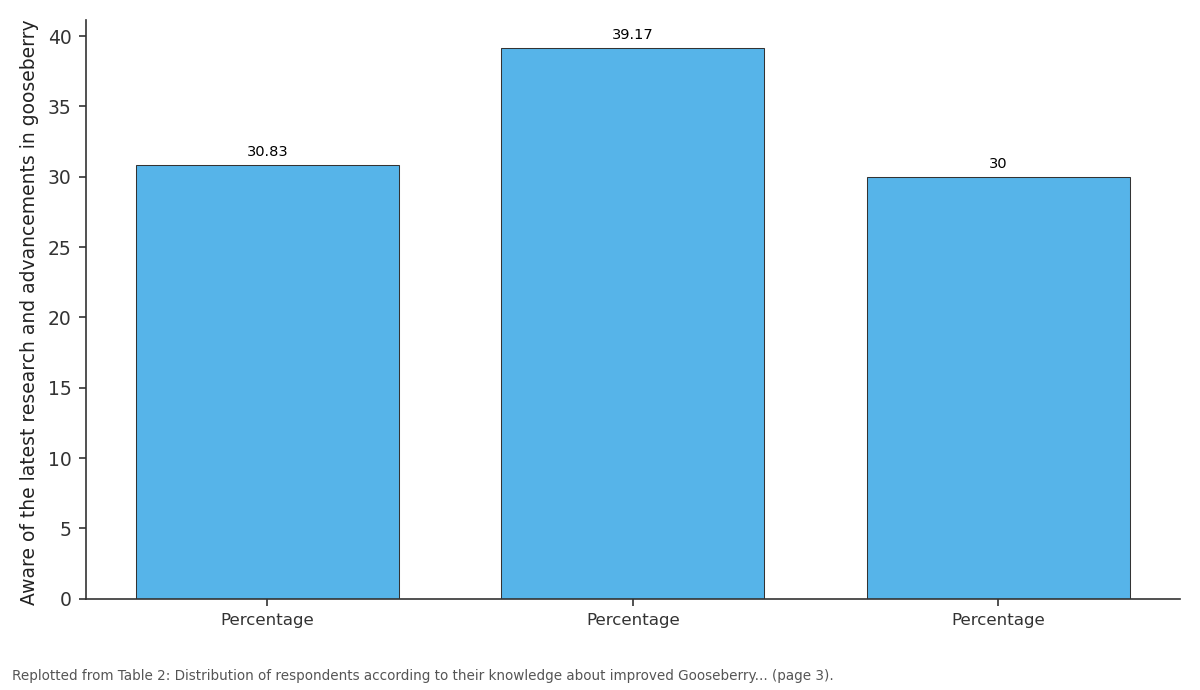
Aware of the latest research and...: Percentage vs Percentage vs Percentage
Replotted from Table 2 (page 3) of the original paper. Every bar is the paper's own table value.
View source evidence ↗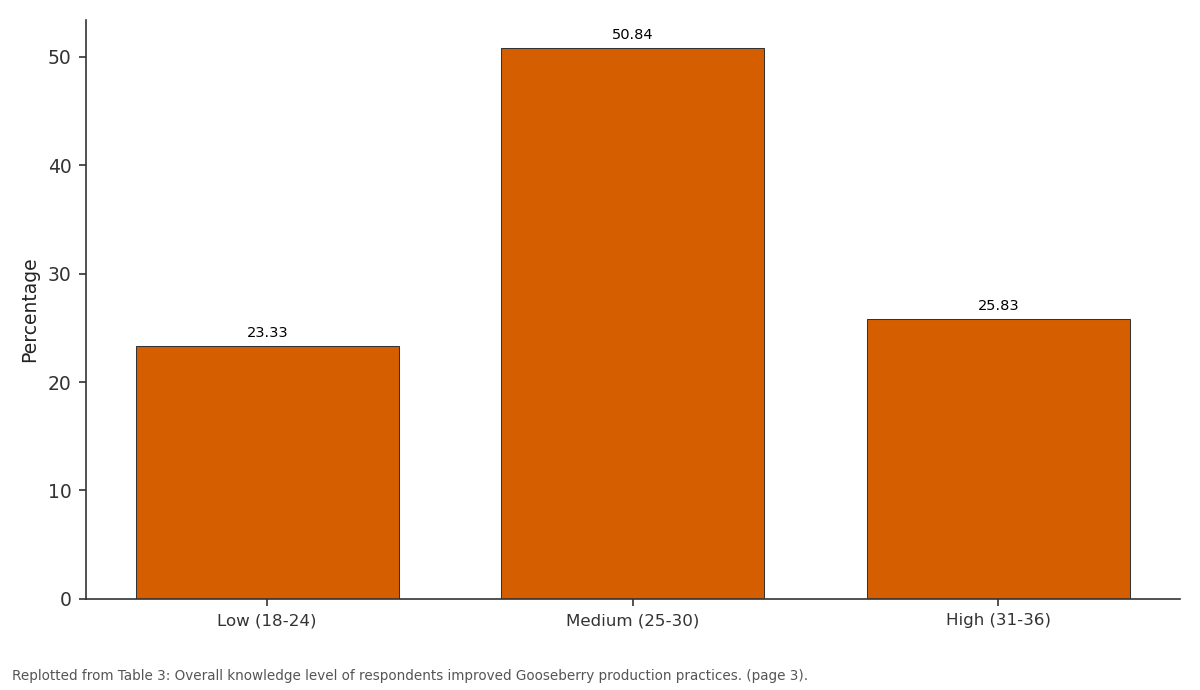
Percentage: Low (18-24) vs Medium (25-30) vs High (31-36)
Replotted from Table 3 (page 3) of the original paper. Every bar is the paper's own table value.
View source evidence ↗Figures & tables
From the original paper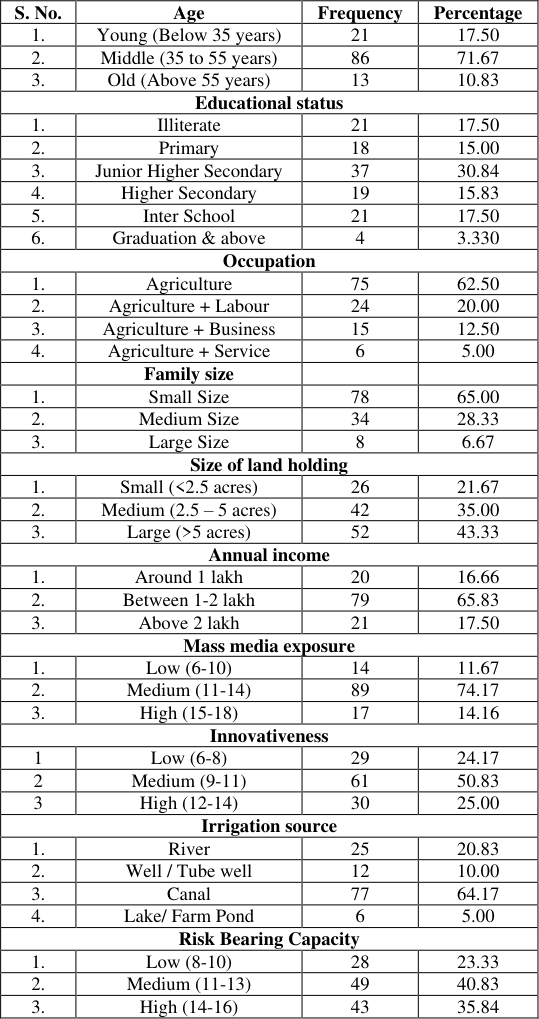 Table 1
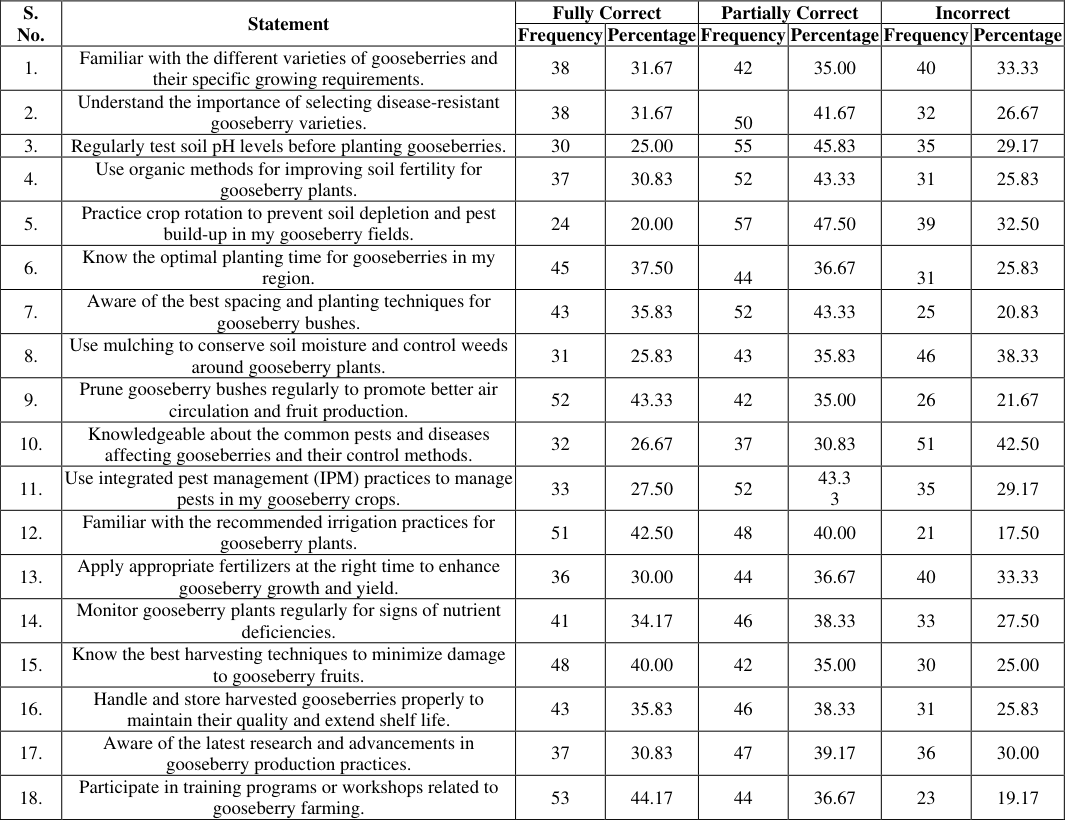 Table 2
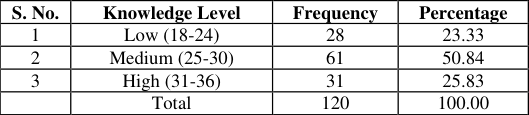 Table 3
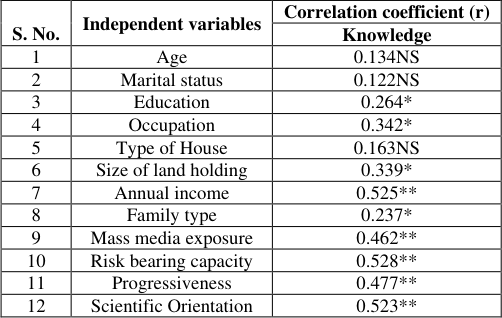 Table 4
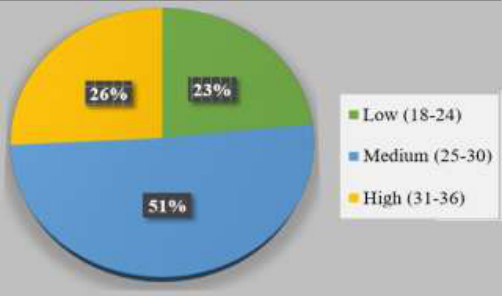 Figure 1
Introduction
Horticulture is a growing sector in India, focusing on the art, science, technology, and business of growing plants. It provides nutritious fruits and vegetables, offers visual enjoyments, and promotes recreational activities. India's varied soil and agro-climatic conditions make it an ideal location for growing horticultural crops, contributing to 30% of India's agricultural GDP from 8.5% of cropped area. The horticulture sector encompasses various crops such as fruits, vegetables, potatoes, tubers, ornamental, medicinal, aromatic, spices, and plantation crops. Gooseberries are small, round or oval-shaped fruits native to Europe, North Africa, and parts of Asia. They have a distinct flavor ranging from sour to sweet and acidic, and are often used. in culinary applications. Gooseberry cultivation requires a temperate climate and is found in home gardens and commercial orchards. They prefer well-drained soil and require regular pruning. Gooseberries have gained popularity for their health benefits and versatility, making them a delightful addition to a well-rounded diet. The Pratapgarh district is known for its high production of gooseberries, but traditional practices are insufficient to achieve desired yields Singh et al. (2019) [9] . Gooseberry trees grow well in sandy loam-clay soil in India. It requires a deep soil. Presence of concrete layer at less than 1 m depth may stop tree growth after 10-12 years. Gooseberry trees can be cultivated in soil from slightly acidic to slightly alkaline or saline (pH 6.0-8.0) in reaction. Grafted or budded plants of Gooseberry are planted at the distance of 8-10 m in the month of June-July. Planting can be done in February-March also provided weekly irrigation is possible. Pits of 1×1×1 m size are dug at least two months prior to planting date. In each pit 3-4 basket of compost mixed with dug soil is filled in. Grafts are planted in the centre of these pits. Budded or grafted Gooseberry tree start fruiting after 6-8 years of planting whereas seedling trees may take 10-12 years of bearing. The change of seed colour from creamy white to brown black is indicative of fruit maturity and harvesting stage of the fruit. Fruit of Gooseberry cultivars generally mature in November-December. The technology in production of Gooseberry is influenced by various factors such as education, social participation, occupation, irrigation facility, and knowledge. Socioeconomic factors, such as higher disposable incomes, influence the knowledge of improved gooseberry cultivation in Uttar Pradesh. However, most farmers are not using seed treatment due to lack of knowledge, high costs of plant protection measures, and non-availability of bio fungicides. Other challenges faced by farmers include low access to extension services, costly labour, lack of credit facility, and lack of marketing information. The knowledge of horticultural technologies is also influenced by factors such as lack of awareness, research, propagating material, adoptable cultivation packages, limited marketing supports, and infrastructure facilities Prusty et al. (2021) [7] .
Objectives of the study
To asses the socio-economic profile of the respondents. www.extensionjournal.com
To determine the knowledge of the respondents towards improved gooseberry production practices.
Research methodology
This study used a descriptive research approach to characterize the features of a population or phenomenon under study. The research was conducted in the Pratapgarh district of Uttar Pradesh state which was selected purposively, with a focus on gooseberry cultivation. The study was conducted through purposive sampling, selecting 1 blocks based on maximum area under gooseberry cultivation. Three villages were selected from each block, and 120 respondents were selected for the present study. Data collection methods included structured interviews and surveys, as well as personal interviews and surveys to gather primary data. Secondary data was collected from the District Agriculture Office, various published and unpublished sources, and written documents from individuals, experts, and organizations related to the farming sector. The study selected independent and dependent variables based on available literature and expert opinions in the field of extension. The dependent variables included age, education, occupation, land holding, annual income, family type, family size, source of information, mass media exposure, scientific orientation, risk orientation, and economic motivation. The dependent variables knowledge. The study aimed to correlate findings with the prevailing conditions in the farming sector.
Results and Discussion
The socio-economic analysis of the respondents reveals a predominantly middle-aged population with a strong commitment to agriculture. They have medium-sized land holdings, but may not have extensive land for large-scale farming operations. Their agricultural practices may be subsistence-oriented, limiting their economic growth potential. Moderate annual incomes highlight the economic challenges faced by this demographic, as their income may not cover all financial needs or invest in productivity improvements. The community's reliance on agricultural activities calls for targeted interventions to enhance economic resilience, such as access to better agricultural technologies, training programs, and diversification of income sources. The results reveal that while most respondents are familiar with optimal gooseberry farming practices, there are gaps in knowledge about soil testing, disease-resistant varieties, and pest management. Only a small percentage of respondents conduct regular soil testing, and many are unaware of the benefits of disease-resistant varieties. Additionally, many farmers are not implementing effective pest management strategies, leading to increased damage and lower yields. Addressing these gaps can improve gooseberry farming's success and sustainability, resulting in higher yields and profits. [5] . The analysis revealed that annual income, risk-bearing capacity, and scientific orientation exhibit the strongest positive correlations with knowledge, indicating that these factors significantly influence an individual's level of understanding. Conversely, variables such as age, marital status, and type of house show no significant correlation, suggesting they may have a lesser impact on knowledge acquisition.
Conclusions
It is concluded that the socio-economic analysis of the respondents a predominantly middle-aged population with a strong commitment to agriculture. Thirty-eight percent of respondents had completed junior high level education, and the majority of respondents (35 to 55 years old) were middle-aged. The majority of respondents-62 percentonly worked in agriculture, while 65 percent had small families, 43.33 percent owned large tracts of land (>5 acres), 65.83 percent earned between Rs. 1 and Rs. 2 lakh annually, 74.17 percent had medium media exposure, 50.83 percent were averagely innovative, 64.17 percent had used canals as a source of irrigation, and 40.83 percent could bear an average amount of risk. The majority of respondents have medium knowledge level (50.84%), followed by high (25.83%) and low (23.33%) knowledge level. Factors such as education, occupation, land holding size, family type, annual income, mass media exposure, risk-bearing capacity, progressiveness, and scientific orientation significantly influence knowledge level. The majority of farmers have a medium level of knowledge, with annual income, riskbearing capacity, and scientific orientation being the strongest positive correlations.
Figures and tables from the paper
| S. No. | Age | Frequency | Percentage |
|---|---|---|---|
| 1. | Young (Below 35 years) | 21 | 17.50 |
| 2. | Middle (35 to 55 years) | 86 | 71.67 |
| 3. | Old (Above 55 years) | 13 | 10.83 |
| Educational status | |||
| 1. | Illiterate | 21 | 17.50 |
| 2. | Primary | 18 | 15.00 |
| 3. | Junior Higher Secondary | 37 | 30.84 |
| 4. | Higher Secondary | 19 | 15.83 |
| 5. | Inter School | 21 | 17.50 |
| 6. | Graduation & above | 4 | 3.330 |
| Occupation | |||
| 1. | Agriculture | 75 | 62.50 |
| 2. | Agriculture + Labour | 24 | 20.00 |
| 3. | Agriculture + Business | 15 | 12.50 |
| 4. | Agriculture + Service | 6 | 5.00 |
| Family size | |||
| 1. | Small Size | 78 | 65.00 |
| 2. | Medium Size | 34 | 28.33 |
| 3. | Large Size | 8 | 6.67 |
| Size of land holding | |||
| 1. | Small (<2.5 acres) | 26 | 21.67 |
| 2. | Medium (2.5 – 5 acres) | 42 | 35.00 |
| 3. | Large (>5 acres) | 52 | 43.33 |
| Annual income | |||
| 1. | Around 1 lakh | 20 | 16.66 |
| 2. | Between 1-2 lakh | 79 | 65.83 |
| 3. | Above 2 lakh | 21 | 17.50 |
| Mass media exposure | |||
| 1. | Low (6-10) | 14 | 11.67 |
| 2. | Medium (11-14) | 89 | 74.17 |
| 3. | High (15-18) | 17 | 14.16 |
| Innovativeness | |||
| 1 | Low (6-8) | 29 | 24.17 |
| 2 | Medium (9-11) | 61 | 50.83 |
| 3 | High (12-14) | 30 | 25.00 |
| Irrigation source | |||
| 1. | River | 25 | 20.83 |
| 2. | Well / Tube well | 12 | 10.00 |
| 3. | Canal | 77 | 64.17 |
| 4. | Lake/ Farm Pond | 6 | 5.00 |
| Risk Bearing Capacity | |||
| 1. | Low (8-10) | 28 | 23.33 |
| 2. | Medium (11-13) | 49 | 40.83 |
| 3. | High (14-16) | 43 | 35.84 |
Table text extracted from the original PDF; superscript letters are shown inline. The original table image is below.
View original table image
| S. No. | Statement | Fully Correct | — | Partially Correct | — | Incorrect | — |
|---|---|---|---|---|---|---|---|
| Frequency | Percentage | Frequency | Percentage | Frequency | Percentage | ||
| 1. | Familiar with the different varieties of gooseberries and their specific growing requirements. | 38 | 31.67 | 42 | 35.00 | 40 | 33.33 |
| 2. | Understand the importance of selecting disease-resistant gooseberry varieties. | 38 | 31.67 | 50 | 41.67 | 32 | 26.67 |
| 3. | Regularly test soil pH levels before planting gooseberries. | 30 | 25.00 | 55 | 45.83 | 35 | 29.17 |
| 4. | Use organic methods for improving soil fertility for gooseberry plants. | 37 | 30.83 | 52 | 43.33 | 31 | 25.83 |
| 5. | Practice crop rotation to prevent soil depletion and pest build-up in my gooseberry fields. | 24 | 20.00 | 57 | 47.50 | 39 | 32.50 |
| 6. | Know the optimal planting time for gooseberries in my region. | 45 | 37.50 | 44 | 36.67 | 31 | 25.83 |
| 7. | Aware of the best spacing and planting techniques for gooseberry bushes. | 43 | 35.83 | 52 | 43.33 | 25 | 20.83 |
| 8. | Use mulching to conserve soil moisture and control weeds around gooseberry plants. | 31 | 25.83 | 43 | 35.83 | 46 | 38.33 |
| 9. | Prune gooseberry bushes regularly to promote better air circulation and fruit production. | 52 | 43.33 | 42 | 35.00 | 26 | 21.67 |
| 10. | Knowledgeable about the common pests and diseases affecting gooseberries and their control methods. | 32 | 26.67 | 37 | 30.83 | 51 | 42.50 |
| 11. | Use integrated pest management (IPM) practices to manage pests in my gooseberry crops. | 33 | 27.50 | 52 | 43.3 3 | 35 | 29.17 |
| 12. | Familiar with the recommended irrigation practices for gooseberry plants. | 51 | 42.50 | 48 | 40.00 | 21 | 17.50 |
| 13. | Apply appropriate fertilizers at the right time to enhance gooseberry growth and yield. | 36 | 30.00 | 44 | 36.67 | 40 | 33.33 |
| 14. | Monitor gooseberry plants regularly for signs of nutrient deficiencies. | 41 | 34.17 | 46 | 38.33 | 33 | 27.50 |
| 15. | Know the best harvesting techniques to minimize damage to gooseberry fruits. | 48 | 40.00 | 42 | 35.00 | 30 | 25.00 |
| 16. | Handle and store harvested gooseberries properly to maintain their quality and extend shelf life. | 43 | 35.83 | 46 | 38.33 | 31 | 25.83 |
| 17. | Aware of the latest research and advancements in gooseberry production practices. | 37 | 30.83 | 47 | 39.17 | 36 | 30.00 |
| 18. | Participate in training programs or workshops related to gooseberry farming. | 53 | 44.17 | 44 | 36.67 | 23 | 19.17 |
Table text extracted from the original PDF; superscript letters are shown inline. The original table image is below.
View original table image
| S. No. | Knowledge Level | Frequency | Percentage |
|---|---|---|---|
| 1 | Low (18-24) | 28 | 23.33 |
| 2 | Medium (25-30) | 61 | 50.84 |
| 3 | High (31-36) | 31 | 25.83 |
| Total | 120 | 100.00 |
Table text extracted from the original PDF; superscript letters are shown inline. The original table image is below.
View original table image
| S. No. | Independent variables | Correlation coefficient (r) |
|---|---|---|
| Knowledge | ||
| 1 | Age | 0.134NS |
| 2 | Marital status | 0.122NS |
| 3 | Education | 0.264* |
| 4 | Occupation | 0.342* |
| 5 | Type of House | 0.163NS |
| 6 | Size of land holding | 0.339* |
| 7 | Annual income | 0.525** |
| 8 | Family type | 0.237* |
| 9 | Mass media exposure | 0.462** |
| 10 | Risk bearing capacity | 0.528** |
| 11 | Progressiveness | 0.477** |
| 12 | Scientific Orientation | 0.523** |
Table text extracted from the original PDF; superscript letters are shown inline. The original table image is below.
View original table image
References
9 in the original paper- Carrosse G, Dikshit A, Verma K, Vanloqueren G. Factors influencing knowledge of gooseberry cultivation practices in Uttar Pradesh, India. Scientia Hortic. 2017;19(2):435-436.
- Gomez L, Duran J, Tobasura I. Economic study on the export of Cape gooseberry produced by Colombian indigenous communities in post-conflict areas to Spain and Europe. Int J Soc Econ. 2021;9(2):72-75.
- Kedar SC, Kode SM, Rawat OS, Rawat N. Awareness and knowledge of improved practices by farmers in cultivation of gooseberry. Indian J Ext Educ. 2020;56(1):23-30.
- Khubchandani PJ, Joshi SK. Knowledge of improved gooseberry dog management practices by the rural farmers. Int J Livest Res. 2015;5(3):126-130.
- Mocktar KS, Mukesh P. Farmers' perception towards knowledge of improved production practices of gooseberry plant in Adilabad. Int J Sci Res. 2017;6(6):633-637.
- Prusty R, Mustafa M, Pandy SK, Katare S. Socioeconomic profile and constraints faced by aonla growers in Ratlam District of M.P. Agric Update. 2021;6:151-153.
- Rai S, Yadav GK, Sharma M, Verma S. Influence of farmers' knowledge and awareness on knowledge of improved gooseberry cultivation. Agric Res Technol. 2014;5(2):207-212.
- Singh U, Mabikar P, Bhardwaj M, Singh C. Knowledge of improved gooseberry (Phalsa) practices in India: an analysis. Indian J Ext Educ. 2019;55(2):79-87.
- Yadav PS, Rai S, Sharma M, Verma S. Socio-economic and institutional factors influencing knowledge of improved gooseberry cultivation in Uttar Pradesh. Indian J Agric Sci. 2015;85(3):339-343.