
Research article · 2024 · Full text
International Journal of Agriculture Extension and Social DevelopmentKnowledge of farmers towards improved chilli cultivation practices in Sonbhadra district of Uttar Pradesh
Volume 7(8S) · Pages 140–143 · DOI: 10.33545/26180723.2024.v7.i8sc.944 ↗
Research areasAgricultural Economics and PracticesAgricultural Practices and Plant Genetics
Abstract
Author-writtenThe study considers the level of knowledge of improved chilli production practices among farmers. The present study was conducted in Sonbhadra district of Uttar Pradesh. Data was collected through surveys, interviews and field observations. A total number of 130 respondents were selected randomly from Robertsganj block. In addition to this, all chilli growers selected from the selected village. It was found that almost half of the respondents percent were of age group of 36-55 years, 25.38 percent were educated up to higher secondary, 40.00 percent had an operational land holding ranging from above 3 hectare, 40.77 percent were have only agriculture as main occupation, nearly one third 42.31 percent respondents had medium level of extension contact, 50.10 percent had high level of mass media exposure, 58.46 percent had low level of social participation, 47.69 percent had medium level of economic motivation and 53.08 percent had high level of scientific orientation. Regarding the knowledge level 56.92 per had medium level of knowledge towards improved production practices of chilli crop, 23.08 per had low level of knowledge and 20.00 percent had high level of knowledge. Variables education, occupation, extension contacts, mass media exposure, scientific orientation had positive and significant association with the knowledge level of the respondents at 5 percent level of significance. Meanwhile, age, caste, land holding, social participation, economic motivation had positive and significant association with the knowledge level of the respondents at 1 percent level of significance.
Summary
Source-checkedPlain-language reading of the full paper, prepared with AI and checked against the text. Each point links to the authors' own words.
Why it matters
- Chilli is a significant crop in India, serving as a spice, vegetable, and cash crop. View evidence ↗
What they did
- The researchers used a descriptive research design, purposively selecting the Robertsganj block in Uttar Pradesh due to its high area of chilli cultivation. View evidence ↗
- A sample of 130 chilli growers was selected via proportionate random sampling, and data were gathered using interviews and pre-structured schedules. View evidence ↗
- The study utilized a combination of surveys, interviews, and field observations to collect data. View evidence ↗
What they found
- The socio-economic profile showed that 53.10% of respondents were aged 36-55, 25.38% were educated to higher secondary level, 40% held over 3 hectares of land, and 40.77% relied solely on agriculture for their occupation. View evidence ↗
- Regarding engagement, 42.31% had medium extension contact, 50.10% had high mass media exposure, 58.46% had low social participation, 47.69% had medium economic motivation, and 53.08% had high scientific orientation. View evidence ↗
What it means
- The authors recommend that the Department of Agriculture provide training for productivity, ensure the timely availability of organic fertilizers, and educate farmers on plant protection. View evidence ↗
Visual summary
2 visualsIllustrations explain the paper; charts are replotted from the paper's own table values.
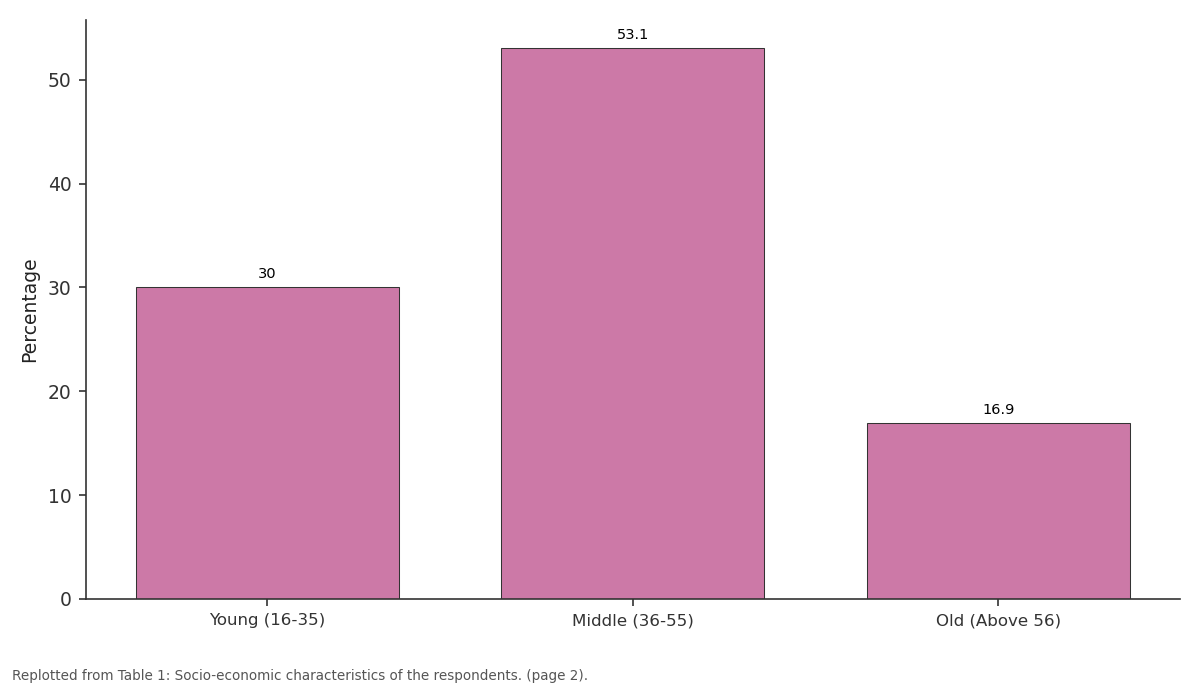
Percentage: Young (16-35) vs Middle (36-55) vs Old (Above 56)
Replotted from Table 1 (page 2) of the original paper. Every bar is the paper's own table value.
View source evidence ↗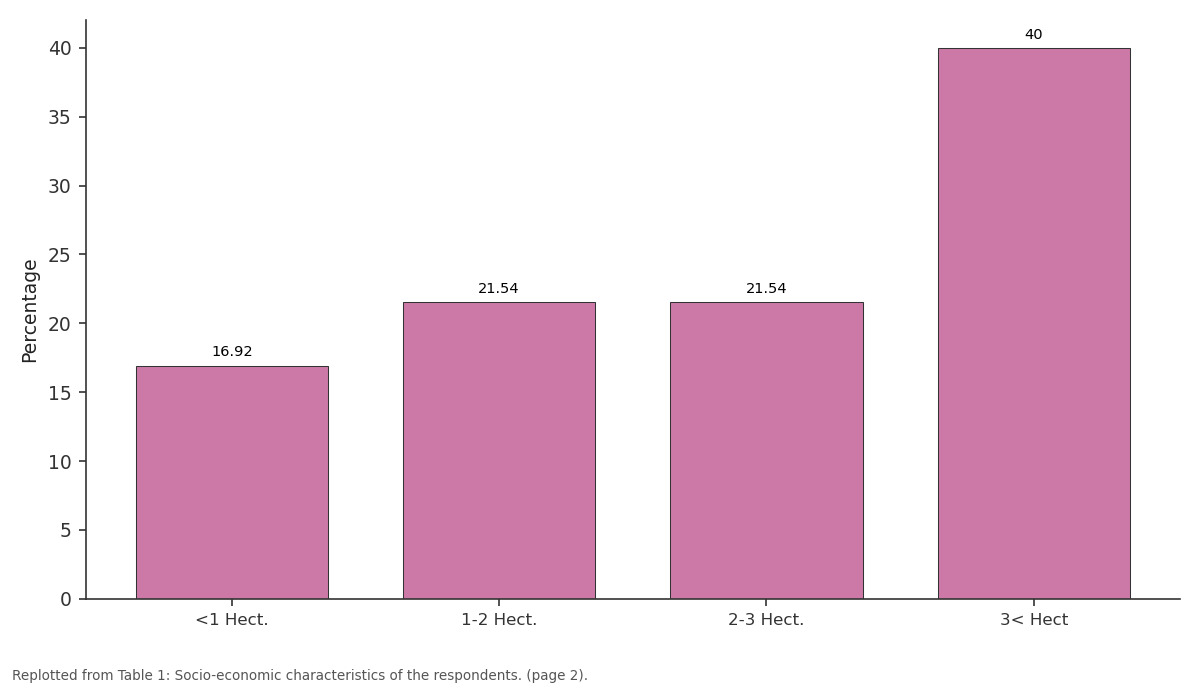
Percentage: <1 Hect. vs 1-2 Hect. vs 2-3 Hect. vs 3< Hect
Replotted from Table 1 (page 2) of the original paper. Every bar is the paper's own table value.
View source evidence ↗Figures & tables
From the original paper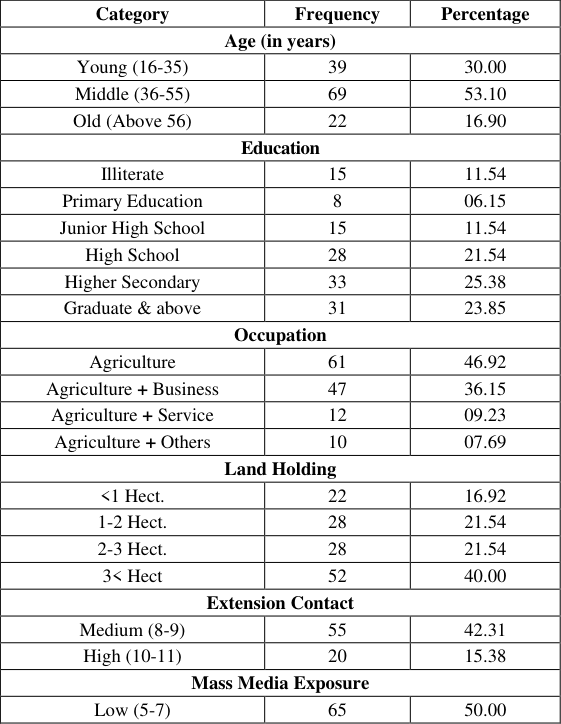 Table 1
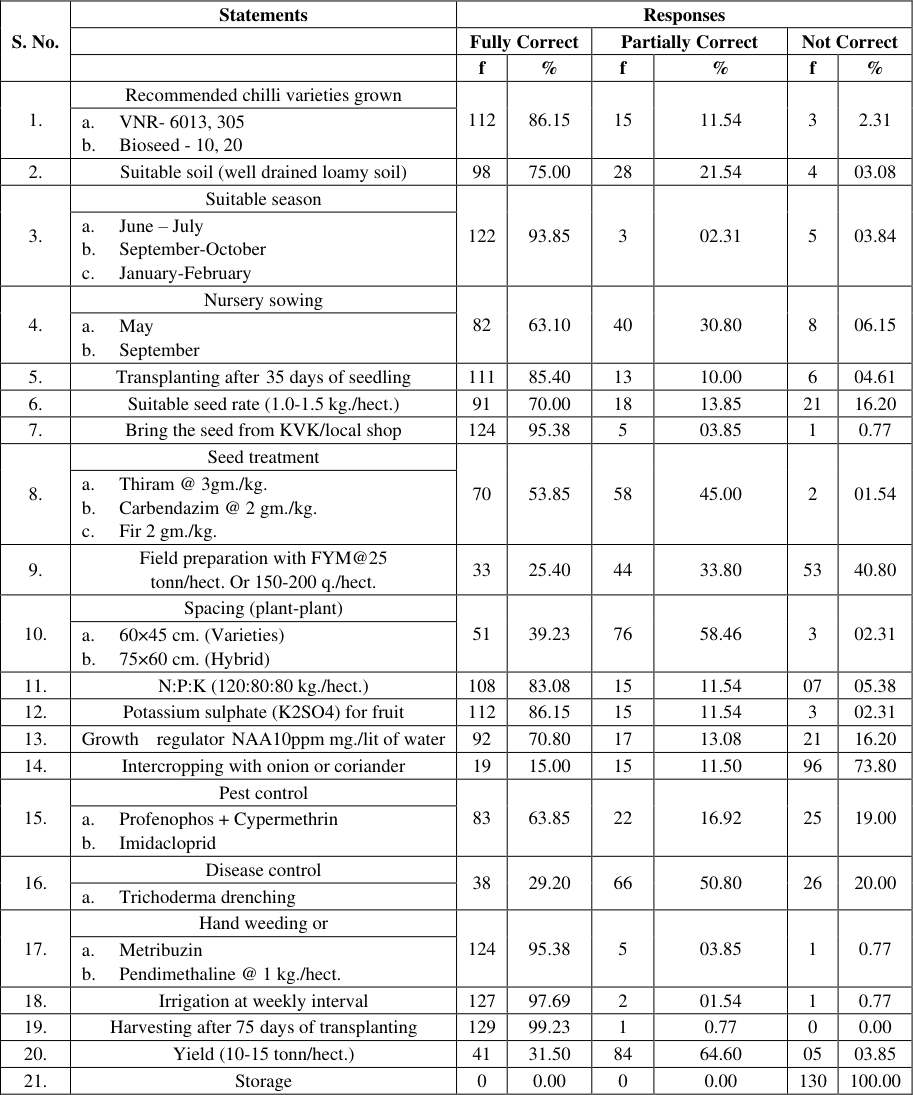 Table 2
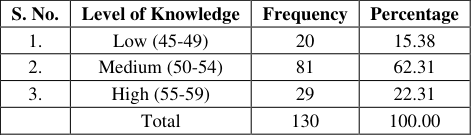 Table 3
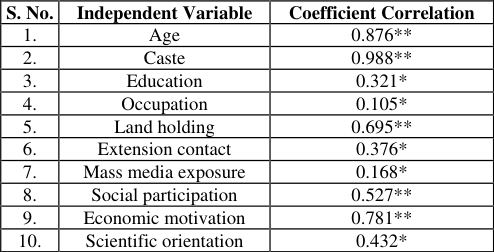 Table 4
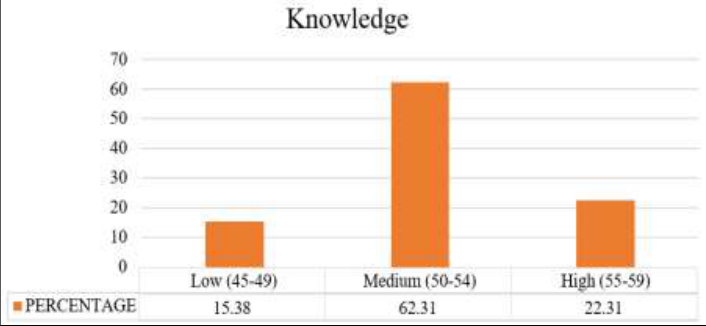 Figure 1
Introduction
Agriculture has been and will continue to be the life line of the Indian economy. As the largest private enterprise in India, agriculture contributes nearly one fourth of the national G.D.P., sustains livelihood of about two third of the population and is the backbone of agro-based industry. India is the world leader in chilli production followed by China, Thailand, Ethiopia and Indonesia. Indian chilli is considered to be world famous for two important commercial qualities of colour and pungency levels. Indian chilli is mainly exported to Asian countries like China, Sri Lanka, Malaysia, Bangladesh, Singapore, Thailand, UAE, etc. In India, major chilli producing states are Andhra Pradesh, Telangana, Madhya Pradesh, Karnataka, Uttar Pradesh and West Bengal. According to the 3rd advance estimates, India's chilli production estimate was 15.78 lakh tonnes for (2021-22) as against 20.49 lakh tonnes in 2020-21. (Agriculture Market Intelligence Sector, PJTSAU) India the 'Land of spices' is the largest producer, consumer and exporter of spices with 40% share in the world trade. The history of Indian spices dates back to the beginning of the human civilization. Chilli (Capsicum annuum Linn.) is one of the important spice/ vegetable/cash crops grown in India. Chilli also called as red pepper, is also an important condiment crop, grown for its pungent fruits which are used both as green and ripe (red) to impart pungency and colour to food. Chilli is a good source of vitamins A, C and E. Oleoresins and essential oils of chilli which are the active principals, providing characteristic pungency, flavour and aroma. Chilli popularly known as 'wonder spice' is a major spice as well as vegetable crop grown in many countries. (Singh et al. 2020) [8] Indian Scenario Chilli is a unique and popular spice in the majority of the countries of the world. Chilli is one of the most important commercial crops of India. There are over 50 spices produced in India and good number of them are grown in the country which is indigenous. Among them pepper, cardamom, ginger and turmeric are important. Among spices, a few spices viz. clove, nutmeg, vanilla and certain varieties of chillies were introduced to the country. Many varieties of chilli are grown for vegetables, spices, condiments, sauce and pickles. India is the largest producer and consumer of chilli among other major producers in the world. Around 29% of the area under cultivation is that of chilli. India contributes 37 percent to total world's production and remained in first position in terms of www.extensionjournal.com international trade by exporting nearly 30 percent from its total production (Geetha et al. 2017) [3] .
Objectives
To determine the socio-economic profile of the respondents. To determine the level of knowledge of the respondents regarding improved chilli production practices.
Research Methodology
Descriptive research design is adopted for the present study. It is a theory based design method which is created by gathering, analysing and presenting collected data. The study was conducted in Uttar Pradesh district. Out of 75 blocks, Robertsganj block was selected purposively based on maximum area under chilli cultivation. Proportionate random sampling was formed to select the chilli growers and make a total sample size as 130. Data were collected with the help of pre structured schedule using interview technique. Appropriate statistics tool was used to analyse the data. From table 3, it can be seen that most of the respondents (62.31%) had medium level of knowledge regarding the recommended practices in chilli cultivation, followed by 22.31 percent of the respondents have high levels and 15.38 percent of the respondents have low levels of knowledge regarding the improved production practices in chilli cultivation. Findings were similar to Jahnavi et al. (2022) [4] . www.extensionjournal.com From table 4, it can be observed that 10 socio-economic characteristics has been studied among which characteristics like education, occupation, extension contacts, mass media exposure, scientific orientation had positive and significant association with the knowledge level of the respondents at 5 percent level of significance. Meanwhile, age, caste, land holding, social participation, economic motivation had positive and significant association with the knowledge level of the respondents at 1 percent level of significance Thus, it can be inferred that had positive influence to enhance the extent of knowledge about improved chilli cultivation practices. Therefore, the null hypothesis is rejected for these variables.
| S. No. | Independent Variable | Coefficient Correlation |
|---|---|---|
| 1. | Age | 0.876** |
| 2. | Caste | 0.988** |
| 3. | Education | 0.321* |
| 4. | Occupation | 0.105* |
| 5. | Land holding | 0.695** |
| 6. | Extension contact | 0.376* |
| 7. | Mass media exposure | 0.168* |
| 8. | Social participation | 0.527** |
| 9. | Economic motivation | 0.781** |
| 10. | Scientific orientation | 0.432* |
Table text extracted from the original PDF; superscript letters are shown inline. The original table image is below.
View original table image
| S. No. | Level of Knowledge | Frequency | Percentage |
|---|---|---|---|
| 1. | Low (45-49) | 20 | 15.38 |
| 2. | Medium (50-54) | 81 | 62.31 |
| 3. | High (55-59) | 29 | 22.31 |
| Total | 130 | 100.00 |
Table text extracted from the original PDF; superscript letters are shown inline. The original table image is below.
View original table image
Results and Discussion
Results and Discussion
Conclusions
It was concluded that the socio-economic profile of the respondents, majority of the respondents are of middle age group (36-55), most of the respondents has attained higher secondary, majority of the respondents are engage in agriculture as their main occupation, majority of the respondents have (above 3 hectare) of land holding, most of respondents have medium level of extension contact, majority of the respondents have medium level of mass media exposure, majority of the respondents have low level of social participation, most of the respondents have medium level of economic motivation, majority of the respondents have high level of scientific orientation. Regarding the knowledge level 56.92 per had medium level of knowledge towards improved production practices of chilli crop, 23.08 per had low level of knowledge and 20.00 percent had high level of knowledge. Variables age, education, occupation, land holding, extension contact, mass media exposure, social participation, economic motivation and scientific orientation had positive and significant association with the level of knowledge. Farmers should be trained for better productivity, timely availability of organic fertilizers and proper education on plant protection measures should be ensured by the Department of Agriculture.
Figures and tables from the paper
| Category | Frequency | Percentage |
|---|---|---|
| Age (in years) | ||
| Young (16-35) | 39 | 30.00 |
| Middle (36-55) | 69 | 53.10 |
| Old (Above 56) | 22 | 16.90 |
| Education | ||
| Illiterate | 15 | 11.54 |
| Primary Education | 8 | 06.15 |
| Junior High School | 15 | 11.54 |
| High School | 28 | 21.54 |
| Higher Secondary | 33 | 25.38 |
| Graduate & above | 31 | 23.85 |
| Occupation | ||
| Agriculture | 61 | 46.92 |
| Agriculture + Business | 47 | 36.15 |
| Agriculture + Service | 12 | 09.23 |
| Agriculture + Others | 10 | 07.69 |
| Land Holding | ||
| <1 Hect. | 22 | 16.92 |
| 1-2 Hect. | 28 | 21.54 |
| 2-3 Hect. | 28 | 21.54 |
| 3< Hect | 52 | 40.00 |
| Extension Contact | ||
| Medium (8-9) | 55 | 42.31 |
| High (10-11) | 20 | 15.38 |
| Mass Media Exposure | ||
| Low (5-7) | 65 | 50.00 |
Table text extracted from the original PDF; superscript letters are shown inline. The original table image is below.
View original table image
| S. No. | Statements | Responses | — | — | — | — | — |
|---|---|---|---|---|---|---|---|
| Fully Correct | Partially Correct | Not Correct | |||||
| f | % | f | % | f | % | ||
| 1. | Recommended chilli varieties grown | 112 | 86.15 | 15 | 11.54 | 3 | 2.31 |
| a. VNR- 6013, 305 b. Bioseed - 10, 20 | |||||||
| 2. | Suitable soil (well drained loamy soil) | 98 | 75.00 | 28 | 21.54 | 4 | 03.08 |
| 3. | Suitable season | 122 | 93.85 | 3 | 02.31 | 5 | 03.84 |
| a. June – July b. September-October c. January-February | |||||||
| 4. | Nursery sowing | 82 | 63.10 | 40 | 30.80 | 8 | 06.15 |
| a. May b. September | |||||||
| 5. | Transplanting after 35 days of seedling | 111 | 85.40 | 13 | 10.00 | 6 | 04.61 |
| 6. | Suitable seed rate (1.0-1.5 kg./hect.) | 91 | 70.00 | 18 | 13.85 | 21 | 16.20 |
| 7. | Bring the seed from KVK/local shop | 124 | 95.38 | 5 | 03.85 | 1 | 0.77 |
| 8. | Seed treatment | 70 | 53.85 | 58 | 45.00 | 2 | 01.54 |
| a. Thiram @ 3gm./kg. b. Carbendazim @ 2 gm./kg. c. Fir 2 gm./kg. | |||||||
| 9. | Field preparation with FYM@25 tonn/hect. Or 150-200 q./hect. | 33 | 25.40 | 44 | 33.80 | 53 | 40.80 |
| 10. | Spacing (plant-plant) | 51 | 39.23 | 76 | 58.46 | 3 | 02.31 |
| a. 60×45 cm. (Varieties) b. 75×60 cm. (Hybrid) | |||||||
| 11. | N:P:K (120:80:80 kg./hect.) | 108 | 83.08 | 15 | 11.54 | 07 | 05.38 |
| 12. | Potassium sulphate (K2SO4) for fruit | 112 | 86.15 | 15 | 11.54 | 3 | 02.31 |
| 13. | Growth regulator NAA10ppm mg./lit of water | 92 | 70.80 | 17 | 13.08 | 21 | 16.20 |
| 14. | Intercropping with onion or coriander | 19 | 15.00 | 15 | 11.50 | 96 | 73.80 |
| 15. | Pest control | 83 | 63.85 | 22 | 16.92 | 25 | 19.00 |
| a. Profenophos + Cypermethrin b. Imidacloprid | |||||||
| 16. | Disease control | 38 | 29.20 | 66 | 50.80 | 26 | 20.00 |
| a. Trichoderma drenching | |||||||
| 17. | Hand weeding or | 124 | 95.38 | 5 | 03.85 | 1 | 0.77 |
| a. Metribuzin b. Pendimethaline @ 1 kg./hect. | |||||||
| 18. | Irrigation at weekly interval | 127 | 97.69 | 2 | 01.54 | 1 | 0.77 |
| 19. | Harvesting after 75 days of transplanting | 129 | 99.23 | 1 | 0.77 | 0 | 0.00 |
| 20. | Yield (10-15 tonn/hect.) | 41 | 31.50 | 84 | 64.60 | 05 | 03.85 |
| 21. | Storage | 0 | 0.00 | 0 | 0.00 | 130 | 100.00 |
Table text extracted from the original PDF; superscript letters are shown inline. The original table image is below.
View original table image
References
7 in the original paper- Bushetti V, Krishnamurthy B. Profile characteristics and economic performance of Byadagi chilli growers in Haveri District of Karnataka. Mysore J Agric Sci. 2023;57(1):409-420.
- Chilli Outlook. Agriculture Market Intelligence Sector, PJTSAU. March 2023.
- Geetha R, Selvarani K. A study of chilli production and export from India International Journal of Advanced Research and Innovative Ideas in Education. International J Adv Res Innov Ideas Educ. 2017;3(2):2395-2398.
- Jahnavi P, Mazhar SH. Knowledge of farmers towards improved chilli cultivation practices in Guntur District of Andhra Pradesh. Int Acad Sci Eng Technol. 2022;11:117-122.
- Jolly J, Mazhar SH. Knowledge of the respondents towards black pepper production technology in Idukki District of Kerala, India. J Exp Agric Int. 2023;45(7):147-151.
- Navyasri K, Srilatha Ch, Jnaiah A, Suhasini K. Factors influencing the adoption of drip cum plastic mulch and drip irrigation systems in red chilli cultivation in Bhadradri Kothagudem District of Telangana state. The Pharma Innovation J. 2023;12(3):1122-1124.
- Singh P, Dhillon BS, Singh S. Assessment of farmers' knowledge and their perceived constraints to recommended chilli production practices in Punjab, India. Int J Curr Microbiol Appl Sci. 2020;9(8):14231430.
Cited by 1
From OpenAlex, OpenCitations and reference lists read by Scinovex
- Adoption of improved chilli production technologies and its effect on the technical efficiency of smallholder farmers in Andhra Pradesh
Mangalapuri Pavani, N Sivaramane, K Suseela, D Ramesh, G Sivanarayana · International Journal of Agriculture Extension and Social Development · 2025
The adoption of improved production technologies plays a crucial role in enhancing productivity and efficiency in chilli cultivation, particularly among smallholder farmers. This study analyses adoption behaviour of small holder chilli farmers using the Technology Adoption Index (TAI), Data Envelopment Analysis (DEA), and Tobit regression. Primary data was collected from 360 smallholder chilli farmers using a multistage sampling technique. The TAI results indicated that, among chilli production technologies, the application of plant growth regulators, the selection of disease and pest resistan