
Research article · 2024 · Full text
International Journal of Agriculture Extension and Social DevelopmentAdoption level of advanced cocoon production techniques in Aizawl, district of Mizoram
Volume 7(8) · Pages 244–248 · DOI: 10.33545/26180723.2024.v7.i8d.919 ↗
Research areasAgricultural Economics and PracticesSilkworms and Sericulture ResearchAgricultural Systems and Practices
Abstract
Author-writtenThe present study was conducted to understand the adoption level of advanced cocoon production technique in Aizawl district of Mizoram. The Darlawn Block and Tlangnuam Block of Aizawl district of Mizoram was selected purposively for the present study, descriptive research designed was applied. The primary data was collected from 120 respondents by personal interview which were selected randomly by using pre-structure interview schedule. Adoption of the farmers was measured by asking 15 questions in respect of advanced cocoon production technique. Finding showed that majority i.e. 48.33 percent of the respondents had medium adoption level, 27.53 percent of the respondents had high level of adoption and 24.17 percent of respondent had low adoption level. The relation between profile of the respondents and their adoption level about improved advanced cocoon production technique was revealed that independent variable like age, education, occupation, land holding, annual income, farming experience and scientific orientation are positively and significantly associated with adoption level.
Summary
Source-checkedPlain-language reading of the full paper, prepared with AI and checked against the text. Each point links to the authors' own words.
Why it matters
- India is a global leader in raw silk production, ranking second in the world and contributing approximately 18% of the total global output, which amounts to about 20,000 Metric Tons annually. View evidence ↗
- Sericulture in India is a village-based industry that supports approximately 6 million people across 53,814 villages, offering a source of continuous income for farmers. View evidence ↗
- Mulberry silk is the most prevalent form of sericulture in India, accounting for nearly 80% of the country's total silk production. View evidence ↗
The question
- The study aimed to determine the extent to which farmers in the Aizawl district of Mizoram have adopted advanced cocoon production techniques. View evidence ↗
What they did
- The study used a descriptive research design and purposively selected the Darlawn and Tlangnuam Blocks within the Aizawl district of Mizoram. View evidence ↗
- Primary data was gathered from 120 randomly selected respondents through personal interviews using a pre-structured interview schedule. View evidence ↗
- Farmer adoption was quantified using a set of 15 questions specifically focused on advanced cocoon production techniques. View evidence ↗
What they found
- The majority of respondents (48.33%) demonstrated a medium level of adoption, while 27.53% showed a high level and 24.17% showed a low level of adoption. View evidence ↗
- The use of Farm Yard Manure (FYM) to increase mulberry yield was the most widely adopted practice, with 93.33% of respondents fully adopting it. View evidence ↗
- Intercropping in mulberry fields was the least adopted practice, with 50.83% of respondents not adopting it at all. View evidence ↗
- All ten studied independent variables, including age, education, income, and farming experience, were found to be positively and significantly correlated with the adoption of advanced cocoon production technologies. View evidence ↗
- The respondent profile was predominantly middle-aged (49.17%, aged 40-55 years), followed by young adults (32.5%, below 40 years). View evidence ↗
- A significant majority of the respondents (86.67%) belonged to the Scheduled Tribe (ST) caste. View evidence ↗
What it means
- The authors concluded that farmers face several constraints, primarily the intervention of middlemen, a lack of proper training, and insufficient knowledge of sericulture technology and insurance schemes. View evidence ↗
- The authors recommend that farmers receive training to improve productivity and that the state government and sericulture department ensure support for poor farmers. View evidence ↗
Visual summary
3 visualsIllustrations explain the paper; charts are replotted from the paper's own table values.
Factors Influencing Adoption
AI-generated conceptual illustration (silkworm cocoons and mulberry leaves). It explains the idea and does not show study data.
View source evidence ↗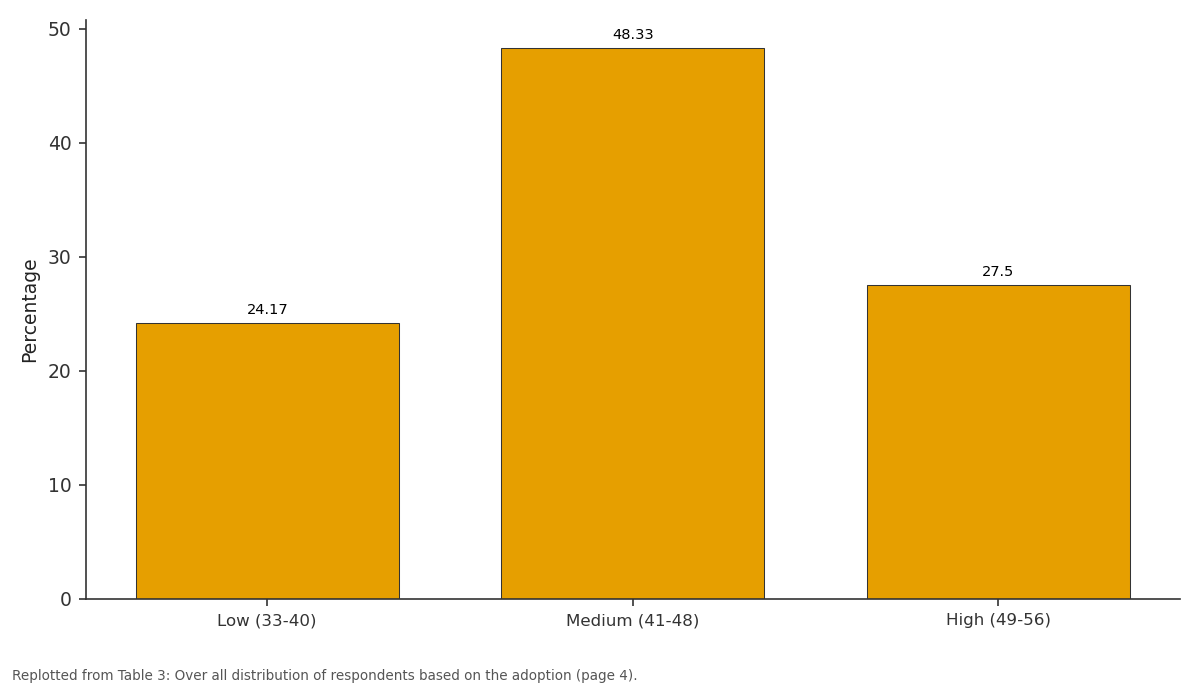
Percentage: Low (33-40) vs Medium (41-48) vs High (49-56)
Replotted from Table 3 (page 4) of the original paper. Every bar is the paper's own table value.
View source evidence ↗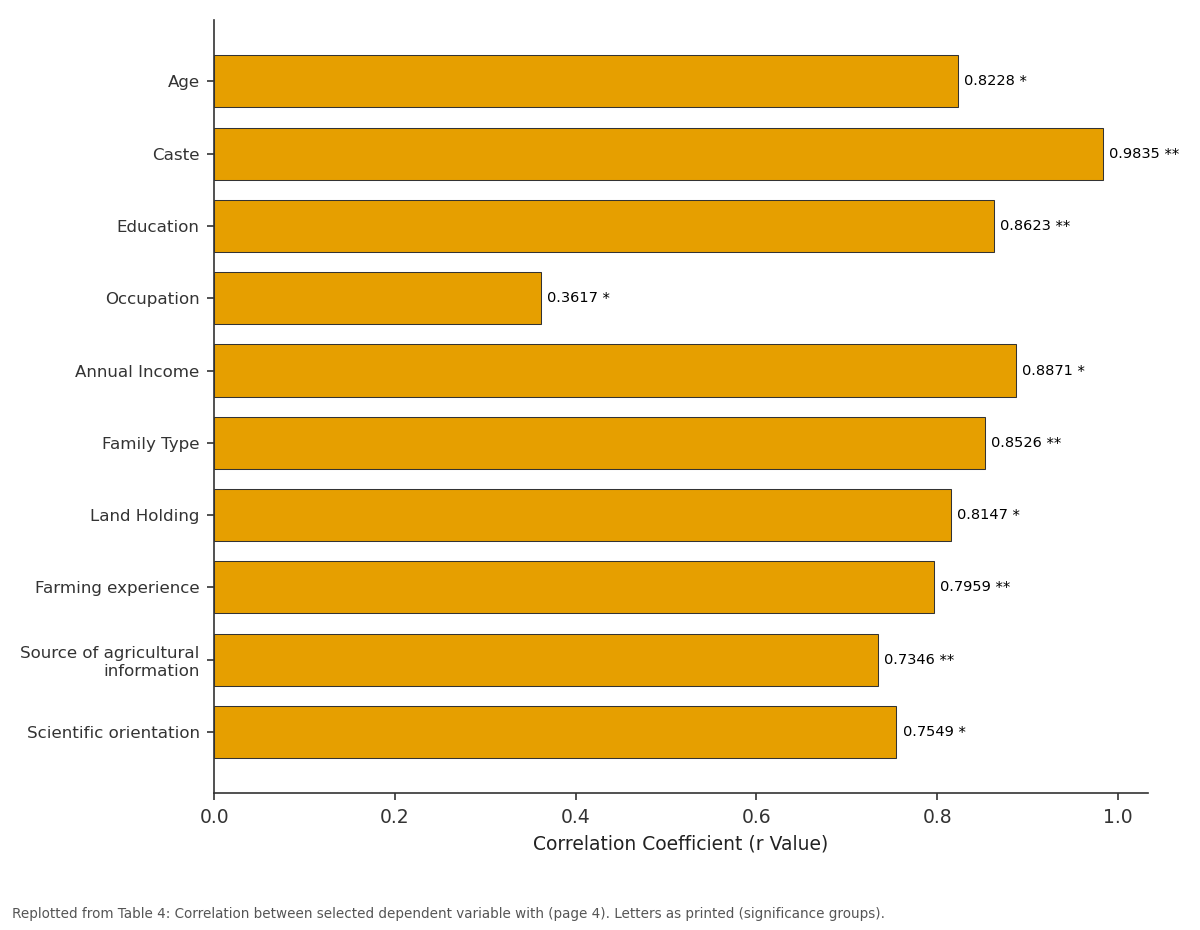
Correlation Coefficient (‘r’ Value): Age vs Caste vs Education vs Occupation vs Annual Income
Replotted from Table 4 (page 4) of the original paper. Every bar is the paper's own table value.
View source evidence ↗Figures & tables
From the original paper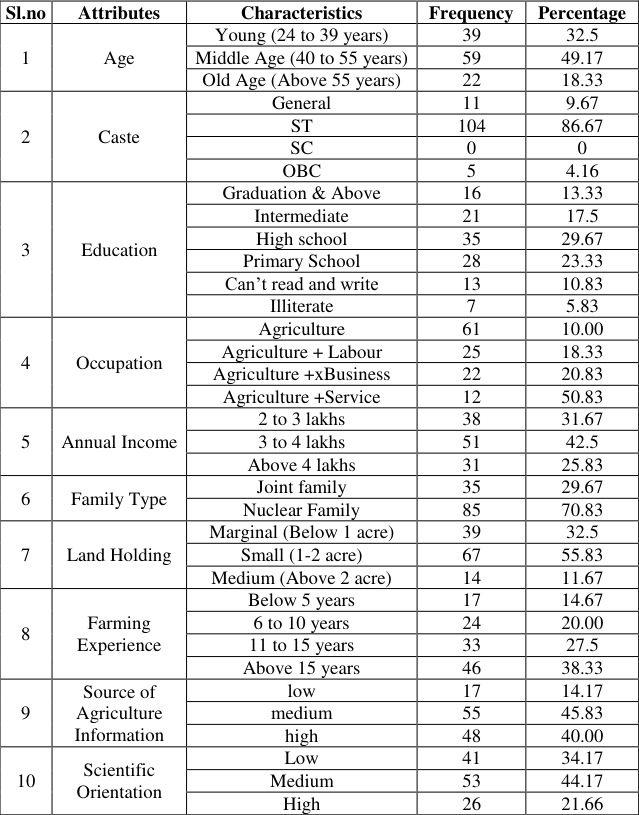 Table 1
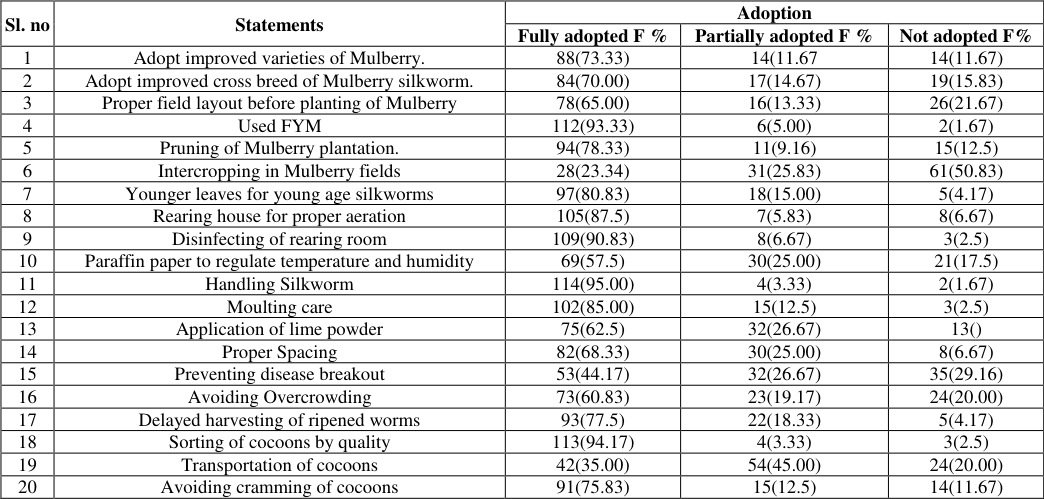 Table 2
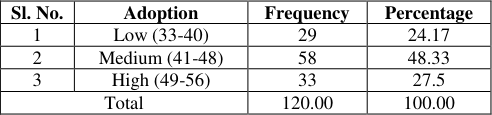 Table 3
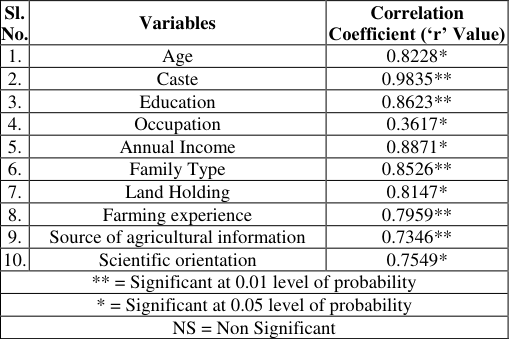 Table 4
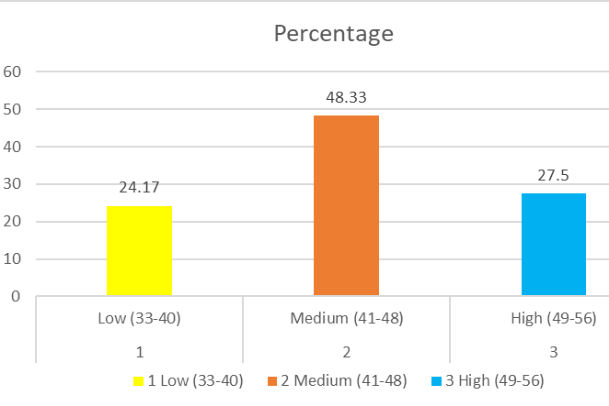 Figure 1
Introduction
India has been ranked as the second major and largest raw silk producer in the world as it contributes about 18% to the total world raw silk production, with an annual silk production of around 20,000 Metric Tons. Sericulture is an agro-based labour-intensive industry. In India, it is a villagebased industry practiced in about 53,814 villages and provides employment to about 6 million people moreover it is capable of providing continuous income to farmers. Sericulture is divided in two sectors namely farm and industry. Sericulture broadly comprises inter-linked activities such as food plant cultivation, maintenance to feed the silkworms, silkworm rearing to produce the silk cocoons, reeling the cocoons for unwinding the silk filament, yarn making, weaving and processing of fabric. India is the only country in the world to produce all the four varieties of silk namely Mulberry, Eri, Tasar and Muga are produced in the country. Mulberry is the largest practiced sericulture industry in India. Mulberry silk production contributes almost 80 percent for entire silk production in the country. There are 10 million silkworm readers and 0.5 million related industrial workers in the world. Asia is the top producer of silk in the world contributing 95% of the total global output. Sericulture plays very effective role in the utilization of the natural resources in a most effective manner for socio-economic upliftment with livelihood, employment and income generation. Based on the success of sericulture practices in the state, both Central Government (Central Silk Board) and State Government (Directorate of Sericulture, Government of Mizoram) are taking lot of initiatives with various schemes and programmes. Financial support for mulberry cultivation, construction of rearing houses, and purchase of rearing appliances besides providing appropriate technologies is also extended to the farmers in order to promote sericulture in the entire state involving maximum number of farmers for livelihood security of Mizo community.
Research Methodology
Descriptive research design was followed for this study as it describes the characteristics or phenomenon that is being studied. The study was conducted at Darlawn and Tlangnuam Block of Aizawl District, under Mizoram state. Which were selected purposively. Three villages were selected randomly from each Block. Objectives 1. To find the Adoption level of the respondents regarding advanced cocoon production techniques. 2. To establish the relationship between the selected independent variables with adoption. www.extensionjournal.com It stated that majority (93.33%) of the respondents fully adopt the used of FYM to increase the yield of mulberry, 5.00% of the respondents partially adopt and 1.67% of the respondents does not adopt the used of FYM to increase the yield of mulberry. It revealed that (78.33%) of the respondents fully adopt the regular practice of pruning of mulberry plantation, 12.5% of the respondents does not adopt and 9.16% of the respondents partially adopt the regular practice of pruning of mulberry plantation. It was observed that (50.83%) of the respondents does not adopt the intercropping in mulberry fields, 25.83% of the respondents partially adopt and 23.34% of the respondents fully adopt the intercropping in mulberry fields. It shows that (80.83%) of the respondents fully adopt the collect of younger leaves for young age silkworms, 15.00% of the respondents partially adopt followed by 4.17% of the respondents does not adopt the collect of younger leaves for young age silkworms. It was observed that majority (87.5%) of the respondents fully adopt the construction of rearing house to prevent the pest from entering while providing proper aeration sowing period, 6.67% of the respondents does not adopt and 5.83% of the respondents partially adopt the construction of rearing house to prevent the pest from entering while providing proper aeration. It revealed that (90.83%) of the respondents fully adopt the disinfect the rearing room 3-4 days before commencement of every rearing, 6.67% of the respondents partially adopt and 2.5% of the respondents does not adopt the disinfect the rearing room 3-4 days before commencement of every rearing. It shows that (57.5%) of the respondents fully adopt the paraffin paper to regulate the temperature and humidity of the rearing tray, 25.00% of the respondents partially adopt and 17.5% of the respondents does not adopt the paraffin paper to regulate the temperature and humidity of the rearing tray. It was observed that majority (95.00%) of the respondents fully adopt the sanitize of hand before handling of silkworm, 3.33% of the respondents partially adopt and 1.67% of the respondents does not adopt the sanitize of hand before handling of silkworm irrigation system. It stated that majority (85.00%) of the respondents fully adopt the practice of moulting care during moulting of silkworm, 12.5% of the respondents partially adopt and 2.5% of the respondents does not adopt the practice of moulting care during moulting of silkworm. It shows that majority (62.5%) of the respondents fully adopt the applied of lime powder to reduce humidity of the silkworm rearing tray, 26.67% of the respondents partially adopt and 10.83% of the respondents does not adopt the applied of lime powder to reduce humidity of the silkworm rearing tray. It was observed that 68.33% of the respondents fully adopt the proper spacing in a single rearing tray to avoid competition for food, 25.00% of the respondents partially adopt and 6.67% of the respondents does not adopt the proper spacing in a single rearing tray to avoid competition for food. It stated that 44.17% of the respondents fully adopt the separation of weak worms from the healthy worms to prevent disease breakout, 29.16% of the respondents does not adopt and 26.67% of the respondents partially adopt the separation of weak worms from the healthy worms to prevent disease breakout. It revealed that majority (60.83%) of the respondents fully adopt the avoiding of overcrowding of mountage with mature silkworm, 20.00% of the respondents does not adopt and 19.17% of the respondents www.extensionjournal.com partially adopt the avoiding of overcrowding of mountage with mature silkworm. It was stated that majority (77.5%) of the respondents fully adopt delayed of harvesting of ripened worms for 1-2 days during winter, 18.33% of the respondents partially adopt and 4.17% of the respondent does not adopt delayed of harvesting of ripened worms for 1-2 days during winter. It was observed that majority (94.17%) of the respondents fully adopt the sort of harvested cocoons depending on the quality of the cocoon, 3.33% of the respondents partially adopt and 2.5% of the respondents does not adopt the sort of harvested cocoons depending on the quality of the cocoon. It was observed that majority 45.00% of the respondents partially adopt the transport of the cocoons in cooler hours of the day, 35.00% of the respondents fully adopt and 20.00% of the respondents does not adopt the transport of the cocoons in cooler hours of the day. It stated that majority (75.83%) of the respondents fully adopt the perforated basket and avoid cramming of cocoons in bags, 12.5% of the respondents partially adopt and 11.67% of the respondents does not adopt the Adopt perforated basket and avoid cramming of cocoons in bags. The fig 1 reveals that majority 48.33 percent of the respondents had medium adoption level, 27.53 percent of the respondents had high level of adoption and 24.17 percent of the respondents have low adoption level. Similar findings was also reported by Brahma (2020) [3] . Scientific orientation 0.7549* ** = Significant at 0.01 level of probability * = Significant at 0.05 level of probability NS = Non Significant * = Significant at p = 0.05%, **= Significant at p = 0.01%, NS= Non-Significant The above Table 4 stated that all the ten independent variables, i.e. age, caste, education, occupation, annual income, family type, land holding, farming experience, source of agriculture information and scientific orientation are positively and significantly correlated with adoption regarding advanced cocoon production technologies. whereas there were no negatively significantly correlated with adoption regarding advanced cocoon production techniques
| Sl. No. | Variables | Correlation Coefficient (‘r’ Value) |
|---|---|---|
| 1. | Age | 0.8228* |
| 2. | Caste | 0.9835** |
| 3. | Education | 0.8623** |
| 4. | Occupation | 0.3617* |
| 5. | Annual Income | 0.8871* |
| 6. | Family Type | 0.8526** |
| 7. | Land Holding | 0.8147* |
| 8. | Farming experience | 0.7959** |
| 9. | Source of agricultural information | 0.7346** |
| 10. | Scientific orientation | 0.7549* |
| ** = Significant at 0.01 level of probability | ||
| * = Significant at 0.05 level of probability | ||
| NS = Non Significant |
Table text extracted from the original PDF; superscript letters are shown inline. The original table image is below.
View original table image
Results and Discussion
Results and Discussion
Socio-economic characteristics of the respondents
Socio-economic characteristics of the respondents
Conclusion
It was concluded that the socio-economic profile of the respondents, majority of the respondents are of middle age (40 to 55 years), most of the respondents are from ST caste, majority of the respondents has attained High School, majority of the respondents are engage in agriculture, most of the respondents has medium level of income (3 to 4 lakh), most of the respondents were from nuclear family, majority of the respondents have 1-2 acres of land with majority of the respondents had above 15 years of farming experience, majority of the respondents had medium level of source of agriculture information similarly majority of the respondents also had medium level of scientific orientation. www.extensionjournal.com Majority of the respondents had medium level category of overall knowledge regarding advanced cocoon production technologies. The factors influencing the knowledge of farmers regarding advanced cocoon production were age, caste, education, occupation, income, family type, land holding, farming experience, source of agriculture information and scientific orientation which were directly co-related with the knowledge regarding advanced cocoon production technologies. Majority of the respondents exhibited a medium level of adoption regarding advanced cocoon production techniques. The factors influencing the adoption of farmers regarding advanced cocoon production techniques were age, caste, education, occupation, income, family type, land holding, farming experience, source of agriculture information and scientific orientation which were directly co-related with the adoption regarding advanced cocoon production techniques. The main constraints faced by the farmers includes intervention of middleman in selling cocoons, lack of proper trainings, lack of sericulture technology knowledge, lack of knowledge of crop insurance and schemes etc. Farmers should be trained for better productivity and support from the state government as well as sericulture department should be ensure for the poor farmers.
Figures and tables from the paper
| Sl.no | Attributes | Characteristics | Frequency | Percentage |
|---|---|---|---|---|
| 1 | Age | Young (24 to 39 years) | 39 | 32.5 |
| Middle Age (40 to 55 years) | 59 | 49.17 | ||
| Old Age (Above 55 years) | 22 | 18.33 | ||
| 2 | Caste | General | 11 | 9.67 |
| ST | 104 | 86.67 | ||
| SC | 0 | 0 | ||
| OBC | 5 | 4.16 | ||
| 3 | Education | Graduation & Above | 16 | 13.33 |
| Intermediate | 21 | 17.5 | ||
| High school | 35 | 29.67 | ||
| Primary School | 28 | 23.33 | ||
| Can’t read and write | 13 | 10.83 | ||
| Illiterate | 7 | 5.83 | ||
| 4 | Occupation | Agriculture | 61 | 10.00 |
| Agriculture + Labour | 25 | 18.33 | ||
| Agriculture +xBusiness | 22 | 20.83 | ||
| Agriculture +Service | 12 | 50.83 | ||
| 5 | Annual Income | 2 to 3 lakhs | 38 | 31.67 |
| 3 to 4 lakhs | 51 | 42.5 | ||
| Above 4 lakhs | 31 | 25.83 | ||
| 6 | Family Type | Joint family | 35 | 29.67 |
| Nuclear Family | 85 | 70.83 | ||
| 7 | Land Holding | Marginal (Below 1 acre) | 39 | 32.5 |
| Small (1-2 acre) | 67 | 55.83 | ||
| Medium (Above 2 acre) | 14 | 11.67 | ||
| 8 | Farming Experience | Below 5 years | 17 | 14.67 |
| 6 to 10 years | 24 | 20.00 | ||
| 11 to 15 years | 33 | 27.5 | ||
| Above 15 years | 46 | 38.33 | ||
| 9 | Source of Agriculture Information | low | 17 | 14.17 |
| medium | 55 | 45.83 | ||
| high | 48 | 40.00 | ||
| 10 | Scientific Orientation | Low | 41 | 34.17 |
| Medium | 53 | 44.17 | ||
| High | 26 | 21.66 |
Table text extracted from the original PDF; superscript letters are shown inline. The original table image is below.
View original table image
| Sl. no | Statements | Adoption | — | — |
|---|---|---|---|---|
| Fully adopted F % | Partially adopted F % | Not adopted F% | ||
| 1 | Adopt improved varieties of Mulberry. | 88(73.33) | 14(11.67 | 14(11.67) |
| 2 | Adopt improved cross breed of Mulberry silkworm. | 84(70.00) | 17(14.67) | 19(15.83) |
| 3 | Proper field layout before planting of Mulberry | 78(65.00) | 16(13.33) | 26(21.67) |
| 4 | Used FYM | 112(93.33) | 6(5.00) | 2(1.67) |
| 5 | Pruning of Mulberry plantation. | 94(78.33) | 11(9.16) | 15(12.5) |
| 6 | Intercropping in Mulberry fields | 28(23.34) | 31(25.83) | 61(50.83) |
| 7 | Younger leaves for young age silkworms | 97(80.83) | 18(15.00) | 5(4.17) |
| 8 | Rearing house for proper aeration | 105(87.5) | 7(5.83) | 8(6.67) |
| 9 | Disinfecting of rearing room | 109(90.83) | 8(6.67) | 3(2.5) |
| 10 | Paraffin paper to regulate temperature and humidity | 69(57.5) | 30(25.00) | 21(17.5) |
| 11 | Handling Silkworm | 114(95.00) | 4(3.33) | 2(1.67) |
| 12 | Moulting care | 102(85.00) | 15(12.5) | 3(2.5) |
| 13 | Application of lime powder | 75(62.5) | 32(26.67) | 13() |
| 14 | Proper Spacing | 82(68.33) | 30(25.00) | 8(6.67) |
| 15 | Preventing disease breakout | 53(44.17) | 32(26.67) | 35(29.16) |
| 16 | Avoiding Overcrowding | 73(60.83) | 23(19.17) | 24(20.00) |
| 17 | Delayed harvesting of ripened worms | 93(77.5) | 22(18.33) | 5(4.17) |
| 18 | Sorting of cocoons by quality | 113(94.17) | 4(3.33) | 3(2.5) |
| 19 | Transportation of cocoons | 42(35.00) | 54(45.00) | 24(20.00) |
| 20 | Avoiding cramming of cocoons | 91(75.83) | 15(12.5) | 14(11.67) |
Table text extracted from the original PDF; superscript letters are shown inline. The original table image is below.
View original table image
| Sl. No. | Adoption | Frequency | Percentage |
|---|---|---|---|
| 1 | Low (33-40) | 29 | 24.17 |
| 2 | Medium (41-48) | 58 | 48.33 |
| 3 | High (49-56) | 33 | 27.5 |
| Total | 120.00 | 100.00 |
Table text extracted from the original PDF; superscript letters are shown inline. The original table image is below.
View original table image
References
7 in the original paper- Ambhure AL, Suman S, Saha S. A study on socioeconomic status of Bt cotton growers of Marathawad region of Maharashtra. Young. 2023;21(17.50):17-50.
- Bagchi SN, Sarkar S, Abhilash PL. Problems and reforms of sericulture seed farmers in Malda District, West Bengal. J Agric Ecol Res Int. 2021;22(6):38-42.
- Brahma U, Bose DDK, Yadav S. Adoption level of sericulture farmers towards improved sericulture production technology in Udalguri block of Udalguri District, Assam. Int J Adv Agric Sci Technol. 2020;7(10):34-39.
- Gaikwad NS, More SS, Munde TB. Constraints perceived by farmers in adoption of sericulture technologies in Solapur district of Maharashtra. The Pharma Innovation J. 2023;12(1):420-422.
- Harisha N, Rao BM, Krishna TG, Devi KU, Umar SK. Knowledge assessment of beneficiary farmers of technical service centres (TSCs) about recommended technologies of sericulture in Karnataka State of India. Int J Environ Climate Change. 2024;14(1):314-321.
- Mazumdar SM, Vishaka GV, Nadaf HS, Selvakumar T. A study on constraints faced by farmers in tropical tasar seed cocoon production. Plant Arch. 2024;42(VS):181183.
- Soundarya SR, Kumar B, Singh RK. An economic analysis of the production of mulberry silkworm cocoons and production constraints faced by farmers in the Kolar district of Karnataka. The Pharma Innov J. 2022;11(-6):267-270.
Cited by 1
From OpenAlex, OpenCitations and reference lists read by Scinovex
- Climate-Resilient and Adaptive Strategies for Hill Farming in Mizoram ↗
Lungmuana, Samik Choudhury, Ramchhanliana Hauchhum, LALHRUAIPUII, P. L. Lalrinsanga, Blessa Sailo et al. · Climate change management · 2026
❝ 0