
Research article · 2024 · Full text
International Journal of Agriculture Extension and Social DevelopmentLivelihood assessment of rural youth through Krishi Vigyan Kendra interventions in Kanyakumari district
Volume 7(8) · Pages 259–264 · DOI: 10.33545/26180723.2024.v7.i8d.922 ↗
Research areasAgricultural Economics and PracticesAgricultural risk and resilience
Abstract
Author-writtenNational agricultural development of today has its focus on rural youth who can gear the rapid socio-economic development progress in the rural areas. Agricultural policy makers in the nation are concerned about the widespread exodus of young rural people from farming to non-farm sectors and metropolitan areas. Agricultural operations in the future are expected to be impacted by this trend, which needs to be checked. A shift toward more economically and intellectually fulfilling agriculture techniques for the younger generation is rapidly approaching. Research on youth participation in creative and sustainable farming methods that contribute to agriculture's profitability must be addressed. The need for self confidence and sense of autonomy has to be boosted up among the rural youth through agro based trainings and capacity building programmes to make agriculture a profitable venture for the rural yout. This paper highlights on the entrepreneurial attributes, relevancy of the trainings and the challenges they face in for their sustained effort in agricultural sector. This study revealed a higher level of entrepreneurial behaviour with respect to entrepreneurial competency and financial competency in allied sector and more of socio business competency in farm+ allied together. The rural youth were convinced by the interventions with respect to the relevancy in enhancing awareness and knowledge (93.94%). All respondents (100%) in allied sector feel that the interventions provided has the capacity to create employment and reduce technological gap.
Summary
Source-checkedPlain-language reading of the full paper, prepared with AI and checked against the text. Each point links to the authors' own words.
Why it matters
- Agricultural policymakers are concerned that rural youth are leaving farming for non-farm sectors and cities. View evidence ↗
- Agro-based training and capacity building are seen as necessary to increase the self-confidence and autonomy of rural youth, making agriculture a profitable option. View evidence ↗
The question
- The study aims to assess the livelihoods of rural youth in the Kanyakumari district following interventions by the Krishi Vigyan Kendra (KVK) in agriculture and allied activities. View evidence ↗
What they did
- The researchers used an ex-post-facto research design. View evidence ↗
- The study used purposive sampling to select a total of 82 respondents. View evidence ↗
- Data was collected using questionnaires and semi-structured interviews to assess livelihoods and employment potential. View evidence ↗
- The analysis involved calculating frequencies, means, and percentages, with ranks assigned based on mean scores. View evidence ↗
What they found
- Females made up the majority (62.5%) of those in combined farming and allied activities, while males were the majority (59.5%) in allied activities alone. View evidence ↗
- Educational levels were high, with 50% of youth in farming and allied sectors and 66.7% in allied activities alone having completed graduation. View evidence ↗
- Youth in the allied sector showed higher entrepreneurial and financial competency, while those in combined farm and allied activities showed higher socio-business competency. View evidence ↗
- The KVK interventions were highly regarded for their relevancy in increasing knowledge and awareness, with a 93.94% conviction rate among rural youth. View evidence ↗
- KVK interventions led to an increase in income of 28.65% for those in farming and allied activities and 45.8% for those in allied activities alone. View evidence ↗
- The increase in entrepreneurial behavior was most significant in the allied activities sector at 68.82%. View evidence ↗
- Financial constraints were identified as the primary obstacle for rural youth, followed by marketing and technological challenges. View evidence ↗
What it means
- The authors recommend increasing youth involvement through skill training to improve efficiency and the application of scientific methods for maximum output. View evidence ↗
Visual summary
3 visualsIllustrations explain the paper; charts are replotted from the paper's own table values.
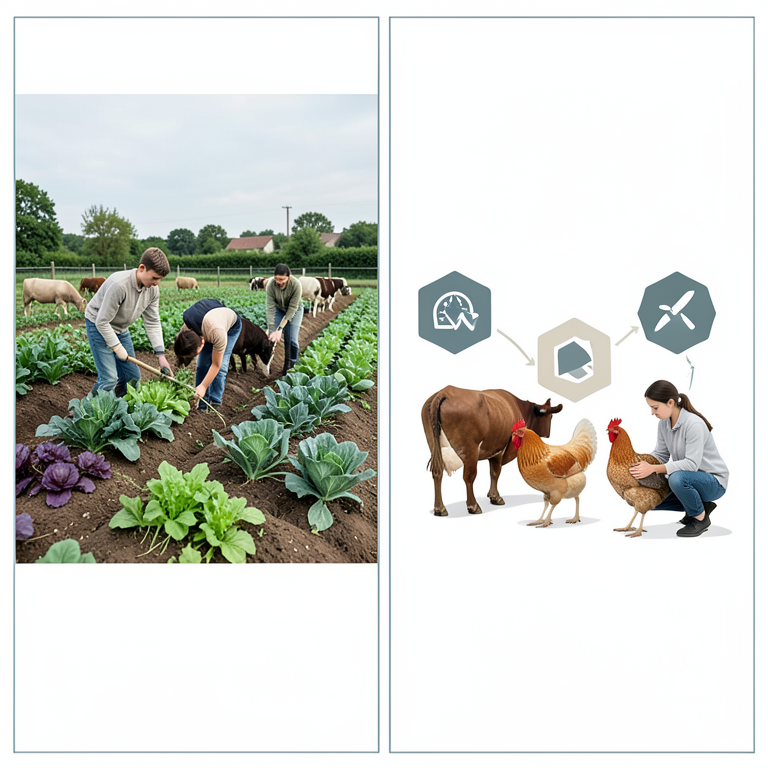
Competency Distribution
AI-generated conceptual illustration (Rural youth in Kanyakumari district engaged in farming and livestock activities). It explains the idea and does not show study data.
View source evidence ↗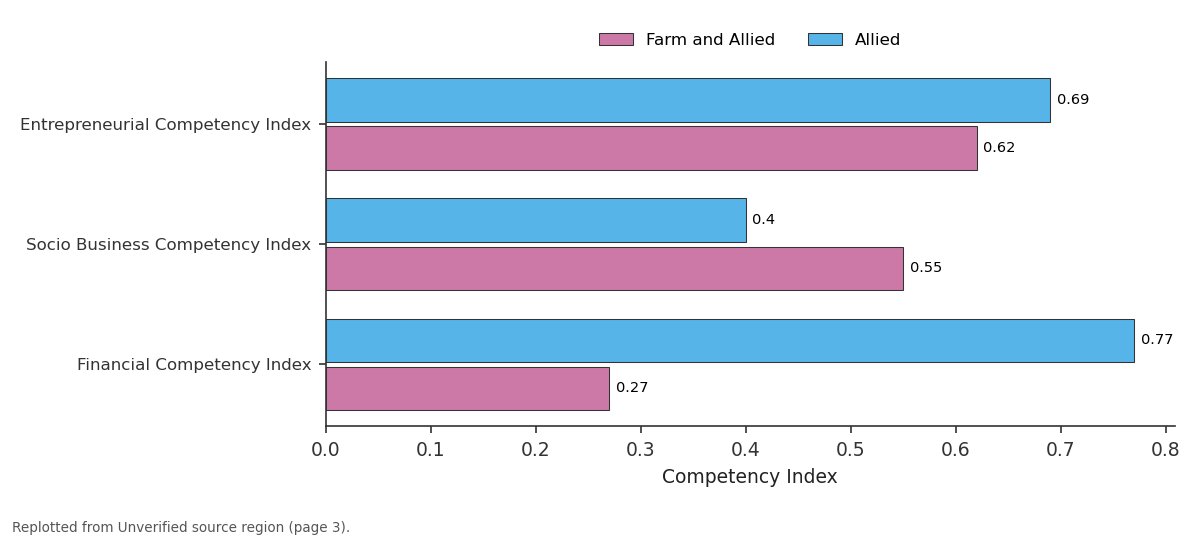
Farm and Allied and Allied: Entrepreneurial... vs Socio Business... vs Financial Competency...
Replotted from a table (page 3) of the original paper. Every bar is the paper's own table value.
View source evidence ↗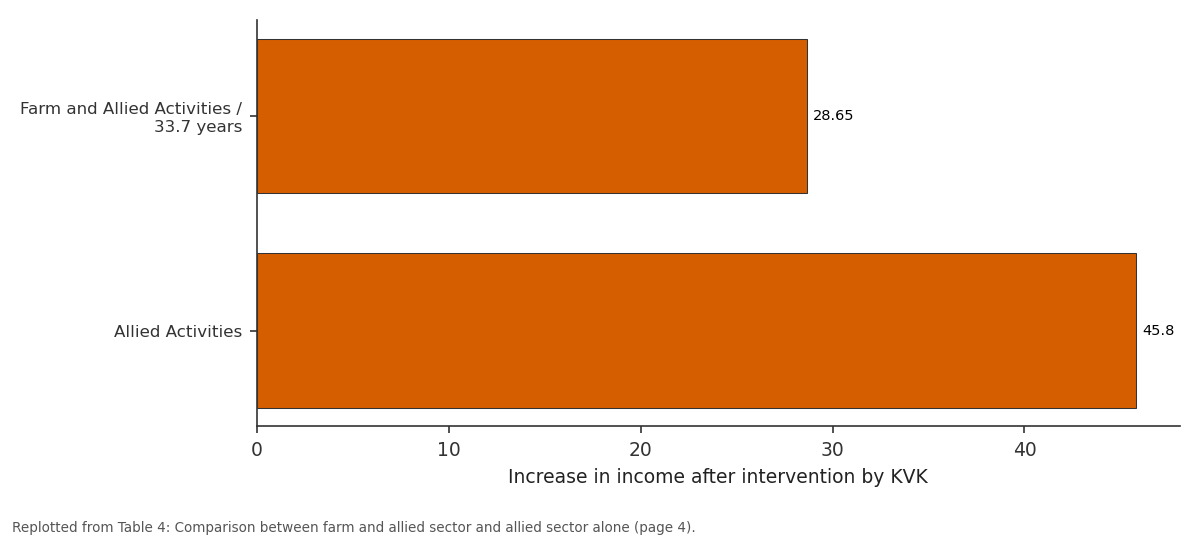
Increase in income after intervention by KVK: Farm and Allied... vs Allied Activities
Replotted from Table 4 (page 4) of the original paper. Every bar is the paper's own table value.
View source evidence ↗Figures & tables
From the original paper Table 1
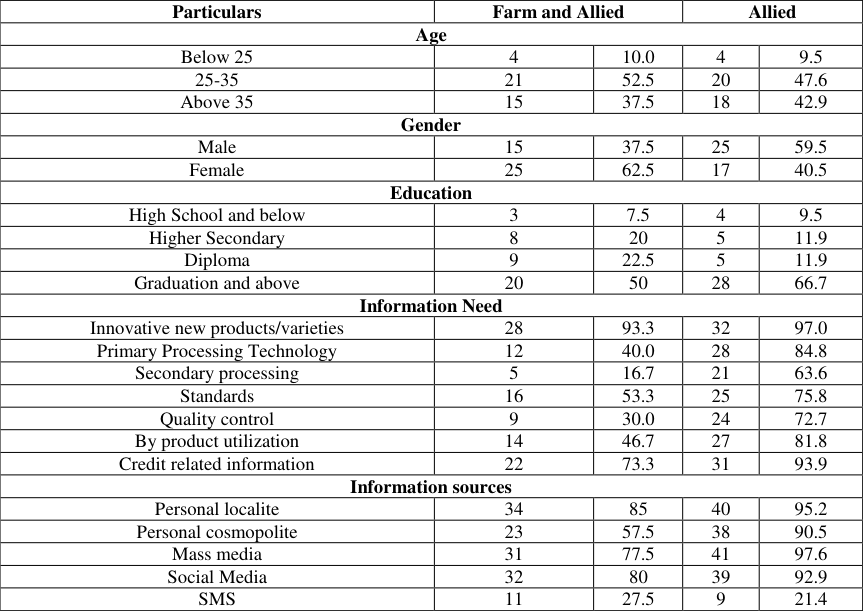 Table 1
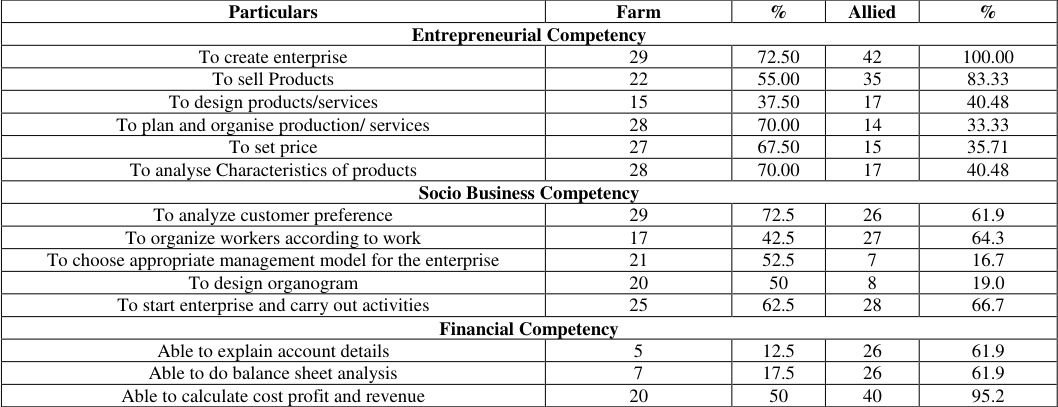 Table 2
 Table 3
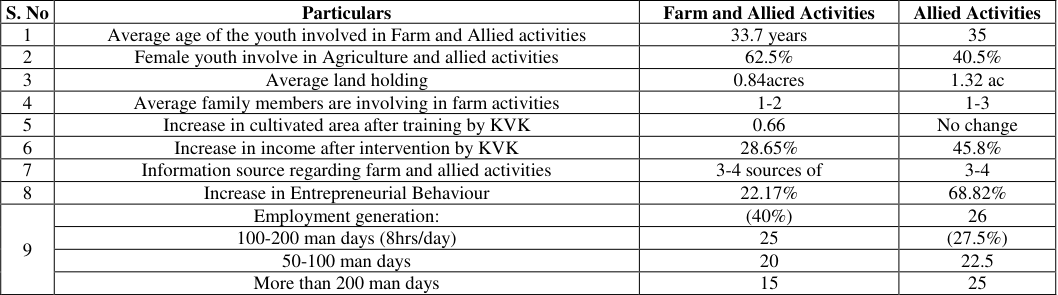 Table 4
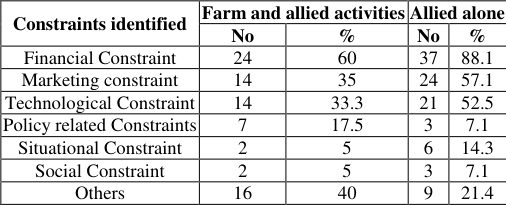 Table 5
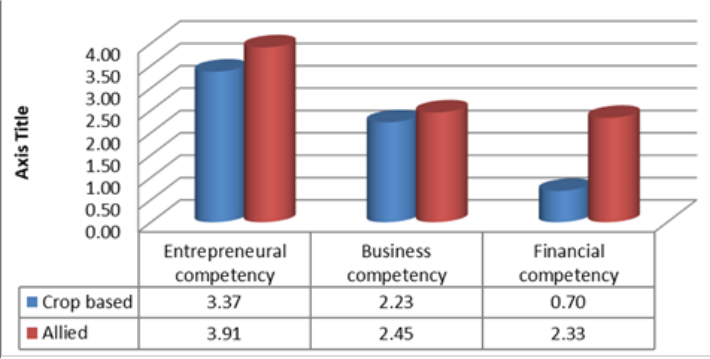 Figure 1
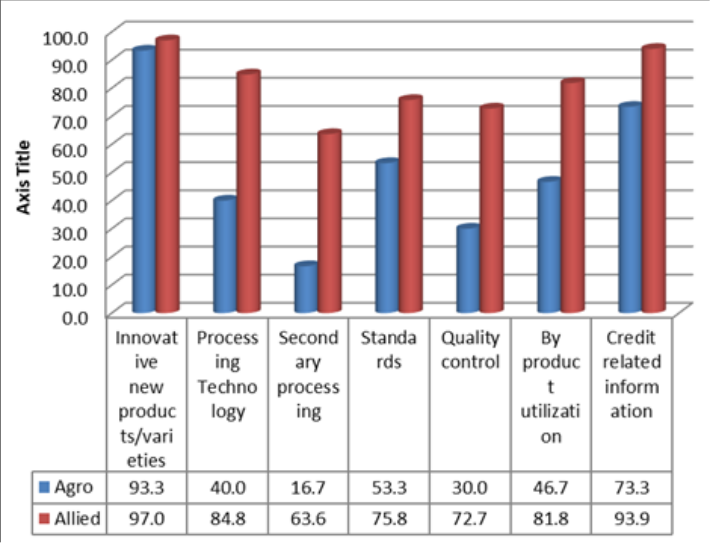 Figure 2
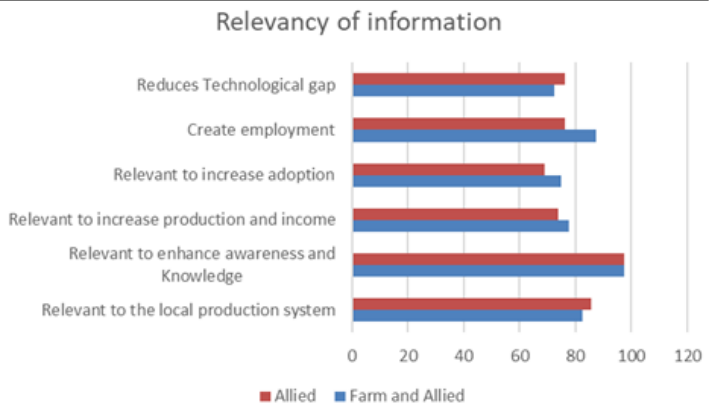 Figure 3
Introduction
The focus of national agricultural development of today is focussed on rural youth who can gear the rapid socioeconomic development progress in the rural areas. In India, around 70% of people under 35 reside in rural areas. The Government of India officially defines youth as persons between the ages of 15 and 29 years based on the recommendation of National Youth Policy, 2014. The definition of Government of India is the most widely accepted age limit in Indian context but varies depending on the programme being implemented. Approximately 550 million young people, including adolescents, live in the nation (Census Report, 2011). That represents roughly 19.1% of India's overall population. The average age in China and the United States of America was expected to be 37 years old in 2020, whereas the average age in India was just 29 years old. Through the channeling of youth's creative impulses, these demographic variances can be leveraged to elevate Indian agriculture to new heights. Many socioeconomic issues, including the profitability of agricultural endeavors, may be to blame for the current difficulty in keeping young people in the agricultural field. Policymakers in the country's agriculture sector are concerned about the large-scale movement of young people from rural areas to metropolitan areas and non-farm sectors. Research on youth participation in creative and sustainable farming methods that contribute to the profitability of agriculture must be conducted. The study conducted by Joshi and Kashyap (2020) [10] on awareness of rural youth on agri related livelihood options revealed that out of the total eighty-five livelihood options related to agriculture and allied sectors provided to them, awareness created among the rural youth was found to be low on 43 options, medium in the 18 areas and high in 24 areas. The reason found out was that they were being traditional cultivator for a long period in the area. The findings of a study conducted in Ghana by Amoako (2019) [3] highlighted that the skill development programmes positively influenced rural youth empowerment. Participants reported increased selfconfidence and a sense of autonomy after completing the training. The acquisition of practical skills not only improved their employability but also imparted a sense of purpose and ambition among the youth. According to a study by Molla Mekonnen Alemu (2016) [9] , the main factors that reduced the potential for agribusiness to be less appealing and profitable for young people were inadequate agricultural technology transfer, the connection between agribusiness and research, the management of market www.extensionjournal.com information, inadequate infrastructure, capacity building and agribusiness technical assistance, and local and regional market opportunities. According to Ramya et al. (2017)'s [11] step-wise regression analysis, the primary variables that explained the livelihood security of tribal farmers were fatalism, risk orientation, family size, annual income, and exposure to the media. It was discovered that these five factors worked together to support tribal farmers' livelihood security. This paper makes an attempt to assess the livelihood of rural youth through interventions in agriculture and allied activities by Krishi Vigyan Kendra in Kanyakumari district.
Materials and Methods
Expose factor research design was followed in this research. The study team conducted a thorough examination of the body of literature, including reports and research publications. Semi-structured interviews and questionnaires were used to solicit the assessment of livelihoods and its potentials in creating employment opportunities for the youth. Discussion with rural youth who have undergone trainings at KVK Kanyakumari were contacted to capture their views and data for assessment of their livelihoods. They form the respondents of the study. This ex-post-facto study has 82 respondents in total. The Sampling procedure followed is purposive sampling as given below Training needs of rural youth were also collected Tabulated and analysed. Mean score for each of the factors was also worked out individually. Data was analyzed using frequency, mean and percentages and ranks assigned on the basis of mean score.
Results and Discussion
The socio-economic background of youth may influence their decisions as well as their overall involvement in enterprising activities. In Indian scenario gender of an individual can influence the type and quality of work carried out by the individual due to the other responsibilities held by them. It was found that about majority of respondents involved in farming and allied activities was female (62.5%) and majority were male (59.5%) in allied activities alone.
The results obtained showed that there are more females involved in the farming and allied sectors integrating and sharing the work force with more contribution than males in farm related work and allied work. This is most likely to be due to the fact that women are capable of doing more tedious work which is usually associated with farming and livestock than the males. In allied sector more involvement was seen in male. Similar educational aspirations and eventually in educational levels was observed irrespective of the gender. Graduation was observed in 50% of the rural youths in farming and allied sector and 66.7% involved in allied activities alone. Increase in unemployment may be the reason for youth showing involvement in allied activities which gives quick remunerations rather than from farm activities which takes a longer duration.
Age
Youth respondents included in the study were aged between 18 and 45 years. Results showed that 52.5% were aged below 35 years, while 37.5% were aged above 35 in farming combined with allied sector. In allied sector alone an uniformity of age above 40 was observed.
Gender
Examining how gender is represented among young people in the study was important. More than half (62.5%) of the respondents in the farming and allied sectors were female, compared to 40.5% in the allied sector alone. This low number of male youth attributed to their involvement in farm related activities and more on allied activities.
Education
In terms of formal schooling, most of the respondents have completed graduation. Only 7.5 to 9.5 percent of respondents had low level of education in both the the types of farming.
Information Need
The most needed information is on Innovative new products or varieties. This is followed by primary processing technology and product standards. Credit related information is also required for the youth to initiate and activity after getting trained in various aspects.
Information Sources
The study's findings showed that Personal localite, personal channel and mass media were the main sources from where the youth used to obtain information. Most of the youth involved in allied activities utilized social media (92.9%) along with mass media (97.6%) and personal localite channels for getting information.
Entrepreneurial Attributes
The The acquisition of new skills and competencies enhances their chances of securing formal employment, leading to better livelihoods and economic empowerment. A study conducted in Assam showed that skill training programs contributed to higher employment rates and improved job placements among rural youth (Singh & Kalita, 2019) [1] .
The respondents of the study revealed a higher level of entrepreneurial behaviour with respect to entrepreneurial competency and financial competency in allied sector and more of socio business competency in farm+ allied together.
Entrepreneurial Attributes Farm and Allied Allied
Entrepreneurial Attributes Farm and Allied Allied
Comparison between farm and allied sector and allied sector alone
A comparison was made to find out level of involvement of the youth and the magnitude of various attributes that are involved in farm and allied sector and allied sector alone. This will help to develop a strategical framework for improving sectoral involvement of youth.
Constraints faced by rural youth
Unprecedented levels of rural-urban migration are being caused by young people in rural areas choosing not to pursue farming in favor of nonexistent white-collar employment in the city, despite the agricultural sector's rapidly expanding potential. To spark our generation's enthusiasm in agricultural production, it is challenging for rural youth to realize their full potential in this field. A list of the main obstacles that young people in the study region had to overcome is provided below. Financial constraints are the main obstacle that rural youth face in their potential to be involved in various activities and to sustain them; these are followed by marketing and technological constraints. The identified constraints prevent the youth from continuing their involvement in agriculture and related activities.
Conclusion
This study highlights on the various socio economic background of rural youth who have undergone trainings at KVK. An attempt has been made to compare the various aspects that that contribute to the entrepreneurial behaviour of the rural youth with respect to farm oriented integrated activities and allied activities alone. The respondents of the study revealed a higher level of entrepreneurial behaviour with respect to entrepreneurial competency and financial competency in allied sector and more of socio business competency in farm and integrated sector. It has been identified that financial constraint in the major challenge faced by the rural youth in potential involvement in various activities and to sustain them. On the basis of the findings it has been suggested for involving more youth through skill trainings to increase their efficiency and better understanding of scientific ways to optimise resource efficiency maximum output.
Figures and tables from the paper
| Agriculture and Value Addition in Banana and coconut | 40 Beneficiaries |
|---|---|
| Allied enterprises | 42 Beneficiaries |
| Total | 82 respondents |
Table text extracted from the original PDF; superscript letters are shown inline. The original table image is below.
View original table image
| Particulars | Farm and Allied | — | Allied | — |
|---|---|---|---|---|
| Age | ||||
| Below 25 | 4 | 10.0 | 4 | 9.5 |
| 25-35 | 21 | 52.5 | 20 | 47.6 |
| Above 35 | 15 | 37.5 | 18 | 42.9 |
| Gender | ||||
| Male | 15 | 37.5 | 25 | 59.5 |
| Female | 25 | 62.5 | 17 | 40.5 |
| Education | ||||
| High School and below | 3 | 7.5 | 4 | 9.5 |
| Higher Secondary | 8 | 20 | 5 | 11.9 |
| Diploma | 9 | 22.5 | 5 | 11.9 |
| Graduation and above | 20 | 50 | 28 | 66.7 |
| Information Need | ||||
| Innovative new products/varieties | 28 | 93.3 | 32 | 97.0 |
| Primary Processing Technology | 12 | 40.0 | 28 | 84.8 |
| Secondary processing | 5 | 16.7 | 21 | 63.6 |
| Standards | 16 | 53.3 | 25 | 75.8 |
| Quality control | 9 | 30.0 | 24 | 72.7 |
| By product utilization | 14 | 46.7 | 27 | 81.8 |
| Credit related information | 22 | 73.3 | 31 | 93.9 |
| Information sources | ||||
| Personal localite | 34 | 85 | 40 | 95.2 |
| Personal cosmopolite | 23 | 57.5 | 38 | 90.5 |
| Mass media | 31 | 77.5 | 41 | 97.6 |
| Social Media | 32 | 80 | 39 | 92.9 |
| SMS | 11 | 27.5 | 9 | 21.4 |
Table text extracted from the original PDF; superscript letters are shown inline. The original table image is below.
View original table image
| Particulars | Farm | % | Allied | % |
|---|---|---|---|---|
| Entrepreneurial Competency | ||||
| To create enterprise | 29 | 72.50 | 42 | 100.00 |
| To sell Products | 22 | 55.00 | 35 | 83.33 |
| To design products/services | 15 | 37.50 | 17 | 40.48 |
| To plan and organise production/ services | 28 | 70.00 | 14 | 33.33 |
| To set price | 27 | 67.50 | 15 | 35.71 |
| To analyse Characteristics of products | 28 | 70.00 | 17 | 40.48 |
| Socio Business Competency | ||||
| To analyze customer preference | 29 | 72.5 | 26 | 61.9 |
| To organize workers according to work | 17 | 42.5 | 27 | 64.3 |
| To choose appropriate management model for the enterprise | 21 | 52.5 | 7 | 16.7 |
| To design organogram | 20 | 50 | 8 | 19.0 |
| To start enterprise and carry out activities | 25 | 62.5 | 28 | 66.7 |
| Financial Competency | ||||
| Able to explain account details | 5 | 12.5 | 26 | 61.9 |
| Able to do balance sheet analysis | 7 | 17.5 | 26 | 61.9 |
| Able to calculate cost profit and revenue | 20 | 50 | 40 | 95.2 |
Table text extracted from the original PDF; superscript letters are shown inline. The original table image is below.
View original table image
| Relevancy of interventions | Farming + allied | Rank | Allied | Rank |
|---|---|---|---|---|
| Relevant to enhance awareness and Knowledge | 96.67 | I | 93.94 | III |
| Create employment | 83.33 | II | 100.00 | I |
| Relevant to the local production system | 76.67 | III | 87.88 | IV |
| Relevant to increase production and income | 70.00 | IV | 84.85 | V |
| Reduces Technological gap | 66.67 | V | 96.97 | II |
| Relevant to increase adoption | 50.00 | VI | 57.58 | VI |
Table text extracted from the original PDF; superscript letters are shown inline. The original table image is below.
View original table image
| S. No | Particulars | Farm and Allied Activities | Allied Activities |
|---|---|---|---|
| 1 | Average age of the youth involved in Farm and Allied activities | 33.7 years | 35 |
| 2 | Female youth involve in Agriculture and allied activities | 62.5% | 40.5% |
| 3 | Average land holding | 0.84acres | 1.32 ac |
| 4 | Average family members are involving in farm activities | 1-2 | 1-3 |
| 5 | Increase in cultivated area after training by KVK | 0.66 | No change |
| 6 | Increase in income after intervention by KVK | 28.65% | 45.8% |
| 7 | Information source regarding farm and allied activities | 3-4 sources of | 3-4 |
| 8 | Increase in Entrepreneurial Behaviour | 22.17% | 68.82% |
| 9 | Employment generation: | (40%) | 26 |
| 100-200 man days (8hrs/day) | 25 | (27.5%) | |
| 50-100 man days | 20 | 22.5 | |
| More than 200 man days | 15 | 25 |
Table text extracted from the original PDF; superscript letters are shown inline. The original table image is below.
View original table image
| Constraints identified | Farm and allied activities | — | Allied alone | — |
|---|---|---|---|---|
| No | % | No | % | |
| Financial Constraint | 24 | 60 | 37 | 88.1 |
| Marketing constraint | 14 | 35 | 24 | 57.1 |
| Technological Constraint | 14 | 33.3 | 21 | 52.5 |
| Policy related Constraints | 7 | 17.5 | 3 | 7.1 |
| Situational Constraint | 2 | 5 | 6 | 14.3 |
| Social Constraint | 2 | 5 | 3 | 7.1 |
| Others | 16 | 40 | 9 | 21.4 |
Table text extracted from the original PDF; superscript letters are shown inline. The original table image is below.
View original table image
References
9 in the original paper- Singh K, Kalita N. Skill development programs and rural youth: A study of North East India. Indian Journal of Human Development. 2019;13(2):159-175.
- Suresh Kumar J, Shobana D. A study on impact of Skill India on rural youth of North East India. International Journal for Multidisciplinary Research (IJFMR). 2023;5(4).
- Amoako G, Mensah A, Ofori EA. Empowering rural youth through skill development: A case study in Ghana. Journal of Rural Studies. 2019;68:78-92.
- Uttej D, Sreenivasa Rao I, Sreenivasulu M, Sailaja A. Relationship between profile characteristics and participation of youth in agriculture and allied sectors. The Pharma Innovation Journal. 2022;SP-11(4):489493.
- Uttej D, Sreenivasa Rao I, Sreenivasulu M. Youth in agriculture: Problems and suggestions. Indian Research Journal of Extension Education. 2022;22(5) Special eIssue.
- Lyocks JS, Lyocks SWJ, Kagbu JH. Mobilizing youth for participation in Nigerian agricultural transformation agenda: A grassroots' approach. Journal of Agricultural Extension. 2013;17(2):78-87.
- Alemu MM. Agribusiness as an unlocking opportunity for youth livelihood development. South American Journal of Academic Research. 2016;Special Edition:15.
- Joshi D, Kashyap SK. Awareness among rural youth about agriculture-related livelihood options in hills of Uttarakhand. Indian Journal of Extension Education. 2020;56(2):70-75.
- Ramya HR, Satya Gopal PV, Prasad SV, Raja L. Characteristics determining the livelihood security of the tribal farmers. International Journal of Current Microbiology and Applied Sciences. 2017;6(7):44624470.