
Research article · 2024 · Full text
International Journal of Agriculture Extension and Social DevelopmentSocio economic profile of fisherwomen involved in marine fisheries in Karnataka
Volume 7(8) · Pages 188–190 · DOI: 10.33545/26180723.2024.v7.i8c.900 ↗
Research areasFisheries and Aquaculture StudiesAgricultural Economics and PracticesSocial and Economic Development in India
Abstract
Author-writtenThe fisheries sector plays a crucial role in India's economy, contributing significantly to national income, employment, and foreign exchange. Particularly in Karnataka, marine fisheries are vital to the livelihoods of coastal communities. This study explores the socio-economic characteristics of fisherwomen engaged in post-harvest activities in Karnataka's Uttara Kannada district. Using a purposive random sampling method, data were collected from 120 fisherwomen in Karwar and Ankola taluks through pretested interview schedule and analysed using frequencies and percentages. The results indicate that a half (50.00%) of the respondents are young and cent percent of the respondents belong to backward communities, 36.67 per cent of them were illiterates and more than half of the respondents studied upto high school. Great majority (95.83%) were married, live in nuclear families, and rely primarily on fisheries for their income. 65.00 per cent had medium annual income and had experience upto 10-20 years.
Summary
Source-checkedPlain-language reading of the full paper, prepared with AI and checked against the text. Each point links to the authors' own words.
Why it matters
- The fisheries sector is a vital part of the Indian economy, providing significant contributions to national income, employment, and foreign exchange. View evidence ↗
- In marine fisheries, women typically handle post-harvest tasks including sorting, grading, cutting, peeling, drying, curing, and marketing. View evidence ↗
- Despite their contributions, the role of women in fisheries is often unrecognized and unorganized, and they are frequently viewed as poor. View evidence ↗
The question
- The study aimed to understand the socio-economic characteristics of women involved in the post-harvest activities of marine fisheries. View evidence ↗
What they did
- The research took place in the Karwar and Ankola taluks of the Uttara Kannada district in Karnataka during 2023-24. View evidence ↗
- A sample of 120 fisherwomen was selected using a purposive random sampling method. View evidence ↗
- Data collection was performed via a pretested interview schedule, and the analysis was based on frequencies and percentages. View evidence ↗
What they found
- Half of the respondents (50.00%) were in the young age group, 45.00% were middle-aged, and 5.00% were old. View evidence ↗
- Education levels were generally low, with 36.67% being illiterate and 25.00% completing high school. View evidence ↗
- The vast majority of the women (95.83%) were married. View evidence ↗
- Most respondents (97.50%) lived in nuclear families. View evidence ↗
- Fisheries served as the sole family occupation for 95.00% of the respondents. View evidence ↗
- Most women (65.00%) had a medium annual income between Rs. 60,000 and Rs. 1,20,000, while 30.00% earned less than Rs. 60,000. View evidence ↗
- The most common level of experience in fisheries was 10 to 20 years, reported by 40.83% of respondents. View evidence ↗
What it means
- The authors conclude that acknowledging and organizing the contributions of fisherwomen is essential to improving their livelihoods and socio-economic status. View evidence ↗
- The authors recommend that future policies focus on financial support, educational opportunities, and formal recognition of women's roles in fisheries. View evidence ↗
Visual summary
1 visualsIllustrations explain the paper; they do not show study data.
Post-Harvest Workflow
AI-generated conceptual illustration (Indian marine fish and traditional processing tools). It explains the idea and does not show study data.
View source evidence ↗Figures & tables
From the original paper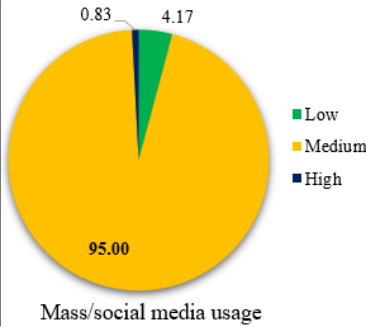 Figure 1
Introduction
The fisheries sector has a significant impact on the Indian economy, as it contributes to the national income, generates employment, and earns foreign exchange. In many regions of the world, fish and fisheries products are considered to be the most affordable source of protein and a staple food for thousands of people. According to a study conducted by Rao et al. in 2016 [3] , there are over 12 million individuals involved in fishing and approximately 60 million people who rely solely on fisheries for their livelihood in India. The coastal ecosystem of Karnataka is a diverse mix of monsoon wetlands, beaches, and mountains, with some reaching heights of up to 2000 meters. It spans along a 300-km long shoreline. Coastal Karnataka is home to 191 marine fishing villages that are spread across three districts. On average, each fishing village covers about 1.6 km of the coastal line. Karnataka, located in the southwest region of India, is known for having a significant population of fishers. According to Bhatta (2000) [1] , marine fisheries play a significant role in coastal Karnataka. Men typically engage in active marine fishing, while women are responsible for handling the catch once it lands. They have a significant impact on post-harvest tasks such as sorting, grading, cutting, peeling, drying, curing, and marketing. Women's participation in these activities helps to generate extra income for their families. Even though women participate in these activities, they also take care of household chores. However, their role is often unorganized and unrecognized, and they are unfortunately often regarded as poor. Therefore, this study was conducted to understand the socioeconomic characteristics of women engaged in post-harvest activities of marine fisheries.
Methodology
The study was conducted in Uttara Kannada district of Karnataka during the year 2023-24. Two taluks i.e., Karwar and Ankola were selected purposively as majority of the women in these taluks are involving in marine fisheries activities. A sample of 120 respondents were selected through purposive random sampling method. Data was collected through pretested interview schedule and analysed by using frequency and percentages. www.extensionjournal.com
Results and Discussion
Age Table 1 shows that 50.00 per cent of the fisherwomen were in the young age group, 45.00 per cent were in the middle age group, and 5.00 per cent were in the old age group. Results are in line with Rabbanee et al. (2012) [2] .
Caste
Cent per cent of the respondents belonged to the backward community, specifically the Hindu Karvi and Harikantra communities. Since the majority of the individuals residing near the coastline were engaged in fishing, they all shared a common community.
Education
In Karnataka state, over one-third of the fisherwomen (36.67%) were illiterate, 25.00 per cent of the respondents had completed high school (8th to 10th grade) followed by middle school (15.83%) and primary education (13.33%). Few (7.50%) had completed their education up to PUC, and only 1.67 percent had obtained a degree. In rural areas, girls don't get as much schooling. They only go to high schools because they are close to the village; to go to college, they have to travel a long way, and their parents didn't sent them out of the village, which is major reason and low economic status another factor why they only go to high school. Results are in line with Roy et al. (2015) [4] .
Marital status
The vast majority (95.83%) of the fisherwomen were married, while a small percentage (1.67%) were widowed or divorced, and only 0.83% were unmarried. In rural communities, women typically marry at the early age and engage in income-generating activities. This is likely the main reason why the majority of women in the survey were married at young age.
Family type
The vast majority (97.50%) of the respondents stated they had nuclear families, whereas a small percentage (2.50%) reported having joint families. In recent times, due to shifting trends, a majority of are preferring to reside in nuclear households.
Family size
The majority of respondents (54.74%) had small families, followed by medium-sized families (41.67%) and only a small percent (4.17%) had large families. Many parents prefer having two children in order to adequately provide for their needs, and low socioeconomic position also contributed to this preference.
Type of house 78.33 per cent of the respondents had pucca houses followed by kuccha houses (19.17%) and concrete houses (2.50%).
Family occupation
The vast majority (95.00%) of the respondents had fisheries as their sole family occupation. 02.50% had a combination of fisheries and business as their family occupation, followed by fisheries and agriculture & allied (01.67%), fisheries and wage earners (0.83%). None of the respondents had fisheries and services as their family occupation. The majority of the respondents rely exclusively on fishing as these activities play a significant role in coastal areas. The fact that these activities have been passed down through generations may be the cause for this dependence.
Annual income
Approximately 65.00% of the fisherwomen fell into the medium income group, earning between Rs. 60,000 and Rs. 1,20,000. Around 30.00% belonged to the low-income group, earning less than Rs. 60,000, while only a small percentage (05.00%) belonged to the higher income group.
Experience in fisheries
Regarding experience in fisheries, 40.83% of the respondents had between 10 and 20 years of experience. 30.00% had between 20 and 30 years of experience. 15.83% had less than 10 years of experience. Only 11.67% had between 30 and 40 years of experience, and a mere 01.67% had between 40 and 50 years of experience.
Mass/social media usage Fig. 1 revealed that vast majority (95.00%) of the respondents belonged to medium mass/social media message, 4.17 percent belonged to low level and very few (0.83%) belonged to high level. Most of the respondents using TV and mobile for entertainment purpose after completing fisheries and household activities. Social media like WhatsApp and you tube were the main apps women using for communication and entertainment few times they use these to gather the information related to fisheries. Very few were reading news papers as majority of them were illiterates and had education upto high school.
Conclusion
The study sheds light on the socio-economic characteristics of fisherwomen involved in marine fisheries in Karnataka, revealing significant insights into their demographics, education, marital status, family structure, and economic activities. The findings show that despite their crucial role in post-harvest activities, these women face challenges such as low literacy rates, limited income, and lack of formal recognition. Most of the fisherwomen belong to the backward community and reside in nuclear families, with fisheries being the primary source of income. The study underscores the importance of acknowledging and organizing the contributions of fisherwomen to improve their socio-economic status and overall livelihood. Future policies should focus on enhancing educational opportunities, providing financial support, and recognizing the pivotal role of women in the fisheries sector to ensure sustainable development and gender equality in coastal Karnataka.
References
4 in the original paper- Bhatta R. An economic analysis of fishing operations in coastal Karnataka. J Soc Econ Dev. 2000;2(2):329-347.
- Rabbanee KF, Yasmin S, Haque A. Women involvement in dry fish value chain: Approaches towards sustainable livelihood. Aust J Bus Manag Res. 2012;1(12):42-48.
- Rao GS, Sathianandan TV, Kuriakose S, Mini KG, Najmudeen TM, Jayasankar J, Mathew WT. Demographic and socio-economic changes in the coastal fishing community of India. Indian J Fish. 2016;63(4):1-9.
- Roy A, Pandit A, Sharma AP, Utpal B, Sucheta M, Dipak B. Socioeconomic status and livelihood of fisherwomen of Hoogly estuary. J Inland Fish Soc India. 2015;47(1):49-56.
Cited by 2
From OpenAlex, OpenCitations and reference lists read by Scinovex
- Socio-demographic status of fisherwomen from the Konkan Coast of Maharashtra
MN Nasre, SM Wasave, KJ Chaudhari, BM Yadav, SV Patil, RA Pawar · International Journal of Agriculture Extension and Social Development · 2026
The present study assesses the socio-demographic status of fisherwomen from the Konkan Coast of Maharashtra. The data were collected from 420 women from the fisher community through personal interviews. The study locations include Mumbai city, Mumbai Suburban, Thane, Palghar, Ratnagiri, Raigad, and Sindhudurg. A pre-tested interview schedule used for data collection and was tabulated and analyzed with the help of software (SPSS, version 27, and Microsoft Excel). The sample size was determined using Cochran's formula; frequency, percentage, and correlations were used for analysis. The majority
- Socio-Economic Conditions and Occupational Challenges of Workers in the Fisheries Industry: A Case Study with Mukka Proteins Limited, Sasihithlu ↗
Harsharani, Shama L Salian · International Journal of Latest Technology in Engineering Management & Applied Science · 2025
Abstract: The growth of the animal protein industry in India has contributed to the generation of employment, particularly in coastal regions like Mangalore. Mukka Proteins Ltd., a leading company in this sector, has played a key role in this development. This study explores the socio-economic conditions and occupational challenges of the employees working in Mukka Proteins Ltd. The research focuses…
❝ 0PDF