
Research article · 2024 · Full text
International Journal of Biology SciencesLeaf extracts as anti-feedant in management of Riptortus linearis in black gram
Volume 6(2) · Pages 18–22 · DOI: 10.33545/26649926.2024.v6.i2a.226 ↗
Research areasAgricultural Science and FertilizationAgricultural pest management studiesBotanical Research and Chemistry
Abstract
Author-writtenBlack gram (Vigna mungo L.), a plant in the leguminosae family, is harmed by various insect pests, and farmers depend on chemical pesticides to control it, putting the sustainable food system at risk. So, this study aimed to discover the insecticidal properties of plant leaf extracts as part of a project to use locally available bio-resources as bio-pesticides. In an experiment from August to November of 2018, according to traditional knowledge, aqueous leaf extract of Ipomea fistulosa, Annona reticulata, and Polygonum hydropiper plants was prepared and tested for pesticide (anti-feeding) activity against an insect pest Riptortus linearis. Pests were observed after 48 hours of treatment for residual toxicity and repellency accordingly. The data from the field demonstrated that Annona reticulata had a 66.70% decline, Ipomoea fistulosa by 65.74% and Polygonum hydropiper was found to be 65.56% effective against Aphis craccivora after 48 hours of treatment. The data collected were analysed in Excel. 2010 and found the differences in the decrease as significant. All of the findings suggest that Annona reticulate, Ipomea fistulosa and Polygonum hydropiper have effective pest control over the selected pests. The utilisation of these bio-products could be advantageous for sustainable agriculture due to various benefits such as low toxicity, improved crop quality and reduced pesticide use.
Summary
Source-checkedPlain-language reading of the full paper, prepared with AI and checked against the text. Each point links to the authors' own words.
Why it matters
- Black gram is a leguminous plant that suffers from various insect pests, leading farmers to rely on chemical pesticides which may threaten sustainable food systems. View evidence ↗
- The pod-sucking pest Riptortus linearis attacks black gram during post-flowering stages, causing seed deformation and yield loss. View evidence ↗
- There is a current need to find alternatives to chemical pesticides, such as bio-pesticides used in Bio-intensive Pest Management (BIPM). View evidence ↗
The question
- The study aimed to investigate the insecticidal properties of locally available plant leaf extracts to be used as bio-pesticides. View evidence ↗
- Specifically, the research evaluated the efficacy of three indigenous plant leaf extracts for the bio-intensive management of pests in black gram. View evidence ↗
What they did
- The experiment was conducted in the Kamrup (Rural) district of Assam from August to November 2018. View evidence ↗
- The study used leaf extracts from three plants: Annona reticulata, Ipomea fistulosa, and Polygonum hydropiper. View evidence ↗
- The study used a random block design on a 400 square metre field, featuring six replications and four treatments (three extracts and one control). View evidence ↗
- Crude extracts were applied to the plots at a 20% concentration using a sprayer. View evidence ↗
- Pest populations were measured by visual counting on five plants per block 24 hours before and 48 hours after treatment. View evidence ↗
What they found
- The average reduction of Riptortus linearis was 66.70% for Annona reticulata, 65.74% for Ipomea fistulosa, and 65.56% for Polygonum hydropiper. View evidence ↗
- The plant extracts exhibited strong repellency against Riptortus linearis, with a calculated repulsion score of 88.34%. View evidence ↗
What it means
- The authors conclude that these plant leaf extracts can be used as an economical and eco-friendly component of Integrated Pest Management. View evidence ↗
- The aqueous extracts provide reasonable anti-feedant protection for black gram crops when superior alternatives are unavailable. View evidence ↗
- A limitation of the study is that using cold water for aqueous extracts may not have captured all leaf components that are not water-soluble. View evidence ↗
- The findings may lack generalizability because the trials involved only a single spray and data collection occurred only 48 hours post-treatment. View evidence ↗
Visual summary
1 visualsIllustrations explain the paper; they do not show study data.
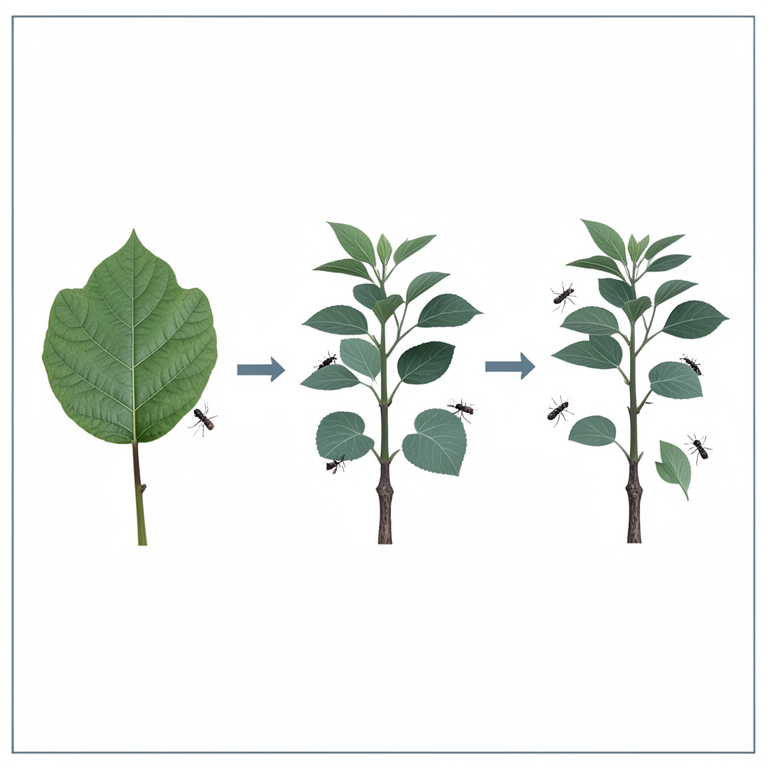
Comparative Efficacy of Plant Extracts
AI-generated conceptual illustration (Black gram plants and Riptortus linearis insects). It explains the idea and does not show study data.
View source evidence ↗Figures & tables
From the original paper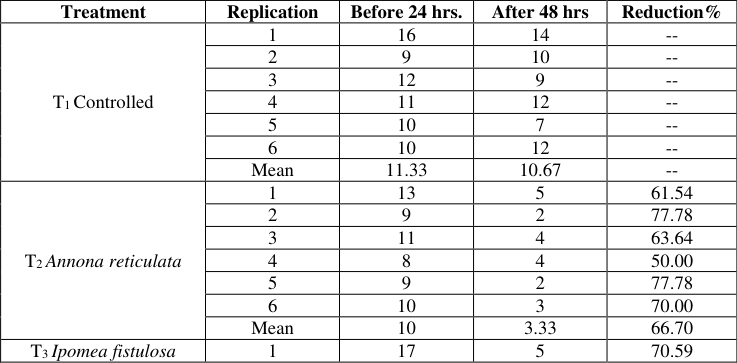 Table 1
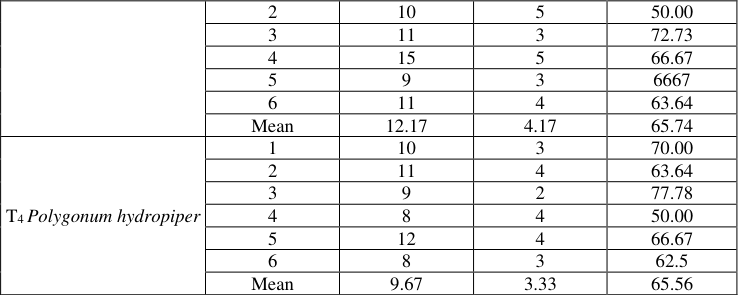 Table 2
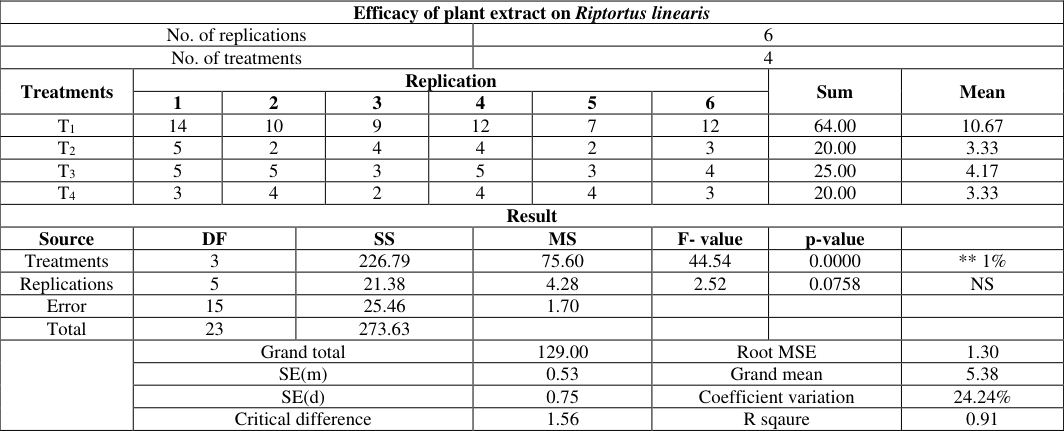 Table 2
 Table 3
Introduction
Black gram (Vigna mungo L.) is locally available and belongs to the family leguminosae and sub family papilionaceae (Verdcourt, B. 1970) [31] . India is the largest producer (25% of global production), consumer (27% of world consumption) and importer (14%) of pulses in the world (FAO, 2018) [16] . According to the estimate of the Agriculture Department of Assam, the production of pulses in Assam was around 80000 MT (Agri Vision, 2025) [1] which can meet a little over 20% requirement of the state. Production of black gram is reduced due to the damage caused by insect pest (Chhabra and Kooner, 1985; Chandra and Rajak, 2004; Lal and Sachan, 1987) [8,7,26] . It is important to manage the damage causing organisms for better production. Sustainable farmers and ranchers are known for their deep respect for the natural world. They use less fossil fuel, produce fewer greenhouse gases, and often depend on human labour rather than chemicals and energy-intensive technology. Sustainable farms encourage biodiversity, conserve scarce water resources, and build healthy soil through techniques like composting and planting cover crops. Management practices, or ignorance of them, play a crucial role in the amount and impact of the pollutants. Management techniques range from animal management and housing to the spread of pesticides and fertilizers in global agricultural practices, which can have major environmental impacts. Bad management practices include poorly managed animal feeding operations, overgrazing, ploughing, fertilizer, and improper, excessive, or badly timed use of pesticides. Chemical pesticides have negative effects on living beings (Das, 1986; Dubey, et al., 2011; Khater, 2011) [10,14,25] . Search for alternatives of chemical pesticide by developing biotic stress tolerant varieties or by using bio-pesticides (Botanical/plant origin pesticides, microbial, parasites and predators) in the form of BIPM is the need of the day (Prakash et al., 2016) [29] . BIPM (Bio-intensive Pest Management) is the recent trend in Indian farming which is more eco-friendly and more economical and attracting the farmers for higher income to their produce including one or more components of bio-pesticides (Prakash and Rao, 2016) [29] and very important for a sustainable environment. Some of the rural folks have developed the knowledge system of utilization of the plant resources to manage the [4,5,13] . It will be an alternative to chemical pesticide and build farmers' knowledge and skills in making best use of local resources. [15] . Comparative efficacy of the extracts was also studied in terms of mortality or rate of reduction of the insect pests (Goudoungou JW et al, 2022) [32] . The evaluation of the efficacy of the leaf extract was conducted on a 400 square metre field. It was divided into six 66 square metre plots, each of which was subdivided into four 16.5 square metre blocks. The experimental design followed here was a random block design consisting of six replications and four treatments, one of which was the control. Fresh leaves (1 kg) from each of the three plants were picked and surface dried in sunshade. These were processed in mixture grinder to make powder and then it was soaked in 5 litres of water and left to decay at room temperature for 72 hours. Through muslin cloth this mixture was filtered and kept as stock solution (Centre for Indian Knowledge System, 2011) [6] . A sprayer was used to saturate the plots in each replication with crude extracts (20% concentration), ensuring consistent coverage of the region. After 35 days from seed sowing, the field spray was carried out in the 39 th standard week of the year 2018.
Residual toxicity test: Hameed et al., (2013) [20] followed a method to determine the residual mortality of the insect pests and in this investigation his method was followed. Data were collected from 5 plants from each block by visual counting including the control in 24 hours before treatment and again 48 hours after treatment. The following formula was followed to determine the percentage residual mortality. The experiment's findings were classified as "Good" which implies a statistically significant reduction in insect numbers, i.e. 75 percent mortality compared to untreated plots, "Fair" means 50-74 percent, and "Bad" means below 50 percent mortality compared to untreated plots.
Repellency test:
The repulsion effect of the plant extracts was determined following the procedure of Ahad and his associates (2012). Data collection was done by following the same procedure. The repulsion in percentage was determined by the following formula.
Repulsion in percentage = (N c -50) × 2
Here N c is the number of insects found in control plot in percentage. If the value of repulsion becomes positive then considered the extract having repellent action and in case of negative value then extracts were considered having attraction.
Statistical Analysis: All the data obtained were analyzed statistically to validate the result of the experiments. The mean reduction of the insect pests was calculated by following the method of Fowler et al., (1998) [17] . The mean values of all the observed data were calculated and analysis of variance was carried out by the F-test and the data obtained for residual mortality were analyzed in the software package developed in Excel. 2010 by Professor Dr. D.S. Dhakre, Department of EES, Visva-Bharati University to find out the significant differences in the reduction under the effect of different treatments to justify the findings.
Results
Results
Residual toxicity on Riptortus linearis:
The data available from the experiment showed that, in A. reticulata, the average percentage reduction of the bug was 66.70 percent, 65.74 percent in I. fistulosa, and 65.56 percent in P. hydropiper. The population of Riptortus linearis varied between 8 to 16/five plants 24 hours before the spray of extract, according to the available data and after treatment, all of the extracts showed a considerable decline in the number of insects. After 48 hours, treatments were found efficient in lowering the pest number which was better than the control with no treatment. In different treatments, the mean decline in Riptortus linearis ranged from 50.00 to 77.78 percent. Annona reticulata caused the greatest population loss (66.70 percent), closely followed by Ipomea fistulosa (65.74 percent) and P. hydropiper (65.56%). All the extracts have a fair control of the target pest. After 48 hours, the effectiveness of these treatments was determined to be in the following order: T 2 > T 3 >T 4 >T 1 (Table 1). The findings were evaluated using ANOVA, and the Fvalue was determined to be significant enough to prove the efficiency of the extracts. It indicates that means of Riptortus linearis population reduction after 48 hours of treatment with each extract were significantly different from one another (Table 2).
| Efficacy of plant extract on Riptortus linearis | — | — | — | — | — | — | — | — | — | — |
|---|---|---|---|---|---|---|---|---|---|---|
| No. of replications | 6 | |||||||||
| No. of treatments | 4 | |||||||||
| Treatments | Replication | Sum | Mean | |||||||
| 1 | 2 | 3 | 4 | 5 | 6 | |||||
| T1 | 14 | 10 | 9 | 12 | 7 | 12 | 64.00 | 10.67 | ||
| T2 | 5 | 2 | 4 | 4 | 2 | 3 | 20.00 | 3.33 | ||
| T3 | 5 | 5 | 3 | 5 | 3 | 4 | 25.00 | 4.17 | ||
| T4 | 3 | 4 | 2 | 4 | 4 | 3 | 20.00 | 3.33 | ||
| Result | ||||||||||
| Source | DF | SS | MS | F- value | p-value | |||||
| Treatments | 3 | 226.79 | 75.60 | 44.54 | 0.0000 | ** 1% | ||||
| Replications | 5 | 21.38 | 4.28 | 2.52 | 0.0758 | NS | ||||
| Error | 15 | 25.46 | 1.70 | |||||||
| Total | 23 | 273.63 | ||||||||
| Grand total | 129.00 | Root MSE | 1.30 | |||||||
| SE(m) | 0.53 | Grand mean | 5.38 | |||||||
| SE(d) | 0.75 | Coefficient variation | 24.24% | |||||||
| Critical difference | 1.56 | R sqaure | 0.91 |
Table text extracted from the original PDF; superscript letters are shown inline. The original table image is below.
View original table image
| — | 2 | 10 | 5 | 50.00 |
|---|---|---|---|---|
| 3 | 11 | 3 | 72.73 | |
| 4 | 15 | 5 | 66.67 | |
| 5 | 9 | 3 | 6667 | |
| 6 | 11 | 4 | 63.64 | |
| Mean | 12.17 | 4.17 | 65.74 | |
| T4 Polygonum hydropiper | 1 | 10 | 3 | 70.00 |
| 2 | 11 | 4 | 63.64 | |
| 3 | 9 | 2 | 77.78 | |
| 4 | 8 | 4 | 50.00 | |
| 5 | 12 | 4 | 66.67 | |
| 6 | 8 | 3 | 62.5 | |
| Mean | 9.67 | 3.33 | 65.56 |
Table text extracted from the original PDF; superscript letters are shown inline. The original table image is below.
View original table image
| Treatment | Replication | Before 24 hrs. | After 48 hrs | Reduction% |
|---|---|---|---|---|
| T1 Controlled | 1 | 16 | 14 | -- |
| 2 | 9 | 10 | -- | |
| 3 | 12 | 9 | -- | |
| 4 | 11 | 12 | -- | |
| 5 | 10 | 7 | -- | |
| 6 | 10 | 12 | -- | |
| Mean | 11.33 | 10.67 | -- | |
| T2 Annona reticulata | 1 | 13 | 5 | 61.54 |
| 2 | 9 | 2 | 77.78 | |
| 3 | 11 | 4 | 63.64 | |
| 4 | 8 | 4 | 50.00 | |
| 5 | 9 | 2 | 77.78 | |
| 6 | 10 | 3 | 70.00 | |
| Mean | 10 | 3.33 | 66.70 | |
| T3 Ipomea fistulosa | 1 | 17 | 5 | 70.59 |
Table text extracted from the original PDF; superscript letters are shown inline. The original table image is below.
View original table image
Repellency of the extracts:
The percentage of repulsion was calculated from the observed data for the insect pest and found to be positive. Riptortus linearis had the lowest, with a score of 88.34. Plant extracts with a positive rating exhibit strong repellency against the insect pest studied (Table 3).
| Name of the pest | Mean No. of insects in control half | — | — | Repulsion in percentage (PR%) | Result of Repellency |
|---|---|---|---|---|---|
| Before 24 hours | After 48 hours | Percentage of insects in the control half | |||
| Riptortus linearis | 11.33 | 10.67 | 94.17 | 88.34 | + |
Table text extracted from the original PDF; superscript letters are shown inline. The original table image is below.
View original table image
Discussion
The mean percentage reduction of Riptortus linearis was found as 66.70% in Annona reticulata. The result of Rosaiah (2001) [30] who reported that the efficacy of A. reticulata against the aphid of bhendi was remarkable is reflected in our findings too, though the insect is different. Experimental result agree with Chitra et al., (1997) [9] who reported that ether extract of A. reticulata leaf extracts gave 88.81 to 90.06 percent reduction in aphid population in cotton plant. The mean percentage reduction of Riptortus linearis was found as 65.74% in Ipomea fistulosa and 65.56% in Polygonum hydropiper. The efficacy of the leaf extract of P. hydropiper in insecticidal activities was supported by several workers (Ayaz, M. et al., 2016) [3] . The result agree with the findings of Kalita and Bhola (2018) [22] when they investigated the anti-feedant effect of some plant extracts including Polygonum hydropiper on Tribolium castaneum (Herbst) and found the plant extracts effective.
Our result is also in agreement with Kalita and Hazarika (2020) [23] from Jorhat Agriculture University, Assam who reported the efficacy of Polygonum hydrpiper for management of Sitophilus oryzae (L.) and Callosobruchus chinensis L. Mohapatra et al., (2021) [27] also reported the efficacy of Polygonum hydropiper against Aphid in cowpea up to 77.48% when they were studying the efficacy of some indigenous products against cowpea aphid. The findings of the present investigation is also in agreement with Karkar, Korat and Dabhi (2014) who reported that botanicals i.e. neem seed kernel extract @ 5%, neem oil @0.3%, leaf extracts of neem, jatropha, naffatia (Ipomea fistulosa), custard apple (A. reticulata) and arduso were found to be more or less equally effective against insect pests Aphid, leaf hopper and whitefly infesting brinjal but seed kernel extract was most effective. Degri et al., (2012) [11] from Nigeria tested the efficacy of balanites (Balanites aegyptiaca Del), Momordica balsamina; bitter leaf (Vernonia amygdalina L) and a standard synthetic insecticide cypermethrin 10% EC against Maruca vitrata F; Clavigralla tomentosicollis Stal; Anoplonemis curvipes L; Riptortus dentipes F; Mirperus jaculus L and Nezara viridula L.and reported the declining infestation of cowpea. Degri et al., (2013) [12] investigated the control of podsucking bug Riptortus dentipes of Cowpea with aqueous plant extracts of neem seed oil (NSO), bitter melon (Momordica balsamina) and garlic (Allium sp) in the Nigerian savanna zone. Neem seed oil and garlic extracts significantly reduced the population of Riptortus dentipes on cowpea pods than bitter melon during the two wet seasons. Haryanta et al., (2020) [21] investigated the repellence of Bintaro Plant Extract (Cerbera manghas) against podsucking insects (Riptortus linearis) and reported the effect on mortality and development of Riptortus linearis. Thus the findings of present investigation are in accordance with some of the previous findings of several workers. The bioefficacy of the plant leaf extracts have been confirmed from the study and may be exploited these types of extracts as eco-friendly bio-intensive integrated pest management measure against the insect pests of black gram. This study is demonstrating that black gram pests can be handled with leaf extracts from non-crop plant species endemic to the area. Even though the results appear to be adequate, some limitations were unavoidable. The method of leaf extract preparation was aimed towards farmers in rural areas who were less educated. Preparing an aqueous extract in cold water will be the most convenient way for them. However, not all leaf components may be water soluble. The experiments were done only in the field for a brief time of a year, because the crop in the study location is only cultivated during the Kharif season, which runs from July to August. The pest control trials were carried out with only one spray of the extract, with data collected after 48 hours of treatment. If more than one spray was used and more data was collected, the findings would have been more generalised.
Conclusion
In this research work, bio-intensive management of insect pests was achieved using the services of botanical insecticides in the form of plant leaf extracts of locally available native plant species. The plant leaf extract if properly applied can be utilized for the management of the insect pests in Integrated Pest Management measures for more economical and eco-friendly approach. All the three plants extract Annona reticulata, Ipomea fistulosa and Polygonum hydropiper showed better efficacy in terms of residual mortality and repellency. Aqueous extracts of the plants reduced the population of these insect pests to an appreciable extent and can offer reasonable protection as anti-feedant to the black gram crop in the absence of superior alternatives.
Acknowledgement
AcknowledgmentsThe author acknowledges the people who came in contact and helped in any way to complete the field work. I offer my sincere gratitude to the departmental colleagues for their assistance in different ways. There is no any conflict of interest related to this work.
References
26 in the original paper- Government of Assam, Department of Agriculture and Horticulture. Agri Vision 2025. 2000. Available from: https://agri-horti.assam.gov.in
- Ahad MA, Sayed MA, Siddiqui MN, Haque MMU. Evaluation of some indigenous plant extracts against pulse beetle, Callosobruchus chinensis (Bruchidae: Coleoptera) in stored green gram (Vigna radiata L.). Global J Med Plant Res. 2012;1(1):33-41.
- Ayaz M, Junaid M, Ullah F, Sadiq A, Ovais M, Ahmad W, et al. Chemical profiling, anti-microbial and insecticidal evaluations of Polygonum hydropiper L. BMC Complement Altern Med. 2016;16:502.
- Barman D, Nath N, Rao S, Barman B. Bio-resource utilization in the management of insect and pest in rice cultivation by Garo tribe of West Garo Hill District, Meghalaya. Int. J Pure Appl. Biosci. 2014;2(3):298304. International Journal of Biology Sciences https://www.biologyjournal.net
- Bhuyan M, Deka MK, Hazarika LK. Traditional pest management practices of Assam. Indian J Tradit. Knowl. 2006;5(1):75-78.
- Chandra U, Rajak DC. Studies on insect pests on urd bean (Vigna mungo). Ann Plant Prot. Sci. 2004;12(1):213-214.
- Chhabra KS, Kooner BS. Loss of summer mungbean due to insect pests in Punjab. Indian J Entomol. 1985;47(1):103-105.
- Chitra KC, Rao SJ, Rao PK. Efficacy of plant extracts for controlling cotton aphid (Aphis gossypii). Indian J Agric Sci. 1997;67:134-135.
- Das GP. Effect of different concentrations of neem oil on the adult mortality and oviposition of Callosobruchus chinensis Linn. (Bruchidae: Coleoptera). Indian J Agric Sci. 1986;56(10):743-744.
- Degri MM, Maina YT, Richard BI. Effect of plant extracts on post flowering insect pests and grain yield of cowpea (Vigna unguiculata L. Walp.) in Maiduguri, semi-arid zone of Nigeria. J Biol Agric Healthcare. 2012;2(3):46-51.
- Degri MM, Maina YT, Sharah HA. Control of podsucking bug Riptortus dentipes (Hemiptera: Alydidae) of cowpea with aqueous plant extracts and Cymbush Super EC in Maiduguri, Nigeria. J Health Med Nurs. 2013;2:8-12.
- Hency Thacker and Vijay Ram. Theoretical evaluation of corrosion inhibitor potential of phytoconstituents of male and female Phoenix dactylifera L. extracts. Int. J. Adv. Chem. Res. 2024;6(1):58-62.
- Gupta A, Nayak S, Mallik A. Preliminary phytochemical screening of hydro-alcoholic flower extract of Ipomoea fistulosa. Int. J Curr. Trends Sci. Technol. 2010;1(3):37-40.
- Hamad SE, Dubey SL. Losses due to insect pests in North Bihar. Indian J Entomol. 1983;1:136-146.
- Hameed A, Shah FH, Mehmood MA, Karar H, Siddique B, Nabi SK, et al. Comparative efficacy of five medicinal plant extracts against Rosa indica insect pests and elaboration of hazardous effects on pollinators and predators. Pak Entomol. 2013;35(2):145-150.
- Haryanta D, Susilo A, Saadah TT. Repelence of Bintaro plant extract (Cerbera manghas) against pod-sucking insects (Riptortus linearis) (Hemiptera). Int. J Biol Biomed Eng. 2020;14:229-238. DOI: https://10.46300/91011.2020.14.30
- Kalita S, Bhola RK. Antifeedant effect of some plant extracts on Tribolium castaneum (Herbst). PARIPEX - Indian J Res. 2018;7(3):48-50.
- Kalita S, Hazarika LK. Botanicals for management of Sitophilus oryzae (L.) and Callosobruchus chinensis L. Indian J Entomol. 2020;82(4):644-648.
- Kara DB, Karat DM, Dhabi MR. Evaluation of botanicals for their bio-efficacy against insect pests of urinal. Karnataka J Agric Sci. 2014;27(2):145-147.
- Khater HF. Prospects of botanical bio-pesticides in insect pest management. Pharmacologia. 2011;3:641656.
- Lal SS, Sachan JN. Recent advances in pest management in pulses. Indian Farm. 1987;37(7):29-32.
- Mohapatra S, Gogoi I, Bhattacharya B, Nath PD, Neog B. Efficacy of some indigenous products against cowpea aphid, Aphis craccivora Koch. Indian J Tradit Knowl. 2021;20(3):822-826.
- Prakash A, Rao J. Bio-intensive insect pest management. Invited paper for oral presentation during National Symposium on New Horizons in Pest Management for Sustainable Goals on 24-25 November, 2016 at OUAT, Bhubaneswar; c2016.
- Rosaiah B. Evaluation of different botanicals against pest complex of brinjal. Pestology. 2001;25(4):14-16.
- Verdcourt B. Studies in the LeguminosaePapilionoideae for the Flora of Tropical East Africa IV. Kew Bull. 1970;24:507-569.
- Goudoungou JW, Barry RB, Abdou JP, Chritopher S, Nukenine EN. Bioefficacy of Aguaria salicifolia and Plectranthus kirbii leaf powders to protect bean grains against infestation by Acanthoscelides obtectus (Coleoptera: Chrysomelidae). Acta Entomol Zool. 2022;3(2):15-23. doi:10.33545/27080013.2022.v3.i2a.71.
Cited by 7
From OpenAlex, OpenCitations and reference lists read by Scinovex
- Efficacy of botanical leaf extracts as anti-feedants against Riptortus linearis (Fabricius) and their potential in sustainable black gram (Vigna mungo) production
Carlos Ernesto Ramirez, Sofia Alejandra Torres · International Journal of Agriculture and Food Science · 2026
How effectively can plant-derived compounds replace synthetic insecticides in protecting black gram from pod-sucking pests? This research evaluated the anti-feedant properties of aqueous leaf extracts from four botanicals Azadirachta indica (neem), Calotropis gigantea (calotropis), Vitex negundo (vitex), and Eucalyptus globulus (eucalyptus) against Riptortus linearis (Fabricius), a major pod-sucking pest of black gram (Vigna mungo). Three concentrations (10%, 15%, and 20% w/v) were tested using choice and no-choice feeding bioassays under controlled laboratory conditions at the National Autono
- Advanced biochemical profiling of anti-feedant leaf extracts and their prospective utility against Riptortus linearis in Korean black gram production systems
Junghwan Park, Seongyun Choi · International Journal of Advanced Biochemistry Research · 2026
Projected increases in hemipteran pest pressure under warming climate scenarios threaten the economic viability of legume cultivation in temperate East Asia, yet biochemically grounded alternatives to synthetic insecticides remain underdeveloped for Korean cropping systems. This research conducted advanced biochemical profiling of leaf extracts from Azadirachta indica, Melia azedarach, Chrysanthemum cinerariaefolium, and Sophora flavescens to characterize their anti-feedant potential against Riptortus linearis in black gram (Vigna mungo) under controlled-environment and greenhouse conditions a
- Impact of Senna uniflora leaf extract on germination and seedling growth of green gram
Athisaya SB, C Raghuram, Anbarasu, J Sathya · International Journal of Research in Agronomy · 2025
The study entitled “Impact of Senna uniflora Leaf Extract on Germination and Seedling Growth of Green Gram” was carried out during 2021-2022 at JSA College of Agriculture and Technology, Cuddalore, to investigate the allelopathic potential of plant part extracts of Senna uniflora on green gram (Vigna radiata). The experimental design followed a Randomized Block Design (RBD) with three replications and four treatments: leaf extract (T1), stem extract (T2), root extract (T3), and control (T4), using 50 g of plant part in 50 ml of distilled water.Among the treatments, leaf extract (T1) significan
- Biopesticidal efficacy of argimone mexicana on jowar ear-head pests Calocoris angustatus and Helicoverpa armigera ↗
Wasu Yogesh H, Bhande Satish S · Acta Entomology and Zoology · 2025
Argimone mexicana is an invasive weed species lowering crop production as it uses nutrition from agriculture crop field and needs to eradicate from the field. It negatively impacts sorghum cultivation by inhibiting seed germination and seedling growth due to allelopathic effects. In present study biopesticidal activity of A. mexicana extracts was studied on jowar ear-head pests Calocoris angustatus and Helicoverpa
- Anti-feedant efficacy of selected botanical leaf extracts against Riptortus linearis (Hemiptera: Alydidae) in black gram cropping systems ↗
Chaminda Herath Perera, Nirosha Bandara Jayawardena, Sanjeewa Ruwan Dissanayake · Journal of Entomology and Zoology Studies · 2025
Black gram (Vigna mungo L. Hepper) production across the dry and intermediate zones of Sri Lanka suffers recurring yield losses from pod-sucking hemipterans, with Riptortus linearis (Fabricius) standing out as a key pest during the reproductive growth phase. Reliance on synthetic insecticides has raised concerns about residue accumulation, non-target organism mortality, and farmer health. This research evaluated the anti-feedant potential
- Feeding behavior disruption in Riptortus linearis (Fabricius) by botanical leaf extracts: Faunal and ecological implications in black gram fields ↗
Sopheak Vuthy Phan, Virak Dara Keo · International Journal of Fauna and Biological Studies · 2025
Current dependence on broad-spectrum synthetic insecticides for managing pod-sucking bugs in Cambodian legume agriculture has outpaced the capacity of extension services to monitor resistance trends or mitigate off-target ecological damage. This research investigated the disruption of feeding behavior in Riptortus linearis (Fabricius) by leaf extracts from Azadirachta indica, Eucalyptus camaldulensis, Lantana camara, and Datura stramonium under laboratory and field-cage conditions
- Phytogenic anti-feedant compounds from leaf extracts and their toxicological safety profile in integrated pest management of legume crops ↗
Ronald Bukenya Muwanga, Grace Nalweyiso Nakato · International Journal of Medicine Sciences · 2024
❝ 0Found by Scinovex