
Research article · 2024 · Full text
International Journal of Agriculture Extension and Social DevelopmentEmpowering rural youth through entrepreneurship development: Tackling unemployment, migration, and Catalyzing innovation
Volume 7(8) · Pages 103–110 · DOI: 10.33545/26180723.2024.v7.i8b.880 ↗
Research areasEntrepreneurship Studies and Influences
Abstract
Author-writtenPromoting youth entrepreneurship has emerged as a potential solution, enabling young people to create their own employment and contribute to sustainable development. This paper reviews the literature on youth entrepreneurship as a strategy for youth empowerment and sustainable development. A systematic literature review was conducted by adopting the preferred Reporting Items for Systematic Reviews and Meta-Analysis (PRISMA) technique. Keywords included youth entrepreneurship, sustainable development, youth empowerment and related terms. The findings reveal that youth entrepreneurship provides economic, social, and psychological benefits for young people, while also contributing to sustainable development through job creation, innovation, and social value creation.. The review highlights the need for a multi-stakeholder approach involving the public and private sectors, development partners, education institutions, and youth themselves to create an enabling ecosystem for youth entrepreneurship. The review concludes that strategic investment in youth entrepreneurship is vital for empowering young people, unlocking their innovative potential, and harnessing their energy to build more sustainable and equitable economies and societies.
Summary
Source-checkedPlain-language reading of the full paper, prepared with AI and checked against the text. Each point links to the authors' own words.
Why it matters
- India possesses the world's largest youth population, with 70% of its people under the age of 35, making the engagement of this group essential for national growth. View evidence ↗
- Entrepreneurship is recognized as a driver of economic growth because it introduces new ideas, products, and services that renew economic activity at local and national levels. View evidence ↗
What they did
- The authors conducted a systematic literature review using the PRISMA technique, searching databases such as Scopus with keywords related to youth and entrepreneurship development. View evidence ↗
- The review included research articles from journals published between 2000 and 2023. View evidence ↗
What they found
- By starting businesses, young people transition from job seekers to job creators, which helps break the cycle of poverty and promotes inclusive economic development. View evidence ↗
- Youthful entrepreneurs drive innovation in traditional industries, which has the potential to boost growth across the broader economy. View evidence ↗
- The review identifies that cultural support is key for obtaining financing, while regulatory entry barriers can hinder the creation of new firms. View evidence ↗
- The authors find that an over-emphasis on financial support often leads to the neglect of other essential enabling factors for youth empowerment and engagement. View evidence ↗
What it means
- The authors state that empowering youth is the fundamental key to achieving sustainable economic growth in any country. View evidence ↗
- The study recommends integrating entrepreneurship education into curricula, providing access to capital, creating mentorship networks, incentivizing green businesses, and investing in technology. View evidence ↗
Figures & tables
From the original paper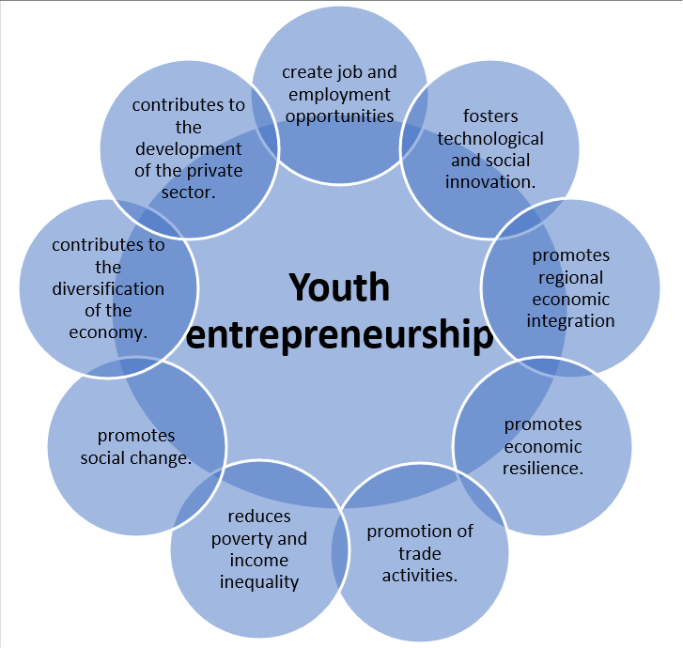 Figure 1
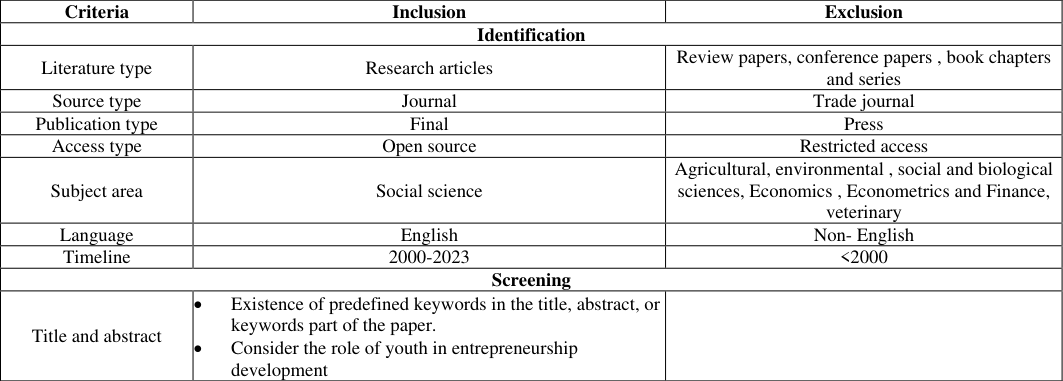 Table 1
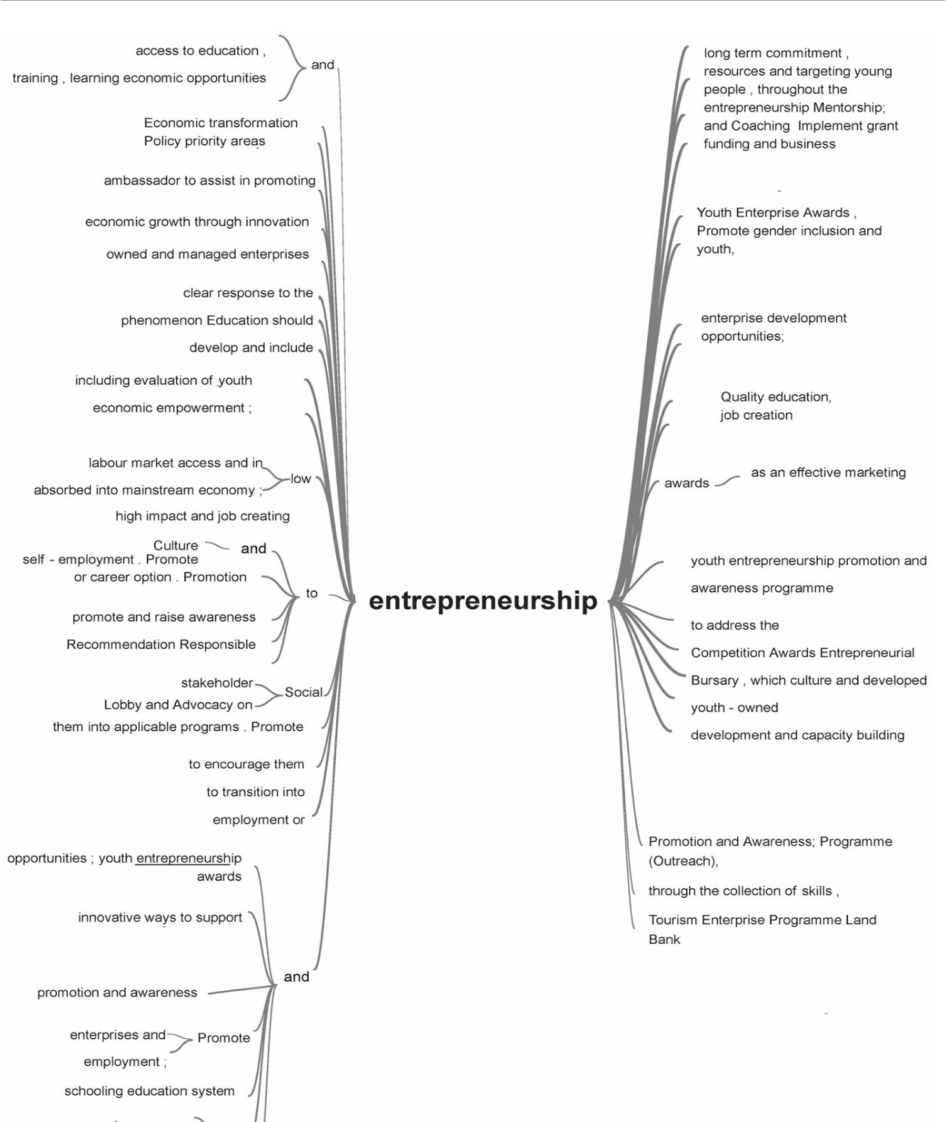 Figure 2
Introduction
The Global Organization for a youngster, according to youngster Agenda (UNYA) (2004) [85] , is an individual in the 15-24 age range. The youth is seen by the psychologist as an individual in for whom time, energy, and potential exist have not been used to their full potential. Young people are those individuals with fervor, ecstasy, vitality, and instability in the natural world. Even though most young people play important roles in their communities, some of them are dealing with a number of issues (UNYA, 2004) [85] . The issues that young people face pose significant difficulties to societies not only now but also for years to come. Seventy-six million young people worldwide are unemployed, accounting for more than 40% of all unemployment, according to the United Nations Youth Empowerment Strategy. The development of youth entrepreneurship is a hot topic in today's globe. The old, stable labour markets are contracting while the global population is increasing. Almost 40% of the world's population is under the age of 20, and over 1 billion individuals are between the ages of 15 and 24. According to ILO estimates, young men and women make up 47% of the world's unemployed, and 660 million of them will either be employed or seeking for employment in 2015. India currently has the world's highest youth population, and it is expected to grow much more during the next ten years. In India, people under the age of 35 make up 70% of the population. It is necessary to involve this group of young people in India's mainstream growth. Based on preliminary data from the 2011 census, there are around 550 million youths in the nation, including teenagers. India is now the youngest country in the world, with a demographic dividend seeming to be a reality because to this incredible increase in the number of young people. Using this demographic dividend and directing young people's creative energies toward nation-building are crucial, it is true. There is, however, consensus that entrepreneurship is positively linked to economic growth. By introducing new ideas, new processes, new products, services and new business opportunities, entrepreneurs affect and ultimately renew the economic activities of their families, communities, countries and the region in which they are situated. Youth development and empowerment are vital stages in life for building the human capital that allows young people to avoid poverty and lead better, and possibly have a more fulfilling life. The human capital formed in youth is thus an important determinant of long term growth that a nation can invest on. Hence, making sure that youths are well prepared for their future is enormously important to the course of poverty reduction and growth. For young individuals, entrepreneurship can be a significant source of opportunities. Additionally, it employs a multifaceted strategy, combating youth unemployment through two distinct channels: On the one hand, it generates jobs for young people who work for themselves and for www.extensionjournal.com other young people who work for young business owners (Dalglish, 2016) [86] However, it also equips young people with the entrepreneurial mindset and abilities needed to deal with the widespread trend away from "jobs for life" and toward "portfolio careers." As a result, it increases young people's overall employability for both the labour markets of now and tomorrow. Entrepreneurship is becoming recognized as a valuable alternative and vital means of generating income for young people, especially when considered in the context of possible initiatives and policies to support youth employment and job creation. In wealthy nations, entrepreneurship and self-employment can lead to the creation of new jobs and economic vibrancy; in developing nations, they can enhance young livelihoods and financial independence. Entrepreneurship is a bottom-up strategy that helps young people in the informal sector become self-sufficient, earn a living, and take care of themselves. In any society, youth entrepreneurship has been shown to be a major force behind economic growth). By stimulating competition, generating employment opportunities, innovation, and financial stability, entrepreneurship is essential to changing economic progress. It is a widely held belief that India boasts a remarkable pool of talent with practically infinite opportunities for entrepreneurs. As a result, it's critical to commit to establishing the ideal setting for the growth of successful entrepreneurs. India has to prioritize fostering an entrepreneurial culture throughout the nation in order to accomplish this.
Statement of Problem
India's youth unemployment rate is three to four times higher than the unemployment rate of adults in their core age in Germany. In the present situation; unemployment and migration are the prime problems of the rural youth in any country. Due to inability of finding decent employment, youth find employment in the informal sector, with poor working conditions and pay. Instead of being self employed in agriculture and allied activities, they are now turning to be "job seekers". Despite the potential benefits of youth entrepreneurship, young entrepreneurs often face numerous challenges in starting and growing their business. These challenges may include limited to access to finance, lack of business skills and experience, and inadequate support networks. Additionally, young entrepreneurs may struggle to navigate complex regulatory environments and face discrimination.
Research Question How does entrepreneurship development impact the economic empowerment of rural youth? What are the strategies to support youth entrepreneurship? How to empower youth in sustainable development?
Methodology
Methodology
Literature search Strategy
The preferred Reporting Items for Systematic Reviews and Meta-Analysis (PRISMA) technique was used for systematic review. The search was performed in databases like Scopus, various combinations of algorithms related to youth in entrepreneurship development were considered and the outcome of interest was used as input to search for research papers. This review was prepared following guidelines from Petticrew and Roberts (2008) [87] . The www.extensionjournal.com approach comprises five steps: 1) Identifying the research question; 2) Identifying relevant studies; 3) Study selection; 4) Extracting and charting the data; and 5) Collating, summarizing, and reporting the results Algorithms included combinations of keywords from each of the following categories:
"Youth" AND "entrepreneurship development" "Role" AND " youth" AND "entrepreneurship development" "Youth" AND "entrepreneurship" "Entrepreneurship development" AND "rural youth" "Youth" AND "Empowerment" For the initial screening of the articles, inclusion and exclusion criteria were established (table 1).
| Criteria | Inclusion | Exclusion |
|---|---|---|
| Identification | ||
| Literature type | Research articles | Review papers, conference papers , book chapters and series |
| Source type | Journal | Trade journal |
| Publication type | Final | Press |
| Access type | Open source | Restricted access |
| Subject area | Social science | Agricultural, environmental , social and biological sciences, Economics , Econometrics and Finance, veterinary |
| Language | English | Non- English |
| Timeline | 2000-2023 | <2000 |
| Screening | ||
| Title and abstract | Existence of predefined keywords in the title, abstract, or keywords part of the paper. Consider the role of youth in entrepreneurship development |
Table text extracted from the original PDF; superscript letters are shown inline. The original table image is below.
View original table image
Strategies to Support Youth Entrepreneurship
In order to fully realize the potential of youth entrepreneurship as a development catalyst, certain policies and initiatives that tackle the particular difficulties that young entrepreneurs encounter must be put in place. The strategies used to encourage young entrepreneurship are: Cultural support for entrepreneurship is a key factor in obtaining external financing and driving entrepreneurial activities. Regulatory barriers, particularly entry regulations, can hinder the creation of new firms, with financial development playing a crucial role in aiding entrepreneurship. Improving the efficiency of financial business support institutions, particularly at the regional level, can enhance the competitiveness of the regional economy and stimulate economic activity. Youth entrepreneurship has the potential to transform the lives of young people and the world around them. By nurturing their entrepreneurial spirit wean empower the next generation of leaders and innovators to create better future for all. Youth entrepreneurship has emerged as a powerful tool, empowering young people to transform their creative and innovative ideas into impactful enterprises.
Empowering transformation through youth entrepreneurship Combatting poverty
By enabling young people to create their own economic opportunities, youth entrepreneurship is a potent tool for combating poverty. By launching businesses, young people not only break the cycle of poverty but also create jobs for others. This promotes inclusive economic development and income generation for all.
Reducing Unemployment
In many nations, high youth unemployment rates continue to be a serious problem. A different route for young people to enter the workforce is through youth entrepreneurship. By launching their own businesses, individuals shift from being job seekers to job creators, promoting economic growth and lowering unemployment rates.
Fostering Innovation
The surge of innovation in traditional industries, driven by youthful entrepreneurs, has significant potential to boost growth in other industries and the economy as a whole. The strategy and policy documents that are part of this evaluation have entrepreneurship as their primary focus. The main tool used by policy to encourage economic reform, encourage youth participation in the economy, and create jobs is entrepreneurship. Because of the focus on entrepreneurship, youth interested in starting their own businesses and entry-level enterprise development are the primary recipients of the support services offered through policy and regulation, awareness campaigns, and incentives, which aim to promote the creation of job opportunities for their peers. Furthermore, by placing too much focus on the financial side, other enabling aspects that are necessary to support young empowerment and engagement are overlooked.
Conclusion:
From Spark to Legacy: The Enduring Impact of Youth Entrepreneurship "Culture of a nation may be gauged by the way it trains its youth"~ McCarthy One instrument that can keep any country from sinking into a deep hole of extreme unemployment, extreme poverty, and stagnation is youth entrepreneurship. In order to encourage the entrepreneurial spirit in the next generation of society's youth, it is imperative that an "entrepreneurial revolution" to be started. It is critical to establish an atmosphere that supports youth entrepreneurship: one in which there is room for experimentation, innovation, and learning; one in which failure is acknowledged and success www.extensionjournal.com is celebrated; one in which start-up viability is unhindered; one in which young people are valued for their ideas; and one in which even established business owners consider it an honour to assist the younger generation. Youth entrepreneurship is not just a trend; it's a transformation. It's about empowering a generation to not just chase success, but to build a more sustainable, equitable, and innovative future. Generally speaking, the best way to describe the contribution of entrepreneurship to a nation's economic development is to say that "entrepreneurship is the cause and an economy is the result. "Achieving inclusive and sustainable economic growth that creates decent work for all requires a multi-pronged approach. Particular focus should be given to increasing opportunities for marginalized groups, women, youth, minorities, people with disabilities and those working in the informal economy. With the right policies and priorities, economic growth can translate into quality jobs, higher incomes and improved standards of living for people at all income levels and create more just, stable and inclusive societies. Thus, the secret to success in every country is to empower young in order to achieve sustainable growth.
Recommendations and policy implication
The findings imply that a variety of socioeconomic issues, such as youth-specific employment possibilities and programs, have an impact on the kinds of economic opportunities available to young people. In addition, the government's policies and initiatives have a limited scope, fail to include young in the design and execution of policies, lack entrepreneurship skills, provide subpar education, and offer little in the way of support for youth entrepreneurs.
Figures and tables from the paper
References
76 in the original paper- Bruton GD, Kitchen DJ Jr. Entrepreneurship as a solution to poverty. Journal of Business Venturing. 2013;28:683-689.
- Singer AE. Business strategy and poverty alleviation. Journal of Business Ethics. 2006;66:225-231.
- Adenutsi DE. Entrepreneurship, job creation, income empowerment and poverty reduction in low-income economies. Munich Personal RePEc Archive (MPRA). 2009;29569:1-21.
- Mitra J, Abubakar Y. Knowledge creation and human capital for development: The role of graduate entrepreneurship. Education+ Training. 2011;53:462479.
- Ali DAH, Ali AYS. Entrepreneurship development and poverty reduction: Empirical survey from Somalia. American International Journal of Social Science. 2013;2:108-113.
- Misango SB, Ongiti OK. Do women entrepreneurs play a role in reducing poverty? A case in Kenya. International Review of Management and Business Research. 2013;2:87-103.
- Rogerson CM. Local economic development and urban poverty alleviation: The experience of post-apartheid South Africa. Habitat International. 1999;23:511-534.
- Tridico P. Growth, inequality and poverty in emerging and transition economies. Transition Studies Review. 2010;16:979-1001.
- Bagheri A, Pihie ZAL. Entrepreneurial leadership learning: In search of missing links. Procedia -Social and Behavioral Sciences. 2010;7:470-479.
- Carland JH, Boulton WL. Differentiating entrepreneurs from small business owners: A conceptualization. Academy of Management Review. 1984;9:354-359.
- Akhuemonkhan I, Raimi L. Entrepreneurship education and employment stimulation in Nigeria. Journal of Studies in Social Sciences. 2013;3.
- Kabongo JD, Okpara JO. Entrepreneurship education in Sub-Saharan African universities. International Journal of Entrepreneurial Behavior & Research. 2010;16:296308.
- Cheng MY, Chan WS. The effectiveness of entrepreneurship education in Malaysia. Education+ Training. 2009;51:555-566.
- Mohd Shariff MN, Peou C. Moderating effect of government policy on entrepreneurship and growth performance of small-medium enterprises in Cambodia. International Journal of Business and Management Science. 2010;3:57.
- Abdullah MA. The accessibility of the governmentsponsored support programmes for small and mediumsized enterprises in Penang. Cities. 1999;16:83-92.
- Nichter S, Goldmark L. Small firm growth in www.extensionjournal.com developing countries. World Development. 2009;37:1453-1464.
- Santos FM. A positive theory of social entrepreneurship. Journal of Business Ethics. 2012;111:335-351.
- Kirby DA, Ibrahim N. The case for (Social) entrepreneurship education in Egyptian universities. Education+ Training. 2011;53:403-415.
- Jiao H. A conceptual model for social entrepreneurship directed toward social impact on society. Social Enterprise Journal. 2011;7:130-149.
- Seelos C, Mair J. Social entrepreneurship: Creating new business models to serve the poor. Business Horizons. 2005;48:241-246.
- De Vita G, Mari M. Women entrepreneurs in and from developing countries: Evidences from the literature. European Management Journal. 2013;32:451-460.
- Gawęł A. Female entrepreneurship in Poland. Poznań University of Economics Review. 2013;13:115-130.
- Singh G, Belwal R. Entrepreneurship and SMEs in Ethiopia: Evaluating the role, prospects and problems faced by women in this emergent sector. Gender in Management: An International Journal. 2008;23:120136.
- Goldsmith RE, Kerr JR. Entrepreneurship and adaptioninnovation theory. Technovation. 1991;11:373-382.
- Kanitkar A. Entrepreneurs and micro-enterprises in rural India. Economic and Political Weekly. 1994;29:25-30.
- McMullan WE, Gillin LM. Developing technological start-up entrepreneurs: A case study of a graduate entrepreneurship programme at Swinburne University. Technovation. 1998;18:275-286.
- Kodithuwakku SS, Rosa P. The entrepreneurial process and economic success in a constrained environment. Journal of Business Venturing. 2002;17:431-465.
- Wang CK, Wong PK. Entrepreneurial interest of university students in Singapore. Technovation. 2004;24:163-172.
- Sriram V, Mersha T. Drivers of urban entrepreneurship: An integrative model. International Journal of Entrepreneurial Behavior & Research. 2007;13:235251.
- Tambunan T. SME development, economic growth, and government intervention in a developing country: The Indonesian story. Journal of International Entrepreneurship. 2008;6:147-167.
- Robson PJ, Haugh HM. Entrepreneurship and innovation in Ghana: Enterprising Africa. Small Business Economics. 2009;32:331-350.
- Mensah SA, Benedict E. Entrepreneurship training and poverty alleviation: Empowering the poor in the Eastern Free State of South Africa. African Journal of Economic and Management Studies. 2010;1:138-163.
- Kobia M, Sikalieh D. Towards a search for the meaning of entrepreneurship. Journal of European Industrial Training. 2010;34:110-127.
- Jones C, Matlay H. Understanding the heterogeneity of entrepreneurship education: Going beyond Gartner. Education+ Training. 2011;53:692-703.
- Mohamed Z, Rezai G. The effectiveness of entrepreneurship extension education among the FOA members in Malaysia. Current Research Journal of Social Sciences. 2011;3:17-21.
- Okpara JO. Factors constraining the growth and survival of SMEs in Nigeria: Implications for poverty alleviation. Management Research Review. 2011;34:156-171.
- Nasution HN, Mavondo FT. Entrepreneurship: Its relationship with market orientation and learning orientation and as antecedents to innovation and customer value. Industrial Marketing Management. 2011;40:336-345.
- Mshenga PM, Richardson RB. Micro and small enterprise participation in tourism in coastal Kenya. Small Business Economics. 2012;43:1-15.
- Ogundele O, Akingbade WA. Entrepreneurship training and education as strategic tools for poverty alleviation in Nigeria. American International Journal of Contemporary Research. 2012;2:148-156.
- Dash M, Kaur K. Youth entrepreneurship as a way of boosting Indian economic competitiveness: A study of Orissa. International Review of Management and Marketing. 2012;2(1):10-21.
- Tende SBA. Government initiatives toward entrepreneurship development in Nigeria. Global Journal of Business Research. 2013;8:109-120.
- Adofu I, Akoji O. Alleviating poverty through the use of entrepreneurship skill acquisition in Kogi State, Nigeria. International Open Journal of Economics. 2013;1:14-23.
- Ndedi AA. Challenges and perspectives facing the development of entrepreneurship education and training in South Africa. World Journal of Entrepreneurship, Management and Sustainable Development. 2013;9:126-132.
- Chen SC, Elston JA. Entrepreneurial motives and characteristics: An analysis of small restaurant owners. International Journal of Hospitality Management. 2013;35:294-305.
- Al-Dajani H, Marlow S. Empowerment and entrepreneurship: A theoretical framework. International Journal of Entrepreneurial Behaviour & Research. 2013;19:4-4.
- Chang WJ, Wyszomirski M. What is arts entrepreneurship? Tracking the development of its definition in scholarly journals. Journal of Entrepreneurship in the Arts. 2015;4(2):11-31.
- Dileep N, Bhavani. Entrepreneurship problems and its remedies for rural villages in India. Restaurant Business. 2019;118(3):202-210.
- Brouwer MT. Weber, Schumpeter and Knight on entrepreneurship and economic development. Journal of Evolutionary Economics. 2002;12:83-105.
- Dhaliwal A. Role of entrepreneurship in economic development. International Journal of Scientific Research and Management. 2016;4(6):4262-4269.
- UNDP. UNDP Youth Strategy 2014-2017: Empowered youth, sustainable future. USA: UNDP; c2014.
- Van Stel A, Carree M, Thurik R. The effect of entrepreneurial activity on national economic growth. Small Business Economics. 2005;24(3):311-321.
- Welsh JA, White JF. A small business is not a little big business. Harvard Business Review. 1981;59(4):18-32.
- Potabatti PS, Boob ND. Youth entrepreneurship: Opportunities and challenges in India. IOSR Journal of Research & Method in Education. 2015;5(2):55-59.
- Christens BD, Peterson NA. The role of empowerment in youth development: A study of sociopolitical control as mediator of ecological systems' influence on developmental outcomes. Journal of Youth and Adolescence. 2011;41:623-635.
- Graham L, Mlatsheni C. Youth unemployment in South Africa: Understanding the challenge and working on solutions. South African Child Gauge. 2015;2:51-59.
- Commonwealth Youth Development. 2019;16:1-19.
- Yu D. Youth unemployment in South Africa since 2000 revisited. Documentos de Trabajo Económico. 2013;4:13.
- Burnett S. Unemployed youth: 'Time bombs' or engines for growth? African Security Review. 2014;23:196-205.
- Dladla LG. Persistent youth unemployment: The role of public employment programme and green jobs -A case of the Western Cape Province, South Africa. African Journal of Governance and Development. 2020;9:47292.
- Hope KR. Engaging the youth in Kenya: Empowerment, education, and employment. International Journal of Adolescence and Youth. 2012;17:221-236.
- Jennings LB, Mph DMP-M, Hilfinger-Messias DK, MA KM. Toward a critical social theory of youth empowerment. Journal of Community Practice. 2006;14:31-55.
- Martínez X, Jiménez-Morales M, Masó PS, Bernet JT. Exploring the conceptualization and research of empowerment in the field of youth. International Journal of Adolescence and Youth. 2016;22:405-418.
- Dolislager M, Reardon T, Arslan A, Fox L, LiverpoolTasie S, Sauer C, et al. Youth and adult agrifood system employment in developing regions: Rural (periurban to hinterland) vs. urban. Journal of Development Studies. 2020;57:571-593.
- Leshilo A, Lethoko M. The contribution of youth in local economic development and entrepreneurship in Polokwane Municipality, Limpopo Province. Skills Work Theory and Practice Journal. 2017;8:45-58.
- Zizzamia R. Is employment a panacea for poverty? A mixed-methods investigation of employment decisions in South Africa. World Development. 2020;130:104938.
- Oyedemi TD, Choung M. Digital inequality and youth unemployment. Communication. 2020;46:68-86.
- Kyei KA, Gyekye KB. Determinants of unemployment in Limpopo province in South Africa: Exploratory studies. Journal of Emerging Trends in Economics and Management Sciences. 2011;2:54-61.
- Graham L, Mlatsheni C. Youth unemployment in South Africa: Understanding the challenge and working on solutions. South African Child Gauge. 2015;2:51-59.
- Commonwealth Youth Development. 2019;16:1-19.
- Yu D. Youth unemployment in South Africa since 2000 revisited. Documentos de Trabajo Económico. 2013;4:13.
- Audretsch DB, Kuratko DF, Link AN. Making sense of the elusive paradigm of entrepreneurship. Small Business Economics. 2015;45:703-712. Available from: https://doi.org/10.1007/s11187-015-9663-z.
- Akintayo DI, Adiat KO. Human resource development for sustainable development: Perspective for youth empowerment in Nigeria. International Journal of Advances in Management and Economics. 2013;2(5):17-21. Available from: www.managementjournal.info.
- Korimapa AK. Youth empowerment: Panacea for peace, development. Paper presented at the Ajasin Foundation Colloquium, Lagos; November 24, 2010.
- Odu BK, Ayodele CJ, Adedayo JO. Empowering the youths for sustainable national development through vocational education in South West Nigeria. International Journal of Educational Research and Development. 2014;3(1).
- United Nations Youth Agenda (UNYA). Empowering for Development and Peace; 2004.
- Dalglish C, Leslie A. A question of what matters: landscape characterisation as a process of situated, problem-orientated public discourse. Landscape Research. 2016 Feb 17;41(2):212-226.
Cited by 3
From OpenAlex, OpenCitations and reference lists read by Scinovex
- Unveiling the Dynamics of Youth Participation in Community Development: Exploring Socioeconomic Determinants of Youth Participation in Community Development in Hadiya Zone, Central Ethiopia Region ↗
Gizachew B. Jekamo, R. Dayananadan, Tofik Musema Nuri · Child & Youth Services · 2025
This study examines youth participation in community development in Central Ethiopia, focusing on economic, social, and political spheres. Data from 593 youth (aged 15 to 29) reveal low overall participation, particularly in economic and political areas, with gender differences: males are more active in economic and political domains, while females’ engagement more in social activities. Key influencing factors include gender,…
❝ 3 - Critical Barriers to Youth Entrepreneurial Growth in Portugal: A Situational Analysis ↗
Mohammad Abu Hanife, Stefano Bresciani · Palgrave studies in cross-disciplinary business research, in association with EuroMed Academy of Business · 2026
❝ 0 - Impact of Digital Entrepreneurship for Youth Economic Independence in Industrial 4.0 ↗
Ugbaga Nkole Ifeanyi, Paul Darlington I. Ndubuisi · International Multidisciplinary Information Technology and Engineering Conference (IMITEC) · 2025
The Growing prevalence of digital entrepreneurship presents a valuable opportunity to combat youth unemployment and foster financial independence. In Nigeria, the youth unemployment rate is increasing daily; this has necessitated an increase in crime and insecurity in the whole country. This study investigates the relationship between digital entrepreneurship and access to funding, training, and education, supportive networks, government policies, and…
❝ 0