
Research article · 2024 · Full text
International Journal of Agriculture Extension and Social DevelopmentExploiting training needs of undergraduate students
Volume 7(8) · Pages 111–115 · DOI: 10.33545/26180723.2024.v7.i8b.881 ↗
Research areasHuman Resource Development and Performance EvaluationGender and Technology in EducationInnovations and Analysis in Business and Education
Abstract
Author-writtenThorough TNA (Training Needs Assessment) conducted by universities or institutions can address the challenges and professional deficiencies occurring at student level. Taking this into consideration, the present study was administered to systematically identify the training needs of final year undergraduate (UG) students of three different colleges of Pantnagar University. The colleges were selected purposively and 65 percent of total number of final year students registered in three colleges was considered as the sample i.e. n=155 for carrying out this study. The training needs were exploited using the structured questionnaires. The importance of training needs was measured by using 3-point Likert scale and prioritized by calculating Weighted Mean Score (WMS) of each item. Profile characteristics of students show that majority of them were from middle age group, residing in rural area and belonging to middle-class families. Most of them (27.09%) also have their source of income through fellowships or giving tuitions etc. With respect to communication characteristics, students had easy access to internet and high exposure towards Information and Communication Technologies sources such as smartphone (100%), laptop (55%), tablet (29.67%) and MAC book (8.38%). The preferred learning style of students was also studied which revealed visual-haptic style of learning (53%) followed by visual- intellectual learning (49%). Most importantly, study revealed that majority (82.58%) had received various trainings via online and offline modes which shows their curiosity and motivation to grasp new knowledge and skills. The most important training areas exploited included Digi-apps for designing and development of content, trading and networking, cyber security, AI tools for career enhancement, entrepreneurial skills, advanced and digital agriculture and many others.
Summary
Source-checkedPlain-language reading of the full paper, prepared with AI and checked against the text. Each point links to the authors' own words.
Why it matters
- India's economic growth relies on its youth, but evolving technologies and shifting job requirements make the modern workplace more challenging for them. View evidence ↗
- Existing research suggests a mismatch between academic education and market needs due to weak university-industry links and a lack of focus on practical and entrepreneurial skills. View evidence ↗
The question
- The primary objective of this study was to explore the specific training needs of undergraduate students at Pantnagar Agriculture University. View evidence ↗
What they did
- The descriptive research was conducted across three colleges at Govind Ballabh Pant University of Agriculture & Technology: the College of Agriculture, College of Community Science, and College of Fisheries. View evidence ↗
- Training needs were measured using a 3-point Likert scale and prioritized by calculating the Weighted Mean Score (WMS) for each item. View evidence ↗
What they found
- The majority of the surveyed students (74.84%) resided in rural areas. View evidence ↗
- All students (100%) owned a smartphone, while 55% owned a laptop, 29.67% owned a tablet, and 8.38% owned a Mac Book. View evidence ↗
- The most preferred learning style among students was visual-haptic (53%), followed by visual-intellectual (49%). View evidence ↗
- A large majority of students (82.58%) had previously attended training programs or workshops. View evidence ↗
- The least important training needs identified were financial management (WMS 33.5), time management (WMS 34.5), resume building (WMS 39), and livestock management (WMS 40). View evidence ↗
What it means
- The authors conclude that identifying skill gaps is an ongoing process and recommend that educators regularly address these needs to empower students and build their confidence. View evidence ↗
Visual summary
3 visualsIllustrations explain the paper; charts are replotted from the paper's own table values.

Hierarchy of Training Needs
AI-generated conceptual illustration (undergraduate students). It explains the idea and does not show study data.
View source evidence ↗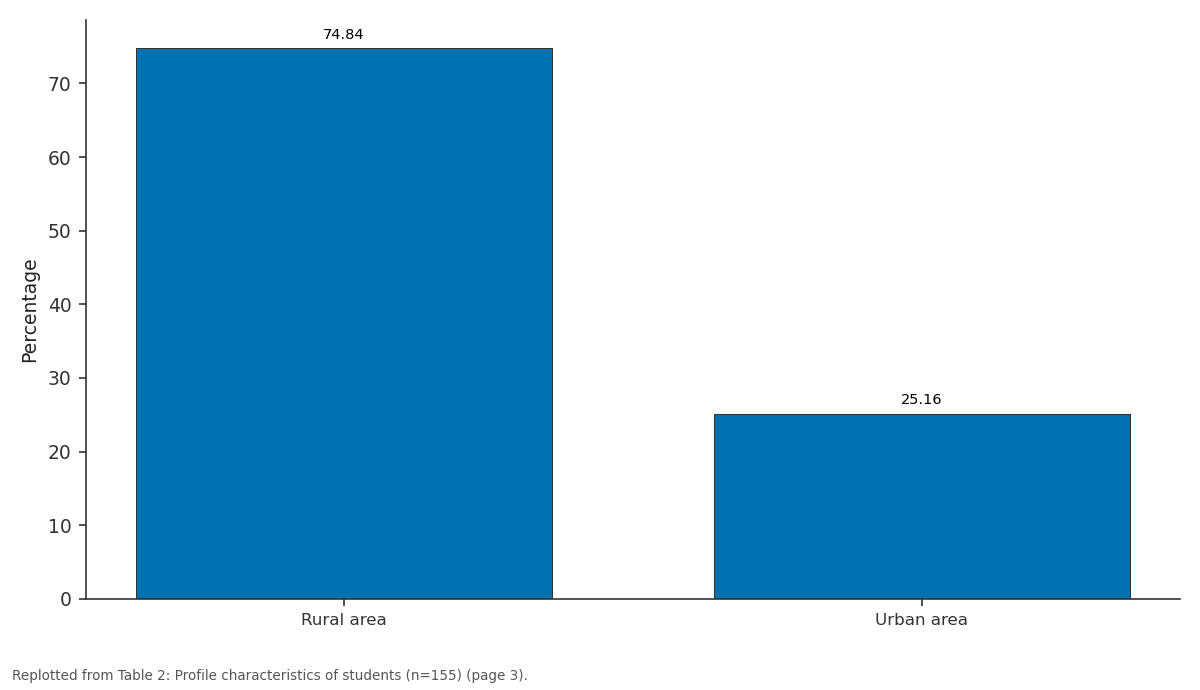
Percentage: Rural area vs Urban area
Replotted from Table 2 (page 3) of the original paper. Every bar is the paper's own table value.
View source evidence ↗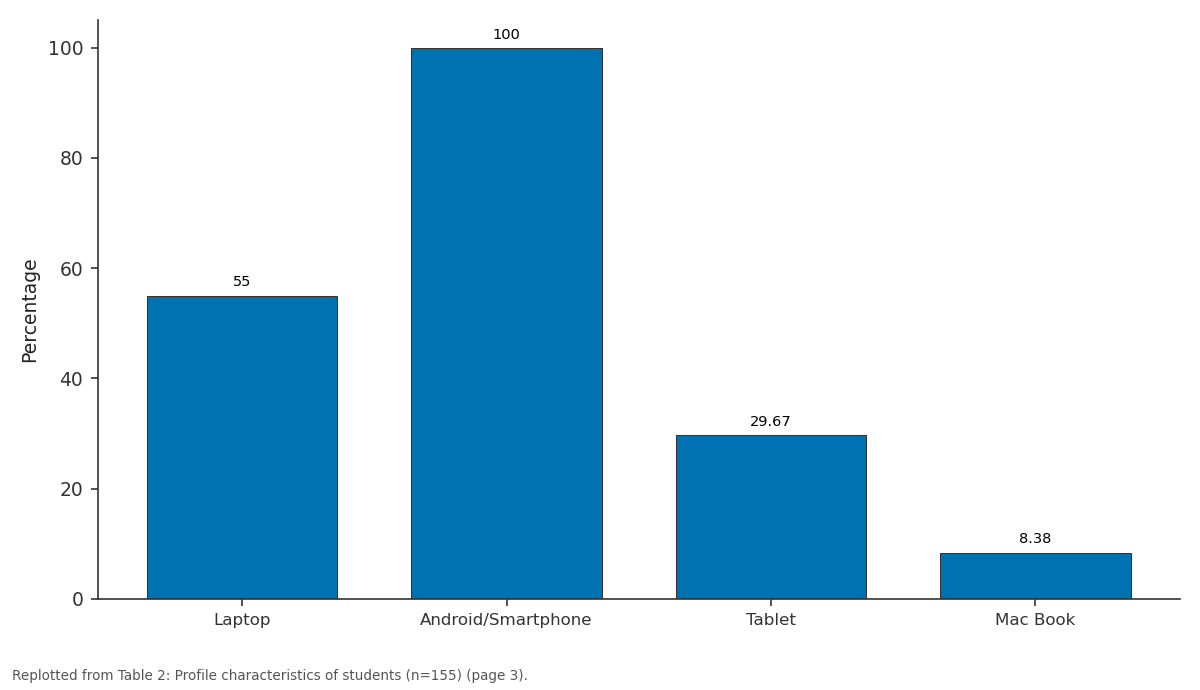
Percentage: Laptop vs Android/Smartphone vs Tablet vs Mac Book
Replotted from Table 2 (page 3) of the original paper. Every bar is the paper's own table value.
View source evidence ↗Figures & tables
From the original paper Table 1
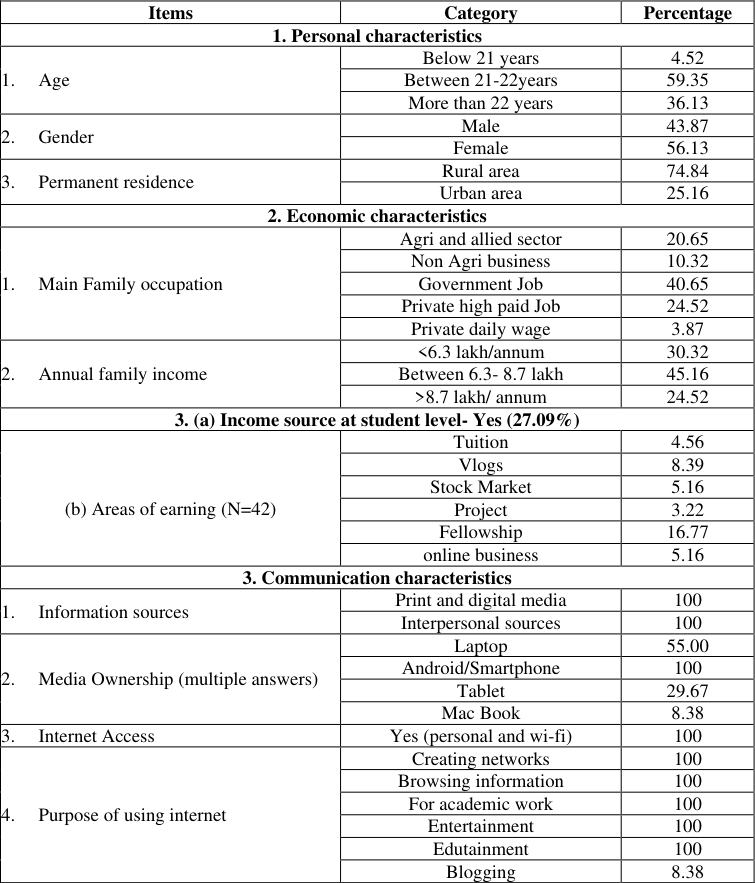 Table 2
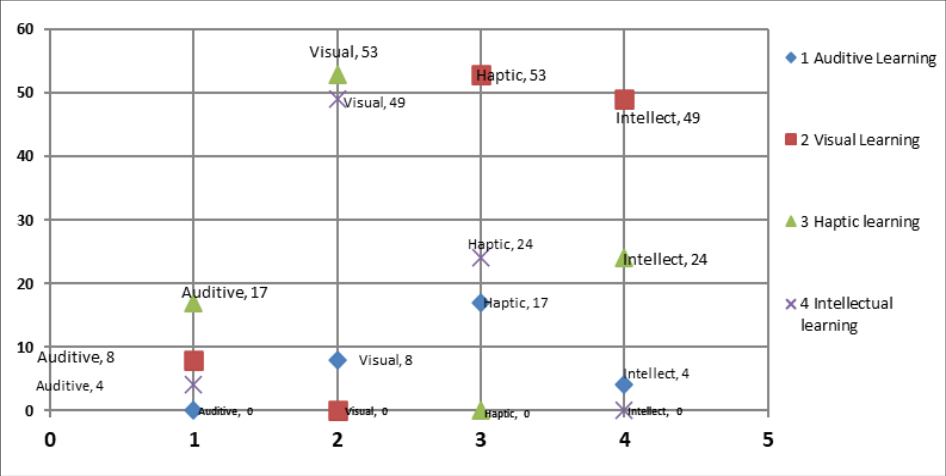 Figure 1
 Table 3
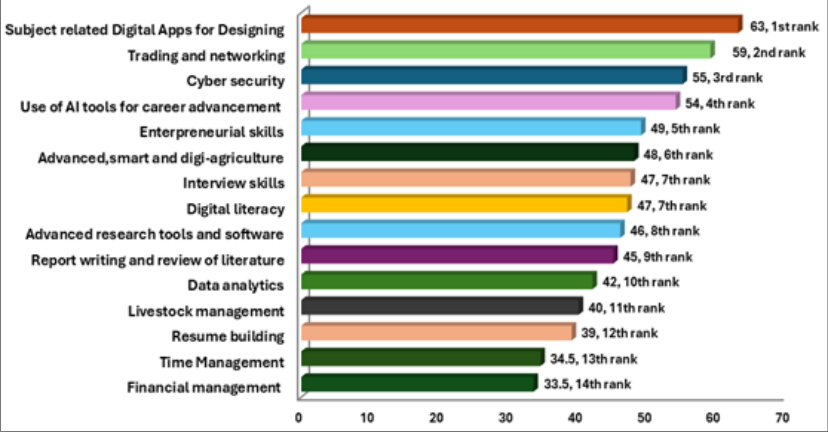 Figure 4
Introduction
India's economic growth highly depends on young generation but working in today's changing workplace is becoming more challenging for them, where new technologies are evolving and job requirements are shifting. Thus, realizing its significance, National Education Policy (NEP-2020) has put strong emphasis on generating skilled and job-ready graduates. It fosters the connections between academia and industries to identify the demands in respective fields and focuses on redesigning the course curricula. NEP recognizes the importance of skills that a graduate student must have like critical thinking, problemsolving, creativity, communication, and digital literacy. Further, India's Graduate Skill Index, 2023 has reported that it is very easy to finding the candidates with non-technical skills than with high job readiness technical skill candidates. The report also highlighted that only 45% of Indian graduates were employed, with the readiness to meet industry's fast-changing demands. Hence, in the present scenario the students need to be skilled and trained in different new emerging paradigms for a sustainable professional career. Previous studies also found the mismatch between academic education and market demands as they had reported a weak link between universities and industries, lack of attention over the practical and entrepreneurial needs of students and shortage of academic resources etc (Harper and Campbell (2023) [5] and Nazarzadeh, Zare and Parvin (2023) [7] . The college students perceive higher education as a means to fulfill their goals. They put a high value on knowledge gained and their professional development that they have experienced during their college days (Blankstein et al. 2019) [3] . Despite educating and providing degrees to graduates, educational institutions have to equip their students with soft abilities and technical abilities. Orientation to market, new technologies and entrepreneurship should be the part of their curriculum (Ed-Dafali, Al-Azad, Mohiuddin and Reza (2023) [4] . There is a plethora of options for students after intermediate but the key is to make right decision to determine their future goals. Various diploma courses and vocational courses are running in India and mass of students is moving towards the courses which will provide them employment immediately. Therefore, colleges and universities have to learn about the practices, strengths, weaknesses, preferences and needs of their students and consider them as the academic needs. In addition, with, teachers/ Professors have to provide equal opportunities, observe learning gaps and support them with www.extensionjournal.com timely feedback to ensure their holistic development (Sharma, 2023) [9] . Moreover, practical experiences, projects, industrial interactions/visits and a blend of technical know-how should be at the core of colleges' curriculum. There is a need of providing flexible learning, recognized certificates and help their students to explore diverse areas of expertise as universities have potential to transform unskilled youth into highly adaptable skilled youth (Bhushan, 2023) [2] . The study of Reddy et al. (2024) [8] also suggested that curriculum has to cover emerging trends, modern practices, advanced technologies, updated software and hardware etc. Meanwhile, faculties also need to conduct various programmes and activities to improve their technical skills, communication skills, problem solving skills and business skills because career development skills positively affect the students' perceived employability (Ho et al, 2023 and Abbas et al, 2024) [6,1] . Deprived of updated skills and knowledge, it could not be possible to create a harmonized educational system. Indian higher education system is perceived as the skill hub for the students because these institutions have potential to bridging the gaps between education and employability. Now, the paradigm of education needs to shift from theoretical to more practical oriented education by inculcating targeted skills and knowledge to make every student self-reliant. By considering its importance, present study was conceptualized with main objective to explore the areas of training needs of undergraduate students of Pantnagar Agriculture University.
Methodology:
This descriptive research was carried out in three colleges viz College of Agriculture (CoA), College of Community Science (CoCS) and College of Fisheries (CoF) of Govind Ballabh Pant University of Agriculture & Technology, Pantnagar, Uttarakhand. These colleges were selected purposively as the undergraduate degree program offered at these colleges are somewhat similar with each other.
Sampling: A simple random sampling method was used. The total numbers of students (N) registered in academic year 2023-2024 in UG program (B.Sc. Final year) in respective colleges were 239 (Table 1). For the true representation, more than fifty percent i.e. 65 percent of total population was taken as the sample of study with the sample size (n) of 155 students. Data Collection and statistics: Questionnaires were distributed among the students and an idea generating discussion was conducted during the data collection. Filled questionnaires were analyzed by using IBM SPSS software. The variable "training needs of students" was measured in 3-point Likert scale (Highly Important, Important and Least Important) thereafter responses were arranged in decreasing order by calculating their weighted mean score (WMS) and ranked them accordingly.
| — | CoA | CoCS | CoF | Total |
|---|---|---|---|---|
| B.Sc. Final Year students | 153 | 67 | 19 | N= 239 |
| 65% of students | 99 | 44 | 12 | n=155 |
Table text extracted from the original PDF; superscript letters are shown inline. The original table image is below.
View original table image
Results and Discussion A) Profile characteristics of respondents
The data set of table2 indicates that majority of students surveyed were under 21-22 years of age followed by more than 22 years age (36.13%) and were female (56.13%). As per majority of students (74.84%), their permanent place of living was located at rural region. The main occupation of their families were government jobs (40.65%), private highly paid jobs (24.52%), agriculture and allied activities (20.65%), non-agri-business (10.32) while only 3.87 percent were engaged in private less paid jobs. Most of students revealed their family's income between 6.3 to 8.7 lakh per annum (45.16%) followed by less than 6.3 lakh per annum (30.32%) whereas 24.52 percent had reported more than 8.7 lakh annual income. Moreover, nearly one fourth of total students (27.09%) were having sources of income such as fellowships (16.77%), indulged in vlogs making (8.39%), stock market and online business (5.16%) whereas few students (4.56%) were giving tuitions within the campus and 3.22 percent earning from the projects.
| Items | Category | Percentage |
|---|---|---|
| 1. Personal characteristics | ||
| 1. Age | Below 21 years | 4.52 |
| Between 21-22years | 59.35 | |
| More than 22 years | 36.13 | |
| 2. Gender | Male | 43.87 |
| Female | 56.13 | |
| 3. Permanent residence | Rural area | 74.84 |
| Urban area | 25.16 | |
| 2. Economic characteristics | ||
| 1. Main Family occupation | Agri and allied sector | 20.65 |
| Non Agri business | 10.32 | |
| Government Job | 40.65 | |
| Private high paid Job | 24.52 | |
| Private daily wage | 3.87 | |
| 2. Annual family income | <6.3 lakh/annum | 30.32 |
| Between 6.3- 8.7 lakh | 45.16 | |
| >8.7 lakh/ annum | 24.52 | |
| 3. (a) Income source at student level- Yes (27.09%) | ||
| (b) Areas of earning (N=42) | Tuition | 4.56 |
| Vlogs | 8.39 | |
| Stock Market | 5.16 | |
| Project | 3.22 | |
| Fellowship | 16.77 | |
| online business | 5.16 | |
| 3. Communication characteristics | ||
| 1. Information sources | Print and digital media | 100 |
| Interpersonal sources | 100 | |
| 2. Media Ownership (multiple answers) | Laptop | 55.00 |
| Android/Smartphone | 100 | |
| Tablet | 29.67 | |
| Mac Book | 8.38 | |
| 3. Internet Access | Yes (personal and wi-fi) | 100 |
| 4. Purpose of using internet | Creating networks | 100 |
| Browsing information | 100 | |
| For academic work | 100 | |
| Entertainment | 100 | |
| Edutainment | 100 | |
| Blogging | 8.38 |
Table text extracted from the original PDF; superscript letters are shown inline. The original table image is below.
View original table image
With respect to communication and information sources, they were seeking information from media as well as from interpersonal sources like friends, teachers etc. ICT devices such as Smartphone (100%), laptop (55%), tablet (29.67%) and Mac Book (8.38%) were owned by the students. These students were also having personal and wi-fi access of internet with uninterrupted speed for creating networks worldwide, getting updated, doing academic work, entertainment with educational work. Additionally, some students (8.38%) were using internet mostly for making content videos or blogs. Thus, it can be interpreted that final year undergraduate students are from the educated families with average income level. These students are very much exposed with the emerging demands and recent opportunities in technological era and are having zeal to improve the wealth at their own level. Having good accessibility and ownership of ICTs, students are increasingly involved in digital activities to enhance their knowledge, skills and links with the outside world. www.extensionjournal.com From the figure 1, the preferred learning style reported by majority of students (53%) was visual-haptic style of learning followed by visual-intellectual learning (49%), haptic-intellectual (24%), auditive-haptic (17%), auditivevisual (8%) and auditive-intellectual (4%). Hence, the data values indicate that students can learn better by doing things and seeing their results. In addition, most of students learn through their intellect, feeling and listening. Thus, it can be said that these students are more action and result oriented learners.
B) Identifying training needs among students
Information about the prior trainings or workshops attended by the respondents provides a more comprehensive understanding for the future trainings. In the present study, data set of Table 3, indicates that a large proportion of students (82.58%) had attended trainings/workshops. Among them, more than fifty percent received from their own university, 28.12 percent from other institutions whereas some students had received from both (own as well as other institutions). The data is also reflecting that majority of them (65.62%) attended training programmes via online platforms (Microsoft teams, Google meet and ZOOM etc) as well as through offline mode.
During discussion with the students, it was discovered that most of training programs, seminars, conferences and workshops were organized in online mode or hybrid mode during and after the COVID period. Thus, it can be said online platforms are becoming more popular by offering a compelling solution for education and training, providing flexibility, effectiveness, wider reach, and improving engagement of learners.
Assessment of training needs as perceived by students-
To succeed in the more rapidly changing world, assessing college students' skill gaps and knowledge gaps are crucial as they are the main drivers of growth and development.
Conclusion
The present study highlights that the students were technologically equipped and engaged in income generating activities by their own. They were showcasing their skills and knowledge by using internet for multipurpose. It can also be inferred that students are more competent, enthusiastic and practical because they are accommodators and have abstract conceptualization. The data is also indicating that they had intrinsic motivation to learn new skills, gain knowledge and create networks as most of them had attended trainings, workshops etc. previously. Thus, the present study proactively identified the knowledge gaps and application gaps which were perceived by the undergraduate students. Identifying these gaps is not one-time event therefore it is suggested that educators have to recognize and address the needs on regular basis to empower and equip their graduate students and build confidence in their abilities.
Figures and tables from the paper
References
8 in the original paper- Abbas J, Kumari K, Al-Rahmi WM. Quality management system in higher education institutions and its impact on students' employability with the mediating effect of industry-academia collaboration. Journal of Economic and Administrative Sciences. 2024;40(2):325-343. Available from: https://doi.org/10.1108/JEAS-07-2021-0135.
- Ed-Dafali S, Al-Azad MS, Mohiuddin M, Reza MNH. Strategic orientations, organizational ambidexterity, and sustainable competitive advantage: Mediating role of industry 4.0 readiness in emerging markets. Journal of Cleaner Production. 2023;401:136765. Available from: https://doi.org/10.1016/j.jclepro.2023.136765.
- Harper P, Campbell L. Addressing the awarding gap, fostering belonging: Developing enhanced academic skills support for our Birmingham Scholars. Journal of Learning Development in Higher Education. 2023;(29).
- Ho TTH, Le VH, Nguyen DT. Effects of career development learning on students' perceived employability: A longitudinal study. Higher Education. 2023;86:297-315. Available from: https://doi.org/10.1007/s10734-02200933-6.
- Nazarzadeh Z, Zare M, Parvin E. The reasons for the gap between academic education and the required skills of the labor market in Iran. Journal of Applied Research in Higher Education. 2024;16(3):831-42.
- Reddy SD, Kumar N, Patra KR. A study on identifying and addressing the gaps in academia and industry demands with reference to selective higher education institutions in Telangana State. Journal of Electrical Systems. 2024;20(2):2704-15.
- Sharma K. Assessment and quality education in India. [Internet]. 2023. Available from: https://mgiep.unesco.org/article/assessment-andquality-education-in-india.
- Basu S. Just 45% of India's graduate jobseekers meet industry needs: Study. The Economic Times: Career. [Internet]. 2023. Available from: https://economictimes.indiatimes.com/jobs/fresher/just45-of-indias-graduate-jobseekers-meet-industry-needsstudy/articleshow/102289251.cms?utm_source=content ofinterest&utm_medium=text&utm_campaign=cppst.