
Research article · 2024 · Full text
International Journal of Geography Geology and EnvironmentComparative analysis of ground water in Jalore District in the year 2022 and 2023
Volume 6(1) · Pages 502–506 · DOI: 10.22271/27067483.2024.v6.i1f.280 ↗
Research areasWater resources management and optimization
Abstract
Author-writtenIn this paper seven ground water parameters for the villages of various tehsils of Jalore District has been studied and analyzed. An effort has been made to explore the various parameters of ground water i.e. Chloride, Fluoride, Total Hardness, Nitrate, pH and TDS. Ground water samples are collected in 2022 and 2023 from one town of each tehsil of Jalore district. In the next section of this paper analysis of experimental data has been discussed. In this section the experimental results are compared with previous data collected from National Rural Drinking Water Programme. Analysis of data shows that the water parameters are too far from the permissible limit. This paper concludes that Fluoride, Nitrate and TDS are surpassing as far as possible from the permissible limit. After analyzing the data it has been found that the ground water of study area is not suitable for domestic purpose and even it is not good for irrigation also. And some water treatment is recommended to save the life of gentry of Jalore district. The study area is full of limestone, Granite, building stone, rock and desert. The present experiments will help in the improvement of drinking water quality.
Summary
Source-checkedPlain-language reading of the full paper, prepared with AI and checked against the text. Each point links to the authors' own words.
Why it matters
- Groundwater serves as the main source of drinking water for rural populations in India. View evidence ↗
- The state of Rajasthan faces significant challenges regarding the depletion of its groundwater resources. View evidence ↗
- In the rural Jalore district, agriculture is the primary occupation and relies heavily on rainwater because groundwater levels are low. View evidence ↗
The question
- The study aims to analyze seven groundwater parameters across various tehsils in the Jalore District. View evidence ↗
What they did
- Water samples were collected in 2022 and 2023 from one town within each tehsil of the Jalore district. View evidence ↗
- Chemical analysis of major cations, anions, pH, electrical conductivity, and total hardness was performed at an NABL accredited Regional Chemical Laboratory. View evidence ↗
What they found
- The depth of the groundwater level in Jalore district increased in 2023 compared to 2022. View evidence ↗
- Chloride levels in the district's groundwater ranged from 99 to 1633 ppm. View evidence ↗
- Fluoride concentrations in the groundwater ranged from 0.09 to 2.40 mg/lit. View evidence ↗
- Approximately 19.62% of the 210 groundwater samples analyzed exceeded the permissible fluoride limit of 1.5 mg/l. View evidence ↗
- Nitrate levels in the groundwater were found to range between 15 and 150 ppm. View evidence ↗
- Some areas of the district recorded nitrate values above 50 mg/l, rendering the water non-potable. View evidence ↗
- Calcium levels were generally safe, with only 4.73% of samples exceeding the permissible limit of 200 mg/l. View evidence ↗
- Total hardness in the groundwater ranged from 110 to 700 ppm. View evidence ↗
- The analysis indicates that the groundwater in the study area is unsuitable for both domestic use and irrigation. View evidence ↗
What it means
- The authors conclude that groundwater augmentation structures should be built in the Jalore district to improve recharge. View evidence ↗
- Water treatment is recommended to protect the health of the residents of the Jalore district. View evidence ↗
Visual summary
3 visualsIllustrations explain the paper; charts are replotted from the paper's own table values.
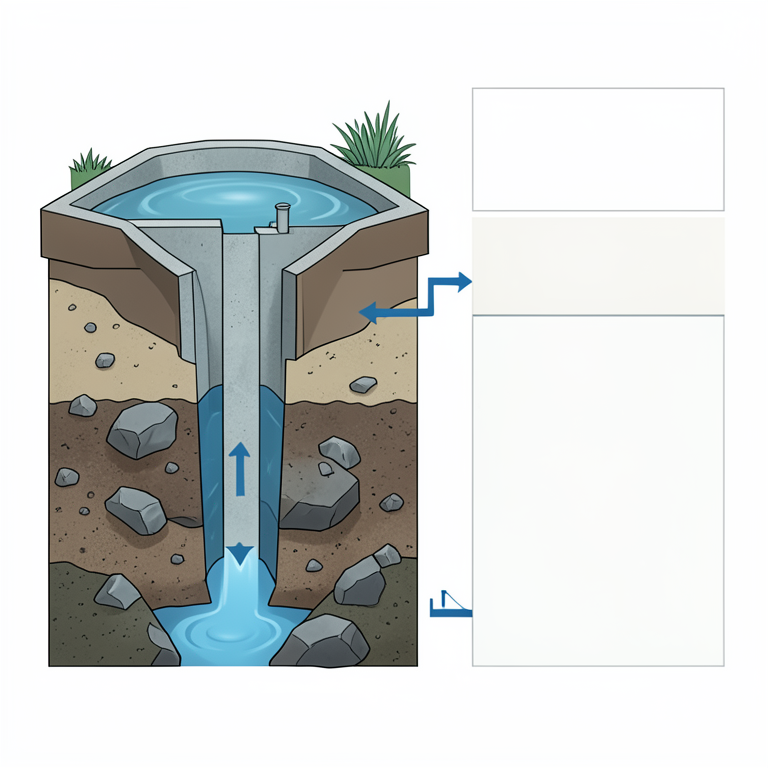
Groundwater Augmentation Concept
AI-generated conceptual illustration (rocky terrain with a groundwater recharge structure and an underground aquifer). It explains the idea and does not show study data.
View source evidence ↗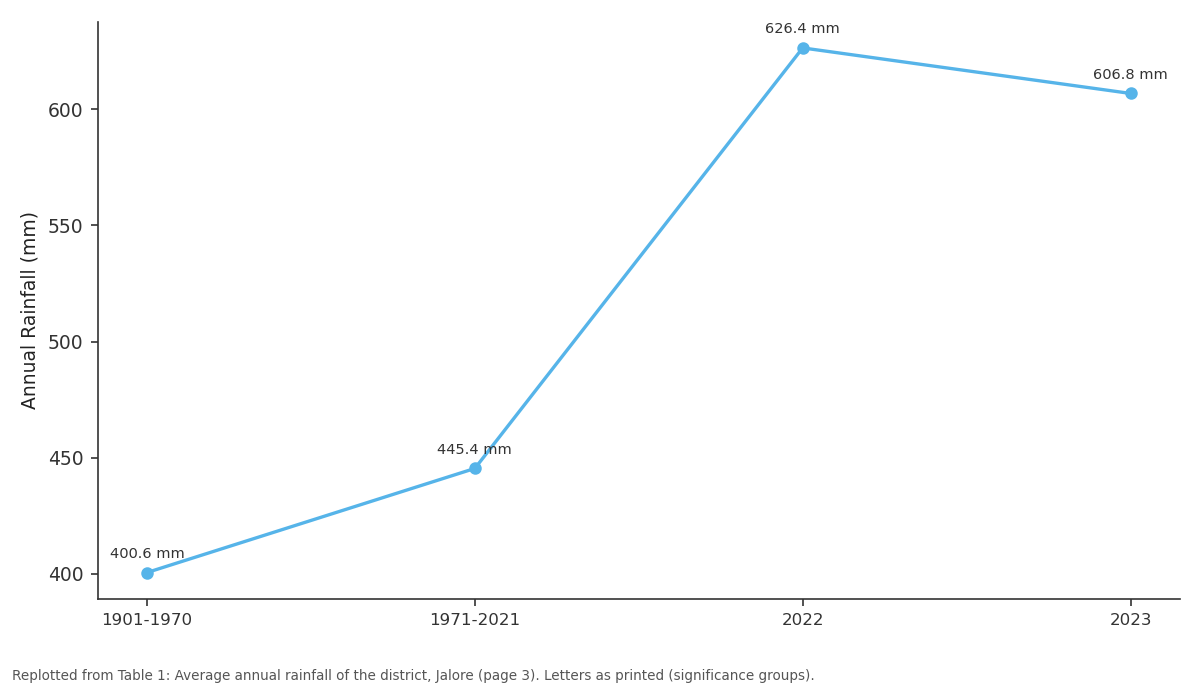
Annual Rainfall: 1901-1970 vs 1971-2021 vs 2022 vs 2023
Replotted from Table 1 (page 3) of the original paper. Every bar is the paper's own table value.
View source evidence ↗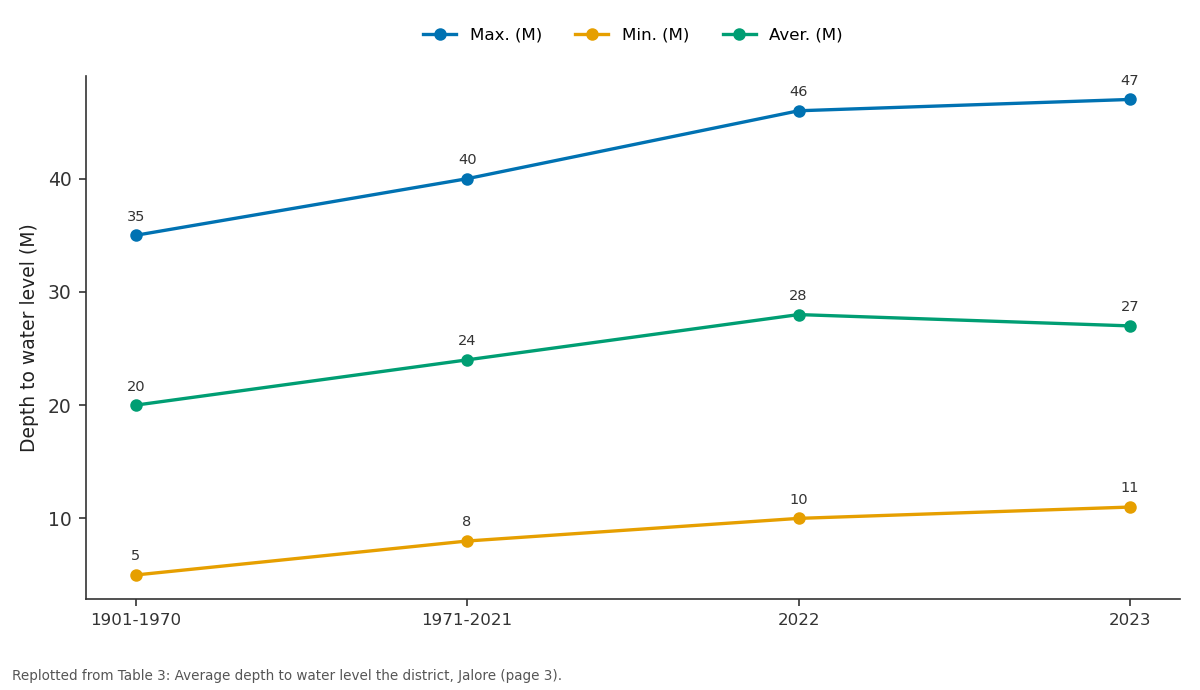
Max. (M) and Min. (M) and more: 1901-1970 vs 1971-2021 vs 2022 vs 2023
Replotted from Table 3 (page 3) of the original paper. Every bar is the paper's own table value.
View source evidence ↗Figures & tables
From the original paper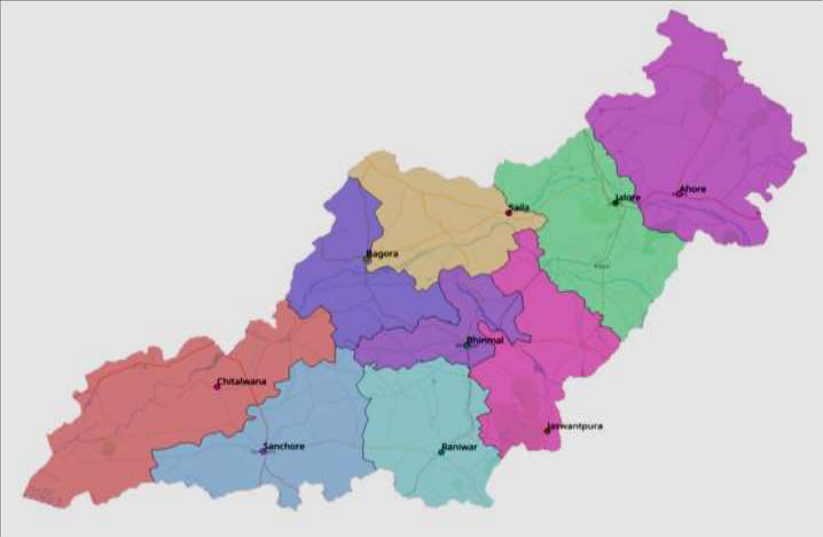 Figure 1
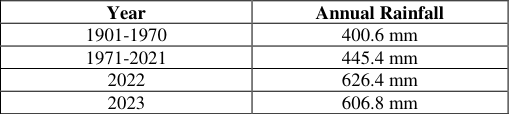 Table 1
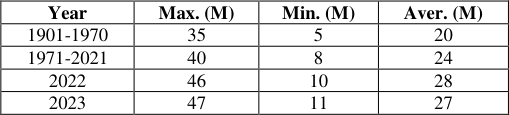 Table 3
 Table 2
 Table 4
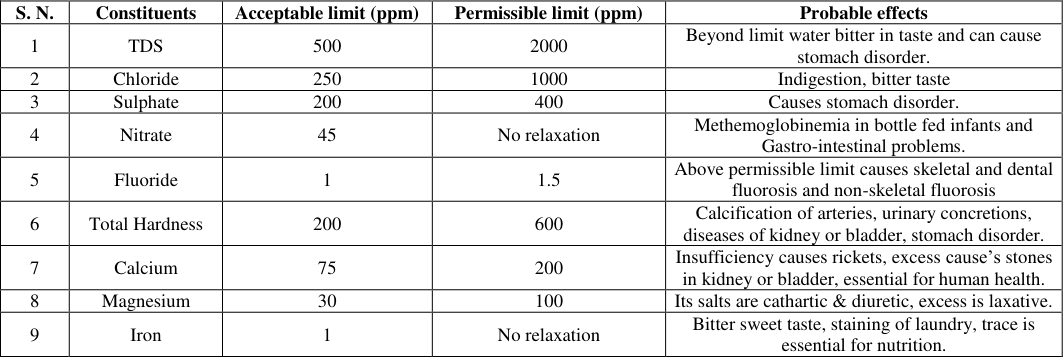 Table 5
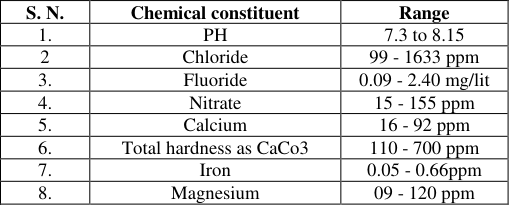 Table 6
Introduction
Jalore district, located in the south-west of Rajasthan state, has a geographical area of 10,640 square kilometers. The distract derives its name from the Town of Jalore, which is the Headquarters of the district administration. The district is part of Jodhpur Division. The district is composed of Nine Tehsils -Ahore, Jalore, Bhinmal, Raniwara, Sayala, Bagoda, Jaswantpura, Sanchore and Chitalwana. Total number of Villages in the district is 850 and its also Four Urban Towns. Total population of the district as per census 2011 is 1828730 with Male and Female population of 936634 and 892096 respectively. Jalore city is known as the Granite City. The area of Jalore district is a mixture of Hills, Deserts and Plains, which is dependent on Rainwater for Water. Some areas of Jalore district are irrigated by the Narmada Canal project and some areas are irrigated by Wells and Tube wells. Jalore district is a rural district, so most of the Occupation here is agriculture work which is dependent on rain water due to low Ground water level. In Jalore district, the Ground water level has decreased in the year 2022-23 as compared to the year 2021-22. Groundwater is water located beneath the earth's surface in the pores of soil and rocks and in the joints and cracks of rock formations. Groundwater is the primary source of potable water supply in rural India. Deforestation and the resulting soil erosion hinder the recharge of groundwater, hence the groundwater level is declining almost all over India. The state of Rajasthan also has a serious problem of groundwater depletion. Hundreds of groundwater augmentation structures have been constructed in the last several years in Jalore district of Rajasthan by the state watershed department and other agencies. It is necessary to analyze the importance of water augmentation structures in relation to the change in groundwater level of different villages of Jalore district to understand how the groundwater level is falling due to increasing population, irregular water exploitation and excessive cutting of trees and how it can be prevented. has been recorded in Sanchore and Chitalwana blocks. This change in the environment is mainly found in Jalore district due to desertification. Due to increase in the number of trees in the district in the year 2023 as compared to the year 2022, a drop in temperature was recorded and there was also a change in rainfall.
Ground Water Scenario
Systematic and regular monitoring of ground water levels brings out the changes taking place in the groundwater regime. The maps so generated are of immense help for regional groundwater flow modelling which serves as a groundwater management tool to provide the necessary advance information to the user agencies to prepare contingency plans in case of unfavourable groundwater recharge situation. The data also has immense utility in deciding the legal issues arising out of conflicting interests of groundwater users. Water level data of the NHS collected during the year 2022 and 2023 has been utilized to prepare various maps showing depth to water level and fluctuation of water level. Depth to water level maps is useful in dealing with problems of water logging and artificial recharge, where the relative position of water level with reference to the ground surface is of critical importance.
Water level fluctuation maps (rise or fall) are indispensable for estimation of change in storage in the aquifer.
Depth to Water Level
The depth of water Chemical analysis was carried out for major cations (Ca, Mg, Na, K) and anions (CO3 -2 , HCO3 -, Cl -, SO4 -2 , NO3 -, F -) in addition to pH, EC, PO4 -3 , TH as CaCO3 and were chemically analyzed in Regional Chemical Laboratory (NABL Accrediated).
Fluoride (F -)
In Jalore district, Fluoride (F -) content was recorded ranging from 0.09 to 2.40 mg/lit, which was found to be varying at different places. Fluoride is as inherent component of igneous rocks. The main sources of fluoride in natural water are Fluorite (CaF2), Cryolite (Na2AlF2), Fluorapatite. In minerals like mica, amphiboles and topaz etc, the fluoride ions are bound on the mineral surfaces. Food in the diet is the major source of fluoride. Tea contains high fluoride concentration. Fluoride reduces dental carries, very high concentration may cause crippling skeletal fluorosis in human body. Less than 1.0 mg/l is essential. Fluoride (F) values higher than the BIS permissible limit (>1.5 mg/l) for drinking water, have been observed in central areas and a few places lying in areas of the jalore district, thus, making the ground water non-potable.
Occurrence of high fluoride in the ground water is a great concern as 19.62% of 210 ground water samples contain fluoride value beyond Permissible limits i.e. 1.5 mg/l, whereas. The worst affected districts are Jalore (80.00%), and Minimum value of fluoride has been observed 0.01 mg/l in Rajsamand District.
Nitrate (NO3 -)
In Jalore district, Nitrate (NO3 -) content was recorded ranging from 15 to 150 PPM, which was found to be varying at different places. Sources of Nitrate are mineral deposits (sodium and potassium nitrates), soils, sea water and atmosphere. Nitrate is used as a fertilizer, as a food preservative and as an oxidizing agent in the chemical industries. Higher concentrations are expected where fertilizers are used, in decayed animals and vegetable matter, in leachates from sludge and refuge disposal and in industrial discharges. Higher concentration of nitrate causes methemoglobinemia disease in bottle fed infants (4 months old). In parts of the Jalore district high nitrate values (>50 mg/l) have been observed thus making the ground water non potable. Gastrointestinal disorders are also founds. It may also have adverse effect on central nervous and cardio vascular system. High nitrate concentrations have been observed in ground water at several places.
Calcium (Ca +2 )
In Jalore district, Calcium (Ca +2 ) content was recorded ranging from 16 to 92 PPM, which was found to be varying at different places. It is always found in combination in limestone, marble and chalk. Its most common compounds are limestone, gypsum, fluorite; also calcium carbide, chloride, hypochlorite. Calcium is essential for human body. Its low content in soft water has been linked with rickets & defective teeth. Its excess may cause stones in kidney or bladder. Gout, Rheumatism etc. are also linked with its high concentration. There is no cause of concern about the calcium hazard as only 4.73% samples are beyond the permissible limit of 200 mg/l, 30.64% samples are within permissible limit and 64.63% samples are within acceptable limit of BIS.
Sulphate (SO4 -2 )
In Jalore district, Sulphate (SO4
Total Hardness (TH)
In Jalore district, Total Hardness (TH) content was recorded ranging from 110 to 700 ppm, which was found to be varying at different places. It is primarily determined by sum of calcium and magnesium ions expressed as calcium carbonate. Other substances such as iron, manganese, aluminum, strontium, zinc may also contribute to a very small extent due to low solubility. An inverse correlation between hardness of water & cardiovascular diseases (Heart, hypertension and stroke) has been shown. High values may cause calcification of arteries, urinary concretions and stomach disorder.
In Jalore district, Magnesium (Mg) content was recorded ranging from 09 to 120 ppm, which was found to be varying at different places. It is never found as a free element. It constitutes a large deposit as magnesite & common rock forming dolomite. Presence of magnesium is beneficial for heart & nervous system. However higher concentrations have laxative and diuretic effect.
Conclusions and Recommendations
As mentioned above, both primary and secondary data have been collected and ground water level data of the area is continuously being analysed. Conclusively, the wells near the rocky terrain are analysed for adequate recharge and higher agricultural productivity. Reference From the above discussion, it is quite clear that the ground water augmentation structures constructed in the rocky terrain by the state watershed department and other NGOs in the last one decade in Jalore district have proved to be beneficial for the local population as such structures recharge the ground water considerably. The wells dug in the rocky terrain have adequate water even during the leap period of the year. Hence, it can be concluded that ground water augmentation structures should be constructed in Jalore district. Groundwater should be used judiciously taking into account modern agriculture water management techniques by cultivating crops needing less watering such as wheat, barley, Makka-Mahi kanchan, Jowar, Bajara, Moong, Soyabeen, Til, Ground nuts, Mustard and use of sprinkler & drip irrigation systems should be encouraged. The small-scale farmers in the area should be encouraged to use common ground water structures for optimum use of ground water resources for irrigation purposes. Cultivators should also be made aware and encouraged to adopt suitable cropping pattern using modern techniques by extension services for getting maximum agriculture production through minimum withdrawal. Suitable artificial recharge structures like subsurface barriers across the river bed should be constructed to arrest and impound the ground water run off for meeting various sectoral needs.
Mass awareness programmes should be taken up in almost all the areas of the district to educate public in adopting water saving practices & conservation of water.
A provision for surplus water of Narmada Canal project for artificially recharge in the district may be taken into consideration. Emphasis should be laid on preparation of regional water supply scheme from Narmada canal water & irrigation should also be facilitated by surface water available through Narmada Canal project so as to reduce the stress on ground water resources
Figures and tables from the paper
| Year | Annual Rainfall |
|---|---|
| 1901-1970 | 400.6 mm |
| 1971-2021 | 445.4 mm |
| 2022 | 626.4 mm |
| 2023 | 606.8 mm |
Table text extracted from the original PDF; superscript letters are shown inline. The original table image is below.
View original table image
| Year | Max. (M) | Min. (M) | Aver. (M) |
|---|---|---|---|
| 1901-1970 | 35 | 5 | 20 |
| 1971-2021 | 40 | 8 | 24 |
| 2022 | 46 | 10 | 28 |
| 2023 | 47 | 11 | 27 |
Table text extracted from the original PDF; superscript letters are shown inline. The original table image is below.
View original table image
| Year | Max. Temp. | Min. Temp. | Aver. Temp. |
|---|---|---|---|
| 2022 | 47 °C | 17 °C | 32 °C |
| 2023 | 46 °C | 16 °C | 31 °C |
Table text extracted from the original PDF; superscript letters are shown inline. The original table image is below.
View original table image
| Year | Max. (M) | Min. (M) | Aver. (M) |
|---|---|---|---|
| 2011-2020 | 4 | 2 | 3 |
| 2022 | 9 | 7 | 8 |
| 2023 | 11 | 6 | 8.5 |
Table text extracted from the original PDF; superscript letters are shown inline. The original table image is below.
View original table image
| S. N. | Constituents | Acceptable limit (ppm) | Permissible limit (ppm) | Probable effects |
|---|---|---|---|---|
| 1 | TDS | 500 | 2000 | Beyond limit water bitter in taste and can cause stomach disorder. |
| 2 | Chloride | 250 | 1000 | Indigestion, bitter taste |
| 3 | Sulphate | 200 | 400 | Causes stomach disorder. |
| 4 | Nitrate | 45 | No relaxation | Methemoglobinemia in bottle fed infants and Gastro-intestinal problems. |
| 5 | Fluoride | 1 | 1.5 | Above permissible limit causes skeletal and dental fluorosis and non-skeletal fluorosis |
| 6 | Total Hardness | 200 | 600 | Calcification of arteries, urinary concretions, diseases of kidney or bladder, stomach disorder. |
| 7 | Calcium | 75 | 200 | Insufficiency causes rickets, excess cause’s stones in kidney or bladder, essential for human health. |
| 8 | Magnesium | 30 | 100 | Its salts are cathartic & diuretic, excess is laxative. |
| 9 | Iron | 1 | No relaxation | Bitter sweet taste, staining of laundry, trace is essential for nutrition. |
Table text extracted from the original PDF; superscript letters are shown inline. The original table image is below.
View original table image
| S. N. | Chemical constituent | Range |
|---|---|---|
| 1. | PH | 7.3 to 8.15 |
| 2 | Chloride | 99 - 1633 ppm |
| 3. | Fluoride | 0.09 - 2.40 mg/lit |
| 4. | Nitrate | 15 - 155 ppm |
| 5. | Calcium | 16 - 92 ppm |
| 6. | Total hardness as CaCo3 | 110 - 700 ppm |
| 7. | Iron | 0.05 - 0.66ppm |
| 8. | Magnesium | 09 - 120 ppm |
Table text extracted from the original PDF; superscript letters are shown inline. The original table image is below.