
Research article · 2024 · Full text
International Journal of Veterinary Sciences and Animal HusbandryEnhancing dairy farm sustainability: Insights into milking practices and economic realities among Kerala farmers
Volume 9(4) · Pages 331–336 · DOI: 10.22271/veterinary.2024.v9.i4f.1566 ↗
Research areasLivestock Management and Performance ImprovementAgricultural Economics and PracticesAgricultural Systems and Practices
Abstract
Author-writtenThe present survey was conducted among 49 dairy farmers to assess the awareness level in practices related to milking. A questionnaire was prepared and the items were categorized under six major domains. After content analysis of the items, it was found that 60.68 percent of the total respondents showed proper knowledge in practices related to herd health, 67.32 percent in practices related to cleanliness of animals and sheds, 60.47 percent in personal hygiene practices of milker, 49.94 percent in practices related to milking and 55.15 percent had knowledge of practices related to cleaning of milking utensils. On evaluating economics of cow rearing, 89.8 percent of the respondents agreed that cow rearing was not profitable. After assessing the items in all six domains, we draw the inference that, there is a need for providing awareness among farmers about various practices related to milking.
Summary
Source-checkedPlain-language reading of the full paper, prepared with AI and checked against the text. Each point links to the authors' own words.
Why it matters
- The dairy industry is a vital part of India's economy, contributing over ₹5 lakh crore and supporting millions of livelihoods while ensuring nutritional security. View evidence ↗
- Mastitis is a costly disease that threatens the productivity of the dairy sector, causing an estimated annual economic loss of approximately Rs. 7165.51 crores in India. View evidence ↗
- The spread of mastitis is influenced by factors such as unhygienic milking practices and a lack of farmer awareness. View evidence ↗
The question
- The study aimed to evaluate the awareness levels regarding milking practices among 49 randomly selected dairy farmers across various regions of Kerala. View evidence ↗
What they did
- Between September 2022 and June 2023, 49 dairy farmers were randomly sampled from the Kerala districts of Wayanad, Alappuzha, Palakkad, and Kottayam. View evidence ↗
What they found
- Approximately 60.68% of the surveyed farmers demonstrated proper knowledge regarding herd health practices. View evidence ↗
- Knowledge levels varied across other domains: 67.32% for animal/shed cleanliness, 60.47% for milker hygiene, 55.15% for utensil cleaning, and 49.94% for milking techniques. View evidence ↗
- Compliance was very high for washing animals and checking udder injuries (100%) and regular vaccination (95.7% in small farms; 96.2% in medium/large farms). View evidence ↗
- Medium and large-scale farmers showed significantly higher awareness than small-scale farmers regarding decreased milk yield during mastitis (p=0.041) and disease transmission from humans to animals (p=0.018). View evidence ↗
- There was a significant difference (p=0.021) between small and medium/large farmers regarding the practice of sun-drying milking utensils after cleaning. View evidence ↗
- Only 28.6% of farmers used steel for storage, despite it being the ideal non-corrosive material for the dairy industry. View evidence ↗
- The majority of respondents (89.8%) viewed cow rearing as unprofitable, with feed costs accounting for 78% of total expenditures. View evidence ↗
- Profitability differed significantly between small and medium/large farmers (p=0.018). View evidence ↗
What it means
- The authors conclude that there is an urgent need to increase farmer awareness of milking practices and provide better information on government support programs to sustain livelihoods and animal well-being. View evidence ↗
Visual summary
3 visualsIllustrations explain the paper; charts are replotted from the paper's own table values.
Knowledge Distribution Across Domains
AI-generated conceptual illustration (dairy cows and milking equipment in a Kerala farm setting). It explains the idea and does not show study data.
View source evidence ↗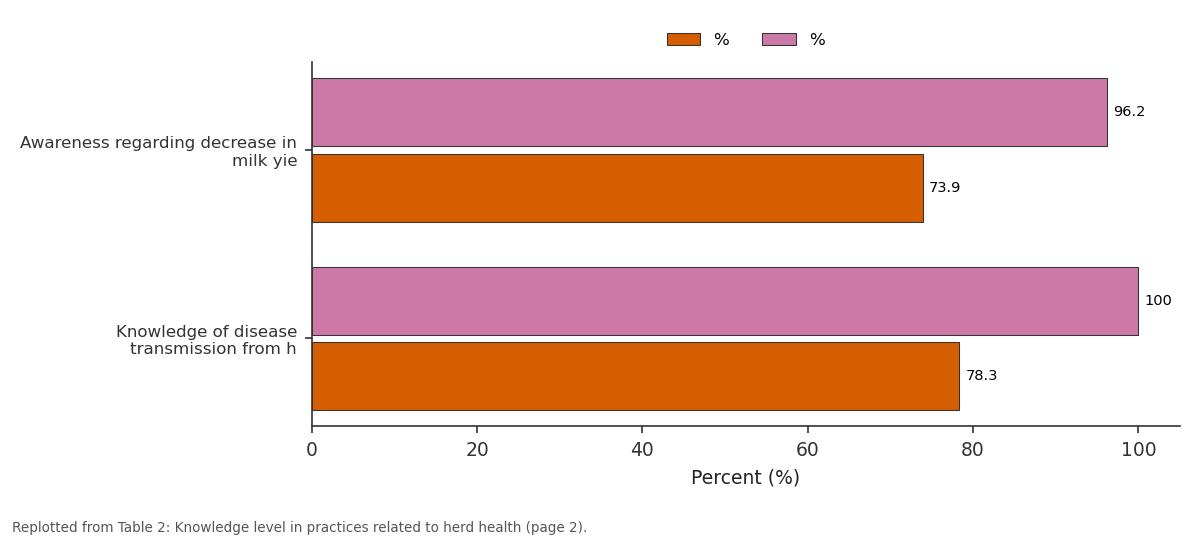
% and %: Awareness regarding... vs Knowledge of disease...
Replotted from Table 2 (page 2) of the original paper. Every bar is the paper's own table value.
View source evidence ↗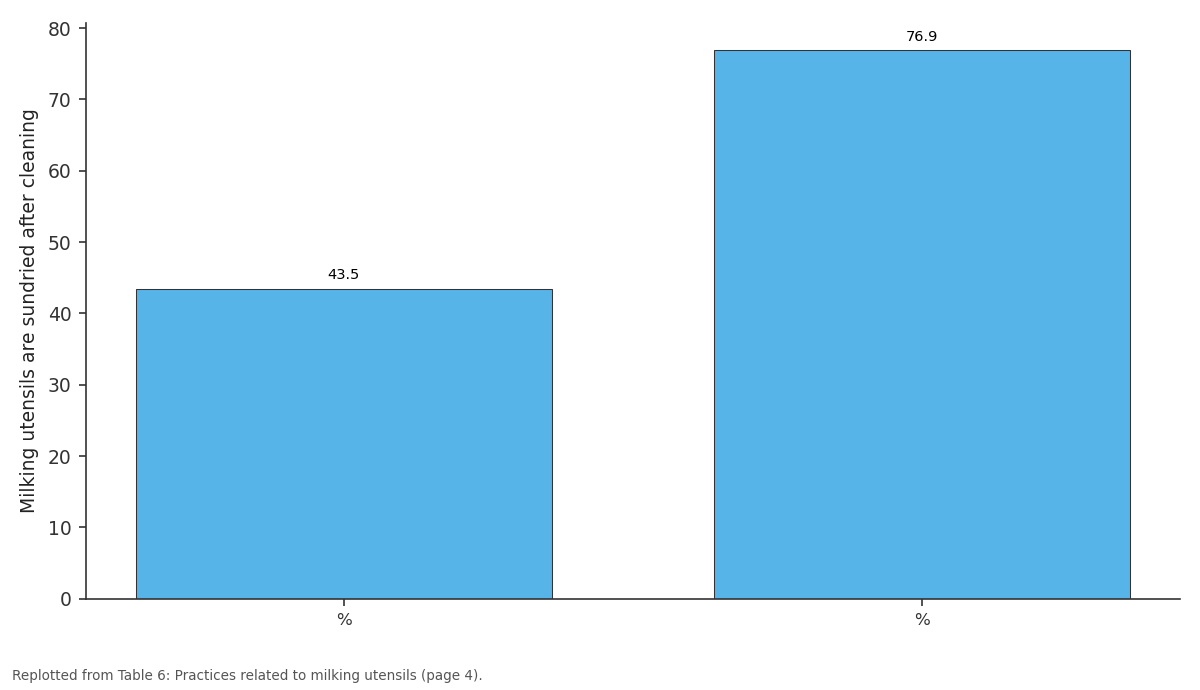
Milking utensils are sundried after cleaning: % vs %
Replotted from Table 6 (page 4) of the original paper. Every bar is the paper's own table value.
View source evidence ↗Figures & tables
From the original paper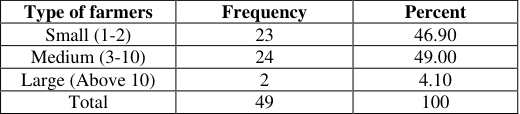 Table 1
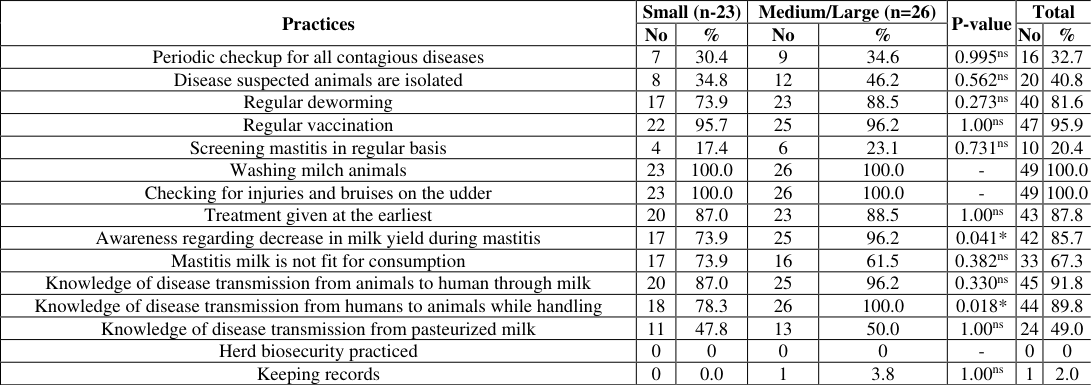 Table 2
 Table 3
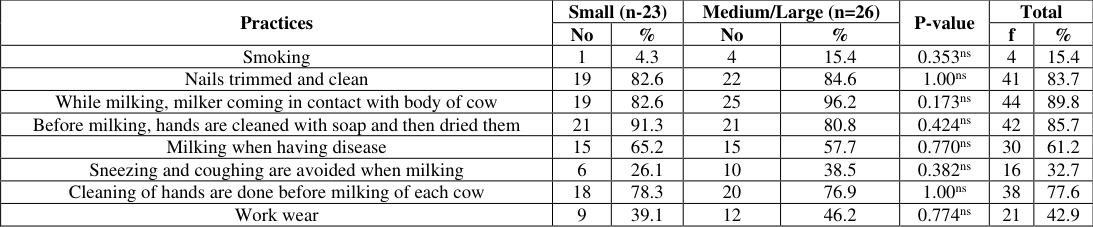 Table 4
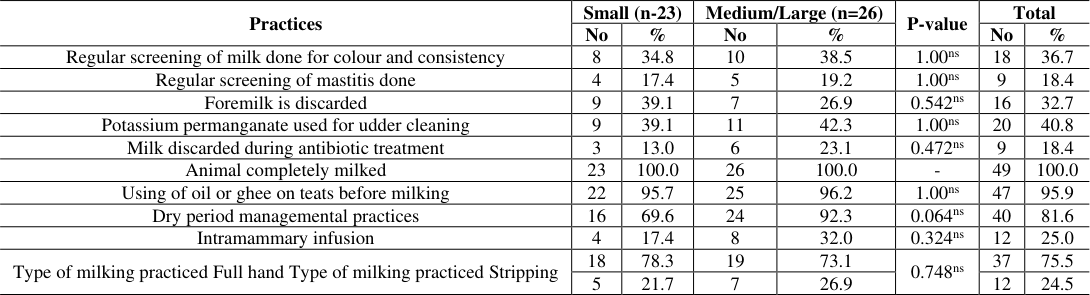 Table 5
 Table 6
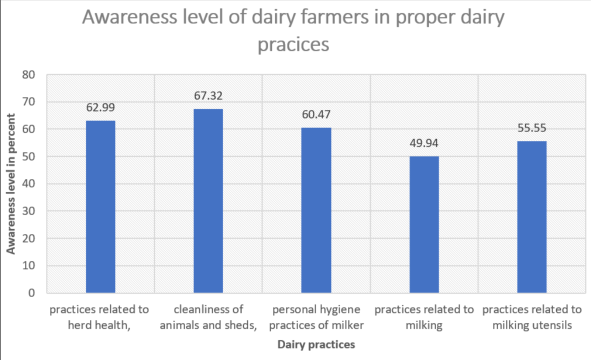 Figure 1
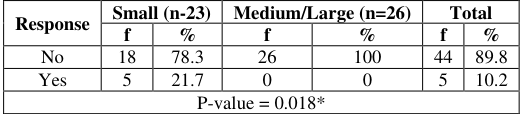 Table 7
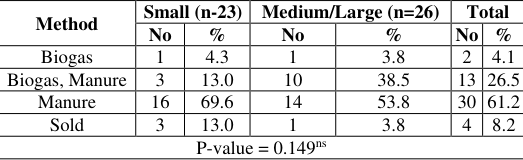 Table 8
Introduction
According to the 2019 livestock census, India had a total of 300 million bovines, and its milk production reached a remarkable 187.75 million tonnes, solidifying its position as the largest milk producer globally. The dairy industry is a significant contributor to India's economy, valued at over ₹5 lakh crore, providing livelihoods to millions of farmers, contributing substantially to agricultural GDP, and ensuring nutritional security for the population. However, the sector faces notable challenges, particularly diseases, among which mastitis, a common and costly disease affecting livestock, poses a significant threat to the industry's productivity and profitability. Mastitis affects approximately 20 -30 percent of India's dairy animals, resulting in reduced milk production, lower milk quality, increased treatment cost for farmers and industries at large scale. Annually the total economic loss due to mastitis is about Rs. 7165.51 crores in India (Bansal et al., 2009) [1] . Mastitis is a multi-etiological disease (Kibebew et al., 2017) [2] . The majority is caused by bacteria, while only two percent of the infection is caused by yeast and moulds (FAO, 2014) [3] . Some studies suggests that trauma and extreme weather conditions can also result in mastitis (Cheng et al., 2020) [4] . Mastitis can be broadly classified into two, as contagious mastitis and environmental mastitis. Bacteria causing contagious mastitis prefer to live and multiply within the udder while the environmental mastitis causing agents are found within the environment and are originating from bedding, soil and manure. These bacteria from environment gains entry into the teat canal with unhygienic practices during milking and colonize within the udder. Organisms that colonize the udder and cause mastitis can compromise the host immunity by evading the immune response or actively suppressing it. The toxins produced by these organisms damages the immune cells, inhibit phagocytosis or modulate the host's immune signaling pathways (Zigo et al., 2021) [5] . This interference weakens the immune system's ability to detect and eliminate the invading pathogens causing mastitis. While the udder becoming an envoy of infection there will be activation of the humoral and antibody mediated immunity which will cause the release of more immunoglobulins in order to counteract the compacting infection caused by the bacterial endotoxins and tight junction disruption (Egyedy et al., 2022) [6] . There are many factors acting simultaneously to cause mastitis which generally involve the interplay between management practices, infectious agents, the host factors and climate (Awale et al., 2012) [7] . Changes to the agents causing mastitis, such as the alterations in the virulence of pathogens or the resistance to the treatment can influence the severity of the condition (Fernandes et al., 2011) [8] . Different climatic changes like high temperature, relative humidity and incorrect ventilation further contributes to the disease (FAO, 2014) [3] . Other factors that have been identified as contributing to the increased spread includes; lack of awareness, unhygienic milking practices, delay in disease detection, and incomplete or delay in treatment strategies (Sharma et al., 2012) [9] . Because of the complexity of mastitis, identification of the pathogens and the risk factors at the herd level is fundamental in order to develop proper preventive and control measures (FAO, 2014) [3] . Faulty milking practices can cause great harm to mammary tissue and make the animal prone to disease (Sudhan and Sharma, 2010) [10] . Farmers awareness about the cause of mastitis and prophylactic measures, is essential to mitigate the economic losses (Audarya et al., 2021) [11] . The awareness level of mastitis influences the perception and decision making ability of the farmers, which in turn will affect the different treatment regimes and various preventive measure such as post-milking teat disinfection, hygiene, milking, housing and bedding (FAO, 2014) [3] . Conducting surveys on mastitis is crucial to understand its prevalence, risk factors and economic impact, enabling the development of effective control strategies to mitigate its effect and ensure the sustainability of India's dairy industry. Hence this study was conducted to evaluate the awareness of practices related to milking among 49 randomly selected dairy farmers in different regions of Kerala.
Materials and Methods
The study samples comprised of 49 dairy farmers selected from different districts of Kerala, viz Wayanad, Alappuzha, Palakkad, and Kottayam through random sampling method during the period from September 2022 to June 2023. A questionnaire was developed to evaluate the farmers awareness and knowledge levels regarding milking practices consisting of six major domains namely; practices related to herd health, cleanliness of animals and sheds, personal hygiene practices of milker, practices related to milking, milking utensils and economics of cow rearing. The farmers were categorized into small (one to two cattle), medium (three to 10 cattle), and large (more than 10 cattle) based on the number of cattle they own (Table . 1). The collected data were compiled and analyzed using Fisher's exact test.
Results and Discussion
The present study analysed the knowledge level regarding the various practices related to milking in 49 dairy farmers and also analysed the differences in perception of the various practices between small scale dairy farmers and medium to large scale dairy farmers. While analysing the knowledge level in practices related to herd health, it was found that practices such as regular vaccination, washing milch animals (100 percent), and checking for udder injuries (100 percent) have very high compliance in both small and medium/large farms. Regular vaccination is almost universally practiced (95.7 percent in small farms and 96.2 percent in medium/large farms) with no significant difference (p=1.00ns). Regular deworming is more common in medium/large farms (88.5 percent) compared to small farms (73.9 percent), but the difference is not statistically significant (p=0.273ns). This highlights their dedication to maintaining the health of their cattle. On an average 62.99 percent of the farmers were aware regarding the various practices related to herd health. This finding was in contrast with those of the (Costa et al., 2013) [12] who reported that only 46 percent of the farmers were aware regarding the various procedures like vaccination, deworming, clinical examination and timely medications. While no significant differences were found in most aspects of herd level knowledge, a significant difference regarding the awareness between small scale dairy farmers and medium and large-scale farmers was found in understanding of disease transmission from humans to animals during handling (p value = 0.018) and in the awareness regarding decreased milk yield during mastitis (p value = 0.041). Record keeping is very low, especially in small farms (0%) compared to medium/large farms (3.8%), but the difference is not significant (p=1.00ns) (Table . 2). In the practices related to cleanliness of animal and shed, this study revealed that, 67.32 percent of farmers showed a strong commitment to cleanliness practices for both animals and sheds. They prioritize proper ventilation in their animal sheds, recognizing the importance of creating a hygienic environment for their livestock. This finding was in contrast with those of (Robichaud et al., 2019) [13] who reported that only 27 percent of the respondents ensured cleanliness of the animals and the sheds. When analyzing the cleanliness practices of farmers, it's noted that 100 percent of them have well-ventilated sheds, benefiting from ample open spaces in rural areas. However, the lowest category, at 22.4 percent, comprises those who store straw, concentrate, and fodder inside milking sheds due to financial constraints and space limitations. Additionally, 80 percent of farmers maintain proper udder hygiene, largely attributed to government initiatives, authoritative guidance, and accumulated experience. Overall, the table highlights that most hygiene and infrastructure practices are similarly adopted by both small and medium/large dairy farms, with no significant differences observed for most practices. The only notable difference, though not statistically significant, is in the storage of straw, concrete, or fodder inside the milking shed, which is more common in small farms (Table . 3). A significant 60.47 percent of respondents exhibited knowledge of milker's personal hygiene practices. They are aware of the importance of maintaining clean and trimmed nails and avoiding smoking during milking, ensuring the quality and safety of the milk. This finding was in contrast with those of (Robichaud et al., 2019) [13] who found that less than half of the respondents are aware of hygienic measures to be followed in the farm. A majority of 85.7 percent respondents cleaned their hands with soap and dried them before milking. This finding is in agreement with that of (Duguma et al., 2015) [14] who found that 85.19 percent of the farmers used water and detergents to wash the hands before milking. Overall, the table highlights that most hygiene and milking practices are similarly adopted by both small and medium/large dairy farms, with no significant differences observed for most practices. The only notable but nonsignificant differences are in the prevalence of smoking and the practice of milking when having a disease (Table . 4) Only 49.94 percent of participants demonstrated sufficient knowledge about milking techniques. In small-scale farming, 78.3 percent practice full hand milking, whereas among medium and large-scale farmers, 73.1 percent adhere to this method. This indicates a need for further education in this critical aspect of dairy farming to maintain the health and productivity of milch animals. This finding was in consonance with the findings of (Heba et al., 2023) [15] who reported that 50 percent of livestock farmers are aware about standard milking practices. A majority, that is 75.5 percent of respondents followed full hand milking method which is in agreement with study conducted by (Moxley et al., 1978) [16] and (Bimal P. Bashir et al., 2013) [17] . All the dairy farmers practiced two times milking, which is also in agreement with findings of (Bimal P. Bashir et al., 2013) [17] . All the farmers were completely milking the animals whereas a small percent of the farmers were practicing regular screening for mastitis and discarding milk during antibiotic treatment. Overall, the table highlights that most milking practices and health management measures are similarly adopted by both small and medium/large dairy farms, with no significant differences observed for most practices. The only notable practice with a near-significant difference is the adoption of dry period managemental practices, which are more common in medium/large farms (Table. 5). A significant 55.15 percent of respondents were aware of proper milking utensil practices. Consistent understanding of these practices among all farmers is crucial to ensure milk quality and prevent Majority of the respondents sieved the milk after milking and also used detergents to clean the utensils. More than half of the respondents sun dried the milking utensils and used hot water for cleaning. But only 6.1 percent of the respondents are using milking machine. This study is in consonance with (Duguma et al., 2015) [14] who reported that 85.19 percent of the producers cleansed the milk handling equipments using warm water in combination with detergent. A significant difference regarding the awareness between small and medium/ large farmers was observed at 0.05 level in the practice of sundrying milking utensils after cleaning, (p-value 0.021). Other practices related to milking utensils did not exhibit significant variance (Table. 6). The finding of our survey revealed a diverse range of materials used for utensils: 55.1 percent of the respondents use aluminium, two percent use fiber, 10.2 percent use plastic, 28.6 percent use steel, two percent use a combination of steel and fiber, and two percent use a combination of steel and plastic. Interestingly, despite steel being identified as the ideal storage material in the dairy industry due to its non-corrosive nature (Dewangan et al., 2015) [18] , only 28.6 percent of respondents reported using it. This highlights a significant gap between the optimal material recommended for safety and quality and the materials currently in use.
After content analysis of the items, it was found that 60.68 percent of the total respondents showed proper knowledge on various practices related to herd health. Of the total respondents, 67.32 percent showed proper knowledge regarding practices related to cleanliness of animals and sheds, and 60.47 percent showed knowledge related to personal hygiene practices of milker, 49.94 percent had knowledge related to practices related to milking and 55.15 percent had knowledge of practices related to cleaning of milking utensils (Fig. 1).
Economic concerns
Average income of 49 dairy farmers per month is found to be Rs 11660.4 ±1015.349 and average expenditure per month is Rs 7682 ± 537.558. Around 48 percent of the farmers reported that the total income obtained is in between 5000-10000 rupees. This finding is in contrast to the findings of (Manju et al., 2023) [19] who reported only 14.6 percent of dairy farmers is in between 5001-10000 rupees group. A significant portion, accounting for 78 percent, of the total expenditure is associated with feed cost. This data is in consonance with the findings of (Sabin et al., 2021) [20] and (Smitha et al., 2019) [21] . This result show that dairy sector requires much more support from the government through various schemes and also need to provide alternatives to reduce the feed cost. By supporting farmers and spreading awareness, we can make the dairy sector stronger and more successful. A significant difference among small and medium/ large farmers was observed in profitability at the 0.05 level (p-value 0.018) (Table .7). Among the total 49 farmers only 27 are beneficiaries of any milk cooperatives. There exists no significant difference between the small-scale farmers and medium/large scale farmers in availing support from milk cooperatives. Method of dung disposal was also assessed in the study group (Table.8). Farmers primarily manage their dung through composting, using it as manure or selling directly or after drying. In this study a significant majority of farmers, regardless of scale, prioritize using dung as manure. Small scale farmers are more reliant on using dung as manure compared to medium/large scale farmers, likely due to resource limitations and the immediate benefits of manure for crop productivity. It suggests that the immediate and wellknown benefits of dung as a fertilizer are still highly valued. The usage of dung for biogas production is minimal among both small and medium/large scale farmers. This could be due to the initial investment and infrastructure required for biogas production, which may not be accessible or deemed necessary by most farmers. The low percentage of farmers using dung for biogas indicates a potential area for development and education. Promoting biogas could offer a sustainable energy source and additional income stream. Small scale farmers show a greater tendency to diversify dung usage, which could be driven by economic necessity and a higher degree of innovation to maximize utility.
Conclusion
In conclusion, the survey results among 49 dairy farmers have provided valuable insights into their knowledge and practices in dairy farm management. The majority of participants demonstrated awareness and competence in various aspects of dairy animal care. Notable findings include: 1. Practices such as regular vaccination, washing milch animals (100 percent), and checking for udder injuries (100 percent) have very high compliance in both small and medium/large farms. Most respondents showed proficiency in washing milch animals and inspecting udder injuries. 2. The majority of farmers prioritize proper ventilation in their animal sheds. 3. It was observed that most individuals understand the importance of maintaining clean and trimmed nails and avoiding smoking during milking. 4. All animals were consistently milked thoroughly, ensuring proper milking practices. 5. All surveyed farmers were found to be consistently sieving milk after milking and cleaning utensils with detergents.
However, there are areas of improvement, with varying levels of knowledge about milking techniques and milking utensil practices. Additionally, a significant portion of respondents expressed concerns about the profitability of cow rearing, primarily due to rising feed costs and limited government support.
In light of these findings, there is a pressing need to enhance awareness among farmers regarding milking practices and to better inform them about available government support programs. This will not only improve the overall well-being of milch animals but also help sustain the livelihoods of dairy farmers. By addressing these challenges and enhancing knowledge in specific areas, the dairy industry can thrive and continue to provide essential products for consumers.
Acknowledgement
AcknowledgementThe authors are thankful to The Dean, College of Veterinary and Animal Sciences, Pookode for all the help rendered for the successful conduct of the work.
Figures and tables from the paper
| Type of farmers | Frequency | Percent |
|---|---|---|
| Small (1-2) | 23 | 46.90 |
| Medium (3-10) | 24 | 49.00 |
| Large (Above 10) | 2 | 4.10 |
| Total | 49 | 100 |
Table text extracted from the original PDF; superscript letters are shown inline. The original table image is below.
View original table image
| Practices | Small (n-23) | — | Medium/Large (n=26) | — | P-value | Total | — |
|---|---|---|---|---|---|---|---|
| No | % | No | % | No | % | ||
| Periodic checkup for all contagious diseases | 7 | 30.4 | 9 | 34.6 | 0.995ns | 16 | 32.7 |
| Disease suspected animals are isolated | 8 | 34.8 | 12 | 46.2 | 0.562ns | 20 | 40.8 |
| Regular deworming | 17 | 73.9 | 23 | 88.5 | 0.273ns | 40 | 81.6 |
| Regular vaccination | 22 | 95.7 | 25 | 96.2 | 1.00ns | 47 | 95.9 |
| Screening mastitis in regular basis | 4 | 17.4 | 6 | 23.1 | 0.731ns | 10 | 20.4 |
| Washing milch animals | 23 | 100.0 | 26 | 100.0 | - | 49 | 100.0 |
| Checking for injuries and bruises on the udder | 23 | 100.0 | 26 | 100.0 | - | 49 | 100.0 |
| Treatment given at the earliest | 20 | 87.0 | 23 | 88.5 | 1.00ns | 43 | 87.8 |
| Awareness regarding decrease in milk yield during mastitis | 17 | 73.9 | 25 | 96.2 | 0.041* | 42 | 85.7 |
| Mastitis milk is not fit for consumption | 17 | 73.9 | 16 | 61.5 | 0.382ns | 33 | 67.3 |
| Knowledge of disease transmission from animals to human through milk | 20 | 87.0 | 25 | 96.2 | 0.330ns | 45 | 91.8 |
| Knowledge of disease transmission from humans to animals while handling | 18 | 78.3 | 26 | 100.0 | 0.018* | 44 | 89.8 |
| Knowledge of disease transmission from pasteurized milk | 11 | 47.8 | 13 | 50.0 | 1.00ns | 24 | 49.0 |
| Herd biosecurity practiced | 0 | 0 | 0 | 0 | - | 0 | 0 |
| Keeping records | 0 | 0.0 | 1 | 3.8 | 1.00ns | 1 | 2.0 |
Table text extracted from the original PDF; superscript letters are shown inline. The original table image is below.
View original table image
| Practices | Small (n-23) | — | Medium/Large (n=26) | — | P-value | Total | — |
|---|---|---|---|---|---|---|---|
| No | % | No | % | No | % | ||
| Cleaning the udder with clean water only | 20 | 87.0 | 24 | 92.3 | 0.655ns | 44 | 89.8 |
| Using cloth after washing udder | 7 | 30.4 | 13 | 50.0 | 0.245ns | 20 | 40.8 |
| Using bleaching powder for floor cleaning | 16 | 69.6 | 14 | 53.8 | 0.379ns | 30 | 61.2 |
| Concrete floor | 21 | 91.3 | 24 | 92.3 | 1.00ns | 45 | 91.8 |
| Shed is ventilated | 23 | 100.0 | 26 | 100.0 | - | 49 | 100.0 |
| Straw, concrete or fodder is stored inside milking shed | 8 | 34.8 | 3 | 11.5 | 0.086ns | 11 | 22.4 |
| Type of bedding material used (rubber mat) | 15 | 65.2 | 17 | 65.4 | 1.00ns | 32 | 65.3 |
Table text extracted from the original PDF; superscript letters are shown inline. The original table image is below.
View original table image
| Practices | Small (n-23) | — | Medium/Large (n=26) | — | P-value | Total | — |
|---|---|---|---|---|---|---|---|
| No | % | No | % | f | % | ||
| Smoking | 1 | 4.3 | 4 | 15.4 | 0.353ns | 4 | 15.4 |
| Nails trimmed and clean | 19 | 82.6 | 22 | 84.6 | 1.00ns | 41 | 83.7 |
| While milking, milker coming in contact with body of cow | 19 | 82.6 | 25 | 96.2 | 0.173ns | 44 | 89.8 |
| Before milking, hands are cleaned with soap and then dried them | 21 | 91.3 | 21 | 80.8 | 0.424ns | 42 | 85.7 |
| Milking when having disease | 15 | 65.2 | 15 | 57.7 | 0.770ns | 30 | 61.2 |
| Sneezing and coughing are avoided when milking | 6 | 26.1 | 10 | 38.5 | 0.382ns | 16 | 32.7 |
| Cleaning of hands are done before milking of each cow | 18 | 78.3 | 20 | 76.9 | 1.00ns | 38 | 77.6 |
| Work wear | 9 | 39.1 | 12 | 46.2 | 0.774ns | 21 | 42.9 |
Table text extracted from the original PDF; superscript letters are shown inline. The original table image is below.
View original table image
| Practices | Small (n-23) | — | Medium/Large (n=26) | — | P-value | Total | — |
|---|---|---|---|---|---|---|---|
| No | % | No | % | No | % | ||
| Regular screening of milk done for colour and consistency | 8 | 34.8 | 10 | 38.5 | 1.00ns | 18 | 36.7 |
| Regular screening of mastitis done | 4 | 17.4 | 5 | 19.2 | 1.00ns | 9 | 18.4 |
| Foremilk is discarded | 9 | 39.1 | 7 | 26.9 | 0.542ns | 16 | 32.7 |
| Potassium permanganate used for udder cleaning | 9 | 39.1 | 11 | 42.3 | 1.00ns | 20 | 40.8 |
| Milk discarded during antibiotic treatment | 3 | 13.0 | 6 | 23.1 | 0.472ns | 9 | 18.4 |
| Animal completely milked | 23 | 100.0 | 26 | 100.0 | - | 49 | 100.0 |
| Using of oil or ghee on teats before milking | 22 | 95.7 | 25 | 96.2 | 1.00ns | 47 | 95.9 |
| Dry period managemental practices | 16 | 69.6 | 24 | 92.3 | 0.064ns | 40 | 81.6 |
| Intramammary infusion | 4 | 17.4 | 8 | 32.0 | 0.324ns | 12 | 25.0 |
| Type of milking practiced Full hand Type of milking practiced Stripping | 18 | 78.3 | 19 | 73.1 | 0.748ns | 37 | 75.5 |
| 5 | 21.7 | 7 | 26.9 | 12 | 24.5 |
Table text extracted from the original PDF; superscript letters are shown inline. The original table image is below.
View original table image
| Practices | Small (n-23) | — | Medium/Large (n=26) | — | P-value | Total | — |
|---|---|---|---|---|---|---|---|
| No | % | No | % | No | % | ||
| Milking utensils are sundried after cleaning | 10 | 43.5 | 20 | 76.9 | 0.021* | 30 | 61.2 |
| Milk sieved after milking | 23 | 100.0 | 26 | 100.0 | - | 49 | 100.0 |
| Utensils are cleaned using detergents | 23 | 100.0 | 26 | 100.0 | - | 49 | 100.0 |
| Milk stored inside the shed | 2 | 8.7 | 5 | 20.0 | 0.419ns | 7 | 14.6 |
| Back flushing of milking claw and teat cups practiced | 0 | 0.0 | 3 | 11.5 | 0.237ns | 3 | 6.1 |
| Hot water cleaning used for cleaning | 11 | 47.8 | 13 | 50.0 | 1.00ns | 24 | 49.0 |
Table text extracted from the original PDF; superscript letters are shown inline. The original table image is below.
View original table image
| Response | Small (n-23) | — | Medium/Large (n=26) | — | Total | — |
|---|---|---|---|---|---|---|
| f | % | f | % | f | % | |
| No | 18 | 78.3 | 26 | 100 | 44 | 89.8 |
| Yes | 5 | 21.7 | 0 | 0 | 5 | 10.2 |
| P-value = 0.018* |
Table text extracted from the original PDF; superscript letters are shown inline. The original table image is below.
View original table image
| Method | Small (n-23) | — | Medium/Large (n=26) | — | Total | — |
|---|---|---|---|---|---|---|
| No | % | No | % | No | % | |
| Biogas | 1 | 4.3 | 1 | 3.8 | 2 | 4.1 |
| Biogas, Manure | 3 | 13.0 | 10 | 38.5 | 13 | 26.5 |
| Manure | 16 | 69.6 | 14 | 53.8 | 30 | 61.2 |
| Sold | 3 | 13.0 | 1 | 3.8 | 4 | 8.2 |
| P-value = 0.149ns |
Table text extracted from the original PDF; superscript letters are shown inline. The original table image is below.
View original table image
References
18 in the original paper- Banal BK, Gupta D. Economic analysis of bovine mastitis in India and Punjab -A review. Indian J Dairy Sci. 2009;62(5):337-345.
- Kibebew K. Bovine mastitis: A review of causes and epidemiological point of view. J Biol. 2017;7(2):1-8.
- Cheng WN, Han SG. Bovine mastitis: risk factors, therapeutic strategies, and alternative treatments -A review. Asian-Australas J Anim Sci. 2020;33(11):16991713.
- Zigo F, Vasil' M, Ondrašovičová S, Výrostková J, Bujok J, Pecka-Kielb E, et al. Maintaining optimal mammary gland health and prevention of mastitis. Front Vet Sci. 2021;8:607311.
- Egyedy A, Barahona Rosales E, Ametaj BN. Association of high somatic cell counts prior to dry off with the incidence of periparturient diseases in Holstein dairy cows. Vet Sci. 2022;9(11):624.
- Awale MM, Dudhatra GB, Kumar A, Chauhan BN, Kamani DR, Modi CM, et al. Bovine mastitis: A threat to the economy. Open Access Reports. 2012;1:295.
- Fernandes JBC, Zanardo LG, Galvão NN, Carvalho IA, Nero LA, Moreira MAS, et al. Escherichia coli from clinical mastitis: serotypes and virulence factors. J Vet Diagn Investig. 2011;23:1146-1152.
- Sharma N, Rho GY, Hong YH, Lee TY, Hur TY, Jeong DK, et al. Bovine mastitis: An Asian perspective. Asian J Anim Vet Adv. 2012;7:454-476.
- Costa JHC, Hotzel MJ, Longo C, Balcao LF. A survey of management practices that influence production and welfare of dairy cattle on family farms in southern Brazil. J Dairy Sci. 2013;96(1):307-317.
- Denis-Robichaud J, Kelton DF, Bauman CA, Barkema HW, Keefe GP, Dubuc J, et al. Biosecurity and herd health management practices on Canadian dairy farms. J Dairy Sci. 2019;102(10):9536-9547.
- Duguma B, Janssens GPJ. Assessment of dairy farmers' hygienic milking practices and awareness of cattle and milk-borne zoonoses in Jimma, Ethiopia. Food Sci Qual Manag. 2015;4:1-9.
- Farag HS, Aly SS, Fahim KM, Fayed AA, Abdelfattah EM, El-Sayed SM, et al. Management practices of bovine mastitis and milk quality on Egyptian dairies. Vet Sci. 2023;10(10):629.
- Moxley JE, Kennedy BW, Downey BR, Bowman JST. Survey of milking hygienic practices and their relationships to somatic cell counts and milk production. J Dairy Sci. 1978;61:1637-1644.
- Bashir BP, Kumar GV. Milking management practices followed in selected areas of the Kottayam district of Kerala state. J Life Sci. 2013;5(1):53-55.
- Dewanagn AK, Patel AD, Bhandania AG. J Mater Sci Eng. 2015;4:5.
- Sasidharan M, Kannan A, Joseph BA, Raji K, Sunanda C. Study on socio-economic status of dairy farmers in Kerala. J Pharm Innov. 2023;12(5):394-398.
- George S, Saseendran PC, Anil KS, Gleeja VL, Pramod S. Cost of milk production among different types of dairy farmers in Kerala. J Vet Anim Sci. 2021;53(1):1-6.
- Smitha S, Devi MCA, Devi GL, Subash S. Analysis of constraints in dairy farming in Kerala: a multistakeholder perspective. Indian J Dairy Sci. 2019;72(3):1-10.
Cited by 1
From OpenAlex, OpenCitations and reference lists read by Scinovex
- Ageratum Conyzoides as a Potential Phytotherapeutic Agent for Mastitis Treatment Through in Vitro Antibacterial and Biofilm-Disrupting Activities with in Silico Docking and Simulation Insights ↗
Sonal Sindhu, Tarun Saini, Dev Kumar, Sayeed Ahmad, Hari Mohan · SSRN Electronic Journal · 2025
❝ 0PDF