
Research article · 2024 · Full text
International Journal of Advanced Chemistry ResearchSpectrophotometric determination of metoclopramide hydrochloride using Co3O4 nanopartical synthesied from the extract of rosemary
Volume 6(2) · Pages 09–15 · DOI: 10.33545/26646781.2024.v6.i2a.219 ↗
Research areasEssential Oils and Antimicrobial ActivityBiological Activity of Diterpenoids and BiflavonoidsPlant chemical constituents analysis
Abstract
Author-writtenBackground: A simple, sensitive and economical spectrophotometric method was proposed for the determination of Metoclopramide hydrochloride in its pure form and its pharmaceutical formulation Meclodin using Cobalt oxide nanoparticles prepared by extracting of rosemary. Measurements were made at Tikrit University, College of Science, during the period from 2024/3/1 to 2023/11/25. Results: Spectroscopic measurements gave the highest absorption value at the wavelength of 275 nm for the mixture of nano solution and drug, and the linear relationship followed the Beer-Lambert law in the concentration range (2-26 µg/mL) with a good correlation coefficient, where its value reached R = 0.9988, which indicates good linearity. The molar absorption coefficient value = 1.6900 x 10⁴ L/mol.cm, and the Sandell’s significance value = 0.0209 µg/cm2. The proposed method was validated statistically and quantitatively, with a detection limit value = 0.1257 µg/mL and a quantitative limit value = 0.4192 µg/mL. Conclusion: concluded from this study the success of the method used in the production of nanomaterials from green sources, and thus the trend towards green synthesis methods became more desirable because it is characterized by ease of preparation, low cost and no need to use materials harmful to the environment, and it was also concluded that when the drug Metoclopramide hydrochloride was associated with Co3O4NPs increased The wavelength value ranged from 270 nm (for Co3O4NPs) to 275 nm when adding the drug to the particle solution (taking into account ideal conditions) as evidence of the association between these particles and the drug solution.
Summary
Source-checkedPlain-language reading of the full paper, prepared with AI and checked against the text. Each point links to the authors' own words.
Why it matters
- Green chemistry aims to create environmentally friendly materials to reduce pollution and the use of substances harmful to humans and nature. View evidence ↗
- Metoclopramide hydrochloride (MCP-HCl) is a medication used to treat migraines and gastrointestinal issues, specifically nausea and vomiting. View evidence ↗
- Cobalt oxide nanoparticles are valuable for research due to their magnetic properties and applications in sensing and data storage. View evidence ↗
The question
- The study aimed to develop a simple, sensitive, and economical spectrophotometric method to determine Metoclopramide hydrochloride in pure form and in the pharmaceutical product Meclodin using rosemary-synthesized cobalt oxide nanoparticles. View evidence ↗
What they did
- The herbal extract was prepared by boiling 5 g of powdered rosemary leaves in 100 mL of deionized water at 80 °C for 30 minutes. View evidence ↗
- Cobalt oxide nanoparticles were synthesized by mixing 2.7 g of CoCl2.6H2O in 100 mL water with 50 mL of rosemary extract, heating at 80 °C for four hours, and adjusting the pH to 8. View evidence ↗
- The synthesized precipitate was dried at 80 °C for six hours and then calcined at 400 °C for two hours. View evidence ↗
- The calibration curve was created using 10 mL flasks containing varying drug doses, 3 mL of Co3O4 nanoparticles, and 1.5 mL of hydrochloric acid (pH 1.2). View evidence ↗
What they found
- The maximum absorption for the mixture of the drug and nanoparticle solution occurred at a wavelength of 275 nm. View evidence ↗
- The method showed good linearity (R = 0.9988) following the Beer-Lambert law within a concentration range of 2-26 µg/mL. View evidence ↗
- The method's detection limit (LOD) was 0.1257 µg/mL and the quantitative limit (LOQ) was 0.4192 µg/mL. View evidence ↗
- Accuracy tests for pure MCP-HCl showed an average recovery rate of 97.42% across concentrations of 6, 10, and 14 µg/mL. View evidence ↗
- When applied to the pharmaceutical preparation Meclodin, the method achieved an average recovery rate of 97.37% for concentrations between 14 and 18 µg/mL. View evidence ↗
- SEM imaging revealed that the cobalt oxide nanoparticles were primarily agglomerated, though some remained well separated. View evidence ↗
What it means
- The authors conclude that green synthesis of nanomaterials is successful and preferable due to its low cost, ease of preparation, and environmental safety. View evidence ↗
- The shift in wavelength from 270 nm (nanoparticles alone) to 275 nm upon adding the drug serves as evidence of the association between the drug and the Co3O4 nanoparticles. View evidence ↗
Visual summary
3 visualsIllustrations explain the paper; charts are replotted from the paper's own table values.
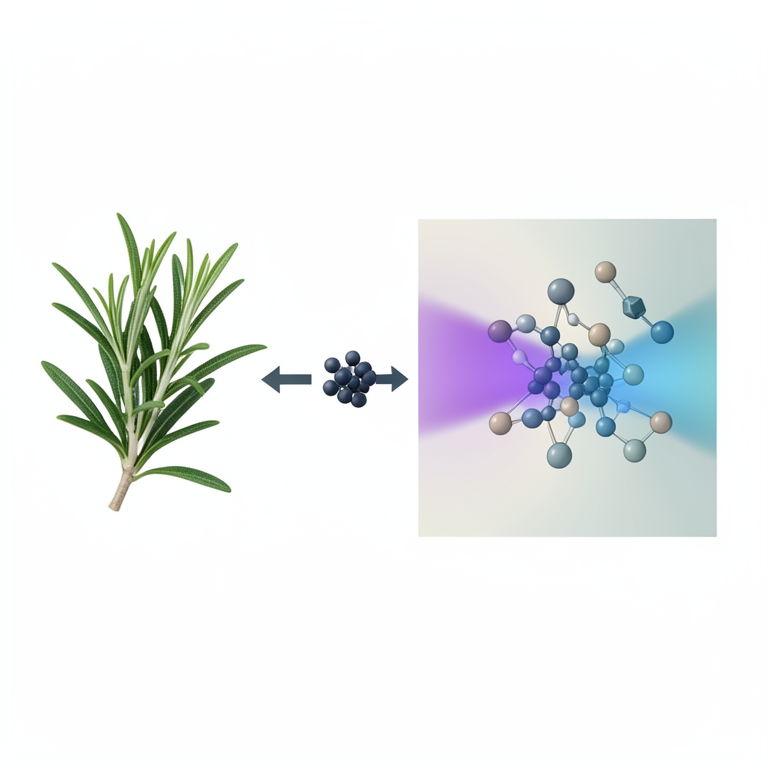
Green Synthesis and Drug Association
AI-generated conceptual illustration (Rosemary leaves, cobalt oxide nanoparticles, and metoclopramide hydrochloride molecules). It explains the idea and does not show study data.
View source evidence ↗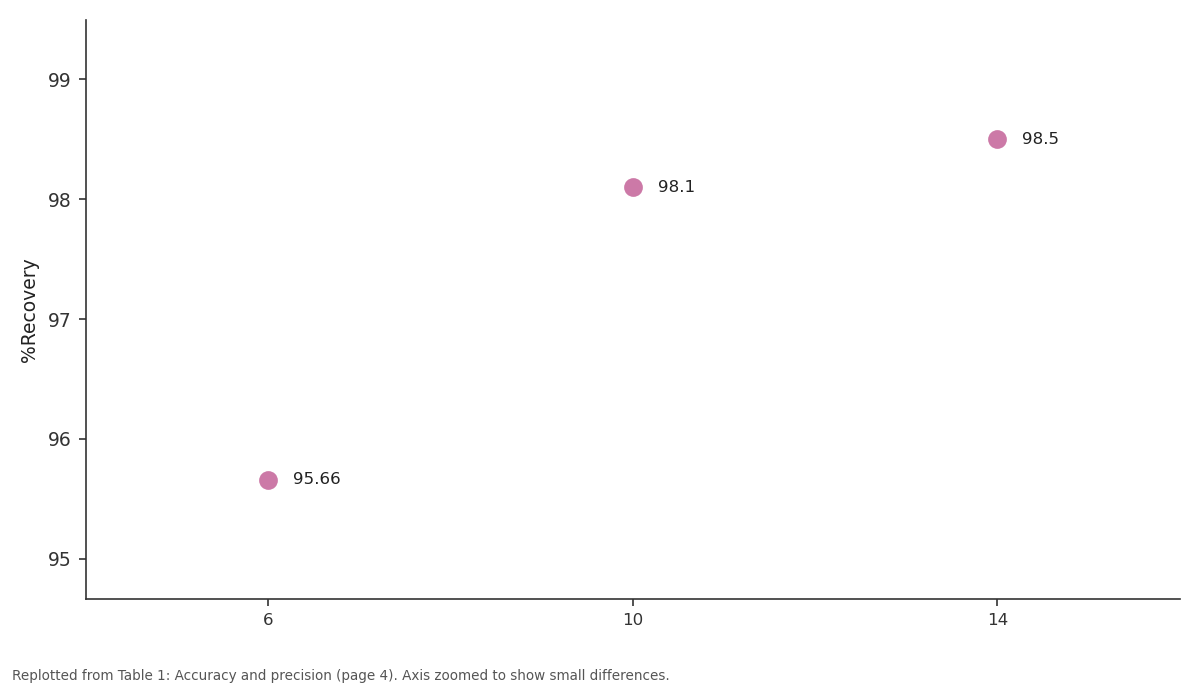
%Recovery: 6 vs 10 vs 14
Replotted from Table 1 (page 4) of the original paper. Every bar is the paper's own table value.
View source evidence ↗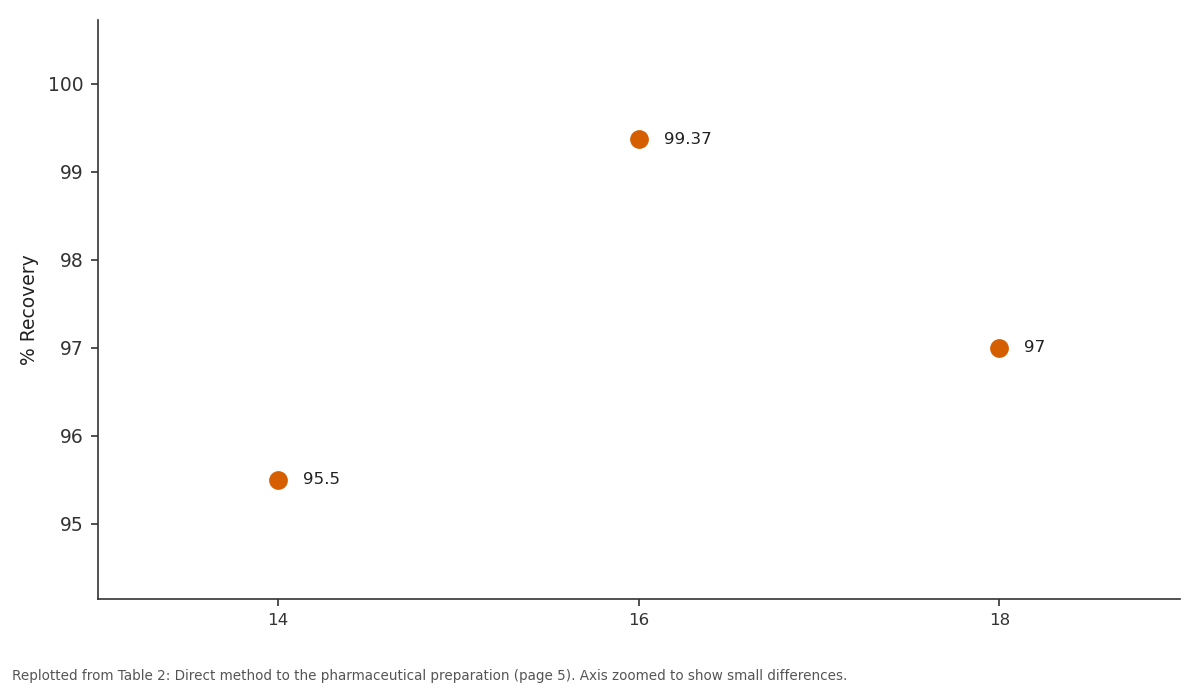
% Recovery: 14 vs 16 vs 18
Replotted from Table 2 (page 5) of the original paper. Every bar is the paper's own table value.
View source evidence ↗Figures & tables
From the original paper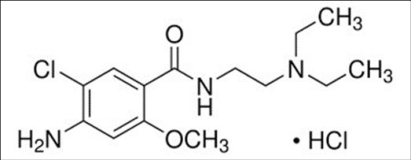 Figure 1
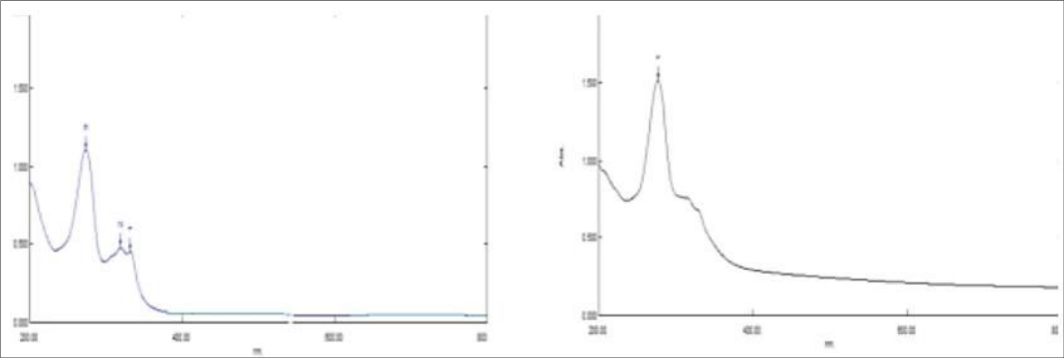 Figure 2
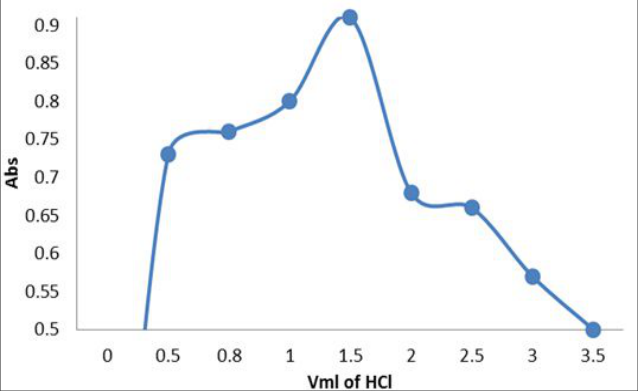 Figure 3
 Table 1
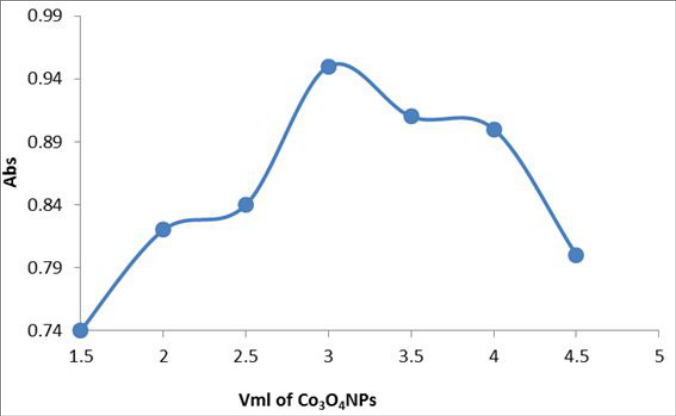 Figure 4
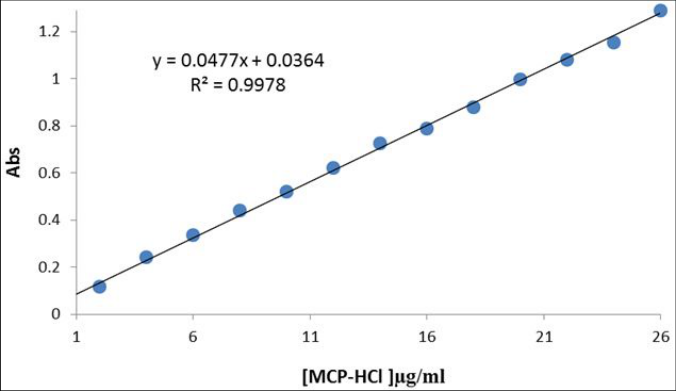 Figure 5
 Table 2
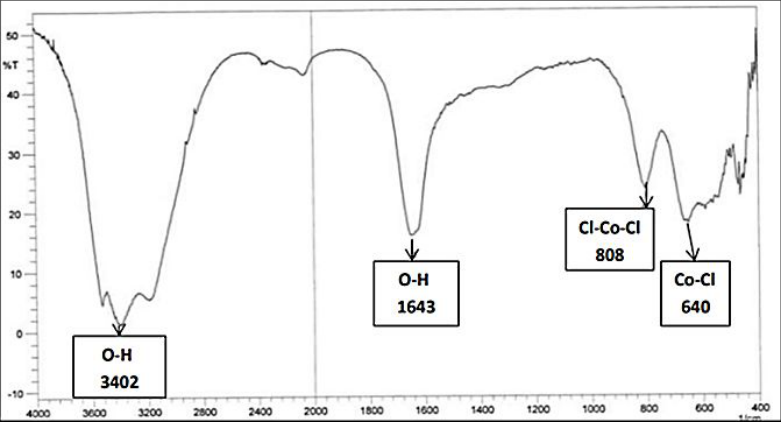 Figure 6
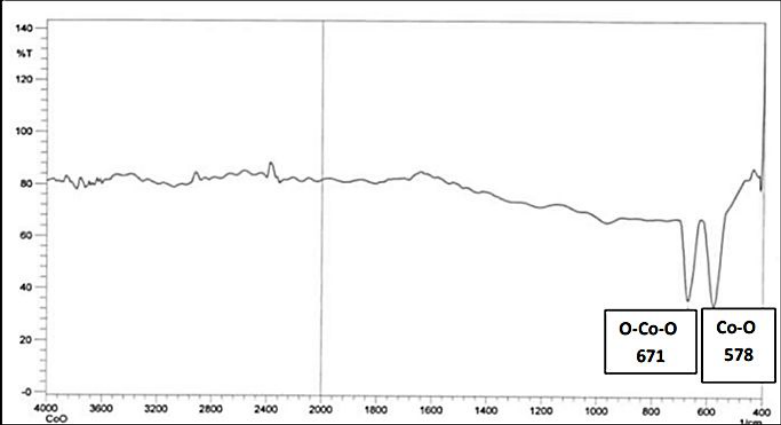 Figure 7
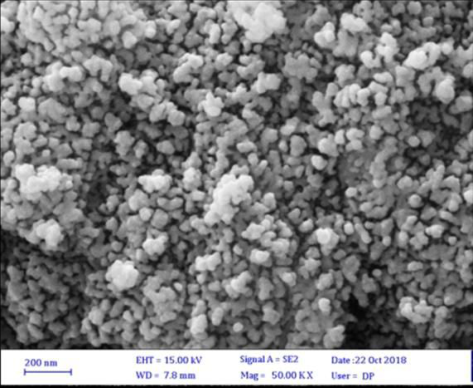 Figure 8
Introduction
Green chemistry is a modern field focused on developing environmentally friendly materials, making it an ideal way to reduce environmental pollution [1] . In addition to reducing the use of substances that are harmful to humans and the environment [2] . One branch of green technology is green nanotechnology, which uses the concepts of green chemistry and green plants. The products, processing and application of nanotechnology aim to make a significant contribution to the protection of the environment and climate, saving raw materials, energy and water, reducing greenhouse gas emissions, global warming and pollutants that turn into nanomaterials in the range of 1 to 100 nanometers [3] . Nanotechnology has helped change the rules of medicine used in preventing, diagnosing and treating diseases, as it provides new ways for nano-medicine carriers that can target different cells to enter the body [4] , and the role of phytochemicals in the overall structure, architecture, and other properties of attractive nanoparticles. It is more than that, because it provides the necessary balance between plant science and nanotechnology, and this balance guides progress in nanotechnology [5] , The main reason for using plant extracts in the production of nanomaterials is that they are easy to obtain, safe and do not cause toxic effects on the body like chemical preparations. Toxic chemicals are absorbed from the surface and cause serious side effects when used in medicine [6] , The main reaction that occurs when using plant extracts is the oxidationreduction reaction [7] . The size of the material class is (1-100) nanometers, and the small size of these materials makes their properties different from existing materials of their size (more than 100 nanometers) [4,8] , Nanoparticles contain more surface atoms than fine particles, which leads to increased performance, and this difference has led to their use in many applications. Fields such as medicine, catalysis, sensors, optoelectronics, food industry, textile industry and agriculture [9] , Cobalt particles were selected for this study based on their magnetic characteristics. Because of their potential impact in a variety of technical applications, including data storage, magnetic fields, information storage devices, and sensing devices, cobalt oxide nanoparticles are essential oxides for scientific research [10] . Nowadays, instead of being used as antibacterial agents, cobalt nanoparticles are usually treated as magnetic nanoparticles, with very little [11] investigations examining the antibacterial properties of cobalt oxide at the nanoscale [12] . However, they share a high surface area to volume ratio with other nanoparticles, which increases their chemical reactivity and renders nano-sized cobalt oxide potentially effective as antibacterial agents in biomedical applications [13] . The hydrothermal approach is one of the popular synthesis techniques for producing cobalt oxide particles that have been documented in the literature [14,15] , solvothermal decomposition [16] , laser deposition [17] , chemical vapor deposition [18] , spray pyrolysis [19] , plasma sputtering [20] , solid phase thermal decomposition [21] , mechano-chemical processing [22] , gamma-radiolysis [23] and so on. Metoclopramide hydrochloride (MCP-HCl), 4-amino-5chloro-2-methoxy-en-(2-2-diethylamine-ethyl)benzamide, is often used in patients with gastrointestinal disturbances and is therefore used to treat nausea Vomiting and also for the treatment of patients suffering from migraines as appear in Fig. 1 and is 354.3 g/mol that molecular weight of MCP, it is a white crystalline powder, soluble in water easy but soluble in alcohol freely, 183 °C that melting point of MCP drugin Fig. 1 and is 354.3 g/mol that molecular weight of MCP, it is a white crystalline powder, soluble in water easy but soluble in alcohol freely, 183 °C that melting point of MCP drug [11] . It is a medication used to treat nausea and vomiting and is usually administered orally or by injection. It works by stimulating intestinal motility and accelerating the passage of food from the stomach to the intestines. It is also used to treat gastrointestinal motility disorders and constipation [24] . concentration of 100 µg/ml was prepared from 0.0100 g of metoclopramide hydrochloride powder in a small amount of non-ionic water with thorough stirring, then the volume was completed to the mark using a 100 ml volumetric flask and the remaining concentrations were prepared by dilution. The pharmaceutical preparation of metoclopramide hydrochloride 10mg from local pharmacies was prepared at a concentration of 100 µg /ml by grinding 5 tablets with a total weight of 0.8782g to obtain 0.1796g of the active substance. Then, 0.01g of the powder was dissolved in a small amount of deionized water with thorough stirring, and the volume was completed to the mark using a 100ml volumetric flask, and the remaining concentrations were prepared by dilution. Aqueous cobalt chloride (CoCl 2 .6H 2 O) was provided from the inorganic chemistry laboratory at Tikrit University by taking 2.7 g of it and dissolving it in a small amount of deionized water, then completing the volume to the mark in a 100ml volumetric flask to obtain a concentration of 0.1M. The HCl solution was prepared by taking 0.83 mL of its concentrated solution and diluting it with nonionic water using a 100 mL volumetric vial to obtain a concentration of 0.1 M The sodium hydroxide solution was prepared by dissolving 0.4 g of sodium hydroxide in an amount of nonionic water using a 100 mL volumetric bottle, then the volume was completed to the mark with the same solvent De-ionized water as a solvent.
Application of the methodology part Preparation of herbal extract
The rosemary leaves that were gathered from the home garden were used to make the herbal extract. After gathering the leaves, they were cleaned with tap water to get rid of any dirt, and then they were repeatedly rinsed with distilled water. They were allowed to dry in the shade, then processed into a powder using an electric grinder, sieved, and put in a container for storage.
Weighing out 5 g of the powdered rosemary leaves, we put them in a glass beaker. Using a magnetic stirrer, 100 milliliters of deionized water was added and continually stirred. After 30 minutes of boiling at 80 °C, the mixture was allowed to cool to room temperature. Filter paper was then used to filter it.
Preparation of cobalt oxide nanoparticles
After weighing and thoroughly mixing 2.7 g of CoCl 2 .6H 2 O in 100 ml of deionized water, the solution was completely dissolved. Next, 50 ml of the produced extract was added using a pipette, dropwise, and constant stirring at 20 °C. The solution was then brought to 80 °C and left on a heater for four hours. The mixture's pH was brought to 8 by adding 0.1M sodium hydroxide solution.
The fluid turned brown and a precipitate formed at the bottom when the magnetic stirring operation was finished.
After a 12-hour incubation period at room temperature, the precipitate was filtered through filter paper and deionized water was used to eliminate any remaining contaminants. After being dried for six hours at 80 °C, the precipitate was put into a calcination furnace and heated to 400 °C for two hours. After being calcined, the produced material was gathered, and 0.1 g of it was immersed in an ultrasonic bath at 60 °C for 15 minutes together with a little amount of deionized water in a container. After that, the volume was filled to the brim in a 100 ml volumetric flask to create a Co The mixture is then diluted with deionized water and its absorption spectrum is measured. It was discovered that the absorbance at 275 nm was the highest. Multiple spectrum measurements were used to change the reaction conditions in order to assess the impact of different elements, such as the addition of hydrochloric acid, the ideal amount of acid to add to the solution, and the ideal volume of the nanomaterial solution.
Using a 10 ml volumetric flask, the following measurements were made. The findings were as follows: Figure ( 2) illustrates how hydrochloric acid produced a distinct effect by increasing absorbance. The best volume of hydrochloric acid that was mixture of the nano solution and the drug (mix ratio 1:5 ml) is 1.5 ml as show in in Figure 3. Following these modifications, a 10 mL volumetric flask containing escalating doses of the medication was filled with 3 mL of Co 3 O 4 NPs, 1.5 mL of hydrochloric acid at pH 1.2, and deionized water to create the calibration curve for metoclopramide hydrochloride.
At a wavelength of 275 nm, the absorbance of the solutions was measured. Figure 5 displays the outcome of the calibration curve. And the correlation coefficient R = 0.9988, the Sandel significance of 0.0209 µg/cm 2 , and the molar absorption coefficient of 1.6900×10⁴ L/mol.cm were all determined.
Accuracy and precision
Three different concentrations of metoclopramide hydrochloride solution were taken within the limits of Fanon Beer-Lambert in the calibration curve, at a rate of three readings for each concentration, and from the results of the calculations of the recovery rate (Rec.%) and deviation. These conditions were used to carry out the accuracy and precision test for this study.
Table (1) illustrates the high accuracy and good precision of the relative standard (RSD %) approach. The Limit of Detection (LOD) and the Limit of Quantity (LOQ) were calculated using the following mathematical relationship 3δ/S is the LOD. 10δ/S is the value of LOQ.
The value of b, or δ, the relative deviation of the intersection resulting from the straight line equation (Y=aX+b), is found using a five-time calibration curve. The slope value of the calibration curve, represented by S, is 0.4192 µg/mL for the quantitative limit and 0.1257 µg/mL for the detection limit.
Metchlopramide HCl was subjected to the direct technique. pharmaceutical preparation (Meclodin 5 mg), where three different concentrations of the preparation solution were taken, which are 4,8,12 µg/mL, the solution was treated with the same steps for preparing a calibration curve for a pure solution of Metchlopramide HCl, and measuring its absorption at a wavelength of 275 nm, as well as calculating the recovery rate and its relative standard deviation, as in Table (2). Diagnosis of nano-cobalt oxide by SEM Using a scanning electron microscope, the morphological and structural characteristics of cobalt oxide nanoparticles were examined. The nanoparticles were generated in the nanoscale range, as Figure 8 demonstrates. The SEM pictures showed that while most of the nanoparticles are present in an agglomerated form, some of them are well separated from one another. In addition to the impact of aqueous suspension, electrostatic factors also contribute to this agglomeration, which is consistent with earlier research.
Figures and tables from the paper
| Taken MCP-HCl µg/ml | Found MCP-HCL µg/ml | %Recovery | Average of % Recovery | %R.SD |
|---|---|---|---|---|
| 6 | 5.74 | 95.66 | 97.42 | 0.29 |
| 10 | 9.81 | 98.1 | 0.47 | |
| 14 | 13.8 | 98.5 | 0.13 |
Table text extracted from the original PDF; superscript letters are shown inline. The original table image is below.
View original table image
| Taken MCP-HCl µg/ml | Found MCP-HCL µg/ml | % Recovery | Average of % recovery | %R.SD |
|---|---|---|---|---|
| 14 | 13.37 | 95.5 | 97.37 | 0.43 |
| 16 | 15.94 | 99.37 | 0.10 | |
| 18 | 17.47 | 97 | 0.32 |
Table text extracted from the original PDF; superscript letters are shown inline. The original table image is below.
View original table image
References
23 in the original paper- Zuin VG, Eilks I, Elschami M, Kümmerer K. Education in green chemistry and in sustainable chemistry: perspectives towards sustainability. Green Chem. 2021;23(4):1594-1608.
- Ravichandran S. Green chemistry-a potential tool for chemical synthesis. Int J Chem Tech Res. 2010;2(4):2188-2191.
- Dutta D, Das BM. Scope of green nanotechnology towards amalgamation of green chemistry for cleaner environment: A review on synthesis and applications of green nanoparticles. Environ Nanotechnology, Monit Manag. 2021;15:100418.
- Abdoon FM, Hasan HM, Salman SA, Ameen ST, Birhan M. Exploiting of green synthesized silver nanoparticles using Capparis spinosa L. Fruit for spectrophotometric determination of diphenhydramine HCl in pure forms and commercial products. J Exp Nanosci. 2023;18(1):2161525.
- Katti K, Chanda N, Shukla R, Zambre A, Suibramanian T, Kulkarni RR, et al. Green nanotechnology from cumin phytochemicals: Generation of biocompatible gold nanoparticles. Int J Green Nanotechnol Biomed. 2009;1(1)-B52.
- Ezhilarasi AA, Vijaya JJ, Kaviyarasu K, Kennedy LJ, Ramalingam RJ, Al-Lohedan HA et al. Green synthesis of NiO nanoparticles using Aegle marmelos leaf extract for the evaluation of in-vitro cytotoxicity, antibacterial and photocatalytic properties. J Photochem Photobiol B Biol. 2018;180:39-50.
- Wadhwani SA, Gorain M, Banerjee P, Shedbalkar UU, Singh R, Kundu GC, et al. Green synthesis of selenium nanoparticles using Acinetobacter sp. SW30: optimization, characterization and its anticancer activity in breast cancer cells. Int J Nanomedicine. 2017;12:6841-6855.
- Lead JR, Batley GE, Alvarez PJJ, Croteau M, Handy RD, McLaughlin MJ, et al. Nanomaterials in the environment: behavior, fate, bioavailability, and effects: An updated review. Environ Toxicol Chem. 2018;37(8):2029-2063.
- Ledo-Suárez A, Rodríguez-Sánchez L, Blanco MC, López-Quintela MA. Electrochemical synthesis and stabilization of cobalt nanoparticles. Phys Status Solidi. 2006;203(6):1234-1240.
- The United State Pharmacopeia Convection, Inc 41-, NF 2018; 36: 269. The United State Pharmacopeia Convection, Inc, 41-NF, 2018; 36: 269. No Title. 2018.
- Lu Z, Rong K, Li J, Yang H, Chen R. Size-dependent antibacterial activities of silver nanoparticles against oral anaerobic pathogenic bacteria. J Mater Sci Mater Med. 2013;24:1465-1471.
- Chattopadhyay S, Dash SK, Tripathy S, Das B, Mandal D, Pramanik P, et al. Toxicity of cobalt oxide nanoparticles to normal cells; An in vitro and in vivo study. Chem Biol Interact. 2015;226:58-71.
- Cao F, Wang D, Deng R, Tang J, Song S, Lei Y, et al. Porous Co 3 O 4 microcubes: hydrothermal synthesis, catalytic and magnetic properties. Cryst. Eng. Comm. 2011;13(6):2123-2129.
- Zhao Y, Xu X, Zhao Y, Zhou H, Li J, Jin H. Synthesis and their physicochemical behaviors of flower-like Co 3 O 4 microspheres. J Alloys Compd. 2016;654:523528.
- Nethravathi C, Sen S, Ravishankar N, Rajamathi M, Pietzonka C, Harbrecht B. Ferrimagnetic nanogranular Co 3 O 4 through solvothermal decomposition of colloidally dispersed monolayers of α-cobalt hydroxide. J Phys Chem B. 2005;109(23):11468-11472.
- Koshizaki N, Narazaki A, Sasaki T. Size distribution and growth mechanism of Co 3 O 4 nanoparticles fabricated by pulsed laser deposition. Scr Mater. 2001;44(8-9):1925-1928.
- Bahlawane N, Rivera EF, Kohse-Höinghaus K, Brechling A, Kleineberg U. Characterization and tests of planar Co 3 O 4 model catalysts prepared by chemical vapor deposition. Appl Catal B Environ. 2004;53(4):245-255.
- Shinde VR, Mahadik SB, Gujar TP, Lokhande CD. Supercapacitive cobalt oxide (Co 3 O 4 ) thin films by spray pyrolysis. Appl Surf Sci. 2006;252(20):74877492.
- Estrada W, Fantini MC de A, De Castro SC, Polo da Fonseca CN, Gorenstein A. Radio frequency sputtered cobalt oxide coating: structural, optical, and electrochemical characterization. J Appl Phys. 1993;74(9):5835-5841.
- Ardizzone S, Spinolo G, Trasatti S. The point of zero charge of Co 3 O 4 prepared by thermal decomposition of basic cobalt carbonate. Electrochim Acta. 1995;40(16):2683-2686.
- Yang H, Hu Y, Zhang X, Qiu G. Mechanochemical synthesis of cobalt oxide nanoparticles. Mater Lett. 2004;58(3-4):387-389.
- Bao Y, Beerman M, Pakhomov AB, Krishnan KM. Controlled crystalline structure and surface stability of cobalt nanocrystals. J Phys Chem B. 2005;109(15):7220-7222.
- Abdel-Rahman SI, Mahrous GM, El-Badry M. Preparation and comparative evaluation of sustained release metoclopramide hydrochloride matrix tablets. Saudi Pharm J. 2009;17(4):283-288.