
Research article · 2024 · Full text
International Journal of Veterinary Sciences and Animal HusbandryEffects of predation on aquaculture production in Kitui County, Kenya
Volume 9(4) · Pages 209–212 · DOI: 10.22271/veterinary.2024.v9.i4d.1538 ↗
Research areasAquatic Ecosystems and BiodiversityFish Biology and Ecology Studies
Abstract
Author-writtenFish farming has gained importance in the provision of dietary protein in Kenya. Many challenges have faced the sector from water to predation in semi- arid regions. This study therefore sought to assess the prevalence, the socio - economic impacts and control measures of predators in fish farming in Kitui County. Data was collected from 110 pounds in 7 sub-counties. Data collection involved questionnaires, key informant interviews and field observations. Collected data was analysed using both descriptive and inferential statistics whereby inferences were made informing the study objectives and making conclusions. The study found that fish predation is at 93% level, with major predators being birds followed by reptiles, domestic animals, and wild animals like raccoons. Birds were found to be the major predators at 87%. The study found that 86% of the fish farmers have various predator control measures in place. The various predator control measures employed are only 37.9% effective leading to 69.5% of the fish farmers experiencing financial losses. The study found that fish predation has a negative effect on the socio-economic conditions of farmers. The study recommends that Kitui County government should integrate predator control training or information in their extension programs. Predator control innovations should also be developed to reduce the costs of controlling fish predators in the region. Further study should be undertaken to allow generalization of the study outcomes in other counties in Kenya.
Summary
Source-checkedPlain-language reading of the full paper, prepared with AI and checked against the text. Each point links to the authors' own words.
Why it matters
- Fish farming is an important source of dietary protein in Kenya. View evidence ↗
- Predators impact aquaculture through direct killing of fish and indirect effects, such as the transmission of diseases. View evidence ↗
- Economic losses from indirect predator damage are often greater than those from direct attacks. View evidence ↗
The question
- The study aimed to evaluate the prevalence of predators, their socio-economic impacts, and the control measures used in fish farming within Kitui County. View evidence ↗
What they did
- The study sampled all 120 active polyethylene-lined fish ponds used for Nile Tilapia (O. niloticus) in the region. View evidence ↗
- Data collection involved structured questionnaires for pond owners and key informant interviews with fisheries extension staff across several sub-counties. View evidence ↗
- Regression analysis was employed to analyze the relationship between fish predation and the socio-economic status of the farmers. View evidence ↗
What they found
- Predator attacks were observed in 93% of the fish farms in Kitui County. View evidence ↗
- Wild birds were the most frequent predators (87%), followed by domesticated birds (60%), reptiles (39%), and domestic animals (36%). View evidence ↗
- Most farmers experienced losses between 1-10% (59%) or 11-50% (36%) due to predator attacks. View evidence ↗
- Approximately 86% of fish farmers implemented predator control measures, while 14% did not. View evidence ↗
- The most common control strategy was a combination of fencing, overhead nets, and scarecrows (30.5%). View evidence ↗
- Combining fencing and overhead nets was found to be the most effective control measure. View evidence ↗
- Fish predation levels could predict 40.7% of the variability in farmers' socio-economic conditions, indicating a negative correlation. View evidence ↗
What it means
- The authors conclude that while predator control is expensive, it is a critical activity for fish farmers in Kitui County. View evidence ↗
- The study recommends that the Kitui County government include predator control training in its extension programs. View evidence ↗
- The authors state that further research is needed to generalize these findings to other Kenyan counties. View evidence ↗
Visual summary
1 visualsIllustrations explain the paper; they do not show study data.
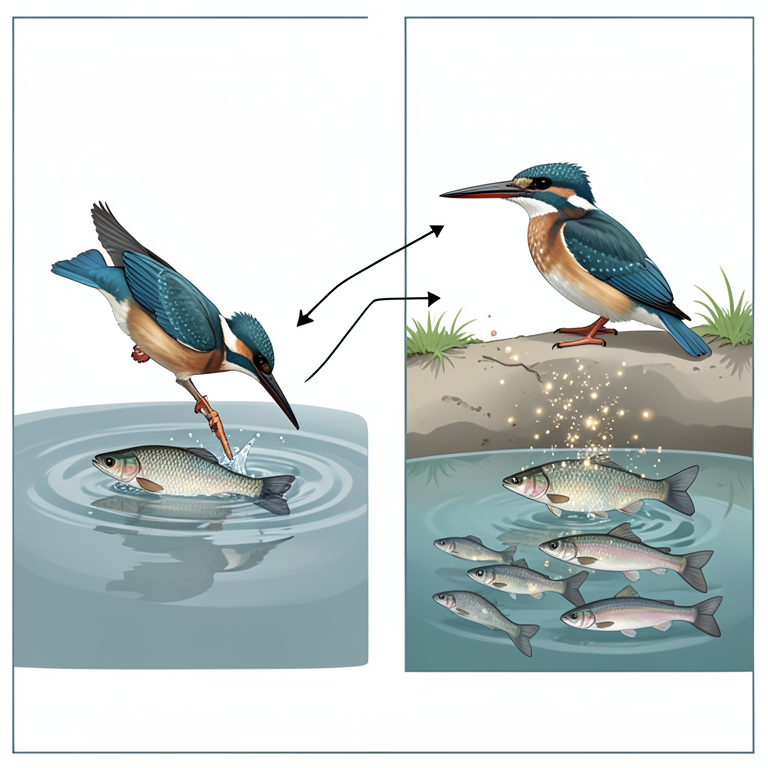
Direct vs Indirect Predation Impacts
AI-generated conceptual illustration (tilapia fish in an earthen aquaculture pond with a kingfisher bird). It explains the idea and does not show study data.
View source evidence ↗Figures & tables
From the original paper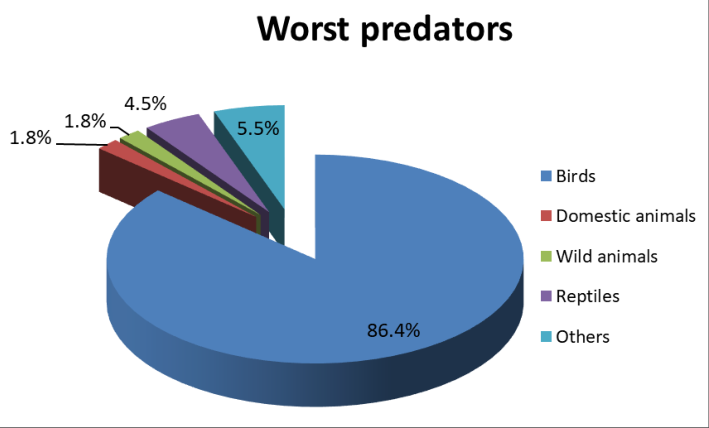 Figure 1
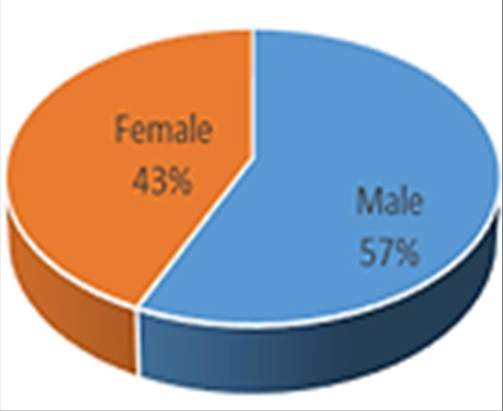 Figure 2
Introduction
Fish farming has evolved into a profitable enterprise globally, providing sustenance and employment opportunities. In many developing countries, fish contributes significantly to animal protein supplies, with approximately 60% of the population deriving over 30% of their protein from fish. Conversely, most developed countries rely on fish for less than 20% of their animal protein supplies (FAO, 2022) [1] . Kenya holds significant potential for pond-based aquaculture, particularly for species such as Oreochromis niloticus (Nile Tilapia) and Clarias gariepinus (African Catfish). Despite an estimated annual harvest of 2 million metric tonnes of fish, accounting for 5% of global aquaculture production (Akoll & Mwanja, 2022) [2] , this potential remained largely untapped as of 2008, despite approximately three decades of various aquaculture extension services (Ngugi et al., 2017) [4] . In Kenya, it worth noting that fish farming has been spreading in non-traditional fish producing areas where high investment in pond construction and maintenance of the ponds has been done. Success in these ponds has been varied due to various factors despite financial and technical support from Government agencies and programmes. Fish farming activities and availability of fish in fish ponds has also brought a challenge of predation. Rothuis et al., (2019) [5] , noted that the controlled or semi controlled conditions are conducive to the survival of predators. The risk of losing profits due to predator attacks is already manifesting in many fish farms especially in areas where there is extensive fish farming and conditions where predators thrive are manifested (Akoll & Mwanja, 2022) [2] . Pemberton et al., (2019) [6] undertook a study that looked at predators in marine fish farms in Tasmania. They discovered that physically preventing predators from accessing the fish is ultimately the sole method to avert the loss of marine farmed fish. Certain bird species present a unique challenge to aquaculture due to their ability to travel vast distances between farms. This mobility increases the risk of spreading disease-causing organisms between geographically isolated farms or from wild animals to farm stock (Musyoka & Mutia, 2016) [8] . Akoll & Mwanja, (2022) [2] on the other hand observed that from their research carried out in Uganda, predators are the key transfer agents for infectious parasites and diseases which affect public and private fish farms. Bacterial pathogens (Flavibacteruim sp, Pseudomonas sp. and Aeromonas sp.), were observed to be transferred between fish farms by the bird predators visiting the farms with those farms protected from bird predators being less affected by the disease than those that are not protected (Akoll et al., 2022) [2] . Fish predators have both direct (such as instances where they attack and kill fish in the pond) and indirect (such as cases where they transfer diseases to the ponds) effects. Losses due to fish predator attacks is particularly high in the tropics where mitigative intervention is limited. The risk of losing profits due to predator attacks is already manifesting in many fish farms especially in areas where there is extensive fish farming and conditions where predators thrive are manifested (Akoll & Mwanja, 2022) [2] . Direct damage occurs when predators kill or severely injure fish or other cultured organisms, resulting in their loss from production. Indirect damage, on the other hand, encompasses a range of effects, including non-lethal wounds, chronic stress leading to reduced feeding efficiency or health, transmission of diseasecausing organisms such as bacteria, viruses, and parasites, and potential damage to the animal enclosure system resulting in escape. Interestingly, indirect damage often outweighs direct damage in terms of economic loss.
Materials and Methods
The study integrated both observational and quantitative methods. By adopting this design, the researcher was able to draw inferences of the status of predators' presence, their management and control practices within the study region; hence the mixed methods research design was the most appropriate. The sample size of this study was confirmed to be the entire 120 active polyethylene lined fish ponds under O. niloticus in the study region. Data was collected using structured questionnaires administered to active pond owners .The respondents of the study were from within the Kitui Central, Kitui South, Kitui Rural, Mwingi West, Mwingi Central, Mwingi North Sub Counties, Fisheries extension staff from the county headquarters and the eight Sub Counties formed part of the information source through key informant interviews. 120 fish ponds formed the 110 households that were interviewed as respondents. The research was conducted in Kitui County, encompassing the seven sub-counties: Kitui Central, Kitui West, Kitui Rural, Kitui South, Mwingi North, Mwingi West, and Mwingi Central. Regression was used to determine the relationship between fish predation and socio-economic status of the farmers. Qualitative data on the other hand was analysed through content analysis and presented in prose or simplified tables.
Results
A look at the level of attack by predators presented revealed that majority of the farmers (59%) have experienced 1-10% losses from attack, while a further 36% have had 11-50% losses from predator attack. A further 1.05% experienced 51-70% losses from predator attacks. Incidences of predator attack were observed to be 93% of the fish farms in the county. The types of predators affecting fish farmers in Kitui county are wild birds (87%), domesticated birds (60%), reptiles (39%), domestic animals (36%), human (30%), wild animals (10%), and racoons (1%), ranked on the level of incidence within the farms. According to majority of the fish farmers (86.4%) birds are the worst predators, with only a small proportion of the farmers indicating domestic animals, wild animals, and reptiles as the worst predators affecting their fish farms
Fig 1: showing severity of predator attaches in fish ponds
According to a majority of the fish farmers (86%), have put in place various predator control measures while only a small proportion of the farmers (14%) have not instituted any predator control measures in their farms.
Investigation on the labour allocation in the fish farms within the county reveals that the control of the predators is left to men in majority of the fishponds (54.7%), with women, children, male and women workers having the predator control role in the rest of the farms. A small proportion of the farmers have hired labour (15%) in their farms. A large proportion of the farms have males working in predator control (57%), but a significant proportion is female also control predation (43%), with fathers making labour allocation in most of the farms (72.6%).
Fig 2: showing predator control undertaken by Gender
Majority of the farmers use a combination of predator control measures like Fencing/Overhead nets/Scare crows (30.5%). A further 22% use fencing combined with overhead nets, while 18% use fencing and scarecrows with a further 12.6% fencing the pond area. Use of overhead nets (8%) and scarecrows (2%) are used by very few farmers It was observed that those farms that indicated that fish farming is profitable had higher initial investment directed towards predator control and slightly lower annual costs directed to predator control and lower estimated annual losses. Those that indicated that fish farming is not profitable had lower initial investments on predator control, higher annual costs on predator control and higher annual losses, hence their view about fish farming profitability has a direct linkage with fish predation and control activities.
Discussion
There is a very high level of prevalence of predator attacks in fish farming within Kitui County, with 93% of the fish farmers indicating that they have experienced a predator attack, from which they experienced significant losses in their production. The predators observed in the area include birds, reptiles, domestic animals, and raccoons, ranked high in occurrences, with birds being the most prevalent fish predator in fish farms in Kitui County. It was found that birds caused the highest level of attack on fish farms in the region, with reptiles, wild-animals, and domestic animals having a low scale of attacks. Birds are considered the worst predators in Kitui County. The highest losses were linked to bird predation according to Murugami et al. (2018) [7] who observed that bird's litter on dykes of the ponds have been confirmed to play a possible role in the transfer of pathogens into aquatic life with piscivorous birds attacks linked to the transmission of fish parasites, for example digenean parasites, in Kirinyaga County. The results of the Chi-Square test revealed a notable distinction between fish farmers who experienced predation on their fish by predators and those who did not encounter such incidents. This discovery aligns with the research outcomes documented by Kimathi et al. (2013) [11] , Shitote et al. (2013) [12] , and Maina et al. (2017), all of whom identified predation by birds and frogs as significant challenges in fish farming. A large majority of the fish farmers have adopted predator control measures in their fish farms, with fathers having the highest predator control responsibilities while some farmers rely on hired labour to control predators. Various predator control measures are available to the farmers including use of fencing, overhead nets and scarecrows, though the most widely used is the combination of all three measures of fencing/overhead nets/scarecrows. A significant number of farmers use fencing and overhead nets to protect their ponds. A look at the effectiveness of these measures revealed that use of the two measures together, fencing/overhead nets, has the highest level of effectiveness, followed by combining all the three measures fencing/overhead nets/scarecrows. Use of overhead nets is less effective than fencing the pond area, and use of scarecrows was observed to be the least effective control measure. According to David et al., (2002), fish farming exclusion and barrier technique is the most effective solution for controlling predation. Installing fishnets and fencing the pond area Farmers were found to spend a significant proportion of their initial investment into predator control. Additionally, they indicated that they face significant annual losses due to predation as well as huge costs directed towards predator control and hiring labour committed towards predator management at the farm. It was found that farmers who spent a substantial amount at the initial stages of investment aiming at predator control later spend less spend less in terms of costs towards predator control. This translated to lower losses due to predation, but all the farmers either incurred huge predator control costs or high losses due to attacks. The study hypothesized that fish predation influences the socio-economic conditions of farmers in Kitui County. The study found that farmers have experienced significant losses to predators' attacks in fish farms and additionally faces major costs trying to control predators that attack their farms, both of which are activities that affect the actual productivity of the fish farm. Major farm activities are observed to be affected by the predation patterns observed in the farms, hence there was a need to confirm this effect and quantify it, which was achieved in this study. The study found that fish predation significantly correlates with the farmers' socioeconomic conditions, with the study realizing that fish predation correlates negatively with farmers' socio-economic conditions. Further, fish predation level was found to have the ability to predict 40.7% of the variability in farmers' socioeconomic conditions, which could be an indication that increase in fish predation level leads to a significant decline in the farmers' socio-economic conditions.
Conclusion
The study found that there are varying types of fish predators that attack fish and that bird predators are the worst with far reaching destruction of fish stock. The study therefore concludes that fish predation in fish farming within Kitui County is a major problem affecting farmers in Kitui county. It was found that farmers have been employing various mechanisms to control fish predation in their farms, with the combination of exclusion, barrier and deterrent methods (overhead-nets, fencing and use of scare-crows) being observed to have the best ability to control fish predators. However, Nzevu (2018) [9][10][11][12][13][14] observed that some predators like the Kingfisher damage the control measures destroying the nets placed to control them before attacking the fish stock. The best control measures were also found to be linked to high initial investment and control costs, which eats into the profit margins for the farmers. Fish predation control was therefore found to be an expensive undertaking for the farmer, and similarly, failure to control predation was also found to lead to great losses in fish stocks for the farmers, thus similarly leading to major losses. Therefore, it is concluded concludes that fish predator control activities adopted by fish farmers are costly but important activities among fish farmers in Kitui County. The study found that fish predation directly leads to decline in profitability of the fish farming ventures in Kitui County. Additionally, farmers were forced to invest time in controlling predation which could be invested elsewhere in the farm, or forced to hire labour to control predators. The farmers are also forced to redirect their funds on various predator control measures in the farm, lack of which would lead to significant losses in the fish stock of the farmer. The study therefore confirms that fish predation significantly affects the socio-economic conditions of the farmers, and fish farmers in the county are significantly affected by the level of fish predation in the area. The study concludes that fish predation is a major problem for fish farmers in Kitui County.
Figures and tables from the paper
References
13 in the original paper- FAO. The State of World Fisheries and Aquaculture 2022. Towards Blue Transformation. Rome: FAO; 2022. Available from: https://doi.org/10.4060/cc0461en
- Akoll P, Mwanja WW. Fish health status, research and management in East Africa: Past and present. African Journal of Aquatic Science. 2022;137(1):117-129.
- Akoll P, Konecny R, Mwanja WW, Schiemer F. Risk assessment of parasitic helminths on cultured Nile Tilapia (Oreochromis niloticus, L.). Aquaculture. 2012;356-357.
- Ngugi CC, Bowman JR, Omolo BO. A New Guide to Fish Farming in Kenya. Agriculture, Ecosystems and Environment Journals. 2017;119(18):112-181.
- Rothius SC, Cooperman M, Lynch AJ, Steel EA, Elliott V, Murchie KJ, Cooke SJ, Dowd S, Cowx IG. Fishing for conservation of freshwater tropical fishes in the Anthropocene. Aquatic Conservation Marine and Freshwater Ecosystems. 2019;29(7):1039-1051.
- Pemberton D, Nigel B, Copson G. Predators on marine fish farms in Tasmania. Pap. Proc. R. Soc. Tasrn. 2019;125:33-35. ISSN 0080-4703.
- Murugami JW, Waruiru RM, Mbuthia PG, et al. Helminth parasites of farmed fish and water birds in Kirinyaga County, Kenya. International Journal of Fisheries and Aquatic Studies. 2018;6(6-12).
- Musyoka SN, Mutia GM. The Status of Fish Farming Development in Arid and Semi-Arid Counties of Kenya: Case Study of Makueni County. European Journal of Physical and Agricultural Sciences. 2016;4(3). ISSN 2056-5879.
- Nzevu JM. Status of Socio-Economic Parameters of Fish Farmers in Kitui Central Sub-County, Kitui County. Quest Journals Journal of Research in Agriculture and Animal Science. 2018;5(1):28-41.
- Obwanga B, Soma K, Ingasia Ayuya O, Rurangwa E, van Wonderen D, Beekman G, Kilelu C. Exploring enabling factors for commercializing the aquaculture sector in Kenya. 3R Research report 011. Wageningen University & Research; 2020.
- Kimanthi et al. Interlocking and distancing processes: An analysis of farmers' interactions with introduced crop production technologies in Sauri Millennium Village, Kenya. Master's thesis. Wageningen University; 2013. Available from: library.wur.nl
- Shitote Z, Wakhungu J, China S. Challenges Facing Fish Farming Development in Western Kenya. Greener Journal of Agricultural Sciences. 2013;3(5):305-311. ISSN: 2276-7770. Available from: http://gjournals.org/GJAS
- Nzevu JM. The contribution of fish farming to household wellbeing of Fish Farmers in Kitui Central Sub-County, Kitui County. Status of Socio-Economic Parameters of Fish Farmers in Kitui Central Sub-County, Kitui County; 2018