
Research article · 2024 · Full text
International Journal of Agriculture Extension and Social DevelopmentPrivate-public investment for synergising growth in Indian agriculture
Volume 7(7) · Pages 451–454 · DOI: 10.33545/26180723.2024.v7.i7f.837 ↗
Research areasIndian Economic and Social DevelopmentAgricultural Economics and PracticesSustainable Development and Environmental Policy
Abstract
Author-writtenThe particle explores the evolution and challenges of Indian agriculture, highlighting the sector's significant progress from 50.82 million metric tons of food grain production in 1950 to a projected 329.68 million metric tons in 2022-23. Despite this growth, increasing population and food demand, limited resources, climate change, and socio-economic issues pose considerable challenges. The paper argues for a synergistic approach between public and private sectors to enhance agricultural productivity, efficiency, and resilience. Public investment, particularly in agricultural research and development, is critical for innovation, productivity improvement, and addressing climate change and resource scarcity. However, public investment has declined, necessitating increased private sector involvement. Private investment brings essential capital, technology, market access, risk mitigation, infrastructure development, and value chain integration, driving modernization and sustainability in agriculture. The paper underscores the need for supportive policies and a liberalized regulatory environment to encourage private and corporate sector investments. By nurturing collaboration and leveraging private capital and expertise, the Indian agriculture sector can achieve sustainable growth, improve food security, reduce poverty, and enhance rural prosperity.
Summary
Source-checkedPlain-language reading of the full paper, prepared with AI and checked against the text. Each point links to the authors' own words.
Why it matters
- Indian agriculture has seen massive growth, with food grain production increasing from 50.82 million metric tons in 1950 to a projected 329.68 million metric tons in 2022-23. View evidence ↗
- Rising population pressures, with India reaching 1.428 billion people in 2023, are expected to drive food demand up to approximately 400 million tonnes by 2050. View evidence ↗
- Indian farmers face multiple challenges, including resource degradation, climate change, and shifting consumption patterns toward high-value agriculture. View evidence ↗
The question
- The paper examines how a synergistic approach between public and private sector investments can improve the productivity, efficiency, and resilience of Indian agriculture. View evidence ↗
What they did
- The author analyzes the evolution of the sector and argues for a combined investment strategy based on existing agricultural data and reports. View evidence ↗
What they found
- Public sector investment in agriculture has declined significantly, dropping from 11.4% in the 1980s to 4.3% in 2019-20. View evidence ↗
- In contrast to public funding, private investment in agriculture rose to 9.3% in 2020-21. View evidence ↗
- Private households provide the majority of agricultural investment at 82%, followed by the public sector at 15%. View evidence ↗
- The corporate sector's contribution to overall agricultural investment has remained very low, staying below 0.2%. View evidence ↗
- Average real public expenditure per hectare in agriculture and irrigation increased from approximately ₹1,900 in the 1980s to ₹5,100 between 2010-11 and 2015-16. View evidence ↗
- Public spending specifically on irrigation rose from ₹1,079 per hectare in the 1980s to ₹3,330 per hectare recently. View evidence ↗
- Public capital investment in agriculture has consistently stayed below ₹500 per hectare. View evidence ↗
- Household investments dominate the private investment landscape, accounting for approximately 90% of the total. View evidence ↗
What it means
- The author concludes that private investment is essential for transforming agriculture and ensuring the resilience of food systems. View evidence ↗
- The author recommends liberalizing the agricultural sector and creating a supportive regulatory environment to encourage responsible public and private investments. View evidence ↗
Visual summary
1 visualsIllustrations explain the paper; they do not show study data.
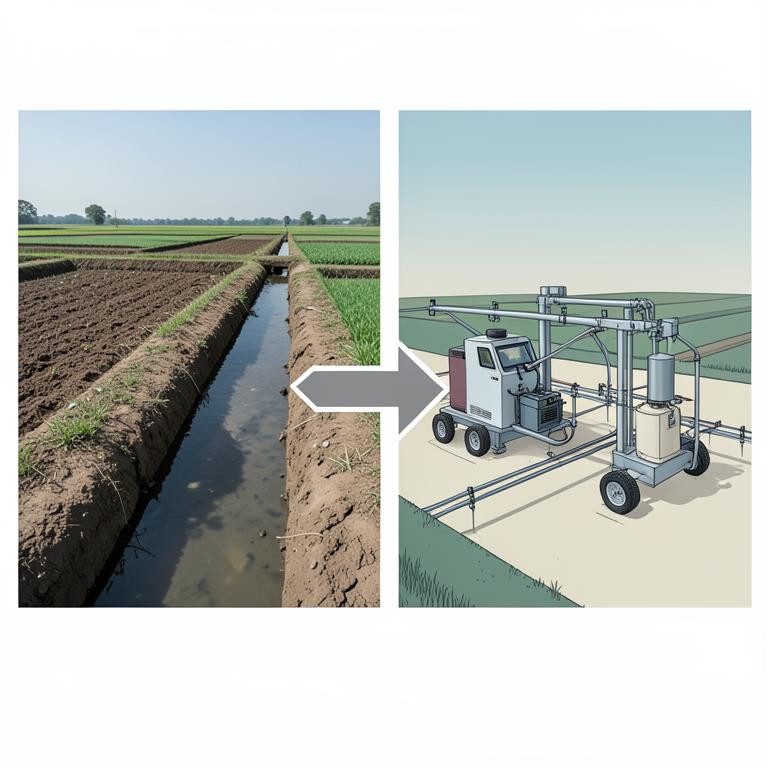
Investment Trend Shift
AI-generated conceptual illustration (Indian agricultural landscape with rice paddies and wheat fields). It explains the idea and does not show study data.
View source evidence ↗Figures & tables
From the original paper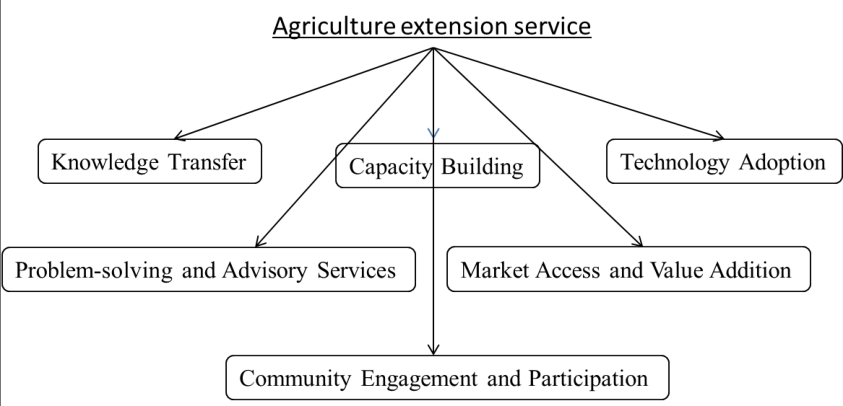 Figure 1
Introduction
Indian agriculture, which traces its roots back to around 10,000 years ago, has indeed witnessed significant progress and evolution over millennia. The journey of Indian agriculture reflects the country's rich agricultural heritage, diverse agro-ecological zones, and the resilience and ingenuity of its farming communities. The increase in food grain production from 50.82 million metric tons (MT) in 1950 to 314.51 million metric tons in 2021-22 (Economic Survey, 2022-23) [5] and the projected record of 329.68 million metric tons in 2022-23 reflects the significant growth and transformation of India's agriculture sector over the decades. The growth of the agriculture and allied sectors at a positive rate of 3.9% in 2021-22 is indeed a positive development, indicating resilience and recovery despite challenges such as the COVID-19 pandemic, supply chain disruptions, and adverse weather events (PIB, Ministry of Agriculture and Farmers Welfare 2023) [7] . However, India became most populous country with a population of 1.428 billion surpassing China in 2023 (Anon, 2023) [2] . By 2050 and the food demand is expected to rise up to ~ 400 million tonnes by the year 2050 (IARI report, 2013). This puts immense pressure on land to feed its growing population. This also creates the problem of poverty and malnutrition accompanied with other socioeconomic problems. There has been a gradual change in the agricultural scenario in India. Several emerging challenges confront Indian farmers. These include limited land and water availability, which is further worsened by degradation of natural resources; climate changes; changes in demand and consumption patterns, moving toward high-value agriculture; increasing population pressure; and liberalization of trade (Lele et al., 2010) [6] . According to the Survey conducted by the Ministry of Finance in 2023 [7] , rural areas in India are home to 65 per cent of the country's population, as per data from 2021. Additionally, 47 per cent of the population relies on agriculture as their primary source of livelihood (PIB, Ministry of Finance 2023) [7] . Hence, the initiatives should be aimed at boosting agricultural productivity and incomes which can have a substantial impact on improving living standards, reducing poverty and addressing nutritional deficiencies across rural communities. Meeting the target growth rate of 4.0% in agriculture, along with providing food security for the growing population, necessitates a significant structural transformation in Indian agriculture (Anon., 2014) [1] . A focused and targeted approach is indeed essential to ensure higher investments in the agriculture sector, which is vital for promoting sustainable agricultural development, enhancing food security, alleviating poverty and for the rural prosperity. To address these constraints, both public and private sectors, particularly corporate entities, need to invest in various aspects of agriculture, for enhancing agricultural productivity, efficiency, resilience and market access, ultimately contributing to the overall growth and sustainability of the agricultural sector.
Constraints in investing in
Constraints in investing in
Aligning public agricultural investment with farmer capital needs
Over the past five decades, the share of public capital formation in agriculture has progressively declined. Currently, the bulk of investments in agriculture and allied activities, standing at 82%, originate from the private household sector. Following this, the public sector contributes 15%, while the private corporate sector accounts for the remaining portion of agricultural investments (Bathla and Kumari, 2017) [3] . The key concerns regarding agricultural investments in increasing investment through personal savings, institutional lending and corporate sector engagement are;
• "crowding in" effect of public investment which drives down corporate sector investment • impact of input subsidies on private investment • rationalization of subsidies to enhance farmer investment and crop productivity
Identifying the most effective types of public investment to reduce poverty and regional inequalities is crucial, along with improving capital use efficiency in irrigation systems through better governance. Futuristic public investment requirements aim to boost farmers' income and address climate change risks.
The average per-hectare real public expenditure in agriculture and irrigation, which includes flood control, has risen from approximately ₹1,900 during the 1980s to ₹5,100 between 2010-11 and 2015-16. In terms of capital expenditure, or public investment, the average spending in agriculture has consistently remained below ₹500 per hectare, while significantly higher investments have been made in irrigation. Specifically, irrigation expenditure has increased from ₹1,079 per hectare during the 1980s to ₹3,330 per hectare in the recent period. (Bathla et al., 2023) [4] .
Public investment in agricultural research and development
Public investment, as per Golait and Lokare (2008) [9] , reduces rural poverty by boosting agricultural production, agribusiness, and rural non-farm employment, while also lowering food prices.
Significance of private investment in empowering agriculture in India
Private sector investment encompasses both corporate and household investments. Corporate sector investment includes contributions from organized entities like large private companies, as well as unorganized entities like sugar and milk cooperatives. On the other hand, household sector investment consists of expenditures on farm equipment, machinery, irrigation, land improvement, and land reclamation. Household investments, comprising about 90% of the total, play a dominant role in private investment. These investments empower farmers to enhance productivity and intensity in growing existing crops, as well as explore non-conventional or high-value crops. Private investment including corporate sector in agriculture saw a notable increase of 9.3 per cent in the fiscal year 2020-21, as highlighted in the Economic Survey 2022-23 [5] . However, despite this growth, the agriculture sector requires further attention. The Survey, presented to the Parliament on January 31, 2023, acknowledges the sector's overall performance but underscores the necessity for a "reorientation" in light of various challenges. These challenges include the adverse effects of climate change, escalating input costs, fragmented landholdings, inadequate farm mechanization, low productivity and disguised unemployment, among others. Addressing these challenges is crucial for revitalizing and sustaining growth in the agriculture sector. Private investment plays a pivotal role in driving innovation, modernization, and growth in the agriculture sector. Here's why private investment is considered critical for agriculture:
Sustainability and Environmental Stewardship:
Increasingly prioritize sustainable agriculture practices, www.extensionjournal.com environmental stewardship, and corporate social responsibility initiatives, promoting resource efficiency, biodiversity conservation, climate resilience and responsible agri-business practices.
The NITI Aayog working paper titled 'From Green Revolution to Amrit Kaal' indicates that,
• Around 80% of investments in agriculture (mainly refer to land, input and production-related investments, does not include investments in markets, storage, transport, grading and other post-harvest infrastructure) come from private sources, with farmers themselves being the primary contributors. • The corporate sector's share in overall public and private investment in agriculture has consistently remained low, at less than 0.2 per cent. This suggests significant potential for expansion in corporate sector investment. • Securing in this particular segment of agriculture continues to pose a substantial challenge.
NITI Aayog emphasize on transition to modernizing agriculture through the adoption of knowledge-and skillintensive practices. This includes • Encouraging private and corporate sector investments,
• Establishing producer institutions,
• Implementing integrated food system mechanisms • Developing innovative producer-end user linkages.
To enable these changes, liberalization in the agriculture sector is essential, characterized by a supportive regulatory environment and responsible public and private investments in agriculture.
Conceptual framework and policy initiatives Conclusion
private investment is indispensable for driving agricultural transformation, better inclusive growth and ensuring the sustainability and resilience of food systems. By leveraging private capital, expertise and innovation, governments, policymakers and stakeholders can unlock the full potential of agriculture to address global challenges, meet rising food demand, and create a more prosperous and sustainable future for farmers and consumers alike. By implementing these strategies, governments can create an enabling environment that encourages private sector investments in agriculture, driving innovation, growth and prosperity in the sector
Figures and tables from the paper
References
3 in the original paper- Bathla S, Joshi PK, Das GK. Synchronising public investment in agriculture with capital requirements of farmers. Economic and Political Weekly. 2023;58(25, 26):27-33.
- Economic Survey 2022-23. Ministry of Finance, Government of India; c2023.
- Golait R, Lokare SM. Capital adequacy in Indian agriculture: A riposte. Reserve Bank of India Occasional Paper. 2008;29(1):79-101.