
Research article · 2024 · Full text
International Journal of Veterinary Sciences and Animal HusbandryStudies on the protective role of Sardinella longiceps extract and quercetin on carbon tetrachloride-induced hematological changes in rats
Volume 9(4) · Pages 227–231 · DOI: 10.22271/veterinary.2024.v9.i4d.1549 ↗
Research areasDrug-Induced Hepatotoxicity and ProtectionNatural Antidiabetic Agents StudiesNigella sativa pharmacological applications
Abstract
Author-writtenThe study aimed to assess the hematological profile of rats treated with Sardinella longiceps extract (SLFE) and quercetin against carbon tetrachloride (CCl4)-induced toxicity. Male Wistar rats (150-200 g) were divided into five groups. The control group received 1% DMSO orally for 3 weeks and olive oil intraperitoneally (i.p.) twice a week during the 2nd and 3rd weeks. Groups II to V were administered CCl4 (1ml/kg b.wt. in olive oil, 1:1) i.p. twice weekly in the 2nd and 3rd weeks. Groups III and IV received SLFE (300mg/kg b.wt.) and quercetin (30mg/kg b.wt.) orally daily for 3 weeks, respectively. Group V was coadministered SLFE and quercetin daily for 3 weeks. CCl4 exposure led to significant reductions (p < 0.01) in hemoglobin, and significant decreases (p
Summary
Source-checkedPlain-language reading of the full paper, prepared with AI and checked against the text. Each point links to the authors' own words.
Why it matters
- Evaluating hematological status is a critical tool for identifying the root causes of diseases because blood parameters reliably reflect the toxic effects of chemicals and medications. View evidence ↗
- Carbon tetrachloride (CCl4) causes tissue damage primarily through lipid peroxidation, which leads to oxidative damage. View evidence ↗
- Sardinella longiceps (Indian oil sardine) is a rich source of omega-3 polyunsaturated fatty acids (PUFAs), specifically docosahexaenoic acid and eicosapentaenoic acid. View evidence ↗
- Quercetin is a polyphenolic flavonoid with antioxidant properties that allow it to scavenge free radicals and work synergistically with other antioxidants. View evidence ↗
The question
- The study aimed to evaluate how Sardinella longiceps extract (SLFE) and quercetin, alone or in combination, protect the hematological profile of rats against CCl4-induced toxicity. View evidence ↗
What they did
- The experiment used 30 adult male Wistar albino rats weighing between 150 and 200 grams. View evidence ↗
- Blood samples of approximately 3ml were collected via retro-bulbar puncture and analyzed using a Mindray BC 2800 auto-hematology analyzer. View evidence ↗
What they found
- CCl4 administration significantly reduced the red blood cell (RBC) count from 8.32 ± 0.13 to 5.97 ± 0.34 ×10⁶/µl compared to the control group (p < 0.05). View evidence ↗
- Hemoglobin levels significantly decreased from 11.03 ± 0.26 g/dl in the control group to 7.43 ± 0.45 g/dl in the CCl4-treated group (p < 0.01). View evidence ↗
- Histological analysis showed that the combination of fish extract and quercetin significantly reduced liver damage, resulting in a near-normal lobular pattern with negligible fatty changes. View evidence ↗
What it means
- The authors conclude that while CCl4 causes significant hematological damage via liver injury, the combined administration of S. longiceps extract and quercetin effectively alleviates these alterations. View evidence ↗
- The authors state that further investigation is required to fully understand the underlying mechanisms and determine the clinical applications of these findings. View evidence ↗
Visual summary
2 visualsIllustrations explain the paper; charts are replotted from the paper's own table values.
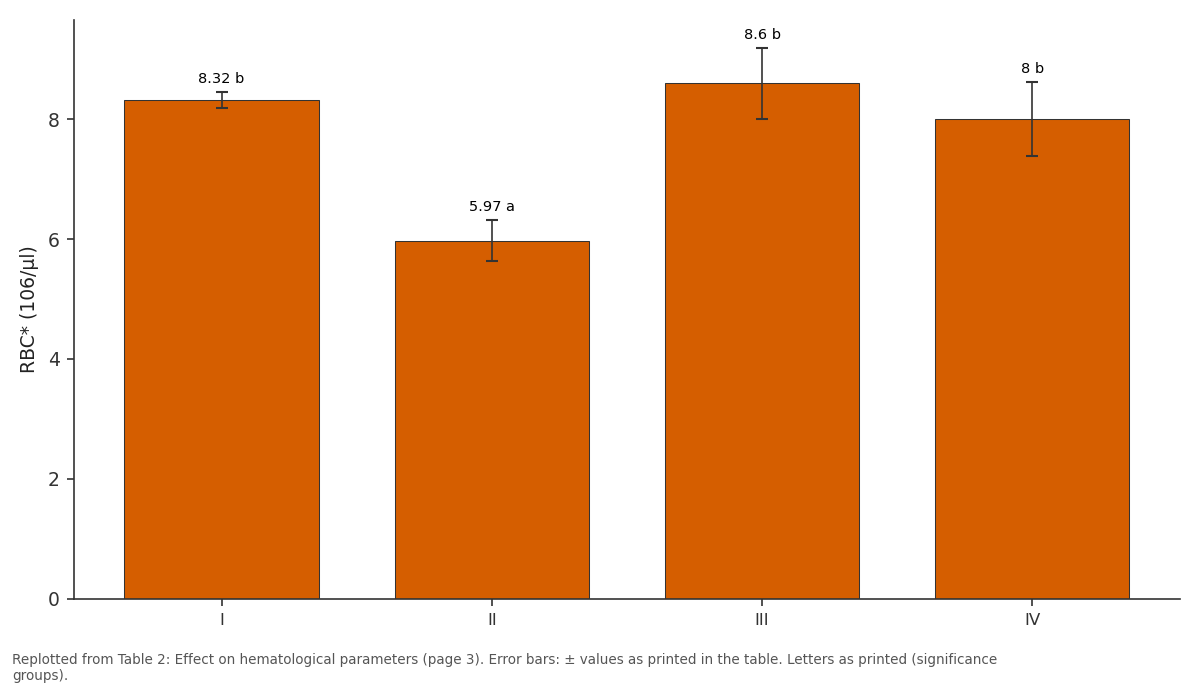
RBC* (106/µl): I vs II vs III vs IV
Replotted from Table 2 (page 3) of the original paper. Every bar is the paper's own table value.
View source evidence ↗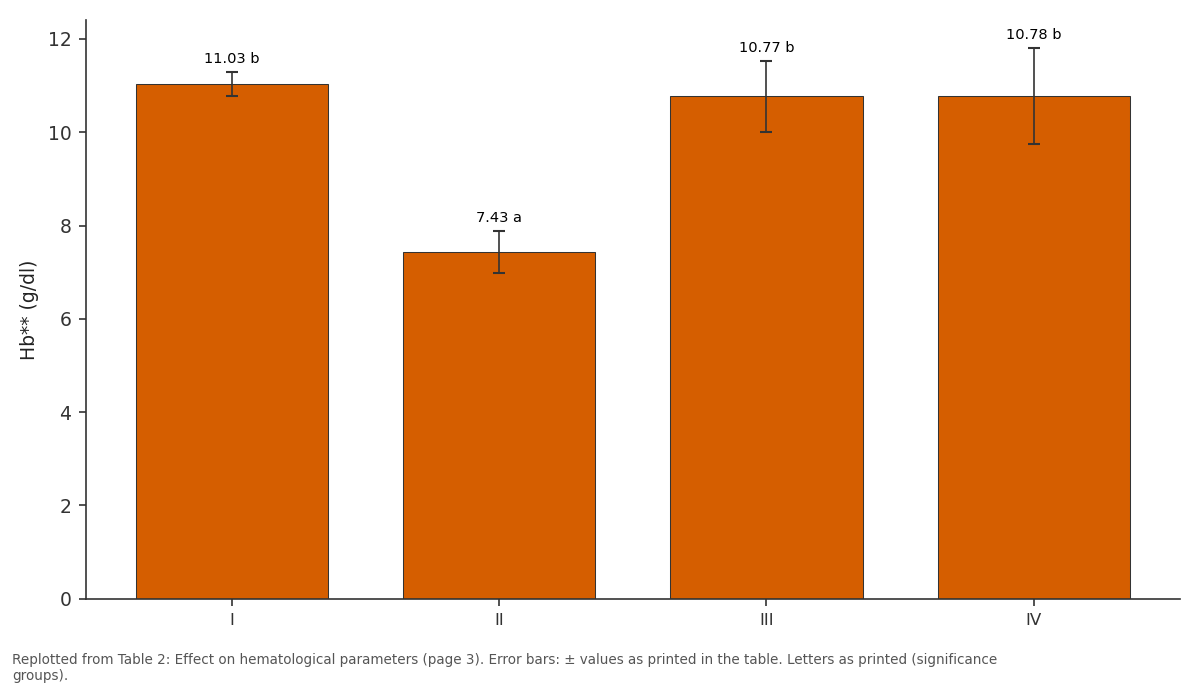
Hb** (g/dl): I vs II vs III vs IV
Replotted from Table 2 (page 3) of the original paper. Every bar is the paper's own table value.
View source evidence ↗Figures & tables
From the original paper Table 1
 Figure 1
 Table 2
 Table 3
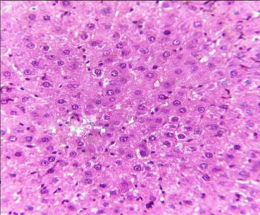 Figure 2
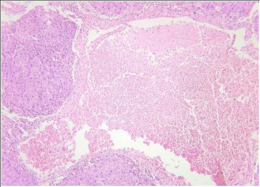 Figure 3
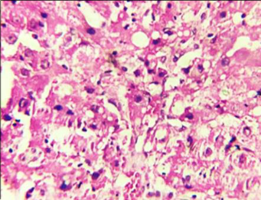 Figure 4
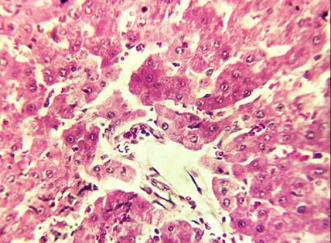 Figure 5
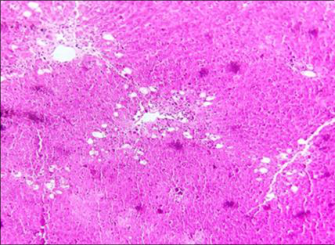 Figure 6
Introduction
The evaluation of hematological status is an important tool for detecting the root cause of diseases. Because blood is the most important tissue in which metabolic changes are reflected, aberrant changes in blood parameters are a reliable signal of the hazardous effects of medications, poisons, and diseases. As a result, numerous hematological criteria can be utilized to estimate the harmful effect of extracts on an animal's blood. By inhalation, ingestion, and cutaneous absorption, CCl 4 is quickly absorbed into the body. The mechanism by which CCl 4 damages tissue is through oxidative damage caused by lipid peroxidation. It begins after CCl 4 is converted to highly toxic trichloromethyl radicals (•CCl 3 ) and trichloromethyl peroxyl radicals (•CCl 3 O 2 ) by the cytochrome P450 enzyme, especially by its isoenzyme CYP 2 E 1 . Various cellular processes, such as apoptosis, necrosis, ferroptosis, and autophagy, are triggered by these free radicals. These reactive free radical metabolites of CCl 4 initiate lipid peroxidation by reacting with polyunsaturated fatty acids (PUFA) or cause cell membrane disruption, leakage of microsomal enzymes, and thus cell damage by covalently binding to protein and fatty acids. Lipid peroxidation products are highly reactive and show significant biological effects that cause selective changes in cell signaling, protein and DNA damage, and cytotoxicity (Doherty, 2000) [1] . The study of hematological status is one of the important ways for diagnosis of the root cause of diseases. Blood is the most important tissue, in which changes in metabolic processes are reflected, therefore, abnormal alterations in blood parameters are the reliable indicator of the toxic effects of drugs, chemicals and diseases. Therefore, the evaluation of various hematological parameters can be used to determine the extent of the deleterious effect of extracts on the blood of an animal. The Indian oil sardine, Sardinella longiceps valenciennes supports a neritic pelagic fishery that accounts for 2 to 33% of India's annual marine fish production. Despite being found all along the Indian coast, the species supports a significant commercial fishery along the coasts of Kerala, Karnataka, and Tamil Nadu and the southern part of Maharashtra (Jayaprakash and Pillai, 2000) [4] Sardines serve as major sources of fish oil and contain high contents of bioactive lipid omega-3 PUFAs especially eicosapentaenoic and docosahexaenoic acid. Palmitic acid was found to be major fatty acid. Proximate analysis revealed that it contains crude protein, crude fat, ash and moisture (Mohanty et al., 2016) [9] . The nutritive value of fish has not been brought to the limelight so far and its therapeutic potential as Quercetin (3,3′,4′,5,7-pentahydroxyflavone) is a ubiquitously present polyphenolic flavonoid in plant food sources such as fruits, vegetables, tea, aromatic plants, and red wine. Plants contain either free quercetin (aglycone) or quercetin conjugated with sugars (quercetin glycosides) and alcohols (quercetin methyl ethers) (Zargar and Wani, 2021) [14] . Quercetin usage has been reported to have the therapeutic potential to mitigate various kinds of toxicity, such as cardiotoxicity, nephrotoxicity, neurotoxicity and hepatotoxicity. Antioxidant properties of quercetin were mediated by its capability to scavenge free radicals, bind to metal ions, and display synergistic actions with other antioxidants (Waseem et al., 2022) [13] . Based on the above reports, it was planned to study the effect of Sardinella longiceps extract, quercetin alone, and a combination of fish extract and quercetin with a hypothesis of an improved protective effect of synergism between the combination of Sardinella longiceps fish extract and quercetin in albino rats of Wistar strain.
Materials and Methods
Materials and Methods
Rats
The study was conducted on 30 adult male albino rats of Wistar strain with an average body weight of about 150-200 grams, procured from Jeeva Life Sciences, Hyderabad (Regn. No.1757/PO/RcBiBt/S/14/CPCSEA). Rats were acclimatized to the laboratory conditions one week before the start of the experiment. All rats were maintained on pelleted rat feed (Jeeva Life Sciences, Hyderabad) and clean drinking water ad-libitum in the lab animal house, NTR C.V.Sc., Gannavaram.
Fish
Freshly harvested Sardinella longiceps fish were purchased from the fishermen at the Fish Landing Centre, Kakinada, Andhra Pradesh, India one week before the start of the experiment. Fish were transported to the laboratory in insulated Styrofoam boxes filled with icepacks and were stored at -20 °C in the freezer until they were processed further.
Preparation of Sardinella longiceps extract
The fish extract was prepared as per the method described by Bligh and Dyer, 1959 with minor modifications. Sardinella longiceps fish were properly cleaned and the muscle tissue was separated Two kg of chopped muscle tissue was ground in a blender for 30 sec. Chloroform and methanol were added in equal quantities (1:1) at 5 times the tissue sample volume. The mixture was homogenized for 10 minutes with a pause of 2 minutes and was placed on an orbital shaker for 24 hours. The homogenate was filtered into a glass tray through Whatman No. 1 filter paper and was placed in a hot air oven at 65 °C for evaporation of the solvent. After evaporation of the entire solvent. The fish extract attached to the bottom and sides of the glass tray was scraped and stored in a container at -4 °C.
Preparation of drug and other solutions 2.4.1 Carbon tetrachloride
Carbon tetrachloride suspension was prepared by mixing it with olive oil in a 1:1 ratio.
Fish extract
Before oral dosing, the required quantity of stored fish extract at -4 °C was weighed daily according to the body weight of the animals and suspended in 1% DMSO @ 75 mg/ml.
Quercetin
A stock solution of 15mg/ml was prepared every week by suspending weighed quercetin powder in 1% DMSO.
Experimental Design
Experiments of this study were conducted following the guidelines of the National Institute of Health Guide for the Care and Use of Laboratory Animals (NIH Publication, Number 85-23, Revised 1985) [2] . The protocol was approved by the Institutional Animal Ethics Committee of N.T.R.
Collection of blood samples
Twenty-four hours after the last treatment as per the experimental protocol, blood (approx. 3ml) was collected by retro-bulbar puncture heparinized container from all the rats and was estimated for complete blood picture using an autohematology analyzer-Mindray (BC 2800).
Total Leucocyte Count (TLC):
The results were expressed in ×10 3 /µl.
Lymphocytes (LYMP):
The results were expressed in ×10 3 /µl.
Monocytes (MONO):
The results were expressed in ×10 3 /µl.
Granulocytes (GRAN):
The results were expressed in ×10 3 /µl.
Total Erythrocyte Count (TEC):
The results were expressed as ×10 6 /µl.
Haemoglobin (Hb):
The results were expressed as g/dl of blood.
Haematocrit (HCT):
The results were expressed in %.
Mean Corpuscular Volume (MCV):
Mean Corpuscular Volume (MCV):
Plateletcrit (PCT):
The results were expressed in %.
Histopathological examination
Liver samples for histopathological examination were collected in 10% formalin. Formalin fixed tissues were subjected to dehydration in ascending grades of ethanol (50-99%), cleared in xylene and embedded in paraffin. 3-5µ thick tissue sections were prepared, stained with hematoxylin and eosin dye and mounted using DPX on glass slides for microscopic examination (Luna, 1968) [7] .
Statistical analysis
The data was analyzed using the statistical software SPSS 17.0 version. Results were expressed as mean ± SEM for six independent rats per each group. Means were compared and the statistical significance of the differences between groups was assessed using a one-way analysis of variance followed by Duncan's multiple range test. Values were considered statistically significant when p < 0.05.
Results and Discussion
Hematological parameters are generally assessed to determine the functional health status and the internal environment of an organism. The hematological parameters were significantly altered by intraperitoneal administration of CCl 4 @ 1ml/kg body weight twice a week in the 2 nd and 3 rd week which was evidenced by a significant reduction in RBC count, hemoglobin and platelet count with a non-significant decrease in WBC count. There was no significant difference between the groups regarding the values of leucocytes and differential leucocyte count. The levels of erythrocytes have been depleted significantly (p<0.05) in group I to 5.97±0.34 from 8.32±0.13 (10 6 /µl) in CCl 4 -induced hepatotoxic group rats. Hb concentration, RBC and platelet counts play a critical role in host defense and many physiological functions (Ndubueze et al., 2021) [10] . A significant decrease in the red blood cells indicates that CCl 4 disrupts the erythropoiesis process or an increase in the destruction of red blood cells, increase in the premature RBC in circulation, and impaired Hb biosynthesis (Vishnu et al., 2022) [12] . The results demonstrated that CCl 4 administration produced thrombocytopenia in the blood as evidenced by a significant decrease in platelet count to about 506.5 ± 123.84 (103/µl) from 894.83±102.19 (103/µl) in control group of rats. CCl 4 -induced liver damage can disrupt the synthesis of thrombopoietin, a hormone crucial for platelet production, leading to decreased platelet levels. Additionally, liver injury can impair platelet function and clearance, further contributing to thrombocytopenia A significant increase in the RBC and platelet counts was observed in the fish extracttreated groups when compared to the CCl 4 -induced hepatotoxic group at the end of the experimental period. The increase in RBC count may be due to docosahexaenoic acid (DHA) supplementation in the form of fish extract that improves RBC membrane flexibility and reduces disruption of RBC. The increase in platelet count may be due to the presence of arachidonic acid @ 2.41±0.84% (Jamila and Sheeba, 2021) [3] in the fish extract which initiates the synthesis of thromboxane needed for platelet aggregation (Zhou et al., 2021) [15] . The results showed that the hemoglobin was increased to10.77±0.76g/dl in the fish extract group. An increase in hemoglobin concentration may be a direct consequence of the high iron content @ 15.6±2.35 mg/100 g (Jamila and Sheeba, 2021) [3] of fish which may stimulate the synthesis of hemoglobin. The present study showed that the supplementation of quercetin orally for 21 days could improve the platelet count in animals treated with CCl 4 . The observed protective and improvement effect can be attributed to the antioxidant properties, immunomodulatory effects of quercetin, as demonstrated in the study by Patil et al. (2018) [11] . The group that was administered with fish extract exhibited a rise in platelets (922.67±182.3) when compared to CCl 4 induced hepatotoxic group (506.5± 123.84), which showed that there was a rise in platelets at a 5% level of significance. There was a significant difference between group III and group V (p<0.05). According to the research findings quercetin has good hematological potential by increasing RBC, and Hb. It has been reported that the administration of quercetin improved the metabolism of iron and Hb (Patil et al., 2018) [11] . The research findings indicate that administering Sardinella longiceps extract and quercetin together, at doses of 300 mg/kg and 30 mg/kg orally for 21 days, improved hematological parameters in animals treated with carbon tetrachloride (CCl4). The presence of docosahexaenoic acid (DHA) in the fish extract likely potentiated quercetin's antioxidant and antithrombotic effects. This synergy may have resulted in a protective and beneficial impact on hematological parameters. MCV, MCH and MCHC were all reduced in group II compared to group I. MCV values were increased significantly in group V compared with the CCl 4 group (Table 1). However, the groups I, III, IV and V showed a nonsignificant increased value of MCH compared to group II. Group II showed a reduction in value at 5% level of significance. The estimated values of hemoglobin in groups I to V were presented in Table 7 and Figure 12. The results demonstrated a significant decrease in hemoglobin levels indicating the anemic condition of group II rats. The average amount of hemoglobin estimated in the blood of the animals in the control group was 11.03±0.26 which is comparable to mean values of hemoglobin in groups III, IV with values 10.77± 0.76 g/dl, 10.78±1.03 g/dl respectively. Group V shows a significant difference (p<0.01) with both groups I and II with the level of Hb 13.9± 0.79g/ dl and there was no significant difference between groups I, III and IV. The effect was noticed on PCT values revealed a significant difference between group I and group II. III and IV treatment groups resulted in an increase in PCT values compared to group II. An increase in PDW value in CCl 4 -treated rats may be attributed to inflammation-induced changes in platelet morphology, compensatory mechanisms, and secondary effects of liver damage on vascular integrity. The decrease in plateletcrit (PCT) in CCl 4 -treated rats may likely be due to liver damage impairing thrombopoiesis, increased platelet destruction, altered megakaryopoiesis, inflammatory responses, and secondary effects of liver damage. Sardinella longiceps extract, being rich in omega-3 fatty acids, vitamins, and minerals, anti-inflammatory agents, and antioxidants, may have enhanced platelet production and function, leading to a more uniform distribution of platelet size (decreased PDW) and an increase in platelet volume (increased PCT) (Kamoun et al., 2016) [5] Additionally, its hematopoietic stimulation properties could have further contributed to the observed effects. Quercetin has been shown to inhibit platelet aggregation and activation, modulating thrombopoiesis, which could lead to a decrease in platelet distribution width (PDW) and potentially an increase in plateletcrit (PCT). Our study demonstrates that the combined administration of quercetin and fish extract produces a synergistic effect on platelet parameters. This could be due to combined effects, including complementary mechanisms, enhanced bioavailability, synergistic interactions of their components, simultaneous targeting of multiple pathways related to platelet function, and coordinated regulation of thrombopoiesis (Patil et al., 2018) [11] . Results indicate that CCl 4 exposure alters blood parameters, likely due to liver damage, but administering the fish extract and quercetin together improves these parameters. This suggests a potential protective role for the combination in CCl 4 -induced hematological alterations. The hepatoprotective effects of S. longiceps extract was also evident from the prominent variations in liver histology ( [8] . The S. longiceps extract group displayed a mild fatty change indicating protection of hepatocytes and had near-normal histology with mild congestion of the central vein and swollen hepatocytes. Normal histological appearance of the central vein, hepatocytes, and sinusoidal structure were observed in the livers of the control group. Quercetin (30 mg/kg) along with CCl 4 insult, showed a normal lobular pattern with mild to moderate fatty changes and very mild congestion implicating the ameliorative effect of quercetin on CCl 4 -induced toxicity. (Kemelo et al., 2017) [6] . The histological architecture of liver sections of rats treated with a combination of S. longiceps extract and quercetin along with CCl 4 insult significantly reduced altered histopathological features and showed a normal lobular pattern with negligible fatty changes and mild congestion implicating the ameliorative effect of S. longiceps extract and quercetin combination on CCl 4 -induced toxicity in rats.
| Group | Group Name | Treatment |
|---|---|---|
| Ⅰ | Control | 1% DMSO PO daily for 3 weeks + Olive oil @ 1 ml/Kg B.wt IP twice a week in the 2nd and 3rd week |
| Ⅱ | Toxic | CCl4 @ 1 ml/Kg B.wt in Olive oil (1:1) IP twice a week in the 2nd and 3rd week |
| Ⅲ | Fish extract (FE) | Fish extract @ 300 mg/Kg B.wt in 1% DMSO PO daily for 3 weeks + CCl4 as in Group Ⅱ |
| Ⅳ | Quercetin (Q) | Quercetin @ 30 mg/Kg B.wt in 1% DMSO PO daily for 3 weeks + CCl4 as in Group Ⅱ |
| Ⅴ | Fish extract + Quercetin (FE+Q) | Fish extract as in Group Ⅲ + Quercetin as in Group Ⅳ + CCl4 as in Group Ⅱ |
Table text extracted from the original PDF; superscript letters are shown inline. The original table image is below.
View original table image
Conclusion
In conclusion, the study highlights the detrimental effects of CCl 4 on hematological parameters in Wistar rats, likely due to liver damage. However, the co-administration of S. longiceps fish extract and quercetin showed promise in alleviating these effects, indicating a potential protective role against CCl 4induced hematological alterations. These findings suggest that S. longiceps extract and quercetin may have therapeutic potential in mitigating liver damage-associated hematological changes and require further investigation to elucidate their underlying mechanisms and clinical applications.
Conflicting Interest:
The Authors declare that there is no conflict of interest.
Acknowledgement
AcknowledgementThe authors are thankful to the Dean of NTR College of Veterinary Science for providing technical facilities and support.
Figures and tables from the paper
| Group | I | II | III | IV | V |
|---|---|---|---|---|---|
| WBC (103/µl) | 18.7 ± 3.18a | 19.72 ±5.59a | 24.57 ± 3.33 a | 26.77 ± 3.99 a | 17.73 ± 1.51 a |
| RBC* (106/µl) | 8.32 ± 0.13b | 5.97 ± 0.34a | 8.6 ± 0.59b | 8 ± 0.62 b | 7.48 ± 0.25b |
| Hb** (g/dl) | 11.03±0.26b | 7.43 ± 0.45a | 10.77 ± 0.76b | 10.78 ± 1.03b | 13.9 ± 0.79c |
| PLT* (103/µl) | 894.83±102.19bc | 506.5 ± 123.84a | 922.67 ± 182.3c | 573.83 ± 70.64abc | 541 ± 59.68ab |
| HCT* (%) | 44.6 ± 1.18b | 30.92 ± 1.74a | 43.63 ± 2.71b | 42.48 ± 3.75b | 43.38 ± 1.45b |
Table text extracted from the original PDF; superscript letters are shown inline. The original table image is below.
View original table image
| Group | I | II | III | IV | V |
|---|---|---|---|---|---|
| MCV** (fl) | 53.67 ± 0.9b | 51.97 ± 0.44ab | 50.95 ± 0.84a | 52.83 ± 0.88ab | 58.08 ± 0.48c |
| MCH (pg) | 13.2 ± 0.18a | 12.42 ± 0.13 a | 12.47 ± 0.25 a | 13.3 ± 0.38 a | 12.4 ± 0.6 a |
| MCHC* (g/dl) | 24.72 ± 0.14abc | 23.97 ± 0.24a | 24.53 ± 0.33ab | 25.2 ± 0.31bc | 25.5 ± 0.41c |
| PDW (%) | 16.55±0.06a | 17.32±0.34b | 16.68±0.1ab | 16.93±0.14ab | 16.62±0.27a |
| PCT* (%) | 0.5±0.04b | 0.35±0.08a | 0.56±0.06b | 0.39±0.05ab | 0.35±0.04a |
Table text extracted from the original PDF; superscript letters are shown inline. The original table image is below.
View original table image
References
12 in the original paper- Doherty RE. A history of the production and use of carbon tetrachloride, tetrachloroethylene, trichloroethylene and 1,1,1-trichloroethane in the United States: part 1-historical background: carbon tetrachloride and tetrachloroethylene. Environ Forensics. 2000;1(2):69-81.
- Jamila P, Sheeba W, Immaculate JK. Comparative studies on the nutrition of two species of sardine, Sardinella longiceps and Sardinella fimbriata of South East Coast of India. Food Sci Nutr Technol. 2021;6(4):000272.
- Kamoun Z, Kamoun AS, Bougatef A, et al. Hepatoprotective and nephroprotective effects of sardinelle (Sardinella aurita) protein hydrolysate against ethanol-induced oxidative stress in rats. Environ Sci Pollut Res. 2017;24:1432-1441.
- Kemelo MK, Pierzynová A, Canová NK, Kučera T, Farghali H. The involvement of sirtuin 1 and heme oxygenase 1 in the hepatoprotective effects of quercetin against carbon tetrachloride-induced sub-chronic liver toxicity in rats. Chem Biol Interact. 2017;269:1-8.
- Mohamed NA, Hashem MA, Alzahrani AM, Abdel Moneim AM, Abdou HM. Hepatoprotective effect of Spirulina platensis against carbon tetrachloride-induced liver injury in male rats. J Pharm Pharmacol. 2021;73(11):1562-1570.
- Mohanty BP, Ganguly S, Mahanty A, Sankar TV, Anandan R, Chakraborty K, et al. DHA and EPA content and fatty acid profile of 39 food fishes from India. Biomed Res Int. 2016;4027437.
- Ndubueze IK, Ogbunugafor HA, Oladejo AA. Effect of smoked and oven-dried catfish (Clarias gariepinus) on haematological parameters, liver and antioxidant enzymes of Wistar rats. Eur J Nutr Food Saf. 2021;13(5):3-13.
- Patil NV, Lonare MK, Sharma M, Lalhriatpuia PC, Saini SPS, Rampal S. Hemato-biochemical alterations mediated by carbendazim exposure and protective effect of quercetin in male rats. Toxicol Int. 2018;25:7-18.
- Vishnu KV, Ajeeshkumar KK, Lekshmi RG, Chatterjee NS, Ganesan B, Anandan R, et al. Sardine oil loaded vanillic acid grafted chitosan microparticles improves the in vivo antioxidant, haematological and lipid profile. J Food Sci Technol. 2022;59(8):3086-3092.
- Waseem M, Kaushik P, Dutta S, Chakraborty R, Hassan MI, Parvez S. Modulatory role of quercetin in mitochondrial dysfunction in titanium dioxide nanoparticle-induced hepatotoxicity. ACS Omega. 2022;7(4):3192-202.
- Zargar S, Wani TA. Protective role of quercetin in carbon tetrachloride-induced toxicity in rat brain: biochemical, spectrophotometric assays and computational approach. Molecules. 2021;26(24):7526.
- Zhou Y, Khan H, Xiao J, Cheang WS. Effects of arachidonic acid metabolites on cardiovascular health and disease. Int J Mol Sci. 2021;22(21):12029.