
Research article · 2024 · Full text
International Journal of Agriculture Extension and Social DevelopmentKnowledge and adoption of improved cultivation practices by Rose growers in Prayagraj district of Uttar Pradesh
Volume 7(7) · Pages 548–550 · DOI: 10.33545/26180723.2024.v7.i7g.855 ↗
Research areasAgricultural Economics and Practices
Abstract
Author-writtenThe study was conducted district of Uttar Pradesh to assess the knowledge of the respondents towards improved rose cultivation practices. A total number of 25 respondents were selected purposively from 8 villages under Chaka block because productivity, production and area under rose cultivation were found to be maximum. The data were collected by interview method by using pre structured schedule and later appropriate statistical analysis was done to find out the meaningful results. The findings also revealed that majority (52.80%) of the respondents have medium knowledge level followed by 32.80 per cent of those having high and 14.40 per cent of those having low knowledge level toward improved rose cultivation practices.
Summary
Source-checkedPlain-language reading of the full paper, prepared with AI and checked against the text. Each point links to the authors' own words.
Why it matters
- Floriculture is a long-standing farming activity in India that has recently become a profitable global agri-business with high potential for providing self-employment to small and marginal farmers. View evidence ↗
The question
- The objective of this study was to evaluate the level of knowledge rose growers have regarding improved cultivation practices. View evidence ↗
What they did
- The researchers used a descriptive research design to characterize the phenomena being studied. View evidence ↗
- The study was conducted in the Prayagraj district of Uttar Pradesh, specifically selecting the Chaka block and 8 villages within it based on having the maximum area of rose cultivation, resulting in a sample of 125 respondents. View evidence ↗
- Data were gathered through interviews using a pre-structured schedule and then analyzed statistically. View evidence ↗
What they found
- The majority of the respondents (52.80%) possessed a medium level of knowledge regarding improved rose cultivation practices. View evidence ↗
- Following the medium group, 32.80% of respondents had a high knowledge level and 14.40% had a low knowledge level. View evidence ↗
- A high percentage of growers were knowledgeable about variety selection, with 61.60% fully agreeing that improved and high-yielding varieties (HYVs) should be used for commercial cultivation. View evidence ↗
- Knowledge of expected yields was low, as 44.00% of respondents were not correct about the yield of 90 stems/plant/year (10 lakh flowers/ha/year). View evidence ↗
- Factors such as age, education, occupation, house type, social participation, extension contacts, mass media exposure, and risk orientation were significantly and positively associated with knowledge levels at a 5% significance level. View evidence ↗
- Annual income and family type showed a positive and significant association with knowledge levels at a more stringent 1% significance level. View evidence ↗
- Land holding size did not have a significant influence on the knowledge level of the respondents. View evidence ↗
What it means
- The authors concluded that most respondents had a medium socio-economic status and a medium level of knowledge regarding improved rose cultivation. View evidence ↗
Visual summary
3 visualsIllustrations explain the paper; charts are replotted from the paper's own table values.
Factors Influencing Knowledge
AI-generated conceptual illustration (Rose plants in a cultivation field). It explains the idea and does not show study data.
View source evidence ↗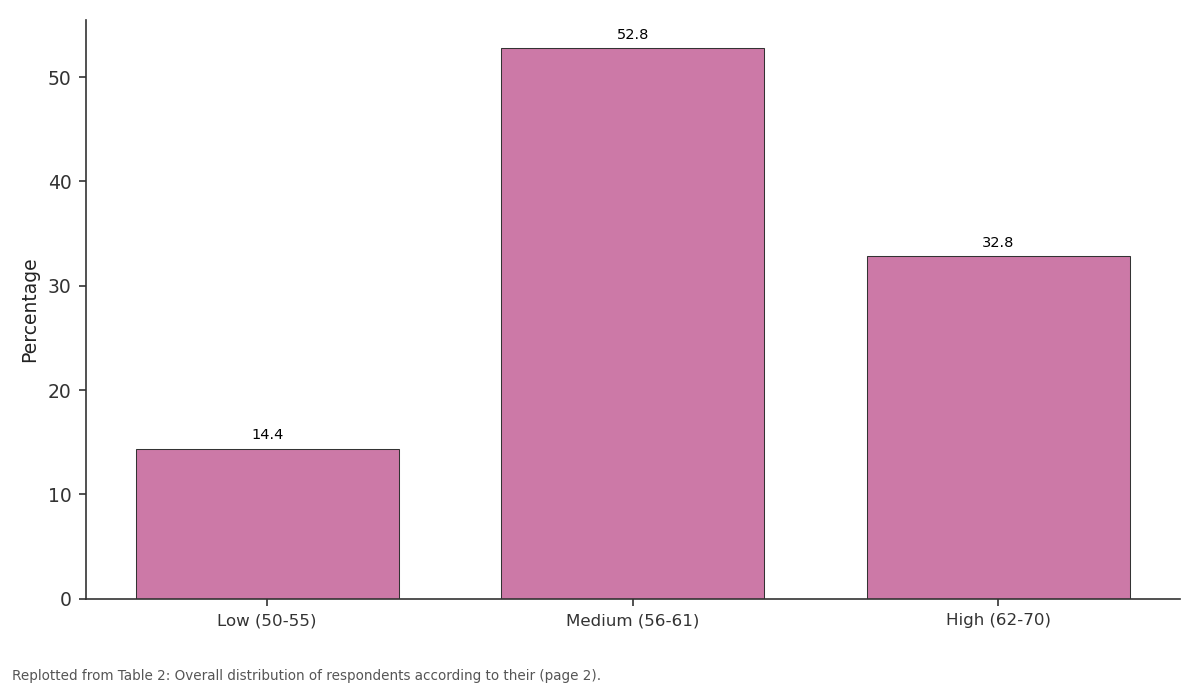
Percentage: Low (50-55) vs Medium (56-61) vs High (62-70)
Replotted from Table 2 (page 2) of the original paper. Every bar is the paper's own table value.
View source evidence ↗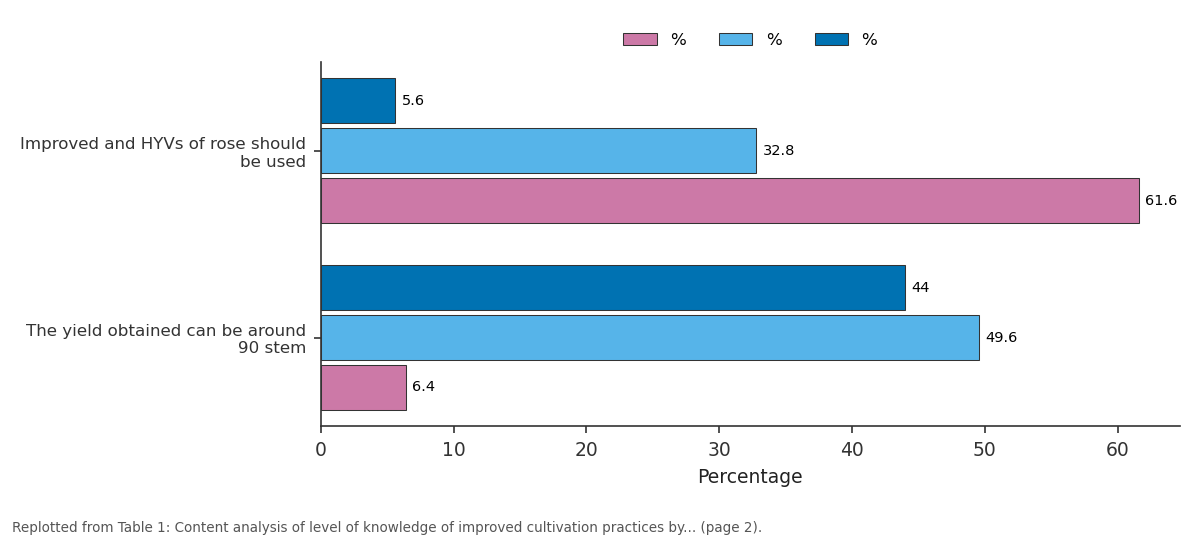
% and % and more: Improved and HYVs of... vs The yield obtained can...
Replotted from Table 1 (page 2) of the original paper. Every bar is the paper's own table value.
View source evidence ↗Figures & tables
From the original paper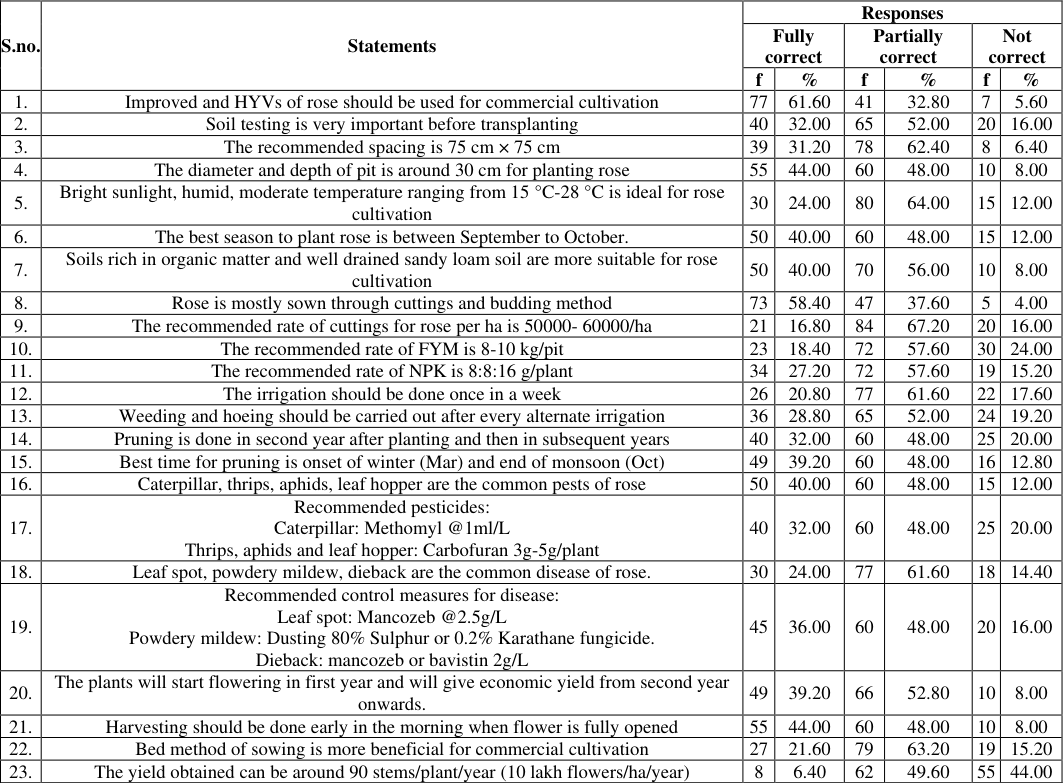 Table 1
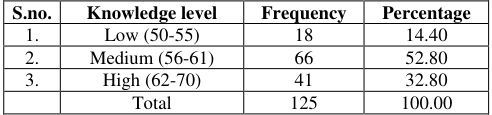 Table 2
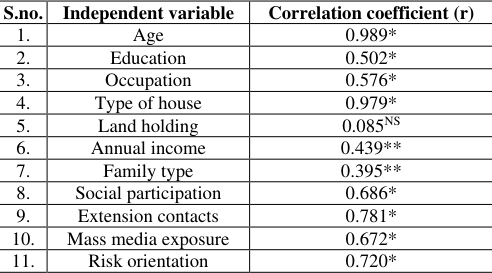 Table 3
Introduction
Floriculture is a branch of horticulture addressing flower and ornamental plant cultivation and propagation of flowering plants for gardens, greenhouses, nurseries and landscape comprising the floral industry. Floriculture crops include bedding plants, houseplants, flowering gardens and potted plants, cut cultivated greens and cut flowers. It is old farming activity in India having immense potential for generating gainful self-employment among small and marginal farmers. In the recent years it has emerged as a profitable agri-business in India and worldwide. According to statistics indicated in the Handbook on Horticulture Statistics 2014, the total area under flower crops in 2012-13 was 232.70 thousand hectares. Total area under floriculture in India is second largest in the world and only next to China. Production of flowers was estimated to be 1729.2 MT of loose flowers and 76731.9 million (numbers) of cut flowers in 2012-13. Rose is a symbol of beauty, love and tranquility; forms the soul of garden and convey the message of nature to mankind. It is one of the nature's beautiful creations and is universally known as "queen of flowers". It is a woody perennial flowering plant of the genus Rosa, in the Rosaceae family. There are over three hundred species and thousands of cultivars. It is grown for various purposes, such as garden flowers, aesthetic value, cut flower, rose oil. rosewater, etc. Rose ranks first among the top ten cut flowers the international flower market. For cut flower use, the old rose varieties like Queen Elizabeth, Super Star, Montezuma, Papa Meilland, Eiffel Tower, Kiss of fire, Golden Giant, etc. are still popular. The fragrance of roses and tube rose flowers would now spread in Trans-Yamuna belt of the Sangam city as authorities of district horticulture department take up a rose cultivation project in Chaka block of the district. Rose is planted commercially by men and women both Prayagraj city and nearby areas.
Objective
To assess the knowledge of the respondents towards improved rose cultivation practices.
Research Methodology
Descriptive research design was adopted for the study as it describes the characteristics or phenomena that are being studied. The study is carried out in the Prayagraj district of Uttar Pradesh. Out of 20 blocks, one block namely Chaka was selected purposively based on maximum area under rose cultivation. From the selected bock, 8 villages were selected purposively based on maximum area under rose cultivation making the sample of 125 respondents. The data presented in the table 2 reveals that majority (52.80%) of the respondents have medium knowledge level followed by 32.80 per cent of those having high and 14.40 per cent of those having low knowledge level with regards to the improved cultivation practices of rose.
| S.no. | Knowledge level | Frequency | Percentage |
|---|---|---|---|
| 1. | Low (50-55) | 18 | 14.40 |
| 2. | Medium (56-61) | 66 | 52.80 |
| 3. | High (62-70) | 41 | 32.80 |
| Total | 125 | 100.00 |
Table text extracted from the original PDF; superscript letters are shown inline. The original table image is below.
View original table image
Results and Discussion
From table 3, it can be observed that 11 socio-economic characteristics has been studied among which characteristics like age, education, occupation, type of house, social participation, extension contacts, mass media exposure and risk orientation had positive and significant association with the knowledge level of the respondents at 5 per cent level of significance. Meanwhile, annual income and family type had positive and significant association with the knowledge level of the respondents at 1 per cent level of significance Thus, it can be inferred that had positive influence to enhance the extent of knowledge about improved rose cultivation practices. Therefore, the null hypothesis is rejected for these variables. Land holding had positive and non-significant association with the knowledge level which means land holding neither have negative or positive significant influence over knowledge. Therefore, the null hypothesis is accepted for this variables.
| S.no. | Independent variable | Correlation coefficient (r) |
|---|---|---|
| 1. | Age | 0.989* |
| 2. | Education | 0.502* |
| 3. | Occupation | 0.576* |
| 4. | Type of house | 0.979* |
| 5. | Land holding | 0.085NS |
| 6. | Annual income | 0.439** |
| 7. | Family type | 0.395** |
| 8. | Social participation | 0.686* |
| 9. | Extension contacts | 0.781* |
| 10. | Mass media exposure | 0.672* |
| 11. | Risk orientation | 0.720* |
Table text extracted from the original PDF; superscript letters are shown inline. The original table image is below.
View original table image
Conclusion
It was concluded that majority of the respondents were living in medium level of socio economic status. The study clearly brought out that the majority (52.80%) of the respondents have medium knowledge level followed by 32.80 per cent of those having high and 14.40 per cent of those having low knowledge level about improved rose cultivation practices. It was also found that knowledge level of respondents was positively and significantly correlated with age, education, occupation, type of house, annual income, family type, social participation, extension contacts, mass media exposure and risk orientation whereas land holding had non-significant association with the knowledge level.
Figures and tables from the paper
| S.no. | Statements | Responses | — | — | — | — | — |
|---|---|---|---|---|---|---|---|
| Fully correct | Partially correct | Not correct | |||||
| f | % | f | % | f | % | ||
| 1. | Improved and HYVs of rose should be used for commercial cultivation | 77 | 61.60 | 41 | 32.80 | 7 | 5.60 |
| 2. | Soil testing is very important before transplanting | 40 | 32.00 | 65 | 52.00 | 20 | 16.00 |
| 3. | The recommended spacing is 75 cm × 75 cm | 39 | 31.20 | 78 | 62.40 | 8 | 6.40 |
| 4. | The diameter and depth of pit is around 30 cm for planting rose | 55 | 44.00 | 60 | 48.00 | 10 | 8.00 |
| 5. | Bright sunlight, humid, moderate temperature ranging from 15 °C-28 °C is ideal for rose cultivation | 30 | 24.00 | 80 | 64.00 | 15 | 12.00 |
| 6. | The best season to plant rose is between September to October. | 50 | 40.00 | 60 | 48.00 | 15 | 12.00 |
| 7. | Soils rich in organic matter and well drained sandy loam soil are more suitable for rose cultivation | 50 | 40.00 | 70 | 56.00 | 10 | 8.00 |
| 8. | Rose is mostly sown through cuttings and budding method | 73 | 58.40 | 47 | 37.60 | 5 | 4.00 |
| 9. | The recommended rate of cuttings for rose per ha is 50000- 60000/ha | 21 | 16.80 | 84 | 67.20 | 20 | 16.00 |
| 10. | The recommended rate of FYM is 8-10 kg/pit | 23 | 18.40 | 72 | 57.60 | 30 | 24.00 |
| 11. | The recommended rate of NPK is 8:8:16 g/plant | 34 | 27.20 | 72 | 57.60 | 19 | 15.20 |
| 12. | The irrigation should be done once in a week | 26 | 20.80 | 77 | 61.60 | 22 | 17.60 |
| 13. | Weeding and hoeing should be carried out after every alternate irrigation | 36 | 28.80 | 65 | 52.00 | 24 | 19.20 |
| 14. | Pruning is done in second year after planting and then in subsequent years | 40 | 32.00 | 60 | 48.00 | 25 | 20.00 |
| 15. | Best time for pruning is onset of winter (Mar) and end of monsoon (Oct) | 49 | 39.20 | 60 | 48.00 | 16 | 12.80 |
| 16. | Caterpillar, thrips, aphids, leaf hopper are the common pests of rose | 50 | 40.00 | 60 | 48.00 | 15 | 12.00 |
| 17. | Recommended pesticides: Caterpillar: Methomyl @1ml/L Thrips, aphids and leaf hopper: Carbofuran 3g-5g/plant | 40 | 32.00 | 60 | 48.00 | 25 | 20.00 |
| 18. | Leaf spot, powdery mildew, dieback are the common disease of rose. | 30 | 24.00 | 77 | 61.60 | 18 | 14.40 |
| 19. | Recommended control measures for disease: Leaf spot: Mancozeb @2.5g/L Powdery mildew: Dusting 80% Sulphur or 0.2% Karathane fungicide. Dieback: mancozeb or bavistin 2g/L | 45 | 36.00 | 60 | 48.00 | 20 | 16.00 |
| 20. | The plants will start flowering in first year and will give economic yield from second year onwards. | 49 | 39.20 | 66 | 52.80 | 10 | 8.00 |
| 21. | Harvesting should be done early in the morning when flower is fully opened | 55 | 44.00 | 60 | 48.00 | 10 | 8.00 |
| 22. | Bed method of sowing is more beneficial for commercial cultivation | 27 | 21.60 | 79 | 63.20 | 19 | 15.20 |
| 23. | The yield obtained can be around 90 stems/plant/year (10 lakh flowers/ha/year) | 8 | 6.40 | 62 | 49.60 | 55 | 44.00 |
Table text extracted from the original PDF; superscript letters are shown inline. The original table image is below.
View original table image
References
4 in the original paper- Kumar V, Singh YK, Shukla A, Sharma A. Knowledge level of improved production technology of rose cultivation of rose growers in Kannauj district (U.P.). The Pharma Innovation J. 2023;12(10):423-426.
- Mathivanan B. A study on rose cultivation and marketing pattern in Housr Taluk. J Exclus Manag Sci. 2013;2(12):2277-5684.
- Singh BK, Rakesh ES, Yadav VPS, Singh DK. Adoption of commercial cut flower production technology in Meerut. Indian Res J Ext Educ. 2016;10(1):50-53.
- Wani NI, Dar MA, Nazki IT, Wani MY, Showkat A. A study on the knowledge and adoption of recommended production and management practices of registered Gladiolus growers of Srinagar and Budgam districts of Kashmir Valley. J Pharmacogn Phytochem. 2017;6(4):1872-1877.
Cited by 1
From OpenAlex, OpenCitations and reference lists read by Scinovex
- A study on farmer’s practices of Rose cv. Charisma cultivation and its impact on socio-economic status of growers
N Mamathalakshmi, Ramegowda GK, Vikram Appanna, Dayamani KJ · International Journal of Advanced Biochemistry Research · 2025
Flower business in our country has been changing from conventional flowers to cut flowers for export orientation. In India as well as in Karnataka the commercial value of Rose cv. Charisma is attaining more significance. Hence, it was considered worth to assess the status of the Rose cv. Charisma cultivation, farmer’s practices and impact on socio-economic status of growers. With the ex-post facto research design study is carried out in Kolar, Chikkaballapur, and Bangaluru Rural districts drawing 30 samples from each district (n = 90). With Ex-post facto research design, personal interview met