
Research article · 2024 · Full text
International Journal of Agriculture Extension and Social DevelopmentThe impact of peer attachment relationships on behavioral problems in adolescents
Volume 7(7) · Pages 504–508 · DOI: 10.33545/26180723.2024.v7.i7g.850 ↗
Research areasBullying, Victimization, and AggressionChild and Adolescent Psychosocial and Emotional DevelopmentChild Development and Digital Technology
Abstract
Author-writtenThis cross-sectional observational study was conducted on school-going adolescents in Haryana state to test the influence of peer relationships on adolescents’ behavioral problems. The study was conducted on adolescents aged 11 to 17 in four government schools in Haryana state. A total of 240 adolescents and their mothers (240) participated in the study. The instruments used for data collection were a self-developed questionnaire on general information that included questions related to personal and socio-economic variables, Goodman’s Strengths and Difficulties Questionnaire (2000), and Rigby and Slee's Peer Relationship Questionnaire (1994). Problems within the behavioral domain included emotional problems, conduct problems, hyperactivity, peer problems, and pro-social behavior. Problems within the peer relationship domain included bullying, physical victimization, and pro-social behavior. The collected data was classified and tabulated in accordance with the standards laid down in order to arrive at meaningful and relevant inferences as per the objectives. For the analysis of data, categorization, coding, tabulation, and statistical analysis were done using the statistical package for the social sciences (SPSS for Windows), SPSS 16.0. As perceived by adolescents themselves, the results revealed that the bullying aspect of peer relationships was significantly correlated with conduct problems, hyperactivity problems, and peer problems. Physical victimization was positively correlated with hyperactivity problems, while the pro-social domain of peer relationships was significantly correlated with hyperactivity problems, peer problems, and pro-social behavior.
Summary
Source-checkedPlain-language reading of the full paper, prepared with AI and checked against the text. Each point links to the authors' own words.
Why it matters
- During the transition from childhood to adolescence, individuals typically reduce their dependence on parents and increase their reliance on friends for social support. View evidence ↗
- Peer attachment is considered a key factor in explaining why some adolescents engage in behavioral problems, such as drug abuse and aggressive behavior. View evidence ↗
- Weak peer relationships in childhood can increase an adolescent's risk for social adjustment difficulties and emotional problems. View evidence ↗
The question
- The study aimed to test how peer relationships influence behavioral problems among school-going adolescents in Haryana state. View evidence ↗
What they did
- The research involved 240 adolescents aged 11 to 17 and their 240 mothers from four government schools in Haryana. View evidence ↗
- Peer relationships were assessed using the Rigby and Slee (1994) Peer Relationship Questionnaire, which measures bullying, victimization, and pro-social behavior. View evidence ↗
- Behavioral disorders were measured using the Strengths and Difficulties Questionnaire (SDQ), covering emotional symptoms, conduct problems, hyperactivity, peer problems, and pro-social behavior. View evidence ↗
- Data analysis, including coding and statistical processing, was performed using SPSS version 16.0. View evidence ↗
What they found
- Educational status was significantly associated with peer relationships (χ2 = 9.67); students in 11th-12th class had the highest level of peer relationships (29.41%), while those in 6th-7th class had the lowest (20.78%). View evidence ↗
- Family size significantly influenced peer relationships (χ2 = 9.83), with adolescents from large families showing a higher percentage of high-level peer relationships (24.71%) than those from small families (18.75%). View evidence ↗
- As perceived by adolescents, bullying was significantly associated with conduct problems (r = 0.25), hyperactivity problems (r = 0.20), and peer problems (r = 0.23). View evidence ↗
- The pro-social domain of peer relationships significantly correlated with hyperactivity problems (r = 0.22), peer problems (r = 0.15), and pro-social behavior (r = 0.14) as perceived by adolescents. View evidence ↗
- As perceived by mothers, bullying was significantly associated with conduct problems (r = 0.21), hyperactivity problems (r = 0.20), and peer problems (r = 0.16). View evidence ↗
- Mothers' perceptions indicated a positive association between victimization and emotional problems (r = 0.11). View evidence ↗
What it means
- The authors conclude that peer-attachment relationships significantly impact the behavioral problems experienced by adolescents. View evidence ↗
- The authors recommend implementing interventions to enrich adolescent peer relationships and suggest that family-based interventions could be effective in treating various behavioral disorders. View evidence ↗
Visual summary
2 visualsIllustrations explain the paper; charts are replotted from the paper's own table values.
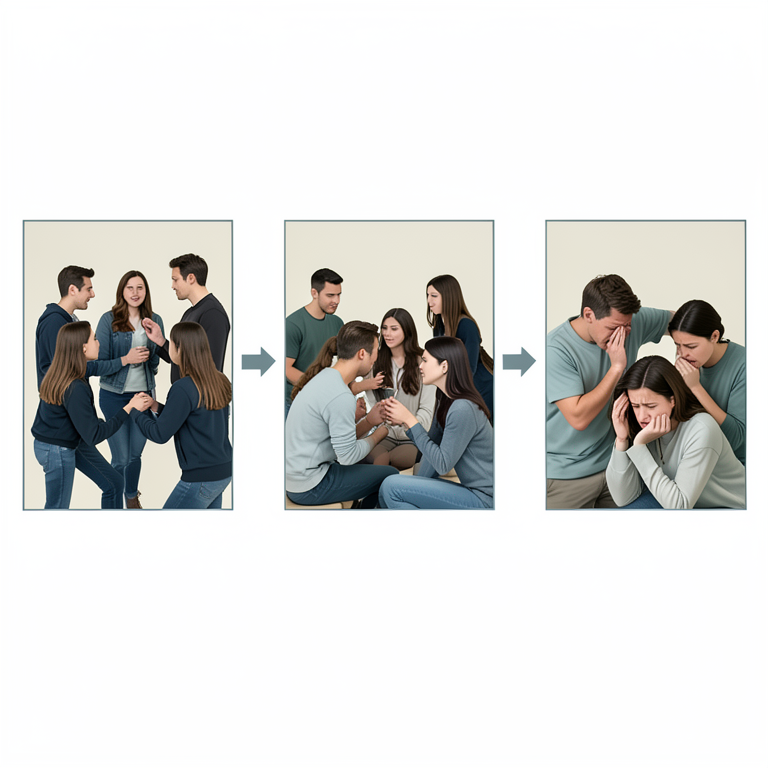
Peer Relationship and Behavioral Problem Links
AI-generated conceptual illustration (adolescents). It explains the idea and does not show study data.
View source evidence ↗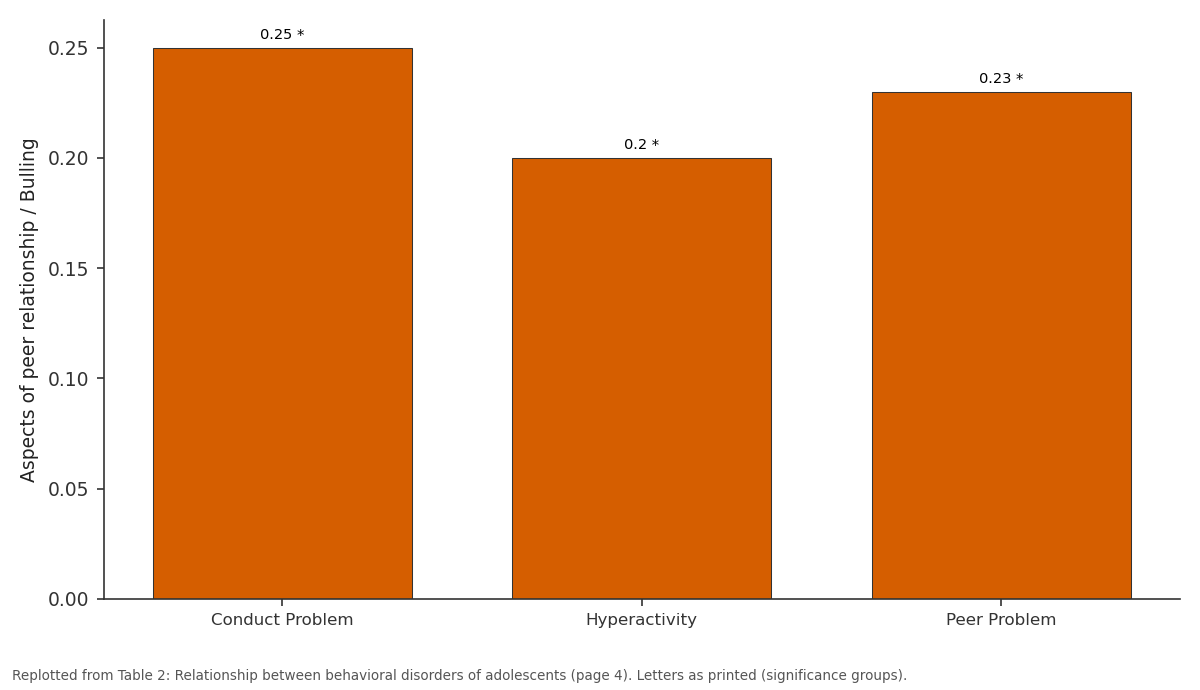
Aspects of peer relationship / Bulling: Conduct Problem vs Hyperactivity vs Peer Problem
Replotted from Table 2 (page 4) of the original paper. Every bar is the paper's own table value.
View source evidence ↗Figures & tables
From the original paper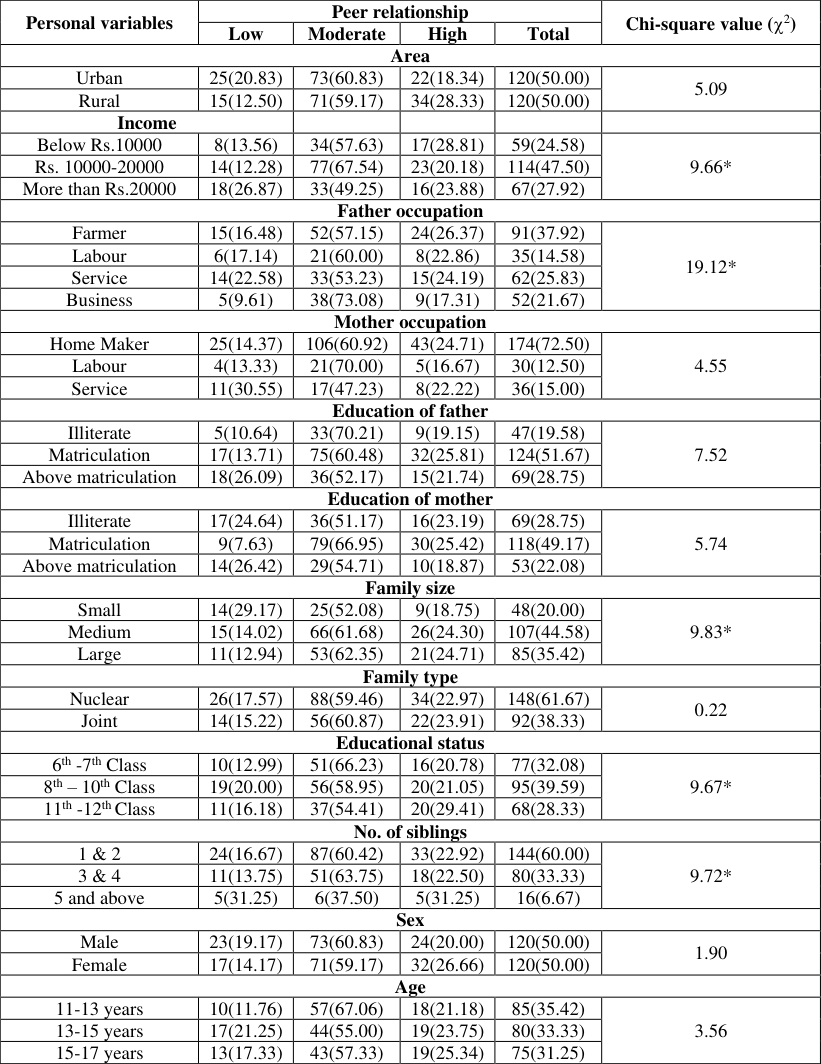 Table 1
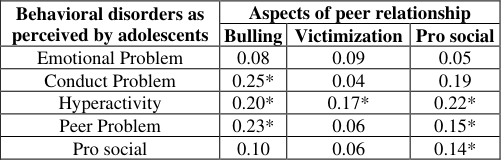 Table 2
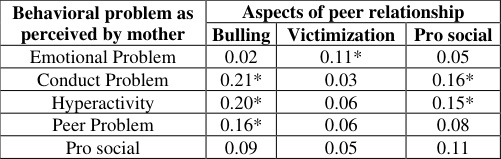 Table 3
Introduction
As children grow from infants to teenagers, they become less dependent on their parents and seek out social support from their friends (Lee et al., 2017) [3] . According to Monaco et al. (2019) [4] , although peers play a significant role in socialization, parental connection continues to be a vital aspect of children's development. But it's crucial to research how teenagers' attachment bonds with their classmates impact their emotions and behaviors (He et al., 2018) [5] . According to Stern et al. (2018) [6] , a safe peer attachment is characterized by a connection built on trust and the conviction that the other person will respect one's own needs and desires and will be able to both comprehend and respond if we communicate our sentiments. Accordingly, mutual understanding, trust, and effective communication are the cornerstones of secure peer attachment relationships during adolescence (Laible et al., 2000; Theisen et al., 2018) [7,8] . On the other hand, feeling alone and alienated from the peer group is a hallmark of insecure peer attachment. This feeling may be brought on by mistrust, poor communication, and a simultaneous dread of rejection and a need for closeness and affiliation (Roelofs et al., 2013) [9] . Teenagers who believe that their classmates are untrustworthy or unsupportive and who frequently feel cut off from their peer group are therefore more likely to exhibit emotional and behavioral problems (Gorrese, 2016) [10] . Researchers have supported the role of peer attachment in explaining adolescents' engagement in behavioral problems like aggressive behavior and drug abuse (Lee et al., 2017; Charalampou et al., 2018) [11,12] . Additionally, attachment insecurity increases the chance of emotional symptoms like depression and anxiety. These challenges may be linked to the agonizing feeling that an adolescent experiences when they are unable to convey their emotional problems to others and feel trusting of them, particularly given the significance of group affiliation at this developmental time (Laible, 2007) [13] . Furthermore, adolescents who establish secure peer attachment relationships are more likely to engage in pro-social behaviors (Shaver et al., 2016) [14] . They need to develop positive internal working models that motivate adolescents to collaborate with one another because they believe it's worthwhile (Houtackers, 2016) [15] . Children's peer relationships have long-term impacts on mental wellbeing and adjustment. Children who had qualitative peer-relation problems were more likely to display internalizing problems as adolescents. Children who had weak peer relationships might become more at risk of emotional problems and social adjustment as adolescents (Shin et al., 2016) [16] . Therefore, keeping in view the significance of all these facts, the current study was www.extensionjournal.com undertaken to assess the impact of peer attachment relationships on behavioral problems in adolescents.
Review of literature
An attempt has been made here to present a brief resume of the available literature on the issue related to the present study: According to Oldfield et al. (2016) [17] , more insecure parental attachment predicted conduct problems and emotional difficulties. Peer attachment and school connectedness were major predictors of pro-social behavior, but parental attachment wasn't. Results also revealed that peer attachment and school connectedness both facilitate the link between parental attachment and pro-social behavior. Peer attachment and school connectedness were found to have no significant moderating effects on the association between psychological state outcomes and parental attachment. They came to the conclusion that improving parental attachment could also be especially effective in reducing negative behaviors like conduct problems and emotional difficulties, while improving peer attachment and school connectedness could also be helpful to push prosocial behavior. Shin et al. (2016) [16] investigated the association between early peer interactions and the psychological adjustment of adolescents. The results showed that children's peer relationships have long-term impacts on mental wellbeing and adjustment. Children who had qualitative peer-relation problems were more likely to display internalizing problems as adolescents. They came to the conclusion that kids with poor peer relationships would grow up to be more vulnerable to emotional problems and difficulties adjusting to social situations. The effect of parental style and peer attachment on bullying and cyberbullying behavior was investigated by Charalampousa et al. (2018) [12] . The research included 861 children and adolescents who attended public schools in Cyprus. The results indicated that parenting seems to be a significant predictor of all styles of bullying and victimization, conventional and cyber, in early adolescents. Rani et al. (2018) 18 examined the impacts of peer relationships in reference to their domestic area and the gender of adolescents. The results revealed that statistically significant differences were detected in the mean score of adolescents for pro-social behavior against residential districts, and non-significant differences were perceived in relation to gender in all aspects of peer relationships. Schoeps et al. (2020) [19] found that peer attachment was negatively correlated with behavioral issues and emotional difficulties but positively associated with pro-social behavior in a sample of 800 adolescents aged 12 to 15. Empathy mediated the connection between peer attachment and both emotional and behavioral outcomes normally, with no significant gender differences. The emphasis of the discussion is on the value of positive peer relationships as a robust indicator of adolescent emotional well-being and psychological problems. Students who had poor peer relationships were less developed in their emotional expression than students who had positive peer relationships, according to research by Sun et al. (2007) [20] . Peer relationships have a significant impact on adolescents' social development and many facets of their thought processes and behaviors, according to Lan and Wang (2019) [21] . The healthy development of teenagers' learning, cognition, emotion, and personality was facilitated by highquality peer connections. Positive emotions in adolescents were found to be connected with high-quality peer relationships.
Methodology
In the present study, peer relationships were independent variables and behavioral disorders were dependent variables.
Peer Relationship: The Peer Relationship Questionnaire developed and standardized by Rigby and Slee (1994) [2] was used to assess peer relationships. It comprised of 20 statements having 3 sub scales i.e. bully scale, victim scale and pro social scale.
The Behavioral Disorders: Strengths and Difficulties Questionnaire (SDQ), developed by Goodman (2002) [1] , was used to measure the behavioral disorders of adolescents. SDQ has five subscales: emotional symptom scale, conduct problem scale, hyperactivity scale, peer problem scale, and pro-social scale of five items each. These two standardized tests mentioned above were used for assessing peer relationships and the behavioral problems of adolescents. A self-developed questionnaire was used to collect general information about the personal and socioeconomic variables of adolescents. For data collection, permission was obtained from the principal of the selected school. Adolescents in the age group of 11-17 years were approached personally to obtain consent for participation in the study after clarifying the purpose of the study. The tools were administered to the selected 240 adolescents after fixing a time and date with their class teachers. The data was collected personally using a small group approach (4-5 adolescents). On the first day of interaction with adolescents, after explaining the purpose of the study, instructions were given on test administration. The mothers of these 240 adolescents were also approached to collect the counter-aspect. The data was collected through personal visits to the selected schools and adolescents' homes. Children as well as mothers participated in it. The data were collected in a friendly and formal manner. Questionnaire was dictating to them before filling it. For the analysis of the collected data, categorization, coding, tabulation, and statistical analysis were done using the statistical package for the social sciences (SPSS for Windows), SPSS 16.0.
Results
Results
Association between personal variables and peer relationship of adolescents
As shown in Table 1, there was a significant association between the educational status of adolescents' and their peer relationships (χ2 = 9.67*). Adolescents had high level of peer relationship who studied in 11 th to 12 th class (29.41%) while adolescents studied in 6 th -7 th class had low level of peer relationship (20.78%). Results further reveal that there was a significant association between the number of siblings and their peer relationships (χ2 = 9.72*). As depicted in the table, a greater percentage of adolescents with 5 or above siblings (31.25%) had a high www.extensionjournal.com level of peer relationships as compared to adolescents with 1-2 siblings (22.92%) and adolescents with 3-4 siblings (22.50%). Table further portrays that a significant association was observed between family size and their peer relationship, χ2 = 9.83*. A greater percentage of adolescents from large families (24.71%) had a high level of peer relationships as compared to adolescents from small families (18.75%) and adolescents from medium families (24.30%). As shown in the table, there was a significant association between the fatherly occupation of adolescents and their peer relationships (χ2 = 19.12*). As depicted in the table, a greater percentage of adolescents whose fathers' were farmers (26.37%) had a high level of peer relationships as compared to those adolescents whose fathers' engaged in labor work (22.86%), service (24.19%), or business (17.31%). A greater percentage of adolescents whose father was in service (22.58%) had a low level of peer relationships. Table 1 further depicts that there was a significant association between the monthly income of the family (χ2 = 9.66*) and peer relationships. As depicted in the table, a greater number of adolescents whose family income was below Rs. 10000 (28.81%) had a high level of peer relationships as compared to adolescents with family incomes of Rs. 10000-20000 (20.18%) and adolescents with family incomes greater than Rs. 20000 (23.88%).
| Personal variables | Peer relationship | — | — | — | Chi-square value (2) |
|---|---|---|---|---|---|
| Low | Moderate | High | Total | ||
| Area | |||||
| Urban | 25(20.83) | 73(60.83) | 22(18.34) | 120(50.00) | 5.09 |
| Rural | 15(12.50) | 71(59.17) | 34(28.33) | 120(50.00) | |
| Income | |||||
| Below Rs.10000 | 8(13.56) | 34(57.63) | 17(28.81) | 59(24.58) | 9.66* |
| Rs. 10000-20000 | 14(12.28) | 77(67.54) | 23(20.18) | 114(47.50) | |
| More than Rs.20000 | 18(26.87) | 33(49.25) | 16(23.88) | 67(27.92) | |
| Father occupation | |||||
| Farmer | 15(16.48) | 52(57.15) | 24(26.37) | 91(37.92) | 19.12* |
| Labour | 6(17.14) | 21(60.00) | 8(22.86) | 35(14.58) | |
| Service | 14(22.58) | 33(53.23) | 15(24.19) | 62(25.83) | |
| Business | 5(9.61) | 38(73.08) | 9(17.31) | 52(21.67) | |
| Mother occupation | |||||
| Home Maker | 25(14.37) | 106(60.92) | 43(24.71) | 174(72.50) | 4.55 |
| Labour | 4(13.33) | 21(70.00) | 5(16.67) | 30(12.50) | |
| Service | 11(30.55) | 17(47.23) | 8(22.22) | 36(15.00) | |
| Education of father | |||||
| Illiterate | 5(10.64) | 33(70.21) | 9(19.15) | 47(19.58) | 7.52 |
| Matriculation | 17(13.71) | 75(60.48) | 32(25.81) | 124(51.67) | |
| Above matriculation | 18(26.09) | 36(52.17) | 15(21.74) | 69(28.75) | |
| Education of mother | |||||
| Illiterate | 17(24.64) | 36(51.17) | 16(23.19) | 69(28.75) | 5.74 |
| Matriculation | 9(7.63) | 79(66.95) | 30(25.42) | 118(49.17) | |
| Above matriculation | 14(26.42) | 29(54.71) | 10(18.87) | 53(22.08) | |
| Family size | |||||
| Small | 14(29.17) | 25(52.08) | 9(18.75) | 48(20.00) | 9.83* |
| Medium | 15(14.02) | 66(61.68) | 26(24.30) | 107(44.58) | |
| Large | 11(12.94) | 53(62.35) | 21(24.71) | 85(35.42) | |
| Family type | |||||
| Nuclear | 26(17.57) | 88(59.46) | 34(22.97) | 148(61.67) | 0.22 |
| Joint | 14(15.22) | 56(60.87) | 22(23.91) | 92(38.33) | |
| Educational status | |||||
| 6th -7th Class | 10(12.99) | 51(66.23) | 16(20.78) | 77(32.08) | 9.67* |
| 8th – 10th Class | 19(20.00) | 56(58.95) | 20(21.05) | 95(39.59) | |
| 11th -12th Class | 11(16.18) | 37(54.41) | 20(29.41) | 68(28.33) | |
| No. of siblings | |||||
| 1 & 2 | 24(16.67) | 87(60.42) | 33(22.92) | 144(60.00) | 9.72* |
| 3 & 4 | 11(13.75) | 51(63.75) | 18(22.50) | 80(33.33) | |
| 5 and above | 5(31.25) | 6(37.50) | 5(31.25) | 16(6.67) | |
| Sex | |||||
| Male | 23(19.17) | 73(60.83) | 24(20.00) | 120(50.00) | 1.90 |
| Female | 17(14.17) | 71(59.17) | 32(26.66) | 120(50.00) | |
| Age | |||||
| 11-13 years | 10(11.76) | 57(67.06) | 18(21.18) | 85(35.42) | 3.56 |
| 13-15 years | 17(21.25) | 44(55.00) | 19(23.75) | 80(33.33) | |
| 15-17 years | 13(17.33) | 43(57.33) | 19(25.34) | 75(31.25) |
Table text extracted from the original PDF; superscript letters are shown inline. The original table image is below.
View original table image
Relationship between behavioral disorders of adolescents as perceived by adolescents and peer relations
The data in Table 2 establishes the correlations between behavioral disorders of adolescents as perceived by adolescents and peer relations. It was observed that conduct problems (r = 0.25*, p<0.05), hyperactivity problems (r = 0.20*, p<0.05), and peer problems (r = 0.23*, p<0.05) showed a significant association with bullying at the 1% level of significance. Victimization showed a positive association with hyperactivity problems (r = 0.17*, p<0.05). Results also revealed that hyperactivity problems (r = 0.22*, p<0.05), peer problems (r = 0.15*, p<0.05), and pro-social behavior (r = 0.14*, p<0.05) were significantly correlated with the pro-social domain of peer relationships.
| Behavioral disorders as perceived by adolescents | Aspects of peer relationship | — | — |
|---|---|---|---|
| Bulling | Victimization | Pro social | |
| Emotional Problem | 0.08 | 0.09 | 0.05 |
| Conduct Problem | 0.25* | 0.04 | 0.19 |
| Hyperactivity | 0.20* | 0.17* | 0.22* |
| Peer Problem | 0.23* | 0.06 | 0.15* |
| Pro social | 0.10 | 0.06 | 0.14* |
Table text extracted from the original PDF; superscript letters are shown inline. The original table image is below.
View original table image
Relationship between behavioral disorders of adolescents as perceived by mother and peer relations
The data in Table 3 establishes the correlations between peer relations and behavioral disorders of adolescents as perceived by mothers. It was observed that conduct problems (r = 0.21*, p<0.05), hyperactivity problems (r = 0.20*, p<0.05), and peer problems (r = 0.16*, p<0.05) showed a significant association with bullying at the 5% level of significance. Victimization also showed a positive association with emotional problems (r = 0.11*, p<0.05). Results also revealed that conduct problems (r = 0.16*, p<0.05) and hyperactivity problems (r = 0.15*, p<0.05) were significantly correlated with the pro-social domain of peer relationships.
| Behavioral problem as perceived by mother | Aspects of peer relationship | — | — |
|---|---|---|---|
| Bulling | Victimization | Pro social | |
| Emotional Problem | 0.02 | 0.11* | 0.05 |
| Conduct Problem | 0.21* | 0.03 | 0.16* |
| Hyperactivity | 0.20* | 0.06 | 0.15* |
| Peer Problem | 0.16* | 0.06 | 0.08 |
| Pro social | 0.09 | 0.05 | 0.11 |
Table text extracted from the original PDF; superscript letters are shown inline. The original table image is below.
View original table image
Discussion
Results portrayed a significant association between adolescents' educational status, number of siblings, family size, father's occupation, and monthly income with peer relationships. While there was no significant association found between area, mother's occupation, father's education, mother's education, family type, sex, and age of adolescents with the peer relationship status of children.
As per mothers' and adolescents' responses related to all domains of peer relationships, i.e., bullying, victimization, and pro-social skills, they were significantly correlated with all aspects of behavioral disorders. Shin et al. (2016) [16] found that children's peer relationships have long-standing impacts on mental wellbeing and adjustment. Children with qualitative peer-relation issues were more likely to experience internalizing issues in their later years. They came to the conclusion that kids with poor peer relationships would grow up to be more vulnerable to emotional issues and difficulties adjusting to social situations. Schoeps et al. (2020) [19] also found that peer attachment was negatively associated with behavioral issues and emotional difficulties but positively connected with pro-social behavior. According to them, positive peer relationships are a strong indicator of adolescent emotional well-being and mental problems.
Conclusion
As perceived by adolescents themselves and their mothers, the results of the study concluded that there was a significant association between adolescents' educational status, number of siblings, family size, father's occupation, and monthly income with peer relationships. Peerattachment relationships have a substantial impact on adolescents' behavioral problems. The results from this study suggest interventions designed to enrich the peer relationships of adolescents. The investigation suggests family-based interventions may be potentially effective for a variety of behavioral disorders in adolescents.
References
19 in the original paper- Rigby K. School bullies. Indep Teach. 1994;13:8-9.
- Lee C-T, Padilla-Walker LM, Memmott-Elison MK. The role of parents and peers on adolescents' prosocial behavior and substance use. J Soc Pers Relat [Internet]. 2017;34(7):1053-1069. Available from: http://journals.sagepub.com/doi/10.1177/026540751666 5928
- Mo´naco E, Schoeps K, Montoya-Castilla M. Attachment styles and well-being in adolescents: How does emotional development affect this relationship? Int J Environ Res Public Health. 2019;6:2554.
- He J, Chen X, Fan X, Cai Z, Hao S. Profiles of parent and peer attachments of adolescents and associations with psychological outcomes. Child Youth Serv Rev [Internet]. 2018;94:163-72. Available from: http://www.sciencedirect.com/science/article/pii/S0190 740918304705
- Stern JA, Cassidy J. Empathy from infancy to adolescence: An attachment perspective on the development of individual differences. Dev Rev [Internet]. 2018;47:1-22. Available from: https://doi.org/10.1016/j.dr.2017.09.002
- Laible DJ, Carlo G, Raffaelli M. The differential relations of parent and peer attachment to adolescent adjustment. J Youth Adolesc. 2000;29(1):45-59.
- Theisen JC, Fraley RC, Hankin BL, Young JF, Chopik www.extensionjournal.com WJ. How do attachment styles change from childhood through adolescence? Findings from an accelerated longitudinal cohort study. J Res Pers [Internet]. 2018;74:141-146. Available from: https://doi.org/10.1016/j.jrp.2018.04.001
- Roelofs J, Onckels L, Muris P. Attachment quality and psychopathological symptoms in clinically referred adolescents: The mediating role of early maladaptive schema. J Child Fam Stud. 2013;22(3):377-385. doi:10.1007/s10826-012-9589-x
- Gorrese A. Peer attachment and youth internalizing problems: A meta-analysis. Child Youth Care Forum. 2016;45(2):177-204.
- Lee JY, Park SH. Interplay between attachment to peers and parents in Korean adolescents' behavior problems. J Child Fam Stud [Internet]. 2017;26(1):57-66. Available from: http://dx.doi.org/10.1007/s10826-0160552-0
- Charalampous K, Demetriou C, Tricha L, Ioannou M, Georgiou S, Militsa N. The effect of parental style on bullying and cyberbullying behaviors and the mediating role of peer attachment relationships: A longitudinal study. J Adolesc. 2018;64:109-123.
- Laible D. Attachment with parents and peers in late adolescence: Links with emotional competence and social behavior. Pers Individ Dif. 2007;43:1185-1197.
- Houtackers R. The relationship between attachment, the self-conscious emotions of shame and guilt, and problem behavior in adolescents. MaRBLe Res Pap. 2016;6:292-301.
- Shin KM, Cho SM, Park KS. Effects of early childhood peer relationships on adolescent mental health: A 6-to 8-year follow-up study in South Korea. Psychiatry Investig. 2016;13(4):383-388.
- Oldfield J, Humphrey N, Hebron J. The role of parental and peer attachment relationships and school connectedness in predicting adolescent mental health outcomes. Int J Ment Health. 2016;21(1):21-29.
- Rani M, Sumit, Sangwan S. Comparison of peer relationship of adolescents in relation to their gender and residential area. Int J Chem Stud. 2018;6(6):12551256.
- Schoeps K, Mo´naco F, Cotolí A, Castilla IM. The impact of peer attachment on prosocial behavior, emotional difficulties, and conduct problems in adolescence: The mediating role of empathy. J Adolesc. 2020;15(1).
- Sun JC, Lu JM, Zheng XJ. Early adolescent perceptions of expressive modes and their relationship to peer acceptance. J Psychol Sci. 2007;5:1052-1056. doi:10.16719/j.cnki.1671-6981.2007.05.007
- Lan NN, Wang XH. The mediation effect of positive emotion between social skill and peer interaction. Modern Special Educ. 2019;12:52-57.