
Research article · 2024 · Full text
International Journal of Agriculture Extension and Social DevelopmentConstraints faced by farmers of “Maroi Nakupi” (garlic chives) growers in Imphal east district of Manipur
Volume 7(7) · Pages 515–517 · DOI: 10.33545/26180723.2024.v7.i7g.853 ↗
Research areasAgricultural Economics and PracticesAgricultural Science and FertilizationLivestock Management and Performance Improvement
Abstract
Author-writtenThe study was carried out in Imphal East District of Manipur during the 2023-24 period to find out the constraints faced by the farmers of Maroi Nakupi (Garlic chives) growers. A total of 120 respondents were selected from Moirang Kampu village within Heingang Community Development Block, based on the high number of farmers engaged in “Maroi Nakupi” (garlic chives) cultivation. The primary data were gathered through personnel interviews using a pre-structured interview schedule and subsequently analyzed using appropriate statistical tools such as frequency, percentage, ranking was used to interpret the findings and draw conclusion. The major constraints faced by the farmer were lack of proper training 96.00%, lack of knowledge about major insect-pest & diseases control 84.17%, lack of knowledge regarding weed control 74.17%, lack of support from government or agricultural department 61.67% and unavailability of fertilizers at proper timing 56.67%.
Summary
Source-checkedPlain-language reading of the full paper, prepared with AI and checked against the text. Each point links to the authors' own words.
Why it matters
- The crop is a cultural emblem of Manipuri identity and is highly valued in local cuisine for its distinctive flavor and versatility. View evidence ↗
- Garlic chives are rich in vitamins C and K, with vitamin K specifically supporting bone growth and health. View evidence ↗
The question
- The study aimed to identify the specific constraints faced by farmers growing Maroi Nakupi in the Imphal East district of Manipur. View evidence ↗
What they did
- The Imphal East district was purposively selected for the study because it has a high concentration of garlic chive farmers. View evidence ↗
- The researchers selected 120 respondents from Moirang Kampu village in the Heingang Community Development Block. View evidence ↗
- Data were collected using a structured questionnaire administered through personal interviews. View evidence ↗
- The study used frequency percentages and ranking as statistical tools to analyze the data and draw inferences. View evidence ↗
What they found
- The most significant constraint was a lack of proper training, reported by 96.00% of the farmers. View evidence ↗
- A lack of knowledge regarding the control of major insect-pests and diseases was the second highest constraint, affecting 84.17% of farmers. View evidence ↗
- Lack of knowledge about weed control was ranked third, reported by 74.17% of the respondents. View evidence ↗
- Insufficient support from the government or agricultural departments was a constraint for 61.67% of farmers. View evidence ↗
- The unavailability of fertilizers at the correct time was reported by 56.67% of farmers. View evidence ↗
- A lack of proper irrigation systems was identified as a constraint by 54.17% of the farmers. View evidence ↗
- Crop damage was cited as a constraint by 46.67% of the respondents. View evidence ↗
- Forty percent of farmers reported a lack of farmyard manure (FYM) or manure at the time of application. View evidence ↗
- Market price fluctuations were considered a constraint by 31.67% of the farmers. View evidence ↗
What it means
- The authors conclude that improving productivity and profitability requires coordinated efforts to provide training, resources, market information, and better infrastructure. View evidence ↗
Visual summary
2 visualsIllustrations explain the paper; charts are replotted from the paper's own table values.
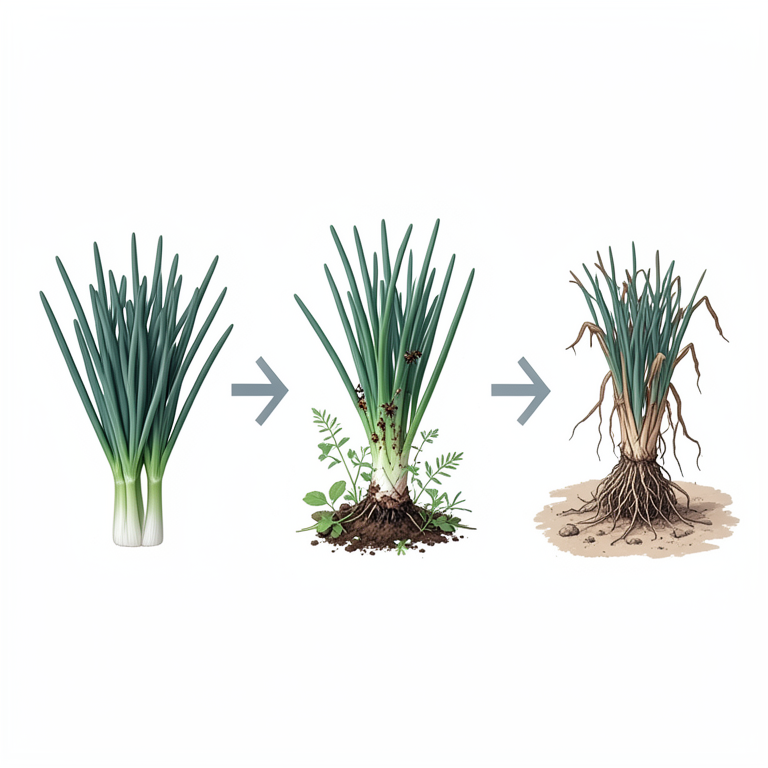
Hierarchy of Farmer Constraints
AI-generated conceptual illustration (Maroi Nakupi (garlic chives) plants). It explains the idea and does not show study data.
View source evidence ↗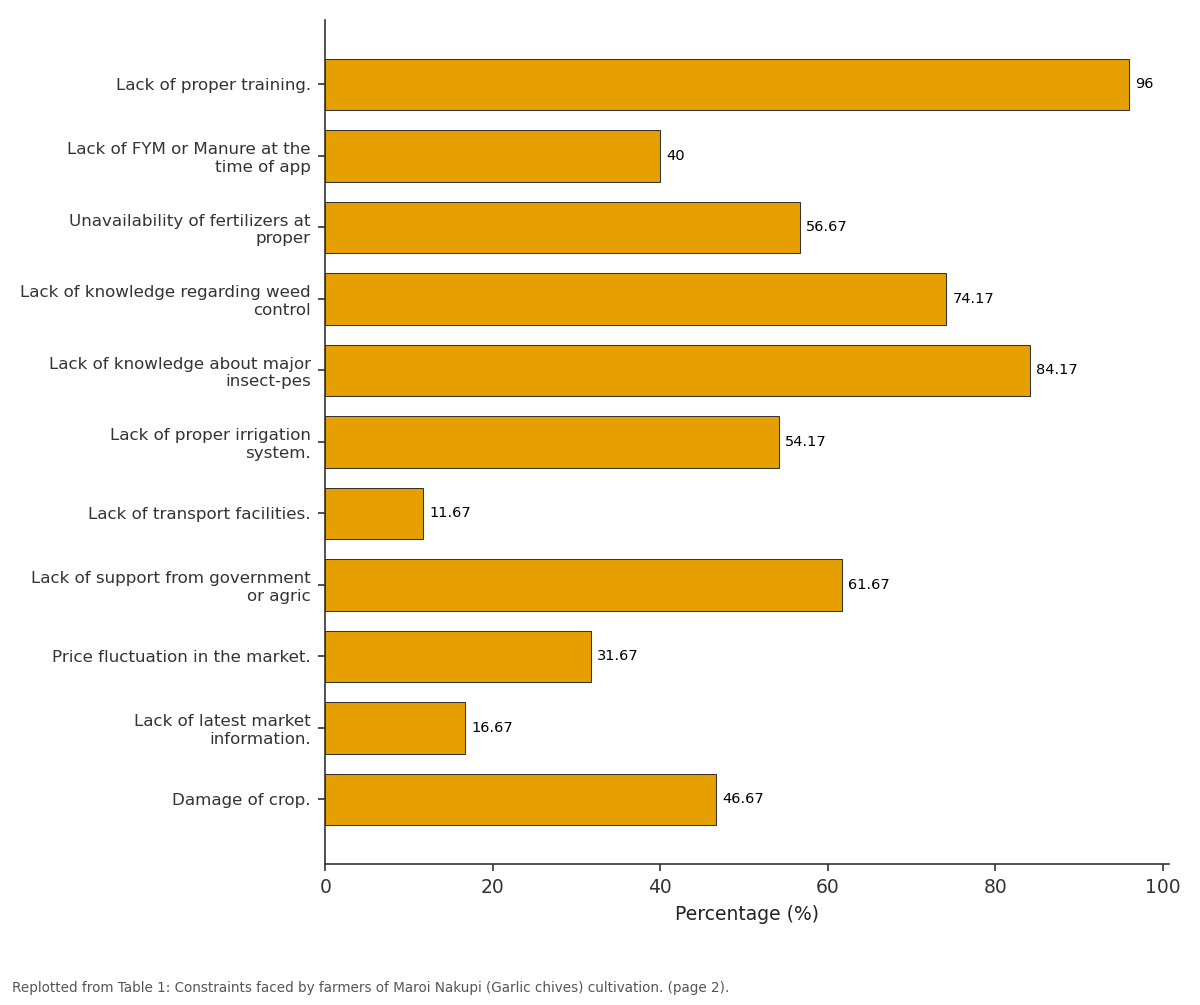
Percentage (%): Lack of proper training. vs Lack of FYM or Manure... vs Unavailability of... vs Lack of knowledge... vs Lack of knowledge about...
Replotted from Table 1 (page 2) of the original paper. Every bar is the paper's own table value.
View source evidence ↗Figures & tables
From the original paper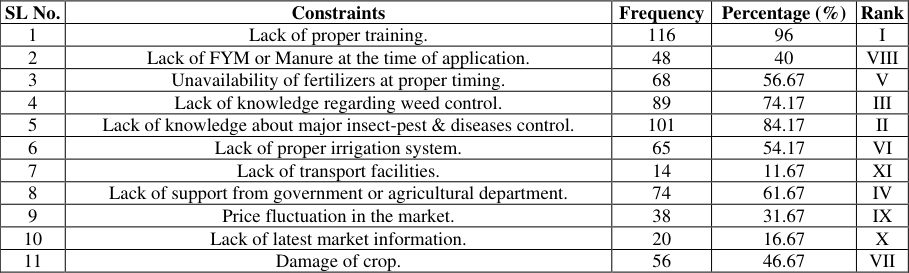 Table 1
Introduction
Manipur, a state in northeastern India renowned for its varied vegetation, is home to an abundance of naturally occurring wild food plants. Manipur State's ethnic communities employ over 400 different species of natural plants, from algae to angiosperms, as food. Known locally as "Maroi Nakupi" in Manipur, garlic chives, also known as Chinese chives and Chinese leek, is a perennial herb that is grown in almost all home gardens in the Manipur valley. Its scientific name is Allium tuberosum and they are a member of the Liliaceae family. The leaves are collected 45-60 days after planting, and if the right amount of moisture and fertilizer are applied during the growth season, the plant can yield fruit for many years to come. Manipur is also home to the cold-tolerant variety referred to locally as "Ningtham Sidabi", which can flourish in a chilly winter. Thus, the crop is suitable for year-round cultivation. Most Manipuri homes often utilize the tender leaves and inflorescences to season food since they have a flavour similar to garlic. You can eat them green or blanched. In several religious feasts where onions are banned, it also takes the place of onions. This unique crop holds a special place in Manipuri cuisine, renowned for its distinctive flavour and culinary versatility. Maroi Nakupi is not merely a vegetable, but a cultural emblem deeply woven into the fabric of Manipuri identity. Its role in traditional cuisine spans centuries, where it imparts a pungent yet refreshing flavour to dishes ranging from stews to salads. It is a cholesterol-free green that can be eaten raw, fresh, cooked, boiled, or used as a vegetable or spice to soups and salads. In South Asian countries, young healthy leaves are sweet and tender and frequently used in many Asian recipes. This crop contains a number of rich important vitamins, including vitamin C and K. In fact, it is one of the best sources of vitamin K, which may support and strengthen bone growth and contribute to bone health. Sufficient intake of vitamin K has been shown to have a major role in the treatment of Alzheimer's disease by reducing the amount of neuronal damage in the brain. The seed contains high amount of oil (15.8%), dietary fibre (18.2%) and crude protein (12.3%). Seeds oil is composed of 10% saturated and 90% unsaturated fatty acid and the leaves is an excellent source of calcium, phosphorus, zinc and iron. Additionally, lutein, zeaxanthin, and carotenes are antioxidants found in green leaves. Crushed leaves are applied straight to the head to promote healthier hair development and relieve tension. To ensure a regular flow of urine, use either fresh or boiling leaves. In Peru, it is being used for bronchitis and asthma (Bussmann and Glenn 2010) [2] . It facilitates the body's digestion of fatty foods and aids in weight loss. It works incredibly well to relieve fatigue and weariness. It lowers blood vessel rigidity, which helps to lower blood pressure in general. The present study was conducted to find out the constraints faced by farmers of "Maroi Nakupi" (Garlic chives) growers in Imphal east district of Manipur.
Objectives of the study To identify the constraints faced by the respondents
of "Maroi Nakupi" (garlic chives) growers and seek their suggestion to overcome it.
Materials and Methods
The study employed a descriptive research design, which aimed to provide a comprehensive description of the phenomena under investigation. Multi stages sampling method was followed for the study for selecting the samples required. Out of 16 districts in Manipur, Imphal east district was selected purposively for the study as high numbers of farmers are engaged in "Maroi Nakupi" (Garlic chives) cultivation. Out of 4 block in Imphal east district, Heingang
Community Development block was specially chosen and Moirang Kampu village was selected purposively based on its high number of farmers engaged in "Maroi Nakupi" (Garlic chives) cultivation. A total of 120 respondents were selected for the study. Personal interview schedule of structured questionnaire was used for the collection of data. The collected data were classified, tabulated and analyzed in the light of the objectives. Appropriate statistical tools such as frequency percentage, ranking was used to draw the inferences.
Results and Discussion
Results and Discussion
Conclusion
It was concluded that the majority of the respondents regarding the constraints of Maroi Nakupi (Galic chives) growers in Imphal East district, Manipur faces significant constraints that hinder productivity and profitability. These constraints include the lack of proper training and knowledge about pest and disease control, weed management, and the absence of support from government or agricultural departments. Additionally, challenges such as the unavailability of fertilizers, inadequate irrigation systems, crop damage, and the scarcity of farmyard manure further exacerbate the difficulties faced by farmers. Moreover, the volatility of market prices, coupled with limited access to timely market information and transport facilities, compounds the challenges, impacting the livelihoods of farmers. Addressing these constraints requires coordinated efforts to provide training, access to resources, market information, and improved infrastructure, ensuring sustainable and resilient agricultural practices in the area.
Figures and tables from the paper
| SL No. | Constraints | Frequency | Percentage (%) | Rank |
|---|---|---|---|---|
| 1 | Lack of proper training. | 116 | 96 | I |
| 2 | Lack of FYM or Manure at the time of application. | 48 | 40 | VIII |
| 3 | Unavailability of fertilizers at proper timing. | 68 | 56.67 | V |
| 4 | Lack of knowledge regarding weed control. | 89 | 74.17 | III |
| 5 | Lack of knowledge about major insect-pest & diseases control. | 101 | 84.17 | II |
| 6 | Lack of proper irrigation system. | 65 | 54.17 | VI |
| 7 | Lack of transport facilities. | 14 | 11.67 | XI |
| 8 | Lack of support from government or agricultural department. | 74 | 61.67 | IV |
| 9 | Price fluctuation in the market. | 38 | 31.67 | IX |
| 10 | Lack of latest market information. | 20 | 16.67 | X |
| 11 | Damage of crop. | 56 | 46.67 | VII |
Table text extracted from the original PDF; superscript letters are shown inline. The original table image is below.
View original table image
References
10 in the original paper- Anonymous. Ethnobiology in India: A Status Report for 1994. New Delhi: Ministry of Environment and Forest, Government of India; c1994.
- Bussmann RW, Glenn A. Medicinal plants used in Peru for the treatment of respiratory disorders. Peruana Biol. 2010;17(3):331-336.
- Chattha SH, et al. Study on cultivators associating postharvest losses of onion vegetable in Sindh's Mirpurkhas District. J Basic Appl Sci. 2017;13:426-430.
- Haile B, et al. Constraints in production of onion (Allium cepa L.) in Masha District, Southwest Ethiopia. Glob J Agric Agric Sci. 2016;4(2):314-321.
- Jangwad NP, et al. Constraints experienced by the onion seed producers regarding the onion seed production in Akola district of Maharashtra state. The Pharma Innovation J. 2021;10(2):76-78.
- Palanisamy H, et al. Constraints in production of onion at Perambalur District of Tamil Nadu, India. Int J Curr Microbiol Appl Sci. 2022;11(12):7-12.
- Raj Kumar, Bishnoi DK, Sumit, Singh A. Constraints in production, marketing, and processing of onion (Allium cepa L.) in Nuh District of Haryana. Econ Aff. 2020;65(4):653-657.
- Raj Kumar, Rathee AK, Bishnoi D, Sumit. Trends and constraints of onion production in Haryana. Indian J Econ Dev. 2017;13(2a):309-313.
- Singh YR, Devi Ch Onita, Abujam SKS, Chetia D. Study on the ethnomedicinal system of Manipur. Int J Pharm Biol Arch. 2012;3(3):587-591.
- Srivastava A, Singh KK, Singh A, Srivastava AB, Shakya AK. Production and marketing constraints in the garlic crop. The Pharma Innovation J. 2022;11(6):2136-2138.