
Research article · 2024 · Full text
International Journal of Biology SciencesA study on the ethnomedicinal uses of Bioresources by the Bodo Community of Udalguri District, Assam, India
Volume 6(2) · Pages 06–13 · DOI: 10.33545/26649926.2024.v6.i2a.224 ↗
Research areasPhytochemicals and Medicinal Plants
Abstract
Author-writtenTraditional medicine has long been a vital component of the health care systems of several ethnic groups who live in rural parts of North-East India. The objective of the study was to survey and document the traditional knowledge on Ethno medicinal uses of bioresources from indigenous people inhabiting in Udalguri district of Assam. Primary data was collected through field visits by using techniques like interview, observation and discussion with people of three sample villages of Udalguri. The study identified a total of 54 species of various plants, animals, and even insects that the Bodo people of the Udalguri district frequently employ to treat a variety of illnesses, including cough, cold, breathing issues, wounds, skin conditions, cancer, and other common disorders. The results showed that the native Bodo people of Udalguri had a wealth of traditional knowledge about using animals and animal products in traditional medicine. For the protection and management of medicinal flora and faunistic resources, it is advised that this type of traditional knowledge be incorporated in the scientific literature. Also, further studies with scientific technique should be conducted on such traditional drug.
Summary
Source-checkedPlain-language reading of the full paper, prepared with AI and checked against the text. Each point links to the authors' own words.
Why it matters
- Traditional medicine is a critical part of healthcare for various ethnic groups living in rural North-East India. View evidence ↗
- Traditional medical knowledge is typically passed down through generations within families, making formal documentation essential to prevent its loss. View evidence ↗
- While plants are the primary source for traditional medicine, the use of animal resources for healthcare is gaining significance. View evidence ↗
The question
- The study aimed to survey and document the traditional knowledge of ethnomedicinal bioresource uses among indigenous people in the Udalguri district of Assam. View evidence ↗
What they did
- The research was conducted from January to March 2023 among Bodo tribes in the villages of Bwigriguri, Sudempuri, and Dhulachuburi in the Udalguri District. View evidence ↗
- Primary data was gathered through interviews, observations, and discussions, specifically targeting elderly men and women familiar with traditional practices. View evidence ↗
What they found
- The study identified 53 species used to treat various conditions, including asthma, jaundice, typhoid, and fractures. View evidence ↗
- The documented bioresources consist of 21 plants, 12 mammals, 7 insects, 7 birds, 2 amphibians, and one each of reptiles, pisces, mollusca, and invertebrates. View evidence ↗
- Black ants (Lasius niger) are used to treat toothaches by smashing the whole body of the insect and applying it. View evidence ↗
- Fresh urine from cows (Bos indicus) is taken orally to treat anemia and blood cancer. View evidence ↗
- For wet cough, the tip of a dry papaya (Carica papaya) stem is lit and the smoke is inhaled. View evidence ↗
- The fruit of the Graviola (Annona muricata) is consumed as a treatment for cancer. View evidence ↗
- A paste made from the leaves and flowers of the Candle bush (Senna alata) is applied to treat ringworm. View evidence ↗
- The most frequently used bioresources in the studied traditional medicine are plants, followed by vertebrate animals. View evidence ↗
What it means
- The authors conclude that the medical value of these bioresources requires further scientific research and should be integrated into biodiversity conservation programs. View evidence ↗
- The authors note the need to scientifically test for the actual therapeutic components within the documented bioresources. View evidence ↗
Visual summary
1 visualsIllustrations explain the paper; they do not show study data.
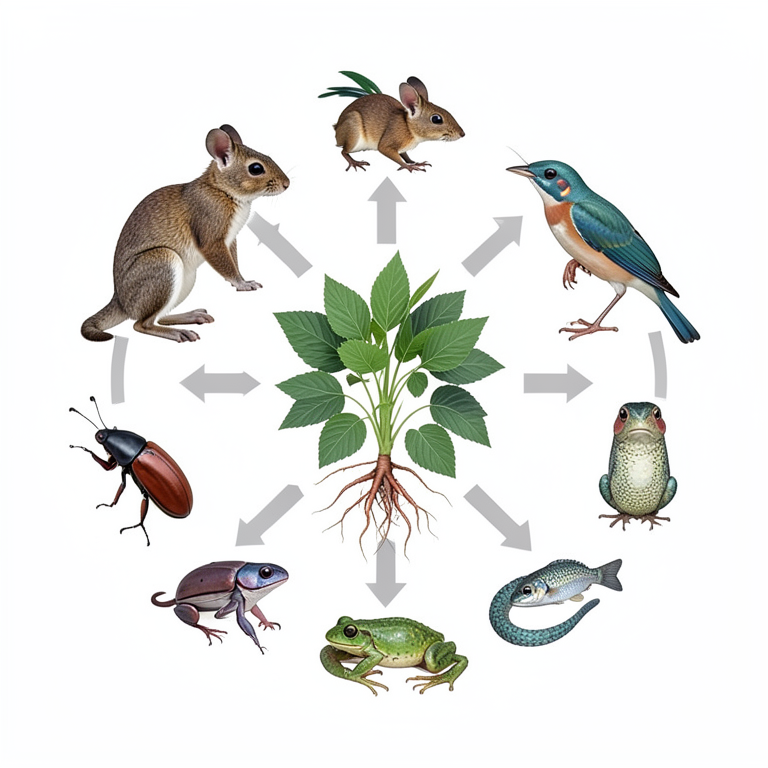
Composition of Bioresources
AI-generated conceptual illustration (Assamese flora and fauna including medicinal plants, mammals, birds, insects, and reptiles). It explains the idea and does not show study data.
View source evidence ↗Figures & tables
From the original paper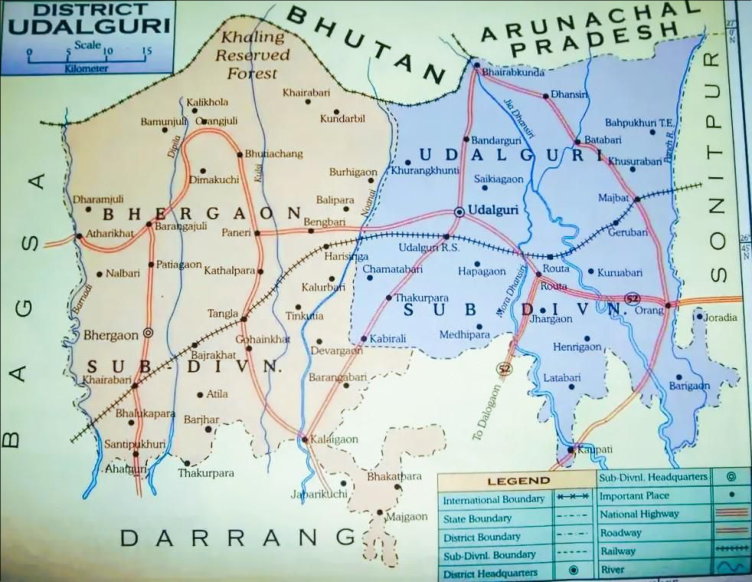 Figure 1
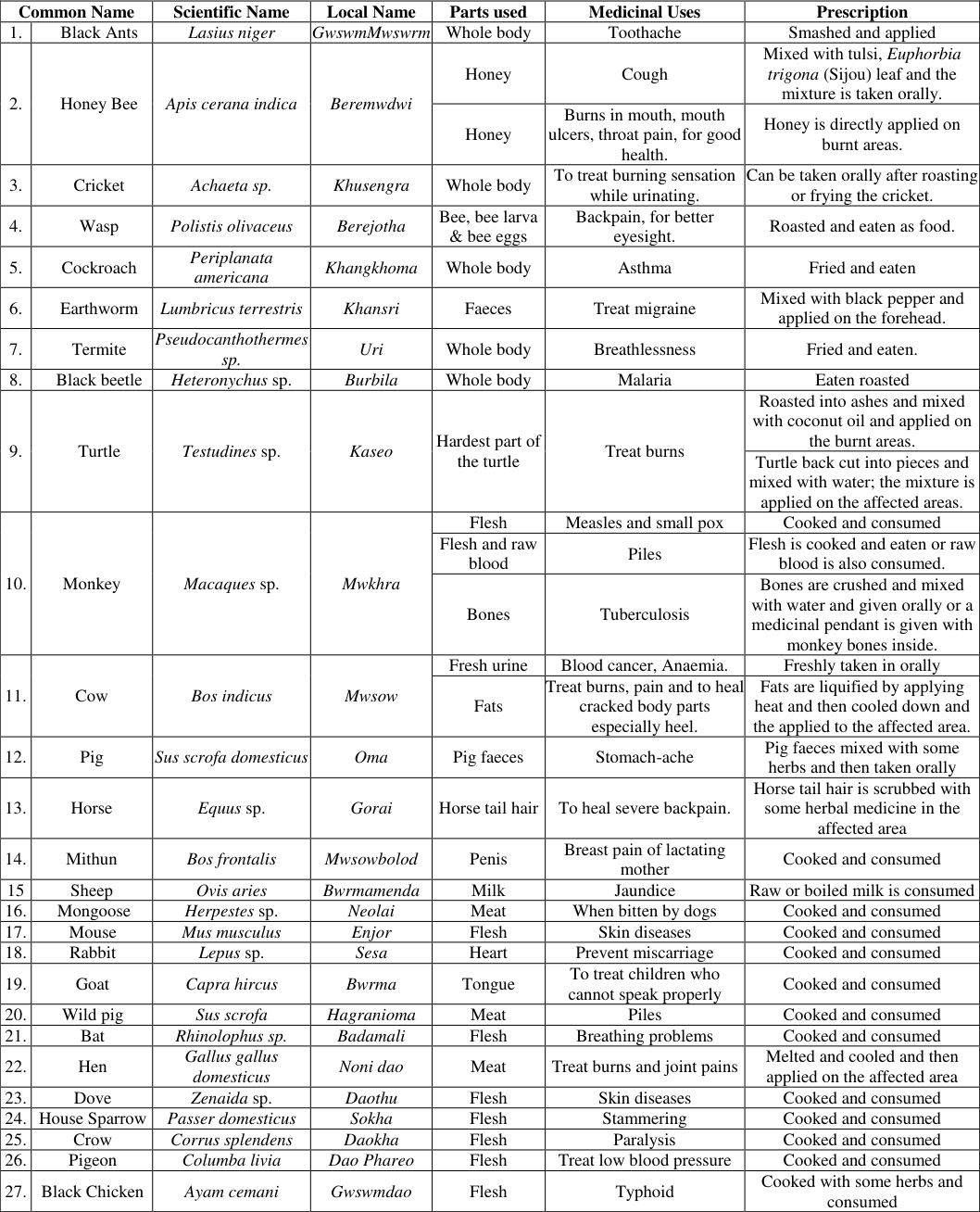 Table 1
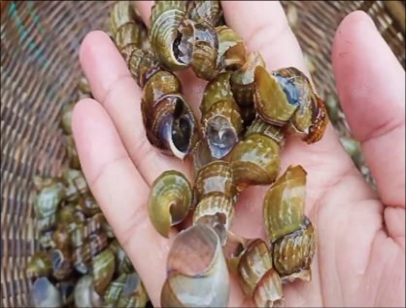 Figure 2
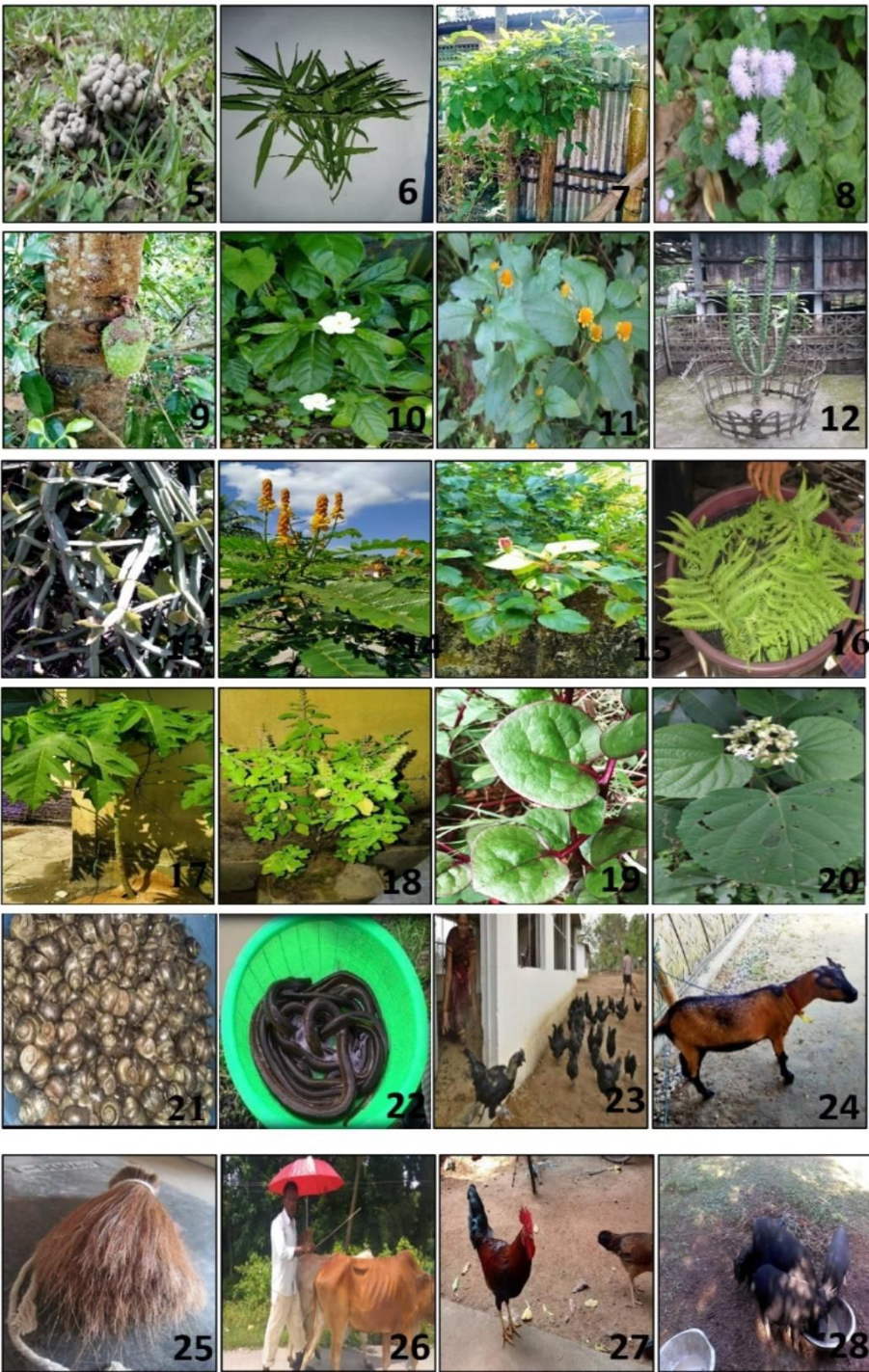 Figure 3
Introduction
The term "ethnomedicine" covers a broad spectrum of healthcare system architecture, practices, ideologies, and treatment approaches that have their origins in indigenous cultural evolution. Ethnomedicine is also understood to refer to the study of these practices and systems, more so from the perspective of setting them in an anthropological context as opposed to assessing their efficacy through the use of science. Such healthcare systems do not necessarily follow the structure of modern or 'Western medicine instead are based on the unique culture that has arisen from native/indigenous groups of people. Traditional or folk medicine is the term used to describe the use of plants and animals by the indigenous people in their own systems of health care. Traditional medicine is defined as "the body of knowledge, skills, and practices based on theories, beliefs, and experiences from indigenous to different cultures that are used to promote and maintain health as well as to prevent, identify, and treat physical and mental illness." India is gifted with enormous biodiversity. Both the relationship between man and his domesticated animals and the relationship between medicinal plants, insects, and humans have roots in primordial times. Even now, man still relies on some plants for basic healthcare in addition to all the modern medical systems. In both traditional and modern medicine around the world, plants and insects have long been used. Although plants and materials derived from plants are the main source of components for traditional medicine, finding animal resources for medical treatments is also becoming more significant in the field of human health care. Around 29 herbal medicines were found to be used in post-natal period by people of Garhwal Region, India (Juyal and Ghildiyal, 2014) [15] . Among countries, the most widely used traditional medicine today include those of China, India and Africa. Insects are very commonly incorporated as part of herbal medicine components of traditional Chinese medicine. Unlike China, the traditional insect medicine of Africa is extremely variable. In Africa, grasshopper is both eaten as food as well as consumed for medicinal purpose.
Indian traditional medicine, or ayurveda, is frequently used in conjunction with western medicine as part of standard medical care. About 15 different animal species are recorded to be used by tribes of Nandurbar district of Maharashtra (Patil, 2003) [25] . 25 vertebrates and 31 invertebrates has been used traditionally to treat ailments by people of Mizoram (Lalramnghinglova, 1999) [17] . Termites are used to treat anemia, rheumatic illnesses, and ulcers as few instances of Ayurvedic medicine in India. Assam is the second-largest state in North-Eastern India and has a diverse population of people from many different ethnic and cultural backgrounds, as well as abundant natural resources and animal sanctuaries. There have been numerous accounts on traditional Assamese medicine that is based on plants, animals, and insects. 20 plant species belonging to 17 families were found to be used traditionally by people of Gohpur, Assam (Saikia, 2006) [27] . Different ethnic groups often pass on their knowledge of and use of animals, plants, and insects in traditional medicine from one senior person in the family to the next, and if this knowledge is not carefully documented, it could be lost. It is therefore vital to preserve these by proper documentation of traditional uses of plant, animals and insects for the cure of different ailments. An effort has been undertaken to gather and document the ethno-biomedical resources from the subject area through this research. This research will be useful in learning more about the traditional medical applications of many plants, animals, and insects. Protecting the knowledge for upcoming generations may also be advantageous.
Materials and Methods
Materials and Methods
Study area
Udalguri district was selected as the study area. It is a district located on the northern bank of the Brahmaputra River in the Bodoland Territorial Region. The district's northern and eastern borders are formed by Bhutan and Arunachal Pradesh, while its western and southern borders are formed by Baksa and Sonitpur Districts. 1852.16 km 2 is roughly the size of it. It may be found at 260 45'13.21" N and 9206 '7.74" E latitude and longitude, respectively. Towards the district's northernmost point, the landscape is covered in a high plain with a moderate amount of forest. The study was conducted among the Bodo tribes during January to March, 2023 in Bwigriguri, Sudempuri, and Dhulachuburi villages of Udalguri District. There are very few proper scientific information regarding the ethnomedicine used by the people of these areas.
Results
Personal interviews with locals revealed some very valuable information about the bioresources used the Bodo people in traditional medicine. The current study provides traditional medical knowledge that uses numerous plants, animals, and their byproducts to cure various ailments. During the field survey, every respondent who revealed their traditional knowledge belonged to the Bodo community. Elderly folks gave further details on how different bioresources are used in traditional medicine. According to the research, older persons have more expertise with ethnomedical practices and are carrying knowledge that was passed down to them by family elders. The findings show that the native population of the Udalguri district still heavily relies on traditional medicine for their basic healthcare. The study recorded a total of 53 species which are used to treat different ailments such as cough, cold, asthma, toothache, stomach ache, burns, wounds and cuts, fracture, jaundice, typhoid, gastric etc. The species belong to different groups which include overall 21 Plants, 12 Mammals, 7 Insects, 7 Birds, 2 Amphibians, 1 Reptile, 1 Pisces, 1 Mollusca, 1 Invertebrate (earthworm) The record of collected bioresources with their local name, scientific name, common name, parts used, medicinal uses and prescription are given in the table 1. The knowledge on medicine was recorded from Bodo community of Udalguri district, Assam. Toothache plant: For toothache and painful bumps on tongue.
| Common Name | — | Scientific Name | Local Name | Parts used | Medicinal Uses | Prescription |
|---|---|---|---|---|---|---|
| 1. | Black Ants | Lasius niger | GwswmMwswrm | Whole body | Toothache | Smashed and applied |
| 2. | Honey Bee | Apis cerana indica | Beremwdwi | Honey | Cough | Mixed with tulsi, Euphorbia trigona (Sijou) leaf and the mixture is taken orally. |
| Honey | Burns in mouth, mouth ulcers, throat pain, for good health. | Honey is directly applied on burnt areas. | ||||
| 3. | Cricket | Achaeta sp. | Khusengra | Whole body | To treat burning sensation while urinating. | Can be taken orally after roasting or frying the cricket. |
| 4. | Wasp | Polistis olivaceus | Berejotha | Bee, bee larva & bee eggs | Backpain, for better eyesight. | Roasted and eaten as food. |
| 5. | Cockroach | Periplanata americana | Khangkhoma | Whole body | Asthma | Fried and eaten |
| 6. | Earthworm | Lumbricus terrestris | Khansri | Faeces | Treat migraine | Mixed with black pepper and applied on the forehead. |
| 7. | Termite | Pseudocanthothermes sp. | Uri | Whole body | Breathlessness | Fried and eaten. |
| 8. | Black beetle | Heteronychus sp. | Burbila | Whole body | Malaria | Eaten roasted |
| 9. | Turtle | Testudines sp. | Kaseo | Hardest part of the turtle | Treat burns | Roasted into ashes and mixed with coconut oil and applied on the burnt areas. |
| Turtle back cut into pieces and mixed with water; the mixture is applied on the affected areas. | ||||||
| 10. | Monkey | Macaques sp. | Mwkhra | Flesh | Measles and small pox | Cooked and consumed |
| Flesh and raw blood | Piles | Flesh is cooked and eaten or raw blood is also consumed. | ||||
| Bones | Tuberculosis | Bones are crushed and mixed with water and given orally or a medicinal pendant is given with monkey bones inside. | ||||
| 11. | Cow | Bos indicus | Mwsow | Fresh urine | Blood cancer, Anaemia. | Freshly taken in orally |
| Fats | Treat burns, pain and to heal cracked body parts especially heel. | Fats are liquified by applying heat and then cooled down and the applied to the affected area. | ||||
| 12. | Pig | Sus scrofa domesticus | Oma | Pig faeces | Stomach-ache | Pig faeces mixed with some herbs and then taken orally |
| 13. | Horse | Equus sp. | Gorai | Horse tail hair | To heal severe backpain. | Horse tail hair is scrubbed with some herbal medicine in the affected area |
| 14. | Mithun | Bos frontalis | Mwsowbolod | Penis | Breast pain of lactating mother | Cooked and consumed |
| 15 | Sheep | Ovis aries | Bwrmamenda | Milk | Jaundice | Raw or boiled milk is consumed |
| 16. | Mongoose | Herpestes sp. | Neolai | Meat | When bitten by dogs | Cooked and consumed |
| 17. | Mouse | Mus musculus | Enjor | Flesh | Skin diseases | Cooked and consumed |
| 18. | Rabbit | Lepus sp. | Sesa | Heart | Prevent miscarriage | Cooked and consumed |
| 19. | Goat | Capra hircus | Bwrma | Tongue | To treat children who cannot speak properly | Cooked and consumed |
| 20. | Wild pig | Sus scrofa | Hagranioma | Meat | Piles | Cooked and consumed |
| 21. | Bat | Rhinolophus sp. | Badamali | Flesh | Breathing problems | Cooked and consumed |
| 22. | Hen | Gallus gallus domesticus | Noni dao | Meat | Treat burns and joint pains | Melted and cooled and then applied on the affected area |
| 23. | Dove | Zenaida sp. | Daothu | Flesh | Skin diseases | Cooked and consumed |
| 24. | House Sparrow | Passer domesticus | Sokha | Flesh | Stammering | Cooked and consumed |
| 25. | Crow | Corrus splendens | Daokha | Flesh | Paralysis | Cooked and consumed |
| 26. | Pigeon | Columba livia | Dao Phareo | Flesh | Treat low blood pressure | Cooked and consumed |
| 27. | Black Chicken | Ayam cemani | Gwswmdao | Flesh | Typhoid | Cooked with some herbs and consumed |
Table text extracted from the original PDF; superscript letters are shown inline. The original table image is below.
View original table image
Crepe Jasmine: For red eye infection Leucas aspera: For cough and cold. Above given pictures are some of the most commonly used bioresources in traditional practices in the above -mentioned locality. The use of different plants, animals, insect-based drugs to treat different ethnic communities in different parts of India including Northeastern region has been well established by different authors, where they reported the use of different bioresources and their products in medicine as well as food and other purposes like religious purposes. The native people also sacrifice animals for different rituals according to their mythological beliefs, myth associated with therapeutics.
Discussion
From the study conducted it was found and recorded that most of the bioresources used in traditional medicine belong to plants groups followed by vertebrate animals. The local people used traditional zootherapeutic medicine and many other medicinal plants for the treatment of various ailments including diarrhea, cough, cold, blood pressure, body ache, skin diseases, toothache, gastric, jaundice, typhoid, chicken pox etc. While fat/oil of some animals such as hen and pigs, is warmed up and externally applied to relief pain and heal cracks especially on the heel. Most of the other parts of animals is cooked or boiled and eaten. Around 34 species of animals are found to be used to cure various ailments by the Biate tribe of Dima Hasao (Betlu, 2013) [2] . Borah and Surya (2016) [3] also recorded about 26 animals and their products having various ethnomedicinal uses like in treatment of jaundice, asthma, etc. Flesh is taken after cooking, while other animal byproducts like milk, urine, honey etc. of some animals are taken fresh or mixed with other ingredients. Plants parts such as leaf and flowers are cooked and consumed or turned into a paste and applied externally or taken orally. For example, flower of crape jasmine is used to treat red eye infection. Paste or flower extract is applied in the infected eye. Another example is skunk vine used for toothache and gastric inflammation. For the former the leaf is turned into a paste and applied directly on the tooth while for the later soup of skunk vine leaves are consumed. About 48 monocot plants belonging to 17 families were also found to be used in treatment of various diseases by Bodo community of Assam (Daimari, 2023) [36] .
Although traditional medicine has been a vital part of primary healthcare systems since ancient times, it is remarkable to note that when researching traditional medical uses of bioresources, one should keep ecological harmony and biodiversity preservation strategies in mind. It's possible that traditional medicine is likewise surrounded by many superstitions and myths. Therefore, it is important to test for the proper therapeutic component in plants, animals, insects, and their byproducts. Traditional healers need to understand the value of protected and endangered bioresources to the balance of biodiversity. Proper awareness and scientific management of these bioresources may help in biodiversity conservation.
Conclusion
Knowledge about the bioresources such as plants, animals, insects, birds etc. that were used for medicinal purposes in the past are still being used as a part of traditional medicine. Plants, animals, aves, insects have wide spectrum application in therapeutic, religious purpose, and pharmaceutical sciences. Efforts should be made for conservation and management of these bioresources (flora and fauna). A total of 52 species were noted to be used for different kinds of ailments by the people of different villages of Udalguri District, Assam. These knowledges are important to science and human society for better understanding of traditional medicine. The present study reflects sustainable and optimum utilization of bioresources by the Bodos. Mechanism of transmission of traditional knowledge of bioresources used in traditional medicine in the society is an interesting area worth investigating. Cultural practices of resource utilization should be encouraged. These products' medical value must be confirmed by more research, and this information must be included into programmes for biodiversity conservation and management of plants, animals, insects, and avian resources.
Acknowledgement
AcknowledgementThe author is thankful to the villagers of the study area for providing full support during the survey.
Figures and tables from the paper
References
35 in the original paper- Alves RN. Why study the use of animal products in traditional medicines. Journal of Ethnobiology and Ethnomedicine. 2005;1:5. DOI:10.1186/1746-4269-1-5.
- Betula. Indigenous Knowledge of Zootherapeutic use among the Biate tribe of Dima Hasao District, Assam, North-eastern India. Journal of Ethnobiology and Ethnomedicine. 2013;9:1-15.
- Borah R, Surya M. Ethnozoological remedial uses by the indigenous inhabitants in adjoining areas of Pobitora Wildlife Sanctuary, Assam, India. International Journal of Pharmacy and Pharmaceutical Sciences. 2016;8.
- Borah R, Surya M. Ethnozoological study of animalbased medicine used by traditional healer and indigenous inhabitants in the adjoining areas of Gibbon Wildlife Sanctuary, Assam, India. Journal of Ethnobiology and Ethnomedicine. 2017;13:39. doi:10.1186/s13002-017-017-6.
- Borthakur SK. Postnatal care in Traditional System in Assam. Ethnobotany. 1996;8:37-41.
- Chakraborty MK, Bhattacharjee D. Some common ethnobotanical uses for various diseases in Purulia district, West Bengal. Indian Journal of Traditional Knowledge. 2006;5(4):554-558.
- Chinlampianga M, Singh RK, Shukla AC. Ethnozoological diversity of North-East India: Empirical learning with Traditional knowledge holders of Mizoram and Arunachal Pradesh. Indian Journal of Traditional Knowledge. 2013;12(1):18-30.
- Daimari S, Baruah S, Bhuyan K. Traditional Medicinal Uses of Monocot plants by Bodo community in Udalguri district (BTAD), Assam, Northeast India. European Journal of Biomedical and Pharmaceutical Sciences. 2016;3(9):554-560.
- Daimari S, Roy K, Swargayari J, Baruah S, Basumatary J. An ethnobotanical survey of antidiabetic medicinal plants used by the Bodo tribe of Kokrajhar district. Indian Journal of Traditional Knowledge. 2019;18(3):421-429.
- Das P, Teron R. Ethnobotanical notes of the Rabha community in Mataikhar reserve forest of Kamrup International Journal of Biology Sciences https://www.biologyjournal.net district, Assam, India. Research Journal of Recent Sciences. 2013;3(6):26-33.
- Hanse R, Teron R. Ethnozoological practices among Karbi tribes in Karbi Anglong district of Assam, India. The Ecoscan. 2012;1:117-120.
- Hazarika R, Singh B, Neog S. Ethnomedicinal studies of common plants of Assam and Manipur. Indian Journal of Pharmaceutical and Biological Archives. 2012;3(4):809-815.
- Jamir NS, Sharma HK, Dolui AK. Folklore medicinal plants of Nagaland, India. Fitoterapia. 1999;70:395401.
- Jamir NS, Lal P. Ethnozoological practices among Naga tribes. Indian Journal of Traditional Knowledge. 2005;1:100-104.
- Juyal P, Ghildiyal JC. Ethnobotanical uses of plants in post-natal care. International Journal of Pharmacy Practice & Drug Research. 2014;4(1):25-26.
- Kakati LN, Doulo V. Indigenous knowledge system of Nagaland, India. Journal of Human Ecology. 2002;13(6):419-423.
- Lalramnghiglova H. Ethnobiology in Mizoram state: folklore medico-zoology. Bulletin of Indian Institute of Medical Research. 1999;29:123-148.
- Mahawar MM, Jaroli DP. Animals and their products utilized as medicine by the inhabitants surrounding the Ranthambhore National Park, India. Journal of Ethnobiology and Ethnomedicine. 2006;2:46-51.
- Mahawar MM, Jaroli DP. Traditional Zootherapeutic studies in India: a review. Journal of Ethnobiology and Ethnomedicine. 2008;4:17-29.
- Mishra N, Rout J, Panda T. Ethno-zoological studies and medicinal values of Similipal Bioreserve, Orissa, India. African Journal of Pharmacy and Pharmacology. 2010;5(1):6-11.
- Namsa ND, Mandal M, Tangjang S. Anti-malarial herbal remedies of Northeast India, Assam: An ethnobotanical survey. Journal of Ethnopharmacology. 2010.
- Narzary S, Sabitry H. Ethnozoological practices on frogs of Bodo tribe from Kokrajhar district, Assam, India. American Journal of Ethnomedicine. 2014;1(6).
- Negi CS. Traditional uses of animal and animal products in medicines and rituals by Shoka tribes of District Pithoragarh, Uttaranchal, India. Ethnomedicine. 2007;1(1):47-54.
- Pandey AK, Singh P, Rita V, Mavinkurve P. Use of indigenous plants in traditional health care system and economics use by Mishing tribes of Jorhat, Assam, India. World Journal of Pharmacy and Pharmaceutical Sciences. 2015;4(8):1277-1289.
- Patil DA. Ethno-medico-zoological studies on Nandurbar district of Maharashtra. Indian Journal of Traditional Knowledge. 2003;2:279.
- Prabhakar VK, Roy SS. Ethnomedicinal uses of some Shejj fishes by people of Kosi river basin of north Bihar, India. Ethnomedicine. 2009;3(1):1-4.
- Saikia B. Ethnomedical plants from Gohpur to Sonitpur district Assam. Indian Journal of Traditional Knowledge. 2006;5(4):529-530.
- Sikdar AK, Dutta BK. Traditional Phytotherapy among the Nath people of Assam. Ethno-Medicine. 2008;2:3945.
- Singh RK. Learning the indigenous knowledge and biodiversity through contest: A participatory methodological tool of Eco-literacy. Indian Journal of Traditional Knowledge. 2010;9(2):355-360.
- Solanki GS, Chutia P. Ethnozoological practices and sociocultural aspects of Monpas of Arunachal Pradesh. Journal of Human Ecology. 2004;4:251-254.
- Teronpi VK, Singh DP. Ethnozoology of the Karbis of Assam, India: Use of Ichthyofauna in traditional healthcare practices. Ancient Science of Life. 2012;32:99-103.
- Tripathy NK. Importance of plants and animals in medicine. Journal of Experimental Zoology India. 2015;18(2).
- Varghese GK, Willsanand R, Rajitha P. Therapeutics of insects and insect products in South Indian traditional medicine. Indian Journal of Traditional Knowledge. 2007;6(4):563-568.
- Vedavathy S. Tribal medicine-The Real alternative. Indian Journal of Traditional Knowledge. 2002;1:25-31.
- Daimari E, Dutta U. Ethnotherapeutic Uses of Aquatic Animals in the North Eastern Region of India: A Preliminary Observation. Current Traditional Medicine. 2023 Aug 1;9(4):153-166.
Cited by 1
From OpenAlex, OpenCitations and reference lists read by Scinovex
- Traditional Child Healing Practices Of Assam: An Analysis Of Cultural Beliefs, Ethno Medicine And Integration Opportunities Of Some Major Tribes And Non Tribes Of Assam. ↗
Dr. Trikha Rani Das, Amrita Bora · INTERNATIONAL JOURNAL OF RESEARCH AND ANALYTICAL REVIEWS · 2026
UGC-CARE list, New UGC-CARE Reference List, UGC CARE Journals, ugc care list of journal, ugc care list, UGC Approved list, list of ugc approved journal, ugc approved journal,IJRAR - international Research Journal,IJRAR.ORG,Ijrar.org, International Journal of Research and Analytical Reviews (IJRAR) , UGC Approved journal, ugc approved,ugc, ugc certify, publish free of cost, free publication, UGC and ISSN Approved , International…
❝ 0PDF