
Research article · 2024 · Full text
International Journal of Biology SciencesMicrobial spoilage of fruits: Reasons and preservation
Volume 6(2) · Pages 14–17 · DOI: 10.33545/26649926.2024.v6.i2a.225 ↗
Research areasEssential Oils and Antimicrobial ActivityListeria monocytogenes in Food SafetyPostharvest Quality and Shelf Life Management
Abstract
Author-writtenFruits provide sufficient condition for the growth of several bacteria and fungi. Microorganism spoils the fruits and changes the texture, taste, odor, flavor etc. and makes them non edible. By the growth of microorganisms there is heavy loss of fruits. Other reasons such as during handling and transportation, there is a greater risk to get damaged in fruits. By spoilage of fruits, farmers suffered from a great loss.
Summary
Source-checkedPlain-language reading of the full paper, prepared with AI and checked against the text. Each point links to the authors' own words.
Why it matters
- Fruits are a critical part of a healthy human diet because they provide essential nutrients, including vitamins, minerals, fats, and oils. View evidence ↗
- The high concentration of sugars, amino acids, vitamins, and minerals in fruits creates an ideal environment for the growth of bacteria and fungi. View evidence ↗
- Microbial spoilage renders fruits inedible by altering their taste, odor, flavor, and texture, leading to significant economic losses. View evidence ↗
The question
- The paper aims to examine the reasons behind the microbial spoilage of fruits and the methods available for their preservation. View evidence ↗
What they did
- This is a review paper that synthesizes information from various cited sources and literature to identify spoilage agents and preservation techniques. View evidence ↗
What they found
- In one reported year in Malaysia, spoilage caused the loss of 18.9 billion pounds of fresh fruits, accounting for 19.6% of the country's edible food losses. View evidence ↗
- Post-harvest losses in Assam reduce the actual market availability of fruits and vegetables by 35% to 40%. View evidence ↗
- The production of ethylene gas during ripening can accelerate the spoilage and over-ripening of other fruits if they are stored together. View evidence ↗
- Fruit spoilage is caused by both pre-harvest sources (seeds, soil, water, manure) and post-harvest factors (handling, processing, and the farm environment). View evidence ↗
- The most common pathogenic fungi found in spoiled fruits include Aspergillus, Rhizopus, Alternaria, Penicillium, and Fusarium. View evidence ↗
- Bacteria typically thrive at a near-neutral pH of 4.5 or higher, whereas fungi can grow across a broader pH range from 3 to 8. View evidence ↗
- Temperature is a primary factor in microbial growth, with psychotropic microorganisms specifically causing spoilage even under refrigeration. View evidence ↗
- Fruit preservation methods include thermal treatments (hot water, steam, sun drying), physical methods (ultrasound, high pressure, irradiation), and chemical methods (hypochlorite and other preservatives). View evidence ↗
What it means
- The authors conclude that fruit preservation is essential to extend the duration for which fruits can be safely consumed. View evidence ↗
Visual summary
1 visualsIllustrations explain the paper; they do not show study data.
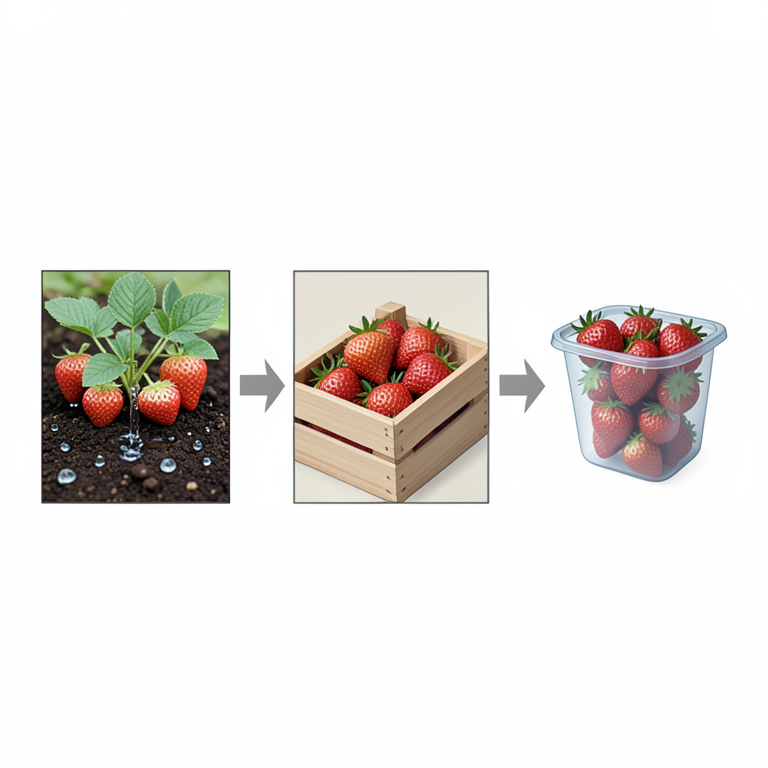
Pathways of Fruit Contamination
AI-generated conceptual illustration (Fresh strawberries). It explains the idea and does not show study data.
View source evidence ↗Figures & tables
From the original paper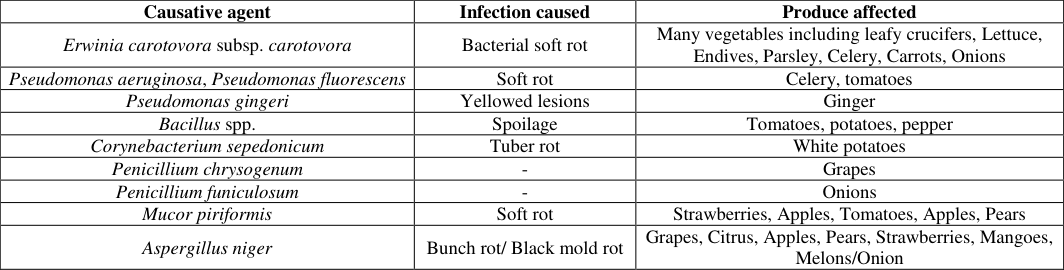 Table 1
Introduction Fruits
Fruits are sweet and fleshy products of trees and other plants that contain seeds and they are typically eaten as food. There are various sizes, shapes, color and flavors of fruits. Fruits are main component of healthy diet because of their nutritional value. A Fruits provides the ideal environment for the growth of many types of microorganisms. Specifically for bacteria fruits gives good environment for growth and viability. Fruits are essential source of nutrients to human being which gives supplement to body with necessary vitamins, fats, minerals, and oil in right proportion for human growth. The fruit tissues composed of high concentration of various types of minerals, sugars, vitamins and amino acids [1] . India is the second largest producer of fruits and vegetables after china. According to Kumar (2011) [5] , Food and Agricultural Organization (FAO) data shows that India has produced about 76424.2 tons of fruits in 2011. Fruits are delicious, and an essential part of a balanced diet. They are not only providing essential nutrients but also enhance the flavor and texture of various dishes. People can use fruits in their regular diet as snacking as a healthy snack between meals. Also fruits can add as salads for a sweet combination. Fruits can blend into smoothies for a nutrientdense drink. Various culinary fruits provide significant amount of fiber and water, and many are generally high in vitamin C [2] . The dietary fiber consumed in eating fruit promotes satiety, and may help to control body weight and aid reduction of blood cholesterol, a risk factor for cardiovascular diseases [3] .
Health benefit of fruits
Fruits are universally noted as healthy. Fruits supply dietary fiber which intake is connected to lower incidence of cardiovascular disease and obesity [4] . Fruits and vegetables also provide minerals and vitamins to the diet and are good source of phytochemicals that function as anti-inflammatory, antioxidants and phytoestrogens agents and other protective mechanisms. All parts of Banana plant have pharmaceutical application. The flowers used in bronchitis and dysentery, cooked flowers are given to diabetics, young leaves are placed as poultices on burns and other skin afflictions. The roots of banana are applicable in digestive disorders and dysentery [5] . Banana seed mucilage is given in cases of diarrhea in India [6] . Bananas contain 27%, 12% and 8% daily volume of Vitamin B6, Vitamin C, and Magnesium respectively. Fruits are very poor source of protein and fat. Avocado is the exception containing 28 % fat. Avocado contains high amounts of potassium, fiber, vitamin B6, E, K and two carotenoids known as lutein and zeaxanthin, which support eye health. Generally fruits are poor source of iron but Seethaphal is good source of iron. Guavas, Citrus fruits and cashew are rich in vitamin C, but quantity of vitamin is varies from fruit to fruit. Fruits like Apple, pears, grapes, and some citrus fruits contain flavonoids which act as antioxidants.
Mangoes are good source of carotenes, while Alphonso type of Mango was found to be the richest source of βcarotene. Oranges are moderately good source of βcarotene.
Mangoes are excellent source of potassium, folate, fiber, and vitamin A, C, B6, K and E, also high in mangiferin a potent antioxidant. Studies have shown that mango may protect the body from chronic diseases, such as type 2 diabetes, heart disease, Parkinson's, and Alzheimer's and some forms of cancer. Amla is also a wealthy source of vitamin C. Ripen fruit contains a higher percentage of sugar than unripe fruit. Sucrose, fructose and glucose are main form of sugars that can find in fruits. Strawberries are a juicy red fruit which have high water content, and seeds provide plenty of dietary fiber. Strawberries also contain flavonoid called quercetin, which is a natural antiinflammatory compound. Lime has antibacterial and antioxidant properties. The flavonoid in Grapefruits helps protect against some cancer, obesity and inflammation [7] . Lychee is rich source of vitamin C, potassium, fiber and many polyphenols with anti-inflamatory and antioxidant properties. Cherries are a great source of fiber and potassium both of which are important for heart and gut health, also good source of serotonin, melatonin; which support good mood and sleep [8] .
Spoilage of fruits
Spoilage can be defined by various ways. Simply spoilage means fruits are no longer acceptable to the consumer. Spoilage of fruits means that condition of food or fruits that causes undesirable changes which is unacceptable for human consumption [9] . The worst case of spoilage; when it becomes a food safety issue, where the food or their product may cause the consumer illness or death. According to a Department of Statistic data, 18.9 billion pounds of fresh fruits were lost annually due to spoilage, which was contributed to 19.6% of edible food losses of Malaysia for that particular year [10] . High concentration of amino acids, sugars, minerals, vitamins also gives good platform for the successful growth and survival of various bacteria and saprophytic fungi. Fruits are highly perishable and maintain the active metabolism during the storage period. During post-harvest period various diseases can affect quality of fruits. Post-harvest deterioration of fruits may take place at any stages such as storage, trans-shipment, handling process, transport or move the crop from the grower to dealer, to retailer and finally to consumer [11] . In every year major loss in yield is caused due to fungal diseases. Postharvest diseases of fruits are most severe cause of loss of production, and diseases are responsible for bio deterioration of fruits. In Assam, actual availability of fruits and vegetables in the market goes down by 35% to 40% due to post harvest losses. Spoilage of bacteria can causes softening of tissues as pectins are degraded, whole fruit may ultimately deteriorate into a slimy mass. Starch and sugars are metabolized which cause unpleasant smell and flavors may develop along with lactic acid and ethanol [12] . Some spoilage microbes are competent of colonizing and creating lessons on undamaged and healthy plant tissue [13] . Microbial fruit infection may occur during the growth season, harvesting, handling, transport, post-harvest storage and marketing conditions. Spoilage will because fruits become even toxic to consumers. Several studies have been reported that occurrence of bacteria in spoiled fruits includes Pseudomonas, Xantomonas, Enterobacter, Bacillus, Clostridium and Lactobacillus etc. [14] . The difference in the presence or absence of microbes could be due to various factors which can be due to resident microflora in the soil, presence of any non-resident microflora through animal manures [15] . Microorganisms spoil fruits which lead to a great loss to mankind [16] . It can be challenging to ensure microbial integrity of fresh fruits throughout the commercial and distribution process. During processing and storage time several compositional and physiological changes occur making fresh fruits a suitable component for microbial spoilage. When the cells of fruits are damaged, enzyme catalyzes the oxidation compounds, resulting in browning the fruits flesh. This process is increases by air exposure. Some fruits develop ethylene gas as they ripen, this gas can help other fruits to ripen and also fasten the process of spoilage if they are stored together which can cause over-ripening and decay. There are many factors which effects of spoilage of fruits such as pH, temperature, oxygen, moisture, certain human tendency and misconception can contribute to spoilage of fruits. Sometimes, consumers buy more produce commodities than required which is also one of the reason for spoilage. Studies have shown correlation between increased incidence of non-communicable diseases and diets rich in fats, sugars and salt, and low in fruit and vegetables [17] . Consumption of fruits has increased exponentially all over the world due to increased awareness of the health benefits [18] . Spoilage of fruits is an important food issue that has taken much less research attention compared to other produce related food borne illness.
Reasons for spoilage of fruits
Even due to enormous production of fruits and vegetables, during transportation, handling, storage heavy losses of fruits and vegetables are reported [19][20] . The chances that microbial spoilage agents will be established at any point along these stages depends on certain factors such as surface morphology, topography, plant surface exudates and postharvest handling. As the fruits are cut off from their natural nutrient source, their quality begins to diminish but the period of greatest susceptibility to decay onset is during ripening and senescence [21] . One of the reasons for spoiled fruit is via the farm environment, post-harvest handling and processing. Furth more, soils typically are teeming with life and the possibility of contamination exists [22] . Second reason for spoilage is pre-harvest sources such as seed, agricultural water, soil, manure, other biological amendments, and humans. Spoilage microorganism can enter through this route into plant tissue, from where it becomes virtually impossible to sanitizers or other decontamination process to reach them and eliminate it [23] . Some fruits develop ethylene gas as they ripen; this gas can stimulate ripening in other fruits, and can also speed up spoilage if fruits are stored together, leading to over-ripening and decay. Improper packaging can expose fruits to air, moisture, and contaminants, speeding up the spoilage process. Over time, fruits naturally decaying due to enzymatic processes and microbial activity, even under optimal storage conditions [24] .
Microorganism involved in spoiled fruits: Presence of pathogenic fungi in fruits had been reported in apple, corn, grapes, guava and mango [25] , orange, tomato, pineapple, and watermelon [26] . The most frequent pathogenic fungi isolated from spoilt fruits are Aspergillus, Rhizopus, Alternaria, Penicillium and fusarium. Fungal spoilage were developed unpleasant odours and flavor, reduced quality and cause foodborne disease [27] . Gram positive bacteria, Gram negative bacteria, fungi, are common spoilage agent of fruits. It can be challenging to ensure the microbiological integrity of fresh fruit throughout the commercial and distribution chain. During this time several changes occur in fruit composition making them a suitable substrate for microbial infestation [28] . In addition to the possibility of triggering allergic responses to dry air borne spores produced by some spoilage microbes such as P. italicum and P. digitatum, several spoilage molds including Aspergillus spp., Fusarium spp., Penicillium spp., Alternaria spp. and so on produce toxic metabolites (mycotoxins), which are a well-established public health hazard [29] . Some spoilage microbes are opportunistic human pathogen, which have been implicated in foodborne outbreaks. Some spoilage microbes may at times play beneficial roles for example Botrytis cinereae, a spoilage agent of grapes, which in certain situations could enhance the commercial value of the commodity [30] . Inappropriate harvesting practices may cause damage such as wounds, abrasion, bruising, puncture, or breakage to the cellular and tissue structure [31] .
Table 1:
Common microbial spoilage agents of fruits and vegetables [32][33] Causative [34] . Fungi are much less sensitive to pH which can grow over a wide range within pH range 3-8 [35] . To survive in food, most of the spoilage microbes required water in an available form [36] . Microbes can survive harsh environmental conditions such as sub optimal temperature provided liquid water is available [37] . Temperature is the second most important factor that modulates the survival and growth of microbes. Psychotropic spoilage microorganisms are common and been associated with spoilage under refrigeration conditions. Many microbes which can cause spoilage in fruits require oxygen for survival and growth. Apart from biological factors, some non-biological factors such as intrinsic food parameters, climate and human tendencies contribute to large scale spoilage. Another factor is spoilage microbes may gain entry into plant tissues during fruit development, or through the calyx, stem scar [38] .
Preservation
One of the major risks for the preservation of fruits and vegetables is that they have a very short shelf life and they are exposed to the microbial contamination if contacted through soil and water. By this reason preservation of fruits are very much important for consumption for a longer duration. Many countries are engaged in the production of fruits to a larger extent. There are some common methods for fruit preservation such as Hot water, hot steams or sun drying treatment. Some physical methods like Ultrasound, High pressure, Irradiation. There are some chemical methods by using Hypochlorite, Preservatives [39] . Some of the antimicrobials, polypeptides and Organic acids can also be used as preservatives. Hermetic sealing in a Modified Atmospheric Packaging (MAP) system is used for protection against microorganisms or enzymes that can cause spoilage.
Acknowledgement
AcknowledgementI am thankful to Dr. Pradeep Verma, Dean, Faculty of Science, Swaminarayan University for providing me laboratory facility for performing my research work. I am also thankful to all the higher authorities of Swaminarayan University for their support. I like to thank faculty of Science for supporting and helping me for this work.
Figures and tables from the paper
| Causative agent | Infection caused | Produce affected |
|---|---|---|
| Erwinia carotovora subsp. carotovora | Bacterial soft rot | Many vegetables including leafy crucifers, Lettuce, Endives, Parsley, Celery, Carrots, Onions |
| Pseudomonas aeruginosa, Pseudomonas fluorescens | Soft rot | Celery, tomatoes |
| Pseudomonas gingeri | Yellowed lesions | Ginger |
| Bacillus spp. | Spoilage | Tomatoes, potatoes, pepper |
| Corynebacterium sepedonicum | Tuber rot | White potatoes |
| Penicillium chrysogenum | - | Grapes |
| Penicillium funiculosum | - | Onions |
| Mucor piriformis | Soft rot | Strawberries, Apples, Tomatoes, Apples, Pears |
| Aspergillus niger | Bunch rot/ Black mold rot | Grapes, Citrus, Apples, Pears, Strawberries, Mangoes, Melons/Onion |
Table text extracted from the original PDF; superscript letters are shown inline. The original table image is below.
View original table image
References
37 in the original paper- Bhale UN. Survey of market storage diseases of some important fruits of Osmannabad District (M.S). India Science Research Reporter. 2011;1:88.
- Hulme AC. The Biochemistry of Fruits and Their Products. London & New York: Academic Press; 1970.
- Brown L, Rosner B, Willett WW, Sacks FM. Cholesterol-lowering effects of dietary fiber: a metaanalysis. Am J Clin Nutr. 1999;69(1):30-42. DOI: 10.1093/ajcn/69.1.30. PMID: 9925120.
- Slavin JL, Lloyd B. Health Benefits of Fruits and Vegetables. Adv Nutr. 2012;3(4):506-516. DOI: 10.3945/an.112.002154.506.
- Kumar KPS, Bhowmik SD, Duraivel MU. Traditional and Medicinal Uses of Banana. J Pharmacogn Phytochem. 2012;1(3):51-63.
- Hassan HF, Hassan UF, Usher OA, Ibrahim AB, Tabe NN. Exploring the Potentials of Banana (Musa Sapietum) Peels in Feed Formulation. Int J Adv Res Chem Sci (IJARCS). 2018;5(5):10-14.
- Hung WL, Suh JH, Wang Y. Chemistry and health effects of furanocoumarins in grapefruit. J Food Drug Anal. 2017;25(1):71-83.
- Kelley DS, Adkins Y, Laugero KD. A Review of the Health Benefits of Cherries. Nutrients. 2018;10(3):368. DOI: 10.3390/nu10030368.
- Akinmusire OO. Fungal species associated with the spoilage of some edible fruits in Maiduguri Northern Eastern Nigeria. Adv Environ Biol. 2011;5:157.
- Department of Statistics. Laporan statistik buah-buahan di Malaysia. 2017.
- Rathod GM. Survey of Post-Harvest Fungal Diseases of Some Fruits from Marathwada Regions of Maharashtra, India. J Ecobiotechnol. 2010;2(6):7-10.
- Rawat S. Food spoilage: Microorganisms and their prevention. Asian J Plant Sci Res. 2015;5.
- Tournas VH, Katsoudas E. Mould and yeast flora in fresh berries, grapes and citrus fruits. Int J Food Microbiol. 2015;105:11.
- Hasan NA, Zulkuhar IM. Isolation and identification of bacteria from spoiled fruits. AIP Conf Proc. 2018;2020:020073.
- Khatri PK, Sharma S. Microbial Examination for Spoil Fruits and Vegetables and its Isolation, Identification, and Antimicrobial Sensitivity Pattern. Int J Curr Microbiol App Sci. 2018;7(12):2671-2679.
- Fatima N, Batool H, Sultana V, Ara J, EhteshamulHaque S. Prevalence of post-harvest rot of vegetables and fruits in Karachi, Pakistan. Pak J Bot. 2009;41(6):3185-3190.
- Jhee JH, Kee YK, Park JT, Chang TI, Kang EW, Yoo TH, et al. A diet rich in vegetables and fruit and incident CKD: A community-based prospective cohort study. Am J Kidney Dis. 2019;74(4):491-500. DOI: 10.1053/j.ajkd.2019.02.023.
- Rekhy R, McConchie R. Promoting consumption of fruit and vegetables for better health. Have campaigns delivered on the goals? Appetite. 2014;79:113-123. DOI: 10.1016/j.appet.2014.04.012.
- Chukwuka KS, Okonko IO, Adekunle AA. Microbial Ecology of Organisms Causing Pawpaw (Carica papaya L.). Fruit Decay In Oyo State, Nigeria. Am Eurasian J Toxicol Sci. 2010;2(1):43-50.
- Barth M, Hankinson TR, Zhuang H, Breidt F. Isolation and identification of fungi associated with the spoilage of sweet orange (Citrus sinensis) Fruits In Sokoto State. Niger J Basic Appl Sci. 2013;21(3):193-196.
- James A, Zikankuba V. Postharvest management of fruits and vegetable: A potential for reducing poverty, hidden hunger and malnutrition in sub-Sahara Africa. Cogent Food Agric. 2017;3(1):1312052. DOI: 10.1080/23311932.2017.1312052.
- Rico-Munoz E, Samson RA, Houbraken J. Mould spoilage of foods and beverages: Using the right methodology. Food Microbiol. 2019;81:51-62. DOI: 10.1016/j.fm.2018.03.016.
- Barrera MJ, Blenkinsop R, Warriner K. The effect of different processing parameters on the efficacy of commercial post-harvest washing of minimally processed spinach and shredded lettuce. Food Control. 2012;25(2):745-751. DOI: 10.1016/j.foodcont.2011.12.013.
- Chudhary L, Dhaka TS. Isolation and identification from some spoiled fruits. Plant Arch. 2016;16(2).
- Samuel M, God'spower RO, Hamza OK, Ramatu O. Isolation and identification of fungi associated with spoilt fruits vended in Gwagwalada market, Abuja, Nigeria. Vet World. 2017;10(4).
- Rawat S. Food spoilage: Microorganisms and their prevention. Asian J Plant Sci Res. 2015;5(4).
- Sudheer KP, Indira V. Post-harvest technology of horticultural crops. New Delhi: New India Publishing; 2007.
- Tournas VH. Spoilage of Vegetable Crops by Bacteria and Fungi and Related Health Hazards. Crit Rev Microbiol. 2005;31(1):33-44. DOI: 10.1080/10408410590886024.
- Rico D, Martín-Diana AB, Barat JM, Barry-Ryan C. Extending and measuring the quality of fresh-cut fruit and vegetables: A review. Trends Food Sci Technol. 2007;18(7):373-386. DOI: 10.1016/j.tifs.2007.03.011.
- Barth M, Hankinson TR, Zhuang H, Breidt F. Microbiological spoilage of fruits and vegetables. In: Compendium of the microbiological spoilage of foods and beverages. New York, NY: Springer; 2009. p. 135183. DOI: 10.1007/978-1-4419-0826-1_6.
- Secor GA, Rivera-Varas VV, Brueggeman RS, Metzger MS, Rengifo J, Richards JK. First Report of Field Decay of Sugar Beet Caused by Pectobacterium carotovorum subsp. Brasiliense in North America. Plant Dis. 2016;100(10):2160-2160. DOI: 10.1094/PDIS-0516-0588-PDN.
- Hoagland L, Ximenes E, Ku S, Ladisch M. Foodborne pathogens in horticultural production systems: Ecology and mitigation. Sci Hortic. 2018;236:192-206. DOI: 10.1016/j.scienta.2018.03.040.
- Baldwin EA, Burns JK, Kazokas W, Brecht JK, Hagenmaier RD, Bender RJ, et al. Effect of two edible coatings with different permeability characteristics on mango (Mangifera indica L.) ripening during storage. Postharvest Biol Technol. 1999;17(3):215-226. DOI: 10.1016/S0925-5214(99)00053-8.
- Rampelotto PH. Resistance of microorganisms to extreme environmental conditions and its contribution to astrobiology. Sustainability. 2010;2(6):1602-1623. DOI: 10.3390/su2061602.
- André S, Vallaeys T, Planchon S. Spore-forming bacteria responsible for food spoilage. Res Microbiol. 2017;168(4):379-387. DOI: 10.1016/j.resmic.2016.10.003.
- Lang C, Dörnenburg H. Perspectives in the biological function and the technological application of polygalacturonases. Appl Microbiol Biotechnol. 2000;53(4):366-375.
- Jung Y, Jang H, Matthews KR. Effect of the food production chain from farm practices to vegetable processing on outbreak incidence. Microb Biotechnol. 2014;7(6):517-527. DOI: 10.1111/1751-7915.12178.
Cited by 1
From OpenAlex, OpenCitations and reference lists read by Scinovex
- Mechanistic Insights Into Antimicrobial Active Packaging for Safer Food ↗
Hayati Samsudin · Elsevier eBooks · 2025
❝ 0