
Research article · 2024 · Full text
International Journal of Agriculture Extension and Social DevelopmentManagerial behaviour of the Agri Start-ups: A case of Punjab and Telangana States of India
Volume 7(7) · Pages 338–341 · DOI: 10.33545/26180723.2024.v7.i7e.822 ↗
Research areasAgricultural risk and resilience
Abstract
Author-writtenMost of the people in India rely on agriculture for their livelihood. This industry accounts for roughly 14-20% of the economy's overall GDP and employs around 60 per cent of the nation’s population. The study followed a descriptive research design. A sample size of 20 start-ups, 10 start-ups each from Punjab and Telangana state, using simple random sampling was selected for the study. Major findings include majority of the Agri start-ups in Punjab and Telangana provide employment to less than 10 employees. Majority of the Agri start-ups in Punjab and Telangana had a medium level of employment generation. Slightly less than three fourth of the agripreneurs of Punjab and Telangana had a medium level of information seeking, information evaluation and information storage behaviour. It is found that most of the agripreneurs of Punjab and Telangana had medium information management orientation and high level of leadership ability.
Summary
Source-checkedPlain-language reading of the full paper, prepared with AI and checked against the text. Each point links to the authors' own words.
Why it matters
- Agriculture is a critical sector in India, employing approximately 60% of the population and contributing between 14% and 20% of the national GDP. View evidence ↗
- The Indian agricultural sector faces several challenges, including poor infrastructure for storage and transport, farmer debt, and ineffective marketing systems. View evidence ↗
- Agripreneurs often struggle to secure initial capital due to difficulties in convincing funding agencies to approve their proposals. View evidence ↗
The question
- The study aimed to evaluate the leadership ability, management orientation, communication behavior, and employment generation of agritech start-ups. View evidence ↗
What they did
- The researchers used simple random sampling to select 20 agritech start-ups, with 10 companies each from the states of Punjab and Telangana. View evidence ↗
- The start-up list was compiled based on collaborations with various research institutes and accelerators, including ICAR, T-Hub, and ICRISAT. View evidence ↗
What they found
- Most start-ups employ few people; 90% of those in Punjab and 50% of those in Telangana employ fewer than 10 people. View evidence ↗
- Year-round employment is common, with 60% of Punjab start-ups and 50% of Telangana start-ups providing employment for over 300 days. View evidence ↗
- The majority of employment provided is for semi-skilled and skilled roles, occurring in 80% of Punjab start-ups and 90% of Telangana start-ups. View evidence ↗
- Information-seeking behavior was predominantly at a medium level for agripreneurs in both Punjab (60%) and Telangana (70%). View evidence ↗
- Information storage behavior was medium for 70% of agripreneurs in Punjab and 60% in Telangana. View evidence ↗
- Information evaluation behavior was medium for 70% of agripreneurs in both Punjab and Telangana. View evidence ↗
- Leadership ability was high for the majority of agripreneurs in both states: 60% in Punjab and 70% in Telangana. View evidence ↗
What it means
- The authors recommend the creation of policies to enhance leadership ability, management orientation, employment generation, and communication behavior. View evidence ↗
- The authors note a deficiency in information dissemination due to a lack of communication aids and a need for training in writing articles. View evidence ↗
Figures & tables
From the original paper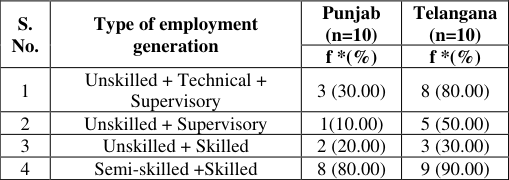 Table 3
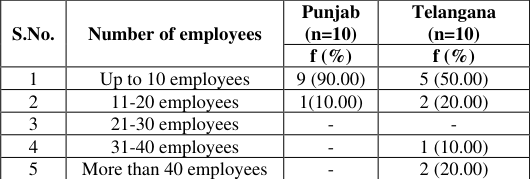 Table 1
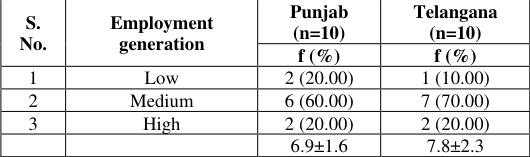 Table 4
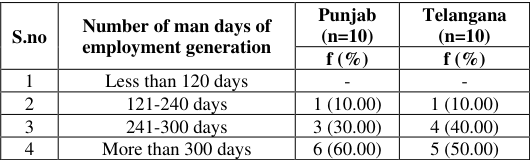 Table 2
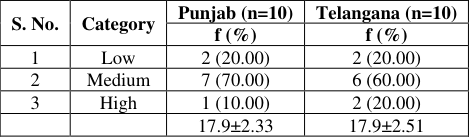 Table 7
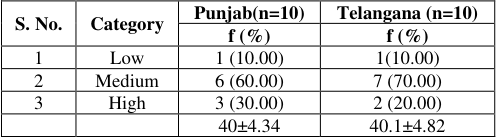 Table 5
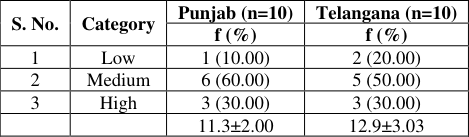 Table 8
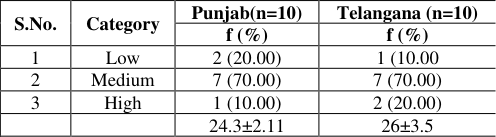 Table 6
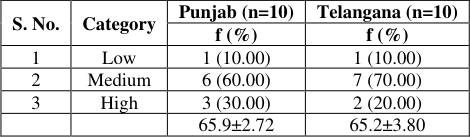 Table 9
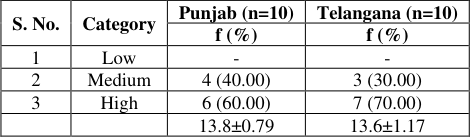 Table 10
Introduction
Most of the people in India rely on agriculture for their livelihood. This industry accounts for roughly 14-20% of the economy's overall GDP and employs around 60 per cent of the nation's population (Chand, 2019; Kumar, 2017) [2,3] . Agriculture is in a period of transition all over the world. Agriculture is taking on a new shape in this ever-changing environment, increasing its reach beyond agricultural production and animal husbandry for the rural population's livelihood (Verma et al. 2019) [12] . Value addition, diversification, high-tech agriculture, precision farming, agripreneurship, organic farming, global marketing and other redefining agricultural activities are increasingly getting popular (Reddy & Krishna, 2018) [6] . Though the government's actions have resulted in significant progress in this area, the progress is insufficient because the results are below expectations. Agriculture is considered the backbone of the nation as it employs a large proportion of the populace. More expansion is required to achieve total economic development. Furthermore, natural causes such as late monsoon, severe rain and cyclones continue to pose threat to this sector (Merriott, 2016) [5] . Other issues include farmer indebtedness, poor storage and transportation facilities, lack of financial resources to begin farming activities, ineffective marketing and middleman benefits (Jeromi, 2007) [13] . Numerous methods and concepts have been proposed to address these issues, but their appropriate implementation remains a question mark because people lack expertise and requires competent supervision to implement improved projects. Entrepreneurship is key to the introduction of new technology, innovations and overall economic changes in society. There are several examples around the world of how large firms have evolved from their early roots as a start-up with the goal of bringing in jobs and revolution (Singh and Pravesh, 2017) [10] . In the last few years, major economies have realized the value of promoting agripreneurship because this one allows for significant growth by addressing a societal need (Uplaonkar and Biradar, 2015) [11] . The government has implemented various initiatives to encourage these agripreneurs such as the Make in India and Start-up India initiatives. There are distinctive kinds of entrepreneurship based on the industry such as automobiles, software, tourism, food processing, textiles, consulting and as numerous other types of businesses as we can think of (Singh and Pravesh, 2017) [10] . The biggest issue these agripreneurs confront at the time of inception is obtaining capital for their initiative as there are numerous hurdles in convincing funding agencies to approve the proposal and begin funding. However, numerous schemes exists for start-ups promotion, they are not adequately implemented causing them to confront initial funding issues (Verma et al., 2019) [12] . However, as their business grows they will have numerous options to expand and become global. Globalization has given them tremendous opportunities by allowing them to trade ideas, innovate and use technology (Singh and Pravesh, 2017) [10] . The agriculture sector in India is challenged by issues such as out-of-date equipment, inadequate structural frame work and farmers who are incapable to easily access a wider range of markets while making only marginal returns on sales of crop produce. The most important tasks are www.extensionjournal.com infrastructure and supply chain management. With significant advancements in technology, digitization and start-up culture many new players are entering the Indian start-up ecosystem. Agri start-ups in India assist farmers with knowledge, methodologies and efficiencies (Ashwini, 2021) [1] .
Methodology
The present study only focusing on agritech start-ups in Punjab and Telangana states, a list of Agri start-ups were prepared based on their working A sample size of 20 agritech start-ups, 10 agritech start-ups from each state, using simple random sampling was selected for the study. 20 agritech startup case studies were documented for the study. the present study was carried out with an objective to study employment generation, communication behaviour, management orientation and leadership ability of agri tech start-ups.
Results and Discussion 1. Employment generation
Table 1 shows that the majority (90.00%) of the Agri startups under study in Punjab providing employment to less than 10 employees followed by those providing employment to 10-20 employees (10.00%) and no start-ups are providing employment to more than 20 employees. Whereas in Telangana half (50.00%) of the agri start-ups providing employment to less than 10 employees followed by providing employment to 11-20 employees (20.00%), 31-40 employees (10.00%) and more than 40 employees (20.00%). Telangana leads Punjab in employment generation, the probable reason for this is Telangana possess a greater number of small size enterprises than Punjab. Table 2 shows that the majority (60.00%) of the agri startups of Punjab under study could provide employment for more than 300 days followed by those providing employment for 241-300 days (30.00%) and 121-140 days (10.00%). Half (50.00%) of the agri start-ups in Telangana providing employment for more than 300 days followed by 241-300 days (40.00%) and 121-140 days (10.00%). The reason for this was due to the very nature of block chain technology, IoT based start-ups and food processing startups were operating throughout the year providing gain full employment to the masses. However, the reason for the rest of the start-ups not being able to provide year-round employment is due to the seasonal nature of operation of agri start-ups and the landscaping, honey processing and farm machinery units were operating based on consumer demand. Table 3 shows that the start-ups under study in Punjab providing semiskilled + skilled employment (80.00%) followed by unskilled + technical + supervisory type of employment (30.00%), unskilled + skilled type of employment (20.00%) and unskilled + supervisory type of employment (10.00%). Whereas agri start-up of Telangana under study providing 90.00 per cent semiskilled +skilled type of employment followed by unskilled + technical + supervisory type of employment (80.00%); unskilled + supervisory type of employment (50.00%) and unskilled + skilled type of employment (30.00%). This is due to the very nature of food processing, honey processing and farm machinery start-ups require semiskilled and skilled workers for day to day operations. Blockchain technology start-ups require technical and supervisory workers. These findings are in accordance with finding of Sindhu (2015) [9] . This might be due to the nature of operation of the majority of the Agri start-ups under study, which were micro and small enterprises. These findings are in accordance with results of Sindhu (2015) [9] .
| S.no | Number of man days of employment generation | Punjab (n=10) | Telangana (n=10) |
|---|---|---|---|
| f (%) | f (%) | ||
| 1 | Less than 120 days | - | - |
| 2 | 121-240 days | 1 (10.00) | 1 (10.00) |
| 3 | 241-300 days | 3 (30.00) | 4 (40.00) |
| 4 | More than 300 days | 6 (60.00) | 5 (50.00) |
Table text extracted from the original PDF; superscript letters are shown inline. The original table image is below.
View original table image
| S.No. | Number of employees | Punjab (n=10) | Telangana (n=10) |
|---|---|---|---|
| f (%) | f (%) | ||
| 1 | Up to 10 employees | 9 (90.00) | 5 (50.00) |
| 2 | 11-20 employees | 1(10.00) | 2 (20.00) |
| 3 | 21-30 employees | - | - |
| 4 | 31-40 employees | - | 1 (10.00) |
| 5 | More than 40 employees | - | 2 (20.00) |
Table text extracted from the original PDF; superscript letters are shown inline. The original table image is below.
View original table image
| S. No. | Type of employment generation | Punjab (n=10) | Telangana (n=10) |
|---|---|---|---|
| f *(%) | f *(%) | ||
| 1 | Unskilled + Technical + Supervisory | 3 (30.00) | 8 (80.00) |
| 2 | Unskilled + Supervisory | 1(10.00) | 5 (50.00) |
| 3 | Unskilled + Skilled | 2 (20.00) | 3 (30.00) |
| 4 | Semi-skilled +Skilled | 8 (80.00) | 9 (90.00) |
Table text extracted from the original PDF; superscript letters are shown inline. The original table image is below.
View original table image
Communication behavior
The results presented in Table 5 shows that most (60.00%) of the agripreneurs of Punjab had medium informationseeking behaviour followed by high (30.00%) and low (10.00%) levels of information-seeking behaviour. In Telangana most (70.00%) of the agripreneurs had a medium level of information-seeking behaviour followed by high (20.00%) and low (10.00%) levels of information-seeking behaviour. The results presented in Table 6 show that slightly less than three fourth (70.00%) of the agripreneurs of Punjab had a medium level of information evaluation behaviour followed by low (20.00%) and high (10.00%) levels of information evaluation behaviour. Majority (70.00%) of the agripreneurs of Telangana had a medium level of information evaluation behaviour followed by high (20.00%) and low (10.00%) levels of information evaluation behaviour. The reasons for this is the majority of the agripreneurs evaluating obtained information by considering its profitability, considering demand and interest, discussing with progressive farmers, family members, peer groups, input dealers and KVK/university scientists. The results presented in Table 7 show that slightly less than three fourth (70.00%) of the agripreneurs of Punjab had a medium level of information storage behaviour followed by low (20.00%) and high (10.00%) levels. Most (60.00%) of the agripreneurs of Telangana had a medium level of information storing behaviour followed by high (20.00%) and low (20.00%) levels.
| S.No. | Category | Punjab(n=10) | Telangana (n=10) |
|---|---|---|---|
| f (%) | f (%) | ||
| 1 | Low | 2 (20.00) | 1 (10.00 |
| 2 | Medium | 7 (70.00) | 7 (70.00) |
| 3 | High | 1 (10.00) | 2 (20.00) |
| 24.3±2.11 | 26±3.5 |
Table text extracted from the original PDF; superscript letters are shown inline. The original table image is below.
View original table image
| S. No. | Category | Punjab(n=10) | Telangana (n=10) |
|---|---|---|---|
| f (%) | f (%) | ||
| 1 | Low | 1 (10.00) | 1(10.00) |
| 2 | Medium | 6 (60.00) | 7 (70.00) |
| 3 | High | 3 (30.00) | 2 (20.00) |
| 40±4.34 | 40.1±4.82 |
Table text extracted from the original PDF; superscript letters are shown inline. The original table image is below.
View original table image
| S. No. | Category | Punjab (n=10) | Telangana (n=10) |
|---|---|---|---|
| f (%) | f (%) | ||
| 1 | Low | 2 (20.00) | 2 (20.00) |
| 2 | Medium | 7 (70.00) | 6 (60.00) |
| 3 | High | 1 (10.00) | 2 (20.00) |
| 17.9±2.33 | 17.9±2.51 |
Table text extracted from the original PDF; superscript letters are shown inline. The original table image is below.
View original table image
From the above table, it could be concluded that the majority of the agripreneurs in both states had a medium level of information storing behaviour. The reason for this is most of the agripreneurs are educated up to senior secondary school and graduation. So that they can store information in the form of CDs, by memorizing, by capturing photographs, video recording and by making a note in diary. The results presented in Table 8 show that most (60.00%) of the agripreneurs of Punjab had a medium level of information dissemination behaviour followed by high (30.00%) and low (10.00%) levels. Half (50.00%) of the agripreneurs of Telangana had a medium level of information dissemination behaviour followed by high (30.00%) and low (20.00%) levels.
| S. No. | Category | Punjab (n=10) | Telangana (n=10) |
|---|---|---|---|
| f (%) | f (%) | ||
| 1 | Low | 1 (10.00) | 2 (20.00) |
| 2 | Medium | 6 (60.00) | 5 (50.00) |
| 3 | High | 3 (30.00) | 3 (30.00) |
| 11.3±2.00 | 12.9±3.03 |
Table text extracted from the original PDF; superscript letters are shown inline. The original table image is below.
View original table image
From the table, it could be concluded that most of the agripreneurs had a medium level of information dissemination behaviour followed by low and high levels.
The reason for this is even though they seek and process the information they were unable to disseminate information due to lack of sufficient communication aid/methods. The majority of the agripreneurs revealed that they never wrote articles through agricultural magazines and only few were speaking in local meetings. Hence there is a need to train them for how to write the articles and different methods to disseminate the information. The results were in conformation with Sarada et al. (2014) [7] Most of the agripreneurs of Punjab and Telangana had a medium and high level of information dissemination behaviour.
Management Orientation
It is indicated from the table 10 that most (60.00%) of the agripreneurs of Punjab had a medium level of management www.extensionjournal.com orientation followed by high (30.00%) and low (10.00%) levels of management orientation. Whereas in Telangana, 70.00 per cent of the agripreneurs had a medium level of management orientation followed by high (20.00%) and low (10.00%) levels of management orientation. It was confirmed that most of the agripreneurs had a medium level of management orientation. This might be due to the reason that management orientation which comprises of planning, production and marketing of enterprise may be having some influence of entrepreneurial experience and education. The possible reason might be that majority of the micro and small enterprises were one-man show and do not follow all management functions and think that they do not require any expertise in management aspects. These findings are in accordance with finding of Laxmidevi (2019). Whereas in Telangana 70.00 per cent of agripreneurs have high leadership ability followed by medium (30.00%) leadership ability. Data given in table depict that the agripreneurs had very high leadership ability. The agripreneurs develop leadership abilities as the enterprise management demands coordination from different subsystems in the whole system as they require different people to perform different tasks. In the case of processing units, every agripreneur should deal with different kinds of people. So most of the agripreneurs had high leadership abilities. From the statements, it was perceived that their strength is management of the people and resources. They regularly address the problems that arise in their enterprise. These findings are in accordance with finding of Shivacharan et al. (2017) [8] .
| S. No. | Category | Punjab (n=10) | Telangana (n=10) |
|---|---|---|---|
| f (%) | f (%) | ||
| 1 | Low | - | - |
| 2 | Medium | 4 (40.00) | 3 (30.00) |
| 3 | High | 6 (60.00) | 7 (70.00) |
| 13.8±0.79 | 13.6±1.17 |
Table text extracted from the original PDF; superscript letters are shown inline. The original table image is below.
View original table image
Leadership ability
Leadership ability
Conclusion
It can be concluded that most of the Agri start-ups in Punjab and Telangana provide employment to less than 10 employees and majority of the agri start-ups of Punjab could provide employment for more than 300 days. It is also found that most of the startups had medium level of information seeking behaviour, information evaluation behaviour and information storage behaviour.. Most of the startups had medium level of management orientation but had high level of leadership ability in both the states of Punjab and Telangana. So proper framing of policy should be there for the enhancement of Communication behaviour, employment generation, management orientation and leadership ability.
Figures and tables from the paper
| S. No. | Employment generation | Punjab (n=10) | Telangana (n=10) |
|---|---|---|---|
| f (%) | f (%) | ||
| 1 | Low | 2 (20.00) | 1 (10.00) |
| 2 | Medium | 6 (60.00) | 7 (70.00) |
| 3 | High | 2 (20.00) | 2 (20.00) |
| 6.9±1.6 | 7.8±2.3 |
Table text extracted from the original PDF; superscript letters are shown inline. The original table image is below.
View original table image
| S. No. | Category | Punjab (n=10) | Telangana (n=10) |
|---|---|---|---|
| f (%) | f (%) | ||
| 1 | Low | 1 (10.00) | 1 (10.00) |
| 2 | Medium | 6 (60.00) | 7 (70.00) |
| 3 | High | 3 (30.00) | 2 (20.00) |
| 65.9±2.72 | 65.2±3.80 |
Table text extracted from the original PDF; superscript letters are shown inline. The original table image is below.
View original table image
References
10 in the original paper- Ashwini. Agriculture Startups in India; c2021 [cited 2021 Jun 25]. Available from: https://startuptalky.com/agriculture-startups-in-india/
- Chand KK. IJRTBT Agripreneurship: a tool for economic development of India in the new millennium. Int J Res Theor. 2019;3:19-25.
- Kumar V. Agripreneurship for sustainable growth in agriculture and allied sectors: A conceptual model. Man in India. 2017;96(5):1633-1641.
- Merriott D. Factors associated with the farmer suicide crisis in India. J Epidemiol Glob Health. 2016;6(4):217227.
- Reddy D, Krishna V. Improving Farmers Income by promoting Agripreneurship on Basis of Shared Economy Principle. 2018;118:4729-4738.
- Sarada K, Sreenivasulu M, Rao IS, Devi KS. A study on innovative farmers network (ifn) for transfer of cotton (Gossypium spp) production technologies in telangana state. J Res PJTSAU. 2016;44(1/2):90-94.
- Singh SK, Pravesh R. Entrepreneurship development in India: Opportunities and challenges. Splint Int J Prof. 2017;4(3):75-81.
- Uplaonkar SS, Biradar SS. Development of agriculture in India through agripreneurs. Int J Appl Res. 2015;1(9):1063-1066.
- Verma RK, Sahoo AK, Rakshit S. Opportunities in agripreneurship in India: need challenges and future prospects. Rashtriya Krishi. 2019;13(1):71-72.
- Jeromi PD. Farmers' indebtedness and suicides: impact of agricultural trade liberalisation in Kerala. Econ Polit Wkly. 2007:3241-3247.