
Research article · 2024 · Full text
International Journal of Agriculture Extension and Social DevelopmentWork-related stress: A hidden threat to the health of women
Volume 7(7) · Pages 358–366 · DOI: 10.33545/26180723.2024.v7.i7e.826 ↗
Research areasEmployment and Welfare Studies
Abstract
Author-writtenThroughout history, women in India were traditionally confined to domestic roles, primarily as mothers and homemakers. However, their role and presence in society have evolved significantly. With women constituting nearly half of the population, their contribution to the Indian economy cannot be underestimated. Recent data from the Periodic Labour Force Survey Report 2022-23 indicates a substantial increase in the Female Work Participation Rate, reaching 37.0% in 2023. This surge is attributed to the Government's concerted efforts to empower women through policy initiatives aimed at their long-term socio-economic and political advancement. Today, economic realities demand women's active engagement in the workforce to support their families financially. Nonetheless, balancing work and family responsibilities poses significant challenges that can affect women's psychological and physical well-being, impacting their job performance. Juggling roles as caregivers, parents, and professionals can lead to considerable stress and strain. Prolonged exposure to occupational stress can have severe consequences, affecting not only women's mental health but also their physical well-being, relationships, and overall quality of life. Therefore, the present study was planned to analyze the trend of women participation in workforce and what are various factors causing occupational stress. The paper also highlights the initiatives taken by the Government of India to reduce working stress. Additionally, the strategies are also discussed to manage occupational stress at various levels. The study will provide valuable insight to policymakers and organizations to support and empower women to thrive in their personal and professional lives.
Summary
Source-checkedPlain-language reading of the full paper, prepared with AI and checked against the text. Each point links to the authors' own words.
Why it matters
- Women make up nearly half of India's population and provide a significant contribution to the national economy. View evidence ↗
- The challenge of balancing professional work with family responsibilities can negatively impact a woman's physical and psychological health, which in turn affects job performance. View evidence ↗
- Long-term occupational stress is a threat that can severely damage mental health, physical health, personal relationships, and general quality of life. View evidence ↗
The question
- The study aims to analyze trends in women's workforce participation and identify the various factors that cause occupational stress. View evidence ↗
- The research also seeks to highlight Indian government initiatives and discuss strategies for managing occupational stress at different levels. View evidence ↗
What they did
- The authors analyzed female literacy trends, noting an increase from 80.35% in 2010 to 91.95% in 2021. View evidence ↗
- The study utilizes data from the Periodic Labour Force Survey Report (2022-23) to assess workforce participation. View evidence ↗
- Demographic data was sourced from the National Family Health Survey (NFHS-5) for 2020-21. View evidence ↗
What they found
- The Female Work Participation Rate in India increased by 4.2 percentage points, reaching 37.0% in 2023. View evidence ↗
- In rural areas, the female employment share in the self-employed category is 63%, though this includes many unpaid family workers. View evidence ↗
- According to the 2015-16 NMHS report, women have higher rates of depressive disorders than men, with current prevalence at 3.0% vs 2.4% and lifetime prevalence at 5.7% vs 4.8%. View evidence ↗
- Occupational stress in women is caused by four primary categories of stressors: socio-economic, psychological, family/relationship, and organizational. View evidence ↗
- Stress is linked to physical health issues including heart disease, high blood pressure, ulcers, arthritis, headaches, constipation, and skin diseases. View evidence ↗
What it means
- The authors conclude that it is essential to address the root causes of occupational stress and provide women with the necessary resources and support to cope. View evidence ↗
- The authors recommend a collaborative effort between employers, policymakers, and society to create a more equitable and supportive work environment. View evidence ↗
Figures & tables
From the original paper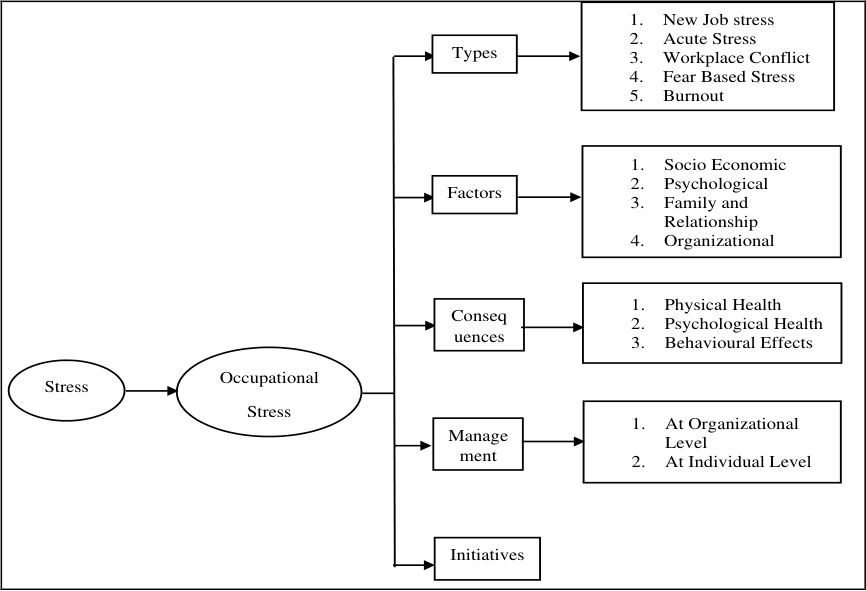 Figure 1
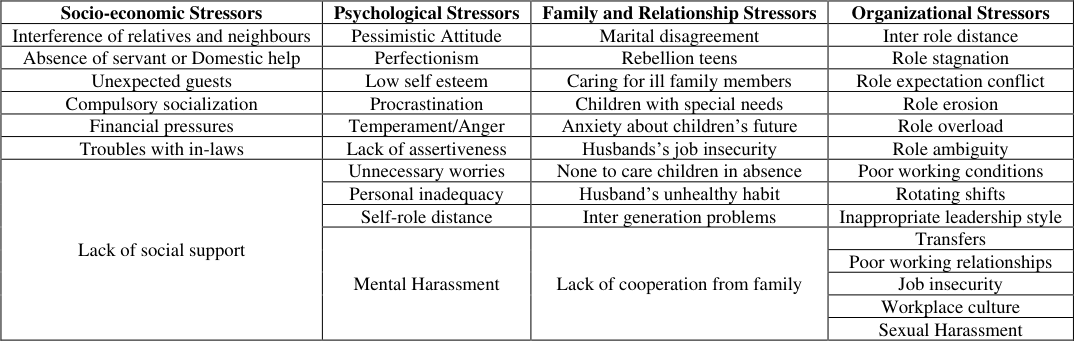 Table 1
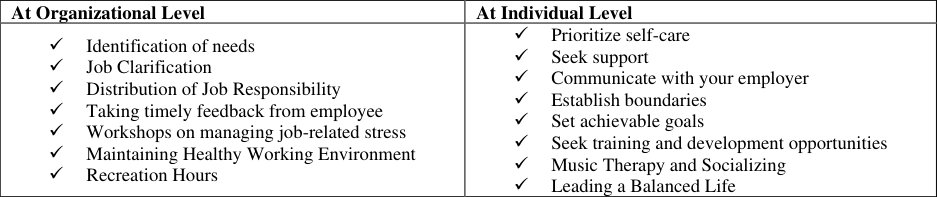 Table 2
Introduction
India is renowned for embracing the principle of "Unity in Diversity," reflecting its rich culture, varied regions, diverse traditions, cuisine, languages and other aspects (Gupta et al. 2023) [9] . The nation's progress depends significantly on the contributions of its population. Historically, the role of women in India was conventionally confined to family responsibilities, encompassing duties as a mother and homemaker. However, contemporary India is experiencing a remarkable surge in the presence of women in the workforce, actively competing with men in all aspects of work (Surbhi, 2015) [35] . Influential factors such as urbanization, technological advancements and women's education have significantly transformed these traditional norms in India. The women's education stands out as a crucial catalyst in driving this notable shift. Starting from 2010, India has witnessed a good improvement in its female literacy rate. In the year 2010, the female literacy rate stood at 80.35% and over time, this rate has steadily rise to 91.95% in 2021. Notably, between 2010 and 2021, there has been a substantial increase of 14.4% in the female literacy rate. Examining the progress on an annual basis, there was a 0.6% rise in the literacy rate in 2021 (Global Data 2022) [8] . According to the Periodic Labour Force Survey Report (2022-23) published by the Ministry of Statistics and Programme Implementation on October 9, 2023, there has been a noteworthy improvement in the Female Work Participation Rate in the country with the remarkable increase by 4.2 percentage, reaching 37.0% in 2023, based on the 'usual status' concept of measuring work participation. This remarkable rise in the female work participation rate is attributed to the Government's decisive agenda, which focuses on ensuring women's empowerment through policy initiatives geared towards their long-term socio-economic and political development. Women in the present day undeniably enjoy increased educational opportunities and a broader array of workplace options. However, their multiple roles of caregivers, parents, and professionals can give rise to significant stress and strain (Patel, 2023) [23] . Stress serves as the fundamental factor driving all adaptive bodily responses, while the circumstances prompting stress are termed as stressors (Selye, 1965) [32] . Perceived stress encompasses both biological and psychological tension, including positive (eustress) and negative (distress) aspects (Selye, 1974) [33] . It involves emotions regarding life's uncertainties, unpleasant situations, and a lack of confidence in problem-solving abilities. The term 'stress' is derived from the Latin 'stringer,' meaning 'to draw tight,' illustrating its constrictive nature. Stress represents a complex interplay between mind and body and is a contributing factor to disease manifestation, with variations observed among individuals (McEwen, 2006) [16] . The circumstances leading to stress are termed stressors. People's reactions and adaptability to stressors can vary, even when faced with the same stressor (McEwen and Wingfield, 2003) [18] . www.extensionjournal.com Advancements in modernization, cultural shifts, evolving social norms, and workplace demands contribute to an increased prevalence of anxiety, depression, and persistent psychosocial stress among individuals (Liu et al., 2017) [14] . An individual experiencing perceived stress will demonstrate behavioural responses. The brain plays a crucial role in perceiving and adapting to both social and physical stressors through various interacting mechanisms (McEwen et al., 2015) [17] . As perceived stress intensifies, the mortality rate tends to increase, resulting in a higher number of deaths (Prior et al., 2016) [27] . Although, at work and at home, women suffer from prejudice and are discriminated against. They struggle to maintain a balance between work and family since they are unable to give their family useful time (Anmol and Kumar, 2017) [2] . The obstacles faced by working women at the workplace may be exacerbated by environmental effects, sociocultural effects, and senior and subordinate relationships (if there is a gender gap between senior and subordinate) (Shivi, 2015) [34] . Therefore, to support the well-being of working women, it is essential to provide resources, such as access to mental health services, support groups, and self-care practices. By acknowledging and addressing the unique challenges faced by working women in India, we can foster more inclusive and supportive communities that empower women to succeed both in their professional and personal lives (Mehta, 2013) [19] .
Workers Population And Employment Type
The significance of women's employment extends beyond their empowerment, encompassing the optimization of the national economy and leveraging their effectiveness in various professions. In India, enhancements in education and employment opportunities have been extensively encouraged to ensure gender-neutral work force participation. An investigation of the Indian workforce statistics based on employment types indicates that in urban areas, the proportion of salaried/wage-earning females surpasses that of males. Conversely, in rural areas, the engagement of self-employed females exceeds that of males. The involvement in casual labour is nearly equal for both genders in rural areas, whereas it slightly tilts in favour of males in urban areas. In the self-employed category, where the female employment share is highest at 63 percent in rural areas, it's crucial to note that these figures can be misleading as significant number of women are employed as unpaid family workers in family farms and businesses, involving activities such as caring for livestock etc (PLFS Report 2019-20).
Concept of Stress
The dictionary defines word "stress" as a mental or emotional strain, tension, or pressure exerted on an object. The concept of stress in the field of life sciences was introduced by Hans Hugo and also known as the "father of stress," He defined stress as the force, pressure, or tension subjected upon an individual who resists these forces and attempt to uphold its true state. Michie (2002) [20] defined stress as the psychological and physical state that results when the resources of the individual are not sufficient to cope with the demands and pressures of the situation. Thus, stress is more likely in some situations than others and in some individuals than others. According to Werther (1996) stress can be a reaction exhibited by the people who have to face excessive pressures on account of various demands placed on them defined stress as a concept which is familiar to both the layman and the professional, it is understood by all in general context, but by very few when a more precise account is required. Stress can also be leveled as the harmful physical and emotional response that occurs when the requirements of the job do not match the capabilities, resources, or needs of the workers. Job stress can lead to poor health and even injury defined stress as a discrepancy between employees perceived state and desired state, when the employee considered such discrepancy important defined stress as an internal reaction to any force that threatens to disturb a person's equilibrium. When people feel helpless to exert, control or direct the demands placed upon them, a sort of tension is created which ultimately leads to stress. Various forms of stress exist in life and they can have impact on both mental and physical well-being. For example, experiencing financial stress may contribute to feelings of anxiety or depression. Similarly, relationship stress can manifest as anger or resentment. Addressing these different types of stress is crucial for maintaining overall well-being.
Occupational Stress
The modern world which is said to be world of achievements is also a "world of stress" one finds a sense of identification to an individual within a community as it satisfies needs and creates sense of worth and emotional wellbeing. Consequently, there has been a noticeable rise in the participation of women across various occupations in recent years. Employment opportunities for women have expanded globally. Therefore, women are increasingly developing a heightened awareness of their careers and embracing a more professional mindset. In the present era, economic demands have also necessitated women's active participation in the workforce to contribute financially to their families. However, the challenge of managing both work and family commitments can substantially influence the psychological and physical well-being of women, ultimately impacting their job performance. The struggle to find equilibrium between career and family responsibilities is a widespread issue encountered by working women globally (Surabhi 2015) [35] . In the traditional Indian society, women are frequently anticipated to fulfill the roles of homemaking and caregiving, with their identity closely linked to marriage, family and children. This scenario can pose challenges for women engaged in work outside the home, making it challenging to navigate and effectively balance their work and family obligations, leading to a notable level of stress in their lives (Patel 2023) [23] . Occupational stress is defined as the physical and emotional harm that occurs when job demands exceed the capabilities, resources, or needs of workers. This can happen when individuals face excessive workloads, challenging colleagues or managers, unrealistic deadlines, or job insecurity. The repercussions of occupational stress can be notably severe for women, given the multiple roles they often navigate as caregivers, professionals, and mothers (Moreno et al. 2020) [22] . Acknowledged as a global www.extensionjournal.com phenomenon, occupational stress carries substantial health and economic consequences in both developed and developing countries (Hassan 2019) [11] . Occupational stress is stress involving work. According to the World Health Organization's (WHO) definition, occupational or work-related stress "is the response people may have when presented with work demands and pressures that are not matched to their knowledge and abilities and which challenge their ability to cope." According to Osipow and Spokane (1998), occupational stress can be defined as the physiological and emotional responses that occur when police perceive an imbalance between their job demands and their capability. Occupational stress is physical or psychological disorder associated with an occupational environment and manifested in symptoms such as extreme anxiety, or tension, or cramps, headaches, or digestion problems. According to Cotton and Hart (2003) occupational stress has been defined as a situation where occupation related factors interact with the employees in a manner that disrupts or enhances his/her physiological conditions forcing them to deviate from normal functioning. • Fear-Based Stress: Circumstances that threaten their job security can create challenges for employees, impeding their performance. Examples of such situations include the prospect of layoffs, strained relationships with their supervisors or unforeseen additional responsibilities for which they were not adequately prepared.
• Burnout: Employees undergo burnout when they sense prolonged physical and emotional exhaustion from work, impacting their overall effectiveness. Various factors, including being part of an understaffed team or consistently facing unrealistic deadlines can contribute to the occurrence of burnout.
Stress and Gender
According to the National Family Health Survey (NFHS-5) for 2020-21, India's current population stands at 1,441,459,746, comprising 51.6% males and 48.4% females. The sex ratio in 2023 is reported as 1020 females per 1000 males, with rural areas showing a ratio of 1037 and urban areas reflecting 985 females per 1000 males. Comprising nearly half of the entire population, we can assert that the contribution of women to the Indian economy is not like a tiny dot on a complete page. www.extensionjournal.com
Living in the 21st century proves to be a source of stress for many. Interestingly, stress affects men and women disparately, and their responses to stress also differ. This divergence in stress response creates what is commonly referred to as a "stress gap" between men and women.
Research suggests that women tend to experience higher levels of stress compared to men. When both men and women are under stress, their bodies undergo different reactions physiologically (Mantracare 2023) [15] . As per the 2015-16 National Mental Health Survey (NMHS) report, females were found to experience a significant majority of depressive disorders, both in terms of current prevalence (female: 3.0% and male: 2.4%) and lifetime prevalence (female: 5.7% and male: 4.8%). Any disparity within families, households, and communities is often justified using the hollow rules of the prevailing culture. A young girl subjected to such irregularities tends to shape her life in alignment with these norms. These disparities contribute to variations in knowledge, skills, abilities, experiences, and intelligence between men and women (Rathore et al 2020) [30] . For example, when men experience stress, they often respond more effectively and come out of stress when they are alone and becoming self-focused. They tend to alleviate stress when they have the opportunity to decompress, taking, for instance, 15 or 30 minutes to emerge from the stress phase. Physiologically, the male body reacts distinctively to stress, often exhibiting higher blood pressure (hypertension). Moreover, extended exposure to stress may lead to chronic stress, escalating the risks of various diseases like heart disease and stroke. On the other hand, women do not tend to respond positively to stress when they are alone. Instead, they actively seek emotional support and have a need for communication. Women exhibit better stress responses when they are in groups, particularly in the company of other supportive women. Stress often induces anxiety in women, and if it persists over an extended period, it may escalate into depression. Women may also experience fatigue, and in tandem with this, there may be a tendency towards weight gain.
Factors Causing Occupational Stress
• Socio-economic stressors Socioeconomic stressors refer to challenges and pressures that individuals or communities experience as a result of their social and economic circumstances. These stressors are often linked to the broader socio-economic environment and can impact various aspects of people's lives. Addressing socioeconomic stressors often involves comprehensive efforts to address systemic issues related to economic, educational, and social inequalities. Social policies, community development initiatives, and efforts to promote economic and educational equity are essential in mitigating the impact of these stressors on individuals and communities.
• Psychological stressors
The American Psychological Association (APA) describes psychological stressors as an emotional reaction to an external stimulus. Stress can manifest as a temporary or prolonged condition, determined by the transient or persistent nature of its origin. The activation of specific hormones, including noradrenaline and cortisol, is prompted by stress. These hormonal changes induce physiological responses in the body, potentially affecting both mental and physical well-being. However, according to the National Health Service (NHS) in the United Kingdom, individuals respond to stress in diverse ways. While a situation might be perceived as stressful by one person, another individual may view it as motivational. The point at which psychological stress becomes problematic is when it disrupts an individual's health and overall well-being.
• Family and relationship stressors Family stressors refers to any factor or situation that affects one or multiple members of a family or the entire family system at a specific time. It influences the emotional bonds among family members, their mood, well-being, and the overall maintenance of family relationships (Randall and Bondenmann 2013) [28] . Family stress may arise when individuals within a family face an overwhelming number of stressors that exceed their capacity to cope. These stressors can result from various events that accumulate over time or a single intense circumstance, whether originating from within the family or external sources. Manifestations of family stress can include:
• Organizational stressors Organizational stressors, commonly known as workplace stressors encompasses the psychological and physiological stress responses arising from unfavourable aspects of an individual's job and work environment. It arises from the perceived imbalance between job demands and an individual's capacity to cope with or fulfil those demands. Employees across different levels and industries can be affected by organizational stress. The repercussions of organizational stress can manifest in various detrimental outcomes for both employees and the overall company. These consequences may include reduced productivity, increased absenteeism, elevated turnover rates, and adverse effects on physical, occupational, and mental health.
Consequences of Occupational Stress
A cause-and-effect relationship underlies every aspect of life, including stress, which leaves its impact on human beings. Prolonged exposure to stressful situations gives rise to significant physical, psychological, and behavioural effects. The ensuing section briefly outlines the effects of stress on women employees. www.extensionjournal.com Moreover, the career prospects and promotional opportunities of an employee are likely to be adversely affected.
Managing Occupational Stress
Occupational stress is a prevalent phenomenon in the workplace, carrying adverse effects on both individuals and organizations. Hence, it is crucial to implement strategies at both organizational and individual levels. Various methods exist for women to effectively manage occupational stress and promoting enhanced psychological well-being. [10] the Penney and Spector's model posits that organizational stressors, such as perceived organizational injustice, can elicit negative psychological responses in employees. Therefore, it is crucial to identify and manage these factors to prevent mental health problems in employees. Consider seeking out training and development opportunities to improve your skills and increase your confidence in the workplace. This can help to reduce stress and increase job satisfaction. 8. Music Therapy: Listening to soft music generally calms down the sensory organs of an individual. As a result, the individual feels relaxed and fresh. Music is connected to the emotions of an individual and thus, listening to music when a person is weak generally relaxes them. 9. Leading a Balanced Life: The employee needs to maintain a work-life balance to lead a stress-free life or to avoid negative stress as both professional and personal lives are interrelated each other. If a person is facing trouble or difficulties in coping with personal life problems like family demands, quality family time, etc. Then the person will not be able to manage his work properly as he's not focused and vice-versa. Thus, the main aim of any employee should be to balance work and life properly. 10. These are just some of the strategies you can use to overcome work stress in India. Remember, managing stress is an ongoing process, and it's important to be patient with yourself and seek help when you need it. By taking steps to manage your stress and prioritize your well-being, you can reduce stress and achieve greater success in both your personal and professional life (Potdar 2023) [26] .
Job Clarification
Job Clarification
Initiatives Taken by Government and Organizations To Reduce Working Stress
There are many factors which effect mental health and emotional wellness of working women, like del responsibility of office and home, caring of children, pregnancy and reproductive health related issues which are only faced by women and other related issues, posting at far place from their family, etc. So, if all these things are going well her stress level can be reduced for somehow and she can be able to do her work at office as well as home in relaxed set of minds (Bhatti et al. 2023) [5] . There are many special provisions under Government of India for benefits of working women. This type of provisions helps in to reduce the various factors which effect the stress level of the working. These are very helpful for the working women at various critical situations and help them to face the many challenges. These are mentioned below.
• Maternity Benefit Act, 1961: The Maternity Benefit Act, 1961 is a crucial legislation in India that protects the rights of women during pregnancy and childbirth. It is applicable to all businesses, whether in the private or public sector, that have more than ten employees. The Act provides for fully paid maternity leave for a period of up to 26 weeks, which can be availed of before and after childbirth. The leave period can be extended by up to eight weeks in case of complications or illness. A woman is eligible to claim maternity benefits if she has worked for at 80 days in the twelve months before childbirth. The Act was amended in 2017 to make it more beneficial for women employees. The Maternity Benefit Act 2017 increased the duration of paid www.extensionjournal.com maternity leave from 12 weeks to 26 weeks, making it easier for women to balance their work and family responsibilities. The Maternity Benefit Act is a significant step towards promoting gender equality in the workplace and ensuring the well-being of women employees. By providing maternity benefits, organizations can support women through their pregnancy and childbirth, which can ultimately lead to a healthier and more productive workforce. • Child adoption: According to the Maternity Benefit Act, 1961 in India, female government employees are entitled to child adoption leave for 135 days if they have fewer than two surviving children and the adopted child is under the age of one year. This leave is granted to support the adopted child's initial transition period and to allow the mother to provide necessary care. The Act recognizes the importance of parental caregiving to children and promotes gender equality in the workplace. ➢ Organizational approach for managing stress: Stress-related issues cost businesses billions of dollars per year in absenteeism, accidents, and lost productivity. As a result, managing employee stress is an important concern for organizations as well as individuals. For example, Renault, the French automaker, invites consultants to train their 2,100 supervisors to avoid the outcomes of negative stress for themselves and their subordinates. IBM Corporation encourages its worldwide employees to take an online stress assessment that helps them create action plans based on their results. Even organizations such as General Electric Company (GE) that are known for a "winner takes all" mentality are seeing the need to reduce stress. Lately, GE has brought in comedians to lighten up the workplace atmosphere, and those receiving low-performance ratings are no longer called the "bottom 10s" but are now referred to as the "less effective" (Adivel and Matilada 2018) [1] .
Suggestions
• Flexible Work Policies: Governments can encourage employers to adopt flexible work arrangements, such as telecommuting, part-time work, or job-sharing. These options allow women to better balance their professional and personal responsibilities. Remember that reducing occupational stress among women requires a collaborative effort involving employers, policymakers, and society as a whole. By implementing these initiatives, we can create a more supportive and equitable work environment for women.
Conclusion
Occupational stress is a serious issue that can have negative effects on the well-being of working women. The consequences of prolonged exposure to occupational stress can be severe. It is essential to address the root causes of occupational stress and provide support and resources for women to manage and cope with stressors in the workplace. Women themselves can take proactive steps to manage their stress levels. Overall, it is crucial to recognize the impact of occupational stress on working women's well-being and take steps to address it. By doing so, we can support and empower women to thrive in their personal and professional lives.
Figures and tables from the paper
| Socio-economic Stressors | Psychological Stressors | Family and Relationship Stressors | Organizational Stressors |
|---|---|---|---|
| Interference of relatives and neighbours | Pessimistic Attitude | Marital disagreement | Inter role distance |
| Absence of servant or Domestic help | Perfectionism | Rebellion teens | Role stagnation |
| Unexpected guests | Low self esteem | Caring for ill family members | Role expectation conflict |
| Compulsory socialization | Procrastination | Children with special needs | Role erosion |
| Financial pressures | Temperament/Anger | Anxiety about children’s future | Role overload |
| Troubles with in-laws | Lack of assertiveness | Husbands’s job insecurity | Role ambiguity |
| Lack of social support | Unnecessary worries | None to care children in absence | Poor working conditions |
| Personal inadequacy | Husband’s unhealthy habit | Rotating shifts | |
| Self-role distance | Inter generation problems | Inappropriate leadership style | |
| Mental Harassment | Lack of cooperation from family | Transfers | |
| Poor working relationships | |||
| Job insecurity | |||
| Workplace culture | |||
| Sexual Harassment |
Table text extracted from the original PDF; superscript letters are shown inline. The original table image is below.
View original table image
References
24 in the original paper- BambooHR. Occupational stress; c2023. Available from: https://www.bamboohr.com/resources/hrglossary/occupational-stress. Accessed 2023.
- Bhardwaj N. Women and Work in India: Trends and Analysis; c2022. Available from: https://www.indiabriefing.com/news/women-and-workin-india-trends-and-analysis-24758.html/. Accessed 2022.
- GlobalData. Female Literacy Rate in India (2010 - 2021, %); c2022. Available from: https://www.globaldata.com/datainsights/macroeconom ic/female-literacy-rate-in-india/. Accessed 2022.
- Global Wage Report. Women and work: how India fared in 2022. Available from: https://iwwage.org/wpcontent/uploads/2023/02/IWWAGE_Trends_Report_20 23.pdf. Accessed 2022.
- Han S, Harold C, Oh S, Kim J, Agolli A. A metaanalysis integrating 20 years of workplace incivility research: antecedents, consequences, and boundary conditions. Journal of Organizational Behaviour. 2021;43:1002.
- Hassan MU. Emotional intelligence and subjective well-being: exploration of teachers' burning dilemma. Problems of Psychology. 2019;13:101-12.
- Liu MN, Li N, William AL, Khan H. Association between psychosocial stress and hypertension: a systematic review and meta-analysis. Journal of Neurological Research. 2017;39(6):573-580.
- Mantracare. Stress and Gender. Available from: https://mantracare.org/therapy/stress/stress-and-gender/. Accessed 2023.
- McEwen BS. Protective and damaging effects of stress mediators: central role of the brain. Dialogues in Clinical Neuroscience. 2006;8(4):367-381.
- McEwen B, Bowles N, Gray J. Mechanisms of stress in the brain. Nature Neuroscience. 2015;18(10):13531363.
- McEwen BS, Wingfield JC. The concept of allostasis in biology and biomedicine. Hormones and Behavior. 2003;43(1):2-15.
- Mehta A. A study of how emotional intelligence reduces occupational stress among teachers. Abhinav International Monthly Refereed Journal of Research in Management & Technology. 2013;2:2320.
- Michie S. Causes and management of stress at work. Journal of Occupational and Environmental Medicine. 2002;59:67-72.
- Ministry of Women and Child Development. Measures taken by the Government for gender equality/socioeconomic development/empowerment of women; c2015. Available from: https://pib.gov.in/newsite/PrintRelease.aspx?relid=1334 41. Accessed 2015.
- Moreno FA, Tian L, Huebner ES. Occupational stress and employees complete mental health: a cross-cultural empirical study. International Journal of Environmental Research and Public Health. 2020;17(10):3629.
- Patel K. Overcoming occupational stress and improving psychological wellbeing of working women. Delhi: International Books & Periodically Supply Service; 2023, 113-124.
- Piyush. Sex Ratio in India 2023 State-wise, Women and Men; c2022 Report. Available from: https://www.studyiq.com/articles/sex-ratio-in-india/. Accessed 2023.
- Potdar M. The impact of work stress in India: statistics, case studies, and research reports; c2023. Available from: https://www.linkedin.com/pulse/impact-workstress-India-statistics-case-studies-research-reports. Accessed 2023.
- Prior A, Frenger-Gron M, Larsen KK, Larsen FB, Robinson KM, Nielsen MG, et al. The association between perceived stress and mortality with multimorbidity. American Journal of Epidemiology. 2016;184(3):199-210.
- Savariau J. Occupational stress. Available from: https://www.slideshare.net/JenniferSavariauMorr/occup ational-stress-70716910. Accessed 2017.
- Selye H. The stress syndrome. American Journal of Nursing. 1965;65(3):97-99.
- Selye H. Stress without distress. Bruxelles Medical. 1974;56(2):205-210.
- Shivi M. Challenges faced by working women at workplace, family and society-its major issues, impact and remedial measures. International Journal of Social Sciences and Humanities. 2015;2249-4642.
- Tyagi. Occupational stress and mental health of youth www.extensionjournal.com working at BPOs in Metro Cities. Gujarat Manovigyan Darshan. 2012;8:16-22.
Cited by 1
From OpenAlex, OpenCitations and reference lists read by Scinovex
- Lived experiences of Iranian employed women with maintaining work-life balance: a descriptive phenomenological study ↗
Nastaran Heydarikhayat, Saba Heydarikhayat, Tahmineh Salehian, Narges Heydarikhayat, Camelia Rohani · BMC Women s Health · 2025
BACKGROUND: Keeping the work-life balance is a situation that can improve employees' stress levels and well-being. Women need to carefully consider how to balance their career with family life. The aim of this study was to explore the lived experiences of employed women in maintaining work-life balance in 10 centers affiliated with one university of medical sciences. METHODS: In this…
❝ 3PDF