
Research article · 2024 · Full text
International Journal of Agriculture Extension and Social DevelopmentAdoption behaviour of farmers towards improved mustard cultivation practices in Kakching district of Manipur
Volume 7(7S) · Pages 165–169 · DOI: 10.33545/26180723.2024.v7.i7sc.820 ↗
Research areasAgricultural Economics and PracticesAgricultural Systems and PracticesLivestock Management and Performance Improvement
Abstract
Author-writtenThe main purpose of the study was to ascertain the adoption behaviour of farmers towards improved mustard cultivation practices in Kakching district of Manipur. The study was conducted in Kakching block of Kakching district in the year 2023-2024. Descriptive research designed was applied for this study. The primary data was collected from 120 respondents by personal interview method using pre-structure interview schedule. Adoption of the farmers was measured by asking 18 questions in respect of mustard cultivation. Finding showed that 40.83 percent of the respondents have medium adoption level of mustard cultivation, followed by 35.00 percent of the respondents having high adoption level of mustard cultivation and 24.17 percent of the respondents having low adoption level of mustard cultivation respectively. It was revealed that out of eleven independent variables, i.e. age, education, occupation, annual income, land holding, farming experience, mass media exposure, sources of agriculture information, risk bearing capacity, scientific orientation and economic motivation are positively and significantly correlate with adoption of farmers towards improved mustard cultivation practices.
Summary
Source-checkedPlain-language reading of the full paper, prepared with AI and checked against the text. Each point links to the authors' own words.
Why it matters
- Indian mustard (Brassica juncea) is a crop grown across India during the rabi season. View evidence ↗
- Oilseed cultivation is hindered by several factors, including water scarcity, poor irrigation, tight sowing windows after rice harvests, and pest and disease pressure. View evidence ↗
- Adopting zero tillage for rapeseed and mustard cultivation can increase yields and farmer earnings. View evidence ↗
The question
- The study aimed to determine how farmers in the Kakching district of Manipur adopt improved mustard cultivation practices. View evidence ↗
What they did
- The researchers randomly selected 120 respondents from six villages in the Kakching block based on the area of mustard cultivation. View evidence ↗
- Data was gathered via personal interviews using a pre-structured schedule consisting of 18 questions regarding mustard cultivation. View evidence ↗
- Responses were converted to a 3-point Likert scale and analyzed using mean, frequency, percentage, and correlation. View evidence ↗
What they found
- The majority of farmers (40.83%) showed a medium level of adoption for improved practices, while 35.00% had high adoption and 24.17% had low adoption. View evidence ↗
- Most farmers (62.50%) fully adopted improved mustard varieties, compared to 34.17% who partially adopted and 3.33% who did not. View evidence ↗
- Modern irrigation techniques are poorly adopted, with 57.50% of respondents not using them and only 5.83% fully utilizing them. View evidence ↗
- Inter-cropping is largely avoided, with 60.84% of farmers not adopting the practice and only 13.33% fully adopting it. View evidence ↗
- Eleven variables, including age, education, income, and scientific orientation, were found to be positively and significantly correlated with the adoption of improved practices. View evidence ↗
What it means
- The authors recommend implementing extension strategies and providing specific training on pests and diseases to maximize the adoption of improved mustard crops. View evidence ↗
Visual summary
3 visualsIllustrations explain the paper; charts are replotted from the paper's own table values.
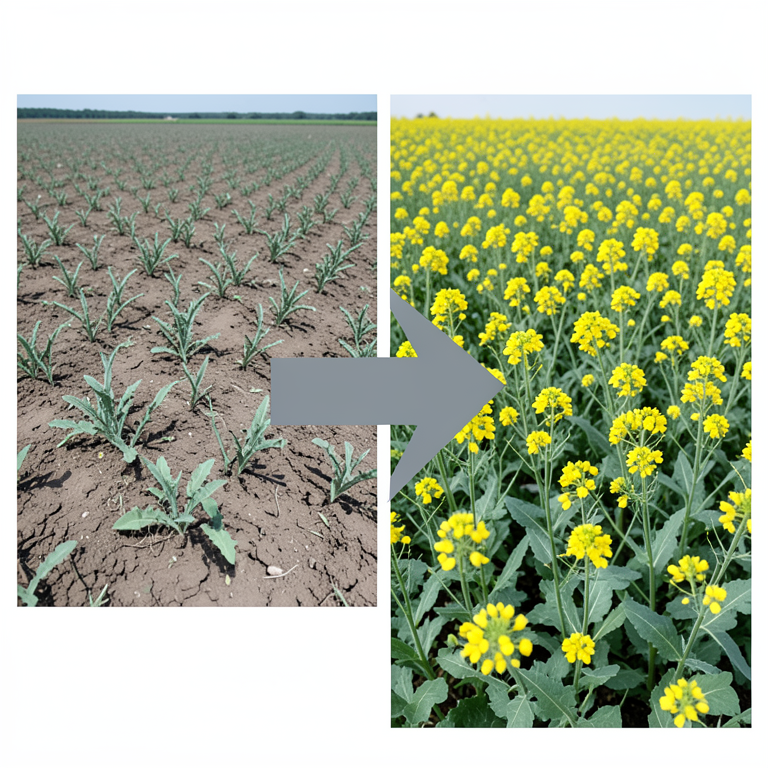
Factors Influencing Adoption
AI-generated conceptual illustration (Mustard plants (Brassica juncea) in a field in Manipur). It explains the idea and does not show study data.
View source evidence ↗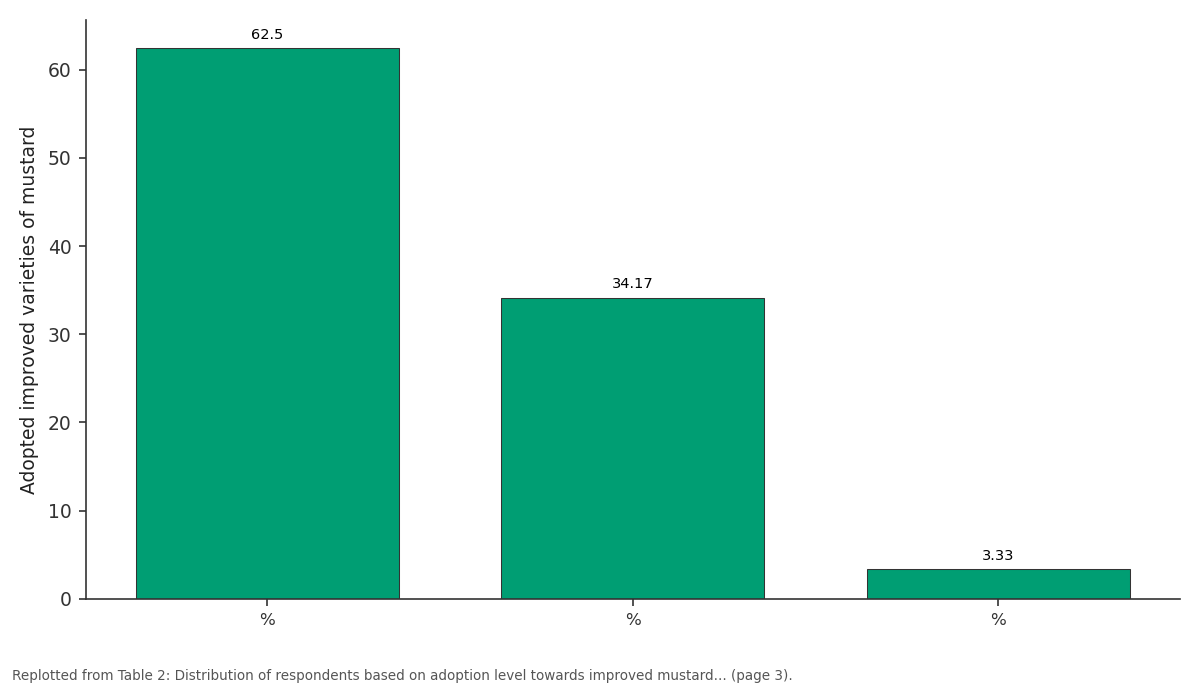
Adopted improved varieties of mustard: % vs % vs %
Replotted from Table 2 (page 3) of the original paper. Every bar is the paper's own table value.
View source evidence ↗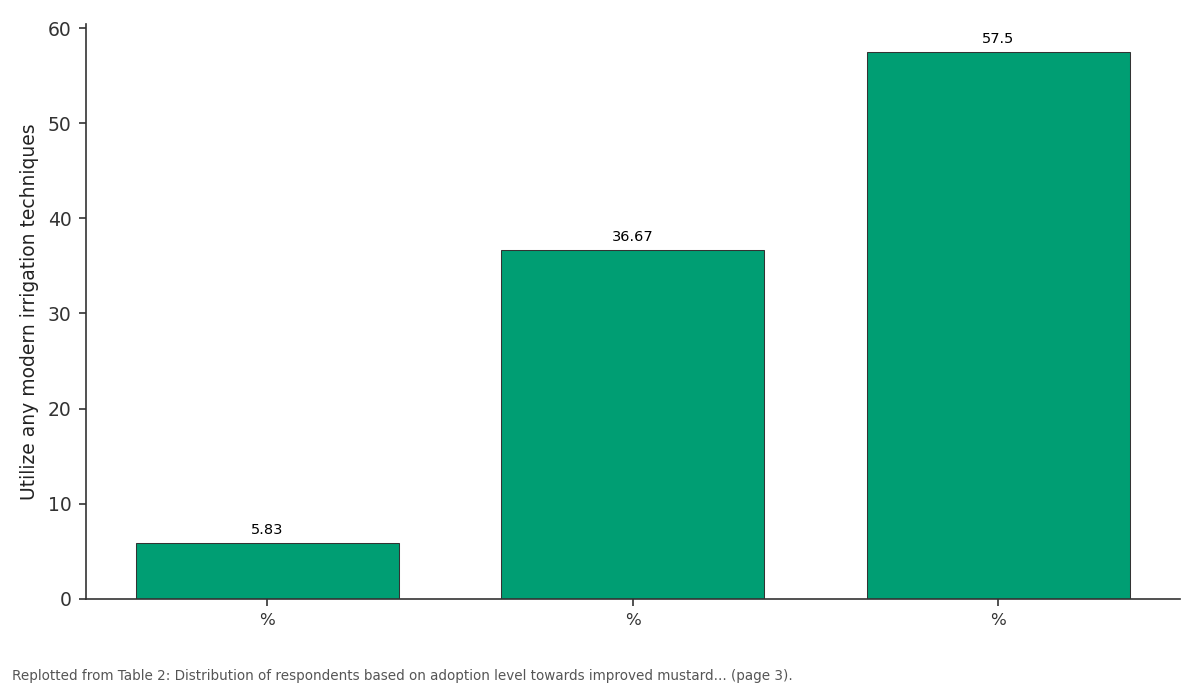
Utilize any modern irrigation techniques: % vs % vs %
Replotted from Table 2 (page 3) of the original paper. Every bar is the paper's own table value.
View source evidence ↗Figures & tables
From the original paper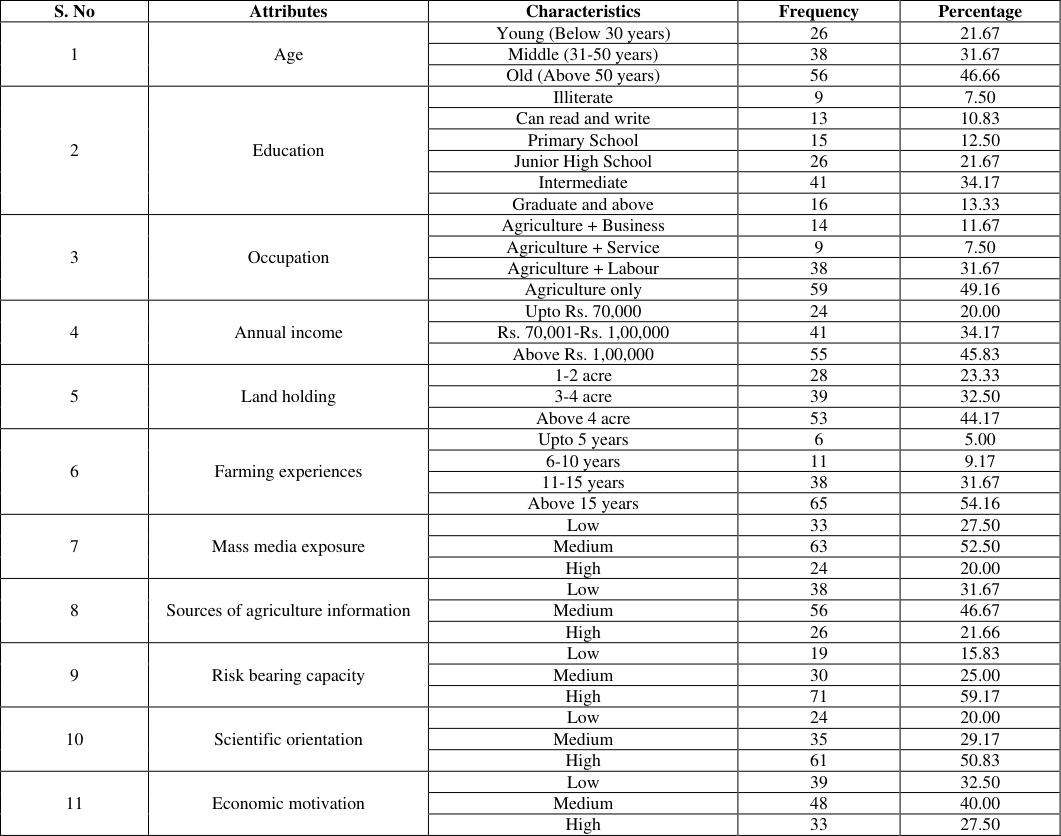 Table 1
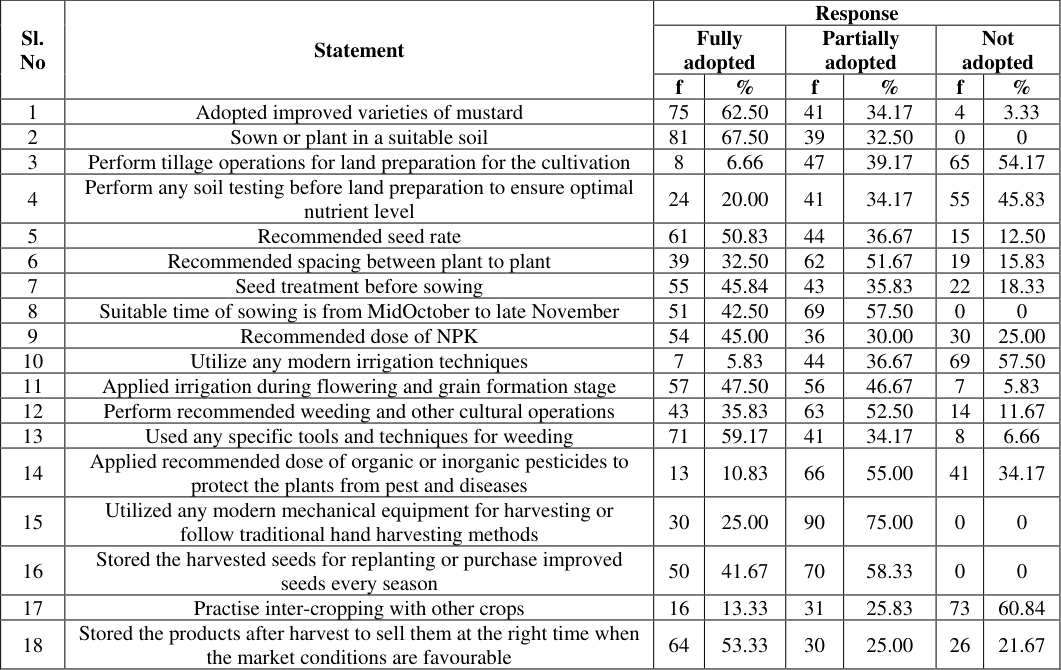 Table 2
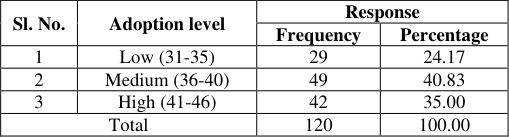 Table 3
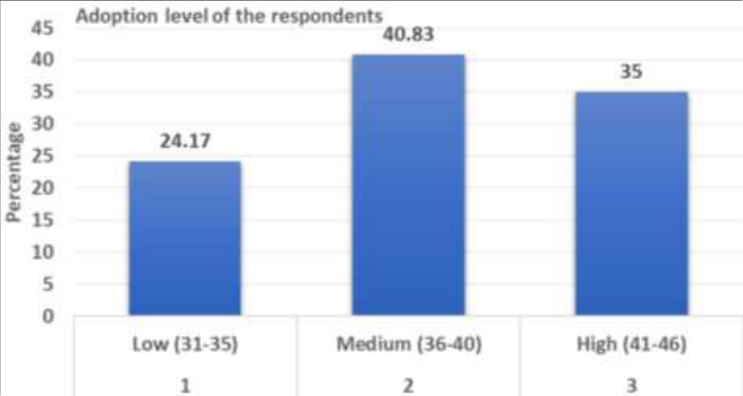 Figure 1
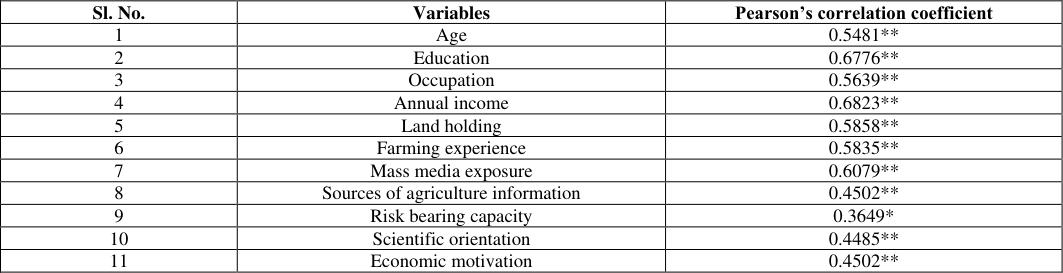 Table 4
Introduction
Rapeseed and Mustard belong to the genus brassica of the family Brassicaceae or Cruciferae. Brassica species include B. carinata, B. juncea, B. oleracea, B. napus, B. nigra, and B. rapa. Mustard oil is the mixture of various acids like, linoleic acid and linolenic acid which have beneficial properties. In India, Rapeseed-mustard crops are grown in diverse agroclimatic conditions ranging from north-eastern/northwestern hills to down south under irrigated/rainfed, timely/late sown, saline soils and mixed cropping. Indian mustard (Brassica juncea) is cultivated throughout the country in the rabi season. The rapeseed-mustard group broadly includes Indian mustard, yellow sarson, brown sarson and toria crops. Indian mustard (Brassica juncea) is predominantly cultivated in Rajasthan, Uttar Pradesh, Haryana, Madhya Pradesh and Gujarat. It is also grown in some non-traditional areas of south India, including Karnataka, Tamil Nadu and Andhra Pradesh. The crop can be raised well under both irrigated and rainfed conditions. The country witnessed the yellow revolution through a phenomenal increase in production and productivity from 2.68 MT and 650 kg/ha in 1985-86 to 6.96 MT and 1022 kg/ha in 1996-97. Shekhawat et al., (2012) [4] . In Manipur, M-27, Ragini and Local variety-Yella are the three popular rapeseed and mustard varieties grown in Manipur. Various sowing techniques have been practiced in zero tillage cultivation of rapeseed and mustard in Manipur viz. as relay crop, sowing seeds after burning straw and sowing seeds with straw mulching. The vast area of Manipur has led to the transformation of mono-cropped rice cropping system to double cropped rice-rapeseed and mustard zero tillage system. Monika et al., (2014) [1] In Kakching district, the oil extracted from rapeseed plants are commonly used. Rapeseed mustard is the primary crop grown in Kakching district during the rabi season after paddy, especially in areas where agriculture depends on rainfall. The cultivation of oilseeds faces several constraints. It includes water scarcity during post monsoon season, lack of irrigation facilities, short time lag after rice harvest for seed sowing and high incidence of pests and diseases in late sown crop. Zero tillage cultivation system of rapeseed mustard in Manipur led to a success in expansion of area in the state. Its popularity is increasing day by day among the farming community in Manipur state. The natural resources are precious and therefore demand an effective and sustainable use. Selection of the suitable varieties for the crop under zero tillage cultivation has become an indispensable step for expanding the crop area and to raise the production. (Sanatomba et al., 2020) [3] The adoption of zero tillage for rapeseed mustard cultivation leads to higher earnings and also helps in increasing the rapeseed yields in the area.
Justification of the study
The findings of the present study will help the adoption behaviour of the farmers that is existing among the Mustard www.extensionjournal.com growers in Kakching district, Manipur. It will enable to investigate its appropriate approach to trace out the constraints in utilization of recommended safe plant protection measures and knowledge for better crop management and enhance productivity regarding improved mustard cultivation. Objectives 1. To assess the socio-economic profile of the respondents. 2. To find the adoption level of improved mustard cultivation practices by the respondents. 3. To establish the relationship between the selected independent variables with adoption.
Research Methodology
The study was conducted in Kakching district of Manipur. Descriptive research design was followed for the present study as it describes the characteristics or phenomenon that is being studied. Multi stages sampling was followed for the present study for the selection of samples required. Manipur has 16 districts and out of which Kakching district was selected. There are two blocks in Kakching district, out of which Kakching block was selected purposively based on maximum area cover under mustard cultivation. Six villages were selected from Kakching block and a total number of 120 respondents were randomly selected proportionately on the basis of maximum area covered under mustard cultivation.
Methods used for data collection
A pre-tested structured interview schedule focused towards the objectives of the study was developed for data collection. Survey method of data collection with the help of a pre-structured interview schedule was used. The collected data were classified, tabulated and analyzed in light of the objectives.
Data statistical analysis
The data collected from the respondents was converted to 3 point score (Likert Scale) and tabulated. The evaluation of the data and the relationship between the independent and dependent variables was done using Mean, Frequency, Percentage and Correlation. The data presented in Table 1 revealed that 46.66 percent of the respondents are old age (above 50 years) followed by 31.67 percent middle age (31-50 years) and 21.67 percent of the respondents are of young age (below 30 years). It also indicated that 34.17 percent of the respondents were educated up-to Intermediate level of education, 21.67 percent of the respondents had Junior High School education, 13.33 percent of the respondents had Graduate and Above education, 12.50 percent of the respondents had Primary School education, followed by 10.83 percent of the respondents that can read and write without any formal education and 7.50 percent of the respondents were illiterate. It was revealed that 49.16 percent of the respondents were engaged in agriculture only, 31.67 percent of the respondents were engaged in agriculture and labour, followed by 11.67 percent of the respondents were engaged in agriculture and business, and 7.50 percent of the respondents were doing service beside agriculture. It was found that 45.83 percent of the respondents have income above 1 lakh rupees followed by 34.17 percent of the respondents has income between 70,001 to 1 lakh and 20.00 percent of the respondents has income upto 70,000 rupees. It was revealed that 44.17 percent of the respondents have land holding above 4 acre, followed by 32.50 percent of the respondents has land holding between 3-4 acre and 23.33 percent of the respondents has land holding of 1-2 acre. It was revealed that majority (54.16%) of the respondents have >15 years of farming experience, 31.67 percent of the respondents have 11-15 years of farming experience, followed by 9.17 percent of the respondents who have 6-10 years of farming experience and 5.00 percent of the respondents have upto 5 years of farming experience. It was found that majority (52.50%) of the respondents have medium level of mass media exposure, followed by 27.50 percent of the respondents having low level of mass media exposure and 20.00 percent of the respondents have high level of mass media exposure. It was revealed that 46.67% percent of the respondents have medium level of sources of agriculture information, followed by 31.67 percent of the respondents having low level of sources of agriculture information and 21.66 percent of the respondents have high level of sources of agriculture information. Majority (59.17%) of the respondents have high level of risk bearing capacity, followed by 25.00 percent of the respondents having medium level of risk bearing capacity and 15.83 percent of the respondents have low level of risk bearing capacity. Majority (50.83%) of the respondents have high level of scientific orientation, followed by 29.17 percent of the respondents having medium level of scientific orientation and 20.00 percent of the respondents have low level of scientific orientation. It was revealed that 40.00 percent of the respondents have medium level of economic motivation, followed by 32.50 percent of the respondents having low level of economic motivation and 27.50 percent of the respondents have high level of economic motivation. The data presented in Table 2 revealed that majority (62.50%) of the respondents fully adopt the improved varieties of mustard, 34.17 percent of the respondents partially adopt and 3.33 percent of the respondents do not adopt. Majority (67.50%) of the respondents fully sowed or plant the mustard in a suitable soil and 32.50 percent of the respondents partially sowed. Majority (54.17%) of the respondents do not perform tillage operations for land preparation for the cultivation, 39.17 percent of the respondents partially performed and 6.66 percent of the respondents fully performed. It was revealed that 45.83 percent of the respondents do not perform any soil testing before land preparation to ensure optimal nutrient level followed by 34.17 percent of the respondents partially performed and 20.00 percent of the respondents fully performed. Majority (50.83%) of the respondents fully adopt the recommended seed rate followed by 36.67 percent of the respondents partially adopt and 12.50 percent of the respondents do not adopt the recommended seed rate. Majority (51.67%) of the respondents partially adopt the recommended spacing between plant to plant, 32.50 percent of the respondents fully adopt and 15.83 percent does not adopt. It was observed that 45.84 percent of the respondents fully treat the mustard seeds before sowing followed by 35.83 percent of the respondents partially treat and 18.33 percent of the respondents do not treat. Majority (57.50%) of the respondents partially sow or plant the mustard seeds from Mid-October to late November and 42.50 percent of the respondents fully sow or plant the mustard seeds from Mid-October to late November. It was revealed that 45.00 percent of the respondents fully adopt the recommended dose of NPK, 30.00 percent of the respondent partially adopts and 25.00 percent of the respondents does not adopt. Majority (57.50%) of the respondents do not utilize any modern irrigation techniques for mustard cultivation, 36.67 percent of the respondents partially utilized and 5.83 percent of the respondents fully utilized. It was revealed that 47.50 percent of the respondents fully apply irrigation during flowering and grain formation stage of mustard, 46.67 percent of the respondents partially applied and 5.83 percent of the respondents do not apply. It shows that the majority (52.50%) of the respondents partially performed weeding and other cultural operations in mustard cultivation as recommended, 35.83 percent of the respondents fully performed and 11.67 percent of the respondents does not perform. Majority (59.17%) of the respondents fully adopts specific tools and techniques for weeding in mustard cultivation, 34.17 percent of the respondents partially adopt and 6.66 percent of the respondents do not adopt. Majority (55.00%) of the respondents partially apply the recommended dose of organic or inorganic pesticides to protect the mustard plants from pest and diseases, 34.17 percent of the respondents do not apply and 10.83 percent of the respondents fully applied. Majority (75.00%) of the respondents partially adopted the traditional hand harvesting methods and modern mechanical equipment for harvesting and 25.00 percent of the respondents fully adopts the modern mechanical equipment for harvesting. Majority (58.33%) of the respondents partially adopted the purchased improved seeds for every season, and 41.67 percent of the respondents fully adopted the storage of harvested seeds for replanting. Majority (60.84%) of the respondents do not adopt inter cropping with other crop, 25.83 percent of the respondents partially adopt and 13.33 percent of the respondents fully adopt inter cropping. Majority (53.33%) of the respondents fully adopt the storage of the products after harvest to sell them at the right time when the market conditions are favourable, 25.00 percent of the respondents partially adopt and 21.67 percent of the respondents do not adopt. The data presented in Table 3 revealed that majority (40.83%) of the respondents have medium adoption level, 35.00% of the respondents have high level of adoption and 24.17% of the respondents have low adoption level. Similar finding was also reported by Nigam et al. (2024) [2] . The data presented in Table 4 revealed that out of eleven independent variables, i.e. age, education, occupation, annual income, land holding, farming experience, mass media exposure, sources of agriculture information, risk bearing capacity, scientific orientation and economic motivation are positively and significantly correlated with adoption of farmers towards improved Mustard cultivation practices.
| Sl. No. | Variables | Pearson’s correlation coefficient |
|---|---|---|
| 1 | Age | 0.5481** |
| 2 | Education | 0.6776** |
| 3 | Occupation | 0.5639** |
| 4 | Annual income | 0.6823** |
| 5 | Land holding | 0.5858** |
| 6 | Farming experience | 0.5835** |
| 7 | Mass media exposure | 0.6079** |
| 8 | Sources of agriculture information | 0.4502** |
| 9 | Risk bearing capacity | 0.3649* |
| 10 | Scientific orientation | 0.4485** |
| 11 | Economic motivation | 0.4502** |
Table text extracted from the original PDF; superscript letters are shown inline. The original table image is below.
View original table image
| Sl. No. | Adoption level | Response | — |
|---|---|---|---|
| Frequency | Percentage | ||
| 1 | Low (31-35) | 29 | 24.17 |
| 2 | Medium (36-40) | 49 | 40.83 |
| 3 | High (41-46) | 42 | 35.00 |
| Total | 120 | 100.00 |
Table text extracted from the original PDF; superscript letters are shown inline. The original table image is below.
View original table image
| Sl. No | Statement | Response | — | — | — | — | — |
|---|---|---|---|---|---|---|---|
| Fully adopted | Partially adopted | Not adopted | |||||
| f | % | f | % | f | % | ||
| 1 | Adopted improved varieties of mustard | 75 | 62.50 | 41 | 34.17 | 4 | 3.33 |
| 2 | Sown or plant in a suitable soil | 81 | 67.50 | 39 | 32.50 | 0 | 0 |
| 3 | Perform tillage operations for land preparation for the cultivation | 8 | 6.66 | 47 | 39.17 | 65 | 54.17 |
| 4 | Perform any soil testing before land preparation to ensure optimal nutrient level | 24 | 20.00 | 41 | 34.17 | 55 | 45.83 |
| 5 | Recommended seed rate | 61 | 50.83 | 44 | 36.67 | 15 | 12.50 |
| 6 | Recommended spacing between plant to plant | 39 | 32.50 | 62 | 51.67 | 19 | 15.83 |
| 7 | Seed treatment before sowing | 55 | 45.84 | 43 | 35.83 | 22 | 18.33 |
| 8 | Suitable time of sowing is from MidOctober to late November | 51 | 42.50 | 69 | 57.50 | 0 | 0 |
| 9 | Recommended dose of NPK | 54 | 45.00 | 36 | 30.00 | 30 | 25.00 |
| 10 | Utilize any modern irrigation techniques | 7 | 5.83 | 44 | 36.67 | 69 | 57.50 |
| 11 | Applied irrigation during flowering and grain formation stage | 57 | 47.50 | 56 | 46.67 | 7 | 5.83 |
| 12 | Perform recommended weeding and other cultural operations | 43 | 35.83 | 63 | 52.50 | 14 | 11.67 |
| 13 | Used any specific tools and techniques for weeding | 71 | 59.17 | 41 | 34.17 | 8 | 6.66 |
| 14 | Applied recommended dose of organic or inorganic pesticides to protect the plants from pest and diseases | 13 | 10.83 | 66 | 55.00 | 41 | 34.17 |
| 15 | Utilized any modern mechanical equipment for harvesting or follow traditional hand harvesting methods | 30 | 25.00 | 90 | 75.00 | 0 | 0 |
| 16 | Stored the harvested seeds for replanting or purchase improved seeds every season | 50 | 41.67 | 70 | 58.33 | 0 | 0 |
| 17 | Practise inter-cropping with other crops | 16 | 13.33 | 31 | 25.83 | 73 | 60.84 |
| 18 | Stored the products after harvest to sell them at the right time when the market conditions are favourable | 64 | 53.33 | 30 | 25.00 | 26 | 21.67 |
Table text extracted from the original PDF; superscript letters are shown inline. The original table image is below.
View original table image
| S. No | Attributes | Characteristics | Frequency | Percentage |
|---|---|---|---|---|
| 1 | Age | Young (Below 30 years) | 26 | 21.67 |
| Middle (31-50 years) | 38 | 31.67 | ||
| Old (Above 50 years) | 56 | 46.66 | ||
| 2 | Education | Illiterate | 9 | 7.50 |
| Can read and write | 13 | 10.83 | ||
| Primary School | 15 | 12.50 | ||
| Junior High School | 26 | 21.67 | ||
| Intermediate | 41 | 34.17 | ||
| Graduate and above | 16 | 13.33 | ||
| 3 | Occupation | Agriculture + Business | 14 | 11.67 |
| Agriculture + Service | 9 | 7.50 | ||
| Agriculture + Labour | 38 | 31.67 | ||
| Agriculture only | 59 | 49.16 | ||
| 4 | Annual income | Upto Rs. 70,000 | 24 | 20.00 |
| Rs. 70,001-Rs. 1,00,000 | 41 | 34.17 | ||
| Above Rs. 1,00,000 | 55 | 45.83 | ||
| 5 | Land holding | 1-2 acre | 28 | 23.33 |
| 3-4 acre | 39 | 32.50 | ||
| Above 4 acre | 53 | 44.17 | ||
| 6 | Farming experiences | Upto 5 years | 6 | 5.00 |
| 6-10 years | 11 | 9.17 | ||
| 11-15 years | 38 | 31.67 | ||
| Above 15 years | 65 | 54.16 | ||
| 7 | Mass media exposure | Low | 33 | 27.50 |
| Medium | 63 | 52.50 | ||
| High | 24 | 20.00 | ||
| 8 | Sources of agriculture information | Low | 38 | 31.67 |
| Medium | 56 | 46.67 | ||
| High | 26 | 21.66 | ||
| 9 | Risk bearing capacity | Low | 19 | 15.83 |
| Medium | 30 | 25.00 | ||
| High | 71 | 59.17 | ||
| 10 | Scientific orientation | Low | 24 | 20.00 |
| Medium | 35 | 29.17 | ||
| High | 61 | 50.83 | ||
| 11 | Economic motivation | Low | 39 | 32.50 |
| Medium | 48 | 40.00 | ||
| High | 33 | 27.50 |
Table text extracted from the original PDF; superscript letters are shown inline. The original table image is below.
View original table image
Results and Discussion Socio Economic Characteristics of the Respondents
Results and Discussion Socio Economic Characteristics of the Respondents
Adoption of Improved Mustard Cultivation Practices
Adoption of Improved Mustard Cultivation Practices
Conclusion
It was concluded that most of the respondents were old age (Above 50 years). Most of the respondents were educated up-to Intermediate level of education. Majority of the respondents have >15 years of farming experience. Most of the respondents were engaged in agriculture only. Most of the respondent land holdings are above 4 acres. Majority of the respondents have medium level of mass media exposure. Majority of the respondents have high level of risk bearing capacity. Majority of the respondents have high level of scientific orientation. Majority of the respondents had medium level of adoption, followed by high level of adoption and low level of adoption respectively. Subsequently, all of the selected independent variables, i.e. age, education, occupation, annual income, land holding, farming experience, mass media exposure, sources of agriculture information, risk bearing capacity, scientific orientation and economic motivation variables were positively significant with the adoption of the farmers towards improved mustard cultivation practices. Proper training related to pest and diseases and extension strategies to be followed for maximum adoption of improved mustard crop in the research area.
Figures and tables from the paper
References
4 in the original paper- Monika A, Singh R, Feroze SM, Singh RJ. Zero Tillage of Rapeseed and Mustard Cultivation in Thoubal District of Manipur: An Economic Analysis. Economic Affairs. 2014;59(3):334-343.
- Nigam A, Mishra NK, Kumar PY. Influence the Adoption of Improved Production Technology among Mustard Growers in the Jaunpur District, Uttar Pradesh, India. Journal of Experimental Agriculture International. 2024;46(1):122-128.
- Sanatomba Y, Lydia Z, Bibek L, Surajkumar SH, Menson K, Banarjee L. Response of different rapeseed (Brassica campestris) and mustard (Brassica juncea) varieties on growth and yield under zero tillage conditions. The Pharma Innovation Journal. 2020;9(12):210-212.
- Shekhawat K, Rathore SS, Premi OP, Kandpal BK, Chauhan JS. Advances on agronomic management of Indian mustard (Brassica juncea): An overview. International Journal of Agronomy. 2012;2012:408284.