
Research article · 2023 · Full text
International Journal of Geography Geology and EnvironmentEvaluating the environmental impacts of textile and fashion industries
Volume 5(1) · Pages 273–275 · DOI: 10.22271/27067483.2023.v5.i1c.273 ↗
Research areasEnvironmental Sustainability in Business
Abstract
Author-writtenThe textile and fashion industries are major contributors to global environmental degradation. This review paper examines the various environmental impacts of these industries, focusing on resource consumption, pollution, waste generation, and the effects on ecosystems and human health. By synthesizing findings from previous studies, the paper aims to provide a detailed understanding of the environmental consequences associated with textile and fashion production and suggest pathways for sustainable practices and policies.
Summary
Source-checkedPlain-language reading of the full paper, prepared with AI and checked against the text. Each point links to the authors' own words.
Why it matters
- The textile and fashion industries are vital components of the global economy, providing employment for millions and creating substantial revenue. View evidence ↗
- Despite their economic importance, these industries are among the most environmentally damaging due to high resource consumption, pollution, and waste production. View evidence ↗
The question
- The objective of this review is to evaluate the environmental impacts of the textile and fashion industries and discuss potential solutions to mitigate these effects. View evidence ↗
What they did
- The authors conducted a review by synthesizing findings from previous studies to understand the environmental consequences of textile and fashion production. View evidence ↗
What they found
- Producing one kilogram of cotton, which is roughly the amount needed for one T-shirt and a pair of jeans, requires approximately 20,000 liters of water. View evidence ↗
- Cotton farming uses a disproportionate amount of chemicals, accounting for 24% of the global insecticide market and 11% of pesticides while using only 2.5% of arable land. View evidence ↗
- The production of synthetic polyester is a source of greenhouse gases, emitting nearly three kilograms of CO2 for every one kilogram of polyester produced. View evidence ↗
- Textile dyeing and finishing processes are highly water-intensive, potentially requiring up to 200 tons of water for every ton of fabric dyed. View evidence ↗
- Fast fashion has increased consumption; for example, the average American bought 60% more clothing in 2014 compared to 2000, but kept those items for only half as long. View evidence ↗
- Textile waste is a major issue in the US, where 16.9 million tons were generated in 2017, and 11.2 million of those tons ended up in landfills. View evidence ↗
- Recycling rates for textiles are very low, with only 15% of textile waste being reused or recycled. View evidence ↗
- Toxic effluents from textile production can cause reproductive issues and genetic mutations in aquatic species. View evidence ↗
- Synthetic clothing releases microfibers during washing that enter the food chain, threatening both human health and marine life. View evidence ↗
What it means
- The authors conclude that the industry must innovate and adopt a combination of sustainable materials, circular economy principles, responsible supply chain management, consumer education, and effective policy to reduce its environmental footprint. View evidence ↗
Visual summary
1 visualsIllustrations explain the paper; they do not show study data.
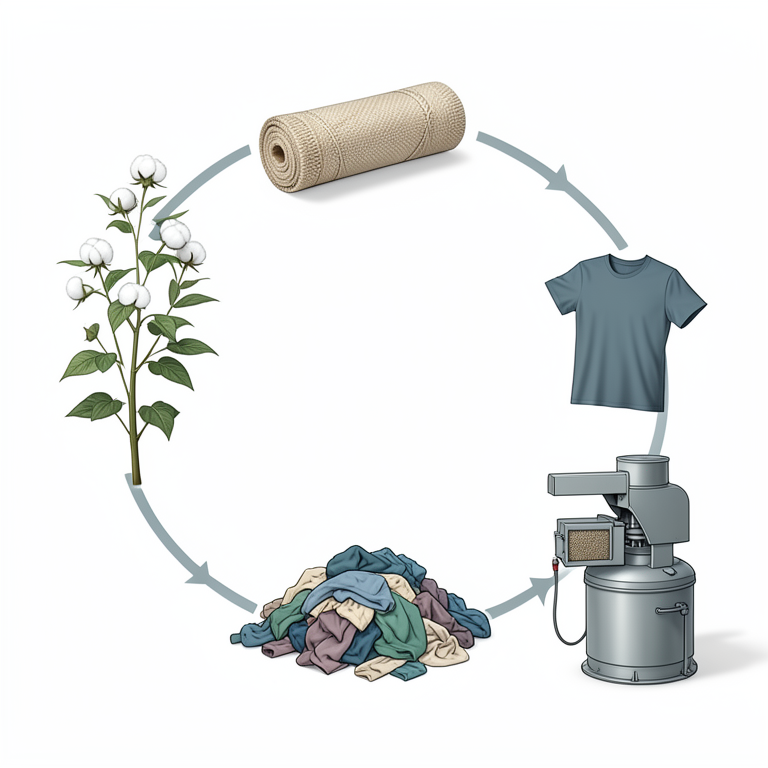
Sustainable Fashion Framework
AI-generated conceptual illustration (Cotton garments and textile recycling machinery). It explains the idea and does not show study data.
View source evidence ↗Introduction
The textile and fashion industries are integral to the global economy, employing millions of people and generating significant revenue. However, these industries are also among the most environmentally damaging. The production of textiles and clothing consumes vast amounts of natural resources, generates significant pollution, and produces substantial waste. This review paper aims to evaluate the environmental impacts of the textile and fashion industries, highlighting key areas of concern and discussing potential solutions for mitigating these impacts.
Main objective
The main objective of this paper is to evaluate the environmental impacts of the textile and fashion industries, highlighting the areas of concern and discussing potential solutions for mitigating these impacts.
Resource consumption
The textile and fashion industries are highly resource-intensive. The production of natural fibers, such as cotton, requires large amounts of water, pesticides, and fertilizers. According to the World Wildlife Fund (WWF), it takes approximately 20,000 liters of water to produce one kilogram of cotton, equivalent to a single T-shirt and pair of jeans. Cotton farming also accounts for 24% of the global insecticide market and 11% of pesticides, despite occupying only 2.5% of the world's arable land. Synthetic fibers, such as polyester, are derived from fossil fuels and require significant energy to produce. Polyester production contributes to the depletion of non-renewable resources and emits large amounts of greenhouse gases. The production of one kilogram of polyester emits nearly three kilograms of CO2, contributing to global warming. The dyeing and finishing processes in textile production also consume substantial amounts of water and chemicals. These processes can require up to 200 tons of water per ton of dyed fabric Kant, (2012) [5] . The use of toxic chemicals in dyeing, such as azo dyes, can lead to environmental contamination and pose health risks to workers and consumers. Water pollution is a significant issue in the textile and fashion industries. The discharge of untreated or inadequately treated effluents from textile factories into water bodies leads to the contamination of rivers, lakes, and oceans. These effluents contain dyes, heavy metals, and other hazardous chemicals that can harm aquatic life and disrupt ecosystems. A study by Greenpeace (2012) [4] found that textile manufacturing facilities in China were discharging toxic chemicals into rivers, affecting water quality and biodiversity. Air pollution is another critical concern.
The production of synthetic fibers, particularly polyester, releases volatile organic compounds (VOCs) and particulate matter into the atmosphere, contributing to air pollution and respiratory problems in nearby communities. Additionally, the incineration of textile waste releases harmful pollutants, including dioxins and furans, which are linked to cancer and other health issues Browne et al., (2011) [1] . The fashion industry also contributes to soil pollution through the use of pesticides and fertilizers in cotton farming. These chemicals can leach into the soil, affecting its quality and harming beneficial microorganisms. The accumulation of microplastics from synthetic fibers in agricultural soils further exacerbates soil pollution, impacting soil health and crop productivity Browne et al., (2011) [1] . The fashion industry is a significant generator of waste. The rise of fast fashion has led to an increase in the production and consumption of low-cost, disposable clothing. Consumers in developed countries purchase more clothes than ever before, with the average American buying 60% more clothing in 2014 than in 2000, but keeping each item half as long McKinsey & Company, (2016) [6] . As a result, large amounts of textile waste end up in landfills or are incinerated. Textile waste in landfills is a growing problem. In the United States alone, 16.9 million tons of textile waste were generated in 2017, with 11.2 million tons ending up in landfills EPA, (2018) [3] . Textiles in landfills can take hundreds of years to decompose, releasing methane, a potent greenhouse gas, and leaching toxic chemicals into the soil and groundwater. Recycling rates for textiles remain low. Only 15% of textile waste is recycled or reused, while the rest is discarded EPA, (2018) [3] . The low recycling rate is due to the complex composition of textiles, which often contain blends of different fibers, making recycling challenging. Additionally, the lack of infrastructure and market demand for recycled textiles further hampers recycling efforts.
Effects on ecosystems and human health
The environmental impacts of the textile and fashion industries extend to ecosystems and human health. The contamination of water bodies with toxic chemicals from textile production can harm aquatic organisms, leading to the decline of fish populations and biodiversity loss. Studies have shown that exposure to textile effluents can cause genetic mutations and reproductive issues in fish and other aquatic species Natarajan et al., (2011) [7] . Human health is also adversely affected by the pollutants released by the textile industry. Workers in textile factories are exposed to hazardous chemicals, leading to respiratory problems, skin conditions, and other health issues. Consumers are not immune to these effects; residual chemicals in clothing can cause allergic reactions and dermatitis. The use of synthetic fibers contributes to the microplastic pollution problem. Microfibers shed from synthetic clothing during washing enter water bodies and accumulate in the food chain, posing risks to marine life and human health. Studies have found microplastics in seafood and drinking water, raising concerns about their potential impact on human health Rochman et al., (2015) [8] .
Potential solutions and sustainable practices
Addressing the environmental impacts of the textile and fashion industries requires a multi-faceted approach involving sustainable practices, technological innovations, and policy interventions. One key solution is the adoption of sustainable materials and processes. By using organic cotton, hemp, and bamboo, which require fewer chemicals and water, the environmental footprint of textile production can be significantly reduced. These materials also have lower carbon emissions compared to conventional fibers. Additionally, the use of natural dyes and waterless dyeing technologies can minimize water consumption and pollution, addressing some of the most pressing environmental issues associated with textile manufacturing. Implementing circular economy principles in the fashion industry can also help reduce waste and resource consumption. This involves designing products for durability, repairability, and recyclability, which can extend the life cycle of clothing and reduce the need for new materials. Promoting the recycling and reuse of textiles is essential, and advances in textile recycling technologies, such as chemical recycling, can enable the recovery of fibers from blended textiles and improve recycling rates. By closing the loop on textile production and consumption, the fashion industry can move towards a more sustainable model that minimizes waste and maximizes resource efficiency. Sustainable supply chain management is another critical component of reducing the environmental impacts of the textile and fashion industries. Transparency and accountability in the supply chain are crucial for promoting sustainability. Companies can adopt sustainable supply chain practices by sourcing raw materials from certified sustainable sources, implementing eco-friendly production processes, and ensuring fair labor practices. Certifications such as the Global Organic Textile Standard (GOTS) and OEKO-TEX Standard 100 provide guidelines for sustainable textile production and can help companies demonstrate their commitment to environmental and social responsibility. Consumer awareness and behavior change are also vital for driving demand for eco-friendly fashion. Educating consumers about the environmental impacts of their clothing choices can encourage more sustainable consumption patterns. Initiatives such as clothing take-back programs, second-hand markets, and rental services can help extend the life cycle of clothing and reduce waste. By fostering a culture of sustainability and responsible consumption, consumers can play a significant role in driving the fashion industry towards more sustainable practices. Policy and regulation are essential for promoting sustainability in the textile and fashion industries. Governments can set standards for environmental performance, provide incentives for sustainable practices, and enforce regulations on pollution and waste management. The European Union's Circular Economy Action Plan and the Sustainable Apparel Coalition's Higg Index are examples of initiatives aimed at improving the sustainability of the textile and fashion sectors. By creating a regulatory framework that supports sustainable practices and holds companies accountable for their environmental impacts, governments can drive significant progress towards reducing the environmental footprint of the textile and fashion industries.
Conclusion
The textile and fashion industries have a profound impact on the environment, contributing to significant resource consumption, pollution, waste generation, and adverse effects on ecosystems and human health. This comprehensive review highlights the urgent need for sustainable practices to mitigate these environmental impacts. The production of textiles, both natural and synthetic, is resource-intensive, consuming vast amounts of water, energy, and chemicals. The extensive use of pesticides and fertilizers in cotton farming, coupled with the energyintensive production of synthetic fibers like polyester, underscores the need for sustainable material alternatives. Water and air pollution from dyeing and finishing processes further exacerbate the environmental footprint of these industries. Waste generation is another critical issue, driven by the rise of fast fashion and consumer culture. The low recycling rates for textiles highlight the inefficiency of current waste management practices, with significant amounts of textile waste ending up in landfills or being incinerated, causing additional environmental harm. The impacts on ecosystems and human health are significant. Contamination of water bodies with toxic chemicals from textile production harms aquatic life and disrupts ecosystems. Workers in the textile industry and consumers are exposed to hazardous substances, leading to health problems. The accumulation of microplastics from synthetic fibers in marine and terrestrial environments poses a growing threat to biodiversity and food safety. To address these challenges, a multifaceted approach is necessary. Sustainable materials and processes, such as organic fibers and waterless dyeing technologies, can reduce the environmental footprint of textile production. Implementing circular economy principles can minimize waste and resource consumption, while sustainable supply chain management ensures transparency and accountability. Consumer awareness and behavior change are crucial for driving demand for eco-friendly fashion. Educating consumers about the environmental impacts of their clothing choices and promoting sustainable consumption patterns can extend the life cycle of clothing and reduce waste. Policy and regulation play a critical role in promoting sustainability in the textile and fashion industries, setting standards for environmental performance and providing incentives for sustainable practices. In conclusion, the textile and fashion industries must adopt sustainable practices and innovate to reduce their environmental impact. By embracing sustainable materials, implementing circular economy principles, managing supply chains responsibly, raising consumer awareness, and supporting effective policies, the industry can move towards a more sustainable future. Continued research, policy development, and public engagement are essential to ensure the successful implementation and sustainability of these practices, ultimately balancing economic growth with environmental stewardship
References
6 in the original paper- Browne MA, Crump P, Niven SJ, Teuten EL, Tonkin A, Galloway TS, et al. Accumulation of microplastic on shorelines worldwide: Sources and sinks. Environ Sci Technol. 2011;45(21):9175-9179.
- Convery F, McDonnell S, Ferreira S. The most popular tax in Europe? Lessons from the Irish plastic bags levy. Environ Resour Econ. 2007;38(1):1-11.
- EPA. Advancing Sustainable Materials Management: 2015 Fact Sheet. United States Environmental Protection Agency; c2018.
- Kant R. Textile dyeing industry an environmental hazard. Nat Sci. 2012;4(1):22-26.
- Natarajan R, Nagarajan S, Thirumalaikolundusubramanian P. Impact of textile effluents on freshwater fish and human health. International Journal of Scientific Engineering and Research. 2011;2(11):456-465
- Rochman CM, Tahir A, Williams SL, Baxa DV, Lam R, Miller JT et al. Anthropogenic debris in seafood: Plastic debris and fibers from textiles in fish and bivalves sold for human consumption. Scientific Reports. 2015;5(1):14340.