
Research article · 2023 · Full text
International Journal of Geography Geology and EnvironmentEvaluating the effectiveness of plastic bag bans in reducing plastic pollution
Volume 5(1) · Pages 270–272 · DOI: 10.22271/27067483.2023.v5.i1c.272 ↗
Research areasMicroplastics and Plastic Pollution
Abstract
Author-writtenPlastic bag pollution has become a significant environmental issue, leading to widespread legislative measures, including plastic bag bans. This review article evaluates the effectiveness of plastic bag bans in reducing plastic pollution by synthesizing findings from previous studies. The paper aims to provide a comprehensive understanding of the impacts of plastic bag bans on plastic pollution, considering environmental, economic, and social factors, and to suggest areas for further research and policy development.
Summary
Source-checkedPlain-language reading of the full paper, prepared with AI and checked against the text. Each point links to the authors' own words.
Why it matters
- Global plastic bag use is immense, with roughly 500 billion bags used each year and a recycling rate of less than 10%. View evidence ↗
- Plastic bags pose a severe threat to marine wildlife, including dolphins and sea turtles, who may die from entanglement or ingestion. View evidence ↗
- On land, plastic bags can cause urban flooding by blocking drainage systems and contaminate soil and water as they degrade into microplastics. View evidence ↗
The question
- The primary goal of this review is to evaluate how effective plastic bag bans are at reducing plastic pollution. View evidence ↗
- The study aims to assess the environmental, economic, and social consequences of these bans by synthesizing existing research. View evidence ↗
What they did
- The authors conducted a review article that synthesizes findings from previous studies to evaluate the effectiveness of bans. View evidence ↗
What they found
- A plastic bag levy introduced in Ireland in 2002 led to a 94% reduction in bag use within one year. View evidence ↗
- In San Francisco, a plastic bag ban achieved a 72% reduction in plastic bag litter over the course of one year. View evidence ↗
- China's ban on ultra-thin plastic bags reduced annual plastic bag consumption by more than 60 billion bags. View evidence ↗
- Some bans have had unintended consequences, such as consumers in cities like Los Angeles switching to thicker plastic bags. View evidence ↗
- Plastic bag bans in Australia resulted in millions of dollars in annual savings for the government regarding litter cleanup. View evidence ↗
- In South Africa, while a levy reduced bag consumption, it shifted the economic burden to retailers and consumers, increasing overall costs. View evidence ↗
- Combining plastic bag bans with educational initiatives in Germany increased public compliance and environmental awareness. View evidence ↗
- In Malaysia, the effectiveness of plastic bag bans was limited by poor public awareness and a lack of enforcement. View evidence ↗
What it means
- The authors conclude that bans should be integrated into a broader strategy that includes recycling programs and policies targeting other plastic waste types. View evidence ↗
- The authors recommend strengthening enforcement mechanisms to ensure consistent adherence and maximize environmental benefits. View evidence ↗
- A limitation of plastic bag bans is that they do not address other major sources of plastic pollution, such as bottles, packaging, and microplastics. View evidence ↗
Visual summary
1 visualsIllustrations explain the paper; they do not show study data.
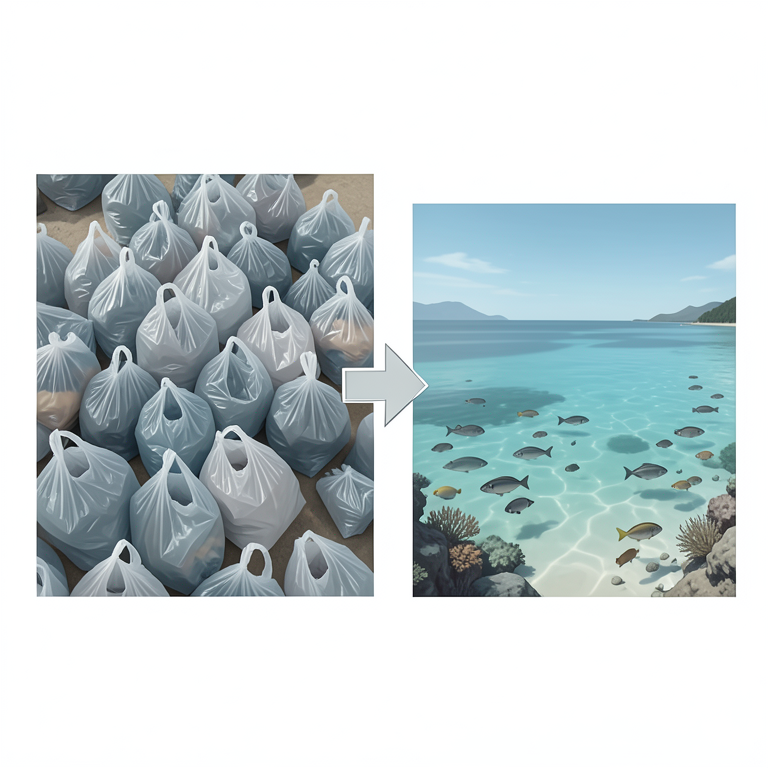
Study overview
AI-generated conceptual illustration (single-use plastic shopping bags and coastal marine environments). It explains the idea and does not show study data.
View source evidence ↗Introduction
Plastic bags are a ubiquitous part of daily life, with billions used worldwide each year due to their convenience, light weight, and durability. However, the widespread use of plastic bags has led to severe environmental consequences that have garnered global attention. It is estimated that approximately 500 billion plastic bags are used annually around the world, and less than 10% of these are recycled. The remaining bags often end up in landfills, oceans, rivers, and landscapes, where they persist for hundreds of years. The environmental impact of plastic bags is profound. Lightweight and durable, plastic bags are easily carried by wind and water, spreading pollution far from their original source. In marine environments, plastic bags contribute significantly to the growing problem of ocean plastic pollution. According to the Ocean Conservancy, plastic bags are among the top ten items found during coastal cleanups, indicating their widespread prevalence in marine debris. These bags pose a significant threat to marine life; animals such as sea turtles, dolphins, and seabirds often mistake plastic bags for food, leading to ingestion, entanglement, and death. Plastic bags also cause considerable harm to terrestrial ecosystems. They can block drainage systems, leading to flooding in urban areas, and degrade soil and water quality when they break down into microplastics. A study by the United Nations Environment Programme highlighted that plastic bags, due to their widespread use and improper disposal, are a major contributor to plastic pollution, causing extensive damage to the environment and biodiversity. In response to these adverse effects, many countries and regions have implemented plastic bag bans. These bans are designed to reduce the consumption of single-use plastic bags, thereby decreasing plastic waste and mitigating its environmental impact. The first significant plastic bag ban was introduced by Bangladesh in 2002, following severe flooding exacerbated by blocked drainage systems clogged with plastic bags. This pioneering move set a precedent, and since then, over 60 countries have introduced various forms of plastic bag regulations. In the United States, California became the first state to implement a statewide ban on single-use plastic bags in 2014. The ban led to an 85% reduction in plastic bag litter on California's beaches, according to a report by the California Coastal Commission (2016). Similarly, the European Union's directive on reducing the consumption of lightweight plastic carrier bags aims to cut down on plastic bag use by at least 80% by 2025 (European Commission, 2015). Despite the growing adoption of plastic bag bans, the effectiveness of these measures varies widely depending on enforcement, public compliance, and complementary measures such as education campaigns and the promotion of alternatives. For example, in Ireland, the introduction of a plastic bag levy in 2002 resulted in a dramatic 94% reduction in plastic bag use within a year.
However, in some regions, bans have led to unintended consequences, such as increased use of other types of plastic bags or consumer resistance.
The objective of the paper
The objective of this paper is to evaluate the effectiveness of plastic bag bans in reducing plastic pollution. By reviewing a wide range of studies, this paper seeks to assess the environmental benefits, economic impacts, and social implications of such bans. The review aims to provide policymakers and stakeholders with a comprehensive understanding of the outcomes of plastic bag bans and to identify best practices and areas where further research is needed.
Environmental impact of plastic bag bans
One of the primary motivations for implementing plastic bag bans is to reduce plastic pollution and its harmful effects on the environment. Numerous studies have examined the environmental outcomes of such bans, with mixed results. A study by Clapp and Swanston (2009) [1] highlighted the significant reduction in plastic bag usage following the implementation of bans in several municipalities. For example, San Francisco's plastic bag ban led to a 72% decrease in plastic bag litter within a year. Similarly, a study by He (2012) [2] found that China's nationwide ban on ultrathin plastic bags resulted in a substantial reduction in plastic waste, with the consumption of plastic bags decreasing by over 60 billion annually. However, the effectiveness of plastic bag bans can vary depending on enforcement and public compliance. A study by Homonoff (2018) [3] noted that while plastic bag bans in cities like Los Angeles led to significant reductions in plastic bag litter, some consumers simply switched to using thicker plastic bags, which can be just as harmful if not properly disposed of. This highlights the importance of comprehensive policies that address all types of plastic bags and encourage the use of sustainable alternatives. Plastic bag bans also positively impact marine environments. Research by Wilcox et al. (2016) [4] indicated that reducing plastic bag usage directly decreases the amount of plastic debris in marine habitats, benefiting marine life and ecosystems. The study emphasized that plastic bag bans are particularly effective in coastal regions where marine pollution is a significant concern.
Economic impact of plastic bag bans
The economic impact of plastic bag bans is a critical consideration for policymakers. These bans can influence various sectors, including retail, manufacturing, and waste management. On the positive side, plastic bag bans can lead to cost savings in waste management and litter cleanup. A study by Nolan-ITU (2002) [5] estimated that the Australian government saved millions of dollars annually in litter cleanup costs following the implementation of plastic bag bans. Reduced plastic waste can also lower the burden on landfills and waste management systems, leading to longterm economic benefits. Conversely, plastic bag bans can pose challenges for retailers and manufacturers. Retailers may incur additional costs in providing alternative bags, such as paper or reusable bags, which are generally more expensive than plastic bags.
A study by Dikgang, Leiman, and Visser (2012) [6] in South Africa found that while plastic bag consumption decreased significantly following the introduction of a levy, the cost burden shifted to consumers and retailers, leading to higher overall costs. Furthermore, the manufacturing sector can be impacted, particularly in regions where plastic bag production is a significant industry. The transition to alternative bag production can require investments in new machinery and materials, which can be costly and time-consuming. Despite these challenges, there are potential economic benefits associated with plastic bag bans. The growing market for reusable and biodegradable bags presents new business opportunities. A report by the Ellen MacArthur Foundation (2017) [7] suggested that the shift towards sustainable packaging solutions could drive innovation and create new jobs in the green economy.
Challenges and opportunities
Despite the demonstrated benefits, plastic bag bans face several challenges that can hinder their effectiveness. One major challenge is the need for comprehensive enforcement and compliance. Studies have shown that weak enforcement mechanisms can lead to low compliance rates, undermining the environmental benefits of the bans. For example, a study by Zen, Ahamad, and Omar (2013) [9] in Malaysia found that lack of enforcement and public awareness limited the effectiveness of plastic bag bans in reducing plastic pollution. Additionally, plastic bag bans must be part of a broader strategy to address plastic pollution. While bans can significantly reduce plastic bag usage, they do not address other sources of plastic waste, such as packaging, bottles, and microplastics. A holistic approach that includes recycling programs, public education, and policies targeting other types of plastic waste is essential for comprehensive plastic pollution mitigation. Opportunities for enhancing the effectiveness of plastic bag bans include increasing public awareness and education, improving enforcement mechanisms, and promoting the use of sustainable alternatives. Public education campaigns can play a crucial role in increasing compliance and encouraging environmentally friendly behavior. Effective enforcement mechanisms, such as fines and penalties for non-compliance, can ensure that bans are adhered to. Promoting the use of reusable, biodegradable, and compostable bags can further reduce the environmental impact of plastic bag bans.
Conclusion
Plastic bag bans hold significant promise for reducing plastic pollution and offering benefits to both the environment and society. The effectiveness of these bans, however, is influenced by enforcement, public compliance, and the presence of complementary measures. Numerous studies have demonstrated the positive impact of plastic bag bans in reducing plastic waste and pollution, yet challenges remain. Looking to the future, addressing these challenges and leveraging opportunities for improvement will be crucial. Enhancing public education and awareness campaigns can foster greater compliance and encourage more environmentally friendly behavior. Strengthening enforcement mechanisms can ensure that bans are adhered to more consistently, thereby maximizing their environmental benefits. The future prospects of plastic bag bans also lie in their integration into a broader strategy for plastic pollution mitigation. This includes expanding recycling programs, developing policies that target other types of plastic waste, and promoting the use of sustainable alternatives such as reusable, biodegradable, and compostable bags. Advances in technology and materials science may provide new solutions for sustainable bag options that can further reduce reliance on single-use plastics. Continued research is essential to monitor the long-term impacts of plastic bag bans and to identify best practices. Policy development must be adaptive and responsive to new findings and emerging trends in plastic pollution. Public engagement remains a cornerstone of successful implementation, as community support and participation are vital for the sustainability of these initiatives. By focusing on these future prospects, plastic bag bans can be more effective and contribute significantly to global efforts to mitigate plastic pollution, ultimately supporting a cleaner, healthier environment for future generations.
References
7 in the original paper- Clapp J, Swanston L. Doing away with plastic shopping bags: International patterns of norm emergence and policy implementation. Environ Polit. 2009;18(3):315332.
- He H. Effects of environmental policy on consumption: Lessons from the Chinese plastic bag regulation. Environ Dev Econ. 2012;17(4):407-431.
- Homonoff TA. Can small incentives have large effects? The impact of taxes versus bonuses on disposable bag use. American Economic Journal: Economic Policy. 2018;10(4):177-210.
- Wilcox C, Mallos NJ, Leonard GH, Rodriguez A, Hardesty BD. Using expert elicitation to estimate the impacts of plastic pollution on marine wildlife. Mar Policy. 2016;65:107-114.
- Dikgang J, Leiman A, Visser M. Analysis of the plastic-bag levy in South Africa. Resources, Conservation and Recycling. 2012;66:59-65.
- Wagner TP. Reducing single-use plastic shopping bags in the USA. Waste Manag. 2017;70:3-12.
- Zen IS, Ahamad R, Omar W. No plastic bag campaign day in Malaysia and the policy implications. Environ Dev Sustain. 2013;15(5):1259-1269.
Cited by 1
From OpenAlex, OpenCitations and reference lists read by Scinovex
- Strategy to Embrace the Impact and Challenges of Marine Plastic Pollution in Malaysia: An Overview ↗
Surindram Krishnaraja, Izyan Munirah Mohd Zaideen, Masha Menhat, Rudiah Md Hanafiah, Norhafiza Ilyana Yatim, Nor Azman Kasan · Thalassas An International Journal of Marine Sciences · 2026
❝ 1
Social implications of plastic bag bans
The social implications of plastic bag bans are multifaceted and can influence public behavior, awareness, and attitudes towards environmental conservation. Plastic bag bans often lead to increased environmental awareness and changes in consumer behavior. Studies have shown that public education campaigns accompanying plastic bag bans can enhance their effectiveness. For example, Wagner (2017) [8] found that educational initiatives in conjunction with plastic bag bans in Germany led to higher public compliance and a greater understanding of the environmental issues associated with plastic pollution. However, the social acceptance of plastic bag bans can vary. A study by Dikgang, Leiman, and Visser (2012) [6] noted that public resistance to plastic bag bans was initially high in South Africa, largely due to the convenience and low cost of plastic bags. Over time, as consumers adapted to using alternative bags and became more aware of the environmental benefits, acceptance increased. Plastic bag bans can also have equity implications. Lowerincome communities may be disproportionately affected by the additional costs associated with purchasing alternative bags. To address this issue, some jurisdictions have implemented measures to mitigate the economic impact on vulnerable populations. For instance, California's statewide plastic bag ban includes provisions to provide free reusable bags to low-income households.