
Research article · 2023 · Full text
International Journal of Geography Geology and EnvironmentThe impact of wastewater treatment plants on aquatic ecosystems
Volume 5(2) · Pages 223–225 · DOI: 10.22271/27067483.2023.v5.i2b.276 ↗
Research areasEnvironmental Science and Water ManagementWater Quality and Pollution Assessment
Abstract
Author-writtenWastewater treatment plants (WWTPs) are critical for managing urban and industrial wastewater, reducing pollution, and protecting public health. However, their impacts on aquatic ecosystems can be significant and complex. This review paper synthesizes findings from previous studies to evaluate the effects of WWTPs on aquatic environments. It examines the benefits of wastewater treatment, the challenges and adverse impacts on water quality and aquatic life, and explores mitigation strategies to minimize negative effects.
Summary
Source-checkedPlain-language reading of the full paper, prepared with AI and checked against the text. Each point links to the authors' own words.
Why it matters
- Wastewater treatment plants (WWTPs) are essential infrastructures used to treat industrial and sewage effluents before they enter natural water bodies. View evidence ↗
- The main goal of these plants is to protect public health and prevent pollution by removing contaminants from wastewater. View evidence ↗
- The scale of these operations is vast; for instance, municipal WWTPs in the United States treat about 34 billion gallons of wastewater every day. View evidence ↗
The question
- The paper aims to evaluate the positive and negative impacts of WWTPs on aquatic ecosystems and explore potential mitigation strategies. View evidence ↗
What they did
- This is a review paper that synthesizes data and findings from existing previous studies. View evidence ↗
What they found
- WWTPs provide a significant benefit by reducing nitrogen and phosphorus levels, which helps prevent eutrophication. View evidence ↗
- Using processes like activated sludge treatment to remove organic matter helps maintain oxygen levels in water, supporting aquatic health. View evidence ↗
- Despite treatment, pharmaceuticals and personal care products often persist in wastewater and accumulate in the environment, harming fish and wildlife. View evidence ↗
- Continuous discharge of treated effluent can cause chronic nutrient enrichment, leading to algal blooms and oxygen-depleted (hypoxic or anoxic) conditions. View evidence ↗
- WWTPs cause thermal pollution because treated effluents are often warmer than receiving waters, which can disrupt the metabolism, reproduction, and survival of aquatic life. View evidence ↗
- WWTPs can contribute to the spread of antibiotic resistance in aquatic environments by releasing surviving bacteria and viruses. View evidence ↗
- The degradation of water quality caused by WWTP impacts can lead to economic losses in tourism, recreation, and fisheries. View evidence ↗
- Advanced technologies like ozonation and membrane filtration can more effectively remove pathogens, nutrients, and emerging contaminants. View evidence ↗
- Phosphorus can be recovered from wastewater using struvite precipitation to create agricultural fertilizer, reducing effluent nutrient loads. View evidence ↗
- Constructed wetlands serve as natural treatment systems that effectively lower pollutant concentrations before water enters natural bodies. View evidence ↗
What it means
- The authors conclude that improving WWTP performance and water sustainability requires a combination of technological innovation, further research, and strong regulatory frameworks. View evidence ↗
Visual summary
1 visualsIllustrations explain the paper; they do not show study data.
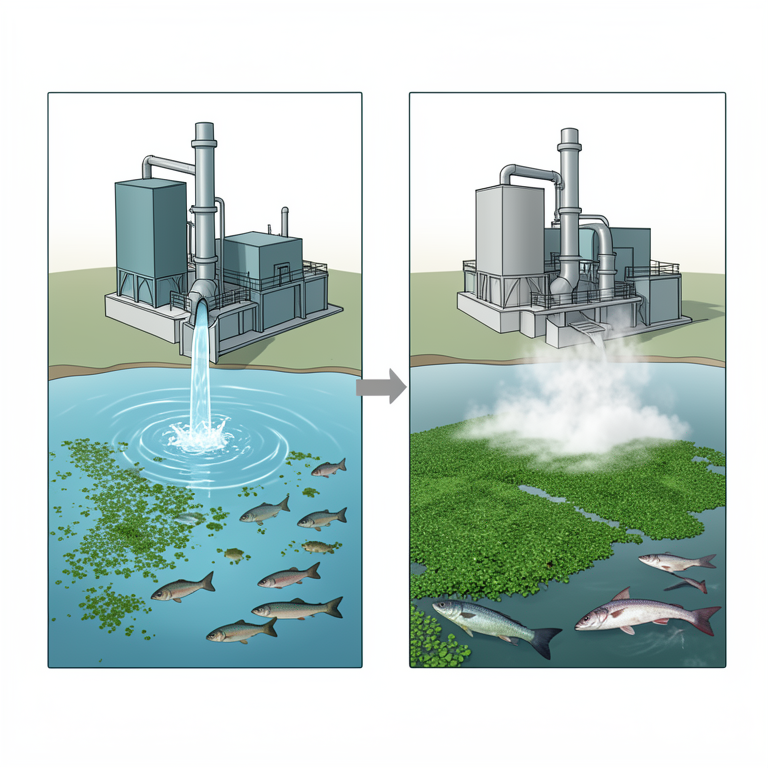
The Nutrient Cycle and Eutrophication
AI-generated conceptual illustration (wastewater treatment plant and a freshwater lake ecosystem). It explains the idea and does not show study data.
View source evidence ↗Figures & tables
From the original paper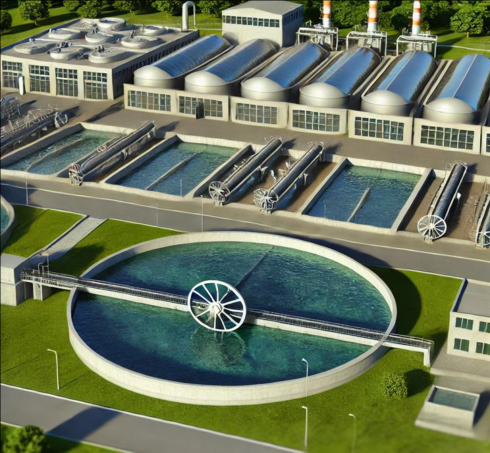 Figure 1
Introduction
Wastewater treatment plants (WWTPs) are critical infrastructures designed to treat sewage and industrial effluents before they are discharged into natural water bodies. Their primary purpose is to remove contaminants from wastewater to prevent pollution and protect public health. The importance of WWTPs in modern society cannot be overstated, as they play a vital role in managing urban and industrial wastewater, thereby reducing pollution and safeguarding aquatic ecosystems. However, while the benefits of WWTPs are substantial, their impact on aquatic ecosystems is complex and multifaceted, encompassing both positive and negative effects. Globally, WWTPs process billions of gallons of wastewater each day. For example, in the United States alone, municipal WWTPs treat approximately 34 billion gallons of wastewater daily. These facilities utilize a range of physical, chemical, and biological processes to remove contaminants such as organic matter, nutrients, heavy metals, and pathogens. Effective wastewater treatment can significantly reduce the contamination of natural water bodies, thereby preventing the spread of waterborne diseases and reducing the incidence of water-related health issues. One of the significant benefits of WWTPs is their ability to reduce nutrient pollution. Nutrients like nitrogen and phosphorus are commonly found in domestic and industrial wastewater. If discharged untreated into water bodies, these nutrients can lead to eutrophication, causing excessive growth of algae and aquatic plants. This process depletes oxygen in the water, resulting in dead zones where aquatic life cannot survive. Studies by Smith et al. (1999) [8] have demonstrated that WWTPs can significantly reduce the levels of these nutrients, thus mitigating the risk of eutrophication and its associated ecological impacts. Despite these benefits, the discharge of treated effluents from WWTPs can still pose challenges to aquatic ecosystems. Residual pollutants such as pharmaceuticals, personal care products, and other emerging contaminants often remain in treated wastewater. These substances can have various adverse effects on aquatic organisms, including endocrine disruption, reproductive issues, and behavioral changes. A study by Kolpin et al. (2002) [4] found that many pharmaceuticals and personal care products persist in treated wastewater and accumulate in aquatic environments, affecting the health of fish and other wildlife. Nutrient loading remains a concern even after wastewater treatment. While WWTPs reduce nutrient concentrations, they may not eliminate them entirely. Continuous discharge of treated effluents can lead to chronic nutrient enrichment in receiving water bodies, stimulating algal blooms and creating hypoxic or anoxic conditions. Research by Carpenter et al. (1998) [1] .
Highlights the persistent issue of nutrient loading from WWTPs and its contribution to eutrophication in freshwater and coastal ecosystems. Thermal pollution is another significant impact associated with WWTPs. Treated effluents are often warmer than the natural receiving waters, leading to changes in the thermal regime of aquatic ecosystems. Temperature fluctuations can affect the metabolism, reproduction, and survival of aquatic organisms. Elevated water temperatures can also reduce dissolved oxygen levels, further stressing aquatic life. Caissie (2006) [2] documented the effects of thermal pollution from WWTPs on riverine ecosystems, emphasizing the need for temperature management in effluent discharge. Additionally, the introduction of microorganisms from treated effluents can alter the microbial communities in receiving waters. While WWTPs are designed to reduce pathogen loads, some bacteria and viruses can survive the treatment process and be released into the environment. These microorganisms can spread antibiotic resistance, posing a threat to both environmental and human health. Martinez (2009) [5] highlighted the role of WWTPs in disseminating antibiotic resistance in aquatic environments. The socio-economic implications of WWTP impacts on aquatic ecosystems are also significant. Water quality degradation can affect fisheries, tourism, and recreational activities, leading to economic losses. Furthermore, poor water quality can necessitate costly water treatment processes for drinking water supplies, impacting public health and increasing financial burdens on communities. In conclusion, while wastewater treatment plants are essential for reducing pollution and protecting public health, their impacts on aquatic ecosystems are complex and multifaceted. Understanding these impacts is crucial for developing effective mitigation strategies to protect aquatic environments. This review aims to provide a comprehensive overview of the effects of WWTPs on aquatic ecosystems, drawing on findings from a wide range of studies. By highlighting both the benefits and challenges associated with WWTPs, this paper seeks to inform future research and policy development to ensure the sustainability of water resources.
Objective of paper
The objective of this paper is to evaluate the impacts of wastewater treatment plants on aquatic ecosystems, highlighting both the benefits and challenges, and to explore mitigation strategies based on previous studies.
Benefits of wastewater treatment plants
WWTPs are essential for improving water quality by removing harmful substances from wastewater. They use a variety of physical, chemical, and biological processes to reduce the concentration of pollutants such as organic matter, nutrients, heavy metals, and pathogens. Treated effluents, when properly managed, can significantly reduce the contamination of natural water bodies. According to the World Health Organization (WHO), effective wastewater treatment can prevent the spread of waterborne diseases and reduce the incidence of water-related health issues. One of the key benefits of WWTPs is the reduction of nutrient pollution. Nutrients such as nitrogen and phosphorus, which are commonly found in domestic and industrial wastewater, can lead to eutrophication if discharged untreated into water bodies. Eutrophication causes excessive growth of algae and other aquatic plants, leading to oxygen depletion and the death of fish and other aquatic organisms. Studies by Smith et al. (1999) [8] have shown that WWTPs can significantly reduce the levels of these nutrients, thereby mitigating the risk of eutrophication. WWTPs also play a crucial role in removing organic matter from wastewater. Organic pollutants, if not treated, can decompose in water bodies, consuming dissolved oxygen and creating hypoxic conditions that are harmful to aquatic life. The removal of organic matter through processes such as activated sludge treatment helps maintain the oxygen balance in receiving waters, supporting the health of aquatic ecosystems (Metcalf & Eddy, 2003) [6] .
Adverse impacts on water quality and aquatic life
Despite the benefits, the discharge of treated effluents from WWTPs can still pose challenges to aquatic ecosystems. Residual pollutants, such as pharmaceuticals, personal care products, and other emerging contaminants, are often not fully removed during the treatment process. These substances can have various adverse effects on aquatic organisms, including endocrine disruption, reproductive issues, and behavioral changes. A study by Kolpin et al. (2002) [4] found that many pharmaceuticals and personal care products persist in treated wastewater and can accumulate in aquatic environments, affecting the health of fish and other wildlife. Another significant impact of WWTP effluents is nutrient loading. While WWTPs reduce the concentration of nutrients, they may not eliminate them entirely. The continuous discharge of treated effluents can lead to chronic nutrient enrichment in receiving water bodies. This nutrient loading can stimulate algal blooms, which decompose and create hypoxic or anoxic conditions. These low-oxygen conditions can result in fish kills and the loss of biodiversity. Research by Carpenter et al. (1998) [1] highlights the persistent issue of nutrient loading from WWTPs and its contribution to eutrophication in freshwater and coastal ecosystems. Thermal pollution is another concern associated with WWTPs. Treated effluents are often warmer than the natural receiving waters, leading to changes in the thermal regime of aquatic ecosystems. Temperature fluctuations can affect the metabolism, reproduction, and survival of aquatic organisms. Elevated water temperatures can also reduce dissolved oxygen levels, further stressing aquatic life. Studies by Caissie (2006) [2] have documented the effects of thermal pollution from WWTPs on riverine ecosystems, emphasizing the need for temperature management in effluent discharge. The introduction of microorganisms from treated effluents can also impact aquatic ecosystems. While WWTPs are designed to reduce pathogen loads, they may not eliminate all microorganisms. Some bacteria and viruses can survive the treatment process and be released into the environment. These microorganisms can alter the microbial communities in receiving waters, potentially leading to the spread of antibiotic-resistant bacteria. Research by Martinez (2009) [5] has highlighted the role of WWTPs in disseminating antibiotic resistance in aquatic environments, posing a threat to both environmental and human health.
Mitigation strategies
To minimize the negative impacts of WWTPs on aquatic ecosystems, several mitigation strategies can be employed. Advanced treatment technologies, such as membrane filtration, ozonation, and advanced oxidation processes, can enhance the removal of emerging contaminants, nutrients, and pathogens from wastewater. These technologies can provide higher treatment efficiency and produce effluents with lower pollutant loads (Snyder et al., 2003) [9] . Nutrient recovery and recycling are also effective strategies to reduce nutrient loading from WWTPs. Techniques such as struvite precipitation can recover phosphorus from wastewater, producing a valuable fertilizer that can be used in agriculture. This not only reduces the nutrient load in effluents but also promotes sustainable resource use Morse et al., (1998) [7] . Constructed wetlands and riparian buffer zones can be used as natural treatment systems to further polish treated effluents before they are discharged into natural water bodies. These systems use vegetation and soil microbial processes to remove residual pollutants, enhance nutrient uptake, and provide habitat for wildlife. Studies by Vymazal (2011) [10] have shown that constructed wetlands can effectively reduce pollutant concentrations and improve water quality in receiving waters. Effective management of effluent discharge, including monitoring and regulation, is essential for protecting aquatic ecosystems. Regulatory frameworks should establish stringent water quality standards and enforce compliance through regular monitoring and reporting. Public awareness and community involvement in monitoring programs can also enhance the effectiveness of regulatory measures and promote sustainable wastewater management practices (Helmer & Hespanhol, 1997) [3] .
Conclusion
Wastewater treatment plants are indispensable for managing urban and industrial wastewater, protecting public health, and reducing pollution. However, their impacts on aquatic ecosystems are complex and multifaceted. While WWTPs provide significant benefits by removing contaminants and reducing nutrient pollution, the discharge of treated effluents can still pose challenges to water quality and aquatic life. Residual pollutants, nutrient loading, thermal pollution, and the introduction of microorganisms are among the key concerns. Mitigation strategies such as advanced treatment technologies, nutrient recovery, constructed wetlands, and effective effluent management can help minimize these impacts and protect aquatic ecosystems. Continued research, technological innovation, and robust regulatory frameworks are essential for improving the performance of WWTPs and ensuring the sustainability of water resources.
Figures and tables from the paper
References
8 in the original paper- Carpenter SR, Caraco NF, Correll DL, Howarth RW, Sharpley AN, Smith VH, et al. Nonpoint pollution of surface waters with phosphorus and nitrogen. Ecol Appl. 1998;8(3):559-568.
- Caissie D. The thermal regime of rivers: A review. Freshw Biol. 2006;51(8):1389-406.
- Kolpin DW, Furlong ET, Meyer MT, Thurman EM, Zaugg SD, Barber LB, et al. Pharmaceuticals, hormones, and other organic wastewater contaminants in US streams, 1999-2000: A national reconnaissance. Environ Sci Technol. 2002;36(6):1202-1211.
- Martinez JL. Environmental pollution by antibiotics and by antibiotic resistance determinants. Environ Pollut. 2009;157(11):2893-2902.
- Morse GK, Brett SW, Guy JA, Lester JN. Review: Phosphorus removal and recovery technologies. Sci Total Environ. 1998;212(1):69-81.
- Smith VH, Tilman GD, Nekola JC. Eutrophication: Impacts of excess nutrient inputs on freshwater, marine, and terrestrial ecosystems. Environ Pollut. 1999;100(13):179-96.
- Snyder SA, Westerhoff P, Yoon Y, Sedlak DL. Pharmaceuticals, personal care products, and endocrine disruptors in water: Implications for the water industry. Environ Eng Sci. 2003;20(5):449-469.
- Vymazal J. Constructed wetlands for wastewater treatment: Five decades of experience. Environ Sci Technol. 2011;45(1):61-69.
Cited by 1
From OpenAlex, OpenCitations and reference lists read by Scinovex
- Comparative analysis of H₃PO₄ and KOH activated African oil bean husk ( Pentaclethra macrophylla ) for adsorption of methylene blue from aqueous solutions: Isothermal, thermodynamic, and kinetic studies ↗
Bethel Mba, Uchenna Henry Alozie, Uzochukwu Franklin Onwuka, Goodluck Chukwudike Amalambu, Maxwell Chukwuma Anukwonke, Onyekachi Monday Okafor et al. · Journal of King Saud University - Science · 2026
This study shows that African oil bean husk was effectively converted to high-performance activated carbons (AC) to eliminate methylene blue (MB) in aqueous solution. Fourier transform infrared spectroscopy (FTIR), X-ray diffraction (XRD), SEM/ Energy-dispersive X-ray spectroscopy (EDS), X-ray fluorescence (XRF), Thermogravimetric Analysis (TGA), and N₂ adsorption Brunauer Emmett–Teller (BET) were used in an extensive study to confirm surface and structural…
❝ 0