
Research article · 2023 · Full text
International Journal of Geography Geology and EnvironmentClimate change: An analysis of causes and consequences
Volume 5(2) · Pages 174–180 · DOI: 10.22271/27067483.2023.v5.i2b.189 ↗
Research areasGlobal Energy and Sustainability ResearchAgriculture Sustainability and Environmental Impact
Abstract
Author-writtenClimate change has become a widespread topic in recent years. It is a problem resulting from the emission of greenhouse gases that greatly affect our environment. Climate change is the periodic modification in Earth's climate caused by changes in the atmosphere as well as interactions between the atmosphere and various other geological, chemical, biological and geographical factors within the Earth system. Climate change includes both global warming and large-scale changes in weather patterns driven by human-induced emissions of greenhouse gases. The question arises whether the problem of climate change is caused by human activities or is a part of nature. Although there have been previous periods of climate change, since the mid-20th century humans have exerted unprecedented influence on the Earth's climate system and have caused climate change on a global scale. Climate change may make weather patterns more difficult to predict. These unpredictable weather patterns may make it difficult to maintain and grow crops, further weakening the economic status of developing countries dependent on agriculture. As a result of rising temperatures due to climate change, ice in the Polar Regions is melting at a faster rate, which is causing global sea levels to rise. It is damaging sea coasts by increasing flooding and erosion. The biggest driver of global warming is the emission of gases that cause the greenhouse effect, of which more than 90% are carbon dioxide and methane. Climate change poses risks to the survival of species on land and in the ocean. These risks increase as temperatures climb. Exacerbated by climate change, the world is losing species at a rate 1,000 times greater than at any other time in recorded human history. One million species are at risk of becoming extinct within the next few decades. At present, the major reason for the rapid climate change is the human based activities which are responsible for threatening the existence of mankind. This paper discusses and compares the various factors contributing to climate change. It also points towards some of the effects and solutions of climate change. The study also sheds light on developing mechanisms to prevent or insure against climate change.
Summary
Source-checkedPlain-language reading of the full paper, prepared with AI and checked against the text. Each point links to the authors' own words.
Why it matters
- Climate change is defined as a periodic modification of the Earth's climate resulting from interactions between the atmosphere and various geological, chemical, biological, and geographical factors. View evidence ↗
- The primary driver of global warming is the emission of greenhouse gases, with carbon dioxide and methane accounting for more than 90% of these emissions. View evidence ↗
- Climate change is accelerating biodiversity loss, with species disappearing at a rate 1,000 times higher than in previous recorded history, putting one million species at risk of extinction in the coming decades. View evidence ↗
The question
- The paper aims to discuss and compare the factors contributing to climate change while identifying its effects and potential solutions. View evidence ↗
What they did
- The study analyzes existing data to shed light on mechanisms that can prevent or provide insurance against the impacts of climate change. View evidence ↗
What they found
- A NASA-led study estimates that accelerating greenhouse gas emissions could lead to a global sea level rise of more than 15 inches contributed by the Antarctica and Greenland ice sheets. View evidence ↗
- Despite international agreements, global warming is projected to reach approximately 2.8 °C by the end of the century. View evidence ↗
- Approximately 12 million hectares of forest are destroyed annually, contributing to emissions and reducing the planet's ability to absorb carbon dioxide. View evidence ↗
- Europe is predicted to experience an average sea level rise of 60 to 80 centimeters by the end of the century, largely depending on the melting rate of the Antarctic ice sheet. View evidence ↗
- Global sea levels rose 4-8 inches over the last 100 years and are projected to rise another 4 to 36 inches in the next century. View evidence ↗
- A 3 °C increase in global average temperatures is estimated to double the frequency of droughts and increase annual drought losses in Europe to 40 million euros. View evidence ↗
- Failure to address carbon emissions could cost the global economy 5% to 20% of annual GDP, whereas the cost to mitigate the most damaging effects is estimated at only 1% of GDP. View evidence ↗
- Coral reefs, which provide approximately $375 billion in annual goods and services, are currently under threat due to climate change. View evidence ↗
What it means
- The authors conclude that there is an urgent need for the enactment of specific laws and acts to address the challenges posed by climate change. View evidence ↗
Visual summary
1 visualsIllustrations explain the paper; they do not show study data.
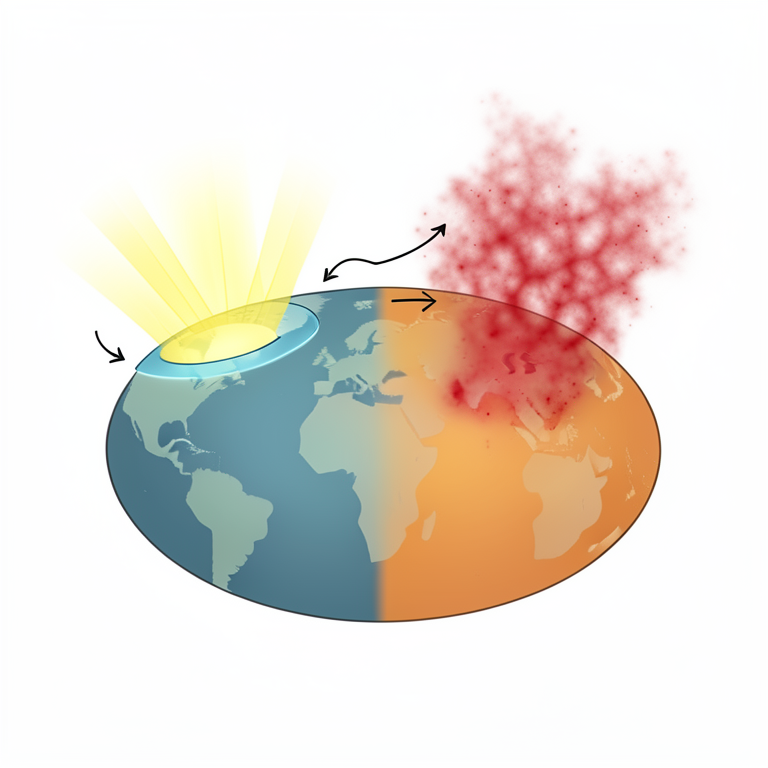
The Greenhouse Effect and Temperature Rise
AI-generated conceptual illustration (Earth and its atmosphere). It explains the idea and does not show study data.
View source evidence ↗Figures & tables
From the original paper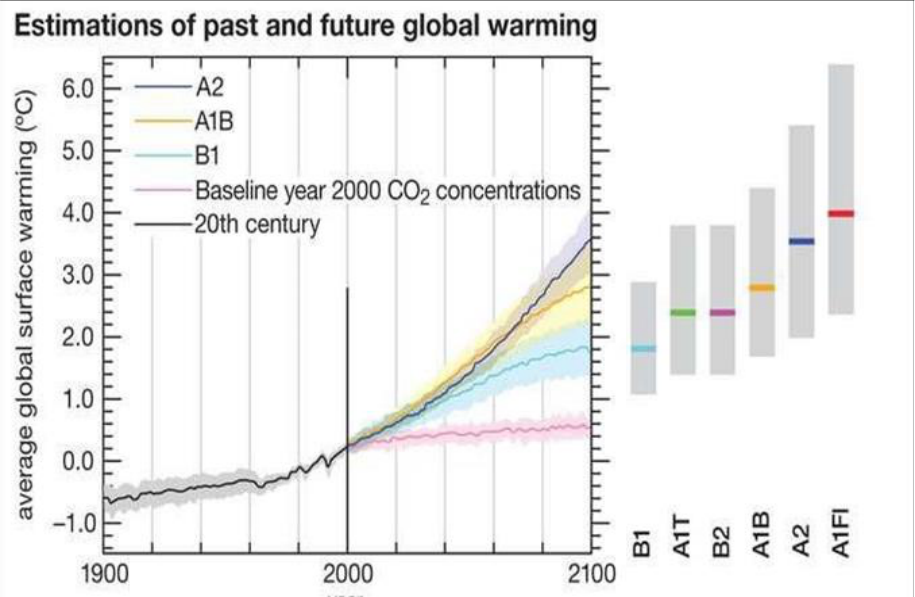 Figure 1
Introduction
A major component of global policy making today is combating the harmful effects of climate change on our environment. Climate change as a phenomenon has particularly attracted the attention of the whole world because it is something that mankind is responsible for it. The climate on the earth is always variable, although there have been many changes in the climate of the earth in the last 100 years, the temperature of the earth has become hotter than before and it has a lot of impact on coastal areas, small islands, food security, health, etc. In this era of urbanization and industrialization, most of the creatures are conducting their lives in many ways. In some way, the problem of climate change has been considered to be more affected by the way of living of human beings. Despite the current attention of the global community to the problem of climate change, the debate on the causes and effects of climate change has begun and is becoming more and more complex as one tries to explain the causes and solutions to these effects. There can be no debate on climate change to find the right solution to the problem, unless the responsibility for the damage it causes to the environment is taken into account. Is it possible to bring climate change within a legal framework for environmental protection so that more damage can be avoided in the future? The point to be noted is that any action to prevent further damage to the environment has to be developed and developing both types of countries need to relook at their domestic laws and policies. Developing countries may have to shoulder this responsibility a bit more as they have to balance development on the one hand and climate related issues on the other.
The world is facing one of the greatest threats ever in the form of climate change, which is having unprecedented impacts on entire societies, nations and economies. From unpredictable weather patterns to extreme climate events including floods, droughts, cyclones to sea level rise, the potential impacts of climate change on the planet are unparalleled. Recent estimates from a NASA-led study indicate that the Greenland and Antarctica ice sheets could contribute more than 15 inches to global sea level rise if greenhouse gas emissions continue to accelerate, which is much higher than the amount before. Thus it is clear that climate change is increasing emissions from human-caused activities, raising global temperatures, disrupting weather patterns and increasing the frequency and intensity of extreme climate events.
Global Warming
Climate change includes both global warming driven by human-induced emissions of greenhouse gases and the resulting large-scale shifts in weather patterns. Though there have been previous periods of climatic change, since the mid-20 th century humans have had an unprecedented impact on Earth's climate system and caused change on a global scale. Global warming is the phenomenon of a gradual increase in the temperature near the earth's surface. This phenomenon has been observed over the past one or two centuries. This change has disturbed the climatic pattern of the earth. However, the concept of global warming is quite controversial but the scientists have provided relevant data in support of the fact that the temperature of the earth is rising constantly. Global warming occurs when carbon dioxide (CO 2 ) and other air pollutants collect in the atmosphere and absorb sunlight and solar radiation that have bounced off the earth's surface. Normally this radiation would escape into space, but these pollutants, which can last for years to centuries in the atmosphere, trap the heat and cause the planet to get hotter. These heat -trapping pollutants-specifically carbon dioxide, methane, nitrous oxide, water vapour, and synthetic fluorinated gases-are known as greenhouse gases, and their impact is called the greenhouse effect. There are several causes of global warming, which have a negative effect on humans, plants and animals. These causes may be natural or might be the outcome of human activities. In order to curb the issues, it is very important to understand the negative impacts of global warming. Evaporation rates are increasing rapidly due to warmer temperatures, making the weather more extreme and prone to severe storms. Impacts on ecosystems include the relocation or extinction of many species as their environment changes, most immediately in coral reefs, mountains, and the Arctic. Climate change puts people at risk of food security, floods, water shortages, infectious diseases, extreme heat, econ omic loss and displacement. Because of these human effects, the World Health Organization has declared climate change the greatest threat to global health in the 21st century. Even if future efforts to reduce warming succeed, some effects will continue for centuries, including rising sea levels, rising ocean temperatures and ocean acidification. The Intergovernmental Panel on Climate Change (IPCC) has issued a series of reports that project significant increases in these impacts as warming continues to 1.5 °C (2.7 °F) and beyond. Additional warming also increases the risk of triggering critical thresholds called tipping points. Under the 2015 Paris Agreement, nations agreed to collectively keep global warming below 2 °C through concerted efforts. Global warming will reach about 2.8 °C by the end of the century even with the promises made under the collective agreement of nations.
Causes of climate change
There are many natural and manmade factors that cause the Earth's climate to change. All factors affect climate over a period of thousands and millions of years.
Generating power
Generating electricity and heat by burning fossil fuels accounts for a large share of global emissions. Most electricity is still generated by burning coal oil or gas which produces powerful greenhouse gases like carbon dioxide and nitrous oxide that cover the earth and trap the sun's heat. Just over a quarter of electricity globally is generated from solar and other renewable sources, which emit very little greenhouse gases or pollutants into the air, unlike fossil fuels.
Change in earth's orbit
The Earth's orbit has a great influence on the seasonal distribution of sunlight that is reaching the Earth's surface. A slight change in the Earth's orbit can lead to variation in distribution across the world. There are very few changes to the average sunshine. However it causes a high impact on geographic and seasonal distribution. There are three types of orbital variations found, variations in the Earth's eccentricity, variations in the tilt angle of the Earth's axis of rotation, and precession of Earth's axis. These together can cause Milankovitch cycles, which have a huge impact on climate and are well -known for their connection to the glacial and interglacial periods. The Intergovernmental Panel on Climate Change has shown that the Milankovitch cycles strongly influence the behaviour of ice formation.
Atmospheric Aerosols
Scatter and absorb the solar and infrared radiation, change microphysical and chemical properties of the clouds, solar radiation, when scattered, cools the planet. On the other hand, when the aerosols absorb solar radiation, it causes an increase in the temperature of the air instead of allowing the sunlight to be absorbed by the Earth's surface. Aerosols can directly affect climate change by absorbing or reflecting solar radiation. They can also produce indirect effects by modifying the cloud's formation and properties. They can even be transported thousands of kilometres away from its source through wind and upper-level circulation in the atmosphere.
Plate tectonics
Changes in Earth's core temperature in the mantle plume and convection currents forced the Earth's plates to adjust, causing a rearrangement of the Earth's plate. This can influence the global and local patterns of climate and atmosphere. The geometry of the oceans is determined by the position of the continents, so the position of the continents can affect the pattern of the oceans. The state of the oceans also plays a very important role in controlling the transfer of heat and moisture around the world and determines the global climate. A recent example of tectonic control over the ocean is the formation of Panama's Is Tum U about 5 million years ago, preventing the direct mixing of the Atlantic and Pacific Oceans.
Manufacturing goods
Manufacturing and industry produce emissions. Most emissions come from burning fossil fuels to produce iron, steel, electronics, plastic, clothing and other goods. Mining and other industrial reactions also release emissions, as does the manufacturing industry. The machines used often run on coal oil or gas and some materials such as plastics are made from chemicals derived from fossil fuels. The manufacturing industry is one of the largest contributors to greenhouse gas emissions worldwide.
Cutting down forests
Cutting forests to make way for farms or pastureland or for various other reasons also produces emissions because when trees are cut they release the carbon they have been storing. About 12 million hectares of forest are destroyed each year. Although forests absorb carbon dioxide, destroying them also limits nature's ability to keep emissions out of the atmosphere. Deforestation, along with agriculture and other land use changes, is responsible for about a quarter of global greenhouse gas emissions.
Land Use Patterns
Half of the land use changes are said to have occurred during the industrial era. Most of the forests were replaced by agricultural crops and grazing of the land, the albedo increased, as a result of deforestation in the high altitude areas covered with snow, the surface of the planet became cold, the lower the albedo the more it is affected by the Sun. The radiation will be absorbed by the Planet and the temperature will increase.
Using transportation
Most cars, trucks, ships, and planes run on fossil fuels. That makes transportation a major contributor of greenhouse gases, especially carbon-dioxide emissions. Road vehicles account for the largest part, due to the combustion of petroleum-based products, like gasoline, in internal combustion engines. But emissions from ships and planes continue to grow. Transport accounts for nearly one quarter of global energy-related carbon-dioxide emissions. And trends point to a significant increase in energy use for transport over the coming years.
Producing food
The production of food causes emissions of carbon dioxide methane and other greenhouse gases in a variety of ways including deforestation and clearing of land for agriculture and grazing, digestion by cows, sheep, production of fertilizers and manures for growing crops and consumption is included This also typically involves using fossil fuels to power farm equipment or fishing boats. All of this makes fertilizer production a major contributor to climate change and the emissions of greenhouse gases caused by food packaging and distribution.
Powering buildings
Globally, residential and commercial buildings consume more electricity than others as they continue to use coal, oil and natural gas for heating and cooling and emit excessive amounts of greenhouse gas emissions. Rising energy demand for heating and cooling, increasing air conditioner ownership as well as increased electricity consumption for lighting fixtures and other equipment contributed to a substantial increase in energy-related carbon dioxide emissions from buildings in recent years.
Consequences of climate change
The consequences of climate change affect entire regions around the world. Seas are rising. Extreme weather events and rainfall are becoming more common in some regions, while other regions are experiencing heat waves and droughts. Climate change is a very serious threat and its consequences affect various aspects of our lives. We can discuss the consequences of climate change in the following manner.
Availability of Fresh Water
As a result of climate warming, rainfall patterns change, evaporation increases, glaciers melt and sea levels rise, all these factors greatly affect the availability of fresh water. More frequent and severe droughts and rising water temperatures are expected to degrade water quality. Such conditions encourage the growth of toxic algae and bacteria, which will make the problem of water scarcity even worse, leading to large-scale caused by human activities. The increase of cloudburst events (Sudden extreme rainfall) is also likely to influence the quality and quantity of fresh water available, as storm water can cause uncleansed sewage to enter surface water. The rivers of Europe generally originate in mountainous regions and about 40% of Europe's fresh water comes from the Alps, although changes in the year and glacier dynamics and rainfall patterns can make it possible for temporary water shortages across Europe due to river drought. Changes in the flow of water can greatly affect inland shipping and the production of hydroelectric power.
High Temperature
The climate crisis has increased average global temperatures and is leading to higher temperature extremes such as heat waves. Higher temperatures can increase mortality, reduce productivity, damage infrastructure and the most vulnerable members of the population such as the elderly and infants will be most seriously affected by it. Higher temperatures are expected to alter the geographic distribution of climate zones. These changes are altering the distribution and abundance of many plant and animal species that are already under pressure from habitat loss and pollution. Temperature rises are also likely to influence phenologythe behaviour and lifecycles of animal and plant species. This could in turn lead to increased numbers of pests and invasive species, and a higher incidence of certain human diseases. Meanwhile, the yields and viability of agriculture and livestock, or the capacity of ecosystems to provide important services and goods (such as the supply of clean water or cool and clean air) could be diminished. Higher temperatures cause evaporation of water which combined with lack of rainfall can increase the risk of severe drought.
Flood
Climate change is expected to increase rainfall in various regions. Increases in rainfall over extended periods may lead primarily to river flooding, while shorter, intense cloud bursts may lead to river flooding, where excessive rainfall causes waterlogging. Flood occurs without overflow of any body of water. River floods are a common natural disaster in Europe that have caused significant fatalities along with storm surges over the past three decades, affecting millions of people and resulting in massive economic losses. There are strong possibilities of increasing the frequency of Floods across Europe as a result of climate change in the coming years. Heavy rainstorms are projected to become more common and more intense due to higher temperatures, with flash floods expected to become more frequent across Europe. In some areas, some risks such as flooding in early spring with less winter snowfall may be reduced in the short term, but the increased risk of flooding in mountainous areas with heavy pressure on river systems may outweigh those impacts in the medium term.
Sea Level Rise
The sea star is larger during the 20th century, and this trend has accelerated in recent decades. The increase is mostly due to thermal expansion in the oceans due to warming, but melting ice from glaciers and the Antarctic ice sheet is also contributing. It is predicted that Europe will face an average of 60 to 80 centimetres of sea level rise by the end of this century depending mainly on the rate at which the Antarctic ice sheet melts. An increase in the temperature of the Earth leads to a rise in sea level due to the thermal expansion (a condition wherein the warm water takes up more area than cooler water). The melting of glaciers adds to this problem. The population living in under-lying areas, islands and coasts are threatened by the rising sea levels. It erodes shorelines, damages properties and destroys ecosystems like mangroves and wetlands that protect coasts from storms. In the last 100 years, the sea level has risen to 4-8 inches and will continue to rise between 4 and 36 inches in the next 100 years. Additionally, sea level rise is also expected to reduce the a mount of available fresh water as sea water intrudes into underground water tables, which will pollute fresh water bodies with salt water, affecting agriculture and drinking water supplies. It will also affect biodiversity in coastal habitats, and the natural services and goods they provide. Many wetlands will be lost, threatening unique bird and plant species, and removing the natural protection these areas provide against storm surges.
Biodiversity
While climate change is occurring so rapidly that many species of plants and animals are struggling to cope, there is also clear evidence that biodiversity is already responding to climate change and will continue to do so in the future. Direct impacts include changes in phenology (the behaviour and lifecycles of animal and plant species), species abundance and distribution, community composition, habitat structure and ecosystem processes. Climate change is indirectly impacting biodiversity through changes in the use of land and other resources. It can be more harmful than direct impacts due to its scale, scope and speed. Indirect impacts can include habitat fragmentation and loss, over -exploitation, pollution of air, water and soil, invasive species, etc. Climate regulation, food, clean air and water, and control of flooding or erosion are elements that will necessarily reduce the resilience of ecosystems to climate change and their abilities to provide essential services.
Soil Structure and Agriculture
As a result of climate change, land erosion may increase, as well as decline in organic matter, salinity, soil biodiversity loss, landslides, desertification and increased possibility of floods. The impact of climate change on soil carbon stocks may be related to changing atmospheric CO2 concentrations, increased temperatures and changing precipitation patterns. Extreme rainfall events, faster snowmelt, higher river discharge and increased drought are all climate change related events, which greatly affect soil erosion. Deforestation and other agriculture-related human activities also play a role in this. Due to rising sea levels and reduced river discharge, the chances of increasing saline soils in coastal areas are higher. The crop cultivation is dependent on solar radiation, favourable temperature and precipitation. Hence, agriculture has always been dependent on climate patterns. The current climate change has affected agricultural productivity, food supply and food security. These effects are biophysical, ecological and economic. They resulted in Climate and agricultural zones are moving towards poles. There is a change in the agricultural production pattern due to increased atmospheric temperature. Agricultural productivity has increased due to the rise in CO2 in the atmosphere.
Marine Environment
An increase in the temperature of the Earth leads to a rise in sea level due to the thermal expansion (a condition wherein the warm water takes up more area than cooler water). The melting of glaciers adds to this problem. Increase in sea surface temperature, ocean acidification and changes in currents and wind patterns will result in significant changes in the physical and biological structure of the oceans. The population living in under -lying areas, islands and coasts are threatened by the rising sea levels. It erodes shorelines, damages properties and destroys ecosystems like mangroves and wetlands that protect coasts from storms. Rising ocean temperatures may enable alien species to expand into areas where they could not previously survive, for example in the ocean. Acidification will impact various calcium carbonate secreting organisms. These changes will have inevitable impacts on coastal and marine ecosystems, resulting in major socioeconomic consequences for many regions. The population living in under-lying areas, islands and coasts are threatened by the rising sea levels. It erodes shorelines, damages properties and destroys ecosystems like mangroves and wetlands that protect coasts from storms. In the last 100 years, the sea level has risen to 4 -8 inches and will continue to rise between 4 and 36 inches in the next 100 years.
Health Hazards
Climate change poses a significant threat not only to human health but also to animal and plant health. The ongoing impacts of climate change will be more severe and pronounced in the future than seen today. A changing climate may affect health in the future in the following ways. Heat related mortality and diseases are likely to increase Decrease in winter cold-related mortality (death) and morbidity (illness) Extreme weather events such as floods, storms etc. can increase the risk of accidents and impact wider wellbeing Changes in the seasonal distribution of some allergenic pollen species, range of pests, and changes in disease distribution are possible. Changes in the impact of diseases e.g. from vector, rodent, water or food-borne disease;
Increasing challenges to European animal and human health posed by the emergence and re-emergence of viral zoonotic diseases and vector-borne diseases; A changing climate may lead to an increase in the number of plant, insect, pathogens and other pests that affect forest and crop systems. Risks related to ozone layer changes and air quality.
Impact on Vulnerable Populations
People living in low-income urban areas with poor infrastructure, and population groups with generally lower incomes and assets, are more vulnerable to climate impacts, but less able to cope with them. Climate change may disproportionately impact women and are at a disadvantage when expensive adaptation measures are required. At the same time, women play a major role in adaptation and sustainable practices more generally. Unemployed and socially excluded people found to be more vulnerable to climate risks. Europe's ageing population, disproportionately affected by reduced mobility or health impediments, will result in a higher share of the population being vulnerable to climate change impacts. Climate change has also started having an impact on population displacement and migration. Although climate is only of several drivers of displacement and migration, many partner countries on their path towards sustainable development are among the most affected. The populations living there are often highly dependent on their natural environment and have few resources available to cope with a changing climate.
Drought and Wildfire
As a result of a changing climate, many European regions are experiencing more frequent, severe and longer-lasting droughts. Drought is an unusual and temporary reduction in water availability caused by a combination of reduced rainfall and increased evaporation. It differs from water scarcity, which is the structural year-round lack of fresh water resulting from the over-consumption of water. Droughts often have knock-on effects, for example on transport infrastructure, agriculture, forestry, water and biodiversity. They reduce the levels of rivers and groundwater, inhibit tree and crop growth, and increase insect attacks and forest degradation. Fire also gets boosted by this. The majority of the estimated €9 billion annual loss due to drought in Europe affects agriculture, the energy sector and public water supplies. Extreme drought is becoming more common in Europe and the damage caused is increasing. With a 3 °C increase in global average temperatures it is estimated that the frequency of droughts will double and the absolute annual losses from droughts in Europe will increase to 40 million euros per year, with the most severe impacts in the Mediterranean and Atlantic regions. More frequent and severe droughts will increase the length and severity of the wildfire season, particularly in the Mediterranean region. Climate change is expanding areas at risk from wildfires. Areas that are not currently vulnerable to fire may become areas that are.
Employment Status and Education
The effects of increases in temperature, changes in rainfall patterns or sea-level rise willdirectly or indirectlyaffect the productivity and viability of all economic sectors in all countries, with implications for the labor market. Climate change conditions may impact workforce availability due to reduced health conditions of the population and additional occupational health barriers. Furthermore, many economic sectors are highly vulnerable due to their dependence on regular climatic conditions. Drastic changes are expected in the agriculture and tourism sectors as a result of climate change. Major investments in adaptation could offer employment and income opportunities in activities such as reinforcing coastal defences, buildings and (green) infrastructure, water management and relocation of exposed settlements. Yet there remains uncertainty about the potential net job creation impact of such investments. Upgrading labour skills will be essential to take advantage of these opportunities. Reducing vulnerability and implementing adaptation measures is not the sole task and responsibility of governments. The severity of climate change requires public and private actors to work together to address vulnerabilities and adapt to impacts. However, not all stakeholders are aware and informed about their vulnerability and the measures they can take to pro-actively adapt to climate change. Therefore, increasing education and awareness is an important component of the adaptation process to limit the impacts of climate change, increase adaptive capacity and reduce overall vulnerability.
Agriculture productivity, Forestry and Food Security
Climate variability is projected to have a substantial impact on agricultural production. Crop yields and longer crop seasons are likely to be lower in locations where a variety of crops are grown. Southern regions will be hit hardest, with an overall negative impact on agriculture. High temperatures, water shortage and extreme weather events may cause lower yields, higher yield variability and, in the long term, a reduction in suitable areas for cultivation. The impacts will depend on precipitation patterns and the crops considered. The crop cultivation is dependent on solar radiation, favourable temperature and precipitation. Hence, agriculture has always been dependent on climate patterns. The current climate change has affected agricultural productivity, food supply and food security. These effects are biophysical, ecological and economic. They resulted in Climate and agricultural zones are moving towards poles. There is a change in the agricultural production pattern due to increased atmospheric temperature. Agricultural productivity has increased due to the rise in CO 2 in the atmosphere. Effects on forestry due to climate change include increased risk of droughts, storms and fires (abiotic) and pests and diseases (biotic)all leading to disturbances to forest health. Forest growth is projected to decrease in different countries and increase in others. However, with changes in tree species and increasing threats to specific plant communities, the biodiversity of forests in these countries is expected to change. The limited diversity of tree species in boreal forests is expected to increase the risk of significant pest and disease impacts.
Building and Infrastructure
Climate change has a major impact on the relevance of buildings and infrastructure to their long life and high initial costs, as well as their essential role in the functioning of our societies and economies. Buildings and infrastructure can be vulnerable to climate change because of their design (low resistance to storms) or location (e.g. in flood-prone areas, landslides, avalanches). In fact they may become damaged or completely unfit for use by any changing climatic conditions or extreme weather event like rising sea level, extreme precipitation and floods, occurrences of extreme low or high temperatures, heavy snowfalls, strong winds etc. The consequences of climate change on infrastructure and buildings may differ from one region to another.
Energy
Climate change-related threats to the energy systems of European countries already exist and are projected to increase. Climate change is likely to reduce demand for heating in Northern and North-Western Europe and further increase demand for energy for cooling in Southern Europe. Which can increase the demand for electricity in summer. More intense and frequent heat waves will shift energy supply and demand patterns, often in opposite directions. Further increases in temperature and droughts may limit the availability of cooling water for thermal power generation in summer (Lowering energy supply), whereas demand for air conditioning will increase. Furthermore, the greater intensity and frequency of extreme weather events will pose a threat to the physical energy infrastructure: overhead transmission and distribution, but also substations or transformers. Climate change also brings uncertainty to weather patterns in different countries. This will have a direct negative impact on renewable energy production in the long run. Some immediate examples would be less sun or wind in areas where there is usually more or heat and droughts affecting the crops intended for the production of energy from biomass.
Tourism and Insurance
The economic consequences of climate change could be significant for regions where tourism is important. The suitability of Southern Europe for tourism is projected to decline during the key summer months but may improve during other types of seasons. The projected reduction in snow cover in many countries could have a negative impact on winter sports industries. The frequency and intensity of most types of extreme events is expected to change significantly as a result of climate change. In the short term, as long as due allowance is made for the underlying trend, premiums would rise gradually and the insurance market would absorb such changes without disruption. However, risk perception often leads to moves that cause prices to rise in short periods. In the long term, especially in the most vulnerable regions, climate change may indirectly increase social inequalities as insurance premiums become unaffordable for a small portion of the population.
Economic Impacts
It is estimated that if action is not taken to address the carbon emissions, climate change could cost about 5 to 20% of the annual global GDP. In contrast, the cost to lessen the most damaging effects of climate change is just 1% of the GDP. Climate change can alter shoreline habitats. This may lead to the need for relocation of ports and near -shore infrastructures and habitats, costing about millions of dollars. The increased hurricanes and other related natural disasters can bring forth extreme economic losses caused by damaged properties and infrastructures. Declining crop yields due to the lengthy droughts and high temperatures can lead to a risk of starvation of thousands of people. Coral reefs generate approximately $375 billion each year in goods and services. Their very survival is currently under threat.
Conclusion
Climate change is a periodic modification of the Earth's climate that results from interplay between changes in the atmosphere as well as various other geologic, chemical, biological, and geographic factors within the Earth's system. Climate change involves global warming and large-scale changes in weather patterns driven by human-induced emissions of greenhouse gases. Climate change is a problem that our planet is facing and there has been a lot of progress in it since the Industrial Revolution. Emissions of greenhouse gases have greatly accelerated the progress of climate change and made our weather more intense. Capital from climate change, Ecosystems, disease, and migration have affected human well-being in many different ways. Climate change has become a widespread topic in recent years. It is a problem that results in negative effects on our environment due to the emission of greenhouse gases. The question arises whether this problem is caused by human activities or is it a phenomenon of nature. There are many natural factors that cause the Earth's climate to change. They affect climate over a period of thousands to millions of years. Since the beginning of the 20th century, scientists have also studied the effects of climate change caused by human activities. Global Warming is a long-term increase in the average temperature of the Earth's climate system, a major aspect of climate change. In this paper, an attempt has been made to explain the causes, effects and consequences of climate change. There is an urgent need to enact specific acts to face the various challenges caused by climate change.
Figures and tables from the paper
References
15 in the original paper- Asthana V, Cyranoski D. Asian Development Bank. Climate Change in Asia, Article by (2005), Climate Change. The Long-Range Forecast, Nature. 1995;438:275-276.
- Dash SK, Hunt JCR. Variability of climate change in India, Current Science. 2007;93(6):782-788.
- Global Climate Change: Effects. NASA Global Climate Change and Global Warming: Vital Signs of the Planet. Jet Propulsion Laboratory / National Aeronautics and Space Administration. 2008 June 15. Web; c2016.
- Gosain AK, Rao S, Basuray D. Climate change impact assessment on hydrology of Indian River Basins, Current Science. 2006;90(3):346-353.
- Intergovernmental Panel on Climate Change (IPCC). Climate Change 2001: Synthesis Report, Geneva, Switzerland; c2001a.
- Sathaye J, Shukla PR, Ravindrnath NH. Climate Change, Sustainable Development and India: Global and National Concerns, Current Science. 2006;90(3):314-325.
- Kumar KKS. Climate Sensitivity of Indian Agriculture, Madras School of Economics. Working Paper. 2009;43:1-33.
- Kovats RS, Campbell-Lendrumdh DH, McMichael AJ. Early Effects of Climate Change: Do they include changes in vector-borne diseases? Philosophical transactions of the Royal Society of London. Series B: Biological Sciences. 2001;356(1411):1057-1068.
- Leemans R, Eickhout B. Another reason for concern: Regional and global impacts on ecosystems for different levels of climate change, Global Environmental Change. 2004;14(3):219-228.
- McMichael AJ, Powles JW, Butler CD, Uauy R. Food, livestock production, energy, climate change, and health. The lancet. 2007;370(9594):1253-1263.
- Weiwei M, Wang H, Jacobs JM. Understanding the influence of climate change on the embodied energy of water supply. Water Research 95. Science Direct. Web. 2016;95:220-229.
- Ravindranath NH, Joshi NV, Sukumar R, Saxena A. Impact of Climate Change on Forest in India. Current Science. 2006;90(3):354-361.
- Sonnabend G, Sornig M, Schieder R, Kostiuk T, Delgado J. Temperatures in Venus upper atmosphere from mid-infrared heterodyne spectroscopy of CO 2 around 10 mm wavelength. Planetary and Space Science. 2008;56(10):1407-1413.
- Stringer LC, Dyer JC, Reed MS, Dougill AJ, Twyman C, Mkwambisi D. Adaptations to climate change, drought and desertification: local insights to enhance policy in southern Africa. Environmental Science Policy. 2009;12(7):748-765.
- Sharma S, Sumana B, Garg A. Greenhouse Gas Emissions from India: A Perspective. Current Science. 2006;90(3):326-333.