
Research article · 2024 · Full text
International Journal of Agriculture and Food ScienceChromium and other heavy metal pollution in surface waters
Volume 6(1) · Pages 27–30 · DOI: 10.33545/2664844x.2024.v6.i1a.192 ↗
Research areasChromium effects and bioremediationWater Quality Monitoring and AnalysisHeavy metals in environment
Abstract
Author-writtenHeavy metal pollution in surface waters is a significant environmental issue due to its toxic effects on ecosystems and human health. Chromium, along with other heavy metals such as lead, cadmium, and mercury, poses serious risks when present in water bodies. This review paper explores the sources, distribution, impacts, and remediation strategies for heavy metal pollution in surface waters, with a particular focus on chromium. By examining recent studies and advancements in pollution control, this paper aims to provide a comprehensive understanding of the challenges and potential solutions associated with heavy metal contamination in aquatic environments.
Summary
Source-checkedPlain-language reading of the full paper, prepared with AI and checked against the text. Each point links to the authors' own words.
Why it matters
- Heavy metal pollution in surface waters is a major environmental concern because it is toxic to both human health and ecosystems. View evidence ↗
- Chromium, lead, cadmium, and mercury are particularly concerning heavy metals because they persist in the environment and bio-accumulate. View evidence ↗
- Human activities are the primary drivers of heavy metal pollution in surface waters, creating substantial threats to health and the environment. View evidence ↗
The question
- The study aims to examine the sources, distribution, impacts, and remediation strategies for chromium and other heavy metal pollution in surface waters. View evidence ↗
What they did
- The authors conducted a review paper focusing on chromium and other heavy metals to understand pollution challenges and solutions. View evidence ↗
- The methodology involved examining recent studies and advancements in pollution control to identify challenges and potential solutions. View evidence ↗
What they found
- Industrial processes, including textile manufacturing, chemical production, tanning, and metal plating, are primary sources of heavy metal pollution. View evidence ↗
- Poor treatment of industrial waste leads to the release of hexavalent chromium (Cr VI), a form of chromium that is carcinogenic and highly toxic. View evidence ↗
- Mining activities, such as those in the Katanga region of the Democratic Republic of Congo, have caused substantial cadmium pollution in rivers. View evidence ↗
- Agricultural runoff can have elevated cadmium levels due to the use of phosphate fertilizers containing cadmium impurities. View evidence ↗
- Mercury from coal-burning power plants can travel through the atmosphere and deposit into distant waters, where it becomes toxic methylmercury that bioaccumulates in fish. View evidence ↗
- Electronic waste (e-waste) landfills are significant sources of lead, mercury, and cadmium pollution due to the high concentrations of these metals in electronics. View evidence ↗
- Acidic water conditions increase the mobility and bioavailability of zinc, lead, and cadmium by making them more likely to exist as free ions. View evidence ↗
- Oxidizing conditions favor the existence of mercury and chromium in their most toxic and mobile forms: methylmercury and Cr VI. View evidence ↗
- Lead and cadmium can reduce primary productivity in aquatic ecosystems by interfering with cellular processes and chlorophyll production, which inhibits photosynthesis. View evidence ↗
- Long-term exposure to hexavalent chromium (Cr VI) can cause skin ulcers, kidney and liver damage, and respiratory issues. View evidence ↗
- Exposure to lead can result in developmental delays, behavioral issues, and cognitive deficits due to neurological damage. View evidence ↗
What it means
- The authors conclude that heavy metal pollution in surface waters represents a severe threat to human health and aquatic ecosystems. View evidence ↗
Visual summary
1 visualsIllustrations explain the paper; they do not show study data.
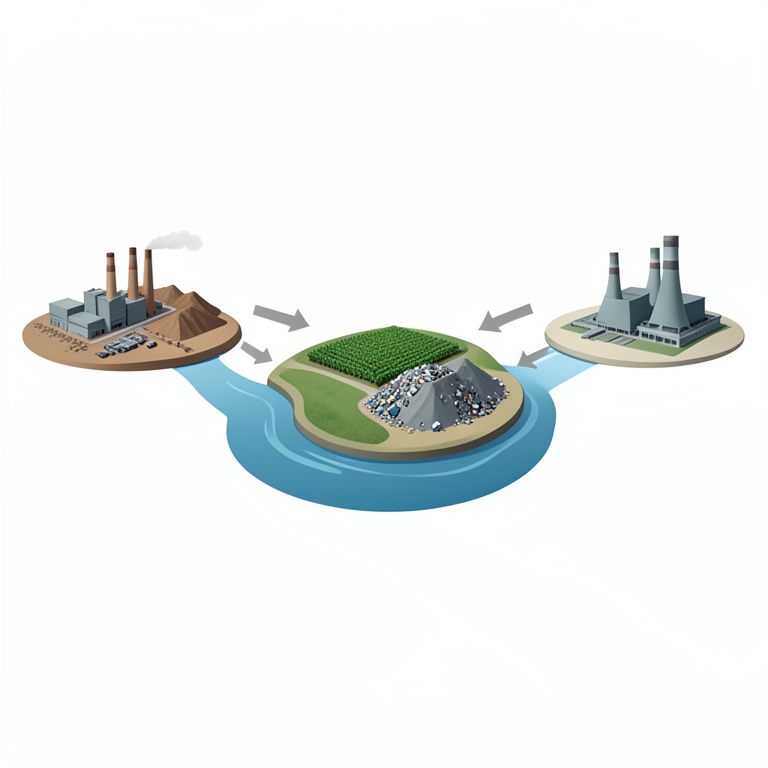
Sources of Heavy Metal Pollution
AI-generated conceptual illustration (a river system surrounded by industrial and agricultural landscapes). It explains the idea and does not show study data.
View source evidence ↗Introduction
Heavy metals are naturally occurring elements characterized by high atomic weights and densities that are at least five times greater than that of water. This category includes metals such as chromium (Cr), lead (Pb), cadmium (Cd), and mercury (Hg), all of which are of particular concern due to their significant toxicity, persistence, and bio-accumulative nature. Heavy metal pollution in surface waters poses a substantial threat to environmental and human health, driven primarily by various anthropogenic activities. One of the primary sources of heavy metal pollution is industrial processes. Industries such as metal plating, tanning, textile manufacturing, and chemical production frequently use heavy metals in their operations. Chromium, for example, is extensively used in leather tanning and electroplating industries due to its anti-corrosive properties. However, inadequate treatment of industrial effluents results in the discharge of hexavalent chromium (Cr VI) into nearby water bodies, which is highly toxic and carcinogenic. Similarly, the improper disposal of industrial waste containing lead, cadmium, and mercury leads to their accumulation in surface waters, exacerbating the pollution problem. Mining activities represent another significant source of heavy metal contamination. During the extraction and processing of ores, large amounts of waste materials, often laden with heavy metals, are generated. These waste materials, commonly referred to as mine tailings, can leach into surface waters, especially when exposed to weathering and erosion. For instance, the release of cadmium from zinc and lead mining operations has been well-documented, leading to contamination of surrounding water bodies and posing risks to aquatic life and human communities relying on these waters. Agricultural practices also contribute to heavy metal pollution in surface waters. The use of fertilizers and pesticides, which may contain trace amounts of heavy metals, can lead to their runoff into adjacent rivers and lakes. Additionally, irrigation with contaminated water or the application of sewage sludge as fertilizer can introduce heavy metals into agricultural soils, which then leach into surface waters. The persistence and toxicity of these metals mean that even trace amounts can accumulate over time, leading to significant environmental contamination. Atmospheric deposition is another pathway through which heavy metals enter surface waters. Emissions from industrial activities, vehicle exhausts, and the burning of fossil fuels release heavy metals into the atmosphere. Matter, where they remain for extended periods, slowly releasing into the water column and being taken up by aquatic organisms. It can cause severe health issues such as lung cancer, kidney damage, and skin ulcers upon prolonged exposure. In aquatic environments, Cr VI can lead to oxidative stress and damage to cellular structures in aquatic organisms, affecting their growth, reproduction, and survival. The trivalent form of chromium (Cr III), although less toxic, can still pose ecological risks, particularly in high concentrations. Lead is another heavy metal of great concern due to its neurotoxic effects, particularly in children. Exposure to lead-contaminated water can result in developmental and cognitive impairments, hypertension, and renal dysfunction. In aquatic ecosystems, lead can adversely affect the neurological functions of fish and invertebrates, leading to behavioural changes and reduced survival rates. Cadmium exposure is associated with serious health problems, including kidney damage, skeletal deformities, and an increased risk of cancer. In aquatic environments, cadmium can disrupt calcium metabolism in fish, leading to weakened bones and impaired reproductive success. It also affects the cardiovascular and endocrine systems of aquatic organisms, causing significant ecological damage. Mercury, especially in its methylated form, is highly toxic and poses a severe risk to human health. Methylmercury can accumulate in fish, leading to neurological impairments and developmental disorders in humans who consume contaminated fish. In aquatic ecosystems, mercury can disrupt the reproductive and behavioral patterns of fish and other wildlife, leading to population declines and biodiversity loss.
Main objective:
The main objective of this study is to examine the sources, distribution, impacts, and remediation strategies of chromium and other heavy metal pollution in surface waters.
Sources of heavy metal pollution:
Heavy metal pollution in surface waters originates from a variety of anthropogenic activities, each contributing significantly to the overall contamination levels observed in aquatic environments. Key sources include industrial discharges, mining activities, agricultural practices, and atmospheric deposition. Understanding these sources is crucial for developing effective mitigation strategies.
Industrial discharges: Industrial activities are one of the primary contributors to heavy metal pollution. Factories involved in metal plating, leather tanning, textile manufacturing, and chemical production frequently release heavy metals such as chromium, lead, cadmium, and mercury into surface waters. For example, chromium is widely used in electroplating and tanning industries for its anti-corrosive properties. Inadequately treated effluents from these industries often contain high levels of hexavalent chromium (Cr VI), a highly toxic and carcinogenic form of chromium. Studies have shown that industrial discharges significantly elevate the concentrations of heavy metals in nearby water bodies, leading to severe ecological and human health risks.
Mining activities:
Mining operations are another significant source of heavy metal contamination. The extraction and processing of ores generate large quantities of waste materials, known as mine tailings, which often contain heavy metals like lead, cadmium, and mercury. These tailings can leach into surface waters, especially when exposed to weathering and erosion. The release of cadmium from zinc and lead mining has been particularly well-documented. For instance, mining activities in the Katanga region of the Democratic Republic of Congo have led to substantial cadmium pollution in the surrounding rivers, posing risks to both aquatic life and local communities (Ngoye & Machiwa, 2004) [14] .
Agricultural practices: Agricultural activities contribute to heavy metal pollution through the use of contaminated fertilizers and pesticides. These products can contain trace amounts of heavy metals, which accumulate in soils and subsequently leach into surface waters. Additionally, irrigation with contaminated water or the application of sewage sludge as fertilizer introduces heavy metals into agricultural soils. Over time, these metals can migrate into nearby water bodies, exacerbating the pollution problem. For example, the use of phosphate fertilizers, which can contain cadmium as an impurity, has been linked to elevated cadmium levels in agricultural runoff (Rothwell et al., 2011) [15] . Atmospheric deposition: Atmospheric deposition is another pathway through which heavy metals enter surface waters. Emissions from industrial activities, vehicle exhausts, and the burning of fossil fuels release heavy metals into the atmosphere. These metals can travel long distances before being deposited onto land and water surfaces through precipitation. Mercury, primarily emitted from coal-burning power plants, can be deposited in distant aquatic ecosystems, where it transforms into methylmercury, a highly toxic form that bioaccumulates in fish and poses severe health risks to humans and wildlife. Studies have highlighted the global nature of mercury pollution, showing that atmospheric deposition can lead to contamination even in remote and pristine environments.
Urban runoff: Urban runoff, especially in heavily industrialized and densely populated areas, can also introduce significant amounts of heavy metals into surface waters. Runoff from roads, rooftops, and urban landscapes often contains heavy metals such as lead, zinc, and copper, which accumulate from various sources, including vehicular emissions, building materials, and industrial activities. During rainfall, these metals are washed into storm water systems and eventually discharged into rivers and lakes. Urban runoff has been shown to contribute to the contamination of surface waters in cities worldwide, impacting water quality and aquatic ecosystems.
Waste disposal and landfills:
Improper waste disposal and the presence of landfills can also lead to heavy metal pollution in surface waters. Leachate from landfills, which contains a mixture of hazardous substances including heavy metals, can seep into groundwater and surface waters if not properly managed. For instance, landfills containing electronic waste (ewaste) are particularly problematic due to the high concentrations of heavy metals such as lead, cadmium, and mercury in electronic components. Studies have documented the significant leaching of these metals from e-waste landfills into surrounding water bodies, leading to environmental contamination and health risks (Leung et al., 2008) [12] .
Distribution and mobility of heavy metals:
The distribution and mobility of heavy metals in surface waters are influenced by a complex interplay of environmental factors, including pH, redox potential, temperature, and the presence of organic and inorganic ligands. Understanding these factors is crucial for predicting the behaviour of heavy metals in aquatic environments and assessing their ecological and health impacts. Chemical speciation plays a significant role in determining the mobility and bioavailability of heavy metals. Metals can exist in various oxidation states and chemical forms, which influence their solubility and interaction with other elements in the environment. For instance, chromium can be found in the trivalent form (Cr III) or the hexavalent form (Cr VI), with Cr VI being more mobile and toxic. The pH of the water significantly affects metal speciation; metals like cadmium, lead, and zinc are more likely to exist as free ions under acidic conditions, increasing their mobility and bioavailability. Conversely, in alkaline conditions, these metals tend to form insoluble hydroxides or carbonate complexes, reducing their mobility. Redox potential is another critical factor influencing the distribution of heavy metals. In oxidizing conditions, metals such as chromium and mercury are more likely to exist in their more mobile and toxic forms, Cr VI and methylmercury (MeHg), respectively. Under reducing conditions, metals can form less soluble compounds, such as sulfides, which precipitate out of the water column. For example, in anaerobic environments, sulfate-reducing bacteria can convert sulfate to sulfide, which then reacts with metals like cadmium, lead, and zinc to form insoluble metal sulfides. These processes reduce the metals' mobility and bioavailability, effectively sequestering them in sediments. The presence of organic matter, such as humic and fulvic acids, can significantly influence the mobility of heavy metals. Organic matter can form stable complexes with heavy metals, enhancing their solubility and mobility in water. For instance, humic substances can bind with metals like copper, lead, and cadmium, increasing their transport in the water column. However, these complexes can also reduce the bioavailability of metals to aquatic organisms by sequestering them in non-bioavailable forms. This dual role of organic matter underscores the complexity of predicting metal mobility in natural waters. Sediments act as both sinks and sources of heavy metals in aquatic environments. Metals can adsorb onto sediment particles through processes such as ion exchange, surface complexation, and precipitation, reducing their concentration in the water column. However, changes in environmental conditions, such as pH shifts, redox potential alterations, or the presence of competing ions, can lead to the desorption of metals from sediments back into the water column, thus remobilizing them. The interaction between sediments and heavy metals is dynamic and can significantly impact the longterm distribution and availability of these contaminants. Temperature variations affect the solubility and mobility of heavy metals. Higher temperatures generally increase the solubility of metals and the rate of chemical reactions, including those that mobilize metals from sediments. Seasonal changes, such as fluctuations in water flow and temperature, also impact the distribution of heavy metals. During periods of high flow, such as spring snowmelt or heavy rainfall, metals adsorbed to sediments can be resuspended and transported downstream. Conversely, during low-flow periods, metals may settle and accumulate in sediments. This seasonal variability can lead to significant temporal changes in metal concentrations in surface waters. Biological activity, including the presence of microorganisms and aquatic plants, influences the mobility of heavy metals. Microorganisms can mediate redox reactions, altering the chemical speciation and mobility of metals. For example, sulfate-reducing bacteria can reduce sulfate to sulfide, which then reacts with metals to form insoluble metal sulfides, reducing their mobility. Aquatic plants can uptake metals from the water column and sediments, sequestering them in their tissues and affecting the overall distribution of metals in the environment. This biological uptake is a crucial component of biogeochemical cycles and can significantly influence the long-term fate of heavy metals in aquatic systems. Heavy metals such as chromium and lead are more mobile during the rainy season due to increased runoff and dilution effects, while lower water levels during the dry season lead to higher concentrations of dissolved metals and greater adsorption onto sediments. In the Danube River, industrial and agricultural activities contribute to significant spatial and temporal variations in heavy metal distribution. Metals such as mercury, cadmium, and lead are often associated with fine sediments and organic matter. Seasonal flooding events can lead to the remobilization of metals from sediments into the water column, affecting water quality and posing risks to aquatic life and human health.
Impacts on aquatic ecosystems: Heavy metal pollution in surface waters has profound and often detrimental impacts on aquatic ecosystems. The toxicity of metals such as chromium, lead, cadmium, and mercury can disrupt biological processes and harm various forms of aquatic life, leading to cascading effects throughout the food web. One of the primary impacts of heavy metals on aquatic ecosystems is their ability to bioaccumulate in organisms. Bioaccumulation occurs when organisms absorb metals faster than they can eliminate them, leading to increasing concentrations in their tissues over time. This is particularly problematic for species at the top of the food chain, such as predatory fish and birds, which can accumulate high levels of metals through their diet. For example, studies have shown that fish exposed to high levels of mercury can suffer from neurological damage, reproductive failures, and behavioral changes, ultimately leading to population declines. Another significant impact of heavy metals on aquatic ecosystems is their ability to bind to sediments, which serve as reservoirs for these contaminants. While sedimentation can initially reduce the concentration of metals in the water column, changes in environmental conditions, such as pH fluctuations or physical disturbances, can remobilize these metals back into the water, re-exposing aquatic organisms. This cyclical process can lead to chronic exposure for benthic organisms, such as worms, crustaceans, and molluscs, which live in or near the sediments. These organisms play crucial roles in nutrient cycling and the food web and their decline can disrupt ecosystem functioning. The presence of heavy metals can also affect the physiology and biochemistry of aquatic organisms. For instance, exposure to chromium (Cr VI) can induce oxidative stress, damage DNA, and inhibit enzyme function in fish and invertebrates. Cadmium can interfere with calcium metabolism, leading to weakened bones and impaired reproductive success. Lead exposure has been linked to neurological damage and behavioural changes, while mercury, particularly in its methylated form, can cause severe neurotoxicity. These physiological impacts can reduce growth rates, alter reproductive cycles, and increase mortality rates, ultimately affecting the population dynamics of affected species. Heavy metals can also disrupt the delicate balance of aquatic ecosystems by affecting primary producers, such as phytoplankton and aquatic plants. These organisms are essential for oxygen production, carbon sequestration, and as a food source for higher trophic levels. Metals like cadmium and lead can inhibit photosynthesis by interfering with chlorophyll production and other cellular processes, leading to reduced primary productivity. This, in turn, can affect the entire food web, as herbivorous organisms have less food available, and the overall energy flow through the ecosystem is diminished. Furthermore, heavy metal pollution can lead to the loss of biodiversity in aquatic ecosystems. Sensitive species that cannot tolerate high levels of metals may decline or disappear, leading to reduced species richness and altered community structures. This loss of biodiversity can reduce ecosystem resilience, making it more difficult for the ecosystem to recover from other stressors, such as climate change or habitat destruction. In extreme cases, heavy metal pollution can lead to the collapse of local ecosystems, as seen in heavily polluted rivers and lakes.
Impacts on human health: Human health is significantly impacted by heavy metal pollution in surface waters, primarily through the consumption of contaminated water and aquatic organisms. One of the most concerning aspects of heavy metal contamination is its persistence and bio-accumulative nature, which leads to long-term exposure risks even at low concentrations. For example, chromium, particularly in its hexavalent form (Cr VI), is a potent carcinogen that can cause various types of cancer, including lung, stomach, and skin cancer, when ingested through contaminated drinking water or food. Chronic exposure to Cr VI can also lead to respiratory problems, liver and kidney damage, and skin ulcers. Lead is another heavy metal that poses severe health risks, especially to children. Lead exposure can cause neurological damage, resulting in cognitive deficits, behavioural issues, and developmental delays. In adults, lead exposure is associated with hypertension, cardiovascular diseases, and kidney damage. The primary sources of lead exposure for humans are drinking water contaminated by lead pipes and the consumption of fish and other aquatic organisms that have bio-accumulated lead. Pregnant women and young children are particularly vulnerable to lead poisoning, which can have lifelong health implications. Cadmium exposure can lead to a range of health problems, including kidney damage, skeletal damage, and an increased risk of cancer. Chronic exposure to cadmium, often through the consumption of contaminated water and food, can result in osteoporosis and other bone disorders due to the metal's interference with calcium metabolism. Cadmium can also accumulate in the kidneys, leading to renal dysfunction and other chronic health issues. Occupational exposure to cadmium, such as in mining and industrial settings, further exacerbates the risk for individuals in those environments. Mercury, particularly methylmercury, is highly toxic and poses significant risks to human health. Methylmercury can bioaccumulate in fish and shellfish, and its consumption is the primary route of human exposure. Methylmercury is a potent neurotoxin that can cross the blood-brain barrier and the placenta, affecting both the central nervous system and fetal development. Pregnant women who consume fish contaminated with methylmercury risk giving birth to children with severe developmental and cognitive impairments. In adults, chronic mercury exposure can lead to neurological symptoms such as tremors, memory loss, and motor dysfunction, as well as cardiovascular problems. Heavy metal exposure can also compromise the immune system, making individuals more susceptible to infections and diseases. The immunotoxic effects of heavy metals such as lead and cadmium include the suppression of immune responses, increased susceptibility to infections, and a higher risk of autoimmune diseases. These metals can interfere with the normal functioning of immune cells, leading to impaired responses to pathogens and other environmental stressors. In addition to direct health impacts, heavy metal pollution in surface waters can have indirect effects on human health through its impact on food security and safety. Contaminated water used for irrigation can lead to the accumulation of heavy metals in crops, which are then consumed by humans. This not only reduces the nutritional quality of the food but also poses additional health risks from dietary exposure to heavy metals. The contamination of fisheries and aquaculture with heavy metals can similarly affect the safety and sustainability of these important food sources, leading to economic losses and food scarcity.
Conclusion
Heavy metal pollution in surface waters poses severe threats to both aquatic ecosystems and human health. The sources of heavy metal contamination are diverse, including industrial discharges, mining activities, agricultural practices, and atmospheric deposition. These metals, such as chromium, lead, cadmium, and mercury, exhibit persistence in the environment and a tendency to bio-accumulate, leading to significant ecological and health impacts. In aquatic ecosystems, heavy metals disrupt biological processes, harm various forms of aquatic life, and lead to bioaccumulation and biomagnification, which can affect the entire food web. For humans, exposure to heavy metals through contaminated water and food results in severe health issues, including cancer, neurological damage, kidney disease, and developmental problems. The distribution and mobility of heavy metals in surface waters are influenced by factors such as chemical speciation, pH, redox potential, temperature, and the presence of organic matter. These factors determine the solubility, bioavailability, and interaction of heavy metals with sediments and aquatic organisms. Seasonal variations and biological activity further complicate the dynamics of metal distribution and mobility.
References
14 in the original paper- Ahmed MT, Alam MZ, Rahman MM, Salam MA. Seasonal variation of heavy metals in water and sediments of Buriganga river, Dhaka, Bangladesh. Environ Monit Assess. 2015;187(7):421.
- Bordenstein SR, Theis KR. Host biology in light of the microbiome: ten principles of holobionts and hologenomes. PLoS Biol., 2015, 13(8).
- Bronstein JL. Our current understanding of mutualism. Q Rev Biol. 1994;69(1):31-51.
- Cernosek RW, Martin SJ, Hillman AR. Thickness-shear mode resonators in the study of electrochemical systems. Electrochim Acta. 1996;41(7-8):1231-1239.
- Clements WH, Carlisle DM, Lazorchak JM, Johnson PC. Heavy metals structure benthic communities in Colorado mountain streams. Ecol Appl. 2010;10(2):626-638.
- Douglas AE. Multiorganismal insects: diversity and function of resident microorganisms. Annu Rev Entomol. 2015;60:17-34.
- Engel P, Moran NA. The gut microbiota of insects - diversity in structure and function. FEMS Microbiol Rev. 2013;37(5):699-735.
- Goulson D, Nicholls E, Botías C, Rotheray EL. Bee declines are driven by combined stress from parasites, pesticides, and lack of flowers. Science. 2015;347(6229):1255957.
- Piyadasa RUK, Bandara SJS. Surface Water Pollution due To Hazardous Waste from Leather Tanning Industry in Colombo District-Sri Lanka. International Journal of Geography, Geology and Environment. 2021;3(1):31-33.
- Herre EA, Jandér KC, Machado CA. Evolutionary ecology of figs and their associates: Recent progress and outstanding puzzles. Annu. Rev. Ecol. Evol. Syst. 2008;39:439-458.
- Kiers ET, Palmer TM, Ives AR, Bruno JF, Bronstein JL. Mutualisms in a changing world: an evolutionary perspective. Ecol. Lett. 2010;13(12):1459-1474.
- Leung AOW, Duzgoren-Aydin NS, Cheung KC, Wong MH. Heavy metals concentrations of surface dust from ewaste recycling and its human health implications in southeast China. Environ Sci. Technol. 2008;42(7):26742680.
- Ngoye E, Machiwa JF. The influence of land-use patterns in the Ruvu river watershed on water quality in the river system. Phys Chem Earth. 2004;29(15-18):1161-1166.
- Rothwell JJ, Robinson SG, Evans MG, Yang J, Allott TEH. Heavy metal release by peat erosion in the Peak District, southern Pennines, UK. Hydrol Process. 2011;25(20):3163-3176.
Cited by 1
From OpenAlex, OpenCitations and reference lists read by Scinovex
- Surface water pollution sources and environmental risk assessment: case of a River in North-East of Tunisia ↗
Hanen Jarray, Thuraya Mellah, Oumaima Akacha, Salah Jellali, Hanène Akrout · Euro-Mediterranean Journal for Environmental Integration · 2026
❝ 0