
Research article · 2024 · Full text
International Journal of Geography Geology and EnvironmentSolid waste management in Chapra (Bihar): Problems and prospects
Volume 6(1) · Pages 246–250 · DOI: 10.22271/27067483.2024.v6.i1d.227 ↗
Research areasHealthcare and Environmental Waste Management
Abstract
Author-writtenSolid waste management ought to be "everyone's concern," but it has historically been "nobody's business."The difference between enforcers and implementers is significant.One of the fundamentally important services offered by municipalities is solid waste management.Due to inadequate planning, Chapra's solid waste management issue is becoming worse every day.The city of Chapa produces a significant amount of rubbish and garbage each day.An average of 87-92 tonnes of solid trash are produced daily in Chapra City, according to estimates.Chapra City's fast population increase, urbanisation, development, and shifting lifestyles have also altered the waste composition, which is now mostly composed of organic and plastic trash.The lack of a monitoring system, garbage collection trucks, and management makes the transportation and disposal of solid waste more difficult.It is also found that most of the people throw garbage on open space, in water bodies etc, it's a challenging task for cleaning.So, this paper illustrated the various aspects of solid waste management issues in Chapra.Regularly garbage collection, promotion of 'Reduce, Reuse and Recycle (R-R-R), participation of NGOs and local people are needed.Societies also acknowledge the necessity of handling waste in a safe and responsible manner.
Summary
Source-checkedPlain-language reading of the full paper, prepared with AI and checked against the text. Each point links to the authors' own words.
Why it matters
- Solid waste management is a critical service provided by municipal governments. View evidence ↗
- In Chapra, poor planning has led to a worsening solid waste management crisis. View evidence ↗
- Rapid urbanization and population growth in Chapra have shifted the composition of waste toward organic and plastic materials. View evidence ↗
The question
- The study aims to illustrate the various aspects and issues surrounding solid waste management in Chapra. View evidence ↗
What they did
- The research utilized both primary and secondary data sources. View evidence ↗
- Primary data was collected through in-person interviews and self-administered questionnaires. View evidence ↗
- Secondary data was gathered from various departments responsible for solid waste management. View evidence ↗
What they found
- Chapra City is estimated to produce an average of 87 to 92 tonnes of solid waste daily. View evidence ↗
- Of the waste collected, only 10 tonnes per day (TPD) are processed, while 77 TPD are disposed of at dumpsites or landfills. View evidence ↗
- The physical composition of waste in Chapra consists primarily of wet waste (45-50%) and dry waste (25-30%). View evidence ↗
- While 92% of residents are aware of solid waste, 89% believe it significantly contributes to environmental damage. View evidence ↗
- Approximately 74% of the city's residents are dissatisfied with the garbage management services provided. View evidence ↗
- Waste segregation is not performed at the household level or during the collection process. View evidence ↗
- There is a total lack of infrastructure for the safe treatment and disposal of waste, leading to disposal in open spaces and along highways. View evidence ↗
- Hazardous waste from hospitals is improperly managed and categorized as general trash. View evidence ↗
What it means
- The authors recommend regular garbage collection, the promotion of the 'Reduce, Reuse, and Recycle' (R-R-R) strategy, and the active participation of NGOs and local citizens. View evidence ↗
- Enforcement agencies need to better understand their roles and ensure that administrative and financial provisions for waste management are included in annual plans. View evidence ↗
Visual summary
1 visualsIllustrations explain the paper; they do not show study data.
Waste Flow Gap
AI-generated conceptual illustration (Municipal solid waste in an urban landscape of Chapra, Bihar). It explains the idea and does not show study data.
View source evidence ↗Figures & tables
From the original paper Table 1
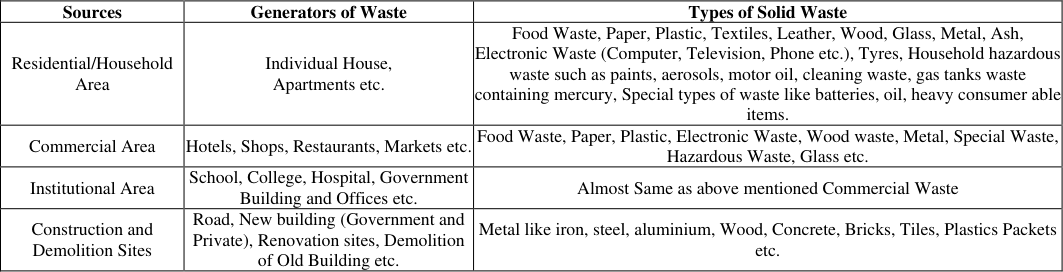 Table 2
 Table 3
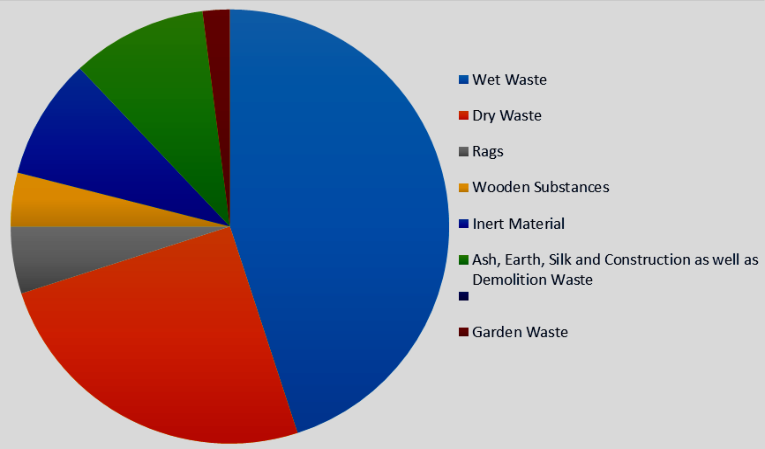 Figure 1
Introduction
The new word used globally to describe non-liquid waste material arising from mining, industrial, commercial, agricultural, and residential operations is solid waste. The term "solid waste" describes undesirable and waste products from homes, sweepings, streets, businesses, and agricultural activities. A variety of plastics, papers, fabrics, rags, and non-biodegradable, recyclable, and flammable materials are mixed together to form this combination. In India's various cities, solid waste is one of the most significant issues. The enormous growth in the production of solid waste, especially in big cities like Chapra, will have a significant effect on the amount of land required for garbage or waste disposal. One of the largest cities and the administrative centre of the Saran district is Chapra. There are 45 wards in the city. The Chapra is 16.96 km 2 in size. Chapra City generates a numerous type of solid waste, including waste from homes, businesses, healthcare facilities, hospitals, industrial areas, animal husbandry facilities, dairy farms, and slaughterhouses. There is no proper sewage system in the city of Chapra, endangering public health and cleanliness. Another solid waste-related issue is the clogging of drains (nallahs) during rainy seasons as a result of poor solid waste management, which causes issues with water logging throughout the city. A significant amount of debris and waste produced daily in the city of Chapra. Chapra City is thought to produce between 87 and 92 tonnes of solid waste every day on average. Urbanization and population growth are correlated with an increase in the annual amount of waste generated. The waste mix of Chapra City has shifted from being primarily organic to being primarily plastic due to the city's rapid population increase, urbanization, development, and changing lifestyles.
Objectives of the Study
The present study has certain specific objectives. These are given below: To examine the existing condition of solid waste in Chapra. To know the processes of solid waste management in Chapra. To examine the socio-economic conditions of the people and their daily solid waste generation and disposal process.
To understand the impact and awareness among people about the solid waste management. To suggest some recommendations of solid waste in aspect of proper management.
Data Source and Methodology
Finding out how solid waste affects the environment in Chapra is the primary goal of this investigation.
Solid Waste in Chapra: Source and Characterization
Waste is becoming increasingly concentrated in megacities like Chapra as a result of shifts in population distribution and consumption patterns. Growth in Chapra's population, urbanisation, and standard of living have all been accompanied by a corresponding rise in the city's garbage output. Here are some numbers to consider about trash collection in Chapra: The generation and forms of solid waste in the city Chapra at the present-day must be understood before research can move further on the other properties of solid waste in the Chapra city. The table illustrate the source of solid waste in different area of Chapra:
Solid Waste Management Scenario in Chapra
The environmental and health risks caused by garbage can be mitigated with an effective waste management system. Similar issues with waste collection, transportation, and disposal are plaguing Chapa as they do in other communities. Annual per capita generation of solid waste is proven to increase in urban regions. Due to the city's distinctive layout and population density, as well as its waste's physical composition, density, temperature and rainfall, activity for recyclable separation, treatment capacity, insufficiency, and limited resources, Chapra's Municipal Corporation has major obstacles. The collection effectiveness of Chapra's current solid waste systems is very low because of a lack of garbage cans and a disorganised management structure. The city as a whole is plagued by the widespread use of open dumping, open waste burning, and the lack of properly built sanitary landfills. This remark claims that no part of Chapra has a suitable system for collecting and disposing of municipal and hazardous trash.
Solid Waste Management Problems in Chapra
Improper solid waste management has been linked to a number of environmental and health problems. The following numbers illustrate the inefficient management of waste collection, which is a direct result of a lack of planning related with waste management. Chapra Municipal Corporation has a small number of garbage trucks and most of them are quite old and need constant maintenance, garbage collection is irregular at best.
Photo 1: Collection bins and transportation vehicles for garbage collection
The solid waste's dampness is severely damaging Chapra's ecology. Everywhere in the city, from Bhagwan Bazar and Gudri to Ramlia Mathia (between the Chapra Junction Railway Station and the Bus Stand), Salempur and Sahebganj to the vicinity of Gandhi Chawk and Mauna Chawk and the Bazar Samiti, the negative effects of improper solid waste dumping on the environment are plain to see. Because of the lack of forethought and financing, the solid waste management situation in Chapra is deteriorating rapidly. The district court, government offices, hospital, school (private and public), market, etc. are all conveniently located in Chapra, making it an attractive choice for residents in the surrounding area. Since the population is increasing rapidly, and the pace of urbanisation is slightly above average, this indicates an increase in solid waste. Open dumping of solid waste is spreading several diseases in the research region, and the city is facing unpleasant solid waste management crises due to inadequate financing and legislation execution.
The research finds that increasing population and a lack of societal awareness are major contributors to the issues of solid waste and the damage it does to the environment. The primary survey found that 92% of Chapra residents are aware of solid waste, with 89% holding the opinion that this type of garbage is a substantial contributor to environmental damage. Sixty-three percent of respondents agreed that the land and biosphere are the primary targets of solid waste. Approximately 74% of Chapra residents are unhappy with the city's garbage management services. The residential neighbourhood has an extremely haphazard waste collection and sorting system. 67% of the population is fine with the fact that there are no buns in the immediate area. Poor sanitation and living conditions are the result of residents' lack of education and to financial resources. Community environmental degradation may be exacerbated by an ineffective solid waste management system. The city's environment has deteriorated and its population has become sick due to the widespread practise of dumping solid trash in illegal locations.
Exiting Solid Waste Management Systems in Chapra:
Challenges Solid garbage collection is provided by Municipal Corporation, Chapra, throughout the city. Numerous problems related to the transportation and disposal of solid waste are caused by inadequate management, an inadequate number of garbage collection vehicles, and a monitoring system. Between Municipal Corporation and Bihar Urban Infrastructure Development Corporation Ltd (BUIDCO), there are numerous problems. The areas next to the shared storage facilities were found to be entirely disorganized. It is also discovered that the majority of individuals discard their trash in open areas, near bodies of water, etc., making cleanup difficult. The infrequency of garbage collection is caused by a lack of vehicles. Chapra Municipal Corporation does not currently have a suitable landfill or place to dispose of waste. In Chapra City, open dumping, open burning of waste, and the disposal of solid waste in unplanned landfill sites are all common practices. Hospital and chemical wastes, among other hazardous waste kinds, are also improperly disposed of. Medical waste, as defined by the World Health Organization, includes all waste resulting from immunizations, COVID-19 testing, and patient care in hospitals and homes. Thus, this includes all of the personal protective equipment (PPE) used by medical personnel, including masks and aprons, as well as caregivers and the patients themselves. It also includes vials, testing reagents, testing swabs, and vaccine needles. It's gigantic in terms of scale. The majority of States and Union Territories in India have outgrown the capacity of the current treatment and disposal facilities. Effective handling of biomedical waste (BMW) is a major priority for the Municipal Corporation of Chapra.
Solid Wate in
Solid Wate in
Conclusion
Poor waste management infrastructure prevents most emerging nations from serving their whole populations.
Outside of Chapra and along the roadsides, trash is regularly deposited. Air pollution is caused by the burning of trash at open dumps, which also clogs drains, encourages the hatching of flies, and can spread infectious diseases. Chapra's current solid waste management system is inadequate because of a lack of resources (both financial and otherwise). Waste collection efficiency is especially low in outlying sections of the city. Dangerous garbage from hospitals and other sources has been categorised as general trash.
Open dumping and open burning have far-reaching consequences and should be discouraged in every way possible. Additionally, societies acknowledge the importance of proper waste management. Solid waste management has been 'Nobody's business' whereas it should be 'Everybody's Concern.' There is a significant difference between enforcers and implementers. Enforcing agencies ought to have a clearer understanding of their responsibilities and begin helping corporations include administrative and financial provisions in their annual plans.
Regularly garbage collection, promotion of 'Reduce, Reuse and Recycle (R-R-R), participation of NGOs and local people are needed. Open burning and open dumping have numerous detrimental effects that make them behaviours that need to be firmly discouraged. Societies also acknowledge the necessity of handling trash in a safe and responsible manner.
Figures and tables from the paper
| Number of household in Chapra | 32585 |
|---|---|
| Number of non-residential premises in Chapra | 5155 |
| Number of administrative ward in Chapra | 45 |
| Estimated quantity of solid waste generated in the local body area per day metric tonnes (TPD) | 87 |
| Quantity of solid waster collected per day (TPD) | 87 |
| Per capita waster collected per day (gm/capita/day) | 43 |
| Quantity of solid waster processed (TPD) | 10 |
| Quantity of solid waster disposed at dumpsite/landfill | 77 |
Table text extracted from the original PDF; superscript letters are shown inline. The original table image is below.
View original table image
| Sl. No. | Waste Types | Average Percentage (%) |
|---|---|---|
| 1. | Wet Waste | 45-50 |
| 2. | Dry Waste | 25-30 |
| 3. | Rags | 05-06 |
| 4. | Wooden Substances | 03-05 |
| 5. | Inert Material | 08-10 |
| 6. | Ash, Earth, Silk and Construction as well as Demolition Waste | 10-12 |
| 7. | Garden Waste | 01-03 (Depends on Heavy Plants) |
| Density of Total Waste | 370-410 kgs/m3 |
Table text extracted from the original PDF; superscript letters are shown inline. The original table image is below.
View original table image
References
8 in the original paper- Ahmad A, Khatoon A. Prevention of environmental degradation by means of solid waste management. Journal of Industrial Pollution Control. 2020;36(2):1545-1552.
- Ahmed SA, Ali SM. People as partners: Facilitating people's participation in public-private partnerships for solid waste management. Habitat International. 2006;30(4):781-796.
- Anand S, Raman E, Rani U. Role of Swachh Bharat Mission In Municipal Solid Waste Management In Patna, Bihar. Advance in Environmental Waste Management and Recycling. 2018;1(1):24-31.
- Ashani PU. Solid Waste Management in India. Infrastructure Report. 2006;26(11):161.
- Singh A, Raj P. Segregation of waste at source reduces the environmental hazards of municipal solid waste in Patna, India. Archives of Environmental Protection. 2018;44(4):96-110.
- Puri A, Kumar M, Johal E. Solid Waste Management in Jalandhar city and its impact on community health. Indian Journal of Occupational and Environmental Medicine. 2008;12(2):76-81.
- Balasubramanian M. Municipal solid waste management in India: status, problems and challenges. Int J Environ Waste Manag. 2018;21(4):290-310.
- Singh AK. Impact of Solid Waste on Water at Chapra (Bihar). International Journal of Fisheries and Marine Research. 2022;4(5):73-81.