
Research article · 2024 · Full text
International Journal of Research in AgronomyThe role of big data in shaping the agribusiness industry
Volume 7(7S) · Pages 116–121 · DOI: 10.33545/2618060x.2024.v7.i7sb.1059 ↗
Research areasBig Data and Business Intelligence
Abstract
Author-writtenThis paper explores the transformative role of big data in business and agribusiness, highlighting its impact on customer relations, operational efficiency, risk management, and product development. The study examines how big data analytics enables businesses to gain deeper insights into consumer behavior, optimize decision-making processes, and enhance overall performance. In the agribusiness sector, big data applications in precision agriculture, weather forecasting, and supply chain optimization are discussed. The paper also addresses the challenges associated with big data implementation, including data volume, velocity, variety, and veracity. By leveraging big data technologies, businesses can improve customer satisfaction, increase operational efficiency, mitigate risks, and drive innovation. However, successful implementation requires careful planning, robust infrastructure, and a skilled workforce. The findings suggest that big data will continue to play a crucial role in shaping the future of business and agribusiness, offering competitive advantages to those who effectively harness its potential.
Summary
Source-checkedPlain-language reading of the full paper, prepared with AI and checked against the text. Each point links to the authors' own words.
Why it matters
- In agribusiness, big data can potentially revolutionize the entire value chain, including production, planning, marketing, and distribution. View evidence ↗
- The use of data analytics in agriculture allows for the optimization of crop yields and the reduction of resource waste. View evidence ↗
The question
- The paper aims to explore how big data transforms business and agribusiness, specifically focusing on its impact on risk management, operational efficiency, product development, and customer relations. View evidence ↗
What they did
- The authors examined the mechanisms by which big data analytics provides insights into consumer behavior and optimizes business decision-making. View evidence ↗
- The analysis specifically discusses the application of big data in weather forecasting, supply chain optimization, and precision agriculture. View evidence ↗
What they found
- Research indicates that 70% of senior business executives view the incorporation of data analytics as very important for maintaining and improving company competitiveness. View evidence ↗
- Studies show that banks utilizing big data analytics outperform those that do not by 4%. View evidence ↗
- Big data applications improve farming decisions by providing accurate and timely weather forecasts based on the analysis of large data volumes. View evidence ↗
- The analysis of crop health, weather, and pest population data enables the early detection of disease and pest outbreaks. View evidence ↗
- Integrating big data into the supply chain allows agribusinesses to accurately trace agricultural products from the farm to the end consumer. View evidence ↗
- The combination of big data and precision agriculture leads to improved environmental sustainability, reduced waste, and increased crop yields. View evidence ↗
- Big data allows livestock farmers to monitor animal well-being by tracking behavior, feeding patterns, and signs of stress or illness. View evidence ↗
- A primary challenge in implementing big data is the massive volume of data, which makes processing and analysis resource-intensive and time-consuming. View evidence ↗
What it means
- The authors conclude that businesses that leverage data-driven insights will be better positioned for sustainable success in competitive markets. View evidence ↗
- The authors state that successful big data implementation is limited by the need for a skilled workforce, robust infrastructure, and careful planning. View evidence ↗
Visual summary
1 visualsIllustrations explain the paper; they do not show study data.
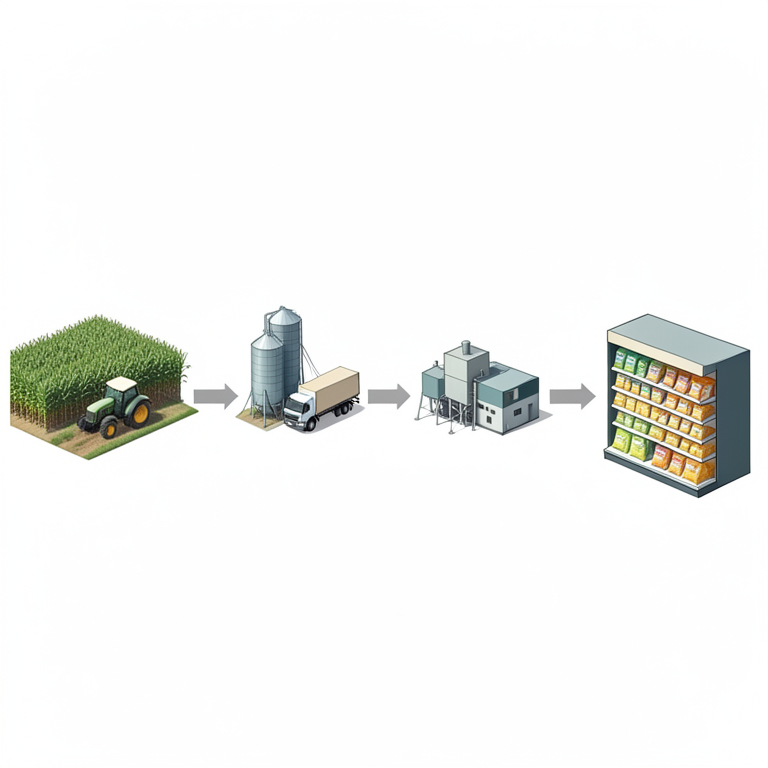
Agribusiness Value Chain Transformation
AI-generated conceptual illustration (Agricultural supply chain from corn fields to a retail grocery store). It explains the idea and does not show study data.
View source evidence ↗Introduction
In today's rapidly evolving digital landscape, the term "big data" has become more than just a concept-it is a game-changer for businesses across industries. From retail to healthcare, big data analytics has proven its worth in providing valuable insights and driving strategic decision-making (Dash et al., 2019) [10] . However, one industry that has particularly harnessed the power of big data is agribusiness. Big data refers to the vast amount of structured and unstructured information generated from various sources such as social media, sensors, machines, and transactions. This data is then analyzed using advanced analytics tools to uncover patterns, trends, and correlations that were previously hidden. The insights derived from big data can revolutionize the way businesses operate, and the agribusiness sector is no exception (Batko & Ślęzak, 2022) [4] . In the agribusiness industry, big data has the potential to transform every stage of the value chain, from crop planning and production to distribution and marketing. By leveraging data analytics, farmers and agricultural companies can optimize crop yields, minimize resource wastage, and improve overall operational efficiency. For instance, with the help of datadriven insights, farmers can make informed decisions about when to plant, irrigate, and harvest, leading to higher crop productivity and reduced costs. Moreover, big data analytics enables agribusinesses to gain a deeper understanding of consumer preferences and market trends. By analyzing vast amounts of data on consumer behavior, purchasing patterns, and market dynamics, companies can tailor their products and marketing strategies to meet the evolving demands of customers. This not only enhances customer satisfaction but also drives revenue growth and competitive advantage (Islam et al., 2022) [16] . However, harnessing the power of big data in agribusiness comes with its own set of challenges. The sheer volume, velocity, and variety of data generated in the industry can be overwhelming. Agribusinesses need to invest in robust data infrastructure, storage, and analytics capabilities to effectively manage and derive meaningful insights from this data deluge. Additionally, ensuring data privacy, security, and compliance with regulatory frameworks is of utmost importance (Saiz-Rubio & Rovira-Más, 2020) [29] .
Big Data and Customer Relations
With the advent of technology and the proliferation of digital platforms, businesses have access to vast amounts of data. This data, commonly referred to as big data, holds immense potential for businesses to understand and engage with their customers in more effective ways. Big data analytics has emerged as a powerful tool for businesses to extract valuable insights from the massive amounts of customer data that they collect (Ahmad & Looy, 2020) [1] . Several studies have highlighted the importance of integrating big data analytics into businesses' customer association strategies. For instance, Amazon and Netflix have successfully integrated big data analytics into their operations to enhance customer retention and maximize profit (Fernando et al., 2018) [12] . By leveraging big data analytics tools, these companies can recommend new and relevant products to customers, ultimately maximizing revenue generation. Similarly, in the e-commerce industry, big data analytics has opened up new avenues of opportunities (Ali et al., 2021) [2] . For example, clustering, association, and prediction techniques derived from big data analytics have proven to be highly useful for businesses in the e-commerce sector. Sales forecasting, customer relationship management, customer retention management, and basket analysis are common data mining models in e-commerce businesses. The exponential rise in digital data has created avenues for industries to understand customer needs, purchasing patterns, and trends (Sabour & Al-Waeli, 2023) [28] . Big data analytics, which utilizes data mining and statistical models to analyze massive datasets, plays a crucial role in helping industries gain insights into customer purchase patterns. Big data analytics enables businesses to evaluate the value of both the firm and the consumer in real time (Khalil et al., 2017) [18] . It allows businesses to gain a deeper understanding of their customers by analyzing massive amounts of data (Islam et al., 2022) [16] . This includes demographic information, purchase history, browsing behavior, social media interactions, and more. Furthermore, the use of big data analytics enables businesses to personalize their interactions with customers. By analyzing customer data, businesses can identify individual preferences and tailor their marketing strategies accordingly. Moreover, big data analytics is instrumental in improving customer relationships. It helps businesses to understand customer preferences and behaviors, enabling them to provide personalized recommendations and offers. Additionally, big data analytics can aid businesses in identifying trends and patterns that may not be apparent on a smaller scale. Within the e-commerce industry, big data analytics has proven to be particularly valuable (Ali et al., 2021) [2] . According to a study, businesses in the e-commerce industry can utilize big data analytics to improve sales forecasting. This can be done by analyzing past sales data, market trends, and customer behavior to make more accurate predictions about future sales. Additionally, big data analytics can be used for customer relationship management in e-commerce businesses. By analyzing customer data, businesses can identify loyal customers, understand their preferences, and tailor their marketing strategies to increase customer satisfaction and retention. Basket analysis is another important data mining model in the e-commerce business. It involves analyzing the items that are frequently purchased together by customers. By analyzing this data, businesses can identify cross-selling opportunities and create personalized recommendations for customers. Studies have further highlighted that the integration of big data techniques in E-commerce web applications has made a significant impact on the overall performance and success of businesses in the industry.
Big Data and Operational Efficiency
The role of big data in data-driven decision-making by businesses has become increasingly important in today's rapidly changing world. There is strong evidence that business performance can be improved substantially through data-driven decision-making (Provost & Fawcett, 2013) [25] . According to research, big data technologies and data science techniques based on big data play a crucial role in enhancing decision-making processes. For example, companies can process vast amounts of data to gain a better understanding of their competitive environment. The use of big data enables businesses to analyze and extract valuable insights from large, complex datasets, which can provide a competitive advantage. It was found in a study that firms that effectively utilize big data are more likely to make informed and strategic decisions, leading to improved performance. Additionally, big data analytical intelligence has been instrumental in data-driven decisionmaking (Bag, 2023) [3] . For instance, the integration of big data analytical intelligence with business processes has enabled greater mass customization ability and improved customer relationship performance. Furthermore, empirical research confirms the advantages of data-driven decisionmaking and has identified a positive association with firm performance (Berner et al., 2014) [5] . Furthermore, big data companies are set to change traditional business practices by providing more accurate predictions, better decision-making capabilities, and precise interventions rather than relying solely on experience and intuition. The incorporation of data analytics is crucial for businesses to sustain and improve their competitiveness (Gökalp et al., 2021) [13] . In summary, the role of big data in data-driven decision-making is integral to businesses' success in today's competitive landscape. According to recent research, 70% of senior business executives indicate that incorporating data analytics is very important to sustain and improve their companies' competitiveness. The integration of big data analytical intelligence with business processes allows for greater customization abilities and improved customer relationships. Businesses that incorporate data analytics and big data technologies in their decision-making processes can enhance operational efficiencies and gain a competitive advantage (Gökalp et al., 2021) [13] . Moreover, the use of big data can enable businesses to make real-time decisions, adapt to changes in the market, and identify new growth opportunities.
Big Data and Risk Management
In recent years, the emergence of big data analytics has significantly impacted various industries, including risk management in businesses. Numerous studies have shown a positive link between the application of big data technologies and business performance, particularly in the banking industry (Daori et al., 2022) [9] . According to several studies, banks that adopt big data analytics outperform non-banks by 4%. In the banking industry, big data analytics plays a crucial role in identifying risks that may pose a threat to the bank's stability and security. Furthermore, big data analytics can be used to detect and prevent fraudulent activities. Overall, the use of big data in risk management enables businesses to improve their ability to identify and mitigate risks (Sharma et al., 2023) [30] . One of the ways big data enhances risk management is by solving the issue of information asymmetry (Sun et al., 2020) [31] . In traditional risk management, businesses often face challenges in acquiring accurate and timely information regarding potential risks. This information asymmetry can lead to inefficient risk-based pricing and decision-making. However, with the utilization of big data analytics, businesses can overcome this challenge. Big data analytics provides businesses with the ability to collect, verify, and analyze vast amounts of data, thus refining the effectiveness of risk pricing mechanisms. Additionally, big data analytics can aid in the collection and verification of data for credit risk estimation and fraud detection. A study found that technology for mining big data has significant implications for risk management and fraud detection (Sun et al., 2020) [31] . Moreover, big data analytics also improves data-driven decision-making in risk management. Organizations that leverage big data analytics have access to a wealth of information that can help them make more informed and strategic decisions (Kim & Chun, 2019 [19] . Furthermore, big data analytics allows businesses to enhance operational efficiency by identifying patterns and trends in data that can lead to process improvements and cost savings (Kim & Chun, 2019) [19] . One of the benefits of adopting big data analytics in risk management is the ability to identify trends and potential risks quickly and efficiently (Ding, 2021). A study emphasizes the speed and efficiency of identifying trends and potential risks as significant advantages of business analytics in risk management. It was also highlighted that big data analytics enables businesses to mitigate risk drivers such as credit risk, forecast errors, and environmental risks (Chehbi-Gamoura, 2018) [8] .
Big Data and Product Development
Big data plays a crucial role in the product development process for businesses, enabling them to make informed decisions and create innovative products. One way big data is utilized in product development is by gathering and analyzing customer expectations and responses to new products (Wang, 2019) [36] . This allows businesses to evaluate whether their new product meets the needs and preferences of their target market. For instance, a study found that analyzing customer feedback through big data helped companies identify areas for improvement and make necessary adjustments to their product development strategy. Another aspect of big data's role in product development is its ability to provide businesses with valuable insights into market trends and consumer behavior. By analyzing large datasets, businesses can identify patterns and trends that can inform their product development strategies. For example, a study found that analyzing big data allowed businesses to identify consumer preferences and tailor their product offerings accordingly (Verhoef et al., 2017) [35] .
Furthermore, big data analytics can also be used in the development of personalized products and services. By analyzing customer data, businesses can gain a deeper understanding of individual preferences and behaviors, allowing them to customize their products and services to meet specific customer needs and preferences (Verhoef et al., 2017) [35] . The use of big data in product development is not limited to customer feedback and market trends. It can also be used to optimize the manufacturing and supply chain processes. For instance, studies suggest that by leveraging big data analytics, businesses can identify bottlenecks and inefficiencies in their manufacturing processes, leading to faster production times and reduced costs. In addition to manufacturing, big data can also play a role in supply chain management. By analyzing large datasets of supply chain data, businesses can identify areas for improvement and optimize their supply chain processes. (Shahid & Sheikh, 2021) [33] . Additionally, big data can assist businesses in managing logistics and inventory more effectively. For example, by analyzing real-time data on transportation and warehouse operations, businesses can make more informed decisions regarding inventory levels, replenishment strategies, and distribution routes, leading to improved efficiency and cost savings (Runtuk et al., 2022) [27] . The application of big data in product development is also beneficial for the fashion industry (Pang et al., 2021) [24] . Big data analytics provides valuable insights into consumer trend forecasting, consumer experience, and consumer engagement. By analyzing consumer sales data collected from real retailers, fashion businesses can gain a deeper understanding of their target markets and stay ahead of their competitors. Big data analytics allows fashion companies to track consumer preferences and behaviors in real time, enabling them to make timely adjustments to their product offerings and marketing strategies. Overall, the use of big data in product development offers businesses a wealth of opportunities to drive innovation, optimize processes, and meet customer needs (Wang, 2019) [36] .
Big Data and the Agribusiness Industry
The agribusiness industry is undergoing significant transformations due to advancements in technology, with one of the most impactful being the utilization of big data. Big data refers to the vast amounts of data that are collected, processed, analyzed, and used to drive decision-making in various industries. In the context of the agribusiness industry, big data plays a crucial role in optimizing agricultural practices, increasing productivity, and improving overall efficiency (Hou et al., 2022) [15] . One area in which big data is playing a significant role in the agribusiness industry is precision agriculture (Bhunia, 2019) [6] . Precision agriculture is an approach that leverages data science and big data technology to make informed and timely decisions in agricultural practices. In particular, big data is being used to collect and analyze agricultural data such as purchasing inputs, feeding, seeding, and the use of fertilizers. Furthermore, the integration of the Internet of Things into agribusiness has bolstered the monitoring and recording of important business events. Additionally, big data is being utilized in the agribusiness industry to optimize the supply chain of agricultural products (Wang & Cai, 2022) [37] . One of the main sources of big data in agribusiness is weather data. Weather data is crucial in the agricultural sector as it helps farmers make informed decisions about when to plant, irrigate, and harvest their crops. Moreover, accurate weather forecasts enable farmers to minimize the risk of crop damage and maximize the yield potential. By collecting and analyzing large volumes of weather data, big data applications can provide accurate and timely weather forecasts that assist farmers in making better-informed decisions regarding their farming practices. In addition to weather data, big data is also being utilized in the agribusiness industry to optimize irrigation systems. The ability to collect and analyze various data, such as soil moisture levels, crop growth patterns, and weather forecasts, allows farmers to implement precision irrigation techniques that match the specific needs of their crops. This not only reduces water wastage but also ensures that crops receive the appropriate amount of water for optimal growth. Furthermore, big data is revolutionizing pest and disease management in the agribusiness industry. By collecting and analyzing data on pest populations, crop health, weather conditions, and other relevant factors, big data applications can provide early detection of potential pest outbreaks or disease outbreaks. This early detection allows farmers to take proactive measures to prevent or mitigate the spread of pests and diseases, minimizing crop losses and reducing the need for pesticide usage. In addition to optimizing farming practices, big data is also being used to enhance the traceability and transparency of agricultural products. By integrating big data technology into the supply chain, agribusinesses can accurately track and trace the journey of agricultural products from farm to consumer. This ensures that products are sourced from reliable and sustainable farms, which promotes consumer trust and confidence in the quality and safety of agricultural products. Another way in which big data plays a role in the agribusiness industry is in the realm of market analysis and prediction. By analyzing market data, consumer trends, and social media sentiment, big data applications can provide agribusinesses with valuable insights into market demand and preferences (Koshkarov & Koshkarova, 2019) [21] . These insights can be used to develop targeted marketing strategies, optimize production and distribution processes, and make informed decisions about product development and innovation. Overall, big data is a powerful tool for the agribusiness industry, offering numerous benefits and opportunities for optimization and improvement. For example, big data technology enables real-time collection of data and parameters in agricultural production and management activities (Sun et al., 2022) [32] . This real-time data collection allows for more accurate and efficient monitoring of crops, livestock, and other agricultural processes. Furthermore, big data facilitates predictive analytics, whereby historical data combined with current data is used to forecast future trends and outcomes in the agribusiness industry (Bhunia, 2019) [6] . Big data is revolutionizing the agribusiness industry by enhancing various aspects of agricultural practices (Hou et al., 2022) [15] . One of the key ways in which big data is playing a role in the agribusiness industry is through the use of precision agriculture (Bhunia, 2019) [6] . Precision agriculture, also known as smart farming, involves the use of advanced technologies to monitor and manage agricultural practices with precision and efficiency. This includes the use of sensors, drones, and satellite imagery to collect data on soil moisture levels, crop health, and weather patterns. This data is then analyzed using big data techniques to gain insights and make informed decisions regarding crop planting, irrigation, fertilizer application, and pest control. The use of precision agriculture and big data in agribusiness can result in increased crop yields, reduced resource wastage, and improved environmental sustainability. Cloud services provide a flexible and scalable platform for storing and analyzing large volumes of agricultural data. This allows agribusinesses to access and process data from various sources, such as weather stations, machinery sensors, market databases, and historical records, in real time. This real-time data analysis enables agribusinesses to make timely and informed decisions, such as adjusting planting schedules based on weather forecasts or optimizing irrigation based on soil moisture data. Furthermore, big data technology has also revolutionized the rental services in the agricultural machinery sector. Through the integration of big data, agribusinesses can optimize machinery rental services by analyzing usage patterns and maintenance requirements. This increases efficiency by ensuring that machinery is available when needed and reducing downtime due to maintenance issues. Through the combination of big data and digital technology, agribusinesses can now access precision machinery rental services that are tailored to their specific needs. For example, by analyzing data on field size, soil characteristics, and crop type, agribusinesses can determine the most suitable types of machinery for efficient cultivation and resource management. Big data has further played a role in the agribusiness industry through optimizing input and transportation scheduling. By harnessing the power of big data, agribusinesses can gain a competitive edge in the market. The application of big data technology in the agribusiness industry has been instrumental in improving crop yields, reducing resource wastage, and promoting environmental sustainability (Wang & Cai, 2022) [37] . In addition to precision farming, big data has also revolutionized the field of livestock management in the agribusiness industry. Livestock farmers can now utilize big data technology to monitor the health and well-being of their animals. This includes tracking feeding patterns, monitoring behavior, and detecting any signs of illness or stress. Furthermore, big data analysis has enabled predictive modeling in livestock management. This allows farmers to anticipate and proactively address issues such as disease outbreaks, feed shortages, or climatic changes that may impact livestock health and productivity. Overall, big data is revolutionizing the agribusiness industry by enabling more informed decision-making, improving efficiency and productivity, reducing risks, and gaining valuable insights into consumer behavior. In conclusion, big data has transformed the agribusiness industry by providing new opportunities and solutions. This technology has greatly enhanced the ability of agribusinesses to make data-driven decisions, optimize supply chains, improve productivity, and understand consumer behavior. The application of big data in the agribusiness industry has revolutionized many aspects of the sector.
Big Data Challenges in Business
The use of big data in business has become increasingly prevalent in recent years, offering valuable insights and opportunities for decision-making. However, the application of big data in business also presents several challenges that need to be addressed. One of the main challenges in big data applications in business is the sheer volume of data. Analyzing and processing large volumes of data can be time-consuming and resource-intensive, requiring advanced technologies and infrastructure (Sivarajah et al., 2017) [34] . Additionally, the velocity at which data is generated poses another challenge. Real-time processing and analysis of streaming data can be complex and require sophisticated algorithms and tools to handle the high velocity of data (Kolajo et al., 2019) [20] . Moreover, the variety of data is another significant challenge in big data applications. Different types of data such as structured, unstructured, and semi-structured data need to be integrated and analyzed together to gain comprehensive insights (Sivarajah et al., 2017) [34] . Furthermore, the veracity of the data is another challenge in big data applications in business. Verifying the accuracy and reliability of the data can be difficult, as big data often comes from diverse sources with varying levels of quality and consistency (Oussous et al., 2018) [23] . Another challenge in big data applications is data quality. Ensuring the accuracy, completeness, and consistency of the data is crucial for reliable analysis and decision-making. Data validation and data cleansing are essential techniques used to address this challenge (Cai & Zhu, 2015) [7] . Additionally, the high dimensionality of big data poses challenges in terms of feature engineering and data reduction. Reducing the dimensionality of data and extracting meaningful features from high-dimensional datasets can be complex and time-consuming (Czarnowski & Jędrzejowic, 2018) [17] . Furthermore, data privacy and security present significant challenges in the application of big data in business. Protecting the privacy and security of sensitive information is essential to maintaining trust and complying with regulations (Jain et al., 2016). To tackle these challenges, various techniques and tools have been developed. These include text analytics, machine learning, predictive analytics, data mining, statistics, and natural language processing.
Conclusion
In conclusion, the potential of Big Data in both business and agribusiness cannot be underestimated. As we have explored throughout this paper, industry experts are harnessing the power of data to gain valuable insights, make informed decisions, and drive sustainable success. With the ability to collect and analyze massive amounts of data, businesses can uncover patterns, trends, and correlations that were previously hidden. This enables them to optimize operations, streamline processes, and enhance overall efficiency. In the world of agribusiness, Big Data offers immense opportunities to improve crop yields, optimize resource allocation, and mitigate risks (Bag, 2023) [3] . Moreover, embracing Big Data allows businesses to better understand their customers, their preferences, and their behaviors. This invaluable information enables companies to tailor their products and services to meet customer needs, improve customer satisfaction, and ultimately drive revenue growth (Islam et al., 2022) [16] .
However, it is important to note that the successful implementation of Big Data initiatives requires careful planning, robust infrastructure, and a skilled workforce. Businesses must invest in data management systems, analytics tools, and talent to ensure the accurate collection, storage, and analysis of data (Luna et al., 2014) [22] . As we look to the future, it is clear that Big Data will continue to play a crucial role in shaping the business and agribusiness landscapes. Those who embrace this potential and leverage data-driven insights will be well-positioned for sustainable success in an increasingly competitive and dynamic marketplace.
References
26 in the original paper- Ali M, Yasmine F, Mushtaq H, Sarwar A, Idrees A, Tabassum S, et al. Customer Opinion Mining by Comments Classification using Machine Learning; c2021 Jan 1. Available from: https://scite.ai/reports/10.14569/ijacsa.2021.0120547
- Bag S. From resources to sustainability: A practicebased view of net zero economy implementation in small and medium business-to-business firms; c2023 May 2. Available from: https://scite.ai/reports/10.1108/bij-01-2023-0056
- Bhunia GS. Horticulture Development in India: Issues and Scenario of Space Technology. 2019 Aug 21. Available from: https://scite.ai/reports/10.33552/wjass.2019.03.000555
- Cai L, Zhu Y. The Challenges of Data Quality and Data Quality Assessment in the Big Data Era. Data Science Journal. 2015;14(0):2. DOI: https://doi.org/10.5334/dsj2015-002
- Dash S, Shakyawar SK, Sharma M, et al. Big data in healthcare: management, analysis and future prospects. J Big Data. 2019;6:54. DOI: 10.1186/s40537-019-02170
- Fernando Y, Chidambaram RR, Wahyuni-TD IS. The impact of Big Data analytics and data security practices on service supply chain performance. 2018 Nov 29. Available from: https://scite.ai/reports/10.1108/bij-072017-0194
- Gökalp MO, Gökalp E, Kayabay K, Kocyigit A, Eren PE. The development of the data science capability maturity model: A survey-based research; c2021 Sep 15. Available from: https://scite.ai/reports/10.1108/oir10-2020-0469
- Islam KF, Rahman M, Hossain SA. Local Inventory Demand Forecasting of E-Commerce with Mapreduce Framework; c2022 Nov 17. Available from: https://scite.ai/reports/10.53808/kus.2022.icstem4ir.008 2-se
- Czarnowski I, Jędrzejowicz P. An Approach to Data Reduction for Learning from Big Datasets: Integrating Stacking, Rotation, and Agent Population Learning Techniques. Complexity. 2018;2018:13. DOI: 10.1155/2018/7404627
- Kolajo T, Daramola O, Adebiyi A. Big data stream analysis: A systematic literature review. J Big Data. 2019;6:47. DOI: 10.1186/s40537-019-0210-7
- Koshkarov A, Koshkarova TS. Data-driven approach in digital agriculture: survey of farmers; c2019 Jan 1. Available from: https://scite.ai/reports/10.2991/ispc19.2019.31
- Luna D, Mayan JC, García MJ, Almerares AA, Househ M. Challenges and potential solutions for big data implementations in developing countries. Yearb Med Inform. 2014 Aug 15;9(1):36-41. DOI: 10.15265/IY2014-0012. PMID: 25123719; PMCID: PMC4287095.
- Oussous A, Benjelloun F-Z, Lahcen AA, Belfkih S. Big Data technologies: A survey. Journal of King Saud University -Computer and Information Sciences. 2018;30(4):431-448.
- Pang W, Ko J, Kim SJ, Ko E. Impact of COVID-19 pandemic upon fashion consumer behavior: Focus on mass and luxury products; c2021 Dec 10. Available from: https://scite.ai/reports/10.1108/apjml-03-2021-0189
- Provost F, Fawcett T. Data Science and its Relationship to Big Data and Data-Driven Decision Making; c2013 Mar 1. Available from: https://scite.ai/reports/10.1089/big.2013.1508
- Rejeb A, Keogh JG, Rejeb K. Big data in the food supply chain: A literature review. J Data Inf Manag. 2022;4:33-47. DOI: 10.1007/s42488-021-00064-0
- Runtuk J, Sidjabat F, Jsslynn, Jordan F. Big Data in Supply Chain Management: A Systematic Literature Review. Green Intelligent Systems and Applications. 2022;2:108-117. DOI: 10.53623/gisa.v2i2.115
- Sabour KA, Al-Waeli A. The effect of Blockchain technology as a moderator on the relationship between big data and the risk of financial disclosure (analytical study in the Egyptian and Iraqi stock exchange); c2023 Feb 28. Available from: https://scite.ai/reports/10.15587/17294061.2023.274641
- Saiz-Rubio V, Rovira-Más F. From Smart Farming towards Agriculture 5.0: A Review on Crop Data Management. Agronomy. 2020;10:207. DOI: 10.3390/agronomy10020207
- Sharma S, Singh S, Sharma SS, Negi N. Big Data in Cloud Computing: An Overview; c2023 Apr 30. Available from: https://scite.ai/reports/10.22214/ijraset.2023.49619
- Sun L, Sun H, Cao N, Xiao H, Cao G, Huo W, et al. Intelligent Agriculture Technology Based on Internet of Things; c2022 Jan 1. Available from: https://scite.ai/reports/10.32604/iasc.2022.021526
- Shahid NU, Sheikh NJ. Impact of Big Data on Innovation, Competitive Advantage, Productivity, and Decision Making: Literature Review; c2021 Jan 1. Available from: https://scite.ai/reports/10.4236/ojbm.2021.92032
- Sivarajah U, Kamal MM, Irani Z, Weerakkody V. Critical analysis of Big Data challenges and analytical methods. Journal of Business Research. 2017;70:263276.
- Verhoef PC, Stephen AT, Kannan PK, Luo X, Abhishek V, Andrews M, et al. Consumer Connectivity in a Complex, Technology-enabled, and Mobileoriented World with Smart Products. Journal of Interactive Marketing. 2017;40(1):1-8. DOI: 10.1016/j.intmar.2017.06.001
- Wang G. The Use of Internet of Things and Big Data to Improve Customer Data in Insurance Company; c2019 Dec 15. Available from: https://scite.ai/reports/10.30534/ijeter/2019/047122019
- Wang Q, Cai Y. Analysis on the Construction of Sustainable Operation Mechanism of Agricultural Product Supply Chain under the Background of Wireless Communication and Internet of Things; c2022 Mar 14. Available from: https://scite.ai/reports/10.1155/2022/4539146