
Research article · 2023 · Full text
International Journal of Advanced Chemistry ResearchNew techniques in liquid chromatography for biomarker discovery
Volume 5(2) · Pages 127–130 · DOI: 10.33545/26646781.2023.v5.i2b.214 ↗
Research areasAnalytical Chemistry and Chromatography
Abstract
Author-writtenLiquid chromatography (LC) has evolved significantly, becoming an indispensable tool for biomarker discovery due to its high resolution, sensitivity, and versatility. This review provides an in-depth look at recent advancements in liquid chromatography techniques, focusing on their applications in biomarker discovery. We explore innovations such as ultra-high-performance liquid chromatography (UHPLC), multidimensional chromatography, and hyphenated techniques, discussing their impact on enhancing analytical performance and their contributions to identifying novel biomarkers. We also address the challenges and future directions in this rapidly evolving field.
Summary
Source-checkedPlain-language reading of the full paper, prepared with AI and checked against the text. Each point links to the authors' own words.
Why it matters
- Biomarkers are essential for monitoring therapeutic responses, disease progression, and medical diagnostics, as well as for personalized medicine. View evidence ↗
- Finding reliable biomarkers depends on the availability of analytical techniques that are sensitive, robust, and capable of high-throughput processing. View evidence ↗
- Liquid chromatography (LC), especially when paired with mass spectrometry, is a fundamental tool for biomarker discovery because it can quantify, identify, and separate complex biological molecules. View evidence ↗
The question
- The paper aims to review recent technological advancements in liquid chromatography specifically as they apply to the discovery of biomarkers. View evidence ↗
What they did
- The review examines the impact of multidimensional chromatography, ultra-high-performance liquid chromatography (UHPLC), and hyphenated techniques on analytical performance and biomarker identification. View evidence ↗
What they found
- In the analysis of diclofenac gel, UHPLC was found to reduce analysis time by as much as 80% compared to HPLC without sacrificing resolution. View evidence ↗
- UHPLC allows for the identification of low-abundance biomarkers that conventional HPLC cannot detect due to its superior separation of proteins and peptides. View evidence ↗
- LC-MS is the most common hyphenated technique used for biomarker discovery, merging LC's separation efficiency with the specificity and sensitivity of mass spectrometry. View evidence ↗
- LC-MS has been shown to be capable of quantifying and identifying thousands of proteins within complex biological samples in proteomics applications. View evidence ↗
- LC-NMR is particularly effective for identifying new metabolites and compounds by combining LC separation with the structural elucidation of NMR spectroscopy. View evidence ↗
- The use of machine learning and AI has improved the efficiency and accuracy of identifying novel biomarkers by revolutionizing how complex LC datasets are interpreted. View evidence ↗
What it means
- The authors conclude that hyphenated techniques, MDLC, and UHPLC have increased the confidence in identifying novel biomarkers by improving throughput, sensitivity, and resolution. View evidence ↗
- The authors note that challenges still exist regarding data integration and standardization in the field of liquid chromatography for biomarker discovery. View evidence ↗
Visual summary
1 visualsIllustrations explain the paper; they do not show study data.
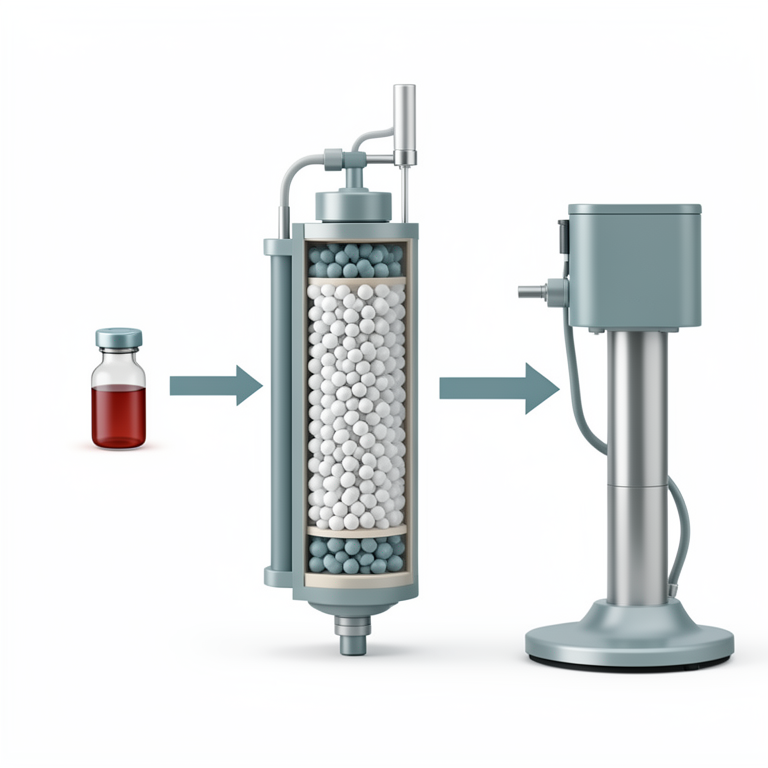
Study overview
AI-generated conceptual illustration (High-performance liquid chromatography (HPLC) system and blood plasma samples). It explains the idea and does not show study data.
View source evidence ↗Introduction
Biomarkers are critical in medical diagnostics, personalized medicine, and therapeutic monitoring, providing valuable insights into disease states, progression, and response to treatment. The discovery of reliable biomarkers requires robust, sensitive, and highthroughput analytical techniques. Liquid chromatography (LC), combined with mass spectrometry (MS) and other detection methods, has become a cornerstone in biomarker discovery due to its ability to separate, identify, and quantify complex biological molecules. This review examines recent advancements in LC techniques and their application in biomarker discovery, highlighting their benefits, limitations, and future potential.
Main objective of paper
The objective of this paper is to review recent advancements in liquid chromatography techniques for biomarker discovery.
Ultra-High-Performance Liquid Chromatography (UHPLC)
Ultra-high-performance liquid chromatography (UHPLC) represents a significant advancement over traditional high-performance liquid chromatography (HPLC). UHPLC utilizes columns packed with sub-2 μm particles and operates at pressures up to 15,000 psi or more. This advancement allows for faster analysis, improved resolution, and increased sensitivity, making UHPLC an indispensable tool in biomarker discovery. The primary advantage of UHPLC over HPLC is its ability to achieve higher separation efficiency in a shorter time frame. The smaller particle size in UHPLC columns provides a larger surface area for interactions between the analysts and the stationary phase, leading to better separation of complex mixtures. Additionally, the high-pressure capability of UHPLC systems enables the use of longer columns or columns with higher resistance, further enhancing separation performance. Studies have demonstrated the significant benefits of UHPLC in various applications. Nováková et al. (2006) [3] compared UHPLC and HPLC for the analysis of diclofenac gel, showing that UHPLC reduced analysis time by up to 80% while maintaining or improving resolution. This study highlighted the efficiency and time-saving potential of UHPLC, which is crucial for high-throughput biomarker discovery. Another study by Desmet PM et al. (2009) [9] evaluated the performance of UHPLC in the analysis of complex biological samples. The researchers found that UHPLC provided superior separation of peptides and proteins, enabling the identification of low-abundance biomarkers that were not detectable using conventional HPLC. The improved sensitivity and resolution of UHPLC are particularly beneficial for proteomics and metabolomics studies, where the detection of subtle changes in biomolecule levels is essential. The increased sensitivity of UHPLC also facilitates the detection of biomarkers in low-abundance samples, such as biological fluids. Want et al. (2010) [4] utilized UHPLC-MS to profile metabolites in human plasma, identifying potential biomarkers for diseases such as cancer and diabetes. The ability of UHPLC to handle small sample volumes and provide high-resolution separations makes it ideal for clinical and biomedical research. The robustness and reproducibility of UHPLC have been demonstrated in several studies. Boichenko et al. (2015) [12] highlighted the use of UHPLC for the analysis of pharmaceuticals in biological matrices. [8] demonstrated the use of UHPLC-MS/MS for the targeted analysis of protein biomarkers in cancer research, showing that the technique could accurately quantify multiple biomarkers in a single run. Despite its advantages, UHPLC does present some challenges. The high pressures required for UHPLC operation can lead to increased wear and tear on the instrument components, necessitating more frequent maintenance. Additionally, the smaller particle size of UHPLC columns can result in higher back pressure, which may limit the choice of mobile phases and require careful optimization of chromatographic conditions. To address these challenges, advancements in UHPLC column technology and instrumentation have been made. The development of more robust column materials and the use of gradient elution techniques have enhanced the durability and performance of UHPLC systems. Furthermore, the integration of automated sample preparation and injection systems has streamlined the workflow, reducing the potential for human error and increasing throughput. In summary, UHPLC has revolutionized liquid chromatography by providing faster, more efficient, and more sensitive separations than traditional HPLC. Its application in biomarker discovery has been particularly impactful, enabling the identification and quantification of low-abundance biomarkers in complex biological samples. The continued advancements in UHPLC technology and methodology are expected to further enhance its capabilities and broaden its applications in various fields of research.
Hyphenated Techniques
Hyphenated techniques refer to the combination of two or more analytical methods to enhance the capabilities of each individual technique, providing comprehensive information about the analytes under investigation. In the context of liquid chromatography (LC), hyphenated techniques such as LC-mass spectrometry (LC-MS), LC-nuclear magnetic resonance (LC-NMR), and LC-infrared spectroscopy (LC-IR) have become powerful tools in biomarker discovery. These techniques leverage the separation capabilities of LC with the detection power of other analytical methods, enabling the detailed analysis of complex biological samples. LC-MS is the most widely used hyphenated technique in biomarker discovery, combining the separation efficiency of liquid chromatography with the sensitivity and specificity of mass spectrometry. This combination allows for the precise identification and quantification of biomolecules, including proteins, peptides, metabolites, and lipids. The integration of ultra-high-performance liquid chromatography (UHPLC) with high-resolution mass spectrometry (HRMS) has further enhanced the capabilities of LC-MS. UHPLC provides high-resolution separations, while HRMS offers accurate mass measurements and high sensitivity. Tandem mass spectrometry (MS/MS) adds another dimension by providing fragmentation data, which aids in the structural elucidation of unknown compounds. For example, Zhang et al. (2013) [8] utilized LC-MS/MS for the targeted analysis of protein biomarkers in cancer research, demonstrating its ability to accurately quantify multiple biomarkers in a single run. LC-MS has been instrumental in metabolomics studies, where the profiling of small molecules and metabolites is crucial for understanding biochemical pathways and disease mechanisms. Want et al. (2010) [4] highlighted the use of LC-MS in metabolite profiling, identifying potential biomarkers for diseases such as cancer and diabetes. The high sensitivity and resolution of LC-MS allow for the detection of low-abundance metabolites, which are often critical for disease diagnosis and monitoring.
In proteomics, LC-MS has enabled the comprehensive analysis of protein expression and post-translational modifications. The use of isotope-labelled standards and multiple reaction monitoring (MRM) has improved the quantification accuracy of protein biomarkers. A study by Aebersold and Mann (2003) [11] demonstrated the application of LC-MS in proteomics, showing its ability to identify and quantify thousands of proteins in complex biological samples. LC-NMR combines the separation power of liquid chromatography with the structural elucidation capabilities of nuclear magnetic resonance spectroscopy. This technique is particularly useful for identifying novel compounds and metabolites, providing detailed information about molecular structures and conformations. LC-NMR offers several advantages, including nondestructive analysis and the ability to study complex mixtures without extensive sample preparation. It is especially valuable in natural product research, where the identification of bioactive compounds is essential. Wolfender et al. (2011) [5] discussed the use of LC-NMR in natural product research, highlighting its role in identifying novel bioactive molecules with potential therapeutic applications.
Despite its advantages, LC-NMR faces challenges such as lower sensitivity compared to LC-MS and the need for larger sample volumes. However, recent advancements in NMR technology, such as cryogenically cooled probes and higher magnetic field strengths, have improved the sensitivity and resolution of LC-NMR, expanding its applications in biomarker discovery. Recent studies have demonstrated the potential of LC-IR in biomedical research. Bellisola and Sorio (2012) [10] highlighted the use of IR spectroscopy in cancer diagnostics, showing its ability to differentiate between normal and cancerous tissues based on their spectral profiles. The integration of LC-IR with other hyphenated techniques, such as LC-MS, can provide a more comprehensive analysis of complex biological samples. Emerging hyphenated techniques continue to push the boundaries of biomarker discovery. The integration of ion mobility spectrometry (IMS) with LC-MS adds an additional dimension of separation, enabling the differentiation of isomeric and conformational variants of biomolecules. Dodds and Baker (2017) [1] discussed the benefits of combining IMS with LC-MS, highlighting its ability to enhance the separation and identification of complex mixtures. Microfluidic and lab-on-a-chip devices are also being integrated with LC and various detection methods, offering high-throughput and point-of-care applications. These miniaturized systems enable the rapid analysis of small sample volumes, making them ideal for clinical diagnostics and personalized medicine.
Innovations in detection methods
Innovations in detection methods have significantly enhanced the capabilities of liquid chromatography (LC) in biomarker discovery, enabling more sensitive, specific, and comprehensive analyses. These advancements have improved the detection and quantification of biomarkers in complex biological samples, facilitating the identification of disease states, progression, and response to treatment. This section discusses key innovations in mass spectrometry, optical detection methods, and data analysis techniques, highlighting their impact on biomarker discovery.
Advances in mass spectrometry
Mass spectrometry (MS) has undergone significant advancements, becoming a powerful tool for the detection and identification of biomolecules. High-resolution mass spectrometry (HRMS), tandem mass spectrometry (MS/MS), and ion mobility spectrometry (IMS) are among the innovations that have enhanced the analytical performance of LC-MS. High-resolution mass spectrometry (HRMS) provides accurate mass measurements with high sensitivity and specificity. Instruments such as Orbitrap and time-of-flight (TOF) analyzers offer exceptional mass accuracy and resolution, allowing for the precise identification of biomarkers even in complex mixtures. HRMS enables the differentiation of isobaric compounds and the detection of low-abundance analytes, which is crucial for biomarker discovery. A study by Zhang et al.
(2013) [8] demonstrated the application of HRMS in the targeted analysis of protein biomarkers in cancer research, showing its ability to accurately quantify multiple biomarkers in a single run. Tandem mass spectrometry (MS/MS) enhances the capabilities of LC-MS by providing fragmentation data that aids in the structural elucidation of unknown compounds. The use of collision-induced dissociation (CID), higher-energy collisional dissociation (HCD), and electron-transfer dissociation (ETD) has improved the identification and characterization of peptides, proteins, and metabolites. MS/MS allows for the differentiation of structural isomers and the identification of post-translational modifications, which are critical for understanding disease mechanisms and identifying potential biomarkers. Aebersold and Mann (2003) [11] highlighted the use of MS/MS in proteomics, demonstrating its ability to identify and quantify thousands of proteins in complex biological samples. Ion mobility spectrometry (IMS) adds an additional dimension of separation to LC-MS, enabling the differentiation of isomeric and conformational variants of biomolecules. IMS separates ions based on their shape, size, and charge, providing complementary information to mass-to-charge ratios. This technique enhances the separation and identification of complex mixtures, improving the resolution and sensitivity of biomarker analysis. Dodds and Baker (2017) [1] discussed the benefits of combining IMS with LC-MS, highlighting its ability to resolve structural isomers and improve the detection of lowabundance biomarkers. [4] used fluorescence-based detection in metabolomics studies to profile metabolites in human plasma, identifying potential biomarkers for diseases such as cancer and diabetes. Chemiluminescence detection relies on the emission of light during a chemical reaction, providing high sensitivity and a low background signal. This method is particularly useful for detecting trace amounts of biomolecules. Enhancements in chemiluminescence detection have focused on improving the efficiency and stability of chemiluminescent reagents, as well as integrating microfluidic platforms for high-throughput analysis. The application of chemiluminescence in immunoassays and DNA hybridization assays has significantly contributed to biomarker discovery, enabling the detection of disease-specific molecules with high accuracy. Surface plasmon resonance (SPR) is an optical detection technique that measures changes in the refractive index near a sensor surface, allowing for the real-time, label-free detection of biomolecular interactions. SPR is highly sensitive and can be used to study binding kinetics and affinity, making it valuable for identifying potential biomarkers and understanding their interactions with other molecules. Advances in SPR technology have improved the sensitivity and resolution of the sensors, enabling the detection of low-abundance analytes. Bellisola and Sorio (2012) [10] highlighted the use of SPR in cancer diagnostics, demonstrating its ability to differentiate between normal and cancerous tissues based on their binding profiles.
Optical detection methods
Optical detection methods
Data analysis and computational tools
Innovations in data analysis and computational tools have played a crucial role in enhancing the capabilities of detection methods in LC. The integration of artificial intelligence (AI) and machine learning algorithms has revolutionized the analysis and interpretation of complex LC datasets, enabling the identification of novel biomarkers with greater accuracy and efficiency. Machine learning algorithms can be used to process large datasets, identify patterns, and classify biomarkers based on their spectral and chromatographic features. These algorithms can also improve the accuracy of peak detection and quantification, reducing the potential for human error. The application of machine learning in metabolomics, proteomics, and genomics has facilitated the discovery of disease-specific biomarkers and provided insights into underlying disease mechanisms. Artificial intelligence (AI) has been employed to develop predictive models for biomarker discovery, enabling researchers to identify potential biomarkers based on existing data. AI-driven approaches can integrate data from multiple omics platforms, such as genomics, proteomics, and metabolomics, providing a comprehensive understanding of disease states. These approaches can also predict the clinical relevance of biomarkers, guiding the development of diagnostic and therapeutic strategies. Advanced bioinformatics tools have been developed to handle the complexity of LC-MS data, enabling the identification and quantification of biomarkers with high precision. Software platforms such as Skyline and MaxQuant offer robust algorithms for processing MS data, identifying peptides and proteins, and performing quantitative analysis. These tools have significantly improved the accuracy and reproducibility of biomarker discovery studies.
Conclusion
Liquid chromatography has evolved significantly, offering advanced techniques and innovations that have transformed biomarker discovery. Advancements in UHPLC, MDLC, and hyphenated techniques have enhanced the resolution, sensitivity, and throughput of LC analyses, enabling the identification of novel biomarkers with greater confidence. Despite challenges related to standardization and data integration, ongoing research and innovation continue to push the boundaries of what is possible with liquid chromatography in biomarker discovery. By addressing these challenges and exploring new directions, liquid chromatography will remain a cornerstone in the quest for reliable and clinically relevant biomarkers.
References
12 in the original paper- Dodds JN, Baker ES. Ion mobility spectrometry: fundamental concepts, instrumentation, applications, and the road ahead. J Am Soc Mass Spectrom. 2017;28(6):987-1003.
- Gilar M, Olivova P, Daly AE, Gebler JC. Twodimensional separation of peptides using RP-RP-HPLC system with different pH in first and second separation dimensions. J Sep Sci. 2005;28(14):1694-1703.
- Nováková L, Solich P, Solichová D, Holčapek M. Advantages of ultra-high performance liquid chromatography over high-performance liquid chromatography: comparison of different analytical approaches during analysis of diclofenac gel. J Sep Sci. 2006;29(17):2433-2443.
- Want EJ, Cravatt BF, Siuzdak G. The expanding role of mass spectrometry in metabolite profiling and characterization. Chembiochem. 2010;6(11):1941-51.
- Wolfender JL, Marti G, Thomas A, Bertrand S. Current approaches and challenges for the metabolite profiling of complex natural extracts. J Chromatogr A. 2011;1218(42):7682-7710.
- Wong MW, Braidy N, Poljak A, Pickford R, Thambisetty M, Sachdev PS. Dysregulation of lipids in Alzheimer's disease and their role as potential biomarkers. Alzheimers Dement. 2014;13(7):810-827.
- Yuan J, Zhang Z, Cai T, Tang Q. Comprehensive twodimensional gas chromatography/time-of-flight mass spectrometry for metabolomics: technical aspects, applications and its future trends. J Chromatogr A. 2012;1255:160-166.
- Zhang H, Liu Q, Zimmerman LJ, Ham AJ, Slebos RJ. Methods for peptide and protein quantitation by liquid chromatography-multiple reaction monitoring mass spectrometry. Mol Cell Proteomics. 2013;10(6)M110.006593
- Desmet PM, Hekkert P. Special issue editorial: Design & emotion. International journal of design. 2009;3(2):16.
- Sorio C, Bellisola G. InfraRed Spectroscopy and Microscopy in Cancer Research. American Journal of Cancer Research. 2012;2(1):01-21.
- Aebersold R, Mann M. Mass spectrometry-based proteomics. Nature. 2003;422(6928):198-207.
- Boichenko AM. Dimension of space. Is it constant?. Phys. J. 2015;1(3):245-54.