
Research article · 2023 · Full text
International Journal of Advanced Chemistry ResearchSoil pH and its influence on nutrient availability and plant health
Volume 5(2) · Pages 68–70 · DOI: 10.33545/26646781.2023.v5.i2a.204 ↗
Research areasAgricultural Science and Fertilization
Abstract
Author-writtenSoil pH is a critical parameter that influences nutrient availability and plant health. This review explores the mechanisms by which soil pH affects nutrient solubility and uptake, the optimal pH ranges for various crops, and strategies for managing soil pH to enhance agricultural productivity. Emphasizing the importance of maintaining appropriate soil pH levels, the review synthesizes current research findings and proposes practical solutions for farmers to optimize soil conditions for plant growth.
Summary
Source-checkedPlain-language reading of the full paper, prepared with AI and checked against the text. Each point links to the authors' own words.
Why it matters
- Soil pH is a vital parameter because it directly impacts how nutrients are available to plants, which in turn affects overall plant health and agricultural productivity. View evidence ↗
- Soil pH, measured on a scale from 0 to 14, determines the chemical form and solubility of nutrients in the soil. View evidence ↗
- Beyond chemistry, soil pH influences the biological health of the soil by affecting the activity of microorganisms responsible for nutrient cycling. View evidence ↗
The question
- The paper aims to examine how soil pH affects nutrient availability and plant health, while proposing management strategies to improve agricultural productivity. View evidence ↗
What they did
- The authors conducted a review synthesizing current research findings on nutrient solubility mechanisms, optimal pH ranges for crops, and pH management strategies. View evidence ↗
What they found
- The optimal range for most nutrient availability is typically between pH 6.0 and 7.0. View evidence ↗
- In acidic soils with a pH below 5.5, toxic elements such as aluminium and manganese become more soluble, which can damage roots and hinder nutrient absorption. View evidence ↗
- Highly acidic soils reduce the availability of essential nutrients like phosphorus, calcium, and magnesium because they precipitate or adsorb onto soil particles. View evidence ↗
- In alkaline soils with a pH above 7.5, micronutrients including iron, manganese, zinc, and copper become less available, often resulting in stunted growth and chlorosis. View evidence ↗
- Phosphorus availability is limited in alkaline soils because it precipitates as calcium phosphate. View evidence ↗
- Applying lime (calcium carbonate) is a standard method used to increase the pH of acidic soils. View evidence ↗
- To lower the pH of alkaline soils, farmers can use acidifying amendments such as organic matter, ammonium sulphate, or sulphur. View evidence ↗
- Sulphur lowers soil pH by being oxidized by bacteria into sulfuric acid, which neutralizes alkalinity. View evidence ↗
What it means
- The authors conclude that regular soil testing is essential for monitoring pH and making informed management decisions. View evidence ↗
- The authors state that using targeted amendments to maintain appropriate pH levels allows farmers to optimize nutrient uptake and improve crop yields for sustainable agriculture. View evidence ↗
Visual summary
1 visualsIllustrations explain the paper; they do not show study data.
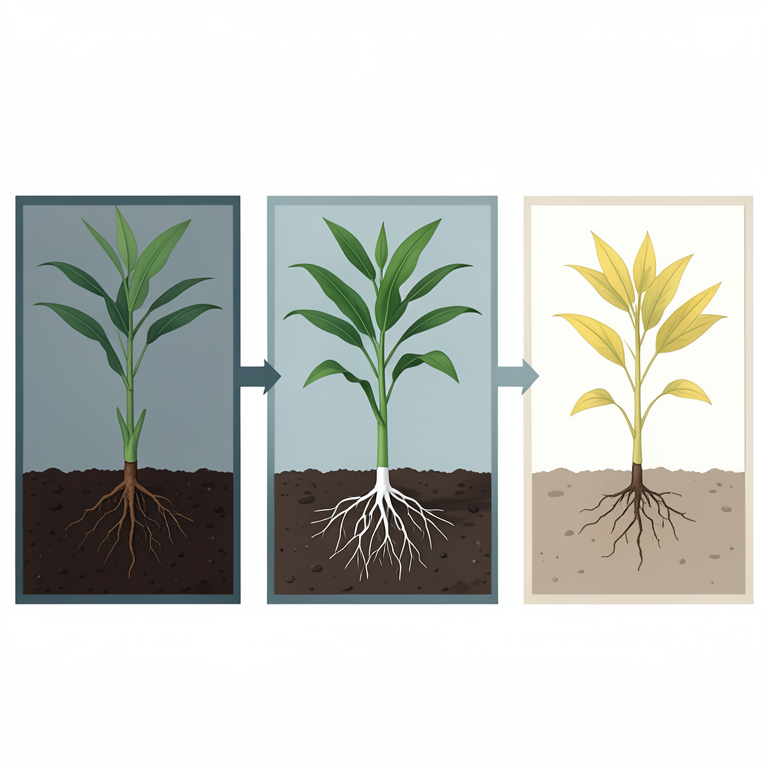
Nutrient Availability vs. Soil pH
AI-generated conceptual illustration (maize plants in soil). It explains the idea and does not show study data.
View source evidence ↗Introduction
Soil pH is a critical factor that significantly influences the availability of nutrients to plants and, consequently, their health and productivity. The pH of soil, which measures its acidity or alkalinity on a scale from 0 to 14, directly affects the chemical forms and solubility of various nutrients. Most nutrients are optimally available to plants in a slightly acidic to neutral pH range, typically between 6.0 and 7.0. Deviations from this range can lead to nutrient deficiencies or toxicities, which can adversely impact plant growth and crop yields. The solubility and availability of essential nutrients such as nitrogen (N), phosphorus (P), potassium (K), and various micronutrients are profoundly affected by soil pH. In acidic soils (pH < 5.5), the solubility of toxic elements like aluminium (Al) and manganese (Mn) increases, which can harm plant roots and reduce nutrient uptake. Simultaneously, essential nutrients like phosphorus become less available due to the formation of insoluble compounds. Conversely, in alkaline soils (pH > 7.5), the availability of micronutrients such as iron (Fe), manganese (Mn), zinc (Zn), and copper (Cu) decreases, leading to deficiencies that can manifest as chlorosis and stunted growth. Maintaining an optimal soil pH is crucial for maximizing nutrient availability and ensuring healthy plant growth. Soil pH affects the microbial activity and biological processes that contribute to nutrient cycling in the soil. For instance, beneficial microorganisms involved in nitrogen fixation and organic matter decomposition thrive best within specific pH ranges. Thus, soil pH not only influences the chemical environment of the soil but also its biological health, which in turn affects plant nutrition. Given the importance of soil pH in agricultural productivity, it is essential to understand the factors that influence soil pH and the methods available to manage it effectively. Soil pH can be affected by various factors including parent material, organic matter content, and agricultural practices such as fertilization and irrigation. Changes in soil pH can be managed through amendments such as lime or sulphur to raise or lower pH, respectively, and through the incorporation of organic matter to buffer pH changes. This review aims to provide a comprehensive understanding of the role of soil pH in nutrient availability and plant health. It will explore the mechanisms by which soil pH influences nutrient dynamics, examine the optimal pH ranges for various crops, and discuss strategies for managing soil pH to enhance agricultural productivity. By synthesizing current research findings, this review seeks to highlight the critical importance of maintaining appropriate soil pH levels for sustainable crop production and propose practical solutions for farmers to optimize soil conditions for plant growth. Understanding and effectively managing soil pH is vital for addressing the challenges of modern agriculture, including soil degradation, climate change, and the need for increased food production.
Objective of the paper
The objective of this paper is to explore the influence of soil pH on nutrient availability and plant health, and to propose strategies for managing soil pH to optimize agricultural productivity.
Soil pH influence on nutrient availability
Soil pH affects the chemical forms and solubility of various nutrients, which in turn influences their availability to plants. In acidic soils (pH < 5.5), the solubility of toxic metals such as aluminium (Al) and manganese (Mn) increases, which can be detrimental to plant health. Aluminium toxicity, in particular, can inhibit root growth and function, reducing the plant's ability to absorb water and nutrients. On the other hand, essential nutrients such as phosphorus (P), calcium (Ca), and magnesium (Mg) become less available in highly acidic soils due to precipitation or adsorption onto soil particles. In alkaline soils (pH > 7.5), the availability of micronutrients such as iron (Fe), manganese (Mn), zinc (Zn), and copper (Cu) decreases due to the formation of insoluble hydroxides and carbonates. This can lead to deficiencies in these essential nutrients, manifesting as chlorosis and other deficiency symptoms in plants. Phosphorus availability is also reduced in alkaline conditions as it precipitates as calcium phosphate. The optimal pH range for nutrient availability is typically between 6.0 and 7.0. Within this range, most essential nutrients are in their most soluble forms and can be readily absorbed by plant roots. For instance, nitrogen (N), in the form of nitrate (NO 3-), is highly available within this pH range, supporting robust plant growth and development. The influence of soil pH on nutrient availability has direct implications for plant health. Plants growing in soils with suboptimal pH levels often exhibit symptoms of nutrient deficiencies or toxicities, leading to reduced growth and yield (Mohammed and Lamma, 2022) [8] . Acidic soils can cause stunted root growth and poor nutrient uptake due to aluminium toxicity and the reduced availability of essential nutrients like phosphorus and calcium. In contrast, alkaline soils can cause deficiencies in micronutrients, leading to symptoms such as interveinal chlorosis (yellowing between the veins of leaves) and reduced photosynthetic efficiency. Research by Marschner (2012) [1] highlighted that maintaining soil pH within the optimal range can significantly enhance nutrient uptake and plant health. For example, studies have shown that liming acidic soils to raise the pH can reduce aluminium toxicity and increase the availability of calcium and magnesium, thereby improving root growth and nutrient absorption.
Strategies for managing Soil pH
Managing soil pH is crucial for optimizing nutrient availability and promoting plant health. Various strategies can be employed to adjust soil pH, depending on whether the soil is too acidic or too alkaline. The application of lime (Calcium carbonate) is a common practice to raise the pH of acidic soils. Lime neutralizes soil acidity by reacting with hydrogen ions to form water and carbon dioxide. This process not only increases soil pH but also supplies calcium and magnesium, essential nutrients for plant growth. The effectiveness of liming depends on factors such as lime quality, soil type, and the initial soil pH. Research by Fageria and Baligar (2008) [2] indicates that regular liming can maintain soil pH within the optimal range, thereby enhancing nutrient availability and crop yields. For soils that are too alkaline, acidifying amendments such as sulphur, ammonium sulphate, or organic matter can be used to lower the pH. Sulphur, when oxidized by soil bacteria, forms sulfuric acid, which neutralizes alkalinity. Ammoniumbased fertilizers also acidify the soil as ammonium is converted to nitrate by soil microorganisms, releasing hydrogen ions in the process. Adding organic matter, such as compost or manure, can improve soil structure and increase microbial activity, which can help to gradually lower soil pH. Regular soil testing is essential for monitoring soil pH and making informed decisions about pH management. Soil tests provide valuable information about the current pH levels and nutrient status of the soil, allowing farmers to apply the appropriate amendments in the correct amounts. Monitoring soil pH over time helps to track changes and adjust management practices accordingly to maintain optimal conditions for crop growth. Certain crops can tolerate a wider range of soil pH levels than others. Crop rotation and selection can be used as a strategy to manage soil pH and nutrient availability. For example, legumes such as clover and alfalfa can improve soil structure and increase organic matter content, which can help buffer soil pH. Additionally, rotating acid-tolerant crops with those that prefer neutral pH can help maintain soil health and productivity.
Conclusion
Soil pH plays a fundamental role in determining nutrient availability and plant health, making it a crucial factor in agricultural productivity and sustainability. This review has highlighted the mechanisms by which soil pH influences nutrient solubility and uptake, affecting the overall growth and development of plants. It is clear that maintaining an optimal soil pH range is essential for maximizing nutrient availability and ensuring healthy plant growth. The optimal pH range for most crops lies between 6.0 and 7.0, where essential nutrients are most readily available, and toxic elements are minimized. The impact of soil pH on nutrient availability underscores the importance of regular soil testing and monitoring. By understanding the current pH levels and nutrient status of their soils, farmers can make informed decisions about the necessary amendments and management practices to optimize soil conditions. Liming acidic soils and acidifying alkaline soils are effective strategies to adjust pH levels and enhance nutrient availability. Additionally, the incorporation of organic matter can help buffer pH changes and improve soil structure, further promoting nutrient uptake and plant health. The influence of soil pH extends beyond chemical properties to include biological health. Soil microorganisms, which play a vital role in nutrient cycling and organic matter decomposition, thrive within specific pH ranges. Therefore, managing soil pH not only affects nutrient availability but also supports a healthy soil ecosystem, contributing to sustainable agricultural practices. As climate change and soil degradation continue to pose challenges to global agriculture, the effective management of soil pH will be increasingly important. Ensuring that soils remain within optimal pH ranges can mitigate the effects of adverse weather conditions, improve water use efficiency, and enhance crop resilience. The integration of traditional soil management techniques with modern technological advancements, such as precision agriculture tools, offers promising approaches to maintaining and improving soil pH levels. In conclusion, soil pH is a critical determinant of nutrient availability and plant health. By maintaining appropriate soil pH levels through targeted amendments and management practices, farmers can optimize nutrient uptake, improve crop yields, and support sustainable agricultural systems. Continued research and innovation in soil pH management will be essential for addressing the evolving challenges of modern agriculture and ensuring food security for future generation.
References
3 in the original paper- Fageria NK, Baligar VC. Ameliorating soil acidity of tropical Oxisols by liming for sustainable crop production. Adv Agron. 2008;99:345-399.
- Mohammed AM, Lamma OA. Studying altitude influence on Uludağ fir, Scots pine and black pine growth and soil properties in Kastamonu. South Asian J Agric Sci. 2022;2(1):47-59.
- Schachtman DP, Reid RJ, Ayling SM. Phosphorus uptake by plants: From soil to cell. Plant Physiol. 1998;116(2):447-453.
Cited by 27
From OpenAlex, OpenCitations and reference lists read by Scinovex
- The pivotal role of arbuscular mycorrhizal fungi in enhancing plant biomass and nutrient availability under drought stress conditions: A global meta-analysis ↗
Fawad Zaman, Muhammad Hassan, Wajid Ali Khattak, Ahmad Ali, Mohamed F. Awad, Fusheng Chen · The Science of The Total Environment · 2024
❝ 24 - Biomass Demineralization: A Critical Need for Future Biorefineries ↗
Leoncio Santiago-Martínez, Styliani Avraamidou, Alejandro Ayala-Cortés, RU Azike, Santanu Bakshi, Chumki Banik et al. · Chemical Reviews · 2026
Biomass contains up to 14 essential elements that serve as nutrients for plant growth and development, including photosynthesis and enzyme functionalities. These elements in different chemical forms (e.g., minerals) constitute the inorganic fraction of biomass and can cause operational issues in thermal and biochemical biomass conversion technologies. In biomass gasification and pyrolysis processes, for instance, inorganics can cause fouling, tar…
❝ 15PDF - Identification of Multiple Extraction Methods to be Used in Extraction of Macro and Micronutrients of Neutral and Alkaline Soils by a Multi-Criteria Decision-Making Technique (TOPSIS) ↗
Mehmet Ali Gürbüz · Journal of soil science and plant nutrition · 2025
Abstract This study aimed to determine the plant-available forms of macronutrients (P, K, Ca, Mg, S) and micronutrients (Fe, Cu, Zn, Mn, B) in neutral and alkaline soils using multiple nutrient extraction methods. It also sought to evaluate the correlations between these methods and routine soil analysis techniques through the TOPSIS multi-criteria decision-making approach. The study focused on identifying the…
❝ 8PDF - Effect of land use change and soil depth on physico-chemical soil properties in Fagita Lekoma district, Northwestern Ethiopia ↗
Sintayehu Yenesew, Amanuel Abate, Achenafi Teklay, Haimanote Kebede Bayabil · Discover Soil. · 2025
Land use Changes have a significant impact on the physico-chemical properties of soil. Understanding the effects of these changes is essential for sustainable land productivity. The purpose of this study was to evaluate how different soil properties were impacted by land use transitions and soil depth in Fagita Lekoma district. Soil samples were collected from cropland, Acacia decurrens , and…
❝ 6PDF - Coordinated systemic regulation maintains plant nutrient homeostasis ↗
Qian-Qian Li, Yi‐Qun Gao · Journal of Plant Physiology · 2026
❝ 4 - Competition between shrubs and grasses in a shrub‒encroached temperate grassland: Implications from nitrogen acquisition ↗
Zhaoxi Li, Yuqiang Tian, Minghua Song, Mengmeng Yu, Xiaobing Li, Yong Zhang et al. · Biology and Fertility of Soils · 2025
❝ 3 - Nanosensors and Their Role in Soil Quality, Moisture, pH, Contaminants, and Other Molecules Detection ↗
Patriciani Estela Cipriano, Matias Siueia Júnior, Rodrigo Fonseca da Silva, Geslin Mars, Rodrigo Fonseca da Silva, Flávio Henrique Silveira Rabêlo · Smart nanomaterials technology · 2025
❝ 3 - Spatial heterogeneity of plant diversity-productivity-carbon nexus in eastern Loess Plateau grasslands ↗
Haiyan Pang, Jia Mi, Yanjun Su, Jincheng Shi, Jincheng Shi, Zonghao Zhou et al. · PLoS ONE · 2026
This study investigated a grassland ecosystem in the eastern part of the Loess Plateau. Based on the field investigation data from 70 typical grassland sample points in Shanxi Province, we systematically analyzed the regional differentiation characteristics. This analysis revealed the relationship between environmental factors and these key ecological indicators, and established a model for prediction. The results showed that: (1)…
❝ 2PDF - The Fungal Microbiome in the Vineyard Ecosystem Plays a Key Role in Shaping the Regional Characteristics of Wine ↗
Chunyan Bai, Yuan Yao, Hua Wang, Hua Li, Ruteng Wei · Foods · 2025
The regional characteristics of wine are shaped by the synergistic effects of vineyard climate conditions, soil microbial microorganisms, soil properties, and grape must microorganisms; however, their role in shaping regional wine quality is still poorly understood. In this study, soil, grape must, and fermentation samples were collected from Cabernet Sauvignon vineyards in five regions of China. High-throughput sequencing technology was…
❝ 2PDF - From Industrial Residue to Agronomic Asset: Gyplime’s Role in Enhancing Wheat Yield and Soil Health ↗
Tejaswini Musani, Rajesh Sharma, Hazel Lim, Ashley Goes, Dennis Plester, Sajeevee S. Sarathchandra et al. · Journal of soil science and plant nutrition · 2026
Abstract Gyplime, a by-product of lithium extraction, contains high levels of gypsum (calcium sulfate) and lime (calcium carbonate), making it a potentially valuable amendment. This study examined gyplime’s effect on wheat growth, yield, nutrient uptake, and soil health. A glasshouse experiment was conducted using two soil types: Shenton Park and Kojonup, and four gyplime rates: 0, 2.5, 5.0, and 10…
❝ 1PDF - Enhancing the recycling and utilization of nitrogen and phosphorus in Rice-fish integrated systems: A pathway to agroecological sustainability ↗
Abdulai Merry Kamara, Dongdong Zhang, Bin Wen, Jianwei Lin, Xugan Wu · Aquaculture · 2026
❝ 1 - Evaluating Hybrid Aspen Plantations for Phytoremediation of Heavy Metals on Former Agricultural Soils ↗
Marju Kaivapalu, Katri Ots, Reimo Lutter, Arvo Tullus, Tea Tullus, Reeno Sopp et al. · Water Air & Soil Pollution · 2026
❝ 1 - Sustainable Soil Management Through Liming: Effects on Soil pH, Carbon Stabilization and Aluminium Transformations ↗
Ieva Mockevičienė, Danutė Karčauskienė, Alvyra Šlepetienė, Monika Vilkienė, Regina Repšienė, Žilvinas Kryževičius et al. · Sustainability · 2026
Soil pH is a key regulator of soil chemical processes, organic matter transformation, and ecosystem functioning in acid soils. This study examines how pH gradients induced by long-term liming affect soil chemical properties, aluminum dynamics, and soil organic carbon (SOC) stabilization in Retisols under plant-derived organic inputs. The study was conducted at six soil pH levels (pHKCl from 3.9–4.0 to…
❝ 1PDF - On-the-Go Prediction of Soil pH Using Generalized Additive Models in Mississippi Delta: A Case Study ↗
Reginald S. Fletcher · Open Journal of Soil Science · 2025
Soil pH is a critical indicator of soil health and fertility, influencing nutrient availability and crop productivity. Leveraging real-time sensor technology allows for high-resolution data collection across diverse agricultural landscapes, yet effective modeling techniques are required to interpret these complex datasets. This study evaluated applying generalized additive models (GAMs) to predict soil pH in Mississippi using data collected from an…
❝ 1PDF - Response of Peking Shallot (Allium ascalonicum L.) to Dolomite and Granular Guano Application on Recovered Lowland Ultisol by Goat Manure ↗
Elara Resigia, Nilla Kristina · Jurnal Agrinika Jurnal Agroteknologi dan Agribisnis · 2025
Shallots are essential for Indonesia's economy and food security. In West Sumatra, cultivating shallots in the highlands is more challenging than in the lowlands. Lowland areas have poor Ultisol soil, but its chemical properties can improve with cultivation. Using organic materials, such as goat manure and granular guano with dolomite, is one solution to this problem. Unfortunately, shallot farmers often…
❝ 1PDF - Environmental Drivers of Culturable Bacterial Diversity in Coastal Sediments of Bhavnagar Coast, Gulf of Khambhat: A Multivariate Statistical Approach ↗
Hardik Giri Gosai, Asha Sharma, Jagriti Patel, Sanjay Lal, Pradeep Mankodi · Thalassas An International Journal of Marine Sciences · 2026
❝ 0 - Acacia decurrens-based rotational agroforestry improves soil properties and promotes sustainable land management in Northwestern Ethiopia ↗
Robel Dessalew Gela, Tadele Amdemariam, Yohannes Misskire, Alebel Melaku · Discover Sustainability · 2026
Soil degradation from erosion and nutrient depletion threatens agricultural sustainability in the Northwestern Ethiopian highlands, undermining global efforts toward sustainable development. Agroforestry systems, particularly those integrating Acacia decurrens under rotational and long-term management, offer a promising strategy for restoring soil fertility. Although A. decurrens –cereal rotational agroforestry is expanding rapidly, its effects on soil properties across depths and its legacy…
❝ 0PDF - Salt-affected soils as an emerging threat for sustainable land management in Raya Kobo Valley, Ethiopia ↗
Endalkachew Fekadu, Amanuel Demlie, Dessale Wasie · Discover Sustainability · 2026
Soil salinity and sodicity pose a significant challenge to sustainable land management in Ethiopia’s arid and semi-arid irrigated regions, affecting vast areas of agricultural land. In the Abuarie-Addisalem irrigation scheme of Raya Kobo Valley, productive farmland has become nonviable due to increasing soil salinization and sodicity. Despite the broader issue of salinization in the Raya Kobo valley, a comprehensive analysis…
❝ 0PDF - Soil Fertility Status of the Lake Liambezi Maize Farm and Implication for Sustainable Cultivation ↗
V. Hepute, J. Abah, G. Kampungu, G. M. Mulonda, N. Mwazi · Sustainability Sciences in Asia and Africa · 2026
❝ 0 - Micronutrient Dynamics in Red Acidic Rice Soils of Eastern India: Linkages to Soil Properties and Agricultural Implications ↗
S. C. Mandal, Goutam Kumar Ghosh · IntechOpen eBooks · 2026
A study was undertaken to evaluate DTPA-extractable micronutrient status in soils under rice-based cropping systems in the red acidic soils of Eastern India. Widespread micronutrient deficiencies in Indian soils have raised concern. This investigation assessed micronutrient availability in selected rice-growing regions. It also evaluated soil fertility and examined the relationship between soil properties and nutrient status. A total of 100…
❝ 0PDF