
Research article · 2023 · Full text
International Journal of Advanced Chemistry ResearchDevelopments in microfluidic devices for point-of-care diagnostics
Volume 5(2) · Pages 101–103 · DOI: 10.33545/26646781.2023.v5.i2b.204 ↗
Research areasMicrofluidic and Capillary Electrophoresis ApplicationsInnovative Microfluidic and Catalytic Techniques InnovationIntravenous Infusion Technology and Safety
Abstract
Author-writtenMicrofluidic devices have revolutionized point-of-care (POC) diagnostics by enabling rapid, accurate, and cost-effective analysis of clinical samples at the site of patient care. This review highlights recent advancements in microfluidic technology, focusing on device fabrication, integration of biosensors, and applications in various medical diagnostics. We discuss the challenges and future directions for enhancing the performance and accessibility of microfluidic POC diagnostic devices.
Summary
Source-checkedPlain-language reading of the full paper, prepared with AI and checked against the text. Each point links to the authors' own words.
Why it matters
- Point-of-care (POC) diagnostics are vital to modern healthcare because they allow for rapid and accessible testing where the patient is located. View evidence ↗
- Conventional lab-based diagnostics are often limited by their need for specialized equipment, skilled staff, and significant time. View evidence ↗
- Microfluidic devices, or lab-on-a-chip systems, provide an alternative by automating and miniaturizing complex lab processes onto one chip. View evidence ↗
The question
- The objective of this review is to examine recent developments in microfluidic devices used for point-of-care diagnostics. View evidence ↗
What they did
- The review focuses on three primary areas: how devices are fabricated, how biosensors are integrated, and their clinical applications. View evidence ↗
What they found
- Standard fabrication methods like photolithography and soft lithography are now supplemented by 3D printing, laser ablation, and injection molding. View evidence ↗
- 3D printing has significantly changed fabrication by allowing for faster prototyping and the ability to customize devices. View evidence ↗
- Injection molding is identified as the most suitable technique for the mass production of these devices. View evidence ↗
- Electrochemical biosensors are commonly integrated because they are highly sensitive, respond quickly, and fit well in miniaturized systems. View evidence ↗
- Optical biosensors, such as those using fluorescence, SPR, and chemiluminescence, are also widely utilized for analyte detection. View evidence ↗
- The development of multiplexed detection allows for several different analytes to be detected simultaneously from one sample. View evidence ↗
- For infectious diseases, these devices combine biosensors, immunoassays, and nucleic acid amplification to identify parasites, bacteria, and viruses. View evidence ↗
- In oncology, microfluidic devices aid in early detection and treatment monitoring by identifying cancer biomarkers and circulating tumor cells in blood. View evidence ↗
- Personalized medicine is supported by devices integrating proteomic analysis and next-generation sequencing to guide individual treatment plans. View evidence ↗
- Key remaining challenges include the need for device standardization, the integration of multiple functions, and ensuring reliability across different clinical environments. View evidence ↗
What it means
- The authors conclude that microfluidic devices have transformed POC diagnostics by making clinical sample analysis faster, more accurate, and more affordable. View evidence ↗
- The authors recommend that future research prioritize the improvement of multiplexing capabilities, specificity, and sensitivity. View evidence ↗
- The authors suggest that incorporating AI and machine learning is a necessary future step to improve decision-making and diagnostic efficiency. View evidence ↗
Visual summary
2 visualsIllustrations explain the paper; they do not show study data.
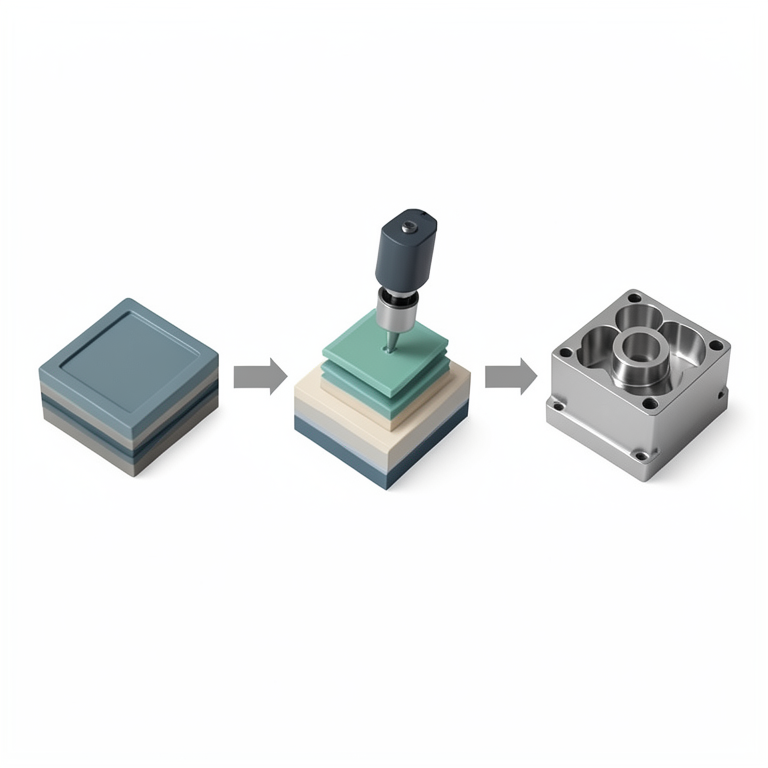
Microfluidic Fabrication Methods
AI-generated conceptual illustration (microfluidic chips). It explains the idea and does not show study data.
View source evidence ↗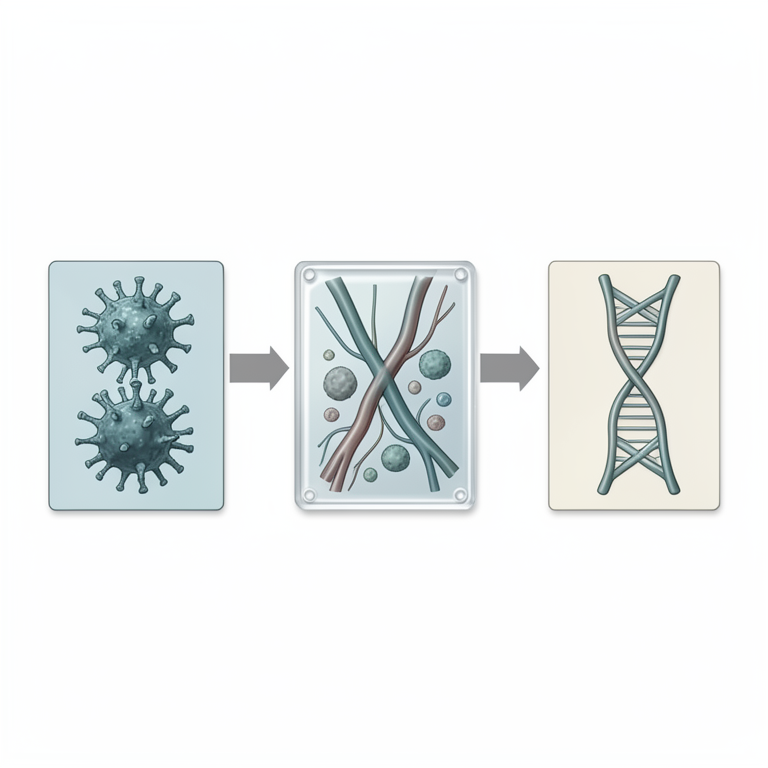
Clinical Applications of POC Devices
AI-generated conceptual illustration (A clear polymer microfluidic chip and biological samples). It explains the idea and does not show study data.
View source evidence ↗Introduction
Point-of-care (POC) diagnostics have become increasingly important in modern healthcare, offering rapid and accessible diagnostic testing at the site of patient care. Traditional laboratory-based diagnostic methods, while accurate, often require significant time, specialized equipment, and skilled personnel. Microfluidic devices, also known as lab-on-achip (LOC) systems, have emerged as a powerful alternative, enabling miniaturization, integration, and automation of complex laboratory processes on a single chip. This review provides an overview of recent developments in microfluidic devices for POC diagnostics, emphasizing advancements in device fabrication, biosensor integration, and clinical applications.
Objective
The objective of this paper is to review recent advancements in microfluidic devices for point-of-care diagnostics.
Advancements in microfluidic device fabrication
The fabrication of microfluidic devices has seen significant advancements, driven by the need for high precision, reproducibility, and scalability. Traditional fabrication methods, such as photolithography and soft lithography, have been supplemented by innovative techniques, including 3D printing, laser ablation, and injection molding. Photolithography remains a cornerstone in microfluidic device fabrication, offering high resolution and precision. This technique involves patterning a photoresist layer on a substrate, followed by etching to create microchannels. Soft lithography, developed as an extension of photolithography, utilizes elastomeric materials like polydimethylsiloxane (PDMS) to create flexible and biocompatible microfluidic structures. These methods allow for the precise control of microchannel dimensions and are suitable for fabricating complex microfluidic networks. 3D printing has revolutionized microfluidic device fabrication by enabling rapid prototyping and customization. Techniques such as stereolithography (SLA) and digital light processing (DLP) can produce intricate microfluidic structures with high resolution. 3D printing allows for the integration of multiple functionalities into a single device, such as fluid handling, mixing, and detection components. Studies by Au et al. (2015) [1] demonstrated the use of 3D printing for creating microfluidic devices with embedded biosensors, highlighting the potential of this technology for developing multifunctional POC diagnostic systems. Laser ablation and injection molding are other notable advancements in microfluidic device fabrication. Laser ablation uses focused laser beams to precisely remove material and create microchannels, offering flexibility in material choice and design complexity. Injection molding, on the other hand, is well-suited for mass production of microfluidic devices. This technique involves injecting molten polymer into a mold to form the desired microstructures, making it ideal for commercial-scale manufacturing. Research by Becker and Gärtner (2008) emphasized the efficiency and scalability of injection molding for producing microfluidic devices with high reproducibility and low cost.
Integration of biosensors in microfluidic devices
The integration of biosensors into microfluidic devices is crucial for enabling real-time, sensitive, and specific detection of analytes. [4] have highlighted the integration of optical biosensors in microfluidic devices for detecting biomarkers in blood and urine samples, demonstrating their applicability in clinical diagnostics. Multiplexed detection is a significant advancement in biosensor integration, enabling the simultaneous detection of multiple analytes in a single sample. This capability is essential for comprehensive diagnostic testing, especially in infectious diseases and cancer diagnostics. Microfluidic devices with multiplexed biosensors use microarrays or microbead-based platforms to capture and detect various analytes. Research by Chin et al. (2011) [3] presented a microfluidic device capable of multiplexed detection of viral RNA, illustrating the potential for rapid and comprehensive infectious disease diagnostics at the POC.
Applications in medical diagnostics
Microfluidic devices have found applications in various medical diagnostics, including infectious diseases, chronic conditions, and personalized medicine. Their ability to provide rapid and accurate results at the POC has transformed patient care and disease management. Infectious disease diagnostics is a critical area where microfluidic devices have made a significant impact. The ability to rapidly detect pathogens at the POC is crucial for controlling outbreaks and guiding treatment. Microfluidic devices for infectious disease diagnostics integrate nucleic acid amplification, immunoassays, and biosensors to detect viral, bacterial, and parasitic infections. For instance, the study by Rodriguez et al. (2015) [7] demonstrated a microfluidic device for the rapid detection of Zika virus RNA using loop-mediated isothermal amplification (LAMP), highlighting the potential for addressing emerging infectious diseases. Chronic diseases such as diabetes, cardiovascular diseases, and cancer require regular monitoring for effective management. Microfluidic devices offer a convenient and reliable solution for monitoring biomarkers associated with these conditions. Glucose monitoring in diabetes management is a well-established application, with microfluidic devices enabling continuous and non-invasive glucose sensing. Additionally, microfluidic devices for cardiac biomarker detection, such as troponin and BNP, provide rapid assessment of cardiovascular health. Cancer diagnostics also benefit from microfluidic devices that can detect circulating tumor cells (CTCs) and cancer biomarkers in blood samples, facilitating early detection and monitoring of treatment response. The work by Lin et al. (2017) [5] on microfluidic devices for CTC isolation and analysis exemplifies the advancements in this field. Personalized medicine aims to tailor medical treatment to individual patients based on their genetic, proteomic, and metabolic profiles. Microfluidic devices play a crucial role in this approach by enabling the rapid and precise analysis of patient-specific biomarkers. Devices that integrate nextgeneration sequencing (NGS) and proteomic analysis provide comprehensive insights into patient health, guiding personalized treatment plans. For example, a study by Qin et al. (2015) [6] demonstrated a microfluidic device for singlecell RNA sequencing, providing valuable data for personalized cancer therapy.
Challenges
Despite significant advancements, several challenges remain in the development and deployment of microfluidic devices for POC diagnostics. These challenges include device standardization, integration of multiple functionalities, and ensuring robust performance in diverse clinical settings. Standardization of microfluidic devices is essential for ensuring reproducibility and reliability across different applications and settings. This involves establishing protocols for device fabrication, testing, and validation. Regulatory approval processes must be streamlined to facilitate the translation of microfluidic technologies from the laboratory to the clinic. Collaborative efforts among researchers, industry, and regulatory bodies are needed to develop standardized guidelines for microfluidic POC diagnostics. Integrating multiple functionalities, such as sample preparation, analysis, and data processing, into a single microfluidic device remains a technical challenge. Advances in microfabrication and materials science are required to develop fully integrated and miniaturized devices that can perform complex diagnostic tasks efficiently. The development of modular microfluidic platforms that allow easy customization and scalability could address this challenge, enabling the rapid adaptation of devices for various diagnostic applications. Ensuring the robust performance of microfluidic devices in diverse clinical settings, including resource-limited environments, is crucial for their widespread adoption. Devices must be designed to operate reliably under varying conditions, such as temperature fluctuations, humidity, and user variability. Additionally, the development of user-friendly interfaces and automated operation systems can enhance the usability of microfluidic POC diagnostics, making them accessible to healthcare providers and patients.
Conclusion
Microfluidic devices have transformed point-of-care diagnostics by enabling rapid, accurate, and cost-effective analysis of clinical samples. Advances in device fabrication, biosensor integration, and clinical applications have paved the way for innovative diagnostic solutions that improve patient care and disease management. Despite existing challenges, continued research and development hold promise for further enhancing the performance and accessibility of microfluidic POC diagnostic devices. By addressing these challenges and exploring new directions, microfluidic technologies have the potential to revolutionize healthcare and contribute to the advancement of personalized medicine. Future research in microfluidic POC diagnostics should focus on improving sensitivity, specificity, and multiplexing capabilities. The integration of advanced materials, such as nanomaterials and biocompatible polymers, can enhance sensor performance and device functionality. Additionally, the incorporation of artificial intelligence (AI) and machine learning algorithms can enable real-time data analysis and decision-making, further improving diagnostic accuracy and efficiency.
References
8 in the original paper- Au AK, Lee W, Folch A. Mail-order microfluidics: evaluation of stereolithography for the production of microfluidic devices. Lab Chip. 2015;15(8):1934-1941.
- Becker H, Gärtner C. Polymer microfabrication methods for microfluidic analytical applications. Electrophoresis. 2008;29(1):23-39.
- Chin CD, Linder V, Sia SK. Commercialization of microfluidic point-of-care diagnostic devices. Lab Chip. 2011;12(12):2118-2134.
- Dutta S, Rangnekar SV, Banks CE. Current trends in microfluidic devices and their commercialization. Anal Methods. 2018;10(24):3099-3123.
- Lin M, Chen J, Lu Y, Zhang Y, Song J, Yang S, et al. High-efficiency isolation and sensitive quantification of rare circulating tumor cells using dual-functional magnetic nanospheres. ACS Nano. 2017;11(1):453-463.
- Qin J, Jones RC, Ramakrishnan R. Studying single gene dynamics in single cells in a microfluidic device. Lab Chip. 2015;14(3):499-508.
- Rodriguez NM, Linnes JC, Fan A, Ellenson CK, Pollock NR, Klapperich CM et al. Paper-based RNA extraction, in situ isothermal amplification, and lateral flow detection for low-cost, rapid diagnosis of Ebola virus disease. Anal Chem. 2015;87(15):7872-7879.
- Wang S, Xu F, Demirci U. Advances in developing HIV-1 viral load assays for resource-limited settings. Biotechnol Adv. 2014;32(2):438-449.