
Research article · 2023 · Full text
International Journal of Advanced Chemistry ResearchChemical reactions involved in plant cell wall biosynthesis
Volume 5(2) · Pages 104–108 · DOI: 10.33545/26646781.2023.v5.i2b.206 ↗
Research areasPolysaccharides and Plant Cell WallsPlant Pathogens and Fungal DiseasesPlant Molecular Biology Research
Abstract
Author-writtenPlant cell wall biosynthesis is a complex process involving various chemical reactions that result in the formation of a dynamic and structurally diverse matrix. This matrix plays crucial roles in plant growth, development, and defense. This review delves into the chemical reactions involved in synthesizing the primary components of plant cell walls, including cellulose, hemicellulose, pectin, and lignin. We explore the enzymatic pathways and regulatory mechanisms that govern these biosynthetic processes and discuss recent advancements in our understanding of plant cell wall biosynthesis through biochemical and genetic studies.
Summary
Source-checkedPlain-language reading of the full paper, prepared with AI and checked against the text. Each point links to the authors' own words.
Why it matters
- The plant cell wall is a vital, dynamic structure that supports plant growth and defense by providing mechanical strength, defining cell shape, and blocking pathogens. View evidence ↗
- Plant cell walls are primarily composed of four materials: cellulose, hemicellulose, pectin, and lignin, which are created via distinct biochemical pathways. View evidence ↗
- Studying how these cell wall components are synthesized is important for improving agricultural methods and expanding biological knowledge. View evidence ↗
The question
- The goal of this review is to examine the chemical reactions that drive the biosynthesis of plant cell walls. View evidence ↗
What they did
- The author reviews the synthesis of the four primary cell wall components: cellulose, hemicellulose, pectin, and lignin. View evidence ↗
- The review analyzes enzymatic pathways, regulatory mechanisms, and recent findings from genetic and biochemical research. View evidence ↗
What they found
- Cellulose is synthesized by the cellulose synthase complex (CSC), which consists of CesA proteins located in the plasma membrane. View evidence ↗
- CesA enzymes use UDP-glucose as a substrate to create β-1,4-linked glucan chains through polymerization. View evidence ↗
- Hemicelluloses are synthesized in the Golgi apparatus using glycosyltransferase enzymes to transfer sugar residues. View evidence ↗
- Pectin biosynthesis also takes place in the Golgi apparatus, utilizing glycosyltransferases to build pectic polysaccharide chains. View evidence ↗
- Lignin is produced through the oxidative polymerization of monolignols, which originate from the phenylpropanoid pathway. View evidence ↗
- The first committed and key regulatory step of lignin biosynthesis is the deamination of phenylalanine into cinnamic acid by the enzyme PAL. View evidence ↗
- Lignin polymerization is driven by peroxidases and laccases that create free radicals, which then couple non-enzymatically. View evidence ↗
What it means
- The author concludes that genetic engineering of these biosynthetic pathways can improve plant traits, enhance biofuel production via better biomass digestibility, and create new industrial uses. View evidence ↗
- A comprehensive understanding of cell wall biosynthesis is essential for sustainable agriculture and the efficient use of plant biomass. View evidence ↗
Visual summary
1 visualsIllustrations explain the paper; they do not show study data.
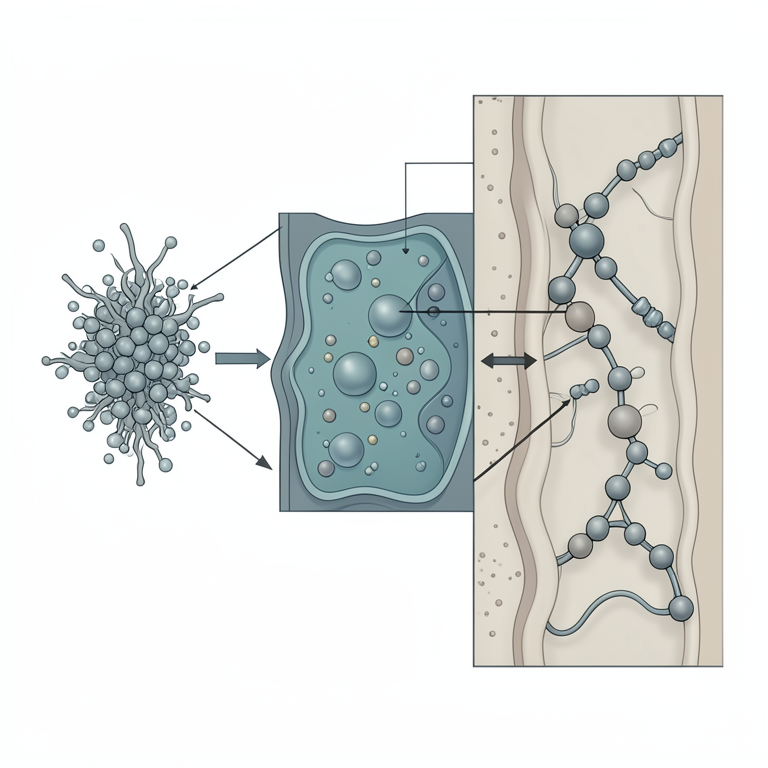
Overview of Plant Cell Wall Component Synthesis
AI-generated conceptual illustration (plant cell). It explains the idea and does not show study data.
View source evidence ↗Introduction
The plant cell wall is a complex and dynamic structure that is essential for plant growth, development, and defense. It provides mechanical support, determines cell shape, mediates cell-cell interactions, and acts as a barrier against pathogens. The primary components of plant cell walls include cellulose, hemicellulose, pectin, and lignin, each synthesized through specific biochemical pathways involving a series of chemical reactions. Understanding these biosynthetic processes is crucial for advancing our knowledge of plant biology and improving agricultural practices.
Main objective
The objective of this paper is to review the chemical reactions involved in plant cell wall biosynthesis.
Once initiated, cellulose chains are elongated by the continuous addition of glucose units. The elongating cellulose chains are extruded from the plasma membrane into the cell wall, where they associate with other cellulose chains to form microfibrils. These microfibrils are further organized into a network that contributes to the structural integrity of the cell wall. The orientation of cellulose microfibrils is influenced by the cytoskeleton, particularly microtubules. Microtubules guide the movement of CSCs along the plasma membrane, determining the direction of cellulose deposition. Research by Paredez et al. (2006) [8] demonstrated that disrupting microtubule organization leads to altered cellulose microfibril orientation, indicating the critical role of microtubules in directing cellulose synthesis. Regulation of cellulose biosynthesis occurs at multiple levels, including gene expression, enzyme activity, and posttranslational modifications. The expression of CesA genes is tightly regulated by developmental cues and environmental factors. For instance, light, hormones, and mechanical stress can influence the expression levels of CesA genes, thereby modulating cellulose synthesis.
Post-translational modifications, such as phosphorylation, also play a role in regulating the activity of CesA proteins. Taylor (2007) [13] reported that phosphorylation of specific residues in CesA proteins affects their stability and interaction with other components of the CSC, thereby influencing cellulose synthesis. Recent advances in structural biology have provided insights into the architecture and function of the CSC. Cryoelectron microscopy (cryo-EM) studies have resolved the structure of the CSC at near-atomic resolution, revealing the arrangement of CesA subunits and the path of the cellulose chain through the complex (Purushotham et al., 2020) [9] . These structural insights have advanced our understanding of the molecular mechanisms underlying cellulose biosynthesis. In addition to genetic and biochemical studies, computational modelling has been employed to understand the dynamics of cellulose synthesis. Computational models simulate the polymerization process, predict the behavior of CSCs, and provide insights into the factors affecting cellulose microfibril formation. Understanding the biosynthesis of cellulose has significant implications for various applications, including improving crop traits, developing biofuels, and producing sustainable materials. Genetic engineering approaches aimed at modifying CesA genes or regulatory pathways hold potential for enhancing cellulose production and altering cellulose properties to meet specific industrial needs. In summary, cellulose biosynthesis in plant cell walls involves a complex interplay of enzymatic activities, regulatory mechanisms, and structural organization. The CSC, composed of CesA proteins, catalyzes the polymerization of glucose units to form cellulose chains, which are extruded into the cell wall and organized into microfibrils. The process is tightly regulated by gene expression, post-translational modifications, and cytoskeletal dynamics. Advances in structural biology and computational modelling have provided deeper insights into the molecular mechanisms of cellulose biosynthesis, offering potential strategies for optimizing cellulose production for various applications.
Hemicellulose biosynthesis
Hemicelluloses are a diverse group of polysaccharides that play a crucial role in the structural integrity and functionality of plant cell walls. Unlike cellulose, hemicelluloses are branched polymers and can interact with cellulose microfibrils and other cell wall components to form a flexible and dynamic matrix. The primary hemicelluloses in plant cell walls include xyloglucans, xylans, mannans, and glucuronoarabinoxylans, each synthesized through distinct but interrelated biochemical pathways. The biosynthesis of hemicelluloses occurs in the Golgi apparatus and involves a series of glycosyltransferase enzymes that catalyze the transfer of sugar residues from nucleotide sugar donors to specific acceptor molecules. These enzymes are responsible for the formation of various glycosidic linkages that define the structure and function of different hemicelluloses. Xyloglucans are the most abundant hemicelluloses in the primary cell walls of dicots. They consist of a β-1,4-glucan backbone similar to cellulose but with α- [3] has identified and characterized several key glycosyltransferases involved in xyloglucan biosynthesis, highlighting the complexity and specificity of this process. Xylans are another major group of hemicelluloses found predominantly in the secondary cell walls of grasses and woody plants. They have a backbone of β-1,4-linked xylose residues, which can be substituted with arabinose, glucuronic acid, or acetyl groups. The biosynthesis of xylans involves the action of xylan synthase complexes, which include xylosyltransferases such as IRX9, IRX10, and IRX14. These enzymes work together to elongate the xylan backbone and introduce various substitutions. Studies by Rennie and Scheller (2014) [10] have provided insights into the roles of these enzymes in xylan biosynthesis and their regulation. Mannans, which are found in both primary and secondary cell walls, have a backbone of β-1,4-linked mannose residues. They can be classified into several types, including glucomannans, galactomannans, and galactoglucomannans, based on the presence of glucose and galactose substitutions. The biosynthesis of mannans involves mannan synthase enzymes, which catalyze the polymerization of mannose residues. Additionally, galactosyltransferases and glucosyltransferases add galactose and glucose residues to the mannan backbone. Research by Liepman et al. (2005) [5] has identified genes encoding mannan synthases and characterized their enzymatic activities, contributing to our understanding of mannan biosynthesis. Glucuronoarabinoxylans (GAX) are the main hemicelluloses in the primary and secondary cell walls of monocots, particularly grasses. GAX consists of a β-1,4xylan backbone with substitutions of arabinose and glucuronic acid. The biosynthesis of GAX involves xylan synthase complexes that elongate the xylan backbone and arabinosyltransferases and glucuronosyltransferases that add arabinose and glucuronic acid residues. Studies by Anders R, et al. (2012) [15] have elucidated the roles of specific glycosyltransferases in GAX biosynthesis and their regulation by developmental and environmental signals. The transport of hemicelluloses from the Golgi apparatus to the cell wall is a critical step in their biosynthesis. This process involves the packaging of hemicelluloses into vesicles that are transported along the cytoskeleton to the plasma membrane, where they are secreted into the cell wall matrix. Vesicle trafficking and fusion are tightly regulated to ensure the proper deposition of hemicelluloses and the maintenance of cell wall integrity. Regulation of hemicellulose biosynthesis occurs at multiple levels, including transcriptional control of glycosyltransferase genes, post-translational modifications of enzymes, and feedback mechanisms involving cell wall composition and structure. Environmental factors such as light, temperature, and nutrient availability can also influence the expression of hemicellulose biosynthetic genes and the activity of their encoded enzymes. Recent advances in molecular biology and biochemistry have provided new insights into the biosynthesis of hemicelluloses. For example, the use of reverse genetics and functional genomics has allowed researchers to identify and characterize numerous glycosyltransferases involved in hemicellulose biosynthesis. Additionally, advanced imaging techniques such as confocal microscopy and electron microscopy have enabled the visualization of hemicellulose deposition and organization within the cell wall. Understanding the biosynthesis of hemicelluloses is essential for improving crop traits and developing sustainable biofuels. Genetic engineering approaches aimed at modifying the expression or activity of glycosyltransferases hold promise for enhancing the yield and quality of hemicelluloses in plants. For instance, overexpression of specific glycosyltransferases could increase the content of desirable hemicelluloses, while downregulation of enzymes involved in undesirable modifications could improve the digestibility of plant biomass for biofuel production. In summary, the biosynthesis of hemicelluloses in plant cell walls is a complex and highly regulated process involving the coordinated action of multiple glycosyltransferases. These enzymes catalyze the formation of diverse glycosidic linkages, resulting in the synthesis of structurally and functionally distinct hemicelluloses. Recent research has provided valuable insights into the enzymatic pathways, regulatory mechanisms, and environmental factors influencing hemicellulose biosynthesis, offering new opportunities for advancing plant science and biotechnology.
Pectin biosynthesis
Pectin is a major component of plant cell walls, particularly in the primary cell walls and middle lamellae. It is a complex group of polysaccharides rich in galacturonic acid, which play crucial roles in cell adhesion, wall porosity, and plant defense. The main types of pectins include homogalacturonan, rhamnogalacturonan I, and rhamnogalacturonan II, each synthesized through distinct biochemical pathways involving specific enzymes. The biosynthesis of pectins occurs in the Golgi apparatus, where various glycosyltransferases catalyze the transfer of sugar residues from nucleotide sugars to growing pectic polysaccharide chains. Homogalacturonan (HG), the simplest form of pectin, consists of a linear chain of α-1,4linked D-galacturonic acid residues. The synthesis of HG begins with the transfer of galacturonic acid from UDPgalacturonic acid to a growing polysaccharide chain by glucuronosyltransferase (GAUTs). GAUT1 and GAUT7 are well-characterized enzymes involved in HG biosynthesis. Atmodjo et al. (2011) [1] identified the GAUT1-GAUT7 complex and demonstrated its role in the elongation of the HG chain. Rhamnogalacturonan I (RG-I) is another important pectin type, characterized by a backbone of alternating α-1,2linked rhamnose and α-1,4-linked galacturonic acid residues, with various side chains of arabinans, galactans, and arabinogalactans. The biosynthesis of RG-I involves the activity of multiple glycosyltransferases, including rhamnosyltransferases and glucuronosyltransferase. Research by Mohnen (2008) highlighted the complexity of RG-I biosynthesis, noting that the diversity of side chains contributes to the structural variability and functional properties of pectins. Rhamnogalacturonan II (RG-II) is the most structurally complex pectin, consisting of a homogalacturonan backbone with four distinct side chains containing a variety of sugars, including rare ones such as aceric acid and 2-keto-3-deoxy-D-manno-octulosonic acid (KDO). The biosynthesis of RG-II is not fully understood due to its complexity, but it involves a large number of glycosyltransferases. The work of O'Neill et al. (2004) [7] provided insights into the structure of RG-II and the potential enzymes involved in its biosynthesis. Pectin biosynthesis is also regulated by methylesterification and acetylation. Methylesterification, mediated by pectin methyltransferases (PMTs) and pectin methylesterases (PMEs), adds methyl groups to the carboxyl groups of galacturonic acid residues. This modification affects the gelling properties of pectins and their interactions with calcium ions. PMEs demethylesterify pectins, modulating their properties and facilitating interactions with other cell wall components. Willats et al. (2001) [14] discussed the dynamic role of PMEs in regulating pectin structure and function. Acetylation, another modification, is catalyzed by pectin acetyltransferases, which add acetyl groups to the hydroxyl groups of galacturonic acid residues. This modification influences the solubility and digestibility of pectins. Research by Gou et al. (2012) [4] showed that the degree of acetylation impacts the mechanical properties of the cell wall and its resistance to enzymatic degradation. Recent advances in genetic and biochemical studies have identified several key genes involved in pectin biosynthesis. Functional genomics approaches, such as mutant analysis and gene expression profiling, have revealed the roles of specific glycosyltransferases and modifying enzymes. For example, mutations in GAUT genes have been shown to affect pectin composition and plant growth, emphasizing their importance in cell wall biosynthesis. Understanding the biosynthesis of pectins has significant implications for agriculture and industry. Modifying pectin biosynthesis can improve crop traits such as fruit firmness, shelf life, and resistance to pathogens. Additionally, pectins have diverse applications in the food, pharmaceutical, and cosmetic industries due to their gelling, stabilizing, and emulsifying properties. Advances in biotechnology offer potential strategies for engineering plants with tailored pectin compositions to meet specific industrial needs.
In summary, pectin biosynthesis is a complex and highly regulated process involving a variety of glycosyltransferases and modifying enzymes. The intricate structure of pectins, with their diverse backbones and side chains, reflects their functional versatility in plant cell walls. Recent research has provided valuable insights into the enzymatic pathways and regulatory mechanisms underlying pectin biosynthesis, offering opportunities for improving crop traits and developing novel industrial applications.
Lignin biosynthesis
Lignin is a complex aromatic polymer that provides rigidity and structural support to the secondary cell walls of vascular plants. It is essential for water transport, mechanical strength, and resistance to pathogens. The biosynthesis of lignin involves the oxidative polymerization of monolignols, which are derived from the phenylpropanoid pathway. Understanding lignin biosynthesis is crucial for advancing plant biology and improving the utilization of plant biomass for biofuels and other applications. The phenylpropanoid pathway begins with the amino acid phenylalanine, which is deaminated by phenylalanine ammonia-lyase (PAL) to form cinnamic acid. This is the first committed step in lignin biosynthesis and is a key regulatory point. The activity of PAL is influenced by various developmental and environmental factors, making it a crucial enzyme in controlling the flux through the lignin biosynthetic pathway. Cinnamic acid is subsequently hydroxylated by cinnamate-4-hydroxylase (C4H) to produce p-coumaric acid, which is then activated by 4-coumarate-CoA ligase (4CL) to form pcoumaroyl-CoA. This intermediate serves as a substrate for several downstream enzymes that produce the different monolignols: p-coumaryl alcohol, coniferyl alcohol, and sinapyl alcohol. These monolignols differ in their degree of methoxylation, which is determined by the action of enzymes such as caffeoyl-CoA O-methyltransferase (CCoAOMT) and ferulate 5-hydroxylase (F5H).
The synthesis of monolignols involves several
The synthesis of monolignols involves several
Conclusion
Understanding the biosynthesis of plant cell wall components, including cellulose, hemicellulose, pectin, and lignin, is essential for advancing plant biology and developing applications in agriculture, biofuels, and industry. The biosynthesis of these components involves complex and tightly regulated pathways that are influenced by various enzymes, genetic factors, and environmental conditions. Cellulose biosynthesis involves the coordinated action of cellulose synthase complexes (CSCs) that polymerize glucose units into β-1,4-linked glucan chains, forming microfibrils that provide structural strength to the cell wall. Hemicellulose biosynthesis, occurring in the Golgi apparatus, involves various glycosyltransferases that create diverse polysaccharides such as xyloglucans, xylans, mannans, and glucuronoarabinoxylans, which interact with cellulose to form a dynamic matrix. Pectin biosynthesis is characterized by the formation of complex polysaccharides rich in galacturonic acid, involving enzymes such as glucuronosyltransferase and rhamnosyltransferases, which contribute to cell adhesion, wall porosity, and defense. Lignin biosynthesis, crucial for the rigidity and support of secondary cell walls, involves the oxidative polymerization of monolignols derived from the phenylpropanoid pathway, with enzymes like PAL, C4H, 4CL, CCR, and CAD playing pivotal roles. Advances in structural biology, genetics, and biochemistry have provided deeper insights into these biosynthetic pathways, highlighting the importance of enzyme complexes, regulatory mechanisms, and environmental factors. Genetic engineering and biotechnological approaches offer promising strategies for modifying these pathways to enhance plant traits, improve biomass digestibility for biofuels, and develop new industrial applications. In conclusion, the detailed understanding of plant cell wall biosynthesis provides a foundation for innovative research and practical applications, supporting the development of sustainable agricultural practices and the efficient utilization of plant biomass.
References
15 in the original paper- Atmodjo MA, Hao Z, Mohnen D. Evolving views of pectin biosynthesis. Annu Rev Plant Biol. 2011;62:5578.
- Boerjan W, Ralph J, Baucher M. Lignin biosynthesis. Annu Rev Plant Biol. 2003;54(1):519-546.
- Faik A, Price NJ, Raikhel NV, Keegstra K. An Arabidopsis gene encoding an α-xylosyltransferase involved in xyloglucan biosynthesis. Proc Natl Acad Sci U S A. 2002;99(11):7797-7802.
- Gou JY, Miller LM, Hou G, Yu XH, Chen XY, Liu CJ et al. Acetylation of lignin and its association with enzymatic depolymerization of poplar wood. Bioenerg Res. 2012;5(2):287-297.
- Liepman AH, Wilkerson CG, Keegstra K. Expression of cellulose synthase-like (Csl) genes in insect cells reveals that CslA family members encode mannan synthases. Proc Natl Acad Sci USA. 2005;102(6):22212226.
- Mohnen D. Pectin structure and biosynthesis. Curr Opin Plant Biol. 2008;11(3):266-277.
- O'Neill MA, Ishii T, Albersheim P, Darvill AG. Rhamnogalacturonan II: structure and function of a borate cross-linked cell wall pectic polysaccharide. Annu Rev Plant Biol. 2004;55:109-139.
- Paredez AR, Somerville CR, Ehrhardt DW. Visualization of cellulose synthase demonstrates functional association with microtubules. Science. 2006;312(5779):1491-1495.
- Purushotham P, Ho R, Zimmer J. Architecture of a catalytically active homotrimeric plant cellulose synthase complex. Science. 2020;369(6506):10891094.
- Rennie EA, Scheller HV. Xylan biosynthesis. Curr Opin Biotechnol. 2014;26:100-107.
- Richmond T, Somerville C. The cellulose synthase superfamily. Plant Physiol. 2000;124(2):495-498.
- Somerville C, Bauer S, Brininstool G, Facette M, Hamann T, Milne J et al. Toward a systems approach to understanding plant cell walls. Science. 2004;306(5705):2206-2211.
- Taylor NG. Identification of cellulose synthase AtCesA7 (IRX3) in vivo phosphorylation sites -a potential role in regulating protein degradation. Plant Mol Biol. 2007;64(1-2):161-171.
- Willats WG, McCartney L, Mackie W, Knox JP. Pectin: cell biology and prospects for functional analysis. Plant Mol Biol. 2001;47(1-2):19-27.
- Anders R, Batchelder WH. Cultural consensus theory for multiple consensus truths. Journal of Mathematical Psychology. 2012;56(6):452-469.
Cited by 1
From OpenAlex, OpenCitations and reference lists read by Scinovex
- Herbicidal activity and mode‐of‐action of the natural product aureonitol isolated from Chaetomium coarctatum NEAU ‐ Z3 ↗
Wenshuai Song, Hongbo Pang, Yuhan Guo, Lixue Wang, Ruimin Ren, Haifeng Zhang et al. · Pest Management Science · 2026
Abstract BACKGROUND Fungal natural products offer significant advantages, including novel modes‐of‐action (MoAs), high environmental compatibility, safety to nontarget organisms and low resistance risk, making them valuable resources for developing eco‐friendly and effective herbicides. This study evaluated the herbicidal activity of aureonitol, a compound derived from Chaetomium coarctatum NEAU‐Z3, and elucidated its molecular mode‐of‐action. These findings provide a promising compound and…
❝ 0