
Research article · 2023 · Full text
International Journal of Advanced Chemistry ResearchExploring polypharmacology in the development of multi-target drugs
Volume 5(2) · Pages 124–126 · DOI: 10.33545/26646781.2023.v5.i2b.212 ↗
Research areasComputational Drug Discovery Methods
Abstract
Author-writtenPolypharmacology, the design or use of pharmaceutical agents that act on multiple targets or disease pathways, represents a promising approach in the development of multi-target drugs. This review explores the principles, strategies, and applications of polypharmacology in drug discovery. We discuss the rationale behind multi-target drugs, the challenges involved, and the innovative approaches being used to identify and develop these agents. The review highlights key studies and examples of successful multi-target drugs, providing insights into their mechanisms and therapeutic potential.
Summary
Source-checkedPlain-language reading of the full paper, prepared with AI and checked against the text. Each point links to the authors' own words.
Why it matters
- Polypharmacology is a drug development approach that focuses on creating pharmaceutical agents capable of acting on multiple disease pathways or targets. View evidence ↗
- This approach is especially useful for complex conditions like cardiovascular diseases, neurodegenerative disorders, and cancer, which involve the dysregulation of multiple biological pathways. View evidence ↗
- Traditional single-target drugs often have limited efficacy and can lead to drug resistance because they cannot address the full complexity of multifactorial diseases. View evidence ↗
The question
- The paper aims to review the concept of polypharmacology and examine its specific role in developing multi-target drugs. View evidence ↗
What they did
- The review identifies three primary strategies for developing multi-target drugs: repurposing existing drugs, using drug combinations, and designing single molecules with affinities for multiple targets. View evidence ↗
- Machine learning and molecular docking are used as computational methods to optimize and predict how multi-target drugs interact with their targets. View evidence ↗
- High-throughput screening (HTS) allows for the rapid testing of thousands of different compounds against multiple targets simultaneously. View evidence ↗
- Systems biology integrates metabolomics, proteomics, and genomics data to identify key pathways and nodes in disease networks for targeting. View evidence ↗
What they found
- Multi-target drugs can provide synergistic effects, resulting in higher therapeutic efficacy than agents that target only a single target. View evidence ↗
- Computational tools have been used to identify compounds that inhibit both butyrylcholinesterase and acetyl cholinesterase, both of which are enzymes involved in Alzheimer's disease. View evidence ↗
- In HIV treatment, combination therapy using antiretroviral drugs that target different stages of the viral life cycle is used to prevent resistance and suppress replication. View evidence ↗
- Drug repurposing has shown that aspirin, originally an anti-inflammatory, possesses anticancer properties by inhibiting multiple targets in tumor progression. View evidence ↗
- A challenge in optimization is that increasing a drug's affinity for one target may simultaneously decrease its affinity for another target. View evidence ↗
- Polypharmacology faces the risk of off-target effects, where drugs interact with unintended proteins, potentially causing adverse reactions. View evidence ↗
What it means
- The authors suggest that future progress will depend on integrating personalized medicine and advanced technologies to create safe and effective multi-target drugs. View evidence ↗
Visual summary
1 visualsIllustrations explain the paper; they do not show study data.
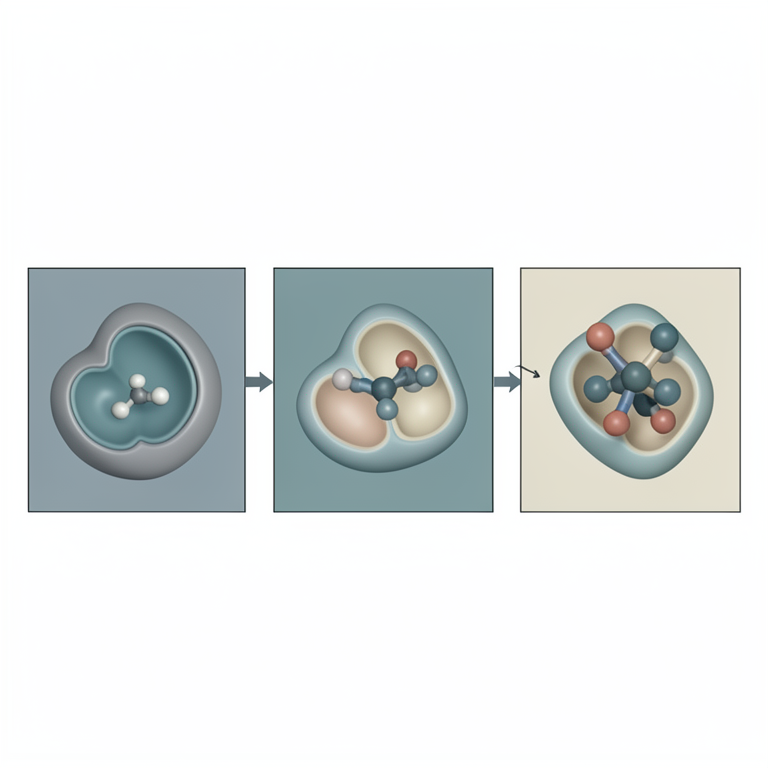
Multi-Target Drug Development Strategies
AI-generated conceptual illustration (Small molecule drugs and protein receptors). It explains the idea and does not show study data.
View source evidence ↗Introduction
The concept of polypharmacology, where a single drug interacts with multiple targets, has gained significant traction in recent years. Unlike traditional drug discovery, which often focuses on single-target agents, polypharmacology aims to develop drugs that can modulate multiple pathways simultaneously. This approach is particularly relevant for complex diseases such as cancer, neurodegenerative disorders, and cardiovascular diseases, where multiple biological pathways are dysregulated. The increasing understanding of disease complexity and the limitations of single-target therapies have driven the shift towards polypharmacology, promising more effective and comprehensive treatments.
Objective of paper
The objective of this paper is to review the concept of polypharmacology and its role in the development of multi-target drugs.
Rationale for multi-target drugs
The rationale behind multi-target drugs lies in the multifactorial nature of many diseases. Conditions such as cancer and neurodegenerative diseases involve intricate networks of signalling pathways, genetic mutations, and environmental factors. Single-target drugs often fail to address the complexity of these diseases, leading to limited efficacy and the development of drug resistance. Multi-target drugs, on the other hand, can modulate several pathways simultaneously, potentially improving therapeutic outcomes and reducing the likelihood of resistance. A study by Morphy and Rankovic (2005) [6] highlighted the advantages of multi-target drugs in treating multifactorial diseases. The authors discussed how multi-target drugs could offer synergistic effects, where the combined modulation of multiple targets leads to enhanced therapeutic efficacy compared to single-target agents. This synergy can be particularly beneficial in oncology, where cancer cells often activate alternative pathways to survive targeted therapies.
Strategies for developing multi-target drugs
Several strategies are employed in the development of multi-target drugs, including the design of single molecules with multiple target affinities, the use of drug combinations, and the repurposing of existing drugs. Each approach has its advantages and challenges, and the choice of strategy depends on the specific disease and therapeutic goals. The design of single molecules with multiple target affinities involves the use of computational modelling and high-throughput screening to identify compounds that can bind to multiple targets. This approach requires a detailed understanding of the molecular interactions and binding sites of each target. A study by Anighoro et al. (2014) [1] demonstrated the use of computational tools to design multitarget inhibitors for neurodegenerative diseases. The authors successfully identified compounds that could inhibit both acetyl cholinesterase and butyrylcholinesterase, enzymes implicated in Alzheimer's disease. Drug combinations, another strategy for achieving polypharmacology, involve the simultaneous use of multiple drugs, each targeting different pathways. This approach can provide flexibility in dosing and the potential to adjust the combination based on patient response. However, drug combinations can also lead to complex pharmacokinetic interactions and increased risk of adverse effects. A notable example is the use of combination therapy in HIV treatment, where antiretroviral drugs targeting different stages of the viral life cycle are used together to suppress viral replication and prevent resistance.
Repurposing existing drugs for new therapeutic uses is a cost-effective strategy that leverages the known safety profiles of approved drugs. This approach can expedite the drug development process and reduce the risk of failure in clinical trials. A study by Ashburn and Thor (2004) [2] highlighted the potential of drug repurposing in identifying multi-target agents. The authors discussed how drugs such as aspirin, initially developed as anti-inflammatory agents, were later found to have anticancer properties through the inhibition of multiple targets involved in tumour progression.
Challenges in polypharmacology
Despite its potential, the development of multi-target drugs faces several challenges. These include the complexity of designing molecules with optimal activity against multiple targets, the potential for off-target effects, and the difficulty in predicting the pharmacokinetic and pharmacodynamic properties of multi-target agents. Designing molecules with optimal activity against multiple targets requires a delicate balance between affinity, selectivity, and pharmacokinetic properties. A study by Peters et al. (2012) [7] emphasized the challenges in optimizing multi-target drugs, noting that increasing the affinity for one target can sometimes reduce the affinity for another, complicating the drug development process. The authors also discussed the use of structure-based drug design and fragment-based approaches to identify and optimize multi-target inhibitors.
Off-target effects are a significant concern in polypharmacology, as drugs that interact with multiple targets may also interact with unintended proteins, leading to adverse effects. The development of selective multi-target drugs requires comprehensive screening and validation to ensure specificity and minimize toxicity. A study by Ramsay et al. (2018) [8] explored the use of phenotypic screening to identify multi-target drugs with minimal offtarget effects. The authors highlighted the importance of integrating in vitro and in vivo models to assess the safety and efficacy of multi-target agents.
Predicting the pharmacokinetic and pharmacodynamic properties of multi-target drugs is challenging due to the complex interactions between the drug and multiple targets. These interactions can influence the absorption, distribution, metabolism, and excretion (ADME) of the drug, affecting its therapeutic efficacy and safety. Advanced computational models and systems biology approaches are being developed to predict and optimize the pharmacokinetic and pharmacodynamic profiles of multi-target drugs. A study by Mager and Jusko (2001) [5] discussed the application of pharmacokinetic/pharmacodynamic (PK/PD) modelling in understanding the complex interactions of multi-target drugs, providing insights into dosing regimens and therapeutic windows.
Future directions
The future of polypharmacology in drug development holds great promise, with advancements in computational methods, high-throughput screening, and systems biology providing new opportunities for identifying and optimizing multi-target drugs. Integrating these technologies with traditional drug discovery approaches can accelerate the development of effective and safe multi-target agents.
Computational methods, such as molecular docking and machine learning, are increasingly being used to predict and optimize the interactions of multi-target drugs with multiple targets. These methods can screen large libraries of compounds and identify potential multi-target drugs with high specificity and affinity. A study by Anighoro et al.
(2014) [1] demonstrated the use of molecular docking and virtual screening to identify multi-target inhibitors for neurodegenerative diseases, highlighting the potential of computational tools in polypharmacology. High-throughput screening (HTS) techniques have also advanced, enabling the rapid testing of thousands of compounds against multiple targets. HTS platforms, combined with phenotypic assays, can identify compounds that exhibit desired multi-target activities. Recent advancements in microfluidics and lab-on-a-chip technologies have further enhanced the capabilities of HTS, allowing for more efficient and cost-effective screening processes. Systems biology approaches, which integrate data from genomics, proteomics, and metabolomics, provide a holistic view of disease networks and identify key nodes and pathways that can be targeted by multi-target drugs. These approaches can predict the effects of multi-target drugs on biological systems and identify potential biomarkers for monitoring therapeutic responses. A study by Riedl et al.
(2016) [9] highlighted the use of systems biology in identifying multi-target strategies for complex diseases, emphasizing the importance of network-based approaches in drug discovery. The development of personalized medicine approaches, which tailor treatments based on individual genetic and molecular profiles, aligns well with the principles of polypharmacology. Personalized multi-target therapies can be designed to address the specific dysregulated pathways in each patient, improving therapeutic outcomes and minimizing adverse effects. Advances in next-generation sequencing and bioinformatics are facilitating the identification of patient-specific targets and the development of personalized multi-target drugs.
Conclusion
Polypharmacology represents a promising approach in the development of multi-target drugs, offering the potential to
References
8 in the original paper- Anighoro A, Bajorath J, Rastelli G. Polypharmacology: Challenges and opportunities in drug discovery. J Med Chem. 2014;57(19):7874-87.
- Ashburn TT, Thor KB. Drug repositioning: Identifying and developing new uses for existing drugs. Nat Rev Drug Discov. 2004;3(8):673-683.
- Cavalli A, Bolognesi ML, Minarini A, Rosini M, Tumiatti V, Recanatini M, et al. Multi-target-directed ligands to combat neurodegenerative diseases. J Med Chem. 2008;51(3):347-372.
- Faivre S, Demetri G, Sargent W, Raymond E. Molecular basis for sunitinib efficacy and future clinical development. Nat Rev Drug Discov. 2007;6(9):734745.
- Mager DE, Jusko WJ. General pharmacokinetic model for drugs exhibiting target-mediated drug disposition. J Pharmacokinet Pharmacodyn. 2001;28(6):507-532.
- Rankovic B. Five Serbian reservoirs contain different fungal propagules. Mycologia. 2005;97(1):50-56.
- Ramsay G, Green MJ, Marsh TR, Kupfer T, Breedt E, Korol V, et al. Physical properties of AM CVn stars: New insights from Gaia DR2. Astronomy & Astrophysics. 2018;620:A141.
- Riedl V, Utz L, Castrillón G, Grimmer T, Rauschecker JP, Ploner M, et al. Metabolic connectivity mapping reveals effective connectivity in the resting human brain. Proceedings of the National Academy of Sciences. 2016;113(2):428-433.