
Research article · 2023 · Full text
International Journal of Advanced Chemistry ResearchBiochemical pathways of nitrogen fixation in leguminous plants
Volume 5(1) · Pages 126–129 · DOI: 10.33545/26646781.2023.v5.i1b.217 ↗
Research areasLegume Nitrogen Fixing Symbiosis
Abstract
Author-writtenNitrogen fixation in leguminous plants is a crucial biochemical process that significantly impacts agricultural productivity and environmental sustainability. This review explores the intricate biochemical pathways involved in nitrogen fixation, highlighting the role of symbiotic relationships between legumes and rhizobia bacteria. The paper synthesizes findings from recent studies on the enzymatic mechanisms, genetic regulation, and environmental factors influencing nitrogen fixation. By understanding these pathways, we can enhance crop yields and reduce reliance on synthetic nitrogen fertilizers.
Summary
Source-checkedPlain-language reading of the full paper, prepared with AI and checked against the text. Each point links to the authors' own words.
Why it matters
- Nitrogen fixation in legumes is a vital biochemical process that affects both the environment and agricultural productivity. View evidence ↗
- Studying these pathways is necessary to increase crop yields and lower the use of synthetic nitrogen fertilizers, which carry economic and environmental costs. View evidence ↗
- The process converts atmospheric nitrogen (N₂) into ammonia (NH₃), a form of nitrogen that plants can use for growth. View evidence ↗
The question
- The primary goal of this paper is to review the biochemical pathways involved in nitrogen fixation within leguminous plants. View evidence ↗
What they did
- The review examines biochemical pathways and the symbiotic relationship between legumes and rhizobia bacteria. View evidence ↗
- The author synthesizes data from recent studies regarding genetic regulation, environmental factors, and enzymatic mechanisms. View evidence ↗
What they found
- The enzyme nitrogenase is the central component that catalyzes the reduction of nitrogen gas into ammonia. View evidence ↗
- The nitrogenase reaction requires 16 ATP molecules to convert one N2 molecule into two NH3 molecules, along with H2. View evidence ↗
- Nodule formation begins when legumes release flavonoids that trigger rhizobia to express essential Nod factors. View evidence ↗
- The NIN (Nodule Inception) gene acts as a key transcription factor that initiates the development of nodules. View evidence ↗
- Leghemoglobin protects the oxygen-sensitive nitrogenase enzyme by maintaining a low-oxygen environment in the nodules. View evidence ↗
- Nitrogen fixation is most efficient when soil pH is between 6.0 and 7.0. View evidence ↗
- The process of nitrogen fixation is most efficient at moderate temperatures between 20 and 30 °C. View evidence ↗
- Phosphorus is a critical nutrient because it is required for the production of ATP, which powers the nitrogenase enzyme. View evidence ↗
What it means
- The author concludes that genetic and biotechnological advancements are promising ways to improve the efficiency of nitrogen fixation. View evidence ↗
- Ongoing research is essential to meet food production demands while preserving ecological balance. View evidence ↗
Visual summary
1 visualsIllustrations explain the paper; they do not show study data.
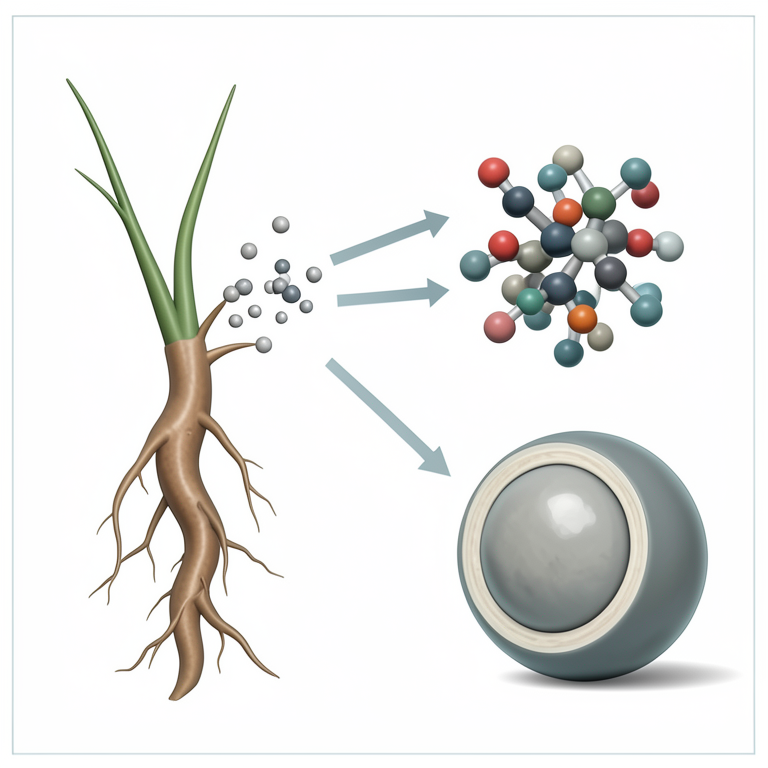
Symbiotic Signaling Process
AI-generated conceptual illustration (legume root and rhizobia bacteria). It explains the idea and does not show study data.
View source evidence ↗Introduction
Nitrogen fixation is a vital process in the nitrogen cycle, enabling the conversion of atmospheric nitrogen (N₂) into ammonia (NH₃), which plants can readily use for growth.
Leguminous plants, through their symbiotic relationship with rhizobia bacteria, play a significant role in this process. Understanding the biochemical pathways of nitrogen fixation in these plants is essential for improving agricultural productivity and reducing dependency on synthetic nitrogen fertilizers, which have environmental and economic impacts. Leguminous plants form specialized root structures called nodules, where nitrogen fixation occurs. Inside these nodules, rhizobia bacteria convert atmospheric nitrogen into ammonia through a series of enzymatic reactions. This review delves into the intricate biochemical pathways involved in this symbiotic nitrogen fixation, discussing the roles of key enzymes, regulatory genes, and environmental factors that influence the efficiency of the process.
Main objective of paper
The objective of this paper is to review the biochemical pathways of nitrogen fixation in leguminous plants.
Enzymatic system of nitrogen fixation
The enzymatic system responsible for nitrogen fixation in leguminous plants is a complex and highly specialized mechanism that enables the conversion of atmospheric nitrogen (N₂) into ammonia (NH₃), which plants can utilize for growth and development. This process primarily occurs in the root nodules of leguminous plants, where symbiotic rhizobia bacteria reside. Central to this system is the enzyme nitrogenase, which catalyzes the reduction of nitrogen gas to ammonia. Understanding the structure, function, and regulation of nitrogenase is crucial for comprehending the overall nitrogen fixation process. Nitrogenase is composed of two main protein complexes: the Fe-protein (dinitrogenase reductase) and the MoFe-protein (dinitrogenase). The Fe-protein is responsible for electron transfer, while the MoFe-protein carries out the reduction of nitrogen to ammonia. The overall reaction facilitated by nitrogenase is:
The Fe-protein is a homodimer containing an iron-sulphur cluster that mediates electron transfer. Each subunit of the Fe-protein binds two molecules of ATP, which are hydrolyzed to provide the energy required for electron transfer. The MoFe-protein is a α2β2 tetramer containing molybdenum-iron co-factors (FeMo-cofactor) at its active site, which directly interacts with nitrogen molecules to facilitate their reduction. The electron transfer from the Fe-protein to the MoFeprotein is a highly regulated process. Initially, electrons are donated by ferredoxin or flavodoxin, which are reduced during photosynthesis or respiration in the plant. These electrons are then transferred to the Fe-protein, which, upon ATP hydrolysis, transfers them to the MoFe-protein. The MoFe-protein, utilizing the FeMo-cofactor, sequentially reduces nitrogen molecules to ammonia. The requirement of 16 ATP molecules per nitrogen molecule underscores the energy-intensive nature of nitrogen fixation. Seefeldt et al. (2009) [2] provided a detailed mechanistic insight into the nitrogenase enzyme, highlighting the stepwise reduction process and the critical role of ATP in driving electron transfer. This study emphasized the intricate coordination between the Fe-protein and MoFe-protein, which is essential for the efficient functioning of nitrogenase. The nitrogenase enzyme is highly sensitive to oxygen, which can irreversibly damage its iron-sulphur clusters. To protect nitrogenase from oxygen, leguminous plants and rhizobia have evolved several protective mechanisms. One such mechanism involves the production of leghemoglobin, a hemoprotein found in the root nodules that binds oxygen with high affinity. Leghemoglobin maintains a low-oxygen environment within the nodules, ensuring that nitrogenase remains functional. The role of leghemoglobin in creating a micro aerobic environment is crucial for effective nitrogen fixation. Regulation of nitrogenase activity is a complex process involving both plant and bacterial genes. In rhizobia, genes such as if (nitrogen fixation) and fix (regulation of nitrogen fixation) are responsible for the synthesis and regulation of nitrogenase. The expression of these genes is tightly controlled in response to environmental cues and the physiological state of the host plant. For instance, the availability of fixed nitrogen in the soil can down-regulate nitrogenase activity to conserve energy. The interaction between plant and bacterial genes also plays a significant role in regulating nitrogen fixation. Plant-derived signals, such as flavonoids, initiate the symbiotic relationship by inducing the expression of Nod factors in rhizobia. These Nod factors, in turn, trigger the formation of infection threads and root nodules in the host plant. Within the nodules, the expression of nitrogenase and other related genes is finely tuned to optimize nitrogen fixation. Recent studies have focused on enhancing the efficiency of nitrogen fixation through genetic manipulation of both the plant and rhizobia. For example, genetic engineering approaches aimed at overexpressing key regulatory genes or introducing novel protective mechanisms against oxygen have shown promise in increasing nitrogenase activity and overall nitrogen fixation rates. In summary, the enzymatic system of nitrogen fixation in leguminous plants involves a highly coordinated interaction between the nitrogenase enzyme, protective mechanisms against oxygen, and regulatory genetic networks. The complex interplay of these factors ensures the efficient conversion of atmospheric nitrogen into ammonia, supporting plant growth and contributing to agricultural productivity. Understanding the detailed mechanisms of this system, as elucidated by studies like Seefeldt et al. (2009) [2] , provides valuable insights into potential strategies for enhancing nitrogen fixation in leguminous crops.
Genetic regulation of nitrogen fixation
The genetic regulation of nitrogen fixation in leguminous plants involves a sophisticated network of plant and bacterial genes that coordinate the formation and function of root nodules, where nitrogen fixation occurs. This symbiotic relationship between legumes and rhizobia bacteria is tightly controlled by signalling molecules, transcription factors, and regulatory pathways that ensure efficient nitrogen fixation. One of the key aspects of this symbiosis is the initiation of nodule formation, which begins with the exchange of signalling molecules between the plant and the rhizobia. Leguminous plants release flavonoids into the soil, which are recognized by the rhizobia. These flavonoids induce the expression of Nod factors in the bacteria, which are lipochitooligosaccharides essential for nodule formation. The recognition of Nod factors by specific receptors on the plant root hairs triggers a cascade of signalling events that lead to the curling of root hairs and the formation of infection threads, through which rhizobia enter the root cells. The plant genes involved in nodule formation and development are numerous and include NIN (Nodule Inception), which is a key transcription factor initiating the nodule development process. The NIN gene is essential for the early stages of nodule formation, and its expression is regulated by Nod factor signalling. Studies by Schauser et al. (1999) [3] showed that mutations in the NIN gene result in the failure of nodule formation, highlighting its critical role in the symbiotic process. Another important gene in the regulation of nodule formation is LHK1 (Lotus japonicus Histidine Kinase 1), a Nod factor receptor kinase. LHK1 perceives Nod factors and activates downstream signalling pathways that lead to nodule organogenesis. Research by Madsen et al. (2010) [4] demonstrated that LHK1 mutants are impaired in their ability to form nodules, further emphasizing the importance of Nod factor signalling in the regulation of nitrogen fixation. Once the rhizobia are inside the root cells, they differentiate into bacteroids, which are the nitrogenfixing form of the bacteria. This differentiation process is regulated by a combination of bacterial and plant genes. In rhizobia, the expression of nitrogen fixation genes, such as if and fix genes, is essential for the synthesis and activity of the nitrogenase enzyme complex. The if genes encode the components of nitrogenase, while the fix genes are involved in the regulation and assembly of the enzyme. The expression of life and fix genes is regulated by the transcriptional activator NifA and the nitrogen fixation regulator FixLJ two-component system. NifA is a key activator of if gene expression, and its activity is modulated by the availability of fixed nitrogen and oxygen levels within the nodule. Studies by Fischer (1994) [5] revealed that the NifA protein is essential for the activation of nitrogenase gene expression in response to low oxygen conditions, which are critical for effective nitrogen fixation. In addition to bacterial genes, plant genes also play a significant role in regulating nitrogen fixation within the nodules. For instance, the expression of leghemoglobin, a plant hemoprotein, is crucial for maintaining a low-oxygen environment within the nodules, protecting the oxygen-sensitive nitrogenase enzyme. Leghemoglobin binds oxygen with high affinity, effectively buffering the oxygen concentration and ensuring optimal conditions for nitrogenase activity. The regulation of leghemoglobin expression is tightly linked to the nitrogen-fixing activity of the bacteroids. Studies by Ott et al. (2005) [6] showed that leghemoglobin gene expression is up regulated in response to the presence of functional nitrogenase, indicating a feedback mechanism that adjusts leghemoglobin levels based on the nitrogen fixation status. Environmental factors also influence the genetic regulation of nitrogen fixation. Soil nutrient availability, particularly phosphorus and iron, affects the expression of genes involved in nodule formation and nitrogenase activity. Phosphorus is essential for ATP production, which powers the nitrogenase enzyme, while iron is a key component of the nitrogenase metallocluster. Research by Vance et al. (2003) [7] highlighted that phosphorus deficiency can limit nitrogen fixation by reducing the availability of ATP and impairing the function of nitrogenase. Overall, the genetic regulation of nitrogen fixation in leguminous plants is a complex and highly coordinated process involving plant and bacterial genes. The intricate interplay of signalling molecules, transcription factors, and regulatory pathways ensures the efficient formation and function of root nodules, enabling the conversion of atmospheric nitrogen into ammonia. Understanding these genetic networks provides valuable insights into enhancing nitrogen fixation efficiency, which is crucial for improving agricultural productivity and sustainability.
Environmental factors influencing nitrogen fixation
Environmental factors play a crucial role in influencing the efficiency and effectiveness of nitrogen fixation in leguminous plants. The process of nitrogen fixation, which involves the conversion of atmospheric nitrogen (N₂) into ammonia (NH₃) by rhizobia bacteria within root nodules, is highly sensitive to various environmental conditions. Understanding these factors is essential for optimizing nitrogen fixation and improving agricultural productivity.
Soil pH
Soil pH is a critical determinant of nitrogen fixation efficiency. The availability of nutrients and the activity of both plant and bacterial enzymes are significantly influenced by the pH of the soil. Nitrogen fixation generally occurs most effectively in slightly acidic to neutral soils (pH 6.0-7.0). Extreme pH levels, either too acidic or too alkaline, can inhibit the growth and activity of rhizobia, leading to reduced nodule formation and nitrogen fixation. In acidic soils, the solubility of toxic metals such as aluminium and manganese increases, which can harm both the plant and the bacteria. Additionally, acidic conditions can lead to the protonation of root exudates, making them less effective at signalling to rhizobia. On the other hand, in alkaline soils, the availability of essential nutrients like iron, manganese, and phosphorus decreases, which can limit the activity of nitrogenase, the enzyme responsible for nitrogen fixation. A study by Hungria and Vargas (2000) [1] demonstrated that liming acidic soils to increase pH improved nodulation and nitrogen fixation in common bean (Phaseolus vulgaris). The study highlighted the importance of maintaining optimal soil pH to support effective nitrogen fixation.
Soil moisture
Soil moisture levels are critical for the successful establishment and functioning of the symbiotic relationship between legumes and rhizobia. Adequate soil moisture is necessary for the diffusion of signalling molecules between the plant and bacteria, as well as for the transport of nutrients. However, both waterlogged and drought conditions can adversely affect nitrogen fixation. In waterlogged soils, oxygen availability is drastically reduced, creating anaerobic conditions that inhibit the activity of the oxygen-sensitive nitrogenase enzyme. Additionally, excess water can lead to the leaching of essential nutrients, further limiting nitrogen fixation. Conversely, drought conditions can reduce the availability of water for biological processes, leading to reduced nodule formation and impaired nitrogen fixation. Research by Zahran (1999) [8] showed that moderate soil moisture levels are essential for optimal nitrogen fixation in legumes. The study found that both excess and deficit water conditions significantly reduced nitrogenase activity and overall nitrogen fixation rates.
Temperature
Temperature is another key environmental factor influencing nitrogen fixation. The metabolic activity of both the plant and rhizobia, as well as the enzymatic reactions involved in nitrogen fixation, are temperature-dependent. Nitrogen fixation typically occurs most efficiently within a moderate temperature range of 20-30 °C. Extreme temperatures, both high and low, can adversely affect the process. High temperatures can denature proteins and enzymes involved in nitrogen fixation, while low temperatures can slow down metabolic processes and enzyme activity. For instance, high temperatures can lead to the degradation of nitrogenase and other proteins, reducing the efficiency of nitrogen fixation. A study by Gibson (1980) [9] demonstrated that elevated temperatures negatively impacted nodule formation and nitrogenase activity in soybeans (Glycine max). The study highlighted the importance of maintaining optimal temperature conditions to support effective nitrogen fixation.
Nutrient availability
The availability of essential nutrients, particularly phosphorus and iron, is crucial for nitrogen fixation. Phosphorus is required for ATP production, which provides the energy necessary for nitrogenase activity. Iron is a key component of the nitrogenase enzyme, and its availability directly influences the efficiency of nitrogen fixation. Phosphorus deficiency can limit the production of ATP, reducing the energy available for nitrogen fixation. Similarly, iron deficiency can impair the synthesis and function of nitrogenase, leading to reduced nitrogen fixation rates. Ensuring adequate levels of these nutrients in the soil is essential for maintaining efficient nitrogen fixation. Research by Vance et al. (2003) [7] demonstrated that phosphorus supplementation in phosphorus-deficient soils significantly improved nitrogen fixation in legumes. The study highlighted the critical role of phosphorus in supporting the energy-intensive process of nitrogen fixation.
Oxygen concentration
Oxygen concentration within the root nodules is a crucial factor affecting nitrogen fixation. While rhizobia and the host plant require oxygen for respiration, the nitrogenase enzyme is highly sensitive to oxygen and can be inactivated by it. Therefore, maintaining a low-oxygen environment within the nodules is essential for effective nitrogen fixation. Leghemoglobin, a hemoprotein produced by the host plant, plays a key role in regulating oxygen concentration within the nodules. Leghemoglobin binds oxygen with high affinity, creating a micro aerobic environment that protects nitrogenase from oxygen damage while providing sufficient oxygen for bacterial respiration. Studies by Ott et al. (2005) [6] have shown that the expression of leghemoglobin is tightly regulated in response to the nitrogen fixation activity of the bacteroids. This regulation ensures that the oxygen concentration within the nodules is maintained at optimal levels for nitrogenase function.
Conclusion
Understanding the biochemical pathways and environmental factors influencing nitrogen fixation in leguminous plants is critical for enhancing agricultural productivity and sustainability. The enzymatic system of nitrogen fixation, primarily driven by the nitrogenase enzyme complex, is a sophisticated process that converts atmospheric nitrogen into ammonia. This process is intricately regulated by a network of plant and bacterial genes, which coordinate the formation and function of root nodules. Environmental factors such as soil pH, moisture levels, temperature, nutrient availability, and oxygen concentration significantly impact the efficiency of nitrogen fixation. Optimal conditions for these factors are essential to support the symbiotic relationship between legumes and rhizobia, ensuring effective nitrogen fixation and reducing the reliance on synthetic nitrogen fertilizers. Advances in genetic and biotechnological approaches offer promising avenues for improving nitrogen fixation efficiency. By leveraging these technologies, researchers can develop leguminous plants and rhizobia strains that are better adapted to various environmental conditions, enhancing their nitrogen-fixing capabilities. The insights gained from recent studies provide valuable knowledge for optimizing nitrogen fixation processes in leguminous plants. This understanding not only contributes to improved crop yields and soil health but also supports sustainable agricultural practices that can mitigate environmental impacts. Continued research and innovation in this field will be crucial for addressing the growing demand for food production while maintaining ecological balance.
References
15 in the original paper- Hungria M, Vargas MAT. Environmental factors affecting N₂ fixation in grain legumes in the tropics, with an emphasis on Brazil. Field Crops Res. 2000;65(2-3):151-64.
- Seefeldt LC, Hoffman BM, Dean DR. Mechanism of Mo-dependent nitrogenase. Annu Rev Biochem. 2009;78:701-22.
- Schauser L, Roussis A, Stiller J, Stougaard J. A plant regulator controlling development of symbiotic root nodules. Nature. 1999;402(6758):191-5.
- Madsen EB, Llovera AM, Grossmann C, Ye J, Vieweg S, Broghammer A, et al. Auto phosphorylation is essential for the in vivo function of the Lotus japonicus Nod factor receptor 1 and receptor-mediated signaling in the absence of rhizobia. Plant Cell. 2010;22(1):20420.
- Fischer HM. Genetic regulation of nitrogen fixation in rhizobia. Microbiol Rev. 1994;58(3):352-86.
- Ott T, Dongen VJT, Günther C, Krusell L, Desbrosses G, Vigeolas H, et al. Symbiotic leghemoglobins are crucial for nitrogen fixation in legume root nodules but not for general plant growth and development. Curr Biol. 2005;15(6):531-535.
- Vance CP, Uhde-Stone C, Allan DL. Phosphorus acquisition and use: Critical adaptations by plants for securing a nonrenewable resource. New Phytol. 2003;157(3):423-447.
- Zahran HH. Rhizobium-legume symbiosis and nitrogen fixation under severe conditions and in an arid climate. Microbiol Mol Biol Rev. 1999;63(4):968-989.
- Oldroyd GED, Downie JA. Coordinating nodule morphogenesis with rhizobial infection in legumes. Annu Rev Plant Biol. 2008 Jun 2;59(1):519-546.
- Ott T, van Dongen JT, Günther C, Krusell L, Desbrosses G, Vigeolas H, et al. Symbiotic leghemoglobins are crucial for nitrogen fixation in legume root nodules but not for general plant growth and development. Curr Biol. 2005;15(6):531-535.
- Dragosits M, Mattanovich D. Adaptive laboratory evolution principles and applications for biotechnology. Microb Cell Fact. 2013 Dec;12:64.
- Marone A, Izzo G, Patel D. Continuous fermentation of lactic acid: Enhancing productivity by real-time monitoring and control. Process Biochem. 2018;72:4047.
- Sun Y, Cheng J. Hydrolysis of lignocellulosic materials for ethanol production: A review. Bioresour Technol. 2002;83(1):1-11.
- Jones JA, Toparlak OD, Koffas MAG. Synthetic microbial consortia for biosynthesis of isobutanol and related compounds. Metab Eng. 2020;57:1-8.
- Liu C, Zhang Y, Lin X. Engineering yeast for the production of a novel terpenoid compound with pharmaceutical applications. Metab Eng. 2019;55:1-10.
Cited by 1
From OpenAlex, OpenCitations and reference lists read by Scinovex
- Unveiling drivers and optimizing strategies for enhanced land and nitrogen fertilizer use efficiency of sorghum intercropping: A meta-analysis ↗
Yushan Bo, Yifan Xing, Chunjuan Liu, Xiaolong Shi, Chang Liu, Yufei Zhou · Field Crops Research · 2025
❝ 6