
Research article · 2024 · Full text
International Journal of Agriculture Extension and Social DevelopmentExploring linkages across enterprises in integrated farming systems: A study of Chhattisgarh and Madhya Pradesh states
Volume 7(7) · Pages 199–202 · DOI: 10.33545/26180723.2024.v7.i7c.791 ↗
Research areasAgricultural Economics and PracticesAgricultural Systems and PracticesAgricultural Innovations and Practices
Abstract
Author-writtenThe study was conducted in Chhattisgarh and Madhya Pradesh states during 2022-23 and 2023-24 to study the linkages across different enterprises in integrated farming system in Chhattisgarh and Madya Pradesh sates. Total of 320 farmers (160 from each state) practicing integrated farming were selected for the study. In this study, the connections between various enterprises were evaluated through a linkage index, determined by the adoption of different practices such as Crop cultivation, Cattle rearing, Vegetable farming, Goatry, Fishery, Vermicomposting, etc., by farmers. Analysis of agricultural enterprises within integrated farming systems reveals significant linkage percentages, notably between crop production and cattle rearing (92.50%), followed by goatry (20.63%) and poultry (12.75%). the z-test analysis aims to discern significant differences in linkage patterns across integrated farming systems in Chhattisgarh and Madhya Pradesh states. Employing a two-tailed z-test with a Z-critical value of 1.95 at a significance level of 0.05, comparisons across various enterprises were conducted. However, none of the comparisons yielded statistically significant differences, as indicated by Z-test values consistently falling below the Z-critical threshold for all ten enterprises. The obtained p-values further support this conclusion, indicating a lack of significant divergence between the integrated farming systems of the two states. Thus, the null hypothesis is retained, suggesting similar patterns among enterprises in both Chhattisgarh and Madhya Pradesh. This underscores the coherence and uniformity in integrated farming practices across the two states, emphasizing the consistent nature of agricultural linkages within their respective systems.
Summary
Source-checkedPlain-language reading of the full paper, prepared with AI and checked against the text. Each point links to the authors' own words.
Why it matters
- India's agricultural sector faces significant inefficiencies, with approximately 30% of annual produce lost to spoilage despite its high global production contribution. View evidence ↗
- Integrated Farming Systems (IFS) are proposed as a strategy to improve productivity and farmer livelihoods by combining crops, livestock, and fisheries on one farm. View evidence ↗
The question
- The study aimed to examine the connections (linkages) between various agricultural enterprises within integrated farming systems in Chhattisgarh and Madhya Pradesh. View evidence ↗
What they did
- The research was carried out across the states of Chhattisgarh and Madhya Pradesh during the 2022-23 and 2023-24 periods. View evidence ↗
- The sample consisted of 320 farmers practicing integrated farming, with 160 participants selected from each of the two states. View evidence ↗
- A two-tailed z-test with a significance level of 0.05 and a Z-critical value of 1.95 was used to compare linkage patterns between the two states. View evidence ↗
What they found
- In Chhattisgarh, crop production showed its strongest linkage with cattle rearing (87.25%), followed by poultry (18.50%) and goatry (17.63%). View evidence ↗
- In Madhya Pradesh, the strongest linkage for crop production was with cattle rearing (92.50%), followed by goatry (20.63%) and poultry (12.75%). View evidence ↗
- In Madhya Pradesh, cattle rearing showed a very high linkage with crop enterprises at 96.38%. View evidence ↗
- Statistical analysis showed no significant differences in linkage patterns across the ten enterprises compared between Chhattisgarh and Madhya Pradesh. View evidence ↗
- The study failed to reject the null hypothesis, meaning the integrated farming systems in both states exhibit similar patterns. View evidence ↗
What it means
- The authors conclude that there is coherence and uniformity in integrated farming practices and agricultural linkages across Chhattisgarh and Madhya Pradesh. View evidence ↗
Visual summary
3 visualsIllustrations explain the paper; charts are replotted from the paper's own table values.
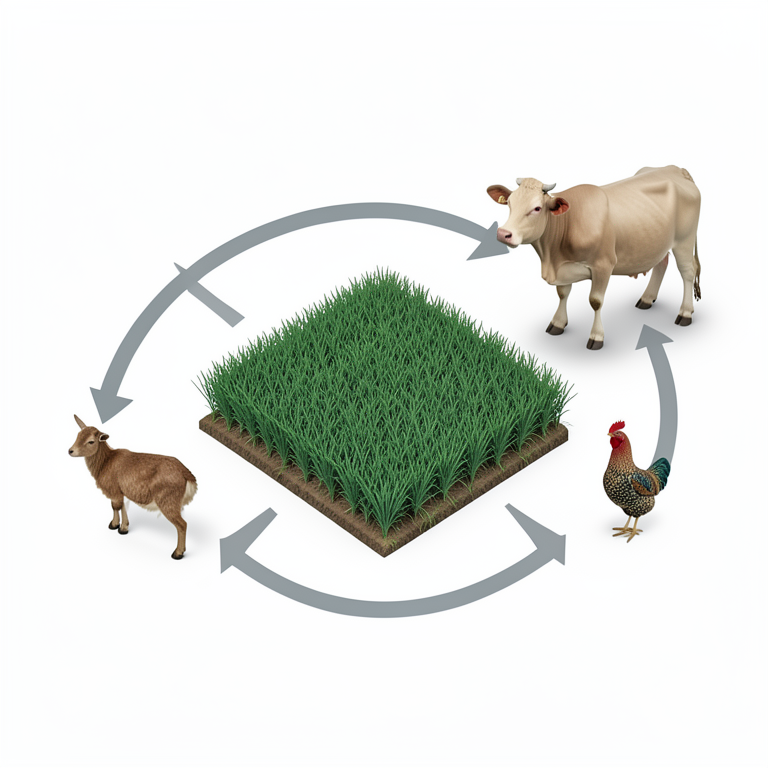
Conceptual Map of IFS Linkages
AI-generated conceptual illustration (Integrated farming system including rice crops, cows, goats, and chickens). It explains the idea and does not show study data.
View source evidence ↗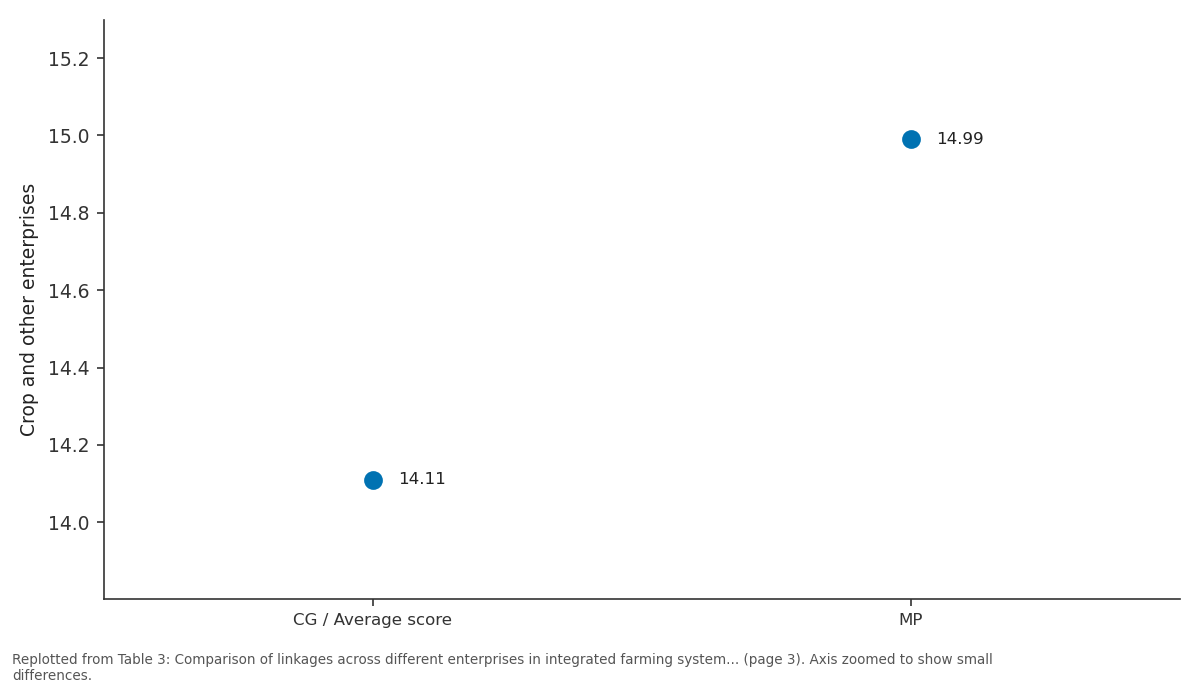
Crop and other enterprises: CG / Average score vs MP
Replotted from Table 3 (page 3) of the original paper. Every bar is the paper's own table value.
View source evidence ↗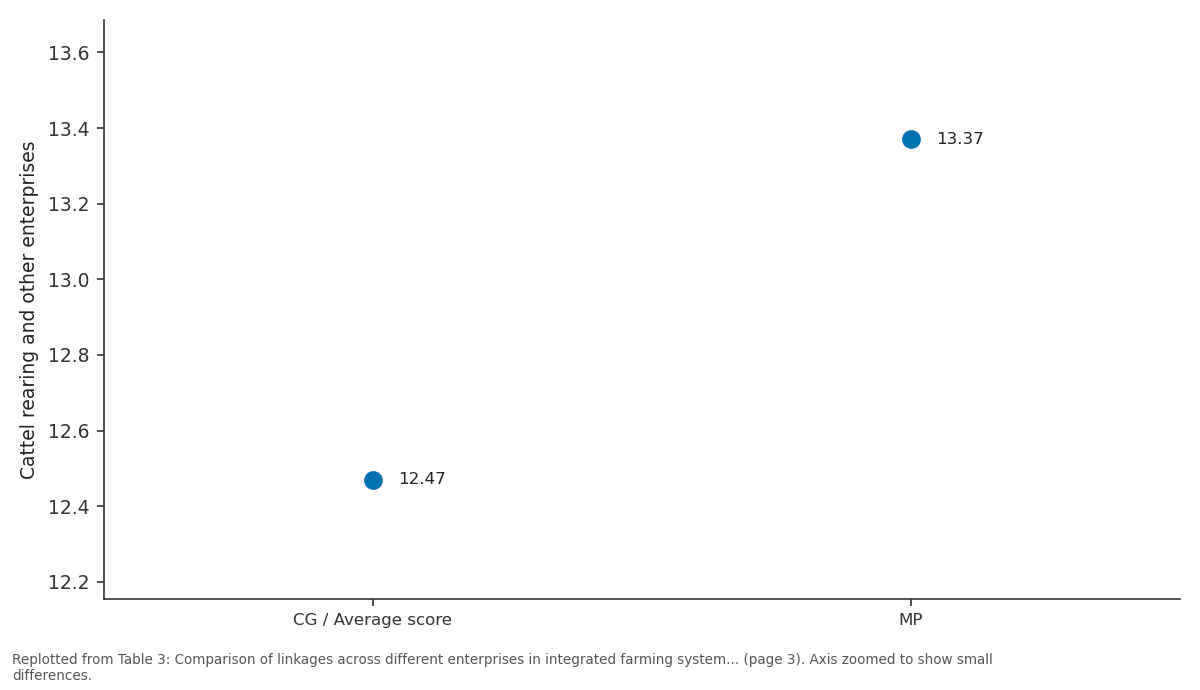
Cattel rearing and other enterprises: CG / Average score vs MP
Replotted from Table 3 (page 3) of the original paper. Every bar is the paper's own table value.
View source evidence ↗Figures & tables
From the original paper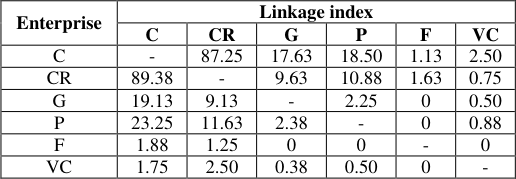 Table 1
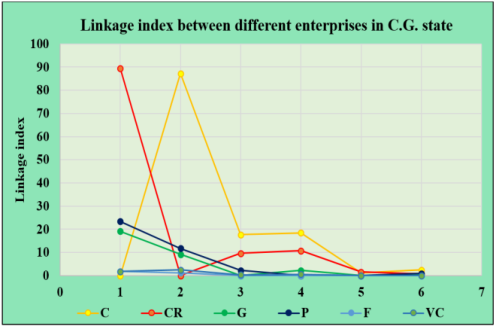 Figure 1
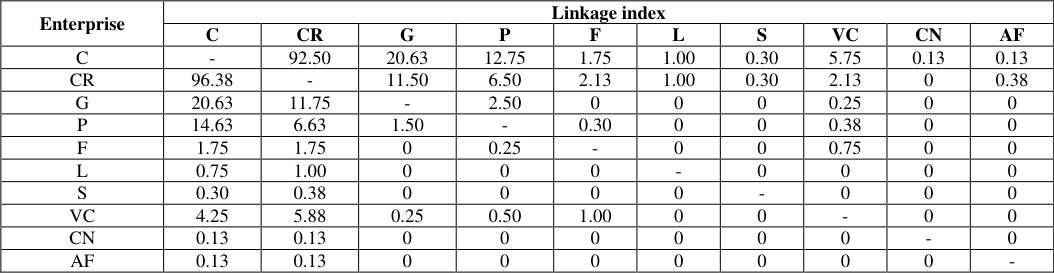 Table 2
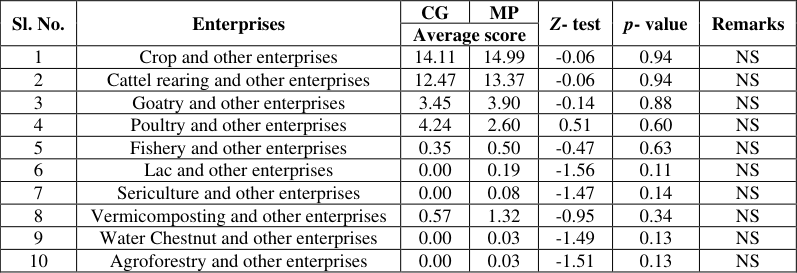 Table 3
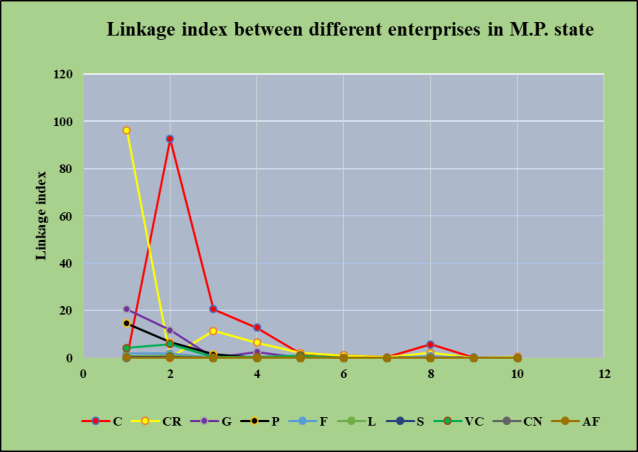 Figure 2
Introduction
India grapples with the monumental task of accommodating over 13 million additional inhabitants annually as its population swells at a rate of one percent each year (Times of India, August 2, 2022). Amidst this demographic surge, India's agricultural sector stands as both a bulwark against food insecurity and a site of profound inefficiencies. Despite contributing a staggering 25 percent to global production and consuming 27 percent of the world's resources, India grapples with significant agricultural losses. A startling 30 percent of farmers' produce annually succumbs to spoilage, exacerbating the urgency for improved agricultural management practices on multiple fronts. India's agricultural landscape, while rich in diversity and productivity, bears the weight of systemic shortcomings that hinder both nutritional enhancement and sustainable growth. Recognizing the pivotal role of agriculture in poverty reduction, food security, and competitiveness, researchers advocate for a holistic approach embodied by farming systems. These systems, complex interplays of land, labor, capital, and management, offer a pathway towards multifaceted development while addressing the pressing needs of diverse stakeholders. Against this backdrop, the states of Chhattisgarh and Madhya Pradesh emerge as microcosms of India's agricultural challenges and potential. Chhattisgarh, dubbed the "rice bowl of central India," and Madhya Pradesh, renowned as the "Soya state," epitomize the agricultural dynamism and diversity prevalent across the nation. Yet, they also confront unique environmental, economic, and social hurdles that underscore the imperative for innovative solutions. In this context, the concept of Integrated Farming Systems (IFS) emerges as a beacon of hope. By integrating crops, livestock, fisheries, and allied activities within a single farm, IFS offers a comprehensive strategy to enhance productivity, mitigate environmental degradation, and bolster farmer livelihoods. However, widespread adoption of IFS faces formidable obstacles, ranging from financial constraints to biophysical and socio-cultural barriers. As India strives to navigate the intricate nexus of agricultural sustainability, food security, and rural livelihoods, the imperative for transformative action becomes ever more pronounced. Through concerted efforts to promote integrated approaches, harness technological innovations, and address systemic challenges, India can chart a course towards a more resilient, inclusive, and prosperous agricultural future.
Objective
To study the linkages across different enterprises in integrated farming system in Chhattisgarh and Madya Pradesh sates.
Methodology
The study was conducted in Chhattisgarh and Madhya Pradesh states during 2022-23 and 2023-24 to explore the integrated farming system. Four districts, namely Rajnandgaon and Kawardha from Chhattisgarh, and Balaghat and Mandla from Madhya Pradesh, were purposively selected. Two blocks were chosen from each district, totaling eight blocks, using simple random sampling. Thirty-two villages (sixteen from each state) were then randomly selected to ensure an adequate sample size. Ten farmers were selected from each village, resulting in a total of 320 respondents (160 from each state) practicing integrated farming. In this study, the connections between various enterprises were evaluated through a linkage index, determined by the adoption of different practices such as Crop cultivation, Cattle rearing, Vegetable farming, Goatry, Fishery, Vermicomposting, etc., by farmers. Respondents' feedback on the quality of linkages across these practices was recorded using a five-point scale: "Very strong (VS)", "Strong (S)", "Medium (M)", "Weak (W)", and blank columns indicating "don't know/doesn't exist" with scores of 5, 4, 3, 2, and 1 respectively. To conduct a detailed analysis, the linkage index was calculated for each respondent and aggregated across enterprises using the following formula:
x 100 S Where, LI i = Linkage index of i th respondent O i = Total score obtained by the i th respondent S= Total obtainable score
Result and Discussion A) Linkages across different enterprises in integrated farming system (IFS) in Chhattisgarh state
Table 1 and Figure 1 present the linkage index between various enterprises within the Integrated Farming System. For crop production, the highest linkage percentage (87.25%) was observed with cattle rearing enterprises, followed by 18.50% with poultry, 17.63% with goatry, 2.50% with vermicomposting, and 1.13% with fishery enterprises. Cattle rearing showed the highest linkage percentage (89.38%) with crop enterprises, followed by 10.88% with poultry, 9.63% with goatry, 1.63% with fishery, and less than one percent with vermicomposting enterprises. Goatry exhibited the highest linkage percentage (19.13%) with crop enterprises, followed by 9.13% with cattle rearing, 2.25% with poultry, and 1.50% with vermicomposting enterprises. Poultry demonstrated the highest linkage percentage (23.25%) with crop enterprises, followed by 11.63% with cattle rearing, 2.38% with goatry, and 0.88% with vermicomposting enterprises. Fishery indicated 1.88% linkage with crop enterprises and 1.25% with cattle rearing enterprises. Vermicomposting exhibited 1.75% linkage with cattle rearing enterprises and 1.25% with crop enterprises. Cattle rearing showed the highest linkage percentage (89.38%) with crop enterprises, followed by 10.88% with poultry, 9.63% with goatry, 1.63% with fishery, and less than one percent with vermicomposting enterprises. Goatry exhibited the highest linkage percentage (19.13%) with crop enterprises, followed by 9.13% with cattle rearing, 2.25% with poultry, and 1.50% with vermicomposting enterprises. Poultry demonstrated the highest linkage percentage (23.25%) with crop enterprises, followed by 11.63% with cattle rearing, 2.38% with goatry, and 0.88% with vermicomposting enterprises. Fishery indicated 1.88% linkage with crop enterprises and 1.25% with cattle rearing enterprises. Vermicomposting exhibited 1.75% linkage with cattle rearing enterprises and 1.25% with crop enterprises.
| Enterprise | Linkage index | — | — | — | — | — |
|---|---|---|---|---|---|---|
| C | CR | G | P | F | VC | |
| C | - | 87.25 | 17.63 | 18.50 | 1.13 | 2.50 |
| CR | 89.38 | - | 9.63 | 10.88 | 1.63 | 0.75 |
| G | 19.13 | 9.13 | - | 2.25 | 0 | 0.50 |
| P | 23.25 | 11.63 | 2.38 | - | 0 | 0.88 |
| F | 1.88 | 1.25 | 0 | 0 | - | 0 |
| VC | 1.75 | 2.50 | 0.38 | 0.50 | 0 | - |
Table text extracted from the original PDF; superscript letters are shown inline. The original table image is below.
View original table image
B) Linkages across different enterprises in integrated farming system (IFS) in Madhya Pradesh state
Analysis of Table 2 and Fig. 2 reveals various linkage percentages between different agricultural enterprises. The highest linkage percentage (92.50%) exists between crop production and cattle rearing, followed by 20.63% between crop production and goatry, 12.75% between crop production and poultry, 5.75% between crop production and vermicomposting, 1.75% between crop production and fishery, and smaller percentages between crop production and other enterprises. Similarly, high linkage percentages are observed between cattle rearing and crop enterprises (96.38%), goatry and crop enterprises (20.63%), and poultry and crop enterprises (14.63%). Lower linkage percentages are noted between other combinations of enterprises as detailed in the data provided. Specifically, for water www.extensionjournal.com chestnut, a 1.00% linkage exists with crop enterprises and cattle rearing. Agroforestry shows a 0.13% linkage with both crop enterprises and cattle rearing. This data illustrates the interconnectedness between different agricultural activities, highlighting the predominant linkages and their significance in agricultural systems. 3 shows the existence of significant difference between Chhattisgarh and Madhya Pradesh states using a z-test for statistical inference. This analysis could support to the analysis which has done in previous Table 1 and Table 2. 3 presents the outcomes of the z-test comparing linkages across various enterprises within integrated farming systems in Chhattisgarh and Madhya Pradesh states. Employing a two-tailed z-test with a Z-critical value of 1.95 (at a significance level of 0.05), the analysis aimed to determine significant differences between the states' integrated farming practices. Results indicate that none of the comparisons yielded statistically significant differences, as evidenced by Z-test values falling below the Z-critical threshold for all ten enterprises (Z-test = -0.06, -0.06, -0.14, 0.51, -0.47, -1.56, -1.47, -0.95, -1.49, and -1.51, with pvalues of 0.68, 0.94, 0.88, 0.60, 0.63, 0.11, 0.14, 0.34, 0.13, and 0.13, respectively). Consequently, the null hypothesis was not rejected, indicating a lack of statistically significant differences between the integrated farming systems of Chhattisgarh and Madhya Pradesh. Thus, it can be inferred that the enterprises exhibit similar patterns in both states, based on the conducted z-test analysis.
| Enterprise | Linkage index | — | — | — | — | — | — | — | — | — |
|---|---|---|---|---|---|---|---|---|---|---|
| C | CR | G | P | F | L | S | VC | CN | AF | |
| C | - | 92.50 | 20.63 | 12.75 | 1.75 | 1.00 | 0.30 | 5.75 | 0.13 | 0.13 |
| CR | 96.38 | - | 11.50 | 6.50 | 2.13 | 1.00 | 0.30 | 2.13 | 0 | 0.38 |
| G | 20.63 | 11.75 | - | 2.50 | 0 | 0 | 0 | 0.25 | 0 | 0 |
| P | 14.63 | 6.63 | 1.50 | - | 0.30 | 0 | 0 | 0.38 | 0 | 0 |
| F | 1.75 | 1.75 | 0 | 0.25 | - | 0 | 0 | 0.75 | 0 | 0 |
| L | 0.75 | 1.00 | 0 | 0 | 0 | - | 0 | 0 | 0 | 0 |
| S | 0.30 | 0.38 | 0 | 0 | 0 | 0 | - | 0 | 0 | 0 |
| VC | 4.25 | 5.88 | 0.25 | 0.50 | 1.00 | 0 | 0 | - | 0 | 0 |
| CN | 0.13 | 0.13 | 0 | 0 | 0 | 0 | 0 | 0 | - | 0 |
| AF | 0.13 | 0.13 | 0 | 0 | 0 | 0 | 0 | 0 | 0 | - |
Table text extracted from the original PDF; superscript letters are shown inline. The original table image is below.
View original table image
The hypothesis tested as below
The hypothesis tested as below
Conclusion
Analysis of agricultural enterprises within integrated farming systems reveals significant linkage percentages, notably between crop production and cattle rearing (92.50%), followed by goatry (20.63%) and poultry (12.75%). Additionally, meaningful connections exist with vermicomposting (5.75%) and fishery (1.75%) enterprises. High linkage percentages are also observed between cattle rearing and crop enterprises (96.38%), goatry and crop enterprises (20.63%), and poultry and crop enterprises (14.63%). However, lower linkage percentages characterize other combinations of enterprises, with water chestnut exhibiting a 1.00% linkage with crop enterprises and cattle rearing, and agroforestry showing a 0.13% linkage with both crop enterprises and cattle rearing. This underscores the interdependence of different agricultural activities within integrated farming systems, highlighting predominant linkages and their significance. Meanwhile, the z-test analysis aims to discern significant differences in linkage patterns across integrated farming systems in Chhattisgarh and Madhya Pradesh states. Employing a twotailed z-test with a Z-critical value of 1.95 at a significance level of 0.05, comparisons across various enterprises were conducted. However, none of the comparisons yielded statistically significant differences, as indicated by Z-test values consistently falling below the Z-critical threshold for all ten enterprises. The obtained p-values further support this conclusion, indicating a lack of significant divergence between the integrated farming systems of the two states. Thus, the null hypothesis is retained, suggesting similar patterns among enterprises in both Chhattisgarh and Madhya Pradesh. This underscores the coherence and uniformity in integrated farming practices across the two states, emphasizing the consistent nature of agricultural linkages within their respective systems.
Figures and tables from the paper
| Sl. No. | Enterprises | CG | MP | Z- test | p- value | Remarks |
|---|---|---|---|---|---|---|
| Average score | ||||||
| 1 | Crop and other enterprises | 14.11 | 14.99 | -0.06 | 0.94 | NS |
| 2 | Cattel rearing and other enterprises | 12.47 | 13.37 | -0.06 | 0.94 | NS |
| 3 | Goatry and other enterprises | 3.45 | 3.90 | -0.14 | 0.88 | NS |
| 4 | Poultry and other enterprises | 4.24 | 2.60 | 0.51 | 0.60 | NS |
| 5 | Fishery and other enterprises | 0.35 | 0.50 | -0.47 | 0.63 | NS |
| 6 | Lac and other enterprises | 0.00 | 0.19 | -1.56 | 0.11 | NS |
| 7 | Sericulture and other enterprises | 0.00 | 0.08 | -1.47 | 0.14 | NS |
| 8 | Vermicomposting and other enterprises | 0.57 | 1.32 | -0.95 | 0.34 | NS |
| 9 | Water Chestnut and other enterprises | 0.00 | 0.03 | -1.49 | 0.13 | NS |
| 10 | Agroforestry and other enterprises | 0.00 | 0.03 | -1.51 | 0.13 | NS |
Table text extracted from the original PDF; superscript letters are shown inline. The original table image is below.
View original table image
References
6 in the original paper- Arya S, Kalla JC. A Study in Estimation of Linkages for Crop-Cattle production activities in Haryana. Indian J Agric Econ. 1992;47(4):653-659.
- Horo A, Singh JM. Quantification of linkages within the prevailing integrated farming systems of Punjab. Econ Aff. 2022;67(05):697-702.
- Iqbal M, Kachroo J, Kachroo D. Interdependence of the various components of different farming systems of different climatic zones of Jammu regions. J Pharmacogn Phytochem. 2018;7(3):172-175.
- Kumar S, Jain DK. Are linkages between crops and livestock important for the sustainability of the farming system? Asian Econ Rev. 2005;47(1):90-101.
- Kumara S, Upadhyay AD. Goat farmers' coping strategy for sustainable livelihood security in arid Rajasthan: An empirical analysis. Agric Econ Res Rev. 2009;22:281-290.
- Lalrinsangpuii, Malhotra R. Inter-linkages among various components of dairy based farming systems in Mizoram State, Indian. J Agric Sci. 2020;90(8):14281433. Available from: https://doi.org/10.56093/ijas.v90i8.105937