
Research article · 2022 · Full text
International Journal of Advanced Chemistry ResearchAdvances in anti-inflammatory drug development
Volume 4(1) · Pages 148–152 · DOI: 10.33545/26646781.2022.v4.i1b.202 ↗
Research areasMonoclonal and Polyclonal Antibodies Research
Abstract
Author-writtenInflammation is a fundamental biological response to injury or infection, yet chronic inflammation is implicated in various diseases, including arthritis, cardiovascular diseases, and cancer. This review paper examines recent advances in anti-inflammatory drug development, focusing on novel targets, innovative drug delivery systems, and emerging therapies. The exploration includes small molecules, biologics, and natural products, highlighting their mechanisms of action, efficacy, and safety profiles. Future perspectives and challenges in anti-inflammatory drug research are also discussed.
Summary
Source-checkedPlain-language reading of the full paper, prepared with AI and checked against the text. Each point links to the authors' own words.
Why it matters
- Inflammation is a protective biological response triggered by irritants, damaged cells, or pathogens. View evidence ↗
- While acute inflammation is normal for healing, chronic inflammation is linked to serious conditions like cancer, cardiovascular diseases, and rheumatoid arthritis. View evidence ↗
- There is a need for safer therapies because traditional options like corticosteroids and NSAIDs often cause significant side effects. View evidence ↗
The question
- The paper aims to review recent progress in anti-inflammatory drug development, specifically looking at new targets, delivery systems, and emerging therapies. View evidence ↗
What they did
- The authors conducted a review of small molecules, biologics, and natural products to evaluate their safety, efficacy, and mechanisms. View evidence ↗
What they found
- TNF-α inhibitors (infliximab, adalimumab, and etanercept) have been shown in clinical studies to improve quality of life and reduce inflammation in patients. View evidence ↗
- Clinical trials of the IL-1 receptor antagonist anakinra showed improved physical function and reduced pain and joint damage in rheumatoid arthritis patients. View evidence ↗
- Tocilizumab, an IL-6 receptor inhibitor, has been shown in clinical studies to slow disease progression and reduce inflammation. View evidence ↗
- The JAK inhibitor tofacitinib has been found to slow radiographic progression and reduce disease activity in rheumatoid arthritis patients. View evidence ↗
- In preclinical gout models, the NLRP3 inhibitor MCC950 provided symptom relief by reducing inflammation and IL-1β production. View evidence ↗
- In arthritis models, liposomal prednisolone showed lower toxicity and better anti-inflammatory activity than free prednisolone. View evidence ↗
- Dupilumab has been shown in clinical trials to improve quality of life and reduce symptoms for patients with moderate-to-severe atopic dermatitis. View evidence ↗
- Clinical studies of the PDE4 inhibitor apremilast show it improves symptoms and reduces the severity of psoriatic lesions. View evidence ↗
- Curcumin supplementation was found to significantly improve physical function and reduce pain compared to a placebo in patients with knee osteoarthritis. View evidence ↗
- In a phase III trial, upadacitinib improved physical function and reduced disease activity in rheumatoid arthritis patients more effectively than adalimumab or placebo. View evidence ↗
- Despite their efficacy, TNF-α inhibitors are associated with an increased risk of autoimmune conditions, malignancies, and infections. View evidence ↗
What it means
- The authors conclude that new targets, therapies, and delivery systems have made significant progress in providing hope for patients with chronic inflammatory diseases. View evidence ↗
- The therapeutic potential of curcumin is limited by its poor bioavailability. View evidence ↗
Visual summary
1 visualsIllustrations explain the paper; they do not show study data.
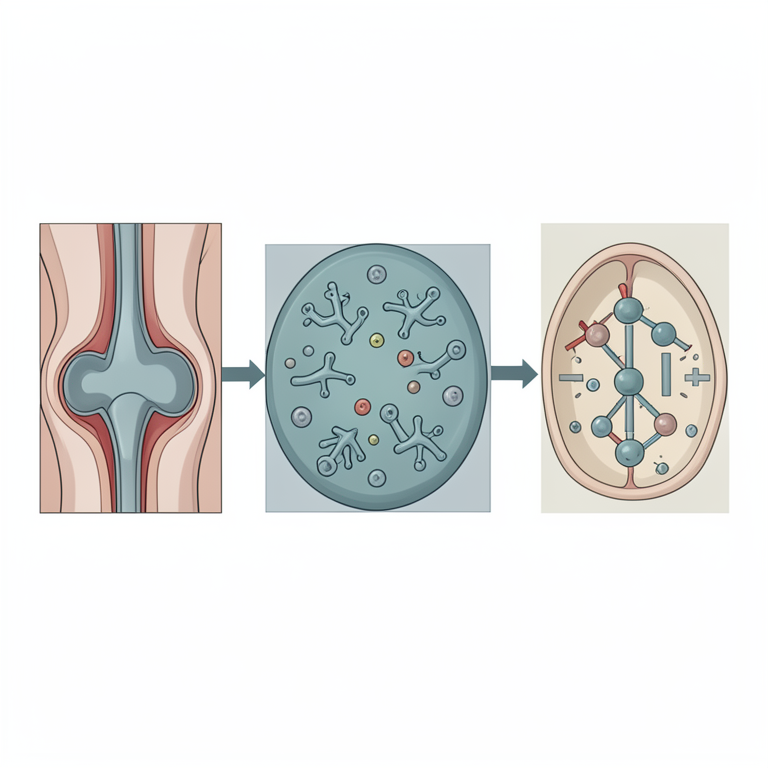
Anti-inflammatory Drug Targets
AI-generated conceptual illustration (human synovial joint tissue and cellular signaling proteins). It explains the idea and does not show study data.
View source evidence ↗Introduction
Inflammation is a complex biological response to harmful stimuli, such as pathogens, damaged cells, or irritants. It is a protective response involving immune cells, blood vessels, and molecular mediators. Acute inflammation is a normal part of the healing process; however, when inflammation becomes chronic, it can lead to various diseases, including rheumatoid arthritis, cardiovascular diseases, inflammatory bowel disease, and cancer. Traditional anti-inflammatory drugs, such as nonsteroidal anti-inflammatory drugs (NSAIDs) and corticosteroids, are effective but often come with significant side effects, driving the need for new and safer therapies. This review explores the recent advances in antiinflammatory drug development, highlighting novel targets, innovative drug delivery systems, and emerging therapies.
Objective
The objective of this paper is to review recent advances in the development of antiinflammatory drugs, focusing on novel targets, innovative drug delivery systems, and emerging therapies, while highlighting their mechanisms of action, efficacy, and safety profiles.
side effects, such as increased risk of infections and malignancies, which necessitate careful monitoring [1] . IL-1 inhibitors: IL-1 is another pro-inflammatory cytokine that plays a pivotal role in the inflammatory response. Anakinra is an IL-1 receptor antagonist that blocks the activity of IL-1 by competitively inhibiting its binding to the IL-1 receptor. Anakinra has been approved for the treatment of rheumatoid arthritis and other inflammatory conditions. Clinical trials have demonstrated that anakinra reduces joint inflammation, pain, and damage, and improves physical function in patients with rheumatoid arthritis. Another IL-1 inhibitor, canakinumab, is a monoclonal antibody that specifically targets IL-1β. It has shown efficacy in treating a range of inflammatory diseases, including systemic juvenile idiopathic arthritis and periodic fever syndromes. Despite their benefits, IL-1 inhibitors can cause adverse effects, including neutropenia and an increased risk of infections [2] . IL-6 inhibitors: IL-6 is a multifunctional cytokine that plays a critical role in immune regulation, inflammation, and hematopoiesis. Tocilizumab is a humanized monoclonal antibody that binds to the IL-6 receptor, inhibiting IL-6-mediated signaling pathways. It has been approved for the treatment of rheumatoid arthritis, systemic juvenile idiopathic arthritis, and giant cell arteritis. Clinical studies have shown that tocilizumab effectively reduces inflammation, improves symptoms, and slows disease progression in patients with these conditions. Sarilumab, another IL-6 receptor antagonist, has also shown promising results in clinical trials for rheumatoid arthritis. However, IL-6 inhibitors can cause side effects such as liver enzyme elevation, lipid abnormalities, and increased risk of infections [3] .
JAK-STAT pathway inhibitors
The Janus kinase (JAK)-signal transducer and activator of transcription (STAT) pathway is critical in cytokine signalling and immune function. events, requiring careful monitoring during treatment [4,5] .
NLRP3 inflammasome inhibitors
The NLRP3 inflammasome is a multi-protein complex involved in the activation of inflammatory responses. It plays a key role in the production of pro-inflammatory cytokines such as IL-1β and ILOther NLRP3 inhibitors, such as dapansutrile, are also being investigated for their potential in treating inflammatory diseases. Dapansutrile has shown efficacy in reducing inflammation and improving outcomes in animal models of myocardial infarction and arthritis [6] .
Innovative drug delivery systems nanotechnology
Nanoparticle-based delivery systems have the potential to revolutionize anti-inflammatory drug delivery by enhancing the bioavailability and targeting of drugs, reducing systemic side effects, and improving therapeutic efficacy. Liposomal delivery: Liposomes are spherical vesicles composed of phospholipid bilayers that can encapsulate drugs, protecting them from degradation and enhancing their delivery to target tissues. Liposomal formulations of corticosteroids and NSAIDs have shown improved anti-inflammatory effects in preclinical models. For example, liposomal prednisolone has demonstrated enhanced anti-inflammatory activity and reduced toxicity compared to free prednisolone in models of arthritis. Similarly, liposomal diclofenac has shown improved efficacy and reduced gastrointestinal side effects in animal models of inflammation. The use of liposomes allows for the controlled release of drugs, providing sustained therapeutic effects and reducing the frequency of dosing [7] . Polymeric nanoparticles: Polymeric nanoparticles are another promising drug delivery system for antiinflammatory therapies. These nanoparticles can be engineered to release drugs in a controlled manner, providing sustained therapeutic effects with minimal dosing frequency. Polymeric nanoparticles can be designed to target specific tissues or cells, enhancing the delivery of anti-inflammatory agents to inflamed tissues. For example, polymeric nanoparticles loaded with dexamethasone have shown prolonged drug release and enhanced anti-inflammatory activity in animal models of inflammation.
Similarly, nanoparticles loaded with methotrexate have demonstrated improved efficacy and reduced toxicity in models of rheumatoid arthritis. The use of polymeric nanoparticles also allows for the incorporation of multiple drugs, providing combination therapy in a single formulation [8] .
Hydrogels
Hydrogels are three-dimensional networks of hydrophilic polymers that can retain large amounts of water. They offer controlled release of anti-inflammatory agents, providing sustained therapeutic effects with minimal dosing frequency. Hydrogel-based delivery: Hydrogels loaded with antiinflammatory drugs such as diclofenac and dexamethasone have shown prolonged drug release and enhanced anti-inflammatory activity in animal models. For example, a hydrogel loaded with diclofenac demonstrated sustained drug release and reduced inflammation in a model of arthritis. Similarly, a hydrogel loaded with dexamethasone showed prolonged drug release and improved outcomes in models of ocular inflammation. The use of hydrogels allows for the localized delivery of drugs, reducing systemic side effects and improving therapeutic efficacy. Hydrogels can also be designed to respond to specific stimuli, such as temperature or pH, allowing for the controlled release of drugs in response to changes in the local environment. This property makes hydrogels particularly suitable for applications in inflammatory diseases, where the local environment is often altered [9] .
Emerging Therapies Biologics
Biologics are large, complex molecules produced by living cells. They target specific components of the immune system, providing precise anti-inflammatory effects. The development of biologics has revolutionized the treatment of inflammatory diseases, offering new therapeutic options for patients who do not respond to traditional therapies. Monoclonal antibodies: Monoclonal antibodies are biologics that specifically target and neutralize proinflammatory cytokines or their receptors. For example, dupilumab is a monoclonal antibody that targets the IL-4 receptor, inhibiting the signalling of both IL-4 and IL-13, which are key drivers of atopic dermatitis. Clinical trials have shown that dupilumab significantly reduces symptoms and improves the quality of life in patients with moderate-to-severe atopic dermatitis. Similarly, secukinumab is a monoclonal antibody that targets IL-17A, a cytokine involved in the pathogenesis of psoriasis. Clinical studies have demonstrated that secukinumab effectively reduces psoriatic lesions and improves symptoms in patients with moderate-to-severe psoriasis. Monoclonal antibodies such as these have shown significant efficacy in treating various inflammatory diseases, but they also have potential side effects, including an increased risk of infections and the development of antibodies against the biologic itself [10,11] . Fusion proteins: Fusion proteins are biologics that combine the properties of two or more proteins to enhance their therapeutic effects. Abatacept is a fusion protein that modulates T-cell activation by interfering with the co-stimulation of T cells. It consists of the extracellular domain of cytotoxic T-lymphocyteassociated antigen 4 (CTLA-4) fused to the Fc region of immunoglobulin G1 (IgG1). Abatacept has been approved for the treatment of rheumatoid arthritis and has shown efficacy in reducing disease activity and improving physical function in clinical trials. Another example of a fusion protein is etanercept, which acts as a decoy receptor for TNF-α. Etanercept consists of the extracellular domain of the TNF receptor fused to the Fc region of IgG1. It has been approved for the treatment of rheumatoid arthritis, psoriatic arthritis, and ankylosing spondylitis, and has shown significant efficacy in clinical studies. Fusion proteins offer the advantages of combining the properties of multiple proteins, enhancing their therapeutic effects and providing new treatment options for inflammatory diseases [12] .
Small molecules
Small molecule inhibitors target specific enzymes or receptors involved in the inflammatory process, offering oral administration options with fewer side effects compared to biologics. The development of small molecule inhibitors has expanded the range of therapeutic options for inflammatory diseases. PDE4 inhibitors: Phosphodiesterase-4 (PDE4) inhibitors are a class of small molecules that inhibit the activity of PDE4, an enzyme involved in the degradation of cyclic adenosine monophosphate (cAMP). By increasing the levels of cAMP, PDE4 inhibitors reduce the production of pro-inflammatory cytokines and enhance the anti-inflammatory response.
Apremilast is a PDE4 inhibitor that has been approved for the treatment of psoriasis and psoriatic arthritis. Clinical studies have shown that apremilast effectively reduces the severity of psoriatic lesions and improves symptoms in patients with psoriatic arthritis. The oral administration of apremilast offers a convenient and less invasive option compared to biologics, but it can also cause side effects such as gastrointestinal disturbances and weight loss [13] . S1P Receptor Modulators: Sphingosine-1-phosphate (S1P) receptor modulators are small molecules that modulate the activity of S1P receptors, which play a crucial role in the regulation of immune cell trafficking.
Fingolimod is an S1P receptor modulator that has been approved for the treatment of multiple sclerosis. By preventing the egress of lymphocytes from lymph nodes, fingolimod reduces the infiltration of immune cells into the central nervous system, thereby reducing inflammation and disease activity. Clinical studies have shown that fingolimod effectively reduces the frequency of relapses and slows the progression of disability in patients with multiple sclerosis. However, fingolimod can also cause side effects such as bradycardia, macular edema, and increased risk of infections, necessitating careful monitoring during treatment [14] .
Natural Products
Natural products and their derivatives exhibit antiinflammatory properties through various mechanisms. These compounds are being investigated for their potential to Curcumin: Curcumin, derived from the spice turmeric, has been extensively studied for its anti-inflammatory properties. It inhibits the NF-κB signalling pathway, which plays a key role in the production of proinflammatory cytokines. Clinical trials have demonstrated that curcumin reduces symptoms and improves outcomes in patients with osteoarthritis, irritable bowel syndrome, and other inflammatory conditions. For example, a study on patients with knee osteoarthritis showed that curcumin supplementation significantly reduced pain and improved physical function compared to placebo. Another study on patients with irritable bowel syndrome found that curcumin reduced symptoms and improved quality of life. Despite its promising effects, the poor bioavailability of curcumin limits its therapeutic potential, and various formulations are being developed to enhance its absorption and efficacy [15] . Resveratrol: Resveratrol, found in grapes and red wine, exhibits anti-inflammatory properties by modulating various signalling pathways, including NF-κB and SIRT1. It has shown potential in reducing inflammation in conditions such as inflammatory bowel disease, cardiovascular diseases, and metabolic disorders. For example, a study on patients with ulcerative colitis found that resveratrol supplementation reduced disease activity and inflammation compared to placebo. Another study on patients with metabolic syndrome demonstrated that resveratrol improved inflammatory markers and cardiovascular risk factors. The potential benefits of resveratrol are being investigated in various clinical trials, but its poor bioavailability remains a challenge, and efforts are being made to develop more effective formulations [16] . Boswellic Acid: Boswellic acid, extracted from the resin of the Boswellia tree, has shown antiinflammatory effects by inhibiting 5-lipoxygenase, an enzyme involved in the production of leukotrienes. Clinical trials have demonstrated the efficacy of boswellic acid in treating osteoarthritis, rheumatoid arthritis, and other inflammatory conditions. For example, a study on patients with osteoarthritis found that boswellic acid supplementation significantly reduced pain and improved physical function compared to placebo. Another study on patients with rheumatoid arthritis showed that boswellic acid reduced disease activity and inflammation. Boswellic acid is generally well-tolerated, but its variable absorption and potential interactions with other medications require further investigation [17] .
Efficacy and safety profiles Clinical trials
Recent clinical trials have shown promising results for novel anti-inflammatory agents. For example, upadacitinib, a JAK inhibitor, has demonstrated significant improvements in rheumatoid arthritis symptoms with a favorable safety profile. A phase III clinical trial found that upadacitinib significantly reduced disease activity and improved physical function in patients with rheumatoid arthritis compared to placebo and adalimumab. Another study on patients with psoriatic arthritis showed that upadacitinib effectively reduced symptoms and improved quality of life. Despite its efficacy, upadacitinib, like other JAK inhibitors, can cause side effects such as infections, lipid abnormalities, and thromboembolic events, requiring careful monitoring during treatment [18] .
Side effects and risks
While new therapies offer improved targeting and efficacy, they also present risks such as immunosuppression and increased infection rates. For example, TNF-α inhibitors, while effective in reducing inflammation, can increase the risk of infections, malignancies, and autoimmune conditions. IL-6 inhibitors can cause liver enzyme elevation, lipid abnormalities, and gastrointestinal perforations. JAK inhibitors can lead to infections, lipid abnormalities, and thromboembolic events. NLRP3 inflammasome inhibitors and biologics such as monoclonal antibodies and fusion proteins can also cause immunosuppression and increased susceptibility to infections. Continuous monitoring and risk management are essential in the clinical use of these drugs to ensure patient safety and optimize therapeutic outcomes [19] .
Future perspectives and challenges Personalized medicine
Advances in genomics and biomarkers are paving the way for personalized anti-inflammatory therapies tailored to individual patient profiles. By identifying specific genetic and molecular markers associated with disease and treatment response, personalized medicine aims to enhance efficacy and minimize adverse effects. For example, pharmacogenomic studies have identified genetic variants associated with the response to TNF-α inhibitors, allowing for more targeted and effective treatment strategies.
Similarly, biomarkers such as C-reactive protein and interleukin-6 levels can guide the use of specific antiinflammatory therapies and monitor treatment response. Personalized medicine also involves the development of companion diagnostics to identify patients who are likely to benefit from specific therapies. While personalized medicine holds great promise, it also presents challenges such as the need for robust clinical validation, regulatory approval, and cost-effective implementation [20] .
Regulatory and ethical considerations
The development and approval of new anti-inflammatory drugs face regulatory challenges, including stringent safety and efficacy requirements. Regulatory agencies such as the FDA and EMA require comprehensive preclinical and clinical data to ensure the safety and efficacy of new therapies. The complex nature of biologics and advanced drug delivery systems adds to the regulatory challenges, necessitating rigorous testing and quality control. Ethical considerations, particularly in clinical trials, must be addressed to ensure patient safety and informed consent. Issues such as the equitable inclusion of diverse populations, the use of placebo controls, and the management of adverse events require careful consideration. The development of new anti-inflammatory therapies also raises ethical questions related to access and affordability, highlighting the need for policies that ensure equitable distribution and availability of these treatments [21] .
effective therapies. Advances in basic science, such as the understanding of the molecular mechanisms underlying inflammation, are driving the discovery of novel targets and therapeutic strategies. The integration of new technologies, such as CRISPR-based gene editing and high-throughput screening, is accelerating the identification and validation of new drug candidates. Collaboration between academia, industry, and regulatory bodies is crucial to advance this field, fostering innovation and translating scientific discoveries into clinical applications. Continued investment in research and development, along with supportive policies and funding mechanisms, is essential to overcome current challenges and achieve breakthroughs in anti-inflammatory drug development [22] .
Conclusion
The development of anti-inflammatory drugs has made significant strides, with novel targets, innovative delivery systems, and emerging therapies offering new hope for patients with chronic inflammatory diseases. The advances in cytokine inhibitors, JAK-STAT pathway inhibitors, NLRP3 inflammasome inhibitors, and biologics have expanded the range of therapeutic options and improved patient outcomes. Innovative drug delivery systems, such as nanotechnology and hydrogels, have enhanced the bioavailability and targeting of anti-inflammatory agents, reducing side effects and improving efficacy. Emerging therapies, including small molecules and natural products, offer new avenues for treatment and complement existing therapies. Despite these advances, challenges such as side effects, regulatory hurdles, and ethical considerations remain. Continued research, collaboration, and investment are vital to overcoming these challenges and achieving breakthroughs in this essential area of medicine.
References
21 in the original paper- Feldmann M, Maini RN. Anti-TNF therapy: past, present and future. Nat Rev Drug Discov. 2003;2(9):693-703.
- Bresnihan B. The safety and efficacy of interleukin-1 receptor antagonist in the treatment of rheumatoid arthritis. Semin Arthritis Rheum. 2001;30(5):17-20.
- Gabay C, McInnes IB. The biological and clinical importance of the 'new generation' cytokines in rheumatic diseases. Arthritis Res Ther. 2009;11(3):230.
- O'Shea JJ, Gadina M. Selective Janus kinase inhibitors come of age. Nat Rev Rheumatol. 2014;10(2):74-75.
- Taylor PC. Clinical efficacy of launched JAK inhibitors in rheumatoid arthritis. Rheumatology (Oxford). 2019;58(Suppl 1).
- Coll RC, Robertson AA, Chae JJ, et al. A smallmolecule inhibitor of the NLRP3 inflammasome for the treatment of inflammatory diseases. Nat Med. 2015;21(3):248-255.
- Pattni BS, Chupin VV, Torchilin VP. New developments in liposomal drug delivery. Chem Rev. 2015;115(19):10938-10966.
- Kamaly N, Yameen B, Wu J, Farokhzad OC. Degradable controlled-release polymers and polymeric nanoparticles: mechanisms of controlling drug release. Chem Rev. 2016;116(4):2906-2942.
- Peppas NA, Bures P, Leobandung W, Ichikawa H. Hydrogels in pharmaceutical formulations. Eur J Pharm Biopharm. 2000;50(1):27-46.
- Blauvelt A, Papp KA, Griffiths CE, et al. Efficacy and safety of secukinumab in the treatment of moderate-tosevere plaque psoriasis: a randomized, double-blind, placebo-controlled, phase 3 trial. Lancet. 2014;384(9949):661-671.
- Simpson EL, Bieber T, Guttman-Yassky E, et al. Two phase 3 trials of dupilumab versus placebo in atopic dermatitis. N Engl J Med. 2016;375(24):2335-2348.
- Kremer JM, Genovese MC, Westhovens R, et al. Abatacept for rheumatoid arthritis refractory to tumor necrosis factor alpha inhibition. N Engl J Med. 2006;353(11):1114-1123.
- Kappos L, Radue EW, O'Connor P, et al. A placebocontrolled trial of oral fingolimod in relapsing multiple sclerosis. N Engl J Med. 2010;362(5):387-401.
- Belcaro G, Cesarone MR, Dugall M, et al. Efficacy and safety of Flexofytol® (Curcumin extract) in the treatment of osteoarthritis: a supplement study. Panminerva Med. 2010;52(2 Suppl 1):55-62.
- Singh NP, Singh UP, Rouse M, et al. Resveratrol protects a mouse model of colitis by improving intestinal barrier function and reducing colon inflammation. Dig Dis Sci. 2010;55(5):1171-1178.
- Siddiqui MZ. Boswellia serrata, a potential antiinflammatory agent: an overview. Indian J Pharm Sci. 2011;73(3):255-261.
- Smolen JS, Pangan AL, Emery P, et al. Upadacitinib as monotherapy: a phase III randomized controlled trial in rheumatoid arthritis. Ann Rheum Dis. 2019;78(1):7080.
- Harrington R, Al Nokhatha SA, Conway R. JAK inhibitors in rheumatoid arthritis: an evidence-based review on the emerging clinical data. J Inflamm Res. 2020;13:519-531.
- Smolen JS, Aletaha D, McInnes IB. Rheumatoid arthritis. Lancet. 2016;388(10055):2023-2038.
- Hoekstra R, van Ede AE, Haagsma CJ, et al. Factors influencing the incidence of infectious complications in patients with rheumatoid arthritis. Arthritis Rheum. 2003;48(2):332-337.
- Firestein GS. Evolving concepts of rheumatoid arthritis. Nature. 2003;423(6937):356-361