
Research article · 2024 · Full text
International Journal of Research in AgronomyAn ancient Indian formulation (Kunapajala) for plant protection and manure use to enhance agricultural productivity under natural farming
Volume 7(6) · Pages 745–750 · DOI: 10.33545/2618060x.2024.v7.i6j.1024 ↗
Research areasAgricultural Economics and PracticesAgricultural Science and Fertilization
Abstract
Author-writtenAgriculture is the backbone of the Indian economy because 65% of our population resides in rural areas, and 47% of the population depends on this sector for their livelihood. Keeping these facts in view, focusing on rural development seems to be essential. After successful implementation of the Green Revolution programme, definitely India has achieved its goal of food security. Currently, our focus has changed from food security to nutritional security with quality produce. Before Indian agriculture, there were many challenges, such as social and environmental issues, which can be catered to by the adoption of age-old agricultural practices after revalidation in present-day farmland cultivation or in the Indian production system. Natural farming is another approach based on the principles of nature and farmland ecology. This aforesaid farming is the need of hour so action should be taken at earliest and our ancient rich agricultural heritage must be utilized as a tool to overcome the current alarming Indian agricultural challenges. For nutrient and pest management, our ancient formulation such as Kunapajala may be beneficial for changing climatic scenarios to meet the quality requirements of Indian households by revitalizing and restrengthening our natural resource bases as a top priority.
Summary
Source-checkedPlain-language reading of the full paper, prepared with AI and checked against the text. Each point links to the authors' own words.
Why it matters
- Agriculture is critical to the Indian economy, supporting 47% of the population's livelihood and involving 65% of the population living in rural areas. View evidence ↗
- The indiscriminate use of up to 61,000 tons of pesticides in India has led to environmental degradation, including pesticide resistance, pest resurgence, and a decline in natural enemy populations. View evidence ↗
- Natural farming is presented as a climate-resilient, low-input alternative that avoids industrial pesticides and relies on local resources to maintain farmland ecology. View evidence ↗
The question
- The authors aim to highlight how the ancient Indian formulation Kunapajala can be used for nutrient and pest management to improve agricultural quality under changing climatic conditions. View evidence ↗
What they did
- Kunapajala is a traditional liquid-fermented preparation made from the fermentation of animal and plant products. View evidence ↗
- The formulation is categorized into two main types: herbal and non-herbal. View evidence ↗
- One specific non-herbal method (Rat Kunapa) involves fermenting a few dead rats with 3L cow urine, 5kg cow dung, sugar, black gram, sesame, milk, and honey for at least 2 weeks. View evidence ↗
- Herbal Kunapajala can be prepared using 20kg cow dung, 20L cow urine, 2kg each of sprouted urd, mustard cake, and jaggery, along with 2kg each of various plants including Neem, Datura, and Lantana. View evidence ↗
What they found
- Combining Kunapajala and Panchagavya for soil drenching resulted in better linear growth of roots and shoots in vegetable seedlings compared to using either alone or a control. View evidence ↗
- A 1% foliar application of Indsafari (a Kunapajala variant) effectively controlled mosquito bugs and loopers in tea gardens. View evidence ↗
- Using Kunapajala at a 10% concentration for seed priming in chickpea crops yielded significantly better results than hydro-priming or control treatments. View evidence ↗
- Kunapajala is found to contain beneficial enzymes, hormones, and microbes that promote plant growth. View evidence ↗
What it means
- The authors conclude that Kunapajala is an effective, sustainable tool for enhancing crop productivity and managing pests and diseases. View evidence ↗
Visual summary
1 visualsIllustrations explain the paper; they do not show study data.
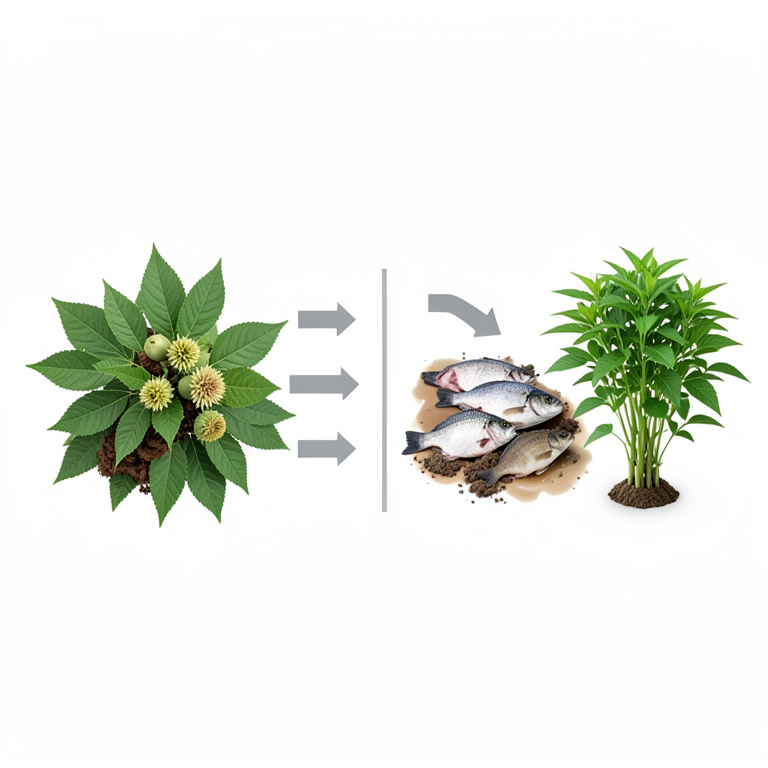
Kunapajala Formulation Types
AI-generated conceptual illustration (Agricultural organic formulations using cow dung, cow urine, plants, and animal proteins). It explains the idea and does not show study data.
View source evidence ↗Figures & tables
From the original paper Table 1
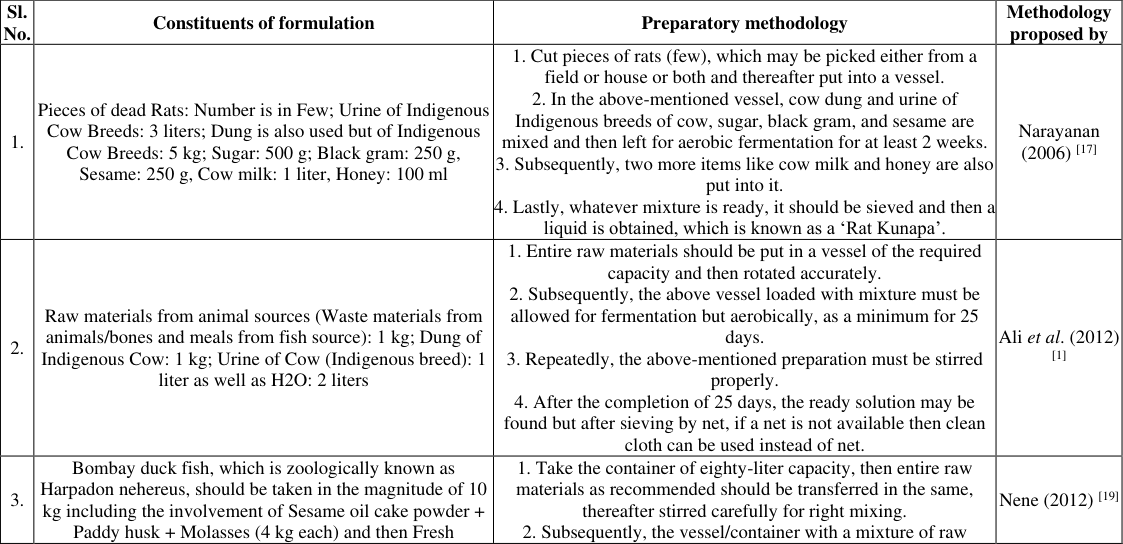 Table 2
Introduction
Natural farming is a kind of agricultural practice that solely keeps farmland ecology at the central focus by maintaining biodiversity, enhancing biological activities by preserving the natural flora and fauna of soil, optimizing the complexity of living organisms both flora and fauna along with abiotic production factors in food grain production ecosystems with the objectives to revitalize and restore overall soil health (wasteland to sustainable productive land); improving and promoting indigenous cow breeds for farm/society welfare and efficiently and effectively utilizing available natural/local resources (land, light, air and water, etc.) at the farm level, consequently enhancing farmers' economies by reducing agricultural input costs in the current agricultural production system and mitigating or/and reducing greenhouse gas emissions. Natural farming practices have following approaches, which should be strictly involved in agricultural production systems: Natural farm must be independent of external agricultural inputs. Use of seeds of local/traditional varieties. Locally developed microbial preparations and others based on natural/local raw materials must be used for soil and seed dressings. The raw materials from farms must be used to prepare microbial and other preparations to maintain soil health. The cover crops were grown, and biomass mulch was obtained from farm trees and other sources. Biomass incorporation may bring about a suitable microclimate by increasing beneficial microbial activity.
Adoption of suitable and remunerative mixed and intercropping systems of local importance. Growing trees on natural farmland. Livestock must be integral part of natural farming system, especially indigenous cow breeds, as dung, urine, milk, curd and ghee are important inputs for the preparation of different products to meet the nutritional requirements of crops and for controlling various diseases and pests. Age-old tested and validated traditional methods must be adopted for water and moisture conservation [13] .
Relevance of Natural Farming
Rachel Carson in 1962 published the book 'Silent Spring', in which she alarmed mankind about the negative impact of synthetic pesticide application in an injudicious and indiscriminate manner [21] . Subsequently, the negative effects of pesticide application on the immediate environment and on agriculturally important microorganisms have also been described by other scientists. Keeping these facts in mind, this research was slightly reoriented to an eco-friendly farming system to expedite the development and adoption of natural/ecopest management practices or methodologies. However, in India, pesticide consumption has increased over the years, reaching a level of 61,000 tons of pesticide [10] . With the inception of the 'greed revolution', excessive and indiscriminate use of pesticides and monoculture of semidwarf varieties became common features of Indian agriculture, which led to an increase in the occurrence of insect pests and diseases, pesticide resistance, pest resurgence, pesticide residues in agricultural products and natural bodies and a marked decrease in the population of natural enemies. In addition, the present agroecosystems in India have structurally and functionally deviated from the natural ones, possibly due to human interference in agricultural production systems. Hence, diversification of the Indian farming system seems to be most crucial and essential in the current climate change scenario for saving and protecting components of farming and cropping systems from pest invasions. Suitable and site-specific crop diversification has several valuable influences on the population dynamics of insects, agriculturally important microbes in the soil environment and disease occurrence in agricultural ecosystems. Microclimatic alteration through agronomic management techniques such as intercropping, relay cropping and crop rotation can not only increase production per unit time and per unit area but also be an effective tool in pest management. Ternangular relationships among pathogens/pests with their host plants and manipulation in microclimatic environments can provide the possibility and opportunity to control pests. Natural farming is an agroecological system that adheres to fundamental ecological and natural principles that promote sustainability, productivity, and the preservation of the land's natural resources. Agroecology emphasizes the interconnectedness of agroecosystem components and the intricate dynamics of ecological processes, including nutrient cycling and insect regulation, as opposed to focusing on a single component. As a result, a cropping system in which primary and intercrop commodities are mutually exclusive and resistant to one another's pests should be devised. Natural farming is a climate-resilient, low-input method that promotes the use of locally sourced, inexpensive inputs, decreases crop water demand, and foregoes industrial pesticides. Moreover, it has the capacity to mitigate cultivation expenses.
Definition of Natural Farming
Natural farming is an ecological farming methodology that was developed by the Japanese philosopher and farmer Masanobu Fukuoka. The book "The One-Straw Revolution" was where he first defined the aforementioned term [8] .
As per Fukuoka, there are 4 principles of natural farming, which are given as follows No disturbance of soil/ no tillage/ no use of plowing implements Avoidance of chemical-based fertilizers, hence it is essential to prepare the manure based age-old formulation from raw materials available at farmlands. Tillage-or herbicide-mediated weed control must be avoided Avoid dependency on other chemicals
The Ministry of Agriculture and Farmers' Welfare Definition of Natural Farming (NF): "A chemical-free natural farming system wherein use of low-cost inputs (cow dung/urine and plant extract based) coupled with recommended agronomic practices like mulching and intercropping are promoted".
NITI Aayog
Naural farming is chemical-free and livestock-based farming. As a basis for this definition, prevalent practices are utilized. A diversified agricultural system that incorporates crops, trees, and livestock while maximizing the use of functional biodiversity is firmly rooted in agroecology.
Nutrient Management and Plant Protection Approaches in Natural Farming
The Indian agricultural history is rich in different innovations and practices, which is evident from various books that have included the different aspects of agricultural development. In 400 BCE, Krishi-Parashar authored the world's first textbook on agriculture. This means that India was a pioneer in the innovation of different kinds of manure and plant protection. Among them, liquid nutrients/manures have an almost 1000year-old history [19] . Since long dating back, Kunapajala or Kunapambu refers to an old-style liquid organic preparation utilized in agriculture. Kunapajala, a Sanskrit word made up of two words, 'Kunapa', means having an odor reminiscent of a decaying corpse, and 'Jala' stands for water. This aforesaid preparation appears in two ancient manuscripts: 'Vrikshayurveda,' authored by Surapala approximately 1,000 AD in Eastern India, and 'Lokopakara,' documented by poet Chavundaraya approximately 1,025 AD in Karnataka, South India. [7,1] . With the publication of the English version of Vrikshayurveda, the beneficial role of Kunapajala came to notice. Valmiki Sreenivasa Ayangarya conducted tryouts with Kunapajala and subsequently highlighted its beneficial effects on mango and coconut using herbal formulations [2] . On the other hand, when herbal Kunapajala is made from naturally fallen sour mango and soap nut (Sapindus emarginatus) and applied to chili plants, its growth enhanced, as reported by Ayangarya [3] . Later, in Arunachal Pradesh, Ayangarya made various types of Kunapajala and experimented with various crops, such as tea bushes and kiwi fruit gardens. The results showed an encouraging impact on plant growth promotion and natural pest-controlling characteristics. Different types of Kunapajala prepared by Ayangarya are given in Table 1. Indsafari [4] Mix safari fish along with cow urine of indigenous breed, then fermented under aerobic conditions 2.
| Sl. No. | Different name of Kunapajala | Preparation Method |
|---|---|---|
| 1. | Indsafari [4] | Mix safari fish along with cow urine of indigenous breed, then fermented under aerobic conditions |
| 2. | Mushika Kunapa [5] | Mix rats (body parts) along with cow urine of indigenous breed, thereafter fermented under aerobic conditions |
| 3. | Kukkuta Kunapa [6] | Mixing of fleshes of chicken + cow urine (Indigenous Breed), then fermented under aerobic conditions |
Table text extracted from the original PDF; superscript letters are shown inline. The original table image is below.
View original table image
Mushika Kunapa [5] Mix rats (body parts) along with cow urine of indigenous breed, thereafter fermented under aerobic conditions 3.
Kukkuta Kunapa [6] Mixing of fleshes of chicken + cow urine (Indigenous Breed), then fermented under aerobic conditions
Along with the adoption of ecologically friendly agricultural operations and practices, natural farming solely depends on locally produced manures, biopesticides, and natural sources of mulching. Age-old plant preparations and formulations are in the real sense good sources of agriculturally important microorganisms, essential plant macro-and micronutrients, plant growth-promoting hormones, enzymes, vitamins, etc., and exhibit natural pest-controlling characteristics [22] . Among the various traditional preparations, Kunapajala was traditionally used and is still contemporary as well as one of the best and first liquid-fermented preparations; it was created by fermenting plants and animal products. Along with important microorganisms, growth-promoting substances, and others, Kunapajala has an abundant amount of plant nutrients, particularly NPK, which play crucial roles in supporting plant development and growth. In 2007, Mishra mentioned that Kunapajala can serve as a viable alternative to traditional plant nutrient sources [15] .
Kunapajala preparation
The importance and use of Kunapajala in optimizing crop growth and productivity are mentioned, while Lokopakara lacks detailed instructions, Surapala's Vrikshayurveda (verses 101-106) outlines the preparation procedure [23] . Whatever flesh, bone marrow, brain, body fluid, or body waste of a lifeless pig is available, it should be collected as convenient, and thereafter, water must be mixed in it and finally placed under the ground to avoid foul/bad odor generation and also avoid attacks from animals, particularly dogs. Surapala has given first preference to use dead boars for the preparation of Kunapajala; however, to enhance flexibility among farmers concerning the use of raw materials, he later recommended the use of other items, e.g., fat, bone marrow, flesh, body fluid, and body waste, from any animal (especially with horns), and fishes can also be used in preparation procedures if available. Collected all the amount of fleshes of animals including fish' excreta and their body components must be appropriately cooked in water and then stored in a vessel made of clay with the adequate husk of paddy. During application, the above-mentioned mixture should be cooked by adding an oilcake of sesame, honey, and black gram but water-soaked, eventually, a small amount of cow ghee may also be added to the mixture.
Perhaps the natural liquid formulation of Kunapajala in many manuscripts mentioned its positive and crucial nutritive role in overall plant/tree growth and development of special reproductive parts; surprisingly, in Vrikshayurveda of Surapala, there is no suggestion about the quantity of ingredients essentially required to prepare Kunapajala formulations [14] .
In 1999, Nene explained that Kunapajala might also be prepared by using plant-based products as a raw material without animal flesh [18] . This means that Kunapajala can be categorized into two parts: herbal and nonherbal. This herbal Kunapajala is also called Shasyagavya. The preparation methods of herbal Kunapajala include first mixing gobars, gomutra, organic residue, and water in a ratio of 1:1:1:2, respectively then this prepared mixture must be allowed for fermentation. Over the course of time, manipulation or alteration in Kunapajala preparation was observed, which was based on locally available raw materials and farming practices. Some are compiled below (Table 2). Cut pieces of rats (few), which may be picked either from a field or house or both and thereafter put into a vessel. 2. In the above-mentioned vessel, cow dung and urine of Indigenous breeds of cow, sugar, black gram, and sesame are mixed and then left for aerobic fermentation for at least 2 weeks. 3. Subsequently, two more items like cow milk and honey are also put into it. 4. Lastly, whatever mixture is ready, it should be sieved and then a liquid is obtained, which is known as a 'Rat Kunapa'.
Raw materials from animal sources (Waste materials from animals/bones and meals from fish source): 1 kg; Dung of Indigenous Cow: 1 kg; Urine of Cow (Indigenous breed): 1 liter as well as H2O: 2 liters 1. Entire raw materials should be put in a vessel of the required capacity and then rotated accurately. 2. Subsequently, the above vessel loaded with mixture must be allowed for fermentation but aerobically, as a minimum for 25 days. 3. Repeatedly, the above-mentioned preparation must be stirred properly. 4. After the completion of 25 days, the ready solution may be found but after sieving by net, if a net is not available then clean cloth can be used instead of net.
Ali et al. (2012)
Bombay duck fish, which is zoologically known as Harpadon nehereus, should be taken in the magnitude of 10 kg including the involvement of Sesame oil cake powder + Paddy husk + Molasses (4 kg each) and then Fresh 1. Take the container of eighty-liter capacity, then entire raw materials as recommended should be transferred in the same, thereafter stirred carefully for right mixing. 2. Subsequently, the vessel/container with a mixture of raw Nene (2012) [19] Indigenous cow urine: 30 liters materials should be placed in a shady place for a minimum of 60 days. During this aforesaid period, rotate the mixture irregularly to confirm the fermentation, but aerobically. 3. Finally, after completion of fermentation of the raw materials mixture, it should be filtered properly by using hygienic fabric.
4.
Fish and mutton: 3 kg; Honey: 2.5 kg; Milk: 6 liters; Sesame: 500 g; Black gram: 500 g; and Water: 12 liters 1. For the preparation of nonherbal Kunapajala, fish, as well as mutton, altogether is allowed to boil in H2O till six liters of extract of mutton and fish remain, which is further allowed to cool down. 2. Thereafter, take a porcelain pot, which must be fumigated employing dried Guggulu (the botanical name is Commiphora wightii)/Marica (its botanical name is Piper nigrum)/Jatamansi (it is also known by Nardostachys grandiflora as a binomial nomenclature). 3. Whatever juice is obtained after boiling and cooling fish and mutton jointly should be transferred in a fumigated porcelain pot.
4. Consequently; the addition of Indigenous Cow Milk, honey, sesame (Til) & Black gram (Urd) is permitted in the same pot. 5. Then, the opening or mouth of the above-mentioned porcelain pot should be locked by cover, i.e., lid, and after all wrapped with muddy (clay) fabric/cloth. 6. In the next step, the jar/pot is allowed for anaerobic fermentation at least for 15 days duration. 7. Ultimately, the mouth of the pot is unlocked, then whatever mixture of the solution is ready, should be sieved by clean cloth/fabric Jani et al.
(2017) [12] 5. Water: 5 liters; Animal flesh/fish: 1 kg; Milk: 1 liter; Ghee: 1 kg; Honey: 500 g; and Cow urine: 1 liter 1. Fleshes/meat of animals and fishes should be boiled along with H2O 2. After boiling, the entire material must be poured into an earthen pot. 3 Then, other all raw constituents must be added to the above earthen pot. 4. Hot water which is approximately 5 liters is being poured into the above mixture. 5. The mouth of the container should be covered with clean and hygienic fabric/cloth 6. Continuously till 14 days, constantly and consistently the above combination must be mixed up. 7. Lastly, the above-ready solution must be filtered properly. 8. The above Filtrate may be applied or sprayed over any crop foliage at any stage by diluting it (Kunapajala) with available H2O in 1:10 proportion.
Nettle Herbal based Kunapajala Cow dung and urine of Indigenous breed must be taken 20 kg and 20 liters, respectively. Germinated pulse, i.e., Sprouted urd: 2 kg; Cake (khali) of mustard: 2 kg; and crushed jaggery: 2 kg; H2O: 20 liters; Indigenous cow milk: 1 liter as well as buttermilk: 1 liter Lastly Paddy husk
Function of Kunapajala in Agriculture
It is a good source of essential plant nutrients Kunapajala contains various agriculturally important microbes, beneficial enzymes, hormones and other natural chemicals that tend to promote plant growth and development Drenching after mixing of Kunapajala and Panchagavya in soil collectively showed linear growth of roots as well as shoots in seedlings of vegetables if compared with treatments like application of Kunapajala and Panchagavya alone as well as control. [25] . In addition to the nutritional role of Kunapajala, it has another property that can control diseases and pests by developing resistance in the plant body; even Kunapajala showed distinct performance as compared to other formulations, which ultimately led to a greater yield of the crop [9] . The application of Indsafari (a type of Kunapajala) on foliage at a rate of 1% effectively controlled the two insects, particularly in the tea garden, i.e., the mosquito bug (Helopeltis theivora) including loopers (Biston suppressaria) [5] . In chickpea crops, as compared with hydro-priming and other seed treatments, even including control, Kunapajala @ 10 percent as a seed priming gave significantly better results, as reported by Halder in 2022 [11] .
Summary and Conclusion
Ancient and modern manuscripts have proven that Kunapajala, a fermented liquid formulation, is effective at sustainably enhancing crop productivity. It is not only acts as manure but also has been found to be effective in managing diseases and pests of crops. By applying Kunapajala, wasteland can be converted into productive and sustainable land by improving the physical, chemical, and biological parameters of the soils. This liquid formulation contains many beneficial nutrients, growthpromoting hormones, enzymes, vitamin organic molecules, etc., which eventually play a crucial role in the overall growth and development of crops and also provide resistance to crops against various types of diseases and pests in a natural manner. However, further research is still needed concerning the analysis of the quality and standardization of raw materials and the determination of the appropriate amount, timing, and method for the application of Kunapajala, etc. These proven age-old ITK formulations must be brought under various crops, multilocational trials, and chemically analyzed the quality parameters of Kunapajala in standard government laboratories. After extensive, elaborate, and concrete successful multifaceted research on Kunapajala, the findings and technology options mentioned above must be incorporated into extension machinery for mass diffusion and percolation of proven natural farmingrelated technologies for sustainable development of Indian agriculture.
Disclaimer (Artificial Intelligence)
Author(s) hereby declares that NO generative AI technologies such as large language models (ChatGPT, COPILOT, etc.) and text-to-image generators have been used during the writing or editing of manuscripts.
References
17 in the original paper- Ali MN, Chakraborty S, Paramanik A. Enhancing the shelf life of Kunapajala and Shasyagavya and their effects on crop yield. Int J Bio-res Stress Manag. 2012;3(3):289-294.
- Ayangarya VS. Herbal Kunapa. Asian Agri-History. 2004;8:315-317.
- Ayangarya VS. Manujala: A liquid manure. Asian AgriHistory. 2004;8:319-321.
- Ayangarya VS. Indsafari-An organic pesticide for tea. Asian Agri-History. 2005;9:317-319.
- Ayangarya VS. Mushika Kunapa. Asian Agri-History. 2006;10:157-159.
- Ayangarya VS. Kiwifruit Plant Treatment on the Himalayas of India: A Vrikshayurveda Experience. In: Choudhary SL, Saxena RC, Nene YL, editors. Bridging Gap Between Ancient and Modern Technologies to Increase Agricultural Productivity: Proceedings of the National Conference; 2005 Dec 16-18; Jodhpur, India. Secunderabad: Asian AgriHistory Foundation (AAHF); c2006. p. 102-103.
- Halder R, Pandey ST, Devi OR, Verma O. Effect of herbal kunapajala, traditional liquid manure, on germination and seedling vigour of chickpea (Cicer arietinum L.). Ann Plant Soil Res. 2022;24(3):512-515. DOI: 10.58625/jfng-1885
- Jani S, Prajapati PK, Harisha CR, Patel BR. Kunapajala, a liquid organic manure: Preparation and its quality parameters. World J Pharm Pharm Sci. 2017;6(8):19892000.
- Lal SP, Mahendra A, Singh A. Dietary analysis of traditional food cultures in India: An overview of 2600 BCE to the 21st century. Toros. Univ. J Nutr. Gastronomy-JFNG. 2022;1(1):119-127. Available from: https://jfng.toros.edu.tr/index.php/jfng/article/view/1885/12 55
- Mishra PK. Effects of Kunapajalam Vrikshayurveda on growth of paddy. Indian J Tradit Knowl. 2007;6(2):307310.
- Naik BM, Pandey ST, Chandra S, Bhatnagar A, Kumar R, Praeek N, et al. Effect of liquid fermented organic manure (Herbal kunapajala) concoctions and their doses on chlorophyll content of mustard crop at Pantnagar, India. Pharm Innov. J. 2022;11(8):720-724.
- Narayanan RS. Application of gunapajalam (Kunapajala) as liquid biofertilizer in organic farms. Asian Agri-History. 2006;10:161-164.
- Nene YL. The Concept and Formulation of Kunapajala, the World's Oldest Fermented Liquid Organic Manure. Asian Agri-History, 2018, 22(1). DOI: 10.17485/aah/2018/v22i1/18292.
- Nene YL. Potential of some methods described in vrikshayurvedas in crop yield increase and disease management. Asian Agri-History. 2012;16(1):45-54.
- Ram RA, Singha A, Vaish S. Microbial characterization of on-farm produced bio-enhancers used in organic farming. Indian J Agric. Sci. 2018;88(1):35-40.
- Sarkar S, Kundu SS, Ghorai D. Validation of ancient liquid organics-panchagavya and Kunapajala as plant growth promoters. Indian J Tradit Knowl. 2014;13(2):398-403.
- Soman S, Christiansen A, Florinski R, Bharat G, Steindal EH, Nizzetto L, et al. An updated status of currently used pesticides in India: Human dietary exposure from an Indian food basket. Environ Res. 2024;242:117543. Available from: https://www.sciencedirect.com/science/article/pii/S0013935 123023472
Cited by 2
From OpenAlex, OpenCitations and reference lists read by Scinovex
- Liquid Kunapajala improves plant growth, selected soil properties, and modulates the rhizosphere bacteriome in Piper nigrum L ↗
Reesamol G. Vaz, Madangchanok Imchen, Sileesh Mullasseri, Thomas Jacob, Ranjith Kumavath, Govinda Rao Duddukuri · Applied Soil Ecology · 2025
❝ 6 - Harnessing the potential of Kunapajala as a sustainable liquid organic preparation for soil health and plant growth ↗
Tejal R. Rathod, Anjali D. Solanki, Drashti Deveshbhai Patel, Vikram H. Raval, Rakeshkumar Ramanlal Panchal, Kiransinh Narendrasinh Rajput · Discover Soil. · 2026
The excessive reliance on synthetic fertilizers has significantly altered soil physicochemical properties, disrupted microbial communities, and reduced long-term soil fertility, thereby necessitating sustainable nutrient management strategies. Kunapajala , a traditional fermented liquid formulation described in ancient Indian agricultural texts, has emerged as a potential biostimulant with significant implications for soil–plant systems. This review critically evaluates the role of Kunapajala in…
❝ 0PDF