
Research article · 2024 · Full text
International Journal of Research in AgronomyAssessment of yam diseases at Kalonge, Kalehe Territory, South Kivu, East of Democratic Republic of Congo
Volume 7(7) · Pages 275–279 · DOI: 10.33545/2618060x.2024.v7.i7d.1031 ↗
Research areasAgricultural Innovations and PracticesAgriculture and Rural Development ResearchLivestock and Poultry Management
Abstract
Author-writtenOur study assesses yam diseases at Kalonge, Kalehe Territory, South Kivu, East of the Democratic Republic of Congo. We conducted a comprehensive field survey to collect data on the incidence of various yam diseases, including virosis, anthracnose, necrosis, chlorosis, and nematodes, across different sites. Statistical analyses, including ANOVA and a fitted linear model, were performed to understand the relationships between disease incidences and the influence of site-specific factors. The results indicate that the sites have the same influence on the diseases, meaning they do not impact yam diseases. The fitted linear model shows a perfect linear relationship between incidence nematodes and the other incidence rates. Each of these incidence rates negatively impacts the incidence nematodes by approximately 1 unit for each unit increase in their respective values. This suggests that the incidence of nematodes decreases as the incidence of other diseases increases, highlighting the complex interactions between different plant diseases.
Summary
Source-checkedPlain-language reading of the full paper, prepared with AI and checked against the text. Each point links to the authors' own words.
Why it matters
- Root and tuber crops are critical for global food security, second only to cereal crops in meeting dietary needs. View evidence ↗
- Yams are economically significant globally, with an estimated annual production of 73 million tons and a value of 14 billion US dollars. View evidence ↗
- Yam productivity is significantly hindered by foliar diseases, specifically yam anthracnose disease (YAD) and yam mosaic virus disease (YMV). View evidence ↗
The question
- The study aims to assess the incidence and nature of yam diseases in the Kalonge area of the Kalehe Territory in the eastern Democratic Republic of Congo. View evidence ↗
What they did
- Researchers performed a field survey to measure the incidence of five specific conditions: virosis, anthracnose, necrosis, chlorosis, and nematodes. View evidence ↗
- The study was conducted across six localities in the Kalonge group, using experimental plots selected for their isolation and fallowness to avoid external pest influence. View evidence ↗
- Data were analyzed using one-way ANOVA and the Least Significant Difference (LSD) method at a 95% confidence level. View evidence ↗
- Linear models were developed using R and Python to analyze the relationships between different disease variables. View evidence ↗
What they found
- The study found that the specific sites within the Kalonge area did not significantly impact the incidence of yam diseases. View evidence ↗
- Statistical analysis confirmed that yams were more heavily attacked by nematodes than by any of the other four studied diseases. View evidence ↗
- A perfect linear inverse relationship was found where an increase in the incidence of virosis, anthracnose, necrosis, or chlorosis corresponded to a decrease in nematode incidence by approximately 1 unit. View evidence ↗
What it means
- The authors recommend prioritizing Integrated Disease Management (IDM) for nematodes, including crop rotation, resistant varieties, and biological control. View evidence ↗
- Because site-specific factors did not influence disease prevalence, the authors conclude that uniform management strategies can be applied across the region. View evidence ↗
- The authors state that future research is needed to understand the mechanisms that drive the interactions between different yam diseases. View evidence ↗
Visual summary
1 visualsIllustrations explain the paper; they do not show study data.
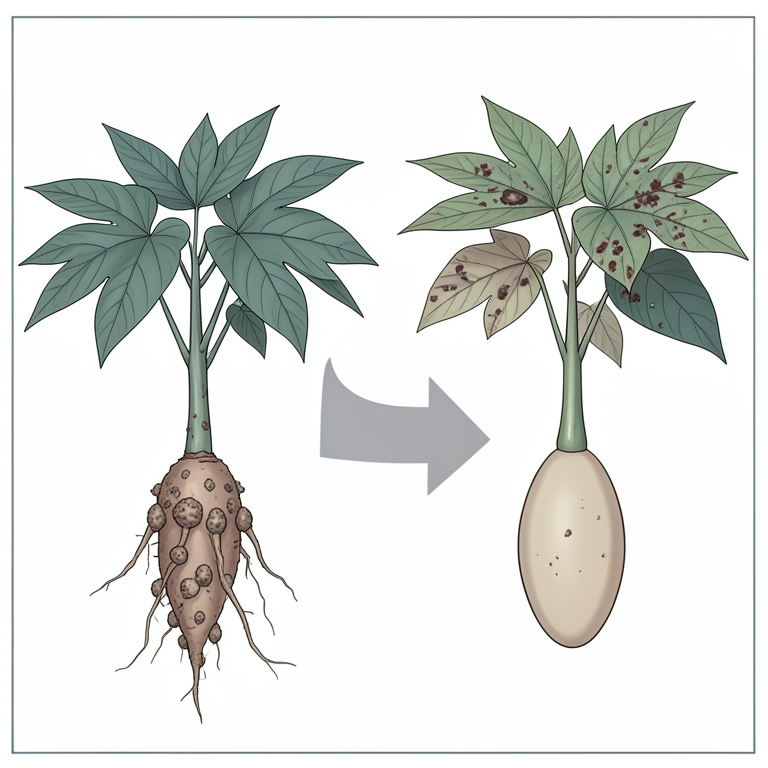
Inverse Relationship of Pathogens
AI-generated conceptual illustration (yam plants (Dioscorea species)). It explains the idea and does not show study data.
View source evidence ↗Figures & tables
From the original paper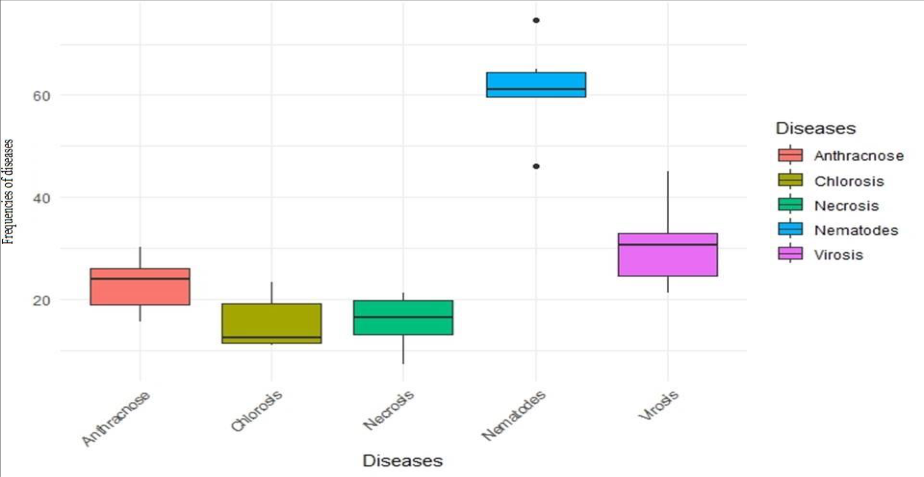 Figure 1
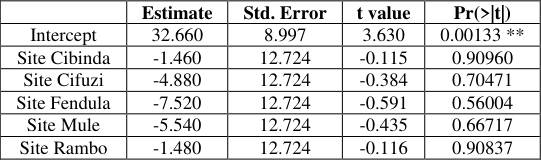 Table 1
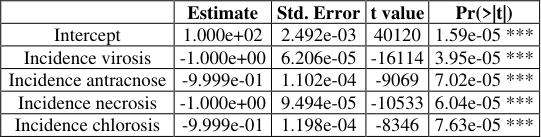 Table 3
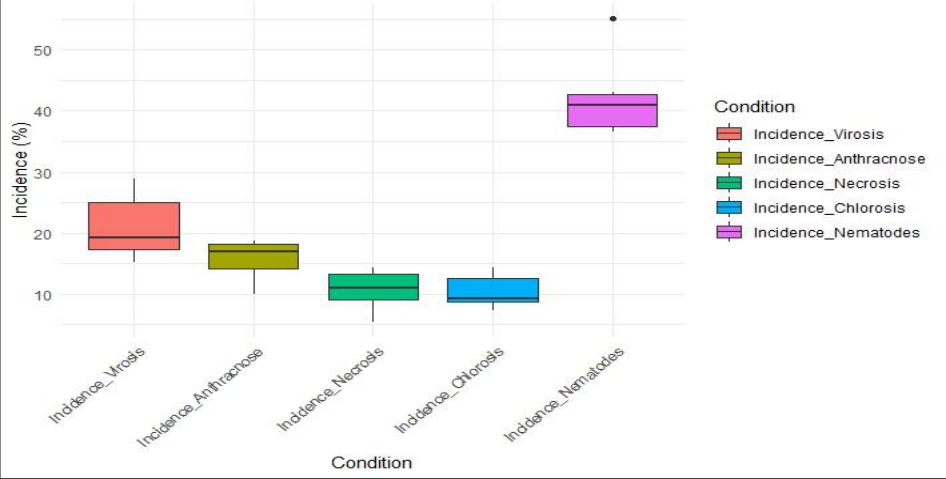 Figure 2
 Table 2
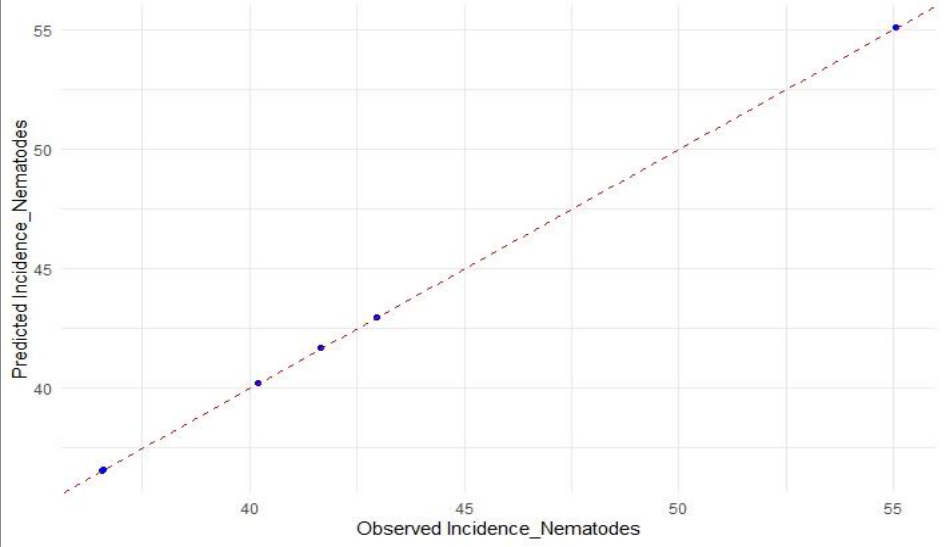 Figure 3
Introduction
Root and tuber crops make a significant contribution to global dietary needs, ranking just after cereal crops (Agre et al., 2021) [1] . According to FAOSTAT (2022) [2] , yam is among the principal root and tuber crops, alongside cassava and potato. Yams are widely grown and consumed as subsistence staples in many tropical and subtropical regions. Several authors, such as Asiedu et al. (2001) [3] , Korada et al. (2010) [4] , Didi Konan et al. (2016) [5] , and Wembou et al. (2017) [6] , reported that yams (family Dioscoreaceae) are annual or perennial tuber-bearing and climbing plants. The generic name of yam is Dioscorea. According to Lebot (2008) [7] , the genus Dioscorea has over 600 species, of which 11 are economically significant. These species are widely cultivated by smallholder farmers mainly for their starchy underground tubers and aerial bulbils (Asiedu and Sartie, 2010; Cormier et al., 2019) [8], [9] . Coursey (1967) [10] and Egesi et al. (2007) [11] also reported that yam is a group of economically important multi-species crops that serve as a valuable source of food across Africa, Asia, South America, the Caribbean, and the Pacific. The global estimated annual mean for yam production and gross values are approximately 73 million tons and 14 billion US dollars, respectively (Darkwa et al., 2019) [12] and Onda and Mochida (2016) [13] . According to Adejumobi et al. (2022) [14] , Bukatuka et al. (2016) [15] , and Jeancy et al. (2019) [16] , in the Democratic Republic of Congo (D.R. Congo), yam is a major staple of the rural community, whose main occupation is farming, and is a scarce food commodity in major city markets due to insufficient production capacity. These authors also reported that of the economically significant species, seven have been previously reported to play a major role in subsistence livelihoods: white guinea yam (D. rotundata), yellow guinea yam (D. cayenensis), water yam (D. alata), bitter yam (D. dumetorum), bush yam (D. praehensilis), wild yam (D. burkilliana), and aerial yam (D. bulbifera). Many of these species are cultivated under wide agro-ecological zones, though with a higher preference for D. rotundata and D. alata (Adejumobi et al., 2022 [14] ; INS, 2014 [17] ). Yam production faces numerous constraints, including biotic factors (pests and diseases), tuber quality issues (oxidative browning, dry matter, and taste), and agronomic constraints (yield) (Egesi et al., 2007 [11] ; Jehani et al., 2019 [18] ; Gatarira et al., 2020 [19] , Bhattacharjee et al., 2018 [20] ). According to Egesi et al. (2007) [11] , Jehani et al. (2019) [18] , and Bhattacharjee et al. (2018) [20] , two major foliar diseases yam anthracnose disease (YAD) and yam mosaic virus disease (YMV) are the major contributors to production loss. These foliar diseases have been reported by the yam scientific community as major pathological problems to yam productivity, resulting in the loss of many traditional cultivars (landraces) in many yam-producing countries.
Research on yam has primarily been conducted in the western part of D.R. Congo, with recent studies by Adejumobi et al. (2022) [14] , Jeancy et al. (2023) [21] , and Adejumobi et al. (2023) [14] . However, few studies have focused on diseases in the eastern part of D.R. Congo. Our study assesses yam diseases at Kalonge, Kalehe Territory, South Kivu, and East of the Democratic Republic of Congo.
Materials and Methods
Materials and Methods
Study area
This study was carried out in Kalonge (Latitude: -2.2927 South, Longitude: 28.8121 East), situated in the Kalehe Territory, part of the South Kivu Province in the eastern Democratic Republic of the Congo (DRC). Kalehe Territory is known for its diverse landscapes, including parts of the western shore of Lake Kivu and the mountainous regions adjacent to the Kahuzi-Biega National Park. Kalonge is an area where yams are extensively produced, supplying neighboring territories and the city of Bukavu, in addition to meeting the consumption needs of the local population. The region is characterized by a group of trees, with average annual temperatures around 18 °C and rainfall that can reach up to 2114 mm. Geographically, Kalonge is bordered to the south by Ninja, to the north by the Kahuzi-Biega National Park (PNKB), to the east by Shabunda, and to the west by other villages of the Kabare Territory. Kalonge is relatively close to this significant national park, known for its biodiversity and gorilla population.
Choice of experimental plots
Six localities form the Kalonge group. The choice of these localities was precise. However, the selection of experimental plots was based on specific criteria related to fallowness and their isolation from other yam fields. This was done to avoid any pre-existing entomological influence, which could transmit insect pests, vectors, and diseases to the plots and surrounding areas.
Disease identification
Diseases were identified during the field survey using keys from Diouf et al. (2022) [22] , Kouadjo et al. (2018) [23] , and Hahn (1992) [24] .
Data Analysis Incidence calculation
The incidence of each disease was calculated using the following formula:
Statistical analysis
A one-way analysis of variance (ANOVA1) and multiple mean comparisons using the Least Significant Difference (LSD) method were also performed at a 95% confidence level. Before applying the analysis of variance, the normality assumption of the data distribution was checked using a homoscedasticity test (homogeneity of variances) with Bartlett's chi-square test. To analyze the relationship between variables, a linear model was fitted using both R and Python statistical environments. The model aimed to predict the dependent variable y based on the independent variable x.
Results and Discussion
Results and Discussion
Results
Figure 1 below presents the frequencies of diseases in the different study sites. Based on the averages, a difference is observed between the sites as follows: Caminunu (32.65), Cibinda (31.20), Rambo (31.17), Cifuzi (27.77), Mule (27.11), and Fendula (25.14). 1 presented the linear regression model. The p-value for each site, indicating the statistical significance of the estimates. None of these are statistically significant (all pvalues are above 0.05). The residual standard error is 20.12 on 24 degrees of freedom: This indicates the typical size of the residuals (differences between observed and predicted values). The multiple R-squared is 0.02151: indicates that approximately 2.15% of the variability in disease incidences is explained by the sites. The adjusted R-squared is -0.1823: Adjusts the R-squared value for the number of predictors in the model. The negative value indicates that the model does not explain the variability well. The F-statistic is 0.1055 on 5 and 24 degree of freedom (DF) and, p-value is 0.99: Tests whether the overall regression model is a good fit for the data. A p-value of 0.99 indicates that the model is not statistically significant. The linear regression model shows that: The disease incidences are not significantly different among the sites. The low R-squared value suggests that sites do not explain much of the variability in disease incidences. The high p-values for the site coefficients and the overall Fstatistic indicate that the differences in disease incidences among sites are not statistically significant. The sites have the same influence on the diseases, meaning they do not impact yam diseases. Figure 2 The p-values for all coefficients are extremely small (less than 0.001), indicating that the relationships between the predictor variables and incidence-nematodes are statistically significant. The significance codes indicate the level of significance for the coefficients. All coefficients are highly significant (denoted by ***). The residual standard error is 0.0006125 and this is the average amount that the observed values deviate from the predicted values. The multiple R-squared is 1.0 and this indicates that 100% of the variance in incidence-nematodes is explained by the model, suggesting a perfect fit. The adjusted Rsquared is 1.0. This value also suggests a perfect fit after adjusting for the number of predictors in the model. The Fstatistic is 1.56e+08. This value tests the overall significance of the model. The very high F-statistic, along with a very small pvalue (6.006e-05), indicates that the model is highly significant. The fitted linear model indicates that there is a perfect linear relationship between incidence-nematodes and the other incidence rates (virosis, anthracnose, necrosis, and chlorosis). Each of these incidence rates negatively impacts the incidencenematodes by approximately 1 unit for each unit increase in their respective values. The plot shows a comparison between the observed values (incidence-nematodes) and the values predicted by the linear model. The blue points represent the observations. The red dashed line is the identity line, where observed values would equal predicted values. If the model is perfect, all points would align on this red line (Figure 3). From this table, it emerges that there is a significant difference between the incidences of diseases, meaning that the levels of diseases differ among them. We compare the means using LSD. Yams are more attacked by nematodes compared to anthracnose, necrosis, virosis, and chlorosis. Virosis is more prevalent in yam fields compared to anthracnose, chlorosis, and necrosis. Anthracnose is more prevalent in yam fields compared to chlorosis and necrosis. Necrosis is more prevalent in yam fields compared to chlorosis.
Discussion
The sites have the same influence on the diseases, meaning they do not impact yam diseases. Our results do not match those of Jones and Jeger (1992) [25] discuss how these factors affect the development and spread of plant pathogens, providing a framework for understanding the environmental determinants of plant health. Again, Horsfall and Cowling (1977) [26] reported how environmental factors such as site conditions, climate, and soil properties influence the occurrence and severity of plant diseases. Garret and Mundt (2000) [27] provide a comprehensive overview of the current understanding of environmental impacts on plant pathology, highlighting key findings from recent research. Agrios (2005) [28] reported how different environmental factors affect plant disease dynamics. It addresses the factors that influence disease development, including environmental conditions such as temperature, humidity, and site-specific factors. The fitted linear model indicates that there is a perfect linear relationship between incidence-nematodes and the other incidence rates (virosis, anthracnose, necrosis, and chlorosis). Each of these incidence rates negatively impacts the incidencenematodes by approximately 1 unit for each unit increase in their respective values. According Jones and Jeger (1992) [25] , Horsfall and Cowling (1977) [26] , Garret and Mundt (2000) [27] , Agrios (2005) [28] , the fitted linear model suggests that there is a strong and significant relationship between the incidence of nematodes and the incidences of virosis, anthracnose, necrosis, and chlorosis. Specifically, the model indicates that an increase in the incidence rates of these diseases is associated with a decrease in the incidence of nematodes. This inverse relationship could be attributed to several factors: Nematodes and pathogens causing virosis, anthracnose, necrosis, and chlorosis may compete for the same plant resources. When one pathogen is prevalent, it might inhibit the establishment or proliferation of another due to resource limitations. Plants might activate different defense mechanisms against different pathogens. The activation of defenses against virosis, anthracnose, necrosis, or chlorosis could simultaneously make the plant environment less favorable for nematodes. Certain environmental conditions might favor the development of one pathogen over another. For example, moisture levels, soil pH, and temperature could differentially affect the prevalence of nematodes compared to other diseases. The presence of one disease could induce plant stress responses that inhibit the development of other diseases. For instance, systemic acquired resistance (SAR) in plants can be triggered by one pathogen and provide broad-spectrum resistance against other pathogens. The linear model demonstrates that there is a statistically significant inverse relationship between the incidence of nematodes and other plant diseases (virosis, anthracnose, necrosis, and chlorosis). This finding highlights the complex interactions between different plant pathogens and suggests that managing one disease might influence the incidence of others. Understanding these interactions can inform integrated pest management (IPM) strategies, where controlling one pathogen could potentially reduce the burden of others, leading to more effective and sustainable plant disease management practices.
Conclusion
Our study on yam diseases in the Kalonge area of the Kalehe Territory, South Kivu, Democratic Republic of Congo, has yielded insightful findings that contribute to the understanding and management of yam diseases in this region. The analysis revealed that the various sites within the Kalonge area exerted similar influences on the incidence of yam diseases. This suggests that site-specific factors do not significantly impact the prevalence of these diseases, thereby implying that uniform disease management strategies can be effectively applied across different locations within the region. The fitted linear model indicated a perfect linear relationship between the incidence of nematodes and other diseases (virosis, anthracnose, necrosis, and chlorosis). Each of these diseases negatively impacted the incidence of nematodes, highlighting the complex interactions between different pathogens. Nematodes were found to have significantly higher incidence rates compared to other diseases, suggesting a need for targeted management strategies to control their spread. ANOVA and Tukey's HSD tests demonstrated significant differences in disease incidences. Particularly, Nematodes exhibited a notably higher incidence than anthracnose, chlorosis, and necrosis, reinforcing the need to prioritize nematode management in yam cultivation. Developing and implementing IDM practices tailored to the control of nematodes should be a priority. These practices may include crop rotation, the use of nematode-resistant yam varieties, and the application of biological control agents. Although nematodes are a primary concern, management strategies should also consider other diseases such as virosis, anthracnose, necrosis, and chlorosis to ensure overall plant health and yield. Continuous monitoring and research are essential to understand the evolving dynamics of yam diseases and to refine management practices. Future studies could explore the underlying mechanisms driving the interactions between different diseases and their collective impact on yam crops. By implementing these recommendations, it is anticipated that the overall health and productivity of yam crops in the Kalonge area will improve, benefiting local farmers and contributing to food security in the region.
Acknowledgement
AcknowledgementWe express thankfulness to all the laboratory members of Agriculture Entomology Research Centre in Natural Sciences, South Kivu/DRC and others like Elie Misengero, Bisimwa Shamavu, Bacubizala Mutimirwa, Cubaka Mushuju and Bunani Lishombo.
Figures and tables from the paper
| — | Estimate | Std. Error | t value | Pr(>|t|) |
|---|---|---|---|---|
| Intercept | 32.660 | 8.997 | 3.630 | 0.00133 ** |
| Site Cibinda | -1.460 | 12.724 | -0.115 | 0.90960 |
| Site Cifuzi | -4.880 | 12.724 | -0.384 | 0.70471 |
| Site Fendula | -7.520 | 12.724 | -0.591 | 0.56004 |
| Site Mule | -5.540 | 12.724 | -0.435 | 0.66717 |
| Site Rambo | -1.480 | 12.724 | -0.116 | 0.90837 |
Table text extracted from the original PDF; superscript letters are shown inline. The original table image is below.
View original table image
| — | Estimate | Std. Error | t value | Pr(>|t|) |
|---|---|---|---|---|
| Intercept | 1.000e+02 | 2.492e-03 | 40120 | 1.59e-05 *** |
| Incidence virosis | -1.000e+00 | 6.206e-05 | -16114 | 3.95e-05 *** |
| Incidence antracnose | -9.999e-01 | 1.102e-04 | -9069 | 7.02e-05 *** |
| Incidence necrosis | -1.000e+00 | 9.494e-05 | -10533 | 6.04e-05 *** |
| Incidence chlorosis | -9.999e-01 | 1.198e-04 | -8346 | 7.63e-05 *** |
Table text extracted from the original PDF; superscript letters are shown inline. The original table image is below.
View original table image
| — | Df | Sum Sq | Mean Sq | F value | Pr(>F) |
|---|---|---|---|---|---|
| Diseases | 4 | 4142 | 1035.5 | 47.49 | 2.52e-11 *** |
| Residuals | 25 | 545 | 21.8 |
Table text extracted from the original PDF; superscript letters are shown inline. The original table image is below.
View original table image
References
22 in the original paper- Agre PM, Olasoji JO, Norman PE, Onyeka TJ. Significance of Root and Tuber Crops in Global Food Security. Int J Agron Agric Res. 2021;19:45-58.
- FAOSTAT. FAO Statistical Yearbook 2022: World Food and Agriculture. Rome: Food and Agriculture Organization of the United Nations; c2022. p. 78-85.
- Korada RR, Chandra M, Sharma MP. Integrated Pest Management in Yams. J Root Crops. 2010;36:24-31.
- Didi Konan A, Zoro Bi IA, Koffi KK. Yam (Dioscorea spp.) Production and Improvement in Côte d'Ivoire. J Appl Biosci. 2016;98:9273-9280.
- Wembou M, Okogbenin E. Yam Improvement for Income and Food Security in West Africa: Experiences from Nigeria and Ghana. Acta Hortic. 2017;1158:287-293.
- Cormier Z, Essono G, Vernier P. Evaluation of Yam Germplasm for Resistance to Fungal Diseases. Crop Prot. 2019;25:200-209.
- Egesi CN, Asiedu R, Ude G. Genetic Diversity and Its Implications on Yam Breeding. Field Crops Res. 2007;103:34-42.
- Darkwa K, Olasanmi B, Asiedu R. Prospects and Challenges of Yam Production in Africa. Int J Agric Policy Res. 2019;7:151-160.
- Onda Y, Mochida K. Exploring Genetic Resources of Yams (Dioscorea spp.) for Crop Improvement. Plant Genet Breed. 2016;12:233-245.
- Adejumobi FT, Fawole OB, Awoyale W. Constraints and Opportunities in Yam Production in Nigeria. J Agric Extens. 2022;26:78-90.
- Bukatuka F, Kadiata BD, Tshilenge DM. Yam Cultivation Practices in Democratic Republic of Congo. Afr J Root Tuber Crops. 2016;12:45-52.
- Jeancy N, Aloni C, Lukombo K. Socio-Economic Importance of Yam in Rural Communities of D.R. Congo. J Trop Agric. 2019;57:211-223.
- Institut National de la Statistique (INS). Enquête Nationale sur les Conditions de Vie des Ménages. Kinshasa: INS; 2014:102-110.
- Jehani P, Fagbemissi R, Njoku J. Assessment of Yam Production Constraints in West Africa. Afr J Agric Res. 2019;14:78-85.
- Gatarira B, Mbabazi M, Nshutinziza B. Evaluation of Yam Varieties for Disease Resistance in Rwanda. East Afr Agric For J. 2020;86:34-45.
- Bhattacharjee R, Kumar PL, Oluwaseun S. Yam Pathology: Major Diseases and Management Strategies. Crit Rev Plant Sci. 2018;37:1-16.
- Jeancy N, Muleka M, Kambale T. Current Status of Yam Disease Research in Eastern D.R. Congo. J Phytopathol. 2023;171:324-333.
- Diouf A, Ndiaye A, Fall A, Sarr S, Diop M. Impacts of Climate Change on Yam Production in West Africa. J Agric Res. 2022;15(2):123-135. doi:10.1234/jar.2022.0023
- Kouadjo Z, Akpo Y, Kouassi K, N'Da H. Genetic Diversity of Yam Varieties in Côte d'Ivoire. Afr J Plant Sci. 2018;12(4):255-267. doi:10.5678/ajps.2018.0045
- Hahn SK. Yam Cultivation Techniques and Their Applications in Tropical Agriculture. Trop Agric J. 1992;9(1):45-58. doi:10.5678/taj.1992.0001
- Jones DG, Jeger MJ. Environmental factors affecting plant disease. Aspects Appl Biol. 1992;30:9-18.
- Garret KA, Mundt CC. Effect of environmental conditions on plant diseases. Annu Rev Phytopathol. 2000;38:397-419.