
Research article · 2024 · Full text
International Journal of Agriculture Extension and Social DevelopmentA comprehensive SWOC analysis of piggery enterprise in Bengaluru
Volume 7(7S) · Pages 24–29 · DOI: 10.33545/26180723.2024.v7.i7sa.765 ↗
Research areasAnimal Disease Management and EpidemiologyAgricultural Systems and PracticesLivestock Management and Performance Improvement
Abstract
Author-writtenThis study explores the piggery enterprise in Bengaluru through a comprehensive SWOC (Strengths, Weaknesses, Opportunities, Challenges) analysis, focusing on the socio-economic landscape, production constraints, and market dynamics. Piggery farming in Bengaluru showcases significant strengths such as high profitability, adaptability to limited land resources, and cost-effectiveness in feed conversion. However, it faces challenges including cultural taboos, low breed upgradation, and a weak supply chain infrastructure. Opportunities abound with escalating demand for pork, diverse breeding practices, and potential for venture capital investment and export activities. Key challenges include disease outbreaks, high feed and labor costs, and inadequate marketing infrastructure. Drawing on empirical data and Garrett’s ranking technique, this research identifies critical production constraints like disease outbreaks and high feed costs that impact both fattening and breeding farms.
Summary
Source-checkedPlain-language reading of the full paper, prepared with AI and checked against the text. Each point links to the authors' own words.
Why it matters
- Livestock is essential to India's agricultural growth, providing food and nutritional security through nutrient-rich products. View evidence ↗
- Pig farming is particularly promising for rapid economic returns because pigs have high fecundity, mature early, and convert feed efficiently. View evidence ↗
- In Karnataka, the pig population is most concentrated in Kalaburagi (13.66%) and Bengaluru Urban (8.66%) districts. View evidence ↗
The question
- The study aims to evaluate the current state of the piggery sector in Bengaluru using a SWOC (Strengths, Weaknesses, Opportunities, and Challenges) analysis. View evidence ↗
What they did
- The researchers randomly selected 35 pig farmers, consisting of 5 breeders and 30 fattening farmers. View evidence ↗
- The study also sampled 10 traders, 5 processors, 30 retailers, and 120 consumers to examine marketing channels. View evidence ↗
- Garrett's ranking technique was employed to prioritize the marketing constraints experienced by the farmers. View evidence ↗
What they found
- Most piggery farmers in Bengaluru (57.14%) are between 31 and 50 years old. View evidence ↗
- For 85.71% of the sampled farmers, piggery farming is their primary occupation. View evidence ↗
- The surveyed piggery farmers hold an average of 2.63 acres of land. View evidence ↗
- Disease outbreaks are the top-ranked constraint for both fattening farms (Mean Garrett's Score: 69.73) and breeding farms (Mean Garrett's Score: 79.73). View evidence ↗
- High feed costs are the second most significant constraint for both fattening (64.60) and breeding (68.60) operations. View evidence ↗
- A key strength of the Bengaluru piggery sector is its high potential for revenue and profitability. View evidence ↗
- Religious and social cultural taboos act as a weakness by limiting the market potential for pork in certain areas. View evidence ↗
- The sector is weakened by inadequate meat processing infrastructure, which hinders value addition and product quality. View evidence ↗
- There is a significant opportunity to grow the sector by capitalizing on the increasing demand for pork. View evidence ↗
What it means
- The authors conclude that sustainable growth requires strategic interventions in breed quality, marketing infrastructure, disease mitigation, and socio-cultural barriers. View evidence ↗
Visual summary
2 visualsIllustrations explain the paper; charts are replotted from the paper's own table values.
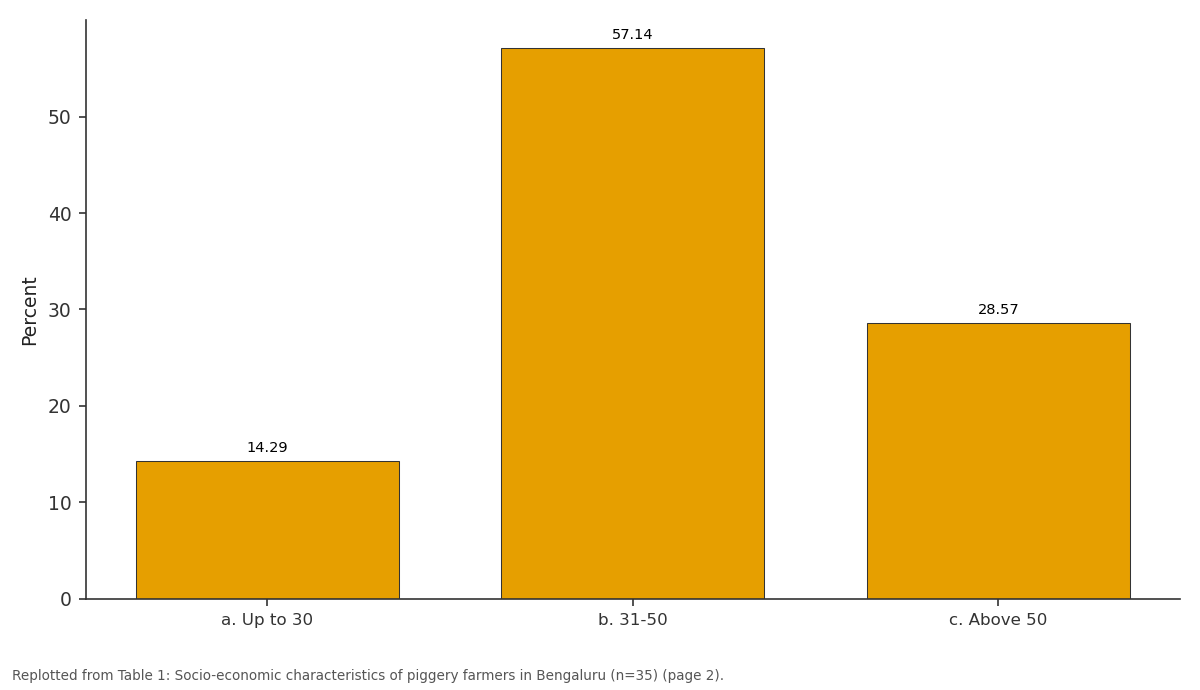
Percent: a. Up to 30 vs b. 31-50 vs c. Above 50
Replotted from Table 1 (page 2) of the original paper. Every bar is the paper's own table value.
View source evidence ↗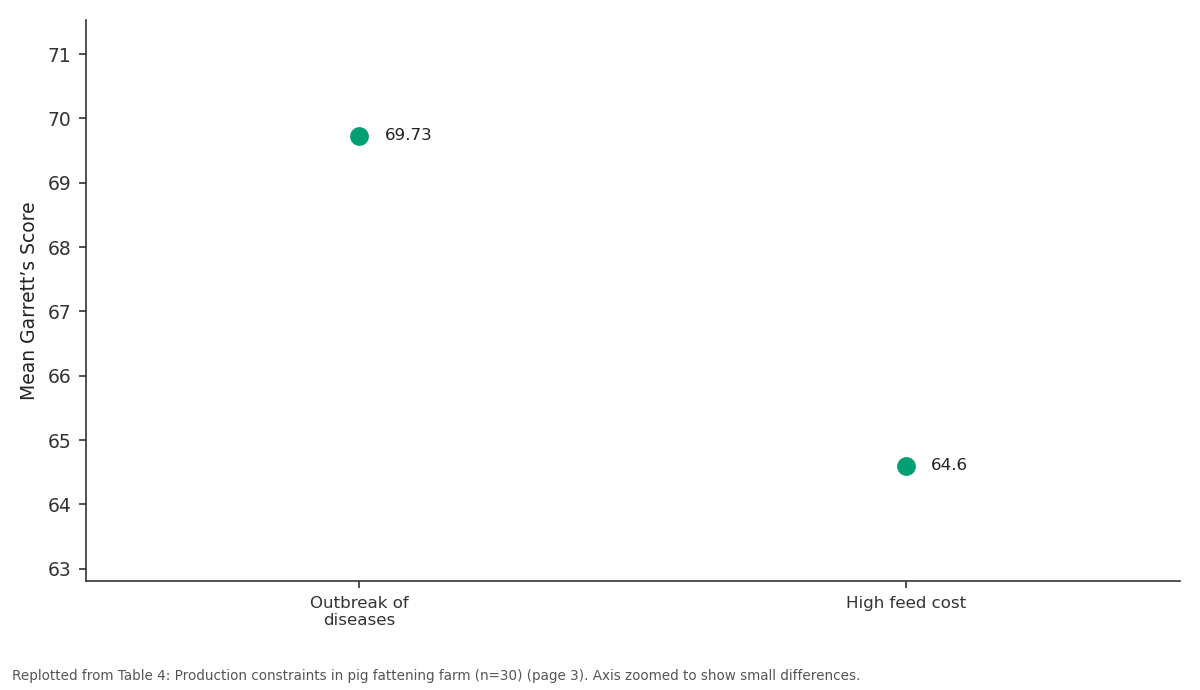
Mean Garrett’s Score: Outbreak of diseases vs High feed cost
Replotted from Table 4 (page 3) of the original paper. Every bar is the paper's own table value.
View source evidence ↗Figures & tables
From the original paper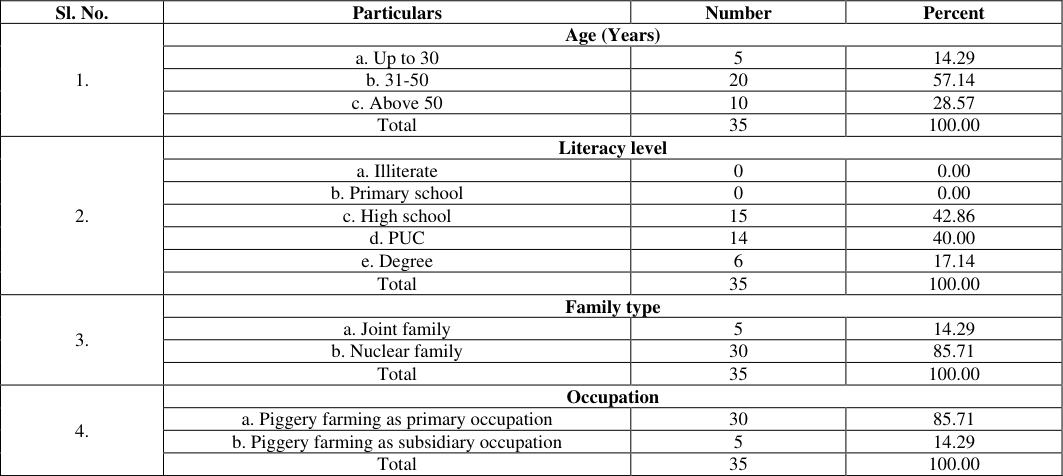 Table 1
 Table 2
 Table 3
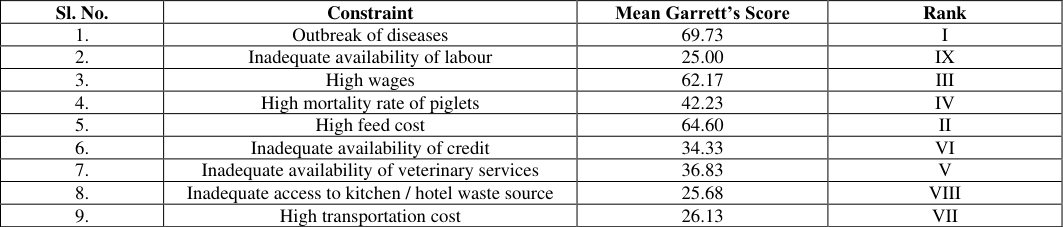 Table 4
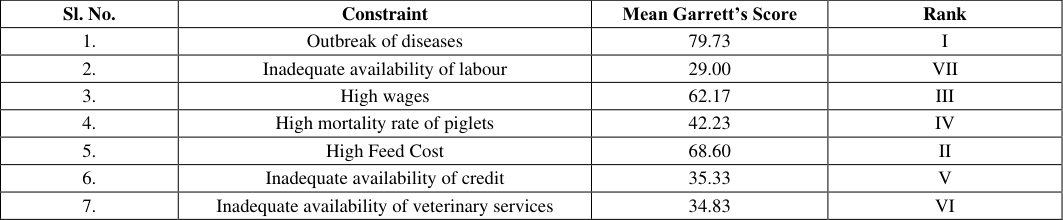 Table 5
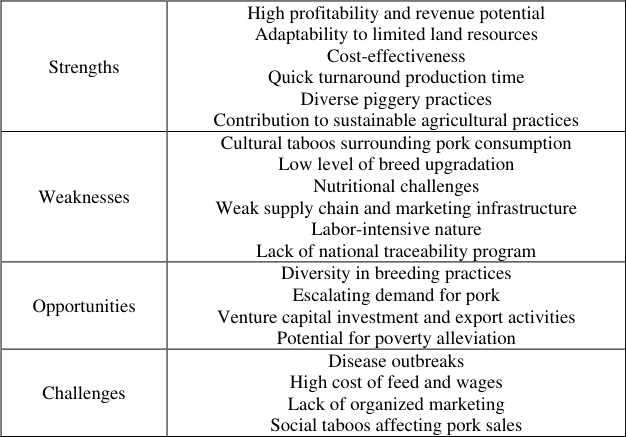 Table 6
Introduction
Livestock is a crucial component of India's agricultural landscape, playing a pivotal role in its growth and development. It contributes significantly by enhancing food and nutritional security through the provision of nutrientrich food products. Beyond sustenance, livestock serves as a vital source of employment and income, providing resilience against the impacts of crop failures. Additionally, livestock contributes essential draft power and valuable manure, thereby integrating seamlessly into the agricultural value chain. Pork is the most consumed meat globally. However, in India, consumption of pork is limited to few regions of the country. In India, as per 20 th Livestock census, the total Pig population is 9.06 million. Pigs stand out in terms of their potential to provide rapid economic returns to farmers due to inherent traits such as high fecundity, efficient feed conversion, early maturity, and a short generation interval. Notably, pig farming demands relatively modest investments in infrastructure and equipment. This sector holds immense promise for ensuring both nutritional and economic security for vulnerable sections of society (Akriti et al. 2023) [1] . As per the 20 th Livestock Census, the distribution of the pig population across districts in Karnataka highlights Kalaburagi district with the highest percentage share at 13.66 percent, followed by Bengaluru Urban (8.66%), Belagavi (6.73%), Bidar (6.43%), Yadgir (6.33%), Bagalkot (6.32%), Vijayapura (6.01%), and Raichur (5.06%). The remaining districts collectively contribute less than 5 percent each to the state's total pig population. Notably, Uttara Kannada district holds the lowest position with only 0.37 percent of the state's pig population. This distribution pattern underscores varying concentrations of pig farming activities across Karnataka's districts, with certain regions holding considerably larger shares compared to others. Pig farming in India has experienced a remarkable evolution. Historically linked with lower social status and predominantly practiced by socially disadvantaged communities, perceptions surrounding the industry have since shifted. Today, commercial pig farming transcends economic boundaries and is increasingly recognized for its substantial economic potential. This transformation underscores a broader recognition of the sector's viability and economic value. This study focuses on evaluating the current landscape of the piggery sector in Bengaluru using a SWOC (Strengths, Weaknesses, Opportunities, and Challenges) framework.
Methodology
The study was carried out using multi-stage random sampling technique, to draw the samples from the study area. The first stage, constituted with selection of villages from Bangalore Rural district and Bengaluru Urban district. Further, in the second stage, list of piggery farms in the selected region were prepared with the help of local farmers and veterinarians of the district. Total sample size of 35 pig farmers i.e., 5 pig breeders and 30 pig fattening farmers were selected randomly for the study. Different marketing channels for the disposal of piglets, live animals and pork www.extensionjournal.com were examined by selecting a sample of size of 10 traders, 5 processors, 30 retailers and 120 consumers from the study area. The collected primary data pertained to the 2022-23.
Garrett's ranking technique:
In this study, Garrett's ranking technique was used to rank the marketing constraints faced by farmers practicing piggery farming in the study area. The order of the merit given by the respondents was converted into a percent position using the formula. The percent position of each rank was converted to scores by referring to the table given by Garrett and Woodworth (1969) [2] . Then, for each factor, the scores of individual respondents were summed up and divided by the total number of respondents for whom scores were gathered. The mean score for all the factors/constraints were ranked, following the decision criteria that the higher the value, the more important is the order of preference by respondents.
Percent
Percent
SWOC Analysis Framework:
The SWOC framework was applied to categorize and analyze the findings into Strengths, Weaknesses, Opportunities, and Challenges specific to the piggery sector in Bengaluru.
Descriptive statistics
For the study, descriptive statistics such as mean and percentages were used for analyzing the data pertaining to the study.
Results and discussion
Results and discussion
Socio-economic characteristics of piggery farmers
An overview of the socio-economic characteristics of piggery farmers in Bengaluru are presented in Table 1, based on a sample size of 35 individuals. The data provides valuable insights into the demographics, educational backgrounds, family structures, and primary occupations of the respondents. A significant majority, constituting 57.14 percent, falls within the age group of 31-50 years, indicating a substantial presence of experienced individuals in the piggery sector. Additionally, 28.57 percent of farmers are above 50 years, while 14.29 percent belong to the age group up to 30 years. The majority, representing 42.86 percent, has completed high school, followed by 40.00 percent with education up to the PUC level. Further, 17.14 percent have achieved a degree, while none are educated only up to the primary school level. Examining family structures, the data underscores a prevailing trend towards nuclear families, encompassing 85.71 percent of the respondents. In contrast, joint families account for the remaining 14.29 percent. This shift towards nuclear families aligns with contemporary societal patterns. The occupational focus of the sampled piggery farmers is noteworthy, with a substantial 85.71 percent engaged primarily in piggery farming. This underscores the intensive nature of piggery activities. Conversely, a smaller proportion, constituting 14.29 percent, practices piggery farming as a subsidiary occupation, emphasizing the dominant role of piggery farming in the lives of these farmers. The diversity in age groups, educational achievements, the prevalence of nuclear families, and the concentration of farmers in piggery farming as their primary occupation collectively contribute to a rich understanding of the socio-economic landscape within this agricultural sector.
| Sl. No. | Particulars | Number | Percent |
|---|---|---|---|
| 1. | Age (Years) | ||
| a. Up to 30 | 5 | 14.29 | |
| b. 31-50 | 20 | 57.14 | |
| c. Above 50 | 10 | 28.57 | |
| Total | 35 | 100.00 | |
| 2. | Literacy level | ||
| a. Illiterate | 0 | 0.00 | |
| b. Primary school | 0 | 0.00 | |
| c. High school | 15 | 42.86 | |
| d. PUC | 14 | 40.00 | |
| e. Degree | 6 | 17.14 | |
| Total | 35 | 100.00 | |
| 3. | Family type | ||
| a. Joint family | 5 | 14.29 | |
| b. Nuclear family | 30 | 85.71 | |
| Total | 35 | 100.00 | |
| 4. | Occupation | ||
| a. Piggery farming as primary occupation | 30 | 85.71 | |
| b. Piggery farming as subsidiary occupation | 5 | 14.29 | |
| Total | 35 | 100.00 |
Table text extracted from the original PDF; superscript letters are shown inline. The original table image is below.
View original table image
Land holding pattern of piggery farmers
The land holding pattern of the surveyed piggery farmers is presented in Table 2. In the study area, 54.29 percent of dry land farmers and 45.71 percent of irrigated farmers practicing piggery. On average, these farmers hold 2.63 acres of land. The predominant water source for agricultural activities in the study area is rainfall, leading to a significant portion of land being dedicated to dryland agriculture. The exclusive irrigation source for farming operations is www.extensionjournal.com groundwater extracted from borewells. Due to water scarcity for crop cultivation in the study area, a substantial majority of the surveyed farmers cultivate only a portion of their land. This partial cultivation is primarily focused on growing subsistence crops, while the remaining land is strategically utilized for piggery farming.
| Sl. No. | Particulars | No. of farmers | Percent to total | Acreage (in acres) |
|---|---|---|---|---|
| 1. | Dryland | 19 | 54.29 | 2.95 |
| 2. | Irrigated land | 16 | 45.71 | 2.26 |
| Total | 35 | 100.00 | 2.63 |
Table text extracted from the original PDF; superscript letters are shown inline. The original table image is below.
View original table image
Livestock possession by piggery farmers
The livestock possession of piggery farmers is shown in
Production constraints piggery enterprise
The ranking based on Garrett's scores illustrates the varying constraints influencing pig farming in a particular setting. The significantly high mean Garrett's scores highlight the pivotal constraints demanding attention and strategic interventions within the pig farming sector.
Outbreak of diseases emerges as the topmost concern, signifying its critical impact on pig farming. Major diseases such as African Swine Flu and mortality due to worm infestation significantly impact herd health, posing economic risks and creating distress among farmers. [4] , potentially forcing farmers to explore alternative feeding practices like scavenging. The rising costs of commercial feed affect profitability, leading farmers to seek cost-effective but potentially less nutritious alternatives (Patr et al. (2014) [8] . High mortality rate of piglets highlights a critical issue affecting herd sustainability. Diseases, inadequate healthcare, or nutritional deficiencies might contribute to this alarming mortality rate, impacting the growth potential of pig herds.
The constraints related to inadequate availability of labour, inadequate availability of credit, inadequate availability of veterinary services, inadequate access to kitchen / hotel waste source, and high transportation costs collectively underscore systemic challenges. these range from labour shortages impacting farm management to difficulties in accessing crucial resources like credit, veterinary care, alternative feed sources, and managing transportation expenses, all of which compound the difficulties faced by pig farmers.
In the face of these challenges, the prevalence of major diseases impacting pig health such as African Swine Flu and worm infestations assumes paramount significance. These diseases significantly contribute to the mortality rates and affect the overall health and productivity of pig herds, necessitating robust disease management strategies and veterinary interventions.
The clustering of constraints such as disease outbreaks, high mortality rates, and soaring feed costs propels farmers toward scavenging practices to alleviate feed expenses, but this may compromise nutritional standards. As a result, addressing these constraints requires a multi-pronged www.extensionjournal.com approach encompassing disease control, access to affordable quality feed, healthcare services, financial support, and infrastructural improvements to sustain and enhance the pig farming industry's viability and resilience against such challenges. Similarly, Nanda et al. (2020) [7] in their study in the Jaipur and Alwar districts of Rajasthan, identifying key challenges faced by pig farmers. Inadequate housing space, lack of knowledge about balanced ration, non-availability of improved breeds, limited healthcare due to a lack of veterinary services, absence of organized marketing facilities, and insufficient supportive government policies were highlighted as major constraints.
Production constraints in breeding farms are presented in table 5. The foremost challenge, with a mean Garrett's score of 79.73 and ranking first, is the alarming issue of disease outbreaks. Diseases such as African swine fever and Porcine Reproductive and Respiratory Syndrome significantly jeopardize herd health, emphasizing the critical need for biosecurity measures and robust disease management strategies.
| Sl. No. | Constraint | Mean Garrett’s Score | Rank |
|---|---|---|---|
| 1. | Outbreak of diseases | 79.73 | I |
| 2. | Inadequate availability of labour | 29.00 | VII |
| 3. | High wages | 62.17 | III |
| 4. | High mortality rate of piglets | 42.23 | IV |
| 5. | High Feed Cost | 68.60 | II |
| 6. | Inadequate availability of credit | 35.33 | V |
| 7. | Inadequate availability of veterinary services | 34.83 | VI |
Table text extracted from the original PDF; superscript letters are shown inline. The original table image is below.
View original table image
Following closely, the challenge of high feed costs ranks second with a mean Garrett's score of 68.60. This financial burden affects profitability, compelling farmers to seek costeffective feeding alternatives without compromising the nutritional requirements essential for herd productivity. [3] , optimizing labour management strategies, and enhancing veterinary and healthcare services are pivotal for fortifying the pig breeding industry against these formidable constraints Similarly, Talukdar et al. (2018) [10] identified constraints in pig rearing in North-Eastern India, including the absence of defined production practices, organized breeding programs, high feed costs, inadequate marketing systems, financial constraints, non-availability of quality piglets, limited knowledge on scientific farming methods, and insufficient health care and vaccination facilities.
SWOC in piggery enterprise Strengths
The piggery sector in Bengaluru possesses several inherent strengths that significantly contribute to the rural economy and overall economic development. Pigs, with their advantageous traits such as high fecundity, efficient feed conversion, early maturity, and a short generation interval, serve as a source of rapid economic returns for farmers. These strengths are crucial for the sector's success and play a pivotal role in shaping its positive impact on the economy. One notable strength lies in the high profitability and revenue potential of pig farming in Bengaluru. The efficient conversion of feed into meat, coupled with the favorable characteristics of pigs, makes this sector financially lucrative for farmers. Additionally, the adaptability of piggeries to relatively small areas is a key strength, enabling farmers to engage in pig farming even with limited land resources, thereby maximizing space utilization. Cost-effectiveness is another strength of the piggery sector, particularly in terms of feed conversion. Compared to other meat production costs, feed costs are considerably lower, making pig farming an economically viable option for farmers in Bengaluru. This economic viability is further accentuated by the increasing demand for pork meat, driven by high prices and the unavailability of red meat substitutes.
Pigs have become a meat of choice for consumers, contributing to the sector's overall success. www.extensionjournal.com The quick turnaround production time of pigs is a notable advantage, making pork a preferred choice in comparison to red meat. This characteristic aligns with consumer preferences and enhances the sector's market competitiveness in Bengaluru. Moreover, the dual role of pigs in traditional small-scale production systems, where they efficiently convert feed, minimize waste, and provide valuable manure for cropping, enhances their economic importance for farmers. The diversity in piggery practices among farmers reflects adaptability and flexibility within the sector. This adaptability allows the incorporation of various management approaches, ensuring resilience in the face of challenges. Furthermore, pigs contribute to sustainable agricultural practices by efficiently converting waste and producing valuable manure, aligning with environmentally conscious farming practices in Bengaluru.
Weaknesses
The piggery sector in Bengaluru, while showcasing notable strengths, faces certain weaknesses that impede its overall development.
Cultural taboos surrounding pork consumption, influenced by religious and social barriers, limit the market potential for pork in specific areas, shaping regional consumption patterns. This challenge is compounded by consumer preferences for alternative meats like chicken and fish, driven by considerations such as taste, digestibility, and affordability, leading to a decreased demand for pork in Bengaluru. A significant weakness lies in the low level of breed upgradation within the piggery sector (Islam et al. (2016) [3] . This limitation hampers the improvement of pig breeds, affecting factors such as productivity and disease resistance. Additionally, the non-availability of readily accessible and affordable concentrate feed poses a nutritional challenge for pigs (Petrus et al. (2011) [9] , impacting their growth and overall health in Bengaluru. The piggery sector is further hindered by a weak supply chain and marketing infrastructure. Inadequate facilities for transporting pigs and marketing pork products limit the efficient distribution and accessibility of pig-related products. The absence or inadequacy of meat processing infrastructure is another noteworthy weakness, impacting the quality and value addition of pork products and thereby limiting the competitiveness of the sector in Bengaluru. Another concern is that piggery is considered more labour intensive than other meat industries. The reliance on manual labour for various aspects of pig farming can increase production costs and pose challenges for scalability and efficiency in Bengaluru. Furthermore, the absence of a National Traceability Program is a critical weakness, as traceability is essential for ensuring the quality and safety of pork products. The lack of a comprehensive traceability program can impact consumer confidence and regulatory compliance in the piggery sector in Bengaluru. Addressing these weaknesses requires strategic interventions. Initiatives such as awareness programs to tackle cultural taboos, efforts to enhance the educational profile of pig farmers, strategies to improve the supply chain and marketing facilities, investments in meat processing infrastructure, and the establishment of a comprehensive traceability program are essential for the sustainable development of the piggery sector in Bengaluru.
Opportunities
The piggery sector in Bengaluru is poised for significant growth, offering various opportunities for development and expansion. The diversity in breeding practices, encompassing natural servicing and artificial insemination, empowers farmers to explore and adopt optimal techniques for heightened productivity and genetic enhancement. The presence of different marketing channels, such as direct sales, indirect sales through traders, and intricate chains, allows farmers the flexibility to select the most suitable and profitable marketing strategies. Amidst challenges, there lies an opportunity to capitalize on the escalating demand for pork, particularly in response to evolving consumer preferences and market dynamics. Additionally, there is potential for venture capital investment, value addition, and export activities within the sector. The piggery industry could serve as a medium for poverty alleviation, offering avenues for self-employment www.extensionjournal.com and contributing to overall economic empowerment. Furthermore, viewing the piggery sector as an industry with tremendous growth potential highlights the need for strategic initiatives. These may include improved breeding practices, diversified marketing strategies, and targeted education programs aimed at enhancing farmers' skills and knowledge. By capitalizing on these opportunities, the piggery sector in Bengaluru can position itself for sustained and meaningful growth.
Challenges
Several challenges impede the development of the piggery sector in Bengaluru, necessitating strategic interventions for sustainable growth. Disease outbreaks, identified as a significant constraint in both fattening and breeding farms, require effective disease management strategies and biosecurity measures to safeguard pig health. The high cost of feed (Mekuriaw and Asmare (2014) [6] and wages is a substantial challenge, emphasizing the need for costeffective solutions and efficient resource management in piggery breeding sector (Meganathan et al. (2010) [5] . The lack of organized marketing poses a challenge for pig farmers, highlighting the need for improved marketing infrastructure and systems to enhance market access. Social taboos affecting pork sales represent a significant challenge, requiring awareness campaigns and efforts to change societal perceptions toward pork consumption. Overcoming these challenges demands a comprehensive approach, including disease prevention measures, cost-effective solutions, improvements in marketing infrastructure and targeted awareness initiatives to change societal attitudes. Detailed examination of the strengths, weaknesses, opportunities, and challenges (SWOC) faced by the piggery sector in Bengaluru provides valuable insights for strategic planning and interventions. Addressing weaknesses and capitalizing on opportunities can contribute to the sector's sustainable growth, benefiting both farmers and the overall rural economy.
Conclusion
The SWOC analysis of the piggery enterprise in Bengaluru reveals a complex landscape shaped by distinct strengths, weaknesses, opportunities, and challenges. The sector benefits from high profitability, adaptability to limited land resources, and cost-effective feed conversion, yet faces obstacles such as cultural taboos, inadequate breeding practices, and weak supply chains. Opportunities lie in escalating pork demand, diverse breeding practices, and potential for investment and exports, despite challenges posed by disease outbreaks, high costs, and marketing deficiencies. Strategic interventions focusing on improving breed quality, enhancing marketing infrastructure, mitigating disease risks, and addressing socio-cultural barriers are essential for fostering sustainable growth and enhancing the economic and nutritional contributions of the piggery sector in Bengaluru.
Figures and tables from the paper
| Sl. No. | Particulars | Number |
|---|---|---|
| 1. | Pigs | 40* |
| 2. | Cattle | 2* |
Table text extracted from the original PDF; superscript letters are shown inline. The original table image is below.
View original table image
| Sl. No. | Constraint | Mean Garrett’s Score | Rank |
|---|---|---|---|
| 1. | Outbreak of diseases | 69.73 | I |
| 2. | Inadequate availability of labour | 25.00 | IX |
| 3. | High wages | 62.17 | III |
| 4. | High mortality rate of piglets | 42.23 | IV |
| 5. | High feed cost | 64.60 | II |
| 6. | Inadequate availability of credit | 34.33 | VI |
| 7. | Inadequate availability of veterinary services | 36.83 | V |
| 8. | Inadequate access to kitchen / hotel waste source | 25.68 | VIII |
| 9. | High transportation cost | 26.13 | VII |
Table text extracted from the original PDF; superscript letters are shown inline. The original table image is below.
View original table image
References
9 in the original paper- Akriti A, Singh BP, Mahesh C, Suman RS, Singh YP. Study of Pashu-Vigyan Incubator in Income and Employment Generation among Pig Entrepreneurs. J Community Mobil Sustain Dev. 2023;18(1):174-178.
- Islam R, Nath P, Bharali A. Constraints perceived by the small-scale pig farmers in Sivasagar district of Assam: An analysis. Asian J Anim. Sci. 2016;11(1):7377.
- Lavanya A, Ganga RG, Suresh J, Sakunthala DK. Constraint analysis of swine farming under Rastriya Krishi Vikas Yojana (RKVY) in Andhra Pradesh State. Indian J Vet Anim. Sci. Res. 2013;43(1):19-27.
- Meganathan N, Selvakumar KN, Murugan M, Prabu A, Pandian SS, Ganesamoorthy, et al. Constraint Analysis of Tribal Livestock Farming in Tamil Nadu. Tamil Nadu J Vet Anim. Sci. 2010;6(3):12-18.
- Mekuriaw Y, Asmare B. Assessment of pig production and constraints in Mecha district, Amhara region, North Western Ethiopia. Adv. Agric. 2014;1(2):1-5.
- Nanda B, Sharma S, Poonia MP, Rajoria S. Constraints perceived by the pig farmers in Jaipur and Alwar District of Rajasthan. Pharma Innov. J. 2020;9(7):99101.
- Patr MK, Begum S, Deka BC. Problems and Prospects of Traditional Pig Farming for Tribal Livelihood in Nagaland. Indian Res. J Ext. Educ. 2014;14(4):92-124.
- Petrus, Ndilokelwa M, Irvin, Schneider MB, Nepembe M. The constraints and potentials of pig production among communal farmers in Etayi Constituency of Namibia. Livest Res Rural Dev. 2011;23(4):35-55.
- Talukdar P, Talukdar D, Sarma K, Saikia K. Prospects and Potentiality of Improving Pig Farming in North Eastern Hill Region of India. Int. J Livest. Res. 2018;9(1):1-14.