
Research article · 2024 · Full text
International Journal of Agriculture Extension and Social DevelopmentConstraints faced by the ICAR Farmer FIRST Programme Participant Farmers
Volume 7(7) · Pages 115–117 · DOI: 10.33545/26180723.2024.v7.i7b.774 ↗
Research areasAgricultural Innovations and Practices
Abstract
Author-writtenThe present research investigation was carried out in Ahmednagar district of Western region of Maharashtra state with aim to identify the constraints faced by the ICAR Farmer FIRST Programme participant farmers and to invite suggestions from them to overcome constraints. The ex-post-facto research design of social research was used. Using purposive sampling method, the data was collected from total 300 respondents through personal interview method with the help of structured interview schedule. The statistical tools like frequency and percentage were used for the analysis of the research data collected in this study. The results of the study revealed that that majority of participant farmers faced major constraints of high labour cost followed by scarcity of labour during peak season, lack of source of irrigation facilities and unavailability of electricity, lack of finance for purchasing farm inputs, high cost of insecticides and pesticides and lack of cooperation among farmers.The major suggestions offered by the participant farmers to overcome these constraints were availability of credit on time followed by regular supply of electricity, procedure should be made simple for availability of subsidy, provision of inputs at subsidized rates, proper cooperation among farmers and provision of technical guidance time to time.
Summary
Source-checkedPlain-language reading of the full paper, prepared with AI and checked against the text. Each point links to the authors' own words.
Why it matters
- The ICAR Farmer FIRST Programme (FFP) was created to support smallholder agriculture by improving the interface between farmers and scientists, moving beyond simple production goals to address complex farming realities. View evidence ↗
- The program promotes a farmer-centric approach by combining on-farm resources with modern scientific innovations directly in the field. View evidence ↗
- This collaborative process helps farmers use technology more effectively and provides scientists with feedback to better adapt technology to local conditions. View evidence ↗
The question
- The study aimed to identify the specific challenges faced by farmers participating in the ICAR Farmer FIRST Programme in the Ahmednagar district of Maharashtra and to gather their suggestions for overcoming these issues. View evidence ↗
What they did
- The researchers employed an ex-post-facto social research design. View evidence ↗
- Data was collected from 300 respondents using a purposive sampling method and structured personal interviews. View evidence ↗
- The collected data were analyzed using frequency, percentage, and ranking statistical tools. View evidence ↗
What they found
- Other significant constraints included labor scarcity during peak seasons (65.00%), lack of irrigation (62.33%), electricity unavailability (59.67%), insufficient finance for inputs (58.33%), high pesticide/insecticide costs (58.00%), and poor farmer cooperation (36.66%). View evidence ↗
- To address these issues, the most frequent suggestions were the availability of timely credit (70.00%) and a regular supply of electricity (69.00%). View evidence ↗
- Additional suggestions included simplifying subsidy procedures (58.33%), providing subsidized inputs (54.00%), improving cooperation among farmers (37.00%), and providing periodic technical guidance (15.00%). View evidence ↗
What it means
- The authors conclude that identifying these constraints and implementing the farmers' suggestions is essential for making the Farmer FIRST Programme more inclusive and impactful for the agricultural sector. View evidence ↗
Visual summary
3 visualsIllustrations explain the paper; charts are replotted from the paper's own table values.
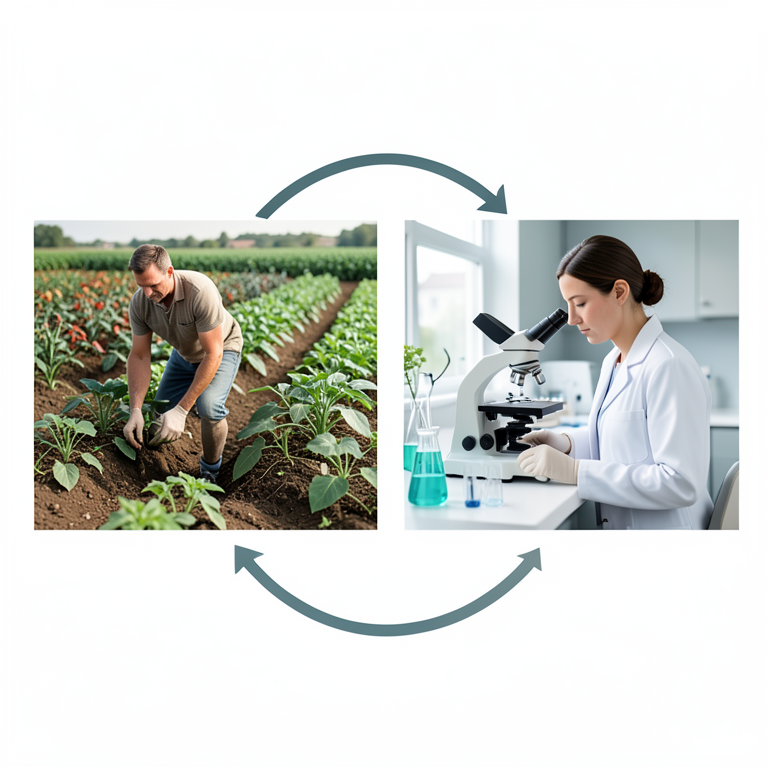
The Farmer-Scientist Interface
AI-generated conceptual illustration (A smallholder farmer in a rural crop field and a scientist in a modern laboratory). It explains the idea and does not show study data.
View source evidence ↗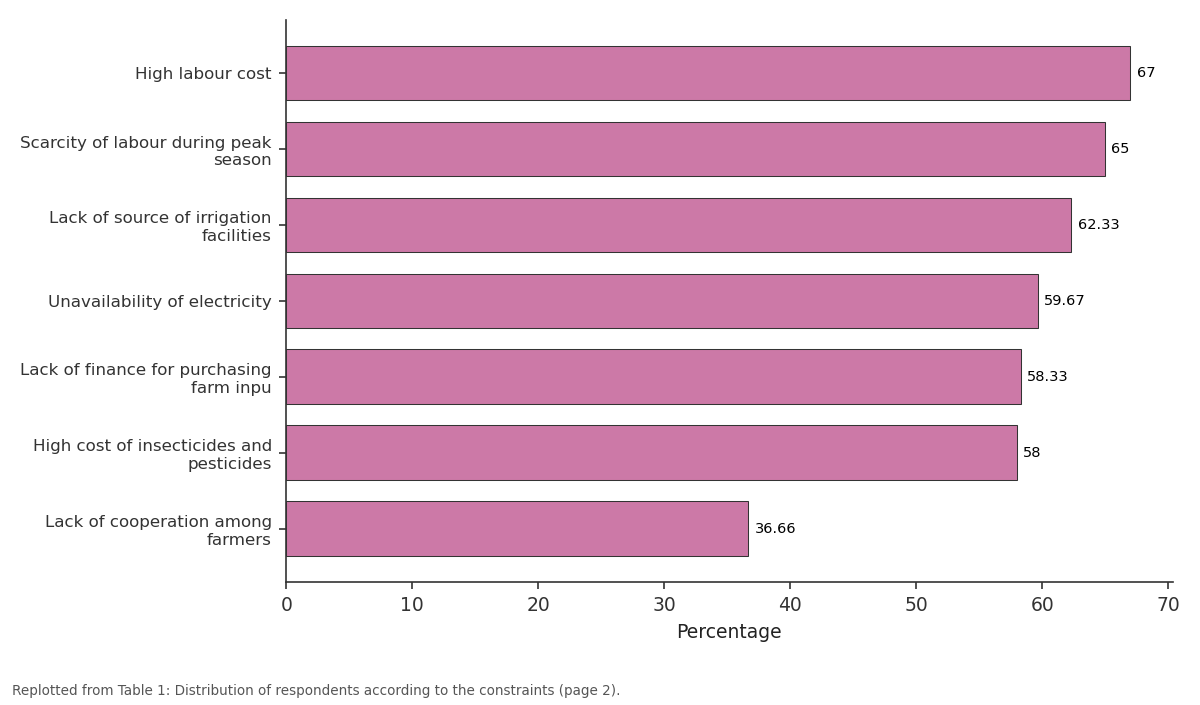
Percentage: High labour cost vs Scarcity of labour... vs Lack of source of... vs Unavailability of... vs Lack of finance for...
Replotted from Table 1 (page 2) of the original paper. Every bar is the paper's own table value.
View source evidence ↗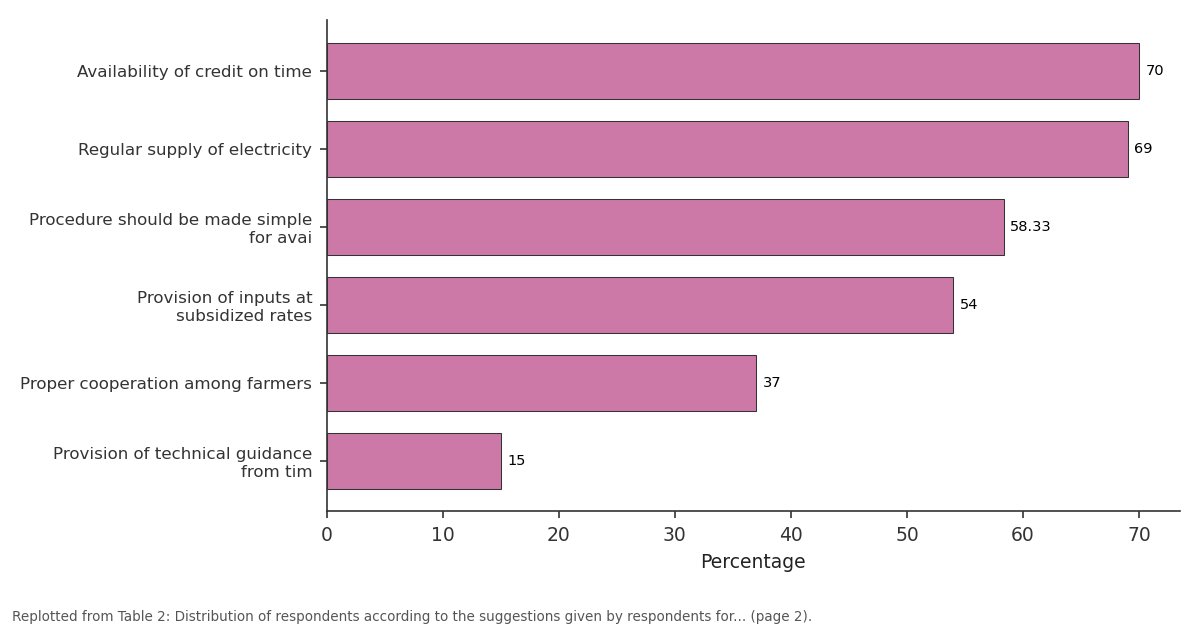
Percentage: Availability of credit... vs Regular supply of... vs Procedure should be... vs Provision of inputs at... vs Proper cooperation...
Replotted from Table 2 (page 2) of the original paper. Every bar is the paper's own table value.
View source evidence ↗Figures & tables
From the original paper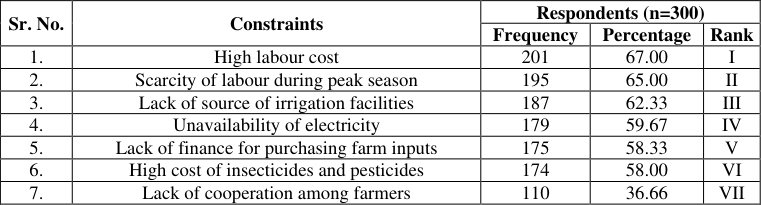 Table 1
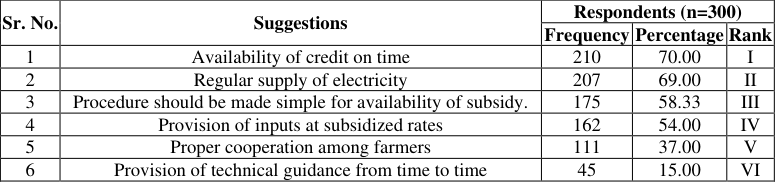 Table 2
Introduction
The Farmer FIRST Programme (FFP) has emerged as a promising approach in agricultural development, which is launched by the Indian Council of Agricultural Research (ICAR) to move beyond the production and productivity; to privilege the smallholder agriculture; and complex, diverse and risk prone realities of majority of the farmers through enhancing farmers-scientists interface. The nomenclature of Farmer FIRST Programme is farmer's Farm, Innovations, Resources, Science and Technology. The synergy between the resources present on the farm and the application of innovations derived from modern science and technology within the realm of agricultural research, as implemented at the farmer's field, has fostered a farmer-centric approach in agricultural research and extension. It necessitates the amalgamation, integration, development and refinement of modern technology from research institutions with the knowledge and wisdom of farmers. This process not only enhances farmers' capacity to effectively utilize appropriate technology but also furnishes valuable feedback to scientists, aiding in the refinement and fine-tuning of technology to better align with local settings. The fundamental concept underpinning this approach is that the farmers assume a central role in identifying research problems, establishing priorities, conducting experiments, and managing them within real farming conditions. In essence, the Farmer FIRST Programme unites farmers and scientists on a single platform to comprehensively address the needs of Indian agriculture in the modern age. The Farmer FIRST Programme (FFP) represents a significant shift in agricultural development, prioritizing farmer participation and knowledge in finding solutions. While the program boasts successes in collaborative innovation, there's a need to understand the challenges faced and also the suggestions to overcome these constraints by participants. This research investigation delves into the constraints encountered and suggestions made by individuals involved in the Farmer FIRST Programme. By knowing the constraints and considering the suggestions to overcome these constraints, we can pave the way for a more inclusive and impactful Farmer FIRST Programme, maximizing its potential to benefit both farmers and the agricultural sector as a whole.
Methodology
The present research investigation was carried out in Ahmednagar district of Western region of Maharashtra state with aim to identify the constraints faced by the ICAR www.extensionjournal.com Farmer FIRST Programme participant farmers and to invite suggestions from them to overcome constraints. The expost-facto research design of social research was used. Using purposive sampling method, the data was collected from total 300 respondents through personal interview method with the help of structured interview schedule. The statistical tools like frequency, percentage and rank were used for the analysis of the research data collected during this study.
Results and Discussion
Constraints experienced by ICAR Farmer FIRST Programme participant farmers: In this research investigation the constraints faced by the participant farmers of the ICAR Farmer FIRST programme were studied. The results of analysis are presented in Table 1. [3] , Shambharkar et al. (2017) [7] , Manjeet (2019) [4] , Patil (2019) [6] and Patil (2023) [5] .
| Sr. No. | Constraints | Respondents (n=300) | — | — |
|---|---|---|---|---|
| Frequency | Percentage | Rank | ||
| 1. | High labour cost | 201 | 67.00 | I |
| 2. | Scarcity of labour during peak season | 195 | 65.00 | II |
| 3. | Lack of source of irrigation facilities | 187 | 62.33 | III |
| 4. | Unavailability of electricity | 179 | 59.67 | IV |
| 5. | Lack of finance for purchasing farm inputs | 175 | 58.33 | V |
| 6. | High cost of insecticides and pesticides | 174 | 58.00 | VI |
| 7. | Lack of cooperation among farmers | 110 | 36.66 | VII |
Table text extracted from the original PDF; superscript letters are shown inline. The original table image is below.
View original table image
Suggestions given by participant farmers of ICAR Farmer FIRST Programme for overcoming the constraints faced by them
The data with respect to the suggestions of the respondents to overcome the constraints faced is presented in Table 2. From data presented in Table 2 it is revealed that the majority of the respondents (70.00%) suggested that availability of timely credit facilities followed by 69.00 per cent suggested the regular supply of electricity, 58.33 per cent suggested procedure should be made simple for availability of subsidy, provision of inputs at subsidized rates (54.00%), Proper cooperation among farmers (37.00%) and providing technical guidance time to time (15.00%). The present research findings are in line with the findings of Ahire and Kapase (2015) [1] and Patil (2019) [6] .
| Sr. No. | Suggestions | Respondents (n=300) | — | — |
|---|---|---|---|---|
| Frequency | Percentage | Rank | ||
| 1 | Availability of credit on time | 210 | 70.00 | I |
| 2 | Regular supply of electricity | 207 | 69.00 | II |
| 3 | Procedure should be made simple for availability of subsidy. | 175 | 58.33 | III |
| 4 | Provision of inputs at subsidized rates | 162 | 54.00 | IV |
| 5 | Proper cooperation among farmers | 111 | 37.00 | V |
| 6 | Provision of technical guidance from time to time | 45 | 15.00 | VI |
Table text extracted from the original PDF; superscript letters are shown inline. The original table image is below.
View original table image
Conclusion
The study revealed that the majority of the participants farmers of the ICAR farmer FIRST programme faced major constraints of high labour cost followed by scarcity of labour during peak season, lack of source of irrigation facilities and unavailability of electricity, lack of finance for purchasing farm inputs, high cost of insecticides and pesticides and lack of cooperation among farmers. The major suggestions offered by the participant farmers to overcome these constraints were availability of credit on time followed by regular supply of electricity, procedure should be made simple for availability of subsidy, provision of inputs at subsidized rates, proper cooperation among farmers and provision of technical guidance time to time.
References
1 in the original paper- Shambharkar YB, Mankar DM, Katole RT, Khade AH. Constraints faced by Bt cotton growers in adoption of integrated nutrient management practices in Yavatmal district of Vidarbha Region. Asian J Ext Edu. 2017;35:30-37.