
Research article · 2024 · Full text
International Journal of Agriculture Extension and Social DevelopmentPork preference, consumption and retailers pattern in Hassan district of Karnataka
Volume 7(7S) · Pages 75–78 · DOI: 10.33545/26180723.2024.v7.i7sb.776 ↗
Research areasGlobal Trade and CompetitivenessAgricultural Economics and PracticesLivestock Management and Performance Improvement
Abstract
Author-writtenA study was carried out in Hassan, a southern district of Karnataka to study the preferences, consumption and retailer patterns of pork as the availability and consumption of pork in this area is high. Data from the respondents of different pork retail shops and the pork consumers were collected in the study area through pretested interview schedule. The social-economic profile along with behaviour pattern of consumers in terms of meat preference, taste, digestibility and cost were studied. The consumer behaviour pattern of pork depicted as preferential, tastier, digestible easily and costlier by (40%, 45%, 12%, 23%) of respondents respectively. A large majority of the respondents preferred pork followed by chicken and the order of reasons for pork preference by the respondents was its taste and the cost. In addition, the trend of pork consumption pattern revealed the other major factors influencing high consumption of pork i.e., during weekends (100%) and preferably from home (62%). The consumers preferred pork in the form of fry (41%) and of the indigenous breed variety (82%). In reference to retailers, 46.8 per cent purchased animals both on daily basis or weekly basis but not in bulk amounts because of lower infrastructure facilities. The economics of retailers were calculated among the pork retailers and found to be profitable. The major constraints expressed in this study influencing the retailers were non availability of indigenous pigs locally, shortage of kitchen / hotel food waste and sale of temple sacrificed pork at cheaper price.
Summary
Source-checkedPlain-language reading of the full paper, prepared with AI and checked against the text. Each point links to the authors' own words.
Why it matters
- Piggery has the potential to meet rising meat demands and provide income for small farmers due to the pig's efficiency as a feed converter, yet it is not widespread across India. View evidence ↗
- Karnataka possesses the highest pig population among South Indian states, totaling 6.25 million. View evidence ↗
- Hassan district is a known hub for meat consumption in Karnataka, particularly pork, partly due to the presence of animal-sacrificing temples. View evidence ↗
The question
- The study aimed to investigate the current state of pig production, marketing, demand, preference, and consumption patterns within the Hassan district of Karnataka. View evidence ↗
What they did
- The collected data were scored, tabulated, and analyzed using statistical methods to reach the study's conclusions. View evidence ↗
What they found
- Pork was the most preferred meat among respondents (40%), followed by chicken (32%), mutton (21%), and fish (7%). View evidence ↗
- When ranking by taste, pork was the top choice for 45% of respondents, followed by mutton (23%), chicken (19%), and fish (13%). View evidence ↗
- Consumers perceived white meats like fish (44%) and chicken (43%) as highly digestible, while pork (12%) and mutton (1%) were seen as not easily digestible. View evidence ↗
- Pork consumption is most frequent on Sundays (100%) and least frequent on Mondays (34%). View evidence ↗
- A large majority of local consumers (82%) prefer pork from the local indigenous black pig breed. View evidence ↗
- Retailers primarily purchase animals on a daily (46.8%) or weekly (34%) basis, with fewer purchasing fortnightly (19.2%). View evidence ↗
- The average purchase price for live animals was Rs.120/kg, while the average retail selling price for pork was Rs.200/kg. View evidence ↗
- Retailers identified the lack of local indigenous pigs, shortage of food waste for feed, and competition from cheaper temple-sacrificed pork as major business constraints. View evidence ↗
What it means
- The authors conclude that indigenous piggery should be promoted in the Hassan district through the development of farming practice packages and farmer training. View evidence ↗
Visual summary
1 visualsIllustrations explain the paper; they do not show study data.
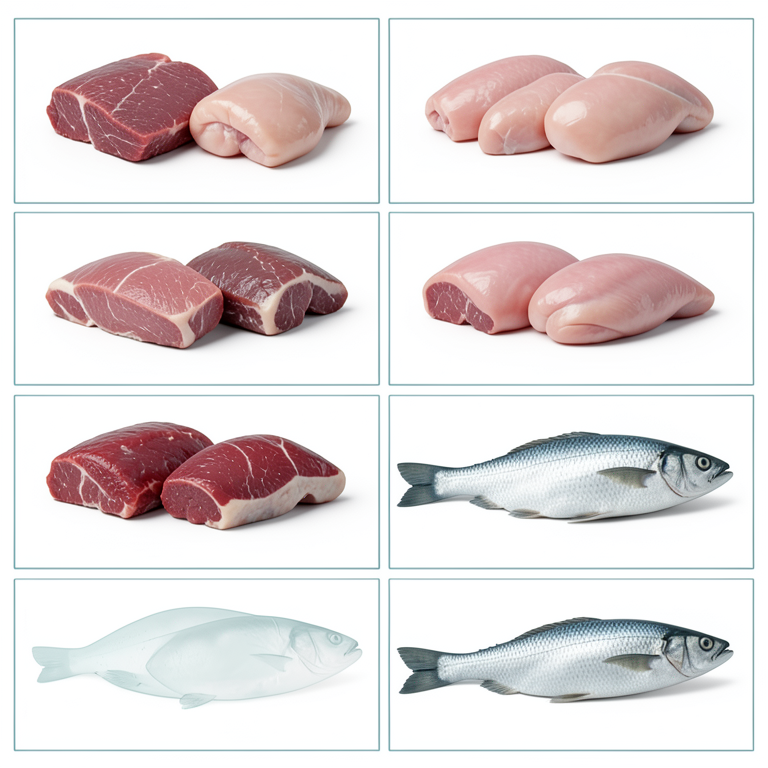
Meat Preference Comparison
AI-generated conceptual illustration (raw pork, chicken, mutton, and fish fillets). It explains the idea and does not show study data.
View source evidence ↗Introduction
Pork is the most consumed meat globally. However, in India, consumption of pork is limited to few regions of the country. In India, as per 20 th Livestock census, the total Pig population is 9.06 million predominantly present in north eastern states of the country. In spite of pig being an efficient feed converter and can solve the problem of increasing meat demand due to population rise and also supplement the income of poor and small/marginal farmers, piggery is not yet wide spread in the country. Three states of India, like Assam, Jharkand and Meghalaya together constitute 45 per cent of the pig population of the country. The pig population is on decreasing trend from 2007 livestock census onwards and has decreased by 12 per cent over previous. Among the South Indian states, Karnataka has highest pig population of 6.25 million. Contrary to negative trend at the national level, the pig population in Karnataka has increased by 6.25% over previous, indicating potential of the state in pig production and livelihood security of the farmers involved. Hassan, a southern district of Karnataka state is well known for meat consumption in the state. District imports meat livestock such as sheep, goat, pig and poultry from other districts of the state as well as from other states to meet the demand for meat in the district. Further, presence of several animal sacrificing temples such as Puradamma, Malaliyamma etc. in the region makes it the destination of meat lovers especially pork. The present study was undertaken to know the present scenario of pig production, marketing, pork demand, its preference and consumption pattern in Hassan district of Karnataka.
Materials and Methods
Data on various relevant aspects was collected from ten pork retail shops and fifty pork consumers from in and around Hassan through a pre-tested, reliable and valid interview schedule. The data thus collected were scored, compiled and tabulated as per the established norms and procedures and were subjected to appropriate statistical analysis in order to arrive at a conclusion.
Results
Results
Pork consumers Profile of the Respondents
The average age of the pork consuming respondents was 38.63 ±12.5 years. All the respondents were literates, with school education (55%), below graduation (26%) and graduation and above (18%), even though all were literates, www.extensionjournal.com majority of them were school dropouts or never continued education after school. Of the respondents, majority belonged to nuclear families (69%), followed by joint family (31%) indicating higher disintegration of joint family system in the area. The median family size in nuclear family and joint family were four and seven respectively. Even though 54 per cent of the respondents were Agrarian and remaining 46 per cent from non-agriculture families.
Pork consumers as Pig farmers
Among the respondent consumers involved in animal husbandry, majority were involved in dairying (50%), followed by back yard poultry (28%), sheep and goat (16%), pig rearing (3%) and mixed livestock (15%). The major reasons put forth by consumer for not taking up pig rearing was because of the difficulty in managing (43%), non-availability of feed / kitchen left out (31%), less profit (14%) and social taboo (12%).
Meat Preference of the Respondents
In Hassan, an average price per kilogram of meat for pork, mutton / chevon, native chicken and fish is rupees 200, 600, 500 and 200 respectively, and the sales also has similar trend. Consumer also opined that mutton (53%) and pork (23%) are costlier than chicken (18%) and fish (4%). Of the people surveyed 27.20 per cent were vegetarians who have tasted meat and remaining 72.80 were non vegetarians. Among non-vegetarians 96 per cent consumed chicken, 92 per cent consumed fish, 72 per cent consumed mutton, 63 per cent consumed chevon and 48 per cent consumed pork. The respondents opined that pork (40%) and chicken (32%) as the most preferred meat, followed by mutton (21%) and fish (7%). Further, on overall basis 63 per cent of the consumers preferred meat of local breeds, 12 per cent preferred improved or outside breeds and 25 per cent had no preference for any particular breed. Pork consumers are of the opinion that red meat is tastier than white meat. Further, with respect to taste, majority ranked pork (45%) as their first choice followed by mutton (23%), chicken (19%) and fish (13%). Consumers are of the opinion that white meat i.e. chicken (43%) and fish (44%) as highly digestible whereas pork (12%) and mutton (1%) are not easily digestible.
Pork consumer's preferences and views
Among 83 per cent of households the decision on purchase of pork for family consumption is made by male head of the family. Among pork eaters 62 per cent households allowed pork utility at their houses where as remaining 38 per cent of the pork eaters consume pork from hotels, friend's house or other places as pork is totally prohibited in their houses. Only 50 per cent household allow cooking of pork inside the house, where as 42 per cent cook pork in backyard of house and 8 per cent does not cook but purchase pork dishes from outside. Even though consumption frequency greatly varied from daily to occasionally, majority of consumers, eat pork twice a week (25%) or occasionally or once in a month (25%). Sunday is the most preferred day (100%), where as Monday is the least preferred day (34%) for pork consumption followed by Saturday (56%) and Thursday (54%). About 34 per cent of consumers don't mind eating on any day of the week. Religious sentiments (38%) and non affordability (25%) are the major reasons for non consumption of pork every day. Majority of consumers do not mind consuming pork in any season (42%), where as summer (22%) and winter (22%) are equally preferred and rainy season (14%) is the least preferred season for pork consumption. About 20 per cent of consumers abstain from pork consumption during Shravana or Karthika masa of Hindu calendar months or during festivals months however, about 32 per cent who consume pork don't mind consuming pork during that period. Even though 80 per cent of the consumers feel eating pork is healthy some 3 per cent of consumers feel it is unhealthy to consume pork. Most consumers prefer to consume pork as fry (41%) and curry dishes (22%). Only 11 per cent of consumers prefer to have Biryani made out of pork. Most of the consumers (36%) wish to have pork during lunch or supper, about 8 per cent preferred it as breakfast and 20 per cent does not have preference of time for pork consumption. Majority of local pork consumers (82%) preferred local indigenous black pig for pork and 77 per cent of the respondents have tasted pork of wild boar atleast once.
Pork retailers Pig / Pork Trade
The interview with retailers revealed that 92 per cent of the retailers do not have their own piggery (breeding pigs) and purchased pigs from others. Pigs are purchased from traders who normally trade local indigenous pigs from out of Hassan district usually from northern Karnataka and Andhra Pradesh once or twice a week. Retailers purchased the animals either daily, weekly or once in a fortnight. Significantly higher proportion of retailers purchased animals either on daily basis (46.8%) or on weekly basis (34%) compared to those purchasing once in fortnight (19.2%). Stocking of piglets by retailers was found to be based on their sales requirement, place to keep animal and availability of kitchen and vegetable waste. Retailers opined that 63.80 per cent of customers demand for muscular meat portion exclusively thigh region where as 23.40 per cent do not mind inclusion of fatty portion of meat. Of the edible organ portion the most sought are liver (41%), followed by heart (15%), intestine (11%), lungs (12%) and others / mixed (20%).
Pig and Pork Economics
The average purchase price of pigs and sale price of pork by retailers was not constant. The average purchasing price of live animal was Rs.120 /kg of live weight (Range Rs.100 to Rs.135) based on demand and body condition of the animal, where as average selling price of pork at their outlets was Rs.200/kg. (Range Rs.180 to 220 /kg) based on demand, bulk purchase, clearing off the stock of the day. Indigenous pigs of around 40 -60 kgs were in high demand. Retailers sacrifice and sell around 2 -8 pigs per day. They opined that selling of at least three pigs per day will be profitable. Majority (73%) of the retailers hired labour on monthly basis to assist in all activities (transit of pigs, feeding, slaughter, sales etc.). The average salary paid to these labour is Rs. 15,000 /month (Range 10,000 to 20,000/-) for a period of 12 hrs (7.00 am to 7.00 pm) per day. However, at Puradamma temple premises labour for slaughter, cleaning and cutting was Rs.1000/-per animal. www.extensionjournal.com
Economics of pork retail shop (per month)
A retailer slaughtering and selling 3 pigs of 40 kg per day, hiring a labour (Rs.15, 000/-per month) Purchase Price --Rs. 120 / kg live weight, 90 pigs/mn @ 40kg /pig-Rs. 4, 32,000-00 Transport -Rs. 7000-00 Labour -Rs. 14,000-00 Feed /Vegetable waste -Rs. 3000-00 Expenditure-Rs. 4, 56,000-00 Income (70% dressing percent, Rs.200/-/kg, 84kg pork) -Rs.5, 04,000-00 Net Profit per month -Rs. 48,000-00
Discussion
Only adult persons who consume pork were considered as respondents, no discrimination regarding gender, religion / caste, region, employment and income was made. Further, respondents were selected randomly and were from different families. Results clearly indicated the increase in urbanization and shift of agriculture to non-agriculture based occupation in the region. The findings also received support from the findings of Borah et al., (2018) [2] and Babu et al., (2010) [1] .
Pork consumers as Pig farmers
Even though, pork consumption was higher in Hassan region, astonishingly people involved in pig rearing were very less and the demand for pork is met from the pig imported from northern districts of Karnataka. These findings were in support with studies of Borah et al., (2018) [2] .
Meat Preference of the Respondents
The preference of livestock species for meat depends on several factors such as availability, cost, taste, digestibility, social taboo and health concern. Hassan district has all major types of agro-climatic conditions suited for different livestock farming, thus all types of meat are available in local market for the consumers. Further, higher demand for meat, good transportation connectivity has established good livestock marketing system in the region. Cost of meat and consumer purchasing power are important factors influencing meat consumption. Chicken and fish are consumed with no social taboos, however, pork is not consumed by Muslims and some Hindu families who consume other meat. Mutton/Chevon was also considered a taboo in certain Hindu families. The opinion of the consumers, who eat all types of meat such as pork, mutton / chevon, chicken and fish were collected and were asked to indicate their most preferred meat among all types of meat. These findings received support from the study of Cranfield (2013) [3] , Babu et al., (2010) [1] , Kavitha and Ajithkumar (2014) [6] . Taste of the meat is influenced by several factors as species, breed, age, sex, portion of meat, slaughtering and cooking method and meat characters such as tenderness, flavor, juiciness and fat content or marbling etc., Further, consumers opined that meat of local breeds of pig, sheep and poultry were tastier than outside breeds. These findings were similar to findings of Borah et al., (2018) [2] , Deka et al., (2007) [4] , Mullie et al., (2010) [9] , Oh and See (2012) [11] , Imchen (2014) [5] , Tammie and Satyanarayana (2005) [13] .
Meat is said to be slowly digestible compared to vegetarian food and is the major reason for not being commonly offered to children and aged. However, majority of general eaters in the present survey preferred pork than other meat in spite of it being less digestible and costlier. These findings were in support with studies of Borah et al., (2018) [2] , Nwachukwu and Udegbunam (2020) [10] .
Pork consumer's preferences and views
The results on preferences and views by consumers varies to greater extent which were depicted in the results. Similarity of these preferences could be derived from the study of Borah et al. (2018) [2] , Deka et al. (2007) [4] and Machado et al. (2014) [7] .
Pork retailers Pig / Pork Trade
In spite of Hassan being major pork consuming districts of Karnataka, as per 20 th livestock census the district pig population (1946) is just 0.6% of Karnataka pig population (323836). The piggery business in the district is controlled by pork retailers and pig traders who import pigs from outside. Stocking of piglets by retailers was found to be based on their sales requirement, place to keep animal and availability of kitchen and vegetable waste. Similar findings were reported by Borah et al. (2018) [2] , Deka et al., (2007) [4] and Imchen (2014) [5] . Small traders who purchased animals regularly opined, lack of space and feed as the major reason for not purchasing in spite of higher profits on bulk purchase of animals. The preference of edible organ portion also differs among different consumers. The results were in support with findings of Meuwissen et al. (2007) [8] .
Pig and Pork Economics
Though the economics possessed by retailers showed profit as depicted from the results, the retailers opined certain constraints. Non availability of indigenous pigs locally and shortage of kitchen / hotel food waste were the two major constraints for their business. Further sale of temple sacrificed pork at cheaper price by few is considered as an emerging constraint. These results are in harmony with findings of Kumar and Mazhar (2020) [12] .
Conclusion
Pork consumption in India is regionally concentrated, with pig farming facing challenges despite its potential. Pork's popularity in Hassan district contrasts with religious and social barriers directly or indirectly influencing consumption. Preferences for taste, digestibility, and affordability drive meat choices, with chicken and fish being favored. Piggery, especially of Indigenous breed needs to be promoted in Hassan district. Package of practices for rearing indigenous pigs in farms is to be developed and farmers need to be trained in this regard.
Conflict of
Conflict of
Acknowledgement
www.extensionjournal.com the stastical analysis; HGK: Identification of retailers and data collection from retailers; DNH: Document compilation and data collection from consumers and retailers; SAN: Data entry into excel sheets and Correspondance.
References
10 in the original paper- Babu AJ, Sundari AR, Triveni G, Indumathi J. Study on meat consumption patterns in rural households of Chittor district of Andhra Pradesh. Tamilnadu Journal of Veterinary and Animal Sciences. 2010;6(4):183-187.
- Borah B, Borgohain A, Khuman LS, Bordoloi G. Analysis of pork preference and consumption pattern among households in Assam. International Journal of Agricultural Science and Research. 2018;8(2):1-12.
- Kavitha R, Ajithkumar KG. A study on the consumption pattern of meat in a rural locality of North Kerala. Asian Journal of Animal Science. 2014;9(2):202-206. doi: 10.15740/has/tajas/9.2/202206.
- Machado ST, de Alencar Nääs I, dos Reis JGM, Vendrametto O. Brazilian consumers' preference towards pork. In: Advances in Production Management Systems. Innovative and Knowledge-Based Production Management in a Global-Local World: IFIP WG 5.7 International Conference, APMS 2014, Ajaccio, France, September 20-24, 2014, Proceedings, Part II; c2014. p. 54-61. DOI: 10.1007/978-3-662-44736-9_7.
- Meuwissen MP, Van Der Lans IA, Huirne RB. Consumer preferences for pork supply chain attributes. NJAS-Wageningen Journal of Life Sciences. 2007;54(3):293-312. DOI: 10.1016/s15735214(07)80021-2.
- Mullie P, Clarys P, Hulens M, Vansant G. Dietary patterns and socioeconomic position. European Journal of Clinical Nutrition. 2010;64(3):231-238. DOI: 10.1038/ejcn.2009.145.
- Nwachukwu CU, Udegbunam C. Rural pig production and pork consumption in Imo State, Nigeria. Nigerian Journal of Animal Science. 2020;22(1):165-185.
- Oh SH, See MT. Pork preference for consumers in China, Japan and South Korea. Asian-Australasian Journal of Animal Sciences. 2012;25(1):143. DOI: 10.5713/ajas.2011.11368.
- Kumar KSNP, Mazhar SH. Constraints experienced by the piggery farmers of West Godavari District of Andhra Pradesh. International Journal of Current Microbiology and Applied Sciences. 2020;9(10):19891993. doi: 10.20546/ijcmas.2020.910.242.
- Tammie RD, Suryanarayana MVAN. Meat consumption in Prakasam district of Andhra Pradesh: an analysis. Livestock Research for Rural Development. 2005;17(11):25-31.