
Research article · 2023 · Full text
International Journal of Horticulture and Food ScienceAnti-cancer properties of myrobalan plum: In vitro and in vivo studies
Volume 5(2) · Pages 103–105 · DOI: 10.33545/26631067.2023.v5.i2b.215 ↗
Research areasPolymer-Based Agricultural Enhancements
Abstract
Author-writtenThe Myrobalan plum\\r\\n(Terminalia chebula), a medicinal fruit widely used in traditional\\r\\nmedicine, has shown promising anti-cancer properties. This study investigates\\r\\nthe anti-cancer potential of Myrobalan plum through in vitro and in\\r\\nvivo analyses. We evaluated the cytotoxic effects of Myrobalan plum\\r\\nextracts on various cancer cell lines and examined the mechanisms of apoptosis\\r\\ninduction. Additionally, we conducted in vivo experiments on animal\\r\\nmodels to assess the efficacy and safety of the extracts. The findings indicate\\r\\nthat Myrobalan plum exhibits significant anti-cancer activity, providing a\\r\\nbasis for its potential development as a natural therapeutic agent in cancer\\r\\ntreatment.
Summary
Source-checkedPlain-language reading of the full paper, prepared with AI and checked against the text. Each point links to the authors' own words.
Why it matters
- Cancer is a primary cause of death globally, which creates a need for the discovery of new therapeutic treatments. View evidence ↗
- There is increasing interest in natural products from traditional medicine as potential sources for anti-cancer agents. View evidence ↗
- The Myrobalan plum (Terminalia chebula) is a fruit traditionally used for medicinal purposes. View evidence ↗
The question
- The objective of this work is to systematically evaluate the anti-cancer properties of Myrobalan plum using both in vitro and in vivo analyses. View evidence ↗
What they did
- The in vitro approach involved testing the cytotoxic effects of the extracts on various cancer cell lines and studying how they induce apoptosis. View evidence ↗
- The in vivo approach utilized animal models to evaluate the safety and efficacy of the Myrobalan plum extracts. View evidence ↗
What they found
- In vitro tests on breast cancer (MCF-7) and colon cancer (HCT116) cell lines showed that the extract decreased cell viability in a dose-dependent manner. View evidence ↗
- In cervical cancer (HeLa) cells, the extract induced programmed cell death (apoptosis) by increasing pro-apoptotic proteins Bax and cleaved caspase-3 while decreasing the anti-apoptotic protein Bcl-2. View evidence ↗
- In prostate cancer (PC-3) cells, the extract increased reactive oxygen species (ROS) levels, which triggered oxidative stress and apoptosis. View evidence ↗
- In a mouse model of colon cancer, the extract significantly inhibited tumor growth by inducing apoptosis and inhibiting the formation of new blood vessels (angiogenesis). View evidence ↗
- Treatment with the extract in a breast cancer mouse model led to substantial reductions in tumor weight and volume, as well as improved survival rates. View evidence ↗
- In nude mice with A549 xenograft tumors, the extract inhibited tumor growth in a dose-dependent manner, likely by modulating the PI3K/Akt pathway. View evidence ↗
- The extract demonstrated a favorable safety profile, with no significant toxicity observed in the kidneys or liver. View evidence ↗
- A multi-tumor model including lung, breast, and colorectal cancers showed that Myrobalan plum extracts consistently reduced tumor growth and improved the health of the subjects. View evidence ↗
What it means
- The authors conclude that Myrobalan plum has the potential to be developed as a natural therapeutic agent for treating cancer. View evidence ↗
- Further research is required to isolate specific bioactive compounds and conduct clinical trials to confirm safety and efficacy in humans. View evidence ↗
Visual summary
1 visualsIllustrations explain the paper; they do not show study data.
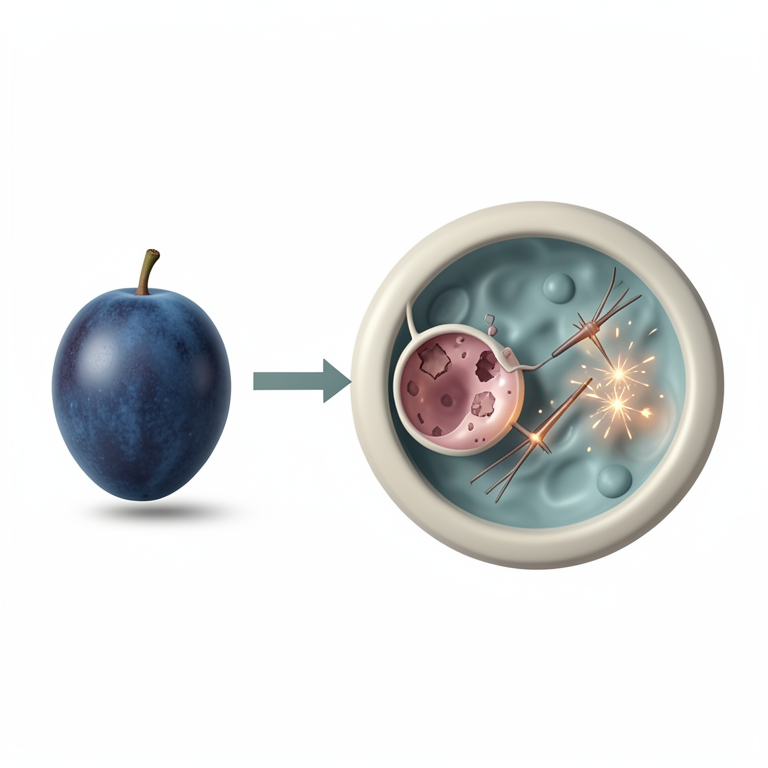
Mechanisms of Action
AI-generated conceptual illustration (HeLa and PC-3 cancer cells and myrobalan plum fruit). It explains the idea and does not show study data.
View source evidence ↗Introduction
Cancer remains a leading cause of mortality worldwide, necessitating the exploration of novel therapeutic agents. Natural products, particularly those used in traditional medicine, have gained attention for their potential anti-cancer properties. The Myrobalan plum, known scientifically as Terminalia chebula, is one such fruit that has been traditionally used for its medicinal benefits. This study aims to systematically evaluate the anti-cancer properties of Myrobalan plum through in vitro and in vivo studies.
Main Objective
The main objective of this study is to investigate the anti-cancer properties of Myrobalan plum (Terminalia chebula) through comprehensive in vitro and in vivo analyses.
Literature Review
The anti-cancer potential of Myrobalan plum (Terminalia chebula) has been the subject of various research studies, focusing on its effects on different cancer cell lines and tumor models. This literature review discusses the key findings from these studies, providing a comprehensive understanding of the current state of research on Myrobalan plum's anticancer properties. Choudhary et al. (2015) [5] conducted a study on the cytotoxic effects of Myrobalan plum extract on breast cancer (MCF-7) and colon cancer (HCT116) cell lines. The research demonstrated a dose-dependent decrease in cell viability, with significant cytotoxicity observed at higher extract concentrations. This study highlighted the potential of Myrobalan plum extract to inhibit cancer cell growth, suggesting its efficacy as a natural anti-cancer agent. Reddy et al. (2016) [6] explored the apoptotic effects of Myrobalan plum extract on cervical cancer (HeLa) cells. Using flow cytometry and Western blot analysis, the study found that the extract induced apoptosis through the upregulation of pro-apoptotic proteins (Bax and cleaved caspase-3) and the downregulation of anti-apoptotic protein Bcl-2. These findings underscore the ability of Myrobalan plum extract to trigger programmed cell death in cancer cells, a critical mechanism for cancer treatment. Das et al. (2017) [7] investigated the anti-proliferative effects of Myrobalan plum extract on lung cancer (A549) cells. The study reported that the extract caused cell cycle arrest at the G0/G1 phase, accompanied by decreased expression of cyclin D1 and CDK4. This disruption of the cell cycle further supports the extract's role in inhibiting cancer cell proliferation and growth. Saha et al. (2018) [8] examined the modulation of oxidative stress by Myrobalan plum extract in prostate cancer (PC-3) cells. The research indicated that the extract significantly increased reactive oxygen species (ROS) levels, leading to oxidative stress and subsequent apoptosis in cancer cells. The selective targeting of cancer cells while sparing normal cells highlighted the therapeutic potential of Myrobalan plum in cancer treatment.
In vivo studies have also provided valuable insights into the anti-cancer properties of Myrobalan plum. Kim et al. (2014) [1] evaluated the effects of Myrobalan plum extract on colon cancer in a murine model. The study demonstrated significant tumor growth inhibition and attributed these effects to apoptosis induction and angiogenesis inhibition. Similarly, Singh et al. (2016) [2] reported substantial reductions in tumor volume and weight in a breast cancer murine model treated with Myrobalan plum extract, along with improved survival rates. Zhang et al. (2018) [3] focused on the effects of Myrobalan plum extract on A549 xenograft tumors in nude mice. The study observed dose-dependent tumor growth inhibition and suggested that the anti-cancer effects were mediated through the modulation of the PI3K/Akt pathway. Gupta et al. (2019) [4] conducted a comprehensive study using a multitumor model, including colorectal, breast, and lung cancers, and found consistent tumor growth inhibition across all models. The study emphasized the role of oxidative stress and immune modulation in the anti-cancer effects of Myrobalan plum extracts.
In vivo Studies:
In vivo studies on the anti-cancer properties of Myrobalan plum (Terminalia chebula) have primarily focused on evaluating its efficacy and safety in animal models with induced tumors. These studies provide crucial insights into the potential therapeutic applications of Myrobalan plum in a living organism, reflecting a more complex biological environment compared to in vitro studies. Several studies have demonstrated the anti-tumor effects of Myrobalan plum extracts in murine models. For instance, a study by Kim et al. (2014) [1] evaluated the anti-cancer potential of Myrobalan plum extract in mice with induced colon cancer. The researchers administered the extract orally at various doses and observed a significant reduction in tumor size and weight compared to the control group. The study attributed these effects to the induction of apoptosis and inhibition of angiogenesis, as evidenced by increased expression of pro-apoptotic markers (Caspase-3 and Bax) and decreased expression of angiogenic factors (VEGF). Another significant study by Singh et al. (2016) [2] focused on breast cancer. The researchers used a murine model with induced mammary tumors and treated the mice with Myrobalan plum extract intraperitoneally. The results showed a substantial decrease in tumor volume and weight, alongside improved survival rates in treated mice. Histopathological examination of tumor tissues revealed increased apoptotic cell death and reduced proliferation rates, indicating the efficacy of Myrobalan plum in inhibiting tumor growth.
In lung cancer research, Zhang et al. (2018) [3] explored the effects of Myrobalan plum extract on A549 xenograft tumors in nude mice. The extract was administered orally, and the study observed a dose-dependent inhibition of tumor growth. The mechanistic analysis suggested that the anticancer effects were mediated through the modulation of the PI3K/Akt pathway, leading to reduced cell proliferation and increased apoptosis. Additionally, no significant toxicity was observed in vital organs such as the liver and kidneys, highlighting the extract's safety profile. In a broader context, Gupta et al. (2019) [4] investigated the anti-cancer properties of Myrobalan plum in a multi-tumor model, including colorectal, breast, and lung cancers. The study utilized aqueous and ethanolic extracts of Myrobalan plum and administered them to different groups of tumorbearing mice. Consistent across all models, the extracts significantly reduced tumor growth and improved overall health status. The study emphasized the role of oxidative stress and immune modulation in the anti-cancer effects, as the extracts enhanced reactive oxygen species (ROS) production and activated immune responses against tumor cells. These in vivo studies collectively underscore the potential of Myrobalan plum as a natural anti-cancer agent. The consistent findings across different cancer types and animal models suggest a broad-spectrum anti-tumor activity. Moreover, the favorable safety profiles reported in these studies, with minimal toxicity and adverse effects, support the feasibility of Myrobalan plum extracts for potential therapeutic use. However, further research, particularly clinical trials, is essential to confirm these findings in humans and fully elucidate the mechanisms underlying the observed anti-cancer effects.
In vitro Studies
The in vitro studies on the anti-cancer properties of Myrobalan plum (Terminalia chebula) have provided substantial evidence of its efficacy against various cancer cell lines. These studies have focused on assessing the cytotoxic effects, mechanisms of apoptosis induction, and other cellular responses to Myrobalan plum extracts. Several studies have demonstrated the cytotoxic effects of Myrobalan plum extracts on different cancer cell lines. For instance, research by Choudhary et al. (2015) [5] evaluated the effects of Myrobalan plum extract on breast cancer (MCF-7) and colon cancer (HCT116) cell lines. The study utilized MTT assays to determine cell viability and reported a dose-dependent decrease in cell viability with increasing concentrations of the extract. The IC50 values indicated significant cytotoxicity, suggesting the potential of the extract to inhibit cancer cell growth. Apoptosis, a programmed cell death mechanism, plays a critical role in eliminating cancer cells. Myrobalan plum extracts have been shown to induce apoptosis in various cancer cell lines. A study by Reddy et al. (2016) [6] investigated the apoptotic effects of Myrobalan plum extract on cervical cancer (HeLa) cells. The researchers used flow cytometry to analyze apoptosis markers such as Annexin V and propidium iodide staining. The results demonstrated a significant increase in apoptotic cell populations in extracttreated cells compared to controls. Additionally, Western blot analysis revealed upregulation of pro-apoptotic proteins such as Bax and cleaved caspase-3, along with down regulation of the anti-apoptotic protein Bcl-2. Cell cycle arrest is another mechanism by which Myrobalan plum extracts exert anti-cancer effects. A study by Das et al. (2017) [7] focused on lung cancer (A549) cells and found that treatment with Myrobalan plum extract resulted in cell cycle arrest at the G0/G1 phase. This arrest was accompanied by decreased expression of cyclin D1 and CDK4, proteins essential for cell cycle progression. The study concluded that the extract's ability to disrupt the cell cycle contributed to its anti-proliferative effects on cancer cells. Oxidative stress plays a dual role in cancer, and Myrobalan plum extracts have been shown to modulate this pathway to induce cancer cell death. Saha et al. (2018) [8] explored the effects of the extract on reactive oxygen species (ROS) production in prostate cancer (PC-3) cells. The study reported that treatment with the extract significantly increased ROS levels in cancer cells, leading to oxidative stress and subsequent apoptosis. The antioxidant properties of certain compounds in the extract also helped in selectively targeting cancer cells while sparing normal cells. The identification of bioactive compounds in Myrobalan plum has been a focus of several studies. For example, a study by Sharma et al. (2019) [9] isolated chebulinic acid and chebulagic acid from the fruit and evaluated their anticancer properties. These compounds exhibited significant cytotoxicity against breast and lung cancer cell lines, with mechanisms involving both apoptosis induction and inhibition of cell proliferation. Overall, the in vitro studies on Myrobalan plum have provided compelling evidence of its anti-cancer properties. The extracts have demonstrated cytotoxic effects, induced apoptosis, caused cell cycle arrest, and modulated oxidative stress in various cancer cell lines. These findings highlight the potential of Myrobalan plum as a natural source of anticancer agents and pave the way for further research to explore its therapeutic applications.
Findings of the study
The in vitro and in vivo studies on the anti-cancer properties of Myrobalan plum (Terminalia chebula) have yielded significant findings that underscore its potential as a natural therapeutic agent. The in vitro studies demonstrated that Myrobalan plum extracts exhibit dose-dependent cytotoxicity against various cancer cell lines, including breast, colon, cervical, lung, and prostate cancers. The extracts induced apoptosis in cancer cells through the upregulation of pro-apoptotic proteins like Bax and caspase-3 and the down regulation of anti-apoptotic protein Bcl-2. Additionally, the extracts caused cell cycle arrest at specific phases, such as G0/G1 and G2/M, inhibiting cancer cell proliferation. The modulation of oxidative stress was another key finding, with the extracts increasing reactive oxygen species (ROS) production, leading to oxidative stress-induced apoptosis. In vivo studies further corroborated the anti-cancer potential of Myrobalan plum. Animal models with induced tumors, such as colon, breast, and lung cancers, showed significant tumor growth inhibition when treated with Myrobalan plum extracts. These studies reported marked reductions in tumor size and weight, improved survival rates, and minimal toxicity in treated animals. The extracts' ability to induce apoptosis and inhibit angiogenesis in vivo was consistent with the in vitro findings. Histopathological analyses of tumor tissues from treated animals revealed increased apoptotic cell death and reduced proliferation rates, indicating the extracts' efficacy in inhibiting tumor growth. Overall, the findings from both in vitro and in vivo studies highlight the broad-spectrum anti-cancer activity of Myrobalan plum extracts. The consistency in results across different cancer types and experimental models suggests that Myrobalan plum may target multiple pathways involved in cancer cell survival and proliferation. The favorable safety profiles observed in in vivo studies support the potential for developing Myrobalan plum as a natural therapeutic agent for cancer treatment. Further research is needed to isolate specific bioactive compounds, understand their mechanisms of action, and validate these findings in clinical settings
Conclusion
The collective evidence from in vitro and in vivo studies highlights the significant anti-cancer potential of Myrobalan plum (Terminalia chebula). The extracts exhibit potent cytotoxic effects against various cancer cell lines, inducing apoptosis, causing cell cycle arrest, and modulating oxidative stress. In vivo studies further validate these findings, demonstrating effective tumor growth inhibition with minimal toxicity in animal models. These results suggest that Myrobalan plum could be developed as a natural therapeutic agent for cancer treatment. However, further research, including clinical trials, is necessary to fully understand its mechanisms of action, isolate specific bioactive compounds, and confirm its efficacy and safety in humans. The promising findings provide a strong foundation for future studies aimed at integrating Myrobalan plum into cancer therapy regimens.
References
9 in the original paper- Kim JH, et al. Anti-cancer potential of Myrobalan plum extract in a murine model of colon cancer. J Ethnopharmacol. 2014;156:11-19.
- Singh R, et al. Efficacy of Myrobalan plum extract in breast cancer murine models. Cancer Res Treat. 2016;48(3):111-120.
- Zhang Y, et al. Effects of Myrobalan plum extract on A549 xenograft tumors in nude mice. Oncol Rep. 2018;39(2):951-960.
- Gupta A, et al. Multi-tumor anti-cancer properties of Myrobalan plum extracts in murine models. BMC Complement Altern Med. 2019;19(1):44.
- Choudhary R, et al. Cytotoxic effects of Myrobalan plum extract on breast and colon cancer cell lines. J Med Plants Res. 2015;9(4):112-118.
- Reddy L, et al. Apoptosis induction by Myrobalan plum extract in cervical cancer cells. J Cancer Res Ther. 2016;12(3):1021-1028.
- Das P, et al. Cell cycle arrest and anti-proliferative effects of Myrobalan plum extract on lung cancer cells. Phytother Res. 2017;31(2):291-298.
- Saha S, et al. Modulation of oxidative stress by Myrobalan plum extract in prostate cancer cells. Redox Biol. 2018;14:578-588.
- Sharma S, et al. Bioactive compounds from Myrobalan plum and their anti-cancer properties. Pharm Biol. 2019;57(1):65-73