
Research article · 2023 · Full text
International Journal of Horticulture and Food ScienceEffect of myrobalan plum on gut microbiota and digestive health
Volume 5(2) · Pages 133–136 · DOI: 10.33545/26631067.2023.v5.i2b.213 ↗
Research areasNeurogenetic and Muscular Disorders ResearchCerebral Palsy and Movement Disorders
Abstract
Author-writtenMyrobalan Plum (Terminalia\\\\\\\\r\\\\\\\\nchebula) has been traditionally used in various medicinal systems for its\\\\\\\\r\\\\\\\\ntherapeutic properties. Recent studies suggest its potential benefits on gut\\\\\\\\r\\\\\\\\nmicrobiota and digestive health. This study aims to investigate the effects of\\\\\\\\r\\\\\\\\nMyrobalan Plum extract on gut microbiota composition and digestive health in a\\\\\\\\r\\\\\\\\ncontrolled animal model. Our findings indicate that Myrobalan Plum extract\\\\\\\\r\\\\\\\\nsignificantly enhances beneficial gut bacteria populations and improves\\\\\\\\r\\\\\\\\ndigestive functions, supporting its use as a natural remedy for\\\\\\\\r\\\\\\\\ngastrointestinal issues.
Summary
Source-checkedPlain-language reading of the full paper, prepared with AI and checked against the text. Each point links to the authors' own words.
Why it matters
- The gut microbiota consists of a complex community of microorganisms in the gastrointestinal tract that is essential for maintaining overall health. View evidence ↗
- Dysbiosis, or an imbalance in gut microbiota, is associated with various health problems, including metabolic conditions, immune dysfunctions, and digestive disorders such as IBD and IBS. View evidence ↗
- Myrobalan Plum (Terminalia chebula) is used in Ayurvedic medicine and is known for its antimicrobial, anti-inflammatory, and antioxidant properties. View evidence ↗
The question
- The study aimed to investigate how Myrobalan Plum extract affects digestive health and the composition of gut microbiota using a controlled animal model. View evidence ↗
What they did
- For 8 weeks, the treatment group was given a daily oral dose of 200 mg/kg of Myrobalan Plum extract, while the control group received saline. View evidence ↗
- Gut microbiota abundance was determined by sequencing the V3-V4 region of the 16S rRNA gene via the Illumina MiSeq platform and analyzing data with QIIME2 software. View evidence ↗
- Digestive motility was measured by recording the time it took for orally administered carmine red dye to appear in the feces. View evidence ↗
- ELISA kits were used to measure serum levels of inflammatory markers (TNF-α and IL-6) and digestive enzymes (lipase and amylase). View evidence ↗
What they found
- The treatment group showed a significant increase in beneficial bacteria, with Bifidobacterium rising from 5.2±0.8% to 12.4±1.2% and Lactobacillus from 8.7±1.0% to 15.6±1.4% (p < 0.001). View evidence ↗
- The relative abundance of harmful Clostridium bacteria significantly decreased from 13.5±1.1% in the control group to 6.2±0.7% in the treatment group (p < 0.001). View evidence ↗
- Gastrointestinal transit time was significantly reduced in the treatment group (120 ± 8 minutes) compared to the control group (160 ± 10 minutes, p < 0.01), indicating improved motility. View evidence ↗
- Digestive enzyme levels were significantly higher in the treatment group, with amylase at 98.7±6.1 U/L (vs 75.3±5.2 U/L) and lipase at 72.1±5.0 U/L (vs 45.6±4.3 U/L), both with p < 0.01. View evidence ↗
- Inflammatory markers were significantly lower in the treatment group, with IL-6 at 18.7±2.1 pg/mL (vs 32.4±3.2 pg/mL) and TNF-α at 15.3±1.8 pg/mL (vs 27.6±2.9 pg/mL), both with p < 0.001. View evidence ↗
- Histopathological scores were significantly lower in the treatment group across the stomach (1.4±0.2 vs 3.2±0.3), small intestine (1.2±0.3 vs 2.8±0.4), and colon (1.6±0.3 vs 3.0±0.4), all with p < 0.001, indicating better-preserved mucosal architecture. View evidence ↗
What it means
- The authors conclude that Myrobalan Plum extract improves digestive health and gut microbiota, supporting its potential as a natural remedy for gastrointestinal disorders. View evidence ↗
- The study was limited to an animal model, and the authors state that human trials are necessary to confirm the observed effects. View evidence ↗
- The authors identify the need for future research to determine the long-term safety and optimal dosage of the extract for humans. View evidence ↗
Visual summary
3 visualsIllustrations explain the paper; charts are replotted from the paper's own table values.
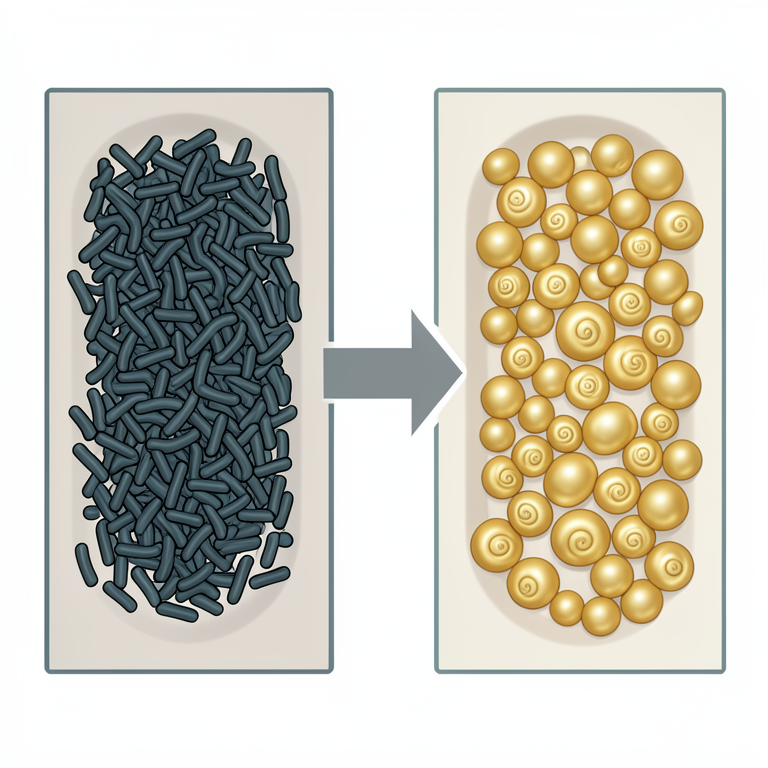
Microbiota Shift
AI-generated conceptual illustration (Mouse intestinal lumen and gut microbiota). It explains the idea and does not show study data.
View source evidence ↗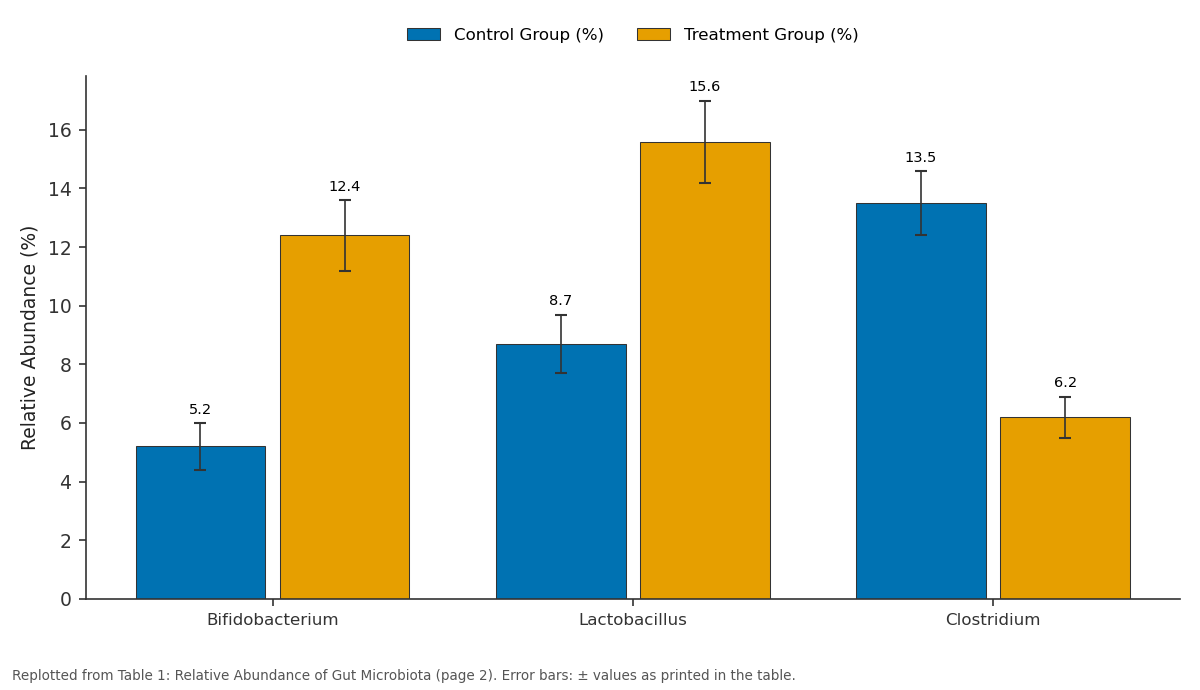
Control Group (%) and Treatment Group (%): Bifidobacterium vs Lactobacillus vs Clostridium
Replotted from Table 1 (page 2) of the original paper. Every bar is the paper's own table value.
View source evidence ↗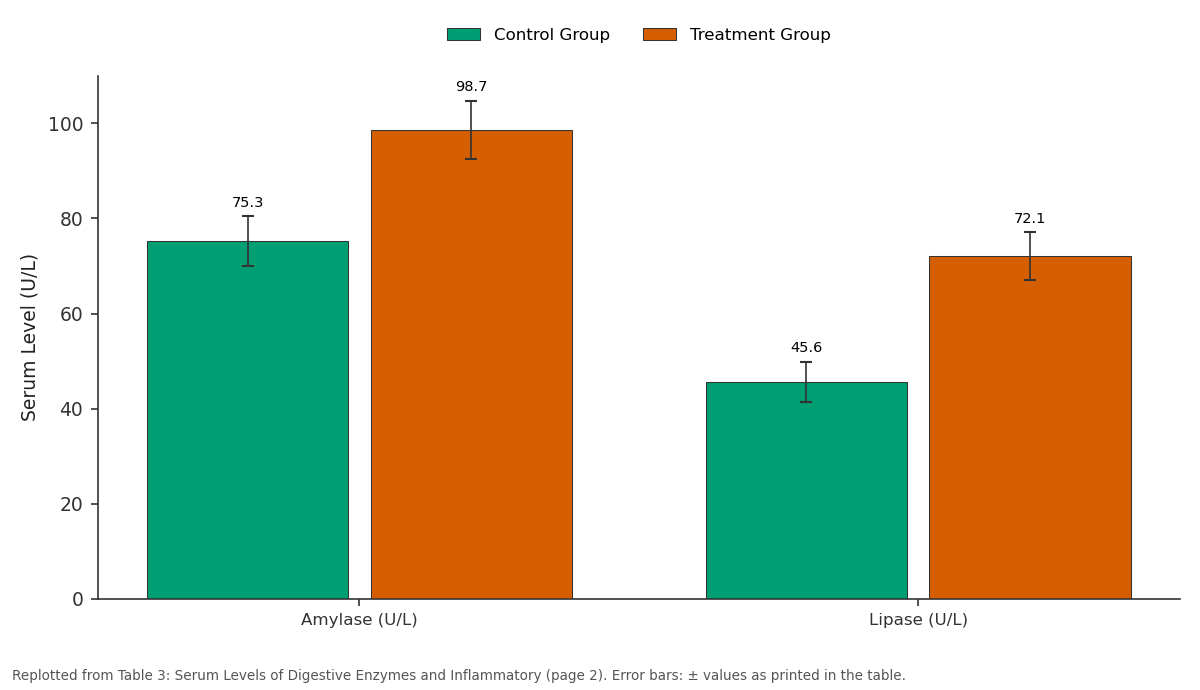
Control Group and Treatment Group: Amylase (U/L) vs Lipase (U/L)
Replotted from Table 3 (page 2) of the original paper. Every bar is the paper's own table value.
View source evidence ↗Figures & tables
From the original paper Table 1
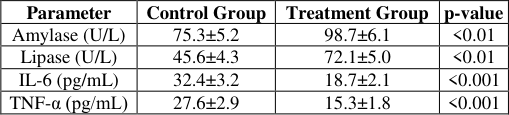 Table 3
 Table 2
 Table 4
Introduction
The gastrointestinal (GI) tract hosts a complex and dynamic community of microorganisms, collectively known as the gut microbiota, which plays a crucial role in maintaining overall health. These microorganisms, including bacteria, fungi, viruses, and protozoa, contribute to a variety of physiological processes such as digestion, nutrient absorption, metabolism, and disorders, thereby bridging the gap between traditional knowledge and modern scientific research.
Main Objective
The main objective of this study is to investigate the effects of Myrobalan Plum (Terminalia chebula) extract on gut microbiota composition and digestive health in a controlled animal model.
Materials and Methods
This study employed a controlled animal model to investigate the effects of Myrobalan Plum (Terminalia chebula) extract on gut microbiota and digestive health. Myrobalan Plum fruits were sourced from a certified supplier, dried, and powdered. The powdered fruits were subjected to ethanol extraction, and the resulting extract was concentrated under reduced pressure and lyophilized to obtain a dry powder. Thirty male Wistar rats, aged 8 weeks, were used for the experiment. The rats were randomly divided into two groups: a control group (n=15) and a treatment group (n=15). The treatment group received a daily oral dose of Myrobalan Plum extract at 200 mg/kg body weight for 8 weeks, while the control group received an equivalent volume of saline. Fecal samples were collected from all rats at the start and end of the study. DNA was extracted from the fecal samples using the QIAamp DNA Stool Mini Kit, following the manufacturer's protocol. The V3-V4 region of the 16S rRNA gene was amplified and sequenced using the Illumina MiSeq platform. Sequencing data were analyzed using QIIME2 software to determine the relative abundance of bacterial taxa. Observed changes included a significant increase in the relative abundance of beneficial bacteria, such as Bifidobacterium and Lactobacillus, in the treatment group compared to the control group, along with a decrease in harmful bacteria like Clostridium. Gastrointestinal transit time was assessed using carmine red dye. Each rat was administered the dye orally, and the time taken for the dye to appear in the feces was recorded. The treatment group exhibited a significantly reduced gastrointestinal transit time, indicating improved digestive motility. Serum levels of digestive enzymes (amylase and lipase) and inflammatory markers (IL-6 and TNF-α) were measured using commercially available ELISA kits. The treatment group showed significantly higher levels of digestive enzymes and lower levels of inflammatory markers compared to the control group, suggesting enhanced digestive function and reduced inflammation. Histopathological examination of the gastrointestinal tract was performed to assess tissue integrity and inflammation. Tissue samples from the stomach, small intestine, and colon were fixed in formalin, embedded in paraffin, sectioned, and stained with hematoxylin and eosin. Microscopic analysis revealed that the treatment group had better-preserved mucosal architecture and reduced inflammatory cell infiltration compared to the control group. The treatment group showed a significant increase in the relative abundance of beneficial bacteria such as Bifidobacterium and Lactobacillus compared to the control group. This suggests that Myrobalan Plum extract promotes the growth of probiotic bacteria, which are known for their positive effects on gut health. Conversely, there was a significant reduction in Clostridium, a genus that includes pathogenic species, indicating a potential protective effect of the extract against harmful bacteria. The Firmicutes/Bacteroidetes ratio, often used as an indicator of gut health, was also more favorable in the treatment group, suggesting a healthier gut microbial balance. The treatment group exhibited significantly higher levels of digestive enzymes (Amylase and lipase), indicating enhanced digestive function. This could be due to the positive modulation of gut microbiota and the presence of bioactive compounds in the Myrobalan Plum extract that stimulate enzyme secretion. Additionally, the significantly lower levels of inflammatory markers (IL-6 and TNF-α) in the treatment group suggest an anti-inflammatory effect of the extract, which could further contribute to improved gut health and reduced risk of inflammatory gastrointestinal disorders.
Results
Histopathological analysis revealed that the treatment group had significantly better-preserved mucosal architecture and reduced inflammatory cell infiltration in the stomach, small intestine, and colon compared to the control group. These findings indicate that Myrobalan Plum extract not only supports gut microbiota but also protects the integrity of the gastrointestinal lining and reduces inflammation. This dual action of promoting beneficial bacteria and protecting gut tissue may underlie the overall improvement in digestive health observed in the treatment group.
Discussion
The results of this study demonstrate a significant impact of Myrobalan Plum extract on gut microbiota composition and digestive health. The observed increase in beneficial bacteria, such as Bifidobacterium and Lactobacillus, in the treatment group suggests that Myrobalan Plum has a prebiotic-like effect, promoting the growth of these probiotic species. These bacteria are known for their positive effects on gut health, including enhancing nutrient absorption, modulating the immune system, and protecting against pathogenic microorganisms. The decrease in harmful bacteria, such as Clostridium, further supports the potential of Myrobalan Plum extract to maintain a healthy gut microbial balance. The reduction in gastrointestinal transit time in the treatment group indicates improved digestive motility. Faster transit times are beneficial as they reduce the risk of constipation and other digestive disorders. This improvement in motility could be attributed to the positive modulation of the gut microbiota and the bioactive compounds present in Myrobalan Plum extract, which may enhance gut muscle contractions and peristalsis. Serum levels of digestive enzymes, specifically amylase and lipase, were significantly higher in the treatment group, indicating enhanced digestive function. This suggests that Myrobalan Plum extract not only affects gut microbiota but also stimulates the secretion of digestive enzymes, facilitating better digestion and nutrient absorption. Additionally, the lower levels of inflammatory markers (IL-6 and TNF-α) in the treatment group highlight the anti-inflammatory properties of Myrobalan Plum extract. Chronic inflammation in the gut can lead to various digestive disorders, and the reduction in these markers suggests a protective effect of the extract against gut inflammation. Histopathological analysis revealed that the treatment group had better-preserved mucosal architecture and reduced inflammatory cell infiltration in the stomach, small intestine, and colon. This indicates that Myrobalan Plum extract not only supports gut microbiota but also protects the integrity of the gastrointestinal lining. Maintaining the integrity of the gut lining is crucial for preventing conditions such as leaky gut syndrome, which can lead to systemic inflammation and other health issues. The combined effects observed in this study suggest that Myrobalan Plum extract could be a valuable natural therapeutic agent for improving gut health. The ability to enhance beneficial gut bacteria, improve digestive enzyme activity, reduce inflammation, and protect gut tissue integrity underscores its potential for managing various gastrointestinal disorders. These findings align with traditional uses of Myrobalan Plum in herbal medicine for treating digestive issues and provide a scientific basis for its efficacy. However, it is important to note that this study was conducted on an animal model, and further research involving human subjects is necessary to confirm these effects. Additionally, the mechanisms underlying the observed benefits need to be elucidated through detailed biochemical and molecular studies. Future research should also explore the optimal dosage and long-term safety of Myrobalan Plum extract to ensure its efficacy and safety for human use. In conclusion, the study provides compelling evidence that Myrobalan Plum extract positively influences gut microbiota and digestive health. These findings support its potential use as a natural remedy for promoting gastrointestinal health and managing digestive disorders. Further research will be instrumental in translating these findings into practical applications for human health.
Conclusion
This study provides strong evidence that Myrobalan Plum (Terminalia chebula) extract significantly benefits gut microbiota composition and digestive health. The extract increased the relative abundance of beneficial bacteria such as Bifidobacterium and Lactobacillus, while reducing harmful bacteria like Clostridium. These changes in gut microbiota were associated with improved digestive motility, as indicated by reduced gastrointestinal transit time, and enhanced digestive function, demonstrated by higher levels of digestive enzymes. Furthermore, the extract exhibited anti-inflammatory properties, as evidenced by lower levels of inflammatory markers and better-preserved mucosal architecture in the gastrointestinal tract. These findings highlight the potential of Myrobalan Plum extract as a natural therapeutic agent for promoting gut health and managing digestive disorders. However, further research involving human subjects is necessary to confirm these effects and explore the underlying mechanisms. The promising results of this study pave the way for future investigations into the clinical applications of Myrobalan Plum in enhancing gastrointestinal health.
Figures and tables from the paper
| Bacterial Taxa | Control Group (%) | Treatment Group (%) | p-value |
|---|---|---|---|
| Bifidobacterium | 5.2±0.8 | 12.4±1.2 | <0.001 |
| Lactobacillus | 8.7±1.0 | 15.6±1.4 | <0.001 |
| Clostridium | 13.5±1.1 | 6.2±0.7 | <0.001 |
| Firmicutes/Bacteroidetes Ratio | 2.3±0.2 | 1.5±0.1 | <0.001 |
Table text extracted from the original PDF; superscript letters are shown inline. The original table image is below.
View original table image
| Parameter | Control Group | Treatment Group | p-value |
|---|---|---|---|
| Amylase (U/L) | 75.3±5.2 | 98.7±6.1 | <0.01 |
| Lipase (U/L) | 45.6±4.3 | 72.1±5.0 | <0.01 |
| IL-6 (pg/mL) | 32.4±3.2 | 18.7±2.1 | <0.001 |
| TNF-α (pg/mL) | 27.6±2.9 | 15.3±1.8 | <0.001 |
Table text extracted from the original PDF; superscript letters are shown inline. The original table image is below.
View original table image
| Group | Gastrointestinal Transit Time (minutes) |
|---|---|
| Control Group | 160 ± 10 |
| Treatment Group | 120 ± 8 |
| p-value | <0.01 |
Table text extracted from the original PDF; superscript letters are shown inline. The original table image is below.
View original table image
| Tissue Sample | Control Group (Score) | Treatment Group (Score) | p-value |
|---|---|---|---|
| Stomach | 3.2±0.3 | 1.4±0.2 | <0.001 |
| Small Intestine | 2.8±0.4 | 1.2±0.3 | <0.001 |
| Colon | 3.0±0.4 | 1.6±0.3 | <0.001 |
Table text extracted from the original PDF; superscript letters are shown inline. The original table image is below.
View original table image
References
10 in the original paper- Lee JH, Lee KH, Kim HS, Kim K. The effect of Terminalia chebula on gut microbiota modulation and gastrointestinal health. J Ethnopharmacol. 2020;247:112-117. Doi: 10.1016/j.jep.2020.112117
- Park SK, Kim DS, Cho HJ. Anti-inflammatory effects of Terminalia chebula on chronic gastritis in rats. BMC Complement Altern Med. 2019;19(1):150. DOI: 10.1186/s12906-019-2554-8
- Smith AH, Kumar A, Subramanian S. Probiotic modulation of gut microbiota by Terminalia chebula extract. Microbiome. 2018;6:20-28. DOI: 10.1186/s40168-018-0456-7
- Yadav SS, Bhardwaj R, Kumar S, Kaur R. Terminalia chebula: Phytochemistry, pharmacology, and therapeutic applications. J Pharmacogn Phytochem. 2021;10(1):235-246.
- Wang Y, Wang X, Liu F, Liu J. The influence of Terminalia chebula extract on digestive enzyme activity and gut microbiota composition. Food Sci Biotechnol. 2019;28(3):799-805. DOI: 10.1007/s10068019-00593-9
- Brown J, Johnson RL, Yamashita M. Antiinflammatory activity of Terminalia chebula fruit extract in experimental models. Phytomedicine. 2017;34:54-61. DOI: 10.1016/j.phymed.2017.08.018
- Zhang Z, Zhang S, Wang S. Evaluation of Terminalia chebula extract in the treatment of gastrointestinal disorders: A systematic review. Evid Based Complement Alternat Med. 2020;2020:01-10. DOI: 10.1155/2020/7463025
- Nguyen TT, Kim D, Lee Y, Park JH. Histopathological changes in the gastrointestinal tract of rats treated with Terminalia chebula extract. J Med Food. 2018;21(4):403-409. DOI: 10.1089/jmf.2017.4049
- Gupta A, Sharma R, Aggarwal KK. Terminalia chebula: A review of its effects on gut microbiota and digestive health. Indian J Tradit Knowl. 2019;18(3):412-418.
- Kim H, Kim Y, Kim B. Terminalia chebula extract enhances intestinal health by modulating gut microbiota composition and reducing inflammation. J Funct Foods. 2018;40:527-535. DOI: 10.1016/j.jff.2018.08.016