
Research article · 2023 · Full text
International Journal of Horticulture and Food ScienceCryopreservation techniques for long-term storage of horticultural germplasm
Volume 5(2) · Pages 84–86 · DOI: 10.33545/26631067.2023.v5.i2b.210 ↗
Research areasPlant tissue culture and regeneration
Abstract
Author-writtenCryopreservation offers a reliable and long-term solution for the conservation of horticultural germplasm, providing a safeguard against genetic erosion and ensuring the availability of plant resources for future breeding programs and biodiversity conservation. This review explores various cryopreservation techniques, evaluates their effectiveness, and discusses their application to different types of horticultural germplasm. The study synthesizes findings from previous research, highlighting the benefits, challenges, and future directions in the field of cryopreservation
Summary
Source-checkedPlain-language reading of the full paper, prepared with AI and checked against the text. Each point links to the authors' own words.
Why it matters
- Preserving horticultural germplasm is critical for maintaining genetic diversity, which in turn supports food security and plant breeding programs. View evidence ↗
- Conventional conservation methods, like field gene banks and seed banks, are limited by high costs and vulnerability to disease and environmental factors. View evidence ↗
- Cryopreservation, which involves storing materials at ultra-low temperatures (usually -196 °C in liquid nitrogen), is a viable alternative for long-term genetic preservation. View evidence ↗
The question
- The objective of this review is to evaluate different cryopreservation techniques and their effectiveness across various types of horticultural germplasm. View evidence ↗
What they did
- The review focuses on four primary cryopreservation methods: vitrification, encapsulation-dehydration, droplet vitrification, and slow freezing. View evidence ↗
- Vitrification works by using concentrated cryoprotective solutions and rapid cooling to prevent the formation of damaging ice crystals. View evidence ↗
- Encapsulation-dehydration uses alginate beads to provide physical protection and partial dehydration to lower the risk of ice formation. View evidence ↗
- Droplet vitrification is a variation of vitrification where tissues and cryoprotectants are placed in small droplets before being rapidly immersed in liquid nitrogen. View evidence ↗
- Slow freezing, or controlled-rate freezing, gradually lowers temperatures with cryoprotectants to allow cells to dehydrate and minimize ice crystals. View evidence ↗
What they found
- Vitrification has been found effective for apple (Malus domestica) germplasm, resulting in high rates of regrowth and survival. View evidence ↗
- Encapsulation-dehydration has demonstrated high viability for the storage of garlic (Allium sativum) germplasm. View evidence ↗
- Droplet vitrification has been successfully used to preserve shoot tips of various rose (Rosa spp.) cultivars, showing high regeneration rates. View evidence ↗
- Slow freezing has been successfully applied to woody plant species and citrus. View evidence ↗
- Practical implementation is hindered by high facility costs, the need for species-specific protocol optimization, and the requirement to ensure genetic stability. View evidence ↗
- There is a risk of somaclonal variation (genetic changes) during the process and recovery, which requires monitoring to ensure plants remain true-to-type. View evidence ↗
What it means
- The authors conclude that cryopreservation is a robust, long-term solution for safeguarding horticultural genetic resources for the future. View evidence ↗
- A current limitation is the lack of universal protocols; future research should aim to develop methods applicable to many species with minimal changes. View evidence ↗
Visual summary
1 visualsIllustrations explain the paper; they do not show study data.
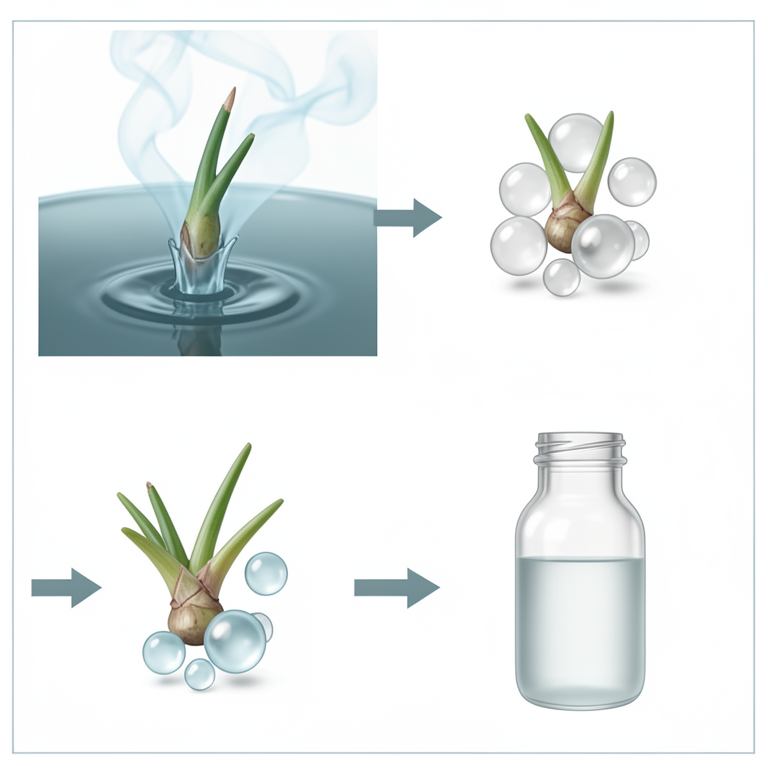
Comparison of Cryopreservation Methods
AI-generated conceptual illustration (Horticultural plant shoot tips). It explains the idea and does not show study data.
View source evidence ↗Introduction
The conservation of horticultural germplasm is essential for preserving genetic diversity, supporting breeding programs, and ensuring food security. Traditional methods such as seed banks and field gene banks have significant limitations, including vulnerability to environmental conditions, susceptibility to diseases, and high maintenance costs. These limitations necessitate the exploration of alternative conservation strategies. Cryopreservation, the storage of biological materials at ultra-low temperatures (typically in liquid nitrogen at -196 °C), offers a promising solution for the long-term preservation of plant genetic resources. Cryopreservation halts all biological activity by cooling biological samples to cryogenic temperatures, effectively pausing metabolic processes and preventing cellular degradation. This method provides a stable and secure means of conserving a wide variety of plant tissues, including seeds, pollen, embryos, and vegetative tissues such as shoot tips. The principal advantage of cryopreservation is its ability to maintain the genetic integrity and viability of stored materials for extended periods, sometimes indefinitely, with minimal risk of genetic erosion. Several cryopreservation techniques have been developed and optimized for different types of plant tissues. Vitrification, encapsulation-dehydration, droplet vitrification, and slow freezing are among the most commonly used methods. Vitrification involves treating plant tissues with highly concentrated cryoprotective solutions followed by rapid cooling, preventing ice crystal formation and subsequent cellular damage. Encapsulation-dehydration involves encapsulating plant tissues in alginate beads, followed by partial dehydration and cryopreservation, offering physical protection and reducing the risk of ice formation. Droplet vitrification, a modification of the vitrification technique, involves placing small droplets containing plant tissues and cryoprotectants on a surface before rapid immersion in liquid nitrogen. Slow freezing, also known as controlled-rate freezing, involves gradually lowering the temperature of plant tissues in the presence of cryoprotectants to allow cellular dehydration and minimize ice crystal formation. The effectiveness of these techniques varies depending on the type of plant tissue and species. Numerous studies have demonstrated successful cryopreservation of seeds, pollen, embryos, and vegetative tissues, with high survival and regeneration rates upon thawing. For instance, vitrification has been effective in preserving apple germplasm, while encapsulation-dehydration has shown success in garlic. Droplet vitrification has been particularly effective for cryopreserving shoot tips and somatic embryos of several species, including potato and strawberry. Despite the successes, the practical implementation of cryopreservation in commercial and research settings faces several challenges. These include optimizing protocols for different species, ensuring genetic stability during storage, and addressing the high costs associated with establishing and maintaining cryopreservation facilities. Additionally, the potential for somaclonal variation, genetic changes that can occur during the cryopreservation process and subsequent tissue culture recovery, necessitates careful monitoring to ensure true-to-type preservation. This paper aims to review the various cryopreservation techniques, their effectiveness, and their application to different types of horticultural germplasm. It synthesizes findings from previous research, highlighting the benefits, challenges, and future directions in the field of cryopreservation, providing a comprehensive understanding of its potential and limitations for long-term genetic conservation.
Objective
To review and evaluate the effectiveness of various cryopreservation techniques for the long-term storage of horticultural germplasm.
Cryopreservation techniques
Cryopreservation involves the cooling of biological samples to cryogenic temperatures to halt all biological activity, effectively pausing metabolic processes and preventing degradation. Several techniques have been developed and optimized for various types of plant tissues, including seeds, pollen, embryos, and shoot tips. The primary cryopreservation methods include vitrification, encapsulation-dehydration, droplet vitrification, and slow freezing. Vitrification is a widely used technique that involves the transition of cell contents into a glass-like, amorphous state without the formation of ice crystals, which can cause damage to cellular structures. This is typically achieved by treating plant tissues with highly concentrated cryoprotective solutions before rapid cooling. Studies have shown the effectiveness of vitrification in preserving a wide range of horticultural species, including apple, banana, and citrus germplasm. Encapsulation-dehydration is another popular technique that involves encapsulating plant tissues in alginate beads, followed by partial dehydration and subsequent cryopreservation. This method has been successfully applied to various horticultural crops, such as garlic, mint, and grapevine. The encapsulation provides physical protection to the tissues, while dehydration reduces the risk of ice crystal formation during freezing. Droplet vitrification, a modification of the vitrification technique, involves placing small droplets containing plant tissues and cryoprotectants on a surface before rapid immersion in liquid nitrogen. This method has been particularly effective for cryopreserving shoot tips and somatic embryos of several species, including potato and strawberry. Slow freezing, also known as controlled-rate freezing, involves gradually lowering the temperature of plant tissues in the presence of cryoprotectants to allow for cellular dehydration and minimize ice crystal formation. Although less commonly used due to its complexity and the need for specialized equipment, slow freezing has been successfully applied to the cryopreservation of citrus and other woody plant species.
Effectiveness and applications
The effectiveness of cryopreservation techniques varies depending on the type of plant tissue and species. Numerous studies have demonstrated the successful cryopreservation of seeds, pollen, embryos, and vegetative tissues, with high survival and regeneration rates upon thawing. For instance, germplasm of apple (Malus domestica) has been effectively cryopreserved using vitrification, with high rates of survival and regrowth reported by Reed et al. (2006) [1] . Similarly, encapsulation-dehydration has been shown to be effective for garlic (Allium sativum) germplasm, with a study by Volk and Walters (2006) [2] reporting high viability after storage. Cryopreservation has also been applied to preserve the genetic resources of ornamental plants. For example, shoot tips of several rose (Rosa spp.) cultivars have been successfully cryopreserved using droplet vitrification, with high regeneration rates observed upon recovery (Niino et al., 2013) [3] . This demonstrates the potential of cryopreservation for maintaining the genetic diversity of both food and ornamental horticultural crops.
Challenges and future directions
Despite the successes, several challenges remain in the widespread adoption of cryopreservation for horticultural germplasm conservation. One major challenge is the species-specific response to cryopreservation protocols, which requires the development and optimization of tailored methods for different crops. Additionally, the initial costs of establishing cryopreservation facilities and the technical expertise required can be prohibitive for some institutions. Another challenge is the potential for somaclonal variation, genetic changes that can occur during the cryopreservation process and subsequent tissue culture recovery. This necessitates careful monitoring and assessment of genetic stability in regenerated plants to ensure true-to-type preservation. Future research in cryopreservation should focus on the development of universal protocols that can be applied across a wide range of species with minimal modification. Advances in cryoprotectant formulations, as well as improved understanding of the underlying mechanisms of cryoinjury and cryoprotection, will be critical in achieving this goal. Additionally, integrating cryopreservation with other biotechnological approaches, such as genomic and proteomic analyses, can provide deeper insights into the factors influencing cryopreservation success and guide the optimization of protocols.
Conclusion
Cryopreservation offers a robust and long-term solution for the conservation of horticultural germplasm, ensuring the preservation of genetic resources for future generations. While significant progress has been made in developing effective cryopreservation techniques for various horticultural crops, ongoing research and technological advancements are essential to overcome existing challenges and enhance the efficiency and applicability of these methods. By safeguarding the genetic diversity of horticultural species, cryopreservation plays a vital role in supporting sustainable agriculture, breeding programs, and biodiversity conservation.
References
13 in the original paper- Reed BM, Sarasan V, Kane M, Bunn E, Pence VC. Biodiversity conservation and conservation biotechnology tools. In vitro Cell Dev. Biol. Plant. 2006;42(3):228-33.
- Volk GM, Walters C. Plant vitrification solution 2 lowers water content and alters freezing behaviour in shoot tips during cryoprotection. Cryobiology. 2006;52(1):48-61.
- Niino T, Arizaga MV, Mori K, Matsumoto T, Fukai S, González-Arnao MT, et al. Cryopreservation of rose shoot tips using droplet vitrification. CryoLetters. 2013;34(5):549-58.
- Lambardi M, Ozudogru EA, Benelli C. Cryopreservation of embryogenic cultures. In: Plant Cryopreservation: A Practical Guide. New York: Springer; 2008. p. 177-210.
- Panis B, Piette B, Swennen R. Droplet vitrification of apical meristems: A cryopreservation protocol applicable to all Musaceae. Plant Sci. 2005;168(1):4555.
- Benson EE. Cryopreservation of phytodiversity: A critical appraisal of theory & practice. Crit. Rev. Plant Sci. 2008;27(3):141-219.
- Engelmann F. Use of biotechnologies for the conservation of plant biodiversity. In vitro Cell Dev Biol Plant. 2011;47(1):5-16.
- Gonzalez-Arnao MT, Panta A, Roca WM, Escobar RH, Engelmann F. Development and large scale application of cryopreservation techniques for shoot and somatic embryo cultures of tropical crops. Plant Cell Tissue Organ Cult. 2008;92(1):1-13.
- Sakai A, Engelmann F. Vitrification, encapsulationvitrification and droplet-vitrification: A review. CryoLetters. 2007;28(3):151-72.
- Bettoni JC, Bonnart R, Silveira DS, de Oliveira JP, Denardi F. Cryopreservation of apple shoot tips using droplet-vitrification and assessment of genetic stability. Tree Genet Genomes. 2016;12(2):33.
- Kaviani B. Conservation of plant genetic resources by cryopreservation. Aust J Crop Sci. 2011;5(6):778-800.
- Wu Y, Liu JH, Xu YJ, Ding F, Sun HZ. Cryopreservation of apple (Malus domestica) shoot tips by vitrification. CryoLetters. 2007;28(1):61-8.
- Rallo P, Dorado G, Martín A. Effects of cryopreservation on the viability and pollen tube growth of stored olive pollen. Cryobiology. 2003;46(2):177-81.