
Research article · 2023 · Full text
International Journal of Horticulture and Food ScienceEcological impacts of plant diseases on natural and managed ecosystems
Volume 5(2) · Pages 112–115 · DOI: 10.33545/26631067.2023.v5.i2b.218 ↗
Research areasPlant Pathogens and Resistance
Abstract
Author-writtenPlant diseases\\r\\nsignificantly impact both natural and managed ecosystems, altering species\\r\\ncomposition, reducing biodiversity, and disrupting ecosystem services. This review\\r\\nexplores the ecological impacts of plant diseases, examining how pathogens\\r\\ninfluence plant communities, species interactions, and ecosystem processes. It\\r\\nalso discusses the specific consequences for agricultural and forestry systems\\r\\nand highlights strategies for mitigating these impacts. Understanding the role\\r\\nof plant pathogens is crucial for developing sustainable disease management\\r\\npractices that protect biodiversity and ensure ecosystem resilience.
Summary
Source-checkedPlain-language reading of the full paper, prepared with AI and checked against the text. Each point links to the authors' own words.
Why it matters
- Plant diseases are caused by various pathogens, including fungi, bacteria, viruses, and nematodes, and they significantly affect both natural and managed environments. View evidence ↗
- In natural ecosystems, these diseases can change which species are present, lower overall biodiversity, and interfere with essential functions like primary production and nutrient cycling. View evidence ↗
- In managed systems like forestry and agriculture, plant diseases threaten food security and cause substantial economic losses. View evidence ↗
The question
- The objective of this review is to examine the ecological impacts that plant diseases have on both managed and natural ecosystems. View evidence ↗
What they did
- The authors conducted a review focusing on how pathogens affect ecosystem processes, species interactions, and plant communities. View evidence ↗
What they found
- The chestnut blight fungus (Cryphonectria parasitica) has almost completely removed American chestnut trees from forests in North America. View evidence ↗
- Phytophthora ramorum causes sudden oak death, which has led to extensive oak mortality in California, subsequently affecting animals that depend on oaks for food and shelter. View evidence ↗
- Ash dieback, caused by Hymenoscyphus fraxineus, has led to a decline in European ash trees, which negatively impacts the biodiversity of species dependent on those trees. View evidence ↗
- Puccinia species cause wheat rusts that result in severe yield reductions, forcing the use of fungicides and resistant crop varieties. View evidence ↗
- Ralstonia solanacearum causes bacterial wilt in various crops such as bananas, tomatoes, and potatoes, resulting in significant economic losses. View evidence ↗
- Heterobasidion annosum causes root rot in conifers, which negatively impacts forest management and timber production. View evidence ↗
- The widespread use of chemical controls to manage plant diseases can cause soil and water pollution and harm beneficial organisms. View evidence ↗
- The use of monocultures in forestry and agriculture increases susceptibility to pathogen spread, worsening the impact of plant diseases. View evidence ↗
- Plant diseases often reduce biomass and growth, which lowers primary productivity and alters the carbon balance of the ecosystem. View evidence ↗
What it means
- The authors conclude that integrated management strategies combining control, monitoring, and prevention are essential for sustainable forestry and agriculture. View evidence ↗
- The authors recommend conserving and restoring plant diversity to promote ecosystem resilience and enhance resistance to diseases. View evidence ↗
Visual summary
1 visualsIllustrations explain the paper; they do not show study data.
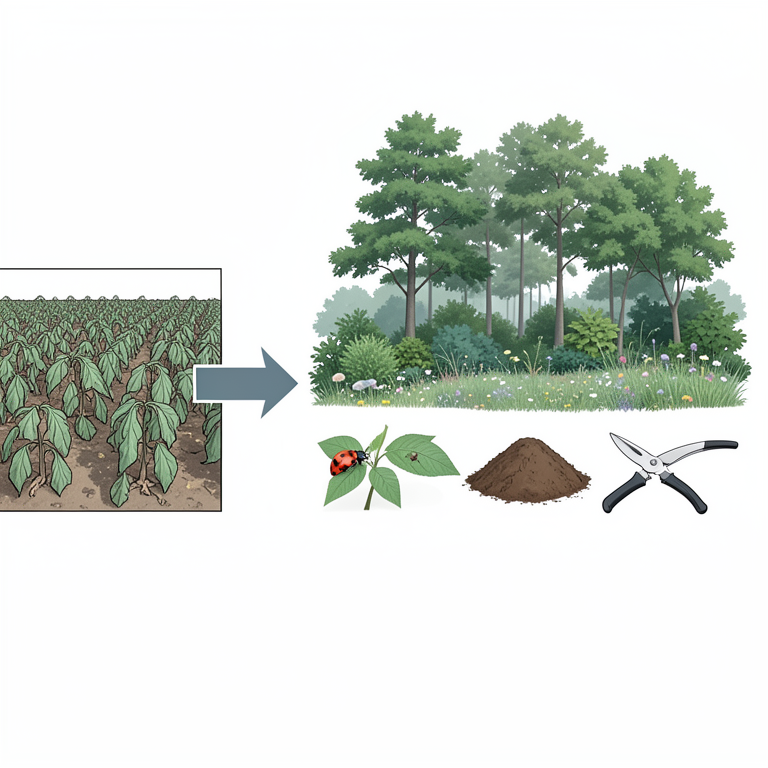
Integrated Disease Management Framework
AI-generated conceptual illustration (Mixed forest and agricultural landscape with diverse plant species). It explains the idea and does not show study data.
View source evidence ↗Introduction
Plant diseases, caused by a variety of pathogens such as fungi, bacteria, viruses, and nematodes, can have profound effects on both natural and managed ecosystems. In natural ecosystems, plant diseases can alter species composition, reduce biodiversity, and disrupt ecosystem functions such as nutrient cycling and primary production. These changes can have cascading effects throughout the ecosystem, influencing not only the plant community but also the animals and microorganisms that depend on those plants. In managed ecosystems, such as agriculture and forestry, plant diseases can lead to significant economic losses and impact food security. Crop pathogens can reduce yields and quality, necessitate increased use of chemical controls, and lead to higher production costs. In forestry, tree pathogens can affect timber production, forest health, and biodiversity, leading to long-term ecological and economic consequences. Understanding the ecological impacts of plant diseases is essential for developing effective management strategies. This involves not only recognizing the direct effects of pathogens on plant health but also understanding the broader ecological consequences of disease outbreaks. For example, the decline of a dominant tree species due to disease can lead to shifts in forest composition, changes in habitat availability for wildlife, and alterations in nutrient cycling processes. Research has shown that plant diseases can influence plant species interactions in various ways. Pathogens that preferentially infect dominant plant species can reduce their abundance, allowing less competitive species to proliferate. This can lead to changes in plant community structure and diversity. Additionally, plant diseases can influence interactions between plants and other organisms, such as herbivores and pollinators, by altering the availability and quality of plant resources. In managed ecosystems, the introduction and spread of plant pathogens are often facilitated by human activities, such as the global trade of plants and plant products. This can lead to the spread of invasive pathogens that have significant impacts on native plant communities. Managing plant diseases in these systems requires a multifaceted approach that includes disease prevention, monitoring, and control strategies.
Objective
The main objective of this paper is to review the ecological impacts of plant diseases on natural and managed ecosystems.
Impacts on Natural Ecosystems
Plant diseases have profound impacts on natural ecosystems, significantly influencing plant species composition, interactions among species, and crucial ecosystem processes. Pathogens can drastically alter the structure of plant communities by selectively infecting and reducing the abundance of dominant species. One prominent example is the chestnut blight fungus (Cryphonectria parasitica), which has nearly eradicated American chestnut trees from North American forests. This event led to significant shifts in forest composition and a considerable loss of biodiversity, demonstrating how a single pathogen can reshape entire ecosystems (Anagnostakis, 2001) [1] . Sudden oak death, caused by Phytophthora ramorum, provides another striking example. This pathogen has led to widespread oak mortality in California, impacting not only the plant community but also the animal species that rely on oak habitats for shelter and food. The death of oaks has cascading effects throughout the ecosystem, affecting species from insects to large mammals, and altering habitat structures and ecological interactions. Pathogens can also influence plant species interactions in various ways. For example, pathogens that preferentially infect dominant plant species can reduce their abundance, allowing less competitive species to proliferate. This shift can lead to changes in the structure and diversity of plant communities. In the case of ash dieback, caused by Hymenoscyphus fraxineus, the decline of ash trees in Europe has significant implications for biodiversity. Ash trees support a wide range of species, including birds, insects, and fungi, and their loss affects these dependent species, leading to a ripple effect throughout the ecosystem (Mitchell et al., 2014) [11] . In addition to altering species composition and interactions, plant diseases impact key ecosystem processes such as nutrient cycling and primary production. Diseased plants often exhibit reduced growth and biomass, which can lower primary productivity and affect the carbon balance of ecosystems. The presence of pathogens can also influence litter quality and decomposition rates. For instance, root diseases that reduce root biomass can significantly affect soil structure and nutrient availability, which in turn impacts plant growth and soil microbial communities. Furthermore, plant diseases can affect water dynamics within ecosystems. For example, the loss of large trees due to disease can reduce transpiration rates, altering local hydrological cycles. These changes can impact water availability for other plants and animals, further demonstrating the interconnected nature of ecosystem processes. Overall, plant pathogens play a critical role in shaping natural ecosystems. They can drive ecological change by influencing plant community composition, altering species interactions, and impacting key ecosystem processes. Understanding these impacts is essential for developing strategies to manage plant diseases and mitigate their effects on biodiversity and ecosystem functioning. As plant diseases continue to emerge and spread, partly due to global trade and climate change, the need for comprehensive management strategies becomes increasingly important. These strategies must integrate ecological knowledge with practical approaches to preserve the health and resilience of natural ecosystems.
Impacts on Managed Ecosystems
In managed ecosystems such as agriculture and forestry, plant diseases can lead to severe economic and ecological consequences. Agricultural systems, in particular, are highly susceptible to disease outbreaks, which can cause significant yield losses, reduce crop quality, and increase production costs. For example, wheat rusts caused by Puccinia species can lead to devastating yield reductions, necessitating the use of resistant varieties and fungicides. These diseases not only impact the immediate harvest but also have long-term implications for food security and economic stability (Pretorius et al., 2007) [12] . Bacterial wilt, caused by Ralstonia solanacearum, affects a wide range of crops, including potatoes, tomatoes, and bananas, leading to substantial economic losses. This pathogen is notorious for its persistence in soil and its ability to infect multiple plant species, making management particularly challenging. The economic impact extends beyond direct crop losses, as farmers must invest in disease control measures and may face restrictions on crop production in infested areas (Hayward, 1991) [6] . In forestry, plant diseases pose significant threats to timber production, forest health, and biodiversity. Diseases such as Dutch elm disease, caused by Ophiostoma ulmi, and sudden oak death have led to the decline of key tree species, affecting timber resources and ecosystem stability. The spread of invasive pathogens in forestry can disrupt native plant communities, reduce biodiversity, and alter ecosystem functions. For example, Heterobasidion annosum, which causes root rot in conifers, has significant implications for timber production and forest management practices. This pathogen not only reduces the economic value of forests but also affects their ecological integrity (Garbelotto & Gonthier, 2013) [5] . The economic impact of plant diseases in managed ecosystems is further compounded by the increased reliance on chemical controls, such as pesticides and fungicides. While these chemicals can be effective in controlling plant diseases, their widespread use can lead to environmental degradation, including soil and water pollution and nontarget effects on beneficial organisms. Additionally, the development of pathogen resistance to chemical controls can complicate management efforts and increase long-term costs. This situation highlights the need for integrated pest management strategies that combine chemical, biological, and cultural control methods to reduce reliance on chemicals and promote sustainable agriculture and forestry (Barzman et al., 2015) [2] . Moreover, plant diseases can affect the sustainability of managed ecosystems by reducing crop and forest resilience. Monoculture practices, common in both agriculture and forestry, can exacerbate the impact of plant diseases by creating environments that are highly susceptible to pathogen spread. Diversifying crop and tree species, implementing crop rotation, and promoting agroforestry practices can enhance the resilience of managed ecosystems to plant diseases. These practices not only reduce disease pressure but also promote biodiversity and ecosystem health. The introduction and spread of plant pathogens in managed ecosystems are often facilitated by human activities, such as global trade of plants and plant products. This can lead to the spread of invasive pathogens that have significant impacts on native plant communities and managed systems.
Effective biosecurity measures, including quarantine regulations and pathogen-free planting materials, are essential for preventing the introduction and spread of plant diseases. Early detection and rapid response to disease outbreaks can also mitigate the impact of plant pathogens on managed ecosystems (López-Avilés et al., 2020) [8] . In conclusion, plant diseases have profound impacts on managed ecosystems, leading to economic losses, reduced productivity, and environmental degradation. Integrated management strategies that combine disease prevention, monitoring, and control are essential for mitigating these impacts and promoting sustainable agricultural and forestry practices. By understanding the dynamics of plant diseases and their effects on managed ecosystems, we can develop more effective and sustainable approaches to disease management.
Strategies for Reducing the Ecological Impacts
Mitigating the ecological impacts of plant diseases requires a multifaceted approach that integrates disease prevention, monitoring, and control strategies. Preventing the introduction and spread of plant pathogens is crucial for protecting both natural and managed ecosystems. This can be achieved through strict quarantine measures, the use of pathogen-free planting material, and regulation of plant and soil movement. Early detection and rapid response to new disease outbreaks are essential for limiting pathogen spread and impact. Surveillance systems that utilize modern diagnostic tools, such as molecular techniques and remote sensing, can improve disease monitoring and facilitate timely interventions (López-Avilés et al., 2020) [8] . Integrated pest management (IPM) combines biological, cultural, physical, and chemical methods to manage plant diseases in an environmentally sustainable manner. The use of resistant plant varieties is a cornerstone of IPM, as it reduces the need for chemical controls and enhances crop resilience. Crop rotation, sanitation practices, and the use of biological control agents such as beneficial microorganisms can also help reduce disease pressure. Implementing IPM practices in agriculture and forestry can enhance ecosystem resilience and reduce the ecological footprint of disease management (Barzman et al., 2015) [2] . Restoring and conserving plant diversity is another important strategy for mitigating the impacts of plant diseases. Diverse plant communities are generally more resilient to disease outbreaks, as the presence of multiple species can buffer against the loss of any single species. Conservation of wild plant relatives and the maintenance of genetic diversity within crops can provide valuable sources of disease resistance for breeding programs. Ecological restoration efforts that promote the growth of diverse plant species can help restore ecosystem functions and enhance resilience to diseases (Menz et al., 2013) [10] . Ongoing research and monitoring are critical for understanding the dynamics of plant diseases and their ecological impacts. Advances in genomics, proteomics, and other omics technologies can improve our understanding of plant-pathogen interactions and facilitate the development of new disease management strategies. Collaborative efforts among researchers, policymakers, and land managers are essential for developing and implementing effective disease management practices that protect biodiversity and promote ecosystem sustainability (McDonald & Stukenbrock, 2016) [9] .
Biological control using natural enemies of plant pathogens, such as beneficial fungi and bacteria, offers a promising alternative to chemical controls. These biocontrol agents can suppress pathogen populations through various mechanisms, including competition, antibiosis, and induced resistance in plants. The use of mycorrhizal fungi, for instance, has been shown to enhance plant resistance to a range of soilborne pathogens, providing a natural and sustainable means of disease control (Cameron et al., 2013) [4] . Cultural practices, such as crop rotation and intercropping, can also reduce the incidence and severity of plant diseases. These practices disrupt the life cycles of pathogens by alternating host plants and increasing the diversity of the plant community. Intercropping, in particular, can create a more complex habitat that is less conducive to pathogen spread, while also enhancing beneficial interactions among plants and soil organisms. Physical control methods, including soil solarization and the use of barriers, can reduce pathogen loads in the soil and prevent the spread of diseases. Soil solarization involves covering the soil with transparent plastic sheets to trap solar radiation, heating the soil to temperatures that are lethal to many soilborne pathogens. This method is particularly effective in warm climates and can be integrated with other management practices for enhanced disease control (Katan, 2000) [7] . Chemical control, while often necessary, should be used judiciously to minimize environmental impact and delay the development of pathogen resistance. The use of targeted applications, based on accurate disease diagnosis and monitoring, can reduce the amount of chemicals needed and their negative effects on non-target organisms. Additionally, integrating chemical controls with other IPM strategies can enhance their effectiveness and sustainability. Finally, public awareness and education are essential for promoting sustainable disease management practices. Farmers, foresters, and other stakeholders need to be informed about the risks of plant diseases and the benefits of integrated management approaches. Extension services, training programs, and knowledge-sharing platforms can play a crucial role in disseminating information and encouraging the adoption of best practices. In conclusion, reducing the ecological impacts of plant diseases requires an integrated approach that combines prevention, monitoring, and control strategies. By leveraging advances in science and technology, promoting biodiversity and ecosystem resilience, and fostering collaboration among stakeholders, we can develop sustainable solutions to manage plant diseases and protect both natural and managed ecosystems
Conclusion
Plant diseases have significant ecological impacts on both natural and managed ecosystems, affecting plant species composition, interactions, and essential ecosystem processes. In natural ecosystems, pathogens can alter species diversity, disrupt ecological networks, and influence nutrient cycling and primary production. Managed ecosystems, such as agriculture and forestry, face economic and ecological challenges due to plant diseases, including yield losses, increased reliance on chemical controls, and reduced ecosystem resilience. Mitigating the ecological impacts of plant diseases requires a multifaceted approach that integrates prevention, monitoring, and control strategies. Preventing the introduction and spread of pathogens through strict quarantine measures and early detection is crucial. Integrated pest management (IPM) practices, which combine biological, cultural, physical, and chemical methods, offer a sustainable approach to disease management. Promoting biodiversity and ecosystem resilience through the conservation and restoration of plant diversity can enhance resistance to diseases. Advances in research and technology, coupled with public awareness and education, are essential for developing and implementing effective disease management strategies. Understanding the ecological impacts of plant diseases and implementing integrated management practices are vital for protecting biodiversity, ensuring sustainable agriculture and forestry, and maintaining ecosystem services. Collaborative efforts among researchers, policymakers, and land managers are essential to address the challenges posed by plant pathogens and to develop sustainable solutions for ecosystem health and resilience.
References
12 in the original paper- Anagnostakis SL. The effect of multiple importations of pests and pathogens on a native tree. Biol Invasions. 2001;3(3):245-254.
- Barzman M, Bàrberi P, Birch ANE, Boonekamp P, Dachbrodt-Saaydeh S, Graf B, et al. Eight principles of integrated pest management. Agron Sustain Dev. 2015;35(4):1199-1215.
- Boyd IL, Freer-Smith PH, Gilligan CA, Godfray HCJ. The consequence of tree pests and diseases for ecosystem services. Science. 2013;342(6160):1235773.
- Cameron DD, Neal AL, van Wees SCM, Ton J. Mycorrhiza-induced resistance: more than the sum of its parts? Trends Plant Sci. 2013;18(10):539-545.
- Garbelotto M, Gonthier P. Biology, epidemiology, and control of Heterobasidion species worldwide. Annu Rev Phytopathol. 2013;51:39-59.
- Hayward AC. Biology and epidemiology of bacterial wilt caused by Pseudomonas solanacearum. Annu Rev Phytopathol. 1991;29(1):65-87.
- Katan J. Physical and cultural methods for the management of soilborne pathogens. Crop Prot. 2000;19(8-10):725-731.
- López-Avilés A, Álvarez LA, Sánchez E, Riego F. Modern techniques in plant disease detection and management. Int J Agric Biol. 2020;22(4):897-908.
- McDonald BA, Stukenbrock EH. Rapid emergence of pathogens in agro-ecosystems: global threats to agricultural sustainability and food security. Philos Trans R Soc Lond B Biol Sci. 2016;371(1709):20160026.
- Menz MHM, Dixon KW, Hobbs RJ. Hurdles and opportunities for landscape-scale restoration. Science. 2013;339(6119):526-527.
- Mitchell RJ, Beaton JK, Bellamy PE, Broome A, Chetcuti J, Eaton S, et al. Ash dieback impacts on biodiversity and ecosystem services: rapid assessment. J Ecol. 2014;102(3):728-740.
- Pretorius ZA, Singh RP, Wagoire WW, Payne TS. Detection of virulence to wheat stem rust resistance gene Sr31 in Puccinia graminis f. sp. tritici in Uganda. Plant Dis. 2007;84(2):203.