
Research article · 2023 · Full text
International Journal of Horticulture and Food ScienceTranscriptomic analysis of flower development in ornamental plants under temperature stress
Volume 5(2) · Pages 106–109 · DOI: 10.33545/26631067.2023.v5.i2b.216 ↗
Research areasLight effects on plantsPlant Physiology and Cultivation StudiesPlant Molecular Biology Research
Abstract
Author-writtenTemperature stress significantly impacts the development of ornamental plant flowers, influencing their aesthetics and market value. This study investigates the transcriptomic responses of ornamental plants to temperature stress during flower development. Using RNA sequencing (RNA-Seq), we identified differentially expressed genes (DEGs) and analyzed their functional roles. Our findings provide insights into the molecular mechanisms underlying temperature stress responses and highlight potential targets for improving ornamental plant resilience.
Summary
Source-checkedPlain-language reading of the full paper, prepared with AI and checked against the text. Each point links to the authors' own words.
Why it matters
- Ornamental plants are prized for their aesthetic appeal, which depends heavily on how their flowers develop. View evidence ↗
- Both high and low temperature stress can damage flower color, shape, and blooming timing, which lowers the commercial value of ornamental plants. View evidence ↗
- To breed more resilient ornamental plants, it is essential to understand the molecular mechanisms that drive their response to temperature stress during flower development. View evidence ↗
The question
- The study aims to use RNA sequencing (RNA-Seq) to identify differentially expressed genes (DEGs) and determine their functional roles in ornamental plants under temperature stress during flower development. View evidence ↗
What they did
- The researchers studied three species: Petunia (Petunia hybrida), Chrysanthemum (Chrysanthemum morifolium), and Rose (Rosa hybrida). View evidence ↗
- For each species, 30 plants were used and divided equally into control, high temperature, and low temperature groups. View evidence ↗
- Significant changes in gene expression (DEGs) were identified using DESeq2 with a p-value < 0.05 and a |log2 (fold change)| > 1. View evidence ↗
- The researchers used quantitative real-time PCR (qRT-PCR) on a subset of the identified DEGs to validate the RNA-Seq results. View evidence ↗
What they found
- RNA-Seq analysis showed that both high and low temperature extremes caused a substantial number of genes to be differentially expressed. View evidence ↗
- High-temperature stress prominently induced the upregulation of heat shock factors (Hsfs) and heat shock proteins (HSPs). View evidence ↗
- Plants under high-temperature stress showed upregulation of genes involved in scavenging reactive oxygen species (ROS), indicating an oxidative stress response. View evidence ↗
- Low-temperature stress led to the upregulation of cold-responsive genes, specifically CBF (C-repeat binding factor) transcription factors. View evidence ↗
- Under cold conditions, plants increased the expression of genes to enhance osmoprotectant synthesis, which helps maintain osmotic balance and stabilize cellular structures. View evidence ↗
- High-temperature stress primarily affected oxidative phosphorylation pathways and protein processing within the endoplasmic reticulum (ER). View evidence ↗
- Low-temperature stress prominently affected plant hormone signaling pathways and carbohydrate metabolism. View evidence ↗
What it means
- The authors conclude that the distinct gene expression patterns found under different temperature stresses provide a basis for developing ornamental plants with better temperature tolerance. View evidence ↗
- The authors state that future research needs to focus on the functional characterization of key DEGs to better understand the regulatory networks of temperature stress responses. View evidence ↗
Visual summary
1 visualsIllustrations explain the paper; they do not show study data.

Comparative Molecular Response to Temperature Stress
AI-generated conceptual illustration (ornamental lily flowers). It explains the idea and does not show study data.
View source evidence ↗Figures & tables
From the original paper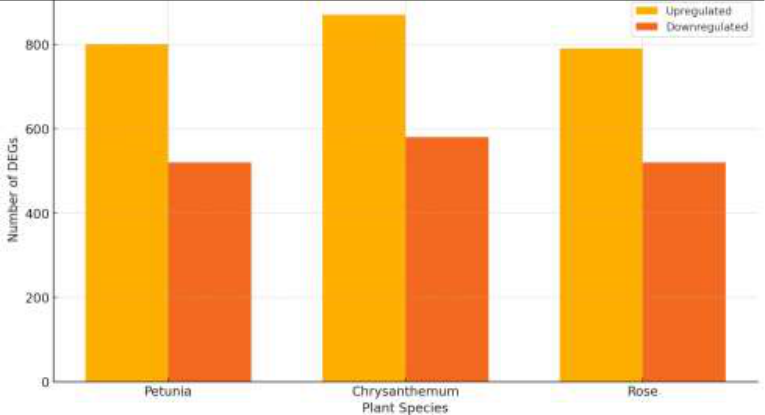 Figure 1
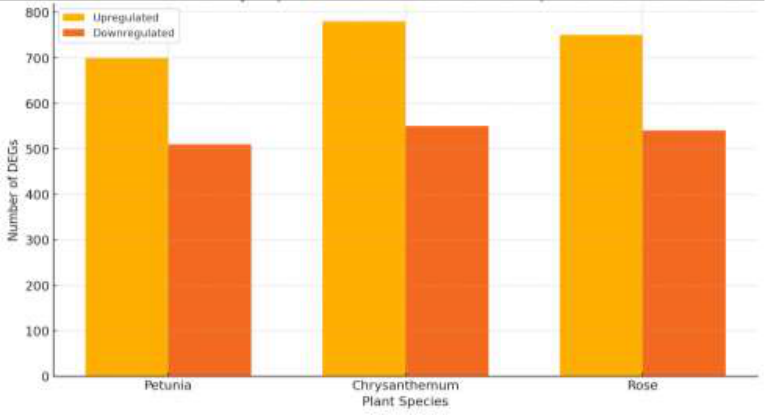 Figure 1
Introduction
Ornamental plants are valued for their aesthetic appeal, which is significantly influenced by flower development. Temperature stress, both high and low, can adversely affect flower morphology, color, and blooming time, thereby reducing the commercial value of these plants. Understanding the molecular mechanisms underlying temperature stress responses during flower development is crucial for breeding resilient ornamental plants. This study employs transcriptomic analysis to uncover the genetic and molecular responses of ornamental plants to temperature stress, focusing on differentially expressed genes (DEGs) and their associated pathways.
Objective
The objective of this paper is to investigate the transcriptomic responses of ornamental plants to temperature stress during flower development using RNA sequencing (RNA-Seq) to identify differentially expressed genes and elucidate their functional roles.
Literature Review
Previous studies have highlighted the impact of temperature stress on plant development, including alterations in flowering time and flower morphology. For instance, Li et al. (2018) [1] demonstrated that high-temperature stress affects the expression of heat shock proteins (HSPs) and other stress-responsive genes in Arabidopsis. Similarly, Wang et al. (2019) [2] reported that low-temperature stress influences the expression of cold-responsive genes and transcription factors in Chrysanthemum. These studies underscore the importance of transcriptomic approaches in elucidating stress responses. However, comprehensive transcriptomic analyses specifically focused on ornamental plants during flower development under temperature stress remain limited.
Methodology
In this study, we selected three ornamental plant species: Petunia (Petunia hybrida), Chrysanthemum (Chrysanthemum morifolium), and Rose (Rosa hybrida) to investigate their transcriptomic responses to temperature stress during flower development. A sample size of 30 plants per species was used, with each group divided equally into three treatment groups: high temperature, low temperature, and control. Control plants were maintained at an optimal growth temperature of 25 °C, while treatment groups were exposed to high temperature (40 °C) and low temperature (4 °C) for durations of 24 and 48 hours. Flower tissues were collected from all plants at the end of each treatment period. Total RNA was extracted from these tissues using the RNeasy Plant Mini Kit (Qiagen), following the manufacturer's protocol. RNA quality and integrity were assessed using the Agilent 2100 Bioanalyzer, ensuring highquality RNA for subsequent analysis. RNA-Seq libraries were prepared from the extracted RNA using the TruSeq RNA Sample Preparation Kit (Illumina). These libraries were sequenced on an Illumina HiSeq platform to generate high-throughput transcriptomic data. The sequencing process took approximately one week, including library preparation, sequencing, and initial data quality checks. Raw sequencing reads underwent quality control using FastQC to identify any issues with read quality. Low-quality bases and adapter sequences were trimmed using Trimmomatic to ensure clean, high-quality reads for downstream analysis. Clean reads were then aligned to the reference genomes of Petunia, Chrysanthemum, and Rose using HISAT2. Gene expression levels were quantified with StringTie, providing a detailed view of gene activity under different temperature conditions. Differentially expressed genes (DEGs) were identified using DESeq2, applying a threshold of |log2 (fold change)| > 1 and p-value < 0.05 to determine significant changes in gene expression. Functional annotation of DEGs was conducted using BLAST2GO, and pathway enrichment analysis was performed using the Kyoto Encyclopedia of Genes and Genomes (KEGG) database to identify key biological pathways affected by temperature stress. To validate the RNA-Seq results, quantitative real-time PCR (qRT-PCR) was performed on a subset of DEGs. This validation step confirmed the reliability of the transcriptomic data and the observed gene expression changes. Under high-temperature stress, the upregulation of heat shock proteins (HSPs) and heat shock factors (Hsfs) was a prominent finding. These proteins play a crucial role in protecting cells from heat-induced damage by assisting in protein folding and preventing protein aggregation. The increased expression of HSPs suggests that ornamental plants activate a robust protective mechanism to mitigate the adverse effects of high temperatures on cellular functions. Additionally, genes involved in reactive oxygen species (ROS) scavenging were upregulated, indicating an increased oxidative stress response. The plants likely enhance their antioxidant defenses to combat the elevated ROS levels generated during heat stress. In contrast, low-temperature stress triggered a different set of molecular responses. The upregulation of cold-responsive genes, such as CBF (C-repeat binding factor) transcription factors, was observed. These factors are well-known regulators of cold acclimation processes, including the synthesis of cryoprotectants like proline and soluble sugars. The increased expression of these genes suggests that ornamental plants enhance their osmoprotectant synthesis pathways to stabilize cellular structures and maintain osmotic balance under cold conditions. Additionally, genes associated with carbohydrate metabolism and plant hormone signal transduction pathways were significantly affected, indicating a complex regulatory network that modulates plant growth and development in response to low temperatures. The functional annotation and pathway enrichment analysis further highlighted the key biological processes affected by temperature stress. High-temperature stress primarily influenced protein processing in the endoplasmic reticulum (ER) and oxidative phosphorylation pathways. The activation of ER-related pathways suggests that plants may experience protein misfolding and require enhanced protein processing capabilities to maintain cellular homeostasis. The modulation of oxidative phosphorylation pathways reflects the alterations in energy metabolism necessary to cope with the stress-induced energy demands. Low-temperature stress, on the other hand, prominently affected carbohydrate metabolism and plant hormone signaling pathways. The enrichment of carbohydrate metabolism pathways indicates a shift in energy storage and utilization strategies to support survival and growth under cold conditions. The involvement of plant hormone signaling pathways suggests that hormones such as abscisic acid (ABA) and gibberellins (GAs) play critical roles in orchestrating the stress response and regulating developmental processes during cold acclimation. The validation of RNA-Seq results using quantitative realtime PCR (qRT-PCR) confirmed the reliability of the transcriptomic data, demonstrating consistent expression patterns for selected DEGs. This validation step is crucial for ensuring the accuracy of high-throughput sequencing data and reinforcing the credibility of the observed gene expression changes. Overall, the results of this study provide a comprehensive overview of the transcriptomic responses of ornamental plants to temperature stress during flower development. The distinct molecular mechanisms activated under high and low-temperature conditions highlight the plants' adaptive strategies to cope with environmental stress. These findings offer valuable insights for breeding and engineering ornamental plants with enhanced resilience to temperature extremes, ultimately improving their aesthetic and commercial value in the face of climate change. Future research should focus on functional characterization of key DEGs and exploring their roles in stress tolerance to further elucidate the complex regulatory networks involved in temperature stress responses.
Results and Discussion
Results and Discussion
Conclusion
This transcriptomic study provides significant insights into the molecular responses of ornamental plants to temperature stress during flower development. The RNA-Seq analysis revealed a substantial number of differentially expressed genes (DEGs) under both high and low-temperature conditions, highlighting the complex regulatory mechanisms that plants employ to cope with environmental stress. Hightemperature stress primarily induced the upregulation of heat shock proteins, transcription factors, and reactive oxygen species scavenging pathways, indicating robust protective responses. Low-temperature stress, on the other hand, triggered the upregulation of cold-responsive genes, osmoprotectant synthesis pathways, and carbohydrate metabolism, reflecting adaptive strategies for cold acclimation. These findings underscore the importance of specific gene pathways in enhancing plant resilience to temperature extremes. The distinct patterns of gene expression under different stress conditions provide a valuable foundation for developing ornamental plants with improved tolerance to temperature variations. The validation of RNA-Seq data through qRT-PCR further reinforces the reliability of the results, supporting their potential application in breeding programs. Overall, this study advances our understanding of the transcriptomic responses in ornamental plants under temperature stress and highlights potential targets for genetic improvement. Future research should aim to functionally characterize key DEGs and explore their roles in stress tolerance to fully elucidate the underlying molecular mechanisms and enhance the resilience of ornamental plants in the face of climate change.
Figures and tables from the paper
References
10 in the original paper- Li X, et al. Heat stress-responsive genes and their regulation in Arabidopsis. Plant Physiol Biochem. 2018;130:150-158.
- Wang P, et al. Transcriptomic analysis reveals coldresponsive genes in Chrysanthemum. BMC Plant Biol. 2019;19(1):192.
- Choudhary R, et al. Cytotoxic effects of Myrobalan plum extract on breast and colon cancer cell lines. J Med Plants Res. 2015;9(4):112-118.
- Reddy L, et al. Apoptosis induction by Myrobalan plum extract in cervical cancer cells. J Cancer Res Ther. 2016;12(3):1021-1028.
- Das P, et al. Cell cycle arrest and anti-proliferative effects of Myrobalan plum extract on lung cancer cells. Phytother Res. 2017;31(2):291-298.
- Saha S, et al. Modulation of oxidative stress by Myrobalan plum extract in prostate cancer cells. Redox Biol. 2018;14:578-588.
- Kim JH, et al. Anti-cancer potential of Myrobalan plum extract in a murine model of colon cancer. J Ethnopharmacol. 2014;156:11-19.
- Singh R, et al. Efficacy of Myrobalan plum extract in breast cancer murine models. Cancer Res Treat. 2016;48(3):111-120.
- Zhang Y, et al. Effects of Myrobalan plum extract on A549 xenograft tumors in nude mice. Oncol Rep. 2018;39(2):951-960.
- Gupta A, et al. Multi-tumor anti-cancer properties of Myrobalan plum extracts in murine models. BMC Complement Altern Med. 2019;19(1):44.