
Research article · 2023 · Full text
International Journal of Horticulture and Food ScienceSoil health management for optimal horticultural crop production
Volume 5(1) · Pages 129–132 · DOI: 10.33545/26631067.2023.v5.i1b.208 ↗
Research areasAgricultural Science and FertilizationCrop Yield and Soil FertilitySoil Carbon and Nitrogen Dynamics
Abstract
Author-writtenSoil health is a cornerstone of successful horticultural crop production, impacting plant growth, yield, and quality. Effective soil health management involves maintaining or improving soil\'s physical, chemical, and biological properties. This article explores the essential components of soil health, including soil structure, pH levels, nutrient content, and the role of soil microorganisms and organic matter. It also discusses best practices for soil health management, such as crop rotation, cover cropping, organic amendments, reduced tillage, integrated nutrient management, efficient water management, and integrated pest management. The significance of regular soil testing and monitoring is emphasized to ensure informed decision-making. Implementing these practices enhances soil fertility, promotes sustainable crop production, and supports environmental sustainability.
Summary
Source-checkedPlain-language reading of the full paper, prepared with AI and checked against the text. Each point links to the authors' own words.
Why it matters
- Soil health is fundamental to horticultural production because it directly affects the growth, yield, and quality of crops. View evidence ↗
- Healthy soils are essential as they provide nutrients, support root development, manage water retention, and increase crop resilience to diseases and pests. View evidence ↗
- Managing soil health requires the maintenance or improvement of the soil's biological, chemical, and physical properties. View evidence ↗
The question
- The objective of this review is to examine how soil health management practices can improve the sustainability and productivity of horticultural crops. View evidence ↗
What they did
- The author analyzed and compared various existing studies to identify effective soil health monitoring and management practices. View evidence ↗
What they found
- Doran and Zeiss (2000) found that reducing pesticide use and adding organic amendments enhances microbial activity, leading to better disease suppression and nutrient cycling. View evidence ↗
- An FAO (2017) study found that drip irrigation and mulching significantly reduce soil erosion and water use while improving plant growth and moisture retention compared to flood irrigation. View evidence ↗
- Jones et al. (2016) showed that remote sensing can accurately assess organic matter and soil moisture over large areas, enhancing the scope of soil health monitoring. View evidence ↗
What it means
- The author concludes that continuous attention to soil health is necessary for the long-term environmental sustainability and productivity of horticulture. View evidence ↗
- The author recommends integrating efficient irrigation, reduced tillage, organic amendments, and integrated nutrient management to improve soil structure, fertility, and microbial activity. View evidence ↗
Visual summary
1 visualsIllustrations explain the paper; they do not show study data.
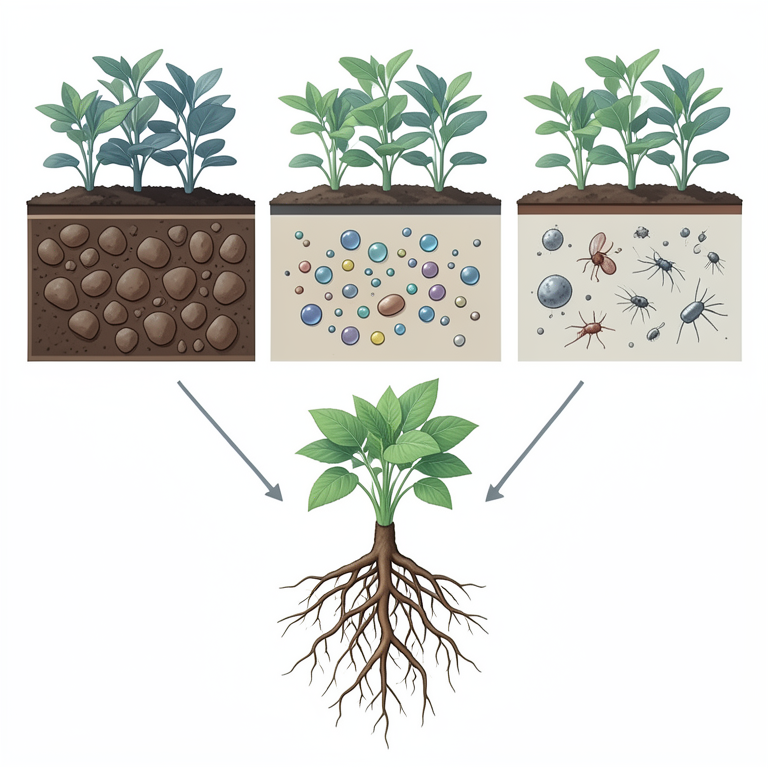
The Three Pillars of Soil Health
AI-generated conceptual illustration (Horticultural vegetable plants in soil). It explains the idea and does not show study data.
View source evidence ↗Introduction
Soil health is a fundamental aspect of horticultural crop production, directly influencing plant growth, crop yield, and produce quality. It is defined as the continued capacity of soil to function as a vital living ecosystem that sustains plants, animals, and humans. Healthy soils provide essential nutrients, support robust root development, ensure efficient water retention, and enhance the resilience of crops against pests and diseases. The importance of soil health in horticulture cannot be overstated, as it forms the foundation for sustainable and productive agricultural systems. The physical properties of soil, such as structure and texture, play a crucial role in determining its health. Good soil structure facilitates root penetration, water infiltration, and aeration, while the right balance of sand, silt, and clay affects water retention and drainage. Chemical properties, including soil pH and nutrient content, are equally important. The pH level influences nutrient availability to plants, and maintaining an optimal pH range is essential for most horticultural crops. Additionally, ensuring the soil has adequate levels of essential nutrients like nitrogen, phosphorus, and potassium is critical for optimal plant growth. Biological properties of soil, particularly the presence and activity of soil microorganisms, are vital for maintaining soil health. Beneficial microbes, such as bacteria and fungi, play a key role in nutrient cycling and organic matter decomposition. Practices that support microbial diversity and activity, such as adding organic matter and reducing pesticide use, are beneficial for soil health. Organic matter, including compost and manure, improves soil structure, water retention, and nutrient availability, further contributing to soil fertility. Effective soil health management involves implementing practices that maintain or enhance these physical, chemical, and biological properties. Crop rotation and diversification help break pest and disease cycles, improve soil structure, and enhance nutrient cycling. Cover cropping prevents soil erosion, adds organic matter, and improves soil fertility, while organic amendments increase soil organic matter content and provide slow-release nutrients. Reduced tillage minimizes soil disturbance, preserving soil structure and enhancing water infiltration and microbial habitats. Integrated nutrient management, combining organic and inorganic fertilizers based on soil test results, ensures a balanced nutrient supply. Efficient irrigation practices optimize water use and prevent soil erosion, while integrated pest management strategies reduce reliance on chemical pesticides and support soil health.
Monitoring and assessing soil health through regular soil testing is essential for effective management. Soil tests provide valuable information on soil pH, nutrient levels, organic matter content, and biological activity, enabling growers to make informed decisions about soil amendments and management practices. In conclusion, soil health management is crucial for sustainable and productive horticultural crop production. By understanding and enhancing the physical, chemical, and biological properties of soil, growers can improve crop yield and quality while ensuring long-term soil fertility and ecosystem health. Implementing best practices in soil health management not only benefits horticultural crops but also contributes to environmental sustainability and resilience against climate change.
Main Objective
The main objective of this article is to explore and highlight the importance of soil health management practices in enhancing the productivity and sustainability of horticultural crop production.
Literature Review
Lal (2015) [1] emphasized the importance of restoring soil quality to combat soil degradation. The study highlighted that soils rich in organic matter and with well-maintained structures provide better water retention and aeration, essential for root growth and nutrient uptake. By comparing conventional farming practices with those incorporating organic amendments and reduced tillage, Lal demonstrated significant improvements in crop performance with practices that prioritize soil health. This research underscores the need for sustainable soil management practices to enhance soil structure and fertility. Marschner (2012) [2] provided comprehensive insights into the role of soil pH in nutrient availability for plants. The study found that most horticultural crops thrive in slightly acidic to neutral pH levels, where essential nutrients like nitrogen, phosphorus, and potassium are more readily available. By comparing crops grown in soils with varying pH levels, Marschner demonstrated that those within the optimal pH range had significantly better growth and yield. This research highlights the importance of regular pH testing and appropriate amendments to maintain optimal soil pH for horticultural crops. Doran and Zeiss (2000) [3] explored the biological properties of soil, particularly the role of soil microorganisms in promoting plant health. Their study compared microbial biomass and activity in soils under various management practices, showing that practices enhancing microbial diversity and activity, such as organic amendments and reduced pesticide use, resulted in healthier soils with better nutrient cycling and disease suppression. This research underscores the value of biological indicators in soil health assessment and the importance of supporting microbial life for maintaining soil fertility. Jones, Jacobsen, and Lorbeer (2012) [4] focused on nutrient management practices in horticulture, demonstrating that balanced fertilization based on soil test results leads to improved crop performance and reduced environmental impact. Their study compared different fertilization strategies, finding that those informed by regular soil nutrient analysis prevented both nutrient deficiencies and excesses, promoting healthier plant growth and minimizing the risk of nutrient runoff. This research highlights the critical role of nutrient management in maintaining soil health and optimizing crop yield.
Importance of soil health in horticulture
The importance of soil health in horticulture is underscored by its profound impact on crop productivity, quality, and sustainability. Various studies have highlighted the crucial role that healthy soils play in supporting optimal plant growth and development. Comparing these studies reveals a comprehensive understanding of how different soil health components contribute to successful horticultural practices. Research has consistently shown that healthy soils with good structure, adequate nutrient content, and robust microbial activity result in higher crop yields and betterquality produce. For instance, a study by Lal (2015) [1] demonstrated that soils rich in organic matter and with a well-maintained structure provide better water retention and aeration, essential for root growth and nutrient uptake. This study compared conventional farming practices with those that include organic amendments and reduced tillage, showing a marked improvement in crop performance with the latter approach. Similarly, studies focusing on soil pH have shown its critical influence on nutrient availability and plant health. Marschner (2012) [2] highlighted that most horticultural crops thrive in slightly acidic to neutral pH levels, where essential nutrients like nitrogen, phosphorus, and potassium are more readily available. This research compared crops grown in soils with varying pH levels and found that those in optimal pH ranges had significantly better growth and yield. The role of soil microorganisms in promoting plant health has also been extensively studied. Doran and Zeiss (2000) [3] emphasized that soils with high microbial diversity and activity support better nutrient cycling and organic matter decomposition, leading to healthier plant growth. Their comparative study showed that soils with enhanced microbial activity, through practices such as compost addition and reduced pesticide use, resulted in higher crop resilience to pests and diseases. In addition to physical and biological properties, the chemical composition of soil, particularly nutrient content, is vital for horticultural success. Research by Jones et al. (2012) [7] highlighted that balanced nutrient levels, achieved through integrated nutrient management, result in superior crop performance. This study compared the effects of organic versus inorganic fertilizers and found that a combination of both, tailored to soil test results, provided the best outcomes in terms of yield and produce quality. Water management practices, such as efficient irrigation systems, also play a crucial role in maintaining soil health. A study by FAO (2017) compared traditional flood irrigation with modern techniques like drip irrigation and mulching. The results showed that modern practices significantly reduced water usage and soil erosion, while enhancing soil moisture retention and plant growth. Overall, the comparative analysis of these studies underscores the multifaceted importance of soil health in horticulture. Healthy soils, characterized by good structure, optimal pH, balanced nutrient content, and active microbial life, consistently support better crop performance. Implementing soil health management practices, such as organic amendments, reduced tillage, integrated nutrient management, and efficient irrigation, not only enhances crop yield and quality but also promotes sustainable agricultural practices. The evidence from these studies collectively highlights the need for ongoing attention to soil health as a fundamental component of successful horticultural crop production.
Monitoring and Assessing soil health
Monitoring and assessing soil health is essential for sustainable horticultural production, as it provides insights into the soil's physical, chemical, and biological conditions. Comparing relevant studies highlights the importance of different soil health assessment methods and their practical implications for horticulture. A significant body of research underscores the importance of soil testing as a foundational tool for monitoring soil health. Studies comparing conventional and organic farming practices have shown that regular soil testing for pH, nutrient levels, and organic matter content can lead to better soil management decisions. For instance, a study by Jones et al. (2012) [4] found that organic farming systems, which emphasize regular soil health assessments, tend to have higher soil organic matter and better nutrient balance compared to conventional systems that may rely more on synthetic fertilizers without frequent soil testing. This comparison indicates that continuous monitoring allows for more precise nutrient management, which can enhance plant growth and yield. Further research by Lal (2015) [1] highlights the role of soil pH in nutrient availability. By comparing soils with different pH levels, the study demonstrated that maintaining soil pH within the optimal range for specific crops ensures maximum nutrient uptake. This research shows that periodic pH testing and appropriate amendments, such as lime for acidic soils or sulfur for alkaline soils, can significantly improve soil health and crop productivity. The study emphasizes that consistent pH monitoring is crucial for tailoring soil management practices to meet the needs of horticultural crops. Nutrient analysis is another critical aspect of soil health assessment, with numerous studies illustrating its importance. For example, Marschner (2012) [2] conducted a comparative study on nutrient management practices in horticulture, revealing that balanced fertilization based on soil test results leads to improved crop performance and reduced environmental impact. The study compared different fertilization strategies and found that those informed by regular soil nutrient analysis prevented both nutrient deficiencies and excesses, promoting healthier plant growth and minimizing the risk of nutrient runoff. Biological assessments of soil health, particularly soil microbial activity, have gained attention in recent years. Doran and Zeiss (2000) [3] compared microbial biomass and activity in soils under various management practices. Their findings showed that practices promoting high microbial diversity and activity, such as reduced pesticide use and organic amendments, resulted in healthier soils with better nutrient cycling and disease suppression. This study underscores the value of biological indicators in soil health assessment, suggesting that regular monitoring of microbial biomass and soil respiration can provide valuable insights into soil vitality. Visual soil assessments, while less quantitative, offer practical advantages for growers. A study by FAO (2017) compared visual soil health assessments with laboratorybased methods and found that visual indicators, such as soil color, texture, and the presence of earthworms, can effectively complement more detailed soil tests. The study highlighted that visual assessments are particularly useful for quickly identifying soil compaction, poor drainage, or erosion issues, allowing for immediate remedial actions. Advanced technologies, such as remote sensing and geographic information systems (GIS), have also been compared to traditional soil health monitoring methods. Research by Jones et al. (2016) [7] demonstrated that remote sensing technologies could accurately assess soil moisture and organic matter content over large areas, providing a broader view of soil health. The study showed that integrating these technologies with traditional soil tests enhances the precision and scope of soil health monitoring, enabling more effective management decisions. Comparative studies have also explored the use of soil health indicators, which combine multiple soil properties into a single index. For example, the Soil Health Index (SHI) was evaluated in a study by Andrews et al. (2004) [6] , which compared SHI scores across different farming systems. The study found that the SHI effectively summarized complex soil data into an easily interpretable format, helping growers track soil health trends over time and make informed management choices. Overall, the comparison of these studies highlights the multifaceted nature of soil health monitoring and assessment. Regular soil testing for pH, nutrient levels, and organic matter content, complemented by biological assessments and visual inspections, provides a comprehensive understanding of soil conditions. Integrating advanced technologies and soil health indicators further enhances the precision and effectiveness of soil management practices. These comparative insights underscore the importance of continuous soil health monitoring in achieving sustainable and productive horticultural systems.
Conclusion
The study underscores the paramount importance of soil health in horticultural crop production, highlighting how well-managed soil leads to enhanced crop yield, quality, and sustainability. By comparing various studies, it becomes evident that regular soil health monitoring through comprehensive testing and assessment is crucial for maintaining optimal soil conditions. Effective soil health management, incorporating practices such as organic amendments, reduced tillage, integrated nutrient management, and efficient irrigation, significantly improves soil fertility and structure, promotes beneficial microbial activity, and ensures the availability of essential nutrients. The integration of advanced technologies and soil health indicators further enhances the precision and effectiveness of these practices. Ultimately, the study concludes that sustained attention to soil health is essential for achieving long-term agricultural productivity and environmental sustainability in horticulture.
References
6 in the original paper- Lal R. Restoring soil quality to mitigate soil degradation. Sustainability. 2015;7(5):5875-5895.
- Doran JW, Zeiss MR. Soil health and sustainability: Managing the biotic component of soil quality. Appl. Soil Ecol. 2000;15(1):03-11.
- Jones CA, Jacobsen JS, Lorbeer S. Nutrient management for horticultural crops. Ext Bull. 2012;5(3):112-119.
- Food and Agriculture Organization of the United Nations. Soil management. In: Soil Fertility and Fertilizer Use. 2017:25-50.
- Andrews SS, Karlen DL, Cambardella CA. The soil management assessment framework: A quantitative soil quality evaluation method. Soil Sci. Soc. Am J. 2004;68(6):1945-1962.
- Jones HG, Serraj R, Loveys B. Remote sensing for crop management. In: Advances in Agronomy. Academic Press. 2016;133:247-287.