
Research article · 2024 · Full text
International Journal of Agriculture and NutritionNutritional and therapeutic benefits of bitter gourd (Momordica charantia L.)
Volume 6(2) · Pages 01–03 · DOI: 10.33545/26646064.2024.v6.i2a.170 ↗
Research areasAdvances in Cucurbitaceae ResearchNatural Antidiabetic Agents StudiesFood Science and Nutritional Studies
Abstract
Author-writtenBitter gourd (Momordica charantia L.), commonly known as bitter melon, is a tropical and subtropical vine belonging to the family Cucurbitaceae. It is widely consumed for its distinctive bitter taste and is revered for its nutritional and medicinal properties. This paper reviews the nutritional composition and therapeutic benefits of bitter gourd, highlighting its potential role in managing various health conditions, including diabetes, cancer, and cardiovascular diseases. The paper also discusses the bioactive compounds responsible for these health benefits and the mechanisms through which they exert their effects.
Summary
Source-checkedPlain-language reading of the full paper, prepared with AI and checked against the text. Each point links to the authors' own words.
Why it matters
- Bitter gourd (Momordica charantia L.), or bitter melon, is a vine from the Cucurbitaceae family found in tropical and subtropical regions. View evidence ↗
- Despite its bitter taste, the vegetable is highly valued across various cultures for its long-recognized nutritional and therapeutic properties. View evidence ↗
- Bitter gourd possesses an impressive nutritional profile, containing a variety of essential minerals and vitamins. View evidence ↗
The question
- The objective of this paper is to provide a comprehensive review of the therapeutic and nutritional benefits of bitter gourd and its potential for managing diseases. View evidence ↗
What they did
- The authors conducted a review of the vegetable's nutritional composition and its role in managing conditions such as cardiovascular diseases, cancer, and diabetes. View evidence ↗
- The review examines the specific bioactive compounds in bitter gourd and the mechanisms they use to produce health benefits. View evidence ↗
What they found
- Bitter gourd is an excellent source of vitamin C, with levels reported to be higher than those found in cucumbers and tomatoes. View evidence ↗
- The potassium content in bitter gourd is comparable to that of bananas. View evidence ↗
- Bitter gourd contains more fiber than many leafy greens, which supports digestive health. View evidence ↗
- Clinical trials show that bitter gourd juice or extracts significantly reduce fasting blood glucose levels, as compounds like polypeptide-p, vicine, and charantin mimic insulin. View evidence ↗
- Bitter gourd extracts can induce programmed cell death (apoptosis) in colon, prostate, and breast cancer cell lines. View evidence ↗
- Bitter gourd helps prevent atherosclerosis by reducing cholesterol levels and preventing the oxidation of Low-Density Lipoprotein (LDL) cholesterol. View evidence ↗
- Extracts from bitter gourd can inhibit the growth of Helicobacter pylori, a bacterium associated with cancer and gastric ulcers. View evidence ↗
- Preliminary studies indicate that bitter gourd extracts may help manage neurodegenerative diseases by inhibiting amyloid plaque formation and reducing oxidative stress in the brain. View evidence ↗
What it means
- The authors conclude that adding bitter gourd to the diet provides substantial health benefits and serves as a promising natural remedy for modern and traditional medicine. View evidence ↗
- The authors state that more clinical studies and research are needed to fully understand and maximize the vegetable's potential. View evidence ↗
Visual summary
1 visualsIllustrations explain the paper; they do not show study data.
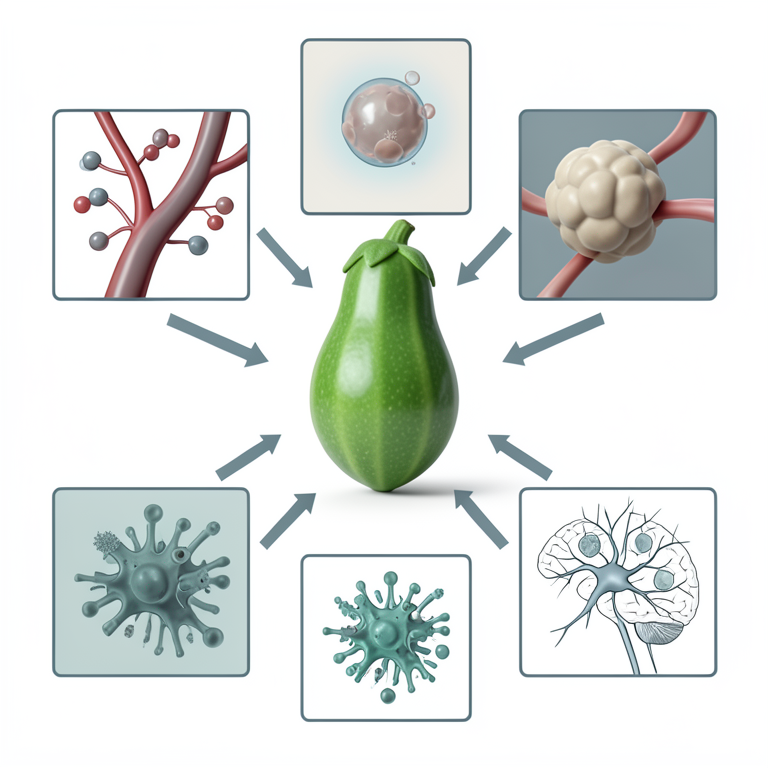
Therapeutic Spectrum of Bitter Gourd
AI-generated conceptual illustration (bitter gourd fruit (Momordica charantia)). It explains the idea and does not show study data.
View source evidence ↗Introduction
Bitter gourd (Momordica charantia L.), also known as bitter melon, is a tropical and subtropical vine belonging to the family Cucurbitaceae. Widely cultivated in Asia, Africa, and the Caribbean, this vegetable is renowned for its distinctive bitter taste and its extensive use in traditional medicine. Despite its bitterness, bitter gourd is highly valued for its nutritional and therapeutic benefits, which have been recognized for centuries in various cultures. The vegetable is often consumed in a variety of culinary dishes, ranging from soups and stir-fries to juices and herbal teas. The nutritional profile of bitter gourd is impressive, as it is rich in essential vitamins and minerals. It is an excellent source of vitamin C, which plays a crucial role in immune function, skin health, and antioxidant protection. Additionally, bitter gourd contains vitamin A, which is important for maintaining healthy vision, skin integrity, and immune response. The vegetable is also a good source of folate (vitamin B9), necessary for DNA synthesis and repair, making it particularly important during pregnancy. Potassium, another key nutrient found in bitter gourd, helps regulate blood pressure and maintain proper heart function. Furthermore, the high dietary fiber content of bitter gourd supports digestive health and helps regulate blood sugar levels. Bitter gourd is also rich in bioactive compounds such as charantin, momordicin, and polypeptide-p, which contribute to its medicinal properties. These compounds have been the subject of numerous studies due to their potential health benefits. For instance, bitter gourd has been extensively researched for its anti-diabetic properties, with findings indicating that it can lower blood glucose levels and improve insulin sensitivity. This makes it a valuable natural remedy for managing diabetes, a condition that affects millions of people worldwide. In addition to its anti-diabetic effects, bitter gourd has shown promise in cancer prevention and treatment. Research has demonstrated that bitter gourd extracts can induce apoptosis (programmed cell death) in various cancer cell lines, including those of breast, prostate, and colon cancers. The vegetable's anti-carcinogenic properties are attributed to its ability to disrupt cancer cell metabolism and inhibit tumor growth. Bitter gourd also offers cardiovascular benefits.
Studies have shown that it can reduce cholesterol levels, lower blood pressure, and prevent the oxidation of Low-Density Lipoprotein (LDL) cholesterol, thereby reducing the risk of atherosclerosis and other cardiovascular diseases. The vegetable's antimicrobial and antiinflammatory properties further enhance its therapeutic profile, making it effective against a range of pathogens and beneficial in managing inflammatory conditions. Moreover, bitter gourd is being investigated for its neuroprotective effects.
Emerging research suggests that its bioactive compounds can protect neurons from oxidative damage and improve cognitive function, potentially offering benefits in the prevention and management of neurodegenerative diseases such as Alzheimer's.
Objective of the paper
The main objective of this paper is to comprehensively review the nutritional and therapeutic benefits of bitter gourd (Momordica charantia L.), highlighting its potential role in enhancing health and managing various diseases. Grover and Yadav (2004) [1] conducted a comprehensive review of the pharmacological actions and potential uses of bitter gourd. Their work underscored the vegetable's hypoglycemic properties, attributing its efficacy in managing diabetes to the presence of charantin, vicine, and polypeptide-p. These compounds were found to mimic insulin and enhance glucose uptake, making bitter gourd a valuable natural treatment for diabetes. In a study by Basch et al., (2003) [2] , the efficacy and safety of bitter gourd were reviewed, focusing on its use as an anti-diabetic agent. The authors reported that clinical trials have shown significant reductions in fasting blood glucose levels in individuals consuming bitter gourd juice or extracts. This study provided strong evidence supporting the use of bitter gourd in diabetes management. Fang and Ng (2011) [3] explored the anti-cancer properties of bitter gourd, revealing that its extracts can induce apoptosis in various cancer cell lines, including breast, prostate, and colon cancers. Their research demonstrated that bitter gourd extract inhibited the growth of cancer cells by disrupting metabolic processes and signaling pathways. The anti-carcinogenic effects were primarily attributed to the presence of momordicin and other triterpenoids. Krawinkel and Keding (2006) [4] reviewed the nutritional composition of bitter gourd and its potential as a medicinal food. They highlighted its rich content of vitamins and minerals, such as vitamin C, vitamin A, folate, potassium, and iron. Their review emphasized the vegetable's high dietary fiber content, which supports digestive health and helps regulate blood sugar levels. A study by Joseph and Jini (2013) [6] focused on the antidiabetic effects of bitter gourd, confirming its role in lowering blood glucose levels and improving insulin sensitivity. The authors also discussed the vegetable's potential to reduce oxidative stress and inflammation, further contributing to its therapeutic benefits. Research by Basch et al., (2003) [2] also highlighted the cardiovascular benefits of bitter gourd, noting its ability to reduce cholesterol levels and prevent the oxidation of Low-Density Lipoprotein (LDL) cholesterol. The study suggested that regular consumption of bitter gourd could lead to improvements in lipid profiles and reduce the risk of cardiovascular diseases. The antimicrobial properties of bitter gourd were examined by Krawinkel and Keding (2006) [4] , who reported its effectiveness against a range of pathogens, including bacteria and viruses. Their review indicated that bitter gourd extracts could inhibit the growth of Helicobacter pylori, a bacterium linked to gastric ulcers and cancer.
Reviews of literature
Reviews of literature
Nutritional benefits of bitter gourd (Momordica charantia L.)
Bitter gourd (Momordica charantia L.) is recognized not only for its distinctive bitter flavor but also for its rich nutritional profile, making it a valuable addition to a healthy diet. The nutritional benefits of bitter gourd are attributed to its diverse array of vitamins, minerals, and bioactive compounds, which collectively contribute to its healthpromoting properties. Bitter gourd is a low-calorie vegetable, making it suitable for weight management diets. It is an excellent source of vitamin C, which acts as a powerful antioxidant, aiding in the neutralization of harmful free radicals and boosting the immune system. Additionally, vitamin C is essential for collagen synthesis, which supports skin health and wound healing. Bitter gourd also contains significant amounts of vitamin A, which is vital for maintaining healthy vision, skin integrity, and immune function. Another important nutrient found in bitter gourd is folate (vitamin B9), which plays a critical role in DNA synthesis and repair, making it particularly important for pregnant women to support fetal development. Folate is also involved in the production of red and white blood cells, contributing to overall blood health. Furthermore, bitter gourd is rich in potassium, a mineral that helps regulate blood pressure by counteracting the effects of sodium and maintaining fluid balance in the body. Adequate potassium intake is associated with a reduced risk of stroke and cardiovascular diseases. Iron is another essential mineral present in bitter gourd, which is necessary for the formation of hemoglobin and myoglobin, proteins that transport oxygen in the blood and muscles. This makes bitter gourd beneficial for preventing and managing iron-deficiency anemia. The high fiber content in bitter gourd aids in digestive health by promoting regular bowel movements and preventing constipation. Dietary fiber also plays a role in maintaining healthy blood sugar levels by slowing the absorption of glucose, which is particularly beneficial for individuals with diabetes. In addition to these essential nutrients, bitter gourd contains various bioactive compounds, including flavonoids, polyphenols, and saponins, which contribute to its therapeutic effects. Studies have shown that these compounds exhibit antioxidant, anti-inflammatory, and anticarcinogenic properties. For instance, a study by Grover and Yadav (2004) [1] highlighted the potential of bitter gourd in managing diabetes due to its hypoglycemic properties, which are attributed to the presence of charantin, vicine, and polypeptide-p. These compounds have been shown to enhance glucose uptake and improve insulin sensitivity. Comparative studies have demonstrated that the nutritional benefits of bitter gourd are superior to many other vegetables. For example, Basch et al., (2003) [2] reported that the vitamin C content in bitter gourd is higher than that in many commonly consumed vegetables, such as tomatoes and cucumbers. Similarly, the potassium content in bitter gourd is comparable to that in bananas, which are often recommended for their potassium content. Furthermore, the fiber content in bitter gourd is higher than that in many leafy greens, making it an excellent choice for promoting digestive health. In conclusion, the nutritional benefits of bitter gourd (Momordica charantia L.) are extensive and welldocumented. Its rich content of vitamins, minerals, and bioactive compounds makes it a valuable functional food with the potential to support overall health and prevent various chronic diseases. The existing body of research underscores the importance of incorporating bitter gourd into the diet to leverage its numerous health benefits.
Therapeutic benefits of bitter gourd (Momordica charantia L.) One of the most significant therapeutic benefits of bitter gourd is its anti-diabetic effect. Several studies have demonstrated its potential in managing diabetes mellitus. For instance, a study by Grover and Yadav (2004) [1] highlighted the hypoglycemic properties of bitter gourd, which are primarily attributed to its ability to enhance glucose uptake and improve insulin sensitivity. The compounds charantin, vicine, and polypeptide-p mimic insulin, thereby lowering blood sugar levels. Clinical trials have shown that consuming bitter gourd juice or extracts can lead to significant reductions in fasting blood glucose levels in individuals with type 2 diabetes, making it a promising natural alternative or complement to conventional diabetes treatments. Bitter gourd also exhibits potent anti-cancer properties. Research has shown that extracts from bitter gourd can induce apoptosis (programmed cell death) in various cancer cell lines, including breast, prostate, and colon cancers. Fang and Ng (2011) [3] demonstrated that bitter gourd extract inhibited the growth of cancer cells by disrupting their metabolic processes and signalling pathways. The anticarcinogenic effects are attributed to the presence of momordicin and other triterpenoids, which can inhibit tumor growth and metastasis. These findings suggest that bitter gourd could be a valuable adjunct therapy in cancer treatment, although further clinical studies are needed to fully understand its efficacy and mechanisms. Cardiovascular health is another area where bitter gourd shows considerable promise. The vegetable's high potassium content helps regulate blood pressure by balancing sodium levels in the body. Additionally, bitter gourd has been found to reduce cholesterol levels and prevent the oxidation of Low-Density Lipoprotein (LDL) cholesterol, which is a key factor in the development of atherosclerosis. A study by Basch et al., (2003) [2] reported that regular consumption of bitter gourd could lead to improvements in lipid profiles, thereby reducing the risk of cardiovascular diseases. The antioxidants present in bitter gourd, such as vitamin C and flavonoids, also play a crucial role in protecting the cardiovascular system from oxidative stress. Bitter gourd's antimicrobial and anti-inflammatory properties further enhance its therapeutic profile. The vegetable has been shown to exhibit antibacterial and antiviral activities, making it effective against a range of pathogens. For example, studies have demonstrated that bitter gourd extracts can inhibit the growth of Helicobacter pylori, a bacterium linked to gastric ulcers and cancer. Its anti-inflammatory effects are beneficial in managing inflammatory conditions such as arthritis. The presence of bioactive compounds like cucurbitacins helps reduce inflammation by inhibiting the production of proinflammatory cytokines. Moreover, bitter gourd is beneficial for digestive health. Its high fiber content promotes regular bowel movements and prevents constipation. The vegetable's bitter principles stimulate digestive juices, enhancing digestion and nutrient absorption. Additionally, bitter gourd has been traditionally used to treat gastrointestinal disorders such as dyspepsia and gastric ulcers. The neuroprotective effects of bitter gourd are also noteworthy. Emerging research suggests that the vegetable can protect neurons from damage and improve cognitive function. Studies have indicated that bitter gourd extracts can reduce oxidative stress in the brain and inhibit the formation of amyloid plaques, which are associated with Alzheimer's disease. These findings, although preliminary, indicate the potential of bitter gourd in preventing and managing neurodegenerative diseases. In conclusion, the therapeutic benefits of bitter gourd (Momordica charantia L.) are extensive and well-supported by scientific research. Its anti-diabetic, anti-cancer, cardiovascular, antimicrobial, anti-inflammatory, digestive, and neuroprotective properties make it a highly valuable medicinal food. Comparative studies have consistently demonstrated the effectiveness of bitter gourd in managing various health conditions, highlighting its potential as a natural remedy in both traditional and modern medicine.
Conclusion
In conclusion, bitter gourd (Momordica charantia L.) offers a wide range of therapeutic benefits supported by extensive scientific research. Its bioactive compounds contribute to its significant anti-diabetic, anti-cancer, cardiovascular, antimicrobial, anti-inflammatory, digestive, and neuroprotective properties. These therapeutic effects make bitter gourd a valuable functional food with the potential to manage and prevent various health conditions. The vegetable's ability to enhance glucose uptake, induce apoptosis in cancer cells, regulate blood pressure and cholesterol levels, combat pathogens, reduce inflammation, promote digestive health, and protect neurons underscores its medicinal importance. Incorporating bitter gourd into the diet can provide substantial health benefits, making it a promising natural remedy in both traditional and modern medical practices. Further research and clinical studies are warranted to fully understand and maximize the potential of this remarkable vegetable.
References
6 in the original paper- Grover JK, Yadav SP. Pharmacological actions and potential uses of Momordica charantia: A review. J Ethnopharmacol. 2004;93(1):123-132.
- Basch E, Gabardi S, Ulbricht C. Bitter melon (Momordica charantia): A review of efficacy and safety. Am J Health Syst Pharm. 2003;60(4):356-359.
- Fang EF, Ng TB. Bitter gourd (Momordica charantia) is a cornucopia of health: A review of its credited antidiabetic, anti-HIV, and antitumor properties. Curr Mol Med. 2011;11(5):417-436.
- Krawinkel MB, Keding GB. Bitter gourd (Momordica charantia): A review of its potential as a medicinal food. Ethnopharmacology. 2006;25(3):45-54.
- Naik BP, Dalai S, Mallikarjunarao K, Kumar P. Combining ability studies in bitter gourd (Momordica charantia L.) for yield and yield attributes. Int J Hortic Food Sci. 2022;4(1):54-56. DOI: 10.33545/26631067.2022.v4.i1a.86.
- Joseph B, Jini D. Antidiabetic effects of Momordica charantia (bitter melon) and its medicinal potency. Asian Pac J Trop Dis. 2013;3(2):93-102.
Cited by 9
From OpenAlex, OpenCitations and reference lists read by Scinovex
- Herbal drugs used in treatment of cancer ↗
Krushnali N Nehar, Pooja R. Hatwar, Daniel Bakal, Ankita Y Gawai, Pranali R. Bhujade · International Journal of Herbal Medicine · 2025
Cancer, a leading cause of death worldwide, is a complex and multifaceted disease characterized by uncontrolled cell growth and metastasis. This review explores the potential of herbal medicine in cancer treatment, highlighting the therapeutic benefits and mechanisms of action of various herbal compounds. With cancer being a leading cause of death worldwide, the need for effective and targeted therapies is
- Establishment of a Loop-Mediated Isothermal Amplification (LAMP) Method for the Detection of Fusarium oxysporum f. sp. momordicae ↗
Xiongjuan Huang, Chengcheng Feng, Xixi Ju, Huang YuHui, Xiaofeng Chen, Jiazuo Liang et al. · Journal of Fungi · 2026
Bitter gourd (Momordica charantia L.) is an important vegetable and medicinal crop in tropical/subtropical regions, but suffers severe yield losses (even total failure) from Fusarium wilt caused by Fusarium oxysporum f. sp. momordicae (Fom). There is no specific detection system available to detect this pathogen, and the methods used for other pathogens exhibit cross-reactivity and require specialized equipment. Therefore, this…
❝ 0PDF - Innovative strategies for the management of bitter gourd mosaic virus
YA Kavathiya, CM Bhaliya, KS Jotangiya, HA Sekhada · International Journal of Agriculture and Food Science · 2025
A field experiment was conducted at the Vegetable Research Station, Junagadh Agricultural University, Junagadh, Gujarat, during the Kharif seasons of 2019-20 to 2021-22 to find out innovative strategies for the management of bitter gourd mosaic virus. The experiment was laid out in a randomized block design with seven treatments and four replications. The treatments included various combinations of biocontrol agents, pesticides, and cultural practices aimed at managing the mosaic disease in bitter gourd caused by begomoviruses. The highest net realization of Rs. 1,38,194/- was observed in trea
- Standardization of different drying methods of bitter gourd
Singh Anjali, Annu Verma · International Journal of Advanced Biochemistry Research · 2025
The present study entitled Standardization of different drying methods of bitter gourd was conducted in the laboratory of Vegetable Science, Indira Gandhi Krishi Vishwavidyalaya, Raipur, (C.G.) during 2023-24. In this experiment the effect of different drying methods for different parameters of bitter gourd were analysed periodically at every 15 days interval up to 60 days of storage period under ambient condition. The physico-chemical analysis of dehydrated bitter gourd revealed an increasing trend in titratable acidity (0.51-0.64%) and decreasing trend in rehydration ratio (5.62 to 5.32), TS
- Nutritional profile and therapeutic potential of bitter gourd (Momordica charantia): A comprehensive review
T Sanath Kumar, Suprakash Pal · International Journal of Advanced Biochemistry Research · 2025
Bitter gourd (Momordica charantia), often called bitter melon, is a tropical and subtropical plant that is well-known for its unique bitter flavor as well as its health benefits. This comprehensive study explores the nutritional composition and potential medicinal applications of bitter gourds, with a focus on their bioactive components, such as flavonoids, alkaloids, phenolic acids, and saponins. The amount of dietary fiber, minerals (iron, potassium, and magnesium), and vitamins (A, C, E and folate) in bitter gourds contributes to their nutritional value. The review highlights the numerous p
- Study of moisture distribution and wetting pattern with mulching under drip irrigation on bitter gourd crop ↗
Rosine Uwase, Georgie Mutuyimana, Meiyappan Valliammai, Eric Derrick Bugenimana, Augustin Nsengimana · The Pharma Innovation · 2025
Soil moisture management is crucial for efficient irrigation, especially in arid and semi-arid regions where water resources are limited. Mulching under drip irrigation has been shown to improve water use efficiency and crop yields. This study evaluated the impact of soil moisture distribution and wetting patterns with mulching under drip irrigation in bitter gourd cultivation. Experiments were carried out at
- Synergistic herbal formulation of Costus igneus and complementary medicinal plants for enhanced anti-diabetic enzyme inhibition ↗
Poonam Kumari, Aman, Danish, Akash, Parakkal Deepak, Devdutt et al. · International Journal of Pharmacy and Pharmaceutical Science · 2025
Diabetes mellitus is a complex metabolic disorder requiring multi-targeted therapeutic approaches. Costus igneus, known as the “Insulin plant,” exhibits promising anti-diabetic effects. This study explores the development and evaluation of synergistic herbal formulations combining Costus igneus with selected complementary anti-diabetic plants including Momordica charantia. The combined extracts were analyzed for enzyme inhibition of key carbohydrate digestive enzymes, α-Amylase and α-glucosidase.
- Anthelmintic activity of bitter gourd leaves extract on Indian earthworms ↗
Pramod N. Patil, Neha Jaiswal, Vishakha Vivek Sonawane, V.R. Shah, Hemant P. Suryawanshi, RA Ahirrao · Journal of Pharmacognosy and Phytochemistry · 2025
The current study examines the Anthelmintic potential of the leaves of Momordica charantia, also known as Bitter Gourd. This plant has long been prized for its many therapeutic uses, particularly in Asian and African traditional medicine. A member of the Cucurbitaceae family, Momordica charantia is widely grown for its nutritional and medicinal qualities, which include its ability to reduce inflammation,
- Characterization of phytochemicals and their role in gene regulation in bitter gourd ↗
Miguel Duarte, Catarina Duarte · International Journal of Molecular Biology and Biochemistry · 2025
Bitter gourd (Momordica charantia L.), a member of the Cucurbitaceae family, is recognized across Asia, Africa, and Latin America for its distinctive bitter taste and wide use in traditional medicine. Its phytochemical richness—comprising triterpenoids, flavonoids, alkaloids, saponins, and phenolic compounds—forms the foundation for its diverse pharmacological activities. Recent molecular biology research has begun to highlight the ability of these compounds