
Research article · 2023 · Full text
International Journal of Biology SciencesThe contribution of cell cycle dysregulation to metastasis and cancer recurrence
Volume 5(2) · Pages 101–104 · DOI: 10.33545/26649926.2023.v5.i2b.217 ↗
Research areasAdvanced Breast Cancer TherapiesPARP inhibition in cancer therapy
Abstract
Author-writtenCell cycle dysregulation is a hallmark of cancer, contributing significantly to tumorigenesis, metastasis, and cancer recurrence. This paper explores the mechanisms by which disruptions in cell cycle regulation facilitate cancer progression and metastasis, examining the roles of key cell cycle regulators such as cyclins, cyclin-dependent kinases (CDKs), and CDK inhibitors. Additionally, the paper discusses how cell cycle dysregulation contributes to therapeutic resistance and cancer recurrence, highlighting potential therapeutic strategies to target these pathways and improve clinical outcomes.
Summary
Source-checkedPlain-language reading of the full paper, prepared with AI and checked against the text. Each point links to the authors' own words.
Why it matters
- Cancer is primarily defined by uncontrolled cell growth, which is largely caused by the failure of the cell cycle's regulatory systems. View evidence ↗
- The cell cycle is normally managed by a coordinated system of cyclins, cyclin-dependent kinases (CDKs), and CDK inhibitors (CKIs). View evidence ↗
- When these regulatory components fail, it can lead to the formation of tumors, the spread of cancer to other organs, and the return of the disease after treatment. View evidence ↗
The question
- The objective of this paper is to investigate the mechanisms by which cell cycle dysregulation drives cancer progression, metastasis, and recurrence, while exploring potential targeted therapies. View evidence ↗
What they did
- The authors conducted a review of the roles of cyclins, CDKs, and CDK inhibitors in facilitating cancer progression and metastasis. View evidence ↗
- The analysis includes a discussion on how these dysregulations lead to resistance against therapy and the subsequent recurrence of cancer. View evidence ↗
What they found
- High levels of cyclins D1, E, and B are common in many cancers and are linked to worse patient outcomes. View evidence ↗
- Cyclin D1 overexpression promotes metastasis by triggering the epithelial-mesenchymal transition (EMT), allowing cells to become more mobile and invasive. View evidence ↗
- Mutations in the TP53 gene, found in more than 50% of human cancers, prevent the cell cycle from stopping, which allows damaged cells to keep dividing. View evidence ↗
- Reduced levels of the CDK inhibitor p27 are associated with poor prognosis in prostate, colorectal, and breast cancers. View evidence ↗
- In breast cancer, the overexpression of cyclin E is linked to resistance against therapies that damage DNA. View evidence ↗
- Cancer stem cells (CSCs) can survive conventional therapy by remaining dormant, later re-entering the cell cycle to cause cancer recurrence. View evidence ↗
- Preclinical models show that CDK4/6 inhibitors like palbociclib can reduce metastasis by stopping cell proliferation. View evidence ↗
What it means
- The authors conclude that targeting cell cycle dysregulation, particularly through CDK inhibitors, is a promising way to improve treatment and reduce metastasis and recurrence. View evidence ↗
- The authors state that further research is needed to identify new therapeutic targets and optimize current treatments by exploring the complex relationship between cancer and cell cycle control. View evidence ↗
Visual summary
1 visualsIllustrations explain the paper; they do not show study data.
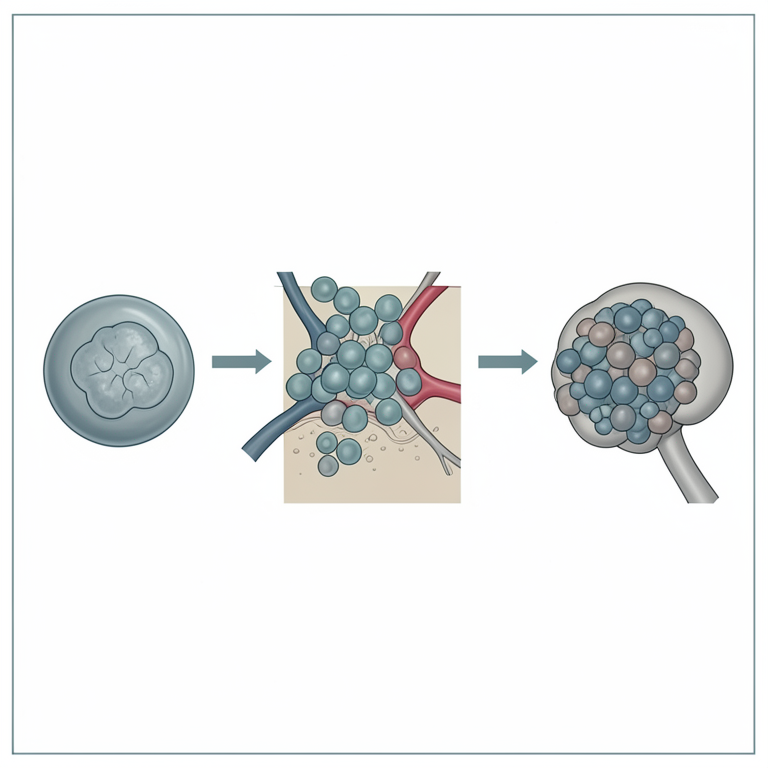
Study overview
AI-generated conceptual illustration (human cancer cells). It explains the idea and does not show study data.
View source evidence ↗Introduction
Cancer is characterized by uncontrolled cell proliferation, driven largely by dysregulation of the cell cycle. The cell cycle comprises a series of tightly regulated phases-G1, S, G2, and That ensure accurate DNA replication and division. Key regulators of the cell cycle include cyclins, cyclin-dependent kinases (CDKs), and CDK inhibitors (CKIs), which work together to control the progression through these phases. Dysregulation of these components can lead to unchecked cell division, contributing to tumorigenesis, metastasis, and cancer recurrence. Understanding the mechanisms by which cell cycle dysregulation drives these processes is crucial for developing effective cancer therapies.
The loss of CKIs removes critical brakes on the cell cycle, facilitating unregulated cell division. For example, the downregulation of p27 has been associated with poor prognosis in several cancers, including breast, colorectal, and prostate cancers (Loda et al., 1997; Slingerland and Pagano, 2000) [13,14] . Mutations in tumor suppressor genes such as TP53 and RB1 also contribute significantly to cell cycle dysregulation. TP53, commonly known as p53, is a crucial regulator of the cell cycle and genomic integrity. It induces cell cycle arrest or apoptosis in response to DNA damage. Mutations in TP53, which occur in over 50% of human cancers, impair its ability to halt the cell cycle, allowing damaged cells to continue proliferating and accumulating further genetic aberrations (Vousden and Lane, 2007) [1] . Similarly, the loss of RB1 function disrupts cell cycle control at the G1/S checkpoint, promoting unrestrained cell proliferation. RB1 mutations or deletions are commonly observed in retinoblastoma, osteosarcoma, and small-cell lung cancer, underscoring its role as a critical gatekeeper of the cell cycle (Weinberg, 1995) [12] . Relevant studies have highlighted the impact of these alterations on cancer progression. For example, the overexpression of cyclin D1 has been linked to breast cancer development and progression, with studies showing that cyclin D1 overexpression correlates with increased cell proliferation and tumor aggressiveness (Arnold and Papanikolaou, 2005) [16] . Similarly, research has demonstrated that the functional inactivation of p27 through phosphorylation leads to its degradation, promoting cell cycle progression and tumorigenesis in prostate cancer (Gao et al., 2014) [11] . The critical role of p53 in cancer is underscored by studies showing that restoring p53 function in mouse models of cancer can lead to tumor regression, highlighting its potential as a therapeutic target (Ventura et al., 2007) [15] . In conclusion, cell cycle dysregulation in cancer involves complex alterations in the regulatory machinery controlling cell proliferation. The overexpression of cyclins, hyperactivation of CDKs, and loss of CKIs and tumor suppressor functions collectively drive uncontrolled cell division, contributing to tumorigenesis. Understanding these mechanisms is crucial for developing targeted therapies aimed at restoring normal cell cycle control and inhibiting cancer progression.
Cell Cycle Dysregulation and Metastasis
Cell cycle dysregulation plays a significant role in the metastasis of cancer. Metastasis is the process by which cancer cells spread from the primary tumor to distant sites, leading to the formation of secondary tumors. This complex process involves several steps, including local invasion, intravasation, survival in the circulation, extravasation, and colonization of distant tissues. Disruptions in cell cycle regulation can facilitate each of these steps, contributing to the aggressive and invasive nature of metastatic cancer cells. Cyclin D1, a key regulator of the G1/S transition, is frequently overexpressed in various cancers and has been implicated in promoting metastasis. Overexpression of cyclin D1 can enhance the metastatic potential of cancer cells by driving epithelial-mesenchymal transition (EMT), a process in which epithelial cells lose their cell-cell adhesion properties and gain migratory and invasive capabilities. Studies have shown that cyclin D1 can upregulate the expression of EMT markers such as N-cadherin and vimentin, while downregulating E-cadherin, facilitating the detachment and invasion of cancer cells. For example, Lin et al. (2000) [17] demonstrated that overexpression of cyclin D1 promotes EMT and increases the metastatic potential of breast cancer cells. CDK4 and CDK6, when hyper-activated, can also contribute to metastasis by promoting cell proliferation and survival. These kinases phosphorylate RB1, leading to the release of E2F transcription factors that drive the expression of genes required for cell cycle progression. In metastatic cancer cells, hyperactivation of CDK4/6 can support the proliferative needs of cells that have detached from the primary tumor and are invading new tissues. Inhibitors targeting CDK4/6, such as palbociclib, have shown efficacy in reducing metastasis in preclinical models by inducing cell cycle arrest and reducing cell proliferation. The loss of CDK inhibitors (CKIs) such as p21, p27, and p16 is another critical factor in metastasis. These CKIs normally function to restrain cell cycle progression by inhibiting the activity of CDKs. Downregulation or inactivation of CKIs removes these brakes, allowing cancer cells to proliferate unchecked. Loss of p27, for instance, has been associated with increased invasiveness and poor prognosis in various cancers, including breast and prostate cancers. Research by Philipp-Staheli et al. (2001) [3] indicated that reduced expression of p27 correlates with enhanced metastatic potential and aggressive tumor behavior. Mutations in tumor suppressor genes such as TP53 and RB1 further exacerbate cell cycle dysregulation and metastasis. TP53, commonly known as p53, plays a crucial role in maintaining genomic integrity by inducing cell cycle arrest or apoptosis in response to DNA damage. Mutations in TP53, which occur in more than half of all human cancers, impair its ability to halt the cell cycle and promote apoptosis, allowing genetically unstable cells to survive and metastasize. Studies by Muller et al. (2011) [4] have shown that mutant p53 can promote invasion and metastasis by enhancing the expression of genes involved in cell migration and invasion. RB1 is another critical tumor suppressor that regulates the G1/S transition. Loss of RB1 function leads to deregulated cell cycle progression and has been linked to increased metastatic potential. The inactivation of RB1 allows for continuous cell proliferation, even under conditions that would normally induce cell cycle arrest. Research by Dick and Rubin (2013) [8] demonstrated that RB1 loss promotes metastasis by facilitating cell cycle progression and allowing cancer cells to evade growth-inhibitory signals.
Cell Cycle Dysregulation and Cancer Recurrence
Cell cycle dysregulation is a major factor in cancer recurrence, which occurs when cancer returns after a period of remission following initial treatment. Recurrence is often driven by residual cancer cells that survive therapy and eventually re-enter the cell cycle to proliferate and form new tumors. The mechanisms underlying cancer recurrence are complex and multifaceted, involving cell cycle dysregulation, therapy resistance, and tumor cell plasticity. One of the key factors in cancer recurrence is the ability of cancer cells to evade cell cycle checkpoints and resist therapy-induced cell cycle arrest. For example, mutations in the TP53 gene, which encodes the p53 protein, are common in many cancers and are associated with poor prognosis and high rates of recurrence. The p53 protein plays a critical role in maintaining genomic stability by inducing cell cycle arrest or apoptosis in response to DNA damage. When TP53 is mutated, p53 loses its ability to halt the cell cycle, allowing damaged cells to survive and proliferate. Studies such as those by Vousden and Lane (2007) [1] have shown that TP53 mutations are found in over 50% of human cancers and are strongly correlated with treatment resistance and recurrence. CDKs, particularly CDK4 and CDK6, are often hyperactivated in recurrent tumors. These kinases drive cell cycle progression from the G1 to the S phase, promoting cell proliferation. Inhibitors of CDK4/6, such as palbociclib, have been developed to target these kinases and induce cell cycle arrest. However, cancer cells can develop resistance to CDK4/6 inhibitors through various mechanisms, including the upregulation of alternative cyclins or CDKs, which allows them to bypass the G1 checkpoint and continue proliferating. Research by Asghar et al. (2015) [5] highlights how adaptive resistance to CDK4/6 inhibitors contributes to cancer recurrence. CKIs such as p21, p27, and p16 are crucial for maintaining cell cycle control and preventing unchecked proliferation. In many cancers, these inhibitors are downregulated or functionally inactivated, removing critical brakes on the cell cycle. The loss of CKIs facilitates the survival of cancer cells after treatment, enabling them to re-enter the cell cycle and drive tumor recurrence. Philipp-Staheli et al. (2001) [3] demonstrated that reduced expression of p27 is associated with poor prognosis and increased recurrence rates in several cancers, including breast and prostate cancers. Another significant factor contributing to cancer recurrence is the presence of cancer stem cells (CSCs), a subpopulation of cells within the tumor that possess stem-like properties, including the ability to self-renew and differentiate. CSCs are often more resistant to conventional therapies, which typically target rapidly dividing cells but may spare the quiescent CSCs. These CSCs can remain dormant for extended periods before re-entering the cell cycle and driving tumor recurrence. Studies by Phi et al. (2018) [7] have shown that targeting CSCs and their cell cycle regulatory mechanisms is crucial for preventing recurrence and improving long-term outcomes in cancer therapy. Therapeutic resistance also plays a crucial role in cancer recurrence. Cancer cells can acquire resistance to chemotherapy and radiation through various mechanisms, including alterations in drug targets, activation of alternative signaling pathways, and enhanced DNA repair capabilities. For example, the overexpression of cyclin E has been linked to resistance to DNA-damaging agents in breast cancer. Cyclin E drives the transition from the G1 to the S phase and its overexpression can allow cancer cells to evade cell cycle arrest induced by therapy, leading to recurrence. Research by Bedrosian et al. (2004) [9] demonstrated that high levels of cyclin E are associated with poor response to therapy and increased risk of recurrence in breast cancer patients. Furthermore, the tumor microenvironment plays a critical role in cancer recurrence. Factors such as hypoxia, nutrient deprivation, and immune evasion can create a supportive niche for residual cancer cells to survive and eventually proliferate. The interaction between cancer cells and the surrounding stroma can also contribute to therapy resistance and recurrence. For instance, the secretion of growth factors and cytokines by stromal cells can activate survival and proliferation pathways in cancer cells, facilitating their escape from therapy-induced cell cycle arrest. In conclusion, cell cycle dysregulation is a key driver of cancer recurrence, enabling residual cancer cells to survive therapy and re-enter the cell cycle to form new tumors. Mechanisms such as TP53 mutations, hyperactivation of CDKs, loss of CKIs, presence of CSCs, and therapeutic resistance all contribute to the complex process of recurrence. Understanding these mechanisms is critical for developing targeted therapies to prevent recurrence and improve long-term outcomes for cancer patients. Relevant studies underscore the importance of addressing cell cycle dysregulation to effectively combat cancer recurrence.
Conclusion
Conclusion
References
16 in the original paper- Vousden KH, Lane DP. p53 in health and disease. Nature Reviews Molecular Cell Biology. 2007;8(4):275-283.
- Asghar U, Witkiewicz AK, Turner NC, Knudsen ES. The history and future of targeting cyclin-dependent kinases in cancer therapy. Nature Reviews Drug Discovery. 2015;14(2):130-146.
- Philipp-Staheli J, Payne SR, Kemp CJ. p27Kip1: regulation and function of a haploinsufficient tumor suppressor and its misregulation in cancer. Experimental Cell Research. 2001;264(1):148-168.
- Muller PA, Vousden KH. Mutant p53 in cancer: new functions and therapeutic opportunities. Cancer Cell. 2014;25(3):304-317.
- Lin SY, Makino K, Xia W, Matin A, Wen Y, Kwong KY, Bourguignon L, Hung MC. Nuclear localization of EGF receptor and its potential new role as a transcription factor. Nature Cell Biology. 2001;3(9):802-808.
- Phi LTH, Sari IN, Yang YG, Lee SH, Jun N, Kim KS, Lee YK, Kwon HY. Cancer stem cells (CSCs) in drug resistance and their therapeutic implications in cancer treatment. Stem Cells International. 2018;2018(1):5416923.
- Dick FA, Rubin SM. Molecular mechanisms underlying RB protein function. Nature Reviews Molecular Cell Biology. 2013;14(5):297-306.
- Bedrosian I, Lu KH, Verschraegen CF, Keyomarsi K. Cyclin E deregulation alters the biologic properties of ovarian cancer cells. Oncogene. 2004;23(16):26482657.
- Wang J, Zhou JY, Wu GS. ERK-dependent phosphorylation of BimEL inhibits its interaction with Bcl-2 and promotes cell survival in response to epidermal growth factor. Molecular Cancer Research. 2017;15(9):1255-1263.
- Gao J, Zhao R, Yang Y, Liang H, Ren J. Selective targeting of DNA damage checkpoint kinase Chk1 enhances the therapeutic efficacy of curcumin in pancreatic cancer. Cancer Letters. 2014;346(2):245253.
- Weinberg RA. The retinoblastoma protein and cell cycle control. Cell. 1995;81(3):323-330.
- Loda M, Cukor B, Tam SW, Lavin P, Fiorentino M, Draetta GF, Pagano M. Increased proteasomedependent degradation of the cyclin-dependent kinase inhibitor p27 in aggressive colorectal carcinomas. Nature Medicine. 1997;3(2):231-234.
- Slingerland J, Pagano M. Regulation of the CDK inhibitor p27 and its deregulation in cancer. Journal of Cellular Physiology. 2000;183(1):10-17.
- Ventura A, Kirsch DG, McLaughlin ME, Tuveson DA, Grimm J, Lintault L, Newman J, Reczek EE, Weissleder R, Jacks T. Restoration of p53 function leads to tumor regression in vivo. Nature. 2007;445(7128):661-665.
- Arnold A, Papanikolaou A. Cyclin D1 in breast cancer pathogenesis. Journal of Clinical Oncology. 2005;23(18):4215-4224.
- Lin SY, Xia W, Wang JC, Kwong KY, Spohn B, Wen Y, Pestell RG, Hung MC. Beta-catenin, a novel prognostic marker for breast cancer: its roles in cyclin D1 expression and cancer progression. Proceedings of the National Academy of Sciences. 2000;97(8):4262-